Review · LISBON
Lisbon: History, Stories and Lifestyle Walking Tour
Lisbon’s story is easiest to grasp on foot, one hill, viewpoint, church, and narrow lane at a time. This three-hour tour links the city’s best-known districts with local stories, a short tram ride, and a coffee-and-pastry stop. The 1755 earthquake and 1974 Carnation Revolution give the sightseeing real meaning, rather than leaving you with a string of pretty façades.
I like the mix of major landmarks and everyday Lisbon. You see the Santa Justa elevator and Lisbon Cathedral, but also wander through Alfama and hear how the city lives with its steep streets, fado traditions, and neighborhood festivals. I also like the guides’ flexibility. Paulo, Ricardo, Beatrice, Anna, João, and others have earned praise for clear storytelling and warm local advice.
The catch is the terrain. Lisbon is hilly, and this tour includes slopes, steps, and uneven lanes. The pace is generally relaxed, but three hours covers a lot, and the tram can be crowded, delayed, or unavailable, as one tour group discovered during heavy rain and a breakdown.
Key points to know before booking
- Bairro Alto opens the story: Begin in a 16th-century district shaped by Lisbon’s growth and the rebuilding after the 1755 earthquake.
- São Pedro de Alcântara gives you the big picture: Look across Baixa toward the south bank of the Tagus.
- Carmo links architecture with revolution: The ruined convent is tied to the 1974 Carnation Revolution.
- The tram ride adds local texture: You get a short trip toward Portas do Sol before exploring Alfama on foot.
- Coffee and pastel de nata are included: It is a simple but welcome break, with alternatives sometimes arranged for dietary needs.
- The guide makes the difference: Paulo, Ricardo, Beatrice, Anna, and João are among the guides praised for humor, history, patience, and local tips.
Why this Lisbon walking tour works well
Lisbon can feel confusing at first. The city spreads across several hills, and its districts change character within a few streets. This tour gives you a useful mental map early in your stay, linking Bairro Alto, Baixa, Carmo, the castle area, Portas do Sol, Alfama, and the cathedral.
I see it as a get your bearings fast experience, not a deep visit inside every monument. You will see and discuss many places, but the three-hour schedule does not allow long museum visits or extended church exploration. That trade-off makes sense if you want context before returning to your favorite areas on your own.
The tour has earned a 4.8 rating from 10,902 reviews, and the pattern is clear: the guide is the main reason people enjoy it. Guides such as Paulo and Ricardo are praised for combining dates and political events with personal stories. Beatrice is noted for adapting to older members of a group, while Anna and João are praised for keeping the pace comfortable and the tone friendly.
More History Walking Tours in Portugal
- Lisbon: Private Dark History Walking Tour with Drinks
★ 4.8 · 387 reviews - Lisbon: 3-Hour The Slave Trade – An Historical Walking Tour
★ 4.9 · 179 reviews - Porto: Historic City Center Walking Tour
★ 4.7 · 1,172 reviews
Bairro Alto and the city after the earthquake
The morning or afternoon begins in Bairro Alto, a district dating from the 16th century. Today, it is often associated with nightlife, but the tour uses it to explain how Lisbon changed over time.
The 1755 earthquake is central to the story. After the disaster, families from Baixa and nearby Bairro districts moved into this area, helping reshape it. That detail turns the neighborhood from a collection of narrow streets into part of a larger story about survival, rebuilding, and changing social patterns.
I like starting here because you are not immediately rushed toward a postcard view. You first learn how the city grew, then see the results in its streets and buildings. A good guide can make the transition from old residential quarter to modern city life easy to follow.
The streets are not flat, and you should wear shoes with a firm grip. Lisbon’s paving can be attractive but slippery, especially in wet weather. The tour pauses often, which helps, but you still need to be comfortable walking uphill and downhill.
São Pedro de Alcântara and the first great view
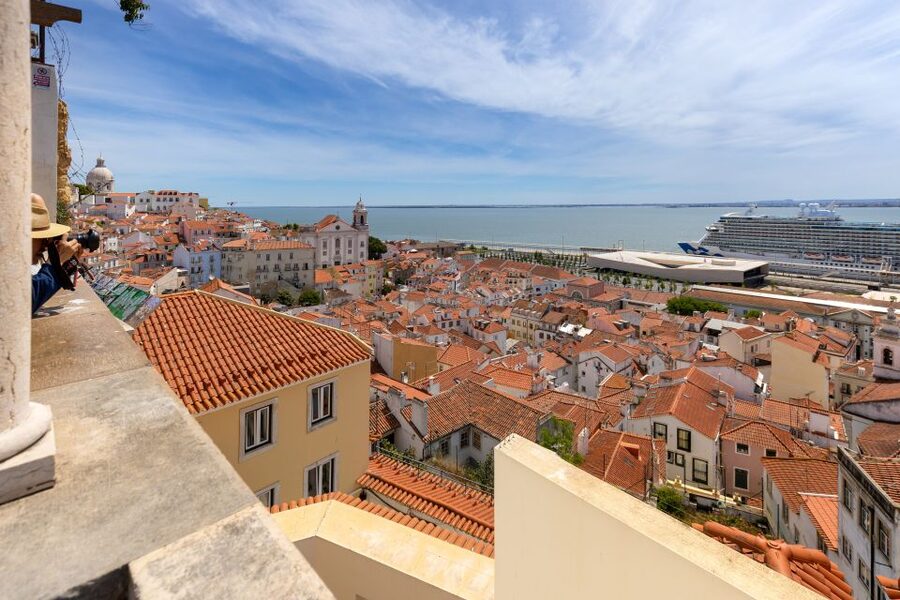
The garden at Miradouro São Pedro de Alcântara is one of the tour’s best pauses. From here, you look over Baixa toward the south bank of the Tagus River.
This is the moment when Lisbon’s geography begins to make sense. The city is built on hills, and the viewpoint lets you see how the lower center sits between higher neighborhoods and the broad river. Your guide can point out the relationship between the areas you have visited and those still ahead.
Bring your camera, but also take a moment to use the view as a map. A viewpoint is more useful when you know what you are looking at. The guide’s explanations help connect the skyline, river, and streets below.
The stop is also practical. You get a break from walking and a chance to catch up with the group. If you are not especially fit, these regular pauses make the experience more manageable. Still, do not mistake a walking tour for a gentle sightseeing bus ride. You will cover ground.
San Roque Church, with a plain exterior and lavish interior
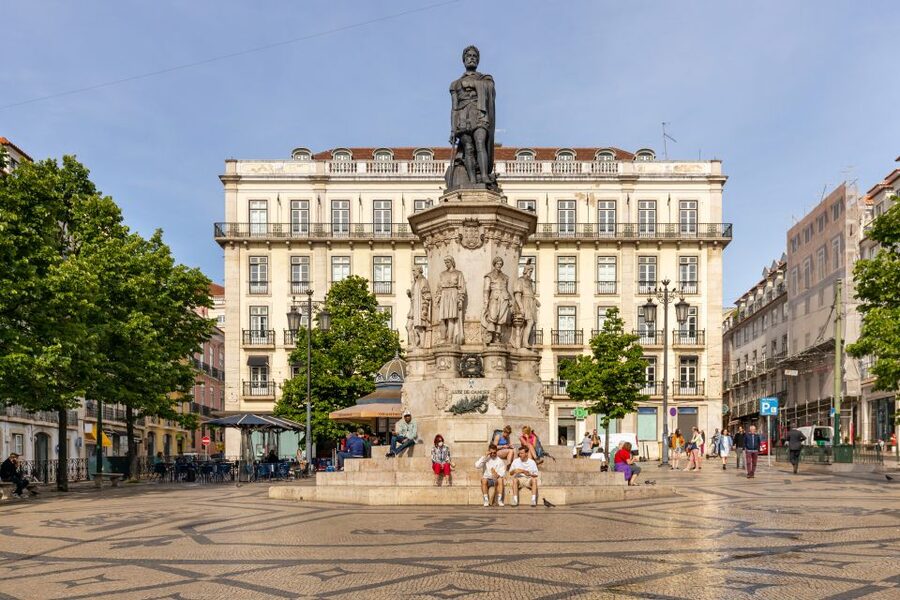
The next major stop is San Roque Church, built by the Jesuits. Its outside is notably austere, while the inside is filled with gilding, tiles, and paintings.
That contrast is one of the more rewarding details on the route. From the street, the church can seem restrained. Inside, the decoration explains how religious buildings could serve as displays of wealth, craft, and belief.
The church also gives the guide a chance to explain Mannerist and Baroque styles without turning the tour into a lecture. You will not need a specialist background in art to appreciate the difference between the plain façade and the richly decorated interior.
As with the other stops, the value is in the explanation. You can visit a church alone and admire the gold, but a guide helps you notice why the space looks the way it does and how it fits into Lisbon’s religious and artistic story.
More History Walking Tours in Lisbon:
- History and Hauntings of Salem Guided Walking Tour
★ 5.0 · 14,564 reviews - Boston: Freedom Trail History Small Group Walking Tour
★ 5.0 · 6,450 reviews - Historic Charleston Guided Sightseeing Walking Tour
★ 5.0 · 6,216 reviews - Barcelona: Tapas Walking Tour with Food, Wine, and History
★ 4.8 · 4,261 reviews
Carmo Convent and the memory of 1974
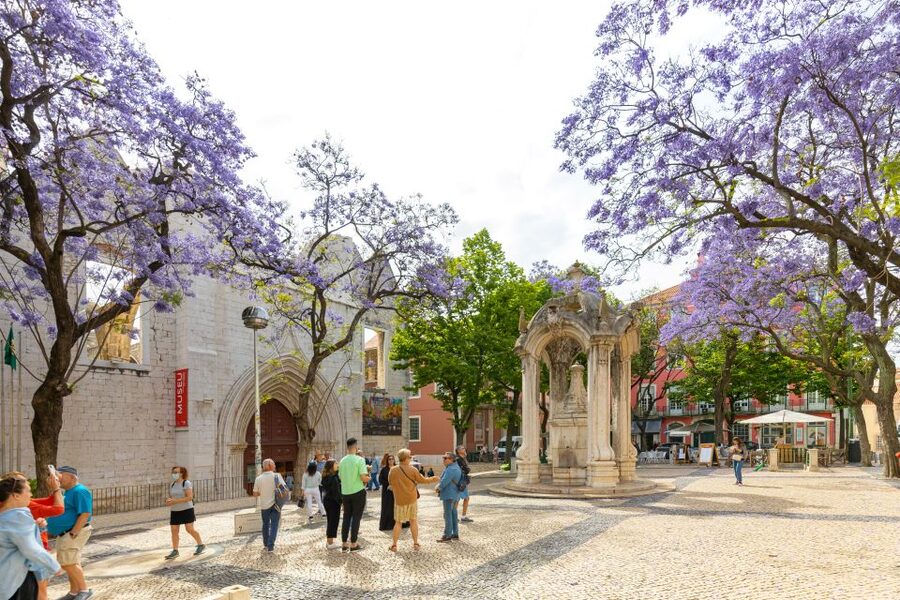
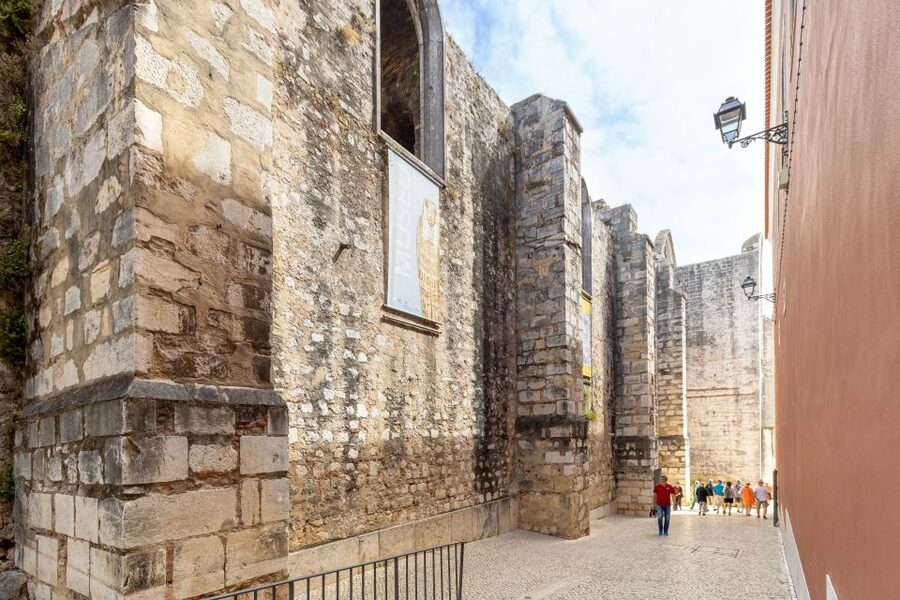
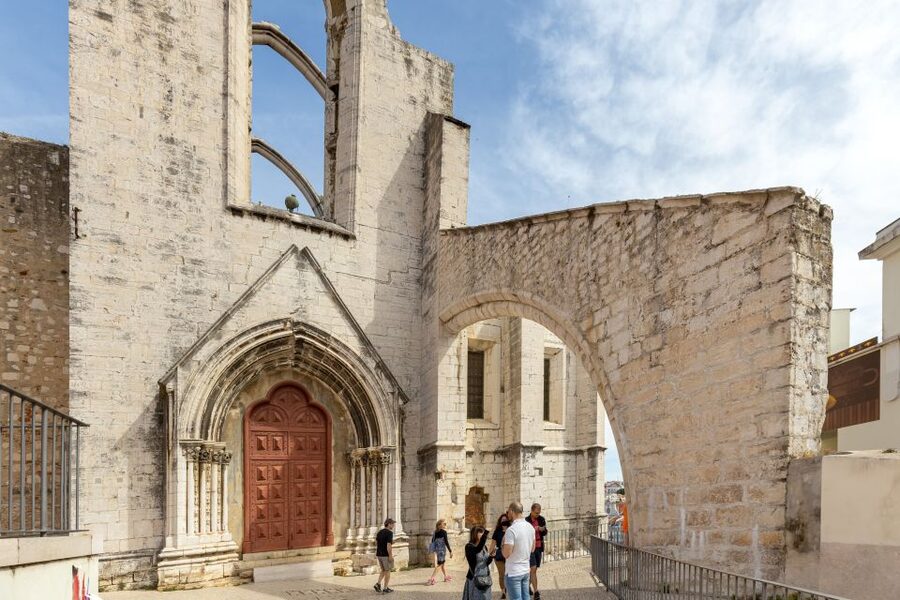
The route then heads downhill to the Carmo convent and church. These ruins are among Lisbon’s most memorable architectural sights, with Gothic arches open to the sky.
Carmo matters for more than its appearance. The 1755 earthquake damaged the church, leaving the roofless structure that you see today. Centuries later, the site became connected to the Carnation Revolution of 1974, when Portugal’s long dictatorship ended.
This modern political history is one of the tour’s strongest features. Lisbon is not presented as an old city frozen in stone. You hear about a major event that shaped the Portugal you visit today. Several guides, including Paulo, have used personal memories of growing up in Lisbon around the revolution to explain its effect on ordinary life.
I especially value this part because it adds a human scale to national history. The date and political facts matter, but so does the sense that recent Portuguese history is still part of family memory.
Santa Justa and the Baixa streets
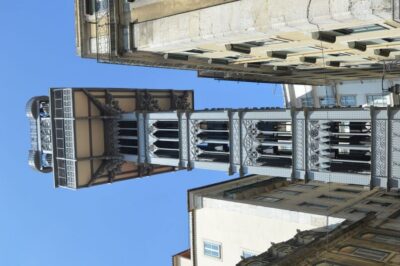
A short walk brings you to the Santa Justa elevator, a tall Gothic Revival structure in the center of Baixa. It is one of Lisbon’s most recognizable monuments and one of the city’s best-known viewpoints.
The tour does not simply treat it as a photo stop. You will see how the elevator helps connect Lisbon’s different levels and why Baixa became such an important part of the rebuilt city. The surrounding streets give you a look at the formal center, with its broad layout contrasting sharply with the tighter lanes of older districts.
There may not be time to take the elevator all the way up as a separate ride. The listed tram trip is included, while other transport or entrance costs are not specified as part of the tour. If riding Santa Justa is high on your list, ask your guide how much time is available or plan to return later.
This is a useful example of the tour’s limits. You receive a broad introduction to many places, but you should not expect a full visit to every attraction.
A short tram ride toward Portas do Sol
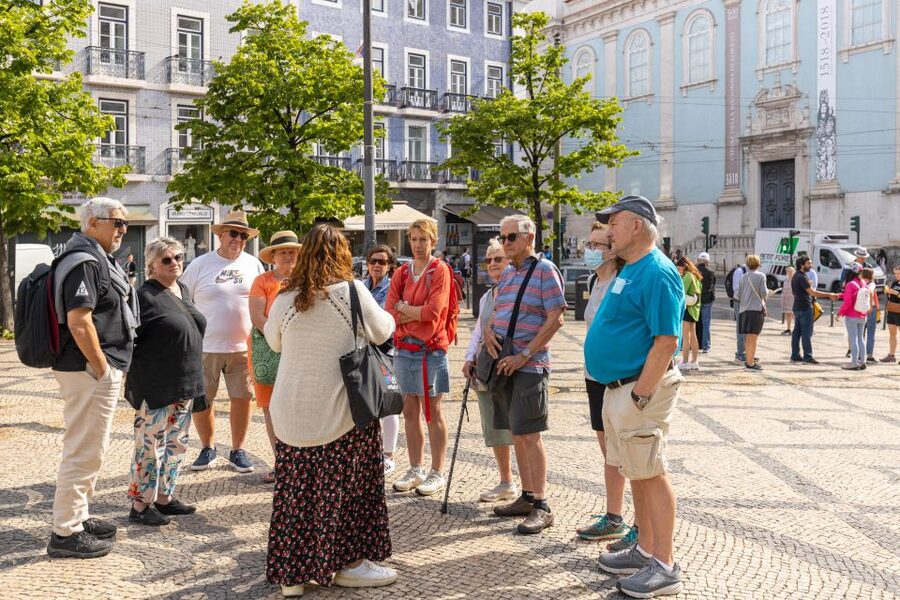
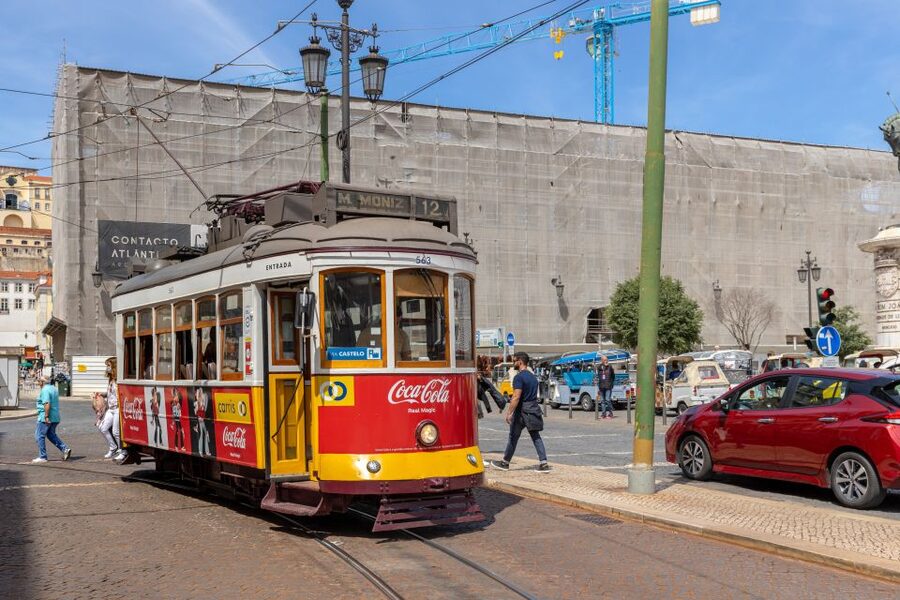
The tram portion gives your feet a break and adds a very Lisbon form of transport. You ride uphill from the castle area toward Portas do Sol, with the exact operation depending on the day and local conditions.
A review from one group describes the tram breaking down during pouring rain. The guide, Anna, changed the plan and kept the day moving. That is worth remembering: the tram is an included part of the experience, but public transport remains public transport.
The ride is brief, yet it matters. Lisbon’s trams are not just tourist props. They climb routes that connect the city’s hills and older districts, and they give you a quick sense of how tightly packed the streets can be. It can also be crowded, so keep your belongings secure and stay close to the group.
When the tram is running normally, this is a fun change of pace. When it is not, a flexible guide matters more than the vehicle itself. The tour’s strongest accounts describe guides adapting without letting a delay spoil the day.
Portas do Sol, Alfama, and the river below
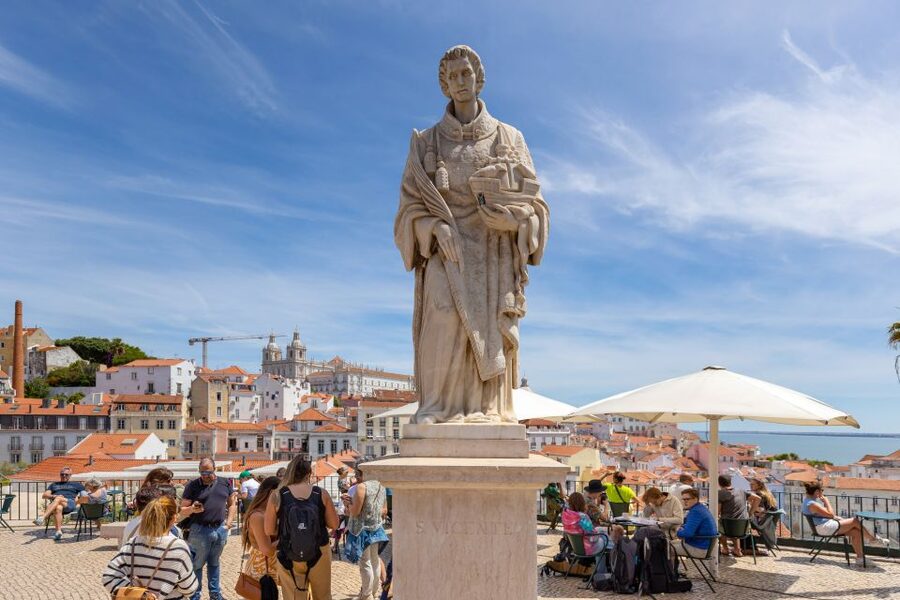
At Portas do Sol, you get another broad view, this time toward the Monastery of São Vicente de Fora, the National Pantheon, and Alfama stretching down toward the Tagus.
This is a good place to understand why Lisbon feels layered. The river, rooftops, church domes, and steep lanes all appear at once. The guide can help you identify the major buildings, but the real pleasure is watching the city’s older quarters spread below.
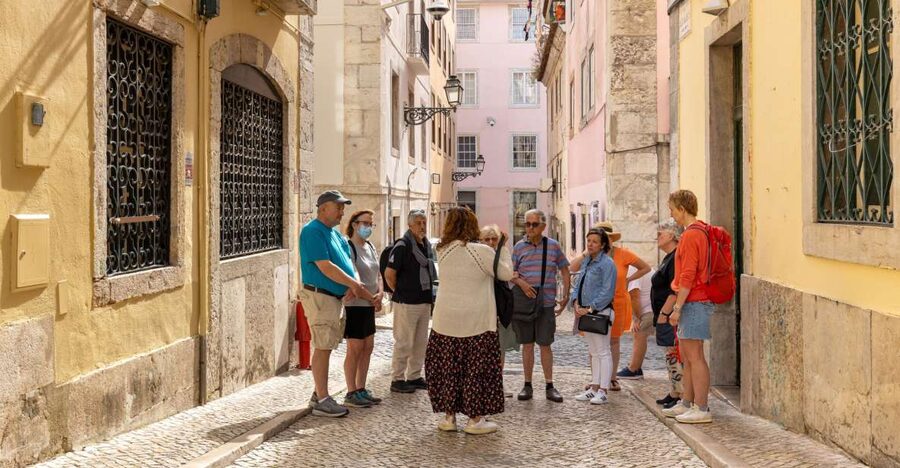
From here, you enter Alfama. It is Lisbon’s oldest and most picturesque neighborhood, with narrow streets, steps, and small turns that make a fixed route difficult to follow on your own. The district is linked with fado houses and the popular festivals of the saints, especially the celebrations for St. Anthony.
I would not expect Alfama to feel polished or uniform. Its appeal comes from the irregular streets and the sense of a neighborhood shaped over many centuries. You see a more intimate side of Lisbon here than in Baixa’s formal center.
The guide’s local knowledge is useful in Alfama because the district rewards small observations. You may hear about traditions, music, festivals, and daily life that are easy to miss if you simply walk from one viewpoint to another.
Coffee, pastel de nata, and a useful pause
Coffee and cake are included, usually a bica and pastel de nata according to the tour details and recent experiences. This is not a full meal, but it is a welcome pause in a three-hour walk.
I like this small inclusion because it fits the subject. You are not only looking at Lisbon. You get a taste of a familiar local routine and a chance to talk with the guide and the rest of the group.
Dietary needs may sometimes be accommodated. One guide, Ricardo, arranged a vegan spinach snack instead of the usual pastry for a vegetarian participant. That does not guarantee every substitute, so tell the guide early if you need an alternative.
The pause also helps with pacing. Several hours of hills and stone paving can be tiring, particularly in warm weather. Use the stop to drink water and reset before the final section.
Lisbon Cathedral and the end of the route
The tour ends at Lisbon Cathedral, built in 1150, three years after the city was taken back from the Moors. Its appearance reflects many later changes, so you see a mixture of architectural styles rather than one perfectly uniform design.
Ending here makes sense. The cathedral brings together several strands of Lisbon’s past: the Christian reconquest, medieval building, later alterations, and the city’s long process of change. It also leaves you in a useful central area for continuing your sightseeing.
The end point is not just a finish line. You can ask your guide for suggestions about where to eat, which neighborhoods to revisit, or how to plan the rest of your stay. Ricardo and several other guides are praised for offering practical recommendations as well as historical detail.
Price, group size, and practical value
At $29 per person, the tour offers a good amount for the money. The price includes a live guide, three hours of walking, the tram trip, coffee, and cake. You also get an organized route through several major areas without needing to work out Lisbon’s hills and public transport on your own.
The value is strongest if this is your first time in Lisbon. You receive orientation, background, viewpoints, and suggestions for later. If you already know the city well, the broad format may feel less useful unless you want the local stories and company of a guide.
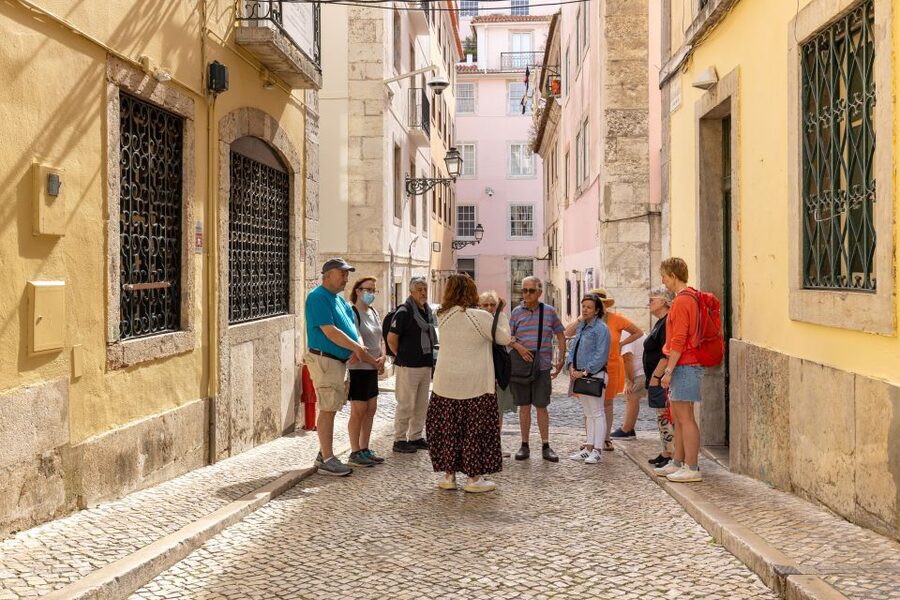
Private and small-group options are available. A small group improves the experience on narrow streets because you can hear the guide and ask questions more easily. One group had only three people and found the outing almost like a private tour. Larger groups can still work, but stay near the guide at viewpoints and tram stops.
The meeting point can change depending on the option booked, so check your confirmation carefully. Hotel pickup and drop-off are not included. Free cancellation is available up to 24 hours before the tour, and you can reserve now and pay later.
Who should book this tour?
I would choose this tour at the start of a Lisbon visit, especially if you want history, orientation, and a taste of local life in one outing. It suits first-time visitors, solo travelers who want an easy way to meet people, and anyone who prefers stories to silent sightseeing.
It also works for people who are not especially athletic, thanks to frequent stops and a generally relaxed pace. But you should still expect hills, steps, and uneven streets. If mobility is a serious concern, confirm the route and current conditions before booking.
The best guides add a lot. Paulo brings personal memories of Lisbon and the 1974 revolution. Ricardo is praised for history, humor, and practical advice. Beatrice is noted for her care with different walking abilities, while Anna and João are praised for patience and calm adjustments when conditions change.
Should you book the Lisbon History, Stories and Lifestyle Tour?
Yes, if you want a well-priced introduction to Lisbon that mixes famous sights with neighborhood life. The tram ride, Alfama walk, São Pedro de Alcântara viewpoint, Carmo history, and coffee stop give you a balanced first look at the city.
Book it early in your stay so you can return to places that catch your attention. Skip it if you want long interior visits, a completely flat route, or a single subject such as art or food. For most first-time visitors, the combination of clear local storytelling, manageable structure, and included tram and pastry makes this a strong three-hour choice.
FAQ
How long is the Lisbon History, Stories and Lifestyle Walking Tour?
The tour lasts three hours. Starting times vary, so check availability for the date you want.
What is included in the price?
The $29 price includes a live guide, walking tour, tram trip, coffee, and cake.
Which Lisbon districts does the tour visit?
The route includes Bairro Alto, Baixa, the Carmo area, the Santa Justa elevator, Portas do Sol, Alfama, and Lisbon Cathedral.
Is the tram ride included?
Yes. A tram trip is included, although public transport conditions can affect the exact experience.
Which languages are available?
Guides are available in Portuguese, Spanish, Italian, German, French, and English.
Can I cancel or pay later?
You can cancel up to 24 hours in advance for a full refund. Reserve now and pay later is also available.
New walking tours around Lisbon
- Lisbon: Walking Tour in the Center (Max 12 Participants)★ 5.0 · 741 reviews
- Lisbon Tram No. 28 Ride & Walking Tour★ 4.1 · 766 reviews
- Lisbon: Kickstart Street Art Walking Tour★ 4.9 · 717 reviews
- Lisbon Through the Eyes of a Local – Food and Walking Tour★ 4.9 · 141 reviews
- Lisbon: Private Boat Trip, Guided Walking Tour, Bike & Tram★ 4.8 · 116 reviews
- Lisbon: Jewish Walking Tour★ 4.9 · 96 reviews
- Lisbon: Street Art Walk★ 5.0 · 79 reviews
- Lisbon: Helicopter Ride, Boat Trip, & Old Town Walking Tour★ 4.7 · 480 reviews
Lisbon Walking Tours, side by side.

Best of Lisbon Small-Group Guided Walking Tour
Read our review →
Lisbon: Food and Wine Small Group Walking Tour
Read our review →
Best of Lisbon Walking Tour: Rossio, Chiado & Alfama
Read our review →

Lisbon Food Tour with 10+ Tastings of Local Delicacies & Wines
Read our review →
Lisbon Roots – Small group Food & Culture Walking Tour w/tastings
Read our review →
Lisbon Private Food Tour – Taste 10+ Local Dishes & Wines
Read our review →