
Review · LISBON
Lisbon: 3-Hour The Slave Trade – An Historical Walking Tour
Lisbon’s grand squares, churches, and Age of Discovery monuments look different once you learn how much of Portugal’s growth rested on the trafficking and enslavement of Africans. This three-hour historical walk brings that overlooked story into the city center, rather than leaving it in a museum footnote.
I like two things right away: Rui Fernandes brings a personal African perspective and strong academic preparation, and the small group gives you room to ask real questions. I also like the relaxed route, which past participants describe as mostly flat or only gently inclined. The main drawback is the subject itself. This is serious, sometimes painful material, not a light sightseeing stroll.
Key points to know before booking
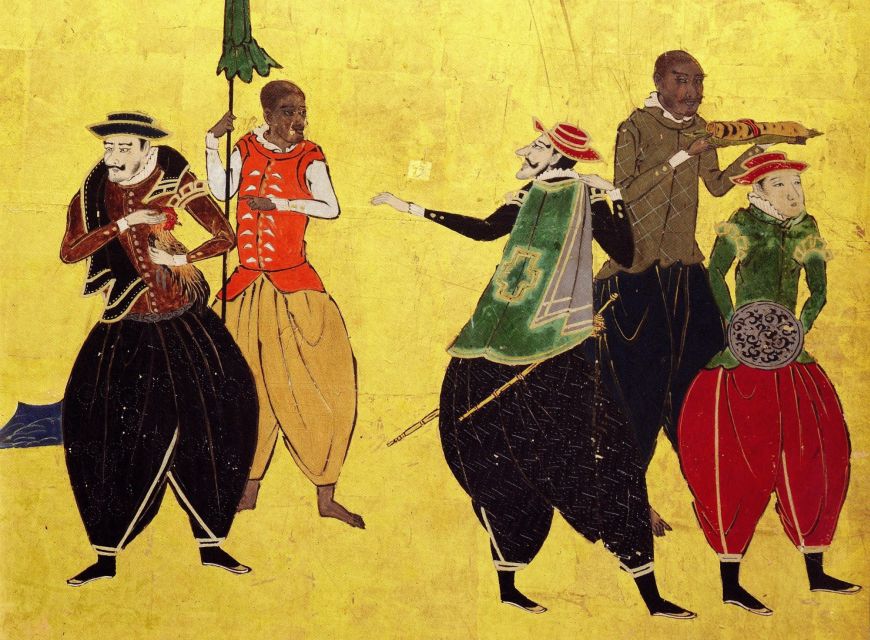
- Starts in Alfama: Meet at Largo do Chafariz de Dentro, in Lisbon’s oldest district.
- Rui Fernandes leads the walk: He has a background in history, political science, and economics, and conducts the tour in English.
- Connects famous sights to slavery: Streets, churches, squares, monuments, and buildings become evidence in a larger story.
- Covers four centuries: Topics range from Iberian slavery and the Atlantic trade to Brazil, abolition, African colonies, and liberation movements.
- Small group format: The practical information lists a maximum of six participants, while another activity detail says eight, so confirm the exact limit when booking.
- Includes a pause: One coffee stop and one WC break are built into the three-hour outing.
Why this Lisbon history walk matters

I find this tour valuable because it asks you to look at Lisbon with both eyes open. You still see the beauty of the city, but you also learn to ask who paid for its wealth, who was excluded from its story, and how those choices shaped Portugal and its colonies.
Portugal began the Atlantic slave trade in the first half of the 15th century, under the direction of Prince Henry the Navigator. Over the following four centuries, an estimated 12 to 14 million Africans were sold into slavery and transported across the Atlantic to the Americas. That scale can feel abstract in a classroom. A walking tour gives the subject physical surroundings.
The guide uses Lisbon itself as the teaching tool. You move through ordinary streets and public spaces while hearing how the city connected to shipping, commerce, religion, political power, and colonial rule. The point is not simply to attach a grim fact to a famous monument. It is to show how slavery operated within everyday urban life.
That approach also helps explain why this subject is often missed. Lisbon’s popular sightseeing story tends to focus on explorers, maritime success, tiled facades, and imperial buildings. This tour adds the people and systems left out of that polished version.
More History Walking Tours in Portugal
- Lisbon: History, Stories and Lifestyle Walking Tour
★ 4.8 · 10,902 reviews - Lisbon: Private Dark History Walking Tour with Drinks
★ 4.8 · 387 reviews - Porto: Historic City Center Walking Tour
★ 4.7 · 1,172 reviews
Meeting in Alfama at Largo do Chafariz de Dentro
The walk begins at Largo do Chafariz de Dentro, a square in Alfama. This is a useful starting point because Alfama is Lisbon’s oldest district and one of the places where the city’s long history is easiest to read through streets, buildings, and changing uses.
You should arrive ready to walk and listen rather than expecting a fixed museum presentation. The route uses both back streets and main avenues, so the city itself remains part of the lesson. The meeting point is not a hotel pickup location, and hotel drop-off is not included, so plan your route to and from the square independently.
The opening part of the tour addresses the roots of slavery in the Iberian Peninsula. That context matters. Portugal’s role in the Atlantic trade did not appear from nowhere, and the guide places later events within older political, religious, and social practices.
I appreciate this beginning because it avoids presenting the Atlantic trade as an isolated episode. You first get the background needed to understand how enslavement became tied to Portuguese expansion and commerce.
From Alfama streets to Lisbon’s public face
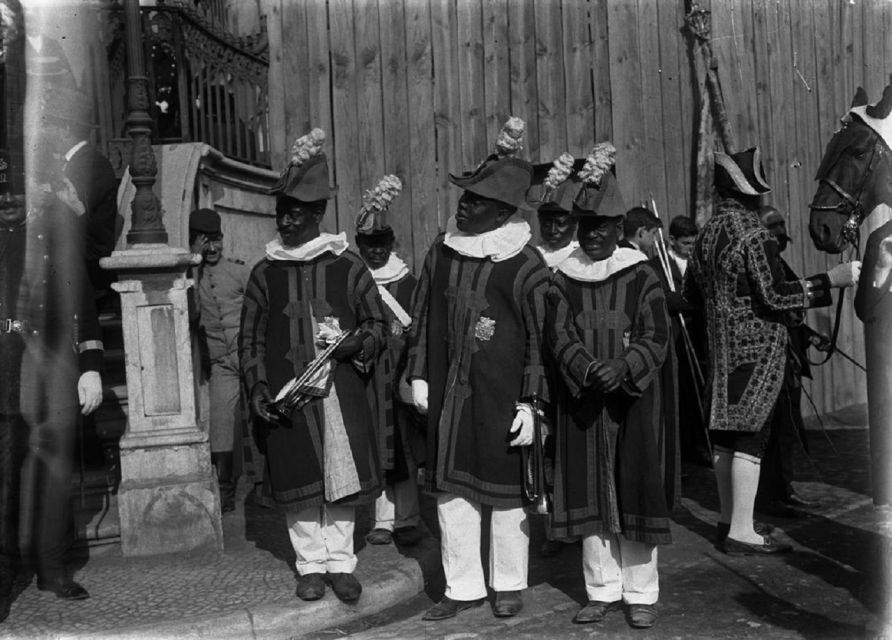
As the walk continues, the route links Lisbon’s central sights with the trade in human beings. The exact sequence of stops can vary, but the experience takes in monuments, churches, public squares, main avenues, and quieter streets with relevant connections.
At each place, the important question is not just what happened here? It is also what did this place represent, and who benefited from it? A church may open a conversation about religion and social power. A public square may help explain commerce, government, or the public display of imperial success. A grand building may carry a less comfortable story about money and colonial ties.
The guide also discusses the daily life of enslaved people in historical Lisbon. That is one of the most useful parts of the tour because it moves beyond ships, kings, and trade routes. You learn about slavery as a lived condition within the city, not only as an overseas system.
The walking format has a practical advantage here. You are not trying to absorb every date from a lecture hall. You pause in the places where the story connects to streets and buildings you can actually see. That can make the material easier to remember after the tour ends.
At the same time, you should expect a lot of information. The subject covers economics, politics, religion, family life, colonial administration, and race. Rui is willing to answer questions and adjust the pace, but the amount of material may feel dense if you prefer a quick overview.
Portugal, Brazil, and the Atlantic system
One major part of the tour is Portugal’s connection with Brazil. The colony was central to the Portuguese imperial economy, and its importance helps explain why the Atlantic trade lasted so long and became so deeply tied to national development.
You will hear how the trade in enslaved Africans connected Europe, Africa, and the Americas. The tour places Portugal within that wider Atlantic system while keeping Lisbon at the center of the discussion.
This is where the tour’s background in economics and political science becomes especially useful. The subject is not treated as a series of isolated acts by a few individuals. You look at institutions, profit, law, political decisions, and the social structures that allowed slavery to continue.
I like that broader framing. It helps you understand how a society can celebrate exploration and prosperity while also profiting from terrible human exploitation. The guide’s job is not to excuse the past or reduce it to a simple national stereotype. It is to explain how the system worked and why it mattered.
More History Walking Tours in Lisbon:
- History and Hauntings of Salem Guided Walking Tour
★ 5.0 · 14,564 reviews - Boston: Freedom Trail History Small Group Walking Tour
★ 5.0 · 6,450 reviews - Historic Charleston Guided Sightseeing Walking Tour
★ 5.0 · 6,216 reviews - Barcelona: Tapas Walking Tour with Food, Wine, and History
★ 4.8 · 4,261 reviews
Abolition, African colonies, and the unfinished story
The tour does not stop with the height of the trade. It also covers the abolition of the slave trade in Portugal, the Portuguese colonies in Africa, and African nationalist struggles for liberation.
That later history is important because Portugal’s relationship with Africa did not end when the Atlantic slave trade was abolished. Colonial rule continued, and the political and economic consequences lasted into the modern era.
This section gives the walk a longer time frame. You are not only learning about a past crime. You are also considering how colonial systems, racism, and public memory carried forward.
Several participants have especially valued the way Rui connects historical events with present-day Portugal. You can ask how this past appears in modern society, how it is remembered, and why some parts receive more public attention than others. The guide welcomes questions throughout the walk, rather than saving them all for the end.
If you have African or African American family history, the discussion may feel particularly personal. The tour is presented as inclusive and careful, but the topic remains difficult. Go in prepared for honest discussion rather than a neatly resolved ending.
Rui Fernandes as your guide
Rui Fernandes is the key reason this experience feels more focused than a standard Lisbon sightseeing tour. He leads in clear English and brings a background in history, political science, and economics. The activity information also identifies him as an African guide, which adds an important perspective to a subject often presented through official Portuguese narratives.
His approach is described as patient, organized, and open to questions. He uses visual material at points to help explain people, places, and events. That can be useful when the names, dates, and geography begin to pile up.
I would also value the way he connects the discussion to the people in the group. He has been praised for remembering names, making room for questions, and keeping an eye on the group’s pace and comfort. In warm weather, shade and a short cafe break can make a real difference.
A guide who can explain both the broad system and the human details is essential here. Rui’s mix of clear delivery, personal connection, and historical research appears to suit the subject well. You are free to ask about Portugal’s general history, nearby sights, food, shops, and public transportation as well.
A three-hour pace with a useful break
The advertised duration is three hours, though the walk can sometimes run closer to three and a half hours. Keep that in mind if you have a timed museum entry, dinner reservation, or train to catch afterward.
The pace is generally relaxed. Several descriptions of the outing note that the route is mostly flat or has only minimal inclines, making it workable for a broad range of ages. Still, this is a walking tour on Lisbon streets, so comfortable shoes are essential.
One coffee and WC break is included. The cafe stop gives you a chance to rest, ask follow-up questions, and let the material settle before the second half. A pastel de nata may be available at the cafe, but that particular treat is not formally listed as part of the inclusion, so do not book this expecting food to be provided.
The small group is another practical strength. The published details are not completely consistent, with one reference to a maximum of eight and another specifying six. Either way, the format is intended to be intimate. A smaller group makes it easier to hear Rui, ask questions, and discuss sensitive subjects without shouting over a crowd.
Is $35 a fair price?
At $35 per person, I consider this a strong value for a three-hour specialist tour, especially if you want more than a general introduction to Lisbon. The price includes the live guide plus local taxes and fees. Hotel transport, meals, and personal spending are not included.
You are paying for focused interpretation rather than admission to a major attraction. The value comes from the guide’s preparation, the route through relevant parts of the city, and the opportunity to ask questions about a subject that is not always addressed in standard tours.
For a visitor who only wants postcard views, the price may feel less attractive because the tour spends serious time on history and context. But if you want to understand how Portugal’s wealth, empire, and modern identity were shaped, $35 is modest for the amount of material covered.
I would not choose this as your only Lisbon tour. It is best paired with a general city walk or sightseeing day, because it assumes you want to examine one difficult part of the city in detail.
Who should book this experience?
I would recommend it to:
- History-focused visitors who want Portugal’s role in the Atlantic slave trade explained clearly.
- First-time Lisbon visitors who want a stronger context for the city’s monuments and central districts.
- Repeat visitors who have already seen the standard sights and want a different way to read them.
- Students and educators looking for a guided introduction to slavery, colonialism, economics, and liberation movements.
- Families with older teenagers who can engage with serious historical material.
- People with African or African American heritage who want to explore Portugal’s part in the Atlantic system.
I would be more cautious about booking it for very young children or anyone hoping for a light, entertainment-first activity. The tour is patient and accessible, but the topic is not softened.
What to know before you reserve
Wear comfortable shoes and allow more than exactly three hours. Meet at Largo do Chafariz de Dentro rather than expecting hotel collection.
The tour is conducted in English. Pets are not allowed. You can cancel up to 24 hours before the start for a full refund, and the reserve-now, pay-later option lets you hold a place without paying immediately.
Because the group-size information differs between the published details, check the current booking page for the exact maximum. The smaller the group, the better this format works, especially if you want to ask about family history, modern Portugal, or the political choices behind the trade.
Should you book the Lisbon Slave Trade Historical Walking Tour?
Book it if you want to understand Lisbon beyond its pretty streets and imperial monuments. Rui Fernandes gives you a serious, carefully researched look at Portugal’s role in the Atlantic slave trade, the lives of enslaved people in Lisbon, Brazil’s importance, abolition, African colonial rule, and liberation movements.
The best reason to choose it is the combination of place-based history and open conversation. You do not simply hear dates. You connect the past to streets, buildings, public spaces, and the way Portugal presents itself today.
Skip it if you want a short, cheerful overview or if you cannot set aside three to three and a half hours for difficult material. For everyone else, this is one of the more worthwhile ways to add moral and historical context to a Lisbon visit.
FAQ
Where does the tour meet?
The meeting point is Largo do Chafariz de Dentro, a square in Lisbon’s Alfama district.
How long does the walking tour last?
The listed duration is three hours. Some outings may last about three to three and a half hours, so allow extra time afterward.
What language is the tour in?
The live tour is conducted in English.
Who leads the tour?
The guide is Rui Fernandes, an African guide with a background in history, political science, and economics.
What historical topics are covered?
The tour covers slavery in the Iberian Peninsula, the start of the Atlantic slave trade, the Age of Discovery, daily life for enslaved people in Lisbon, Brazil, abolition in Portugal, Portuguese colonies in Africa, and African liberation movements.
Is the tour held in a large group?
It is described as a small-group experience. The practical information lists a maximum of six participants, while another activity detail states eight, so confirm the current limit when booking.
Is hotel pickup included?
No. Hotel pickup and hotel drop-off are not included.
Is a break included?
Yes. One coffee break and one WC break are included during the tour.
What should I bring?
Bring comfortable shoes for walking through Lisbon.
Can I cancel for a full refund?
Yes. You can cancel up to 24 hours before the tour for a full refund. The reserve-now, pay-later option is also available.
More three-hour walks around Lisbon
- Lisbon: Food and Culture 3-Hour Walking Tour
★ 4.7 · 95 reviews - Prague: 3-Hour Walking Tour of Old Town & Prague Castle
★ 4.7 · 5,696 reviews - Eat Like a Local: Venice 3-Hour Small-Group Food Tasting Tour
★ 5.0 · 3,137 reviews - Experience Porto’s Charm: 3-Hour Guided Walking Tour
★ 5.0 · 2,432 reviews
New walking tours around Lisbon
- Lisbon: Walking Tour in the Center (Max 12 Participants)★ 5.0 · 741 reviews
- Lisbon Tram No. 28 Ride & Walking Tour★ 4.1 · 766 reviews
- Lisbon: Kickstart Street Art Walking Tour★ 4.9 · 717 reviews
- Lisbon Through the Eyes of a Local – Food and Walking Tour★ 4.9 · 141 reviews
- Lisbon: Private Boat Trip, Guided Walking Tour, Bike & Tram★ 4.8 · 116 reviews
- Lisbon: Jewish Walking Tour★ 4.9 · 96 reviews
- Lisbon: Food and Culture 3-Hour Walking Tour★ 4.7 · 95 reviews
- Lisbon: Street Art Walk★ 5.0 · 79 reviews
Lisbon Walking Tours, side by side.
Lisbon: History, Stories and Lifestyle Walking Tour
Read our review →
Best of Lisbon Small-Group Guided Walking Tour
Read our review →
Lisbon: Food and Wine Small Group Walking Tour
Read our review →
Best of Lisbon Walking Tour: Rossio, Chiado & Alfama
Read our review →

Lisbon Food Tour with 10+ Tastings of Local Delicacies & Wines
Read our review →
Lisbon Roots – Small group Food & Culture Walking Tour w/tastings
Read our review →