Review · PHILADELPHIA
Philadelphia: History, Highlights & Revolution Walking Tour
Philadelphia’s founding story comes alive best on foot, and this tour links the famous places with the less polished human stories behind them. You’ll move from Independence Hall and the Liberty Bell to Elfreth’s Alley, Betsy Ross House, Benjamin Franklin’s grave, and the recreated President’s House site.
I like the way the tour combines big national landmarks with smaller Old City details, and I like that the $45 fee supports a local community organization while covering a guide, the museum presentation, and the national park fee. The main drawback is that the full museum admission is not included, so you’ll need extra time and money if you want to explore the galleries afterward.
The guide can make a real difference. Recent departures have been led by John, Adam, Nina, Tom, David, Caroline, PJ, and others, with strong praise for clear storytelling, humor, patience, and the ability to answer oddball questions. Bring comfortable shoes, allow 150 minutes, and expect to walk outdoors in all kinds of Philadelphia weather.
Key points to know before you book
- A strong first look at Old City: You see many of Philadelphia’s essential historic sites in one well-planned walk.
- The Liberty Bell is a photo stop: You’ll learn about it and see it, but this tour does not promise a separate timed entry to every attraction.
- The museum presentation adds substance: The visit includes a special presentation featuring George Washington’s wartime tent.
- The ticket is not full museum admission: You receive discounted admission to return to the Museum of the American Revolution after the walk.
- The route covers about two and a half hours: It is wheelchair accessible, but you should still plan for sustained outdoor walking.
- The starting point is Signer’s Garden: If you drive, use a garage or lot rather than relying on two-hour street parking.
Why this Philadelphia walking tour works
Philadelphia can be confusing on a first visit. Independence National Historical Park spreads across several blocks, and the important buildings are mixed with modern streets, offices, restaurants, and construction. A guide gives the area a clear story instead of leaving you to connect the dots alone.
This 150-minute walk focuses on the city’s Revolutionary-era center. You’ll hear how Independence Hall, Congress Hall, the Liberty Bell, workshops, meeting places, burial grounds, and private homes fit into the creation of the United States.
I especially like the balance between famous symbols and ordinary people. The walk is not limited to presidents and generals. At the recreated President’s House site, you’ll hear about the two leaders who lived there as well as people whose work and lives were essential to the new nation, but whose names are often missing from schoolbook versions of the story.
The experience is conducted in English and is wheelchair accessible. The pace has been described as relaxed and suitable for different ages, including a 14-year-old on one departure and an older parent on another. Still, this is a walking tour, not a seated lecture. Wear supportive shoes and prepare for outdoor stops.
More History Walking Tours in the USA
- History and Hauntings of Salem Guided Walking Tour
★ 5.0 · 14,564 reviews - Boston: Freedom Trail History Small Group Walking Tour
★ 5.0 · 6,450 reviews - Historic Charleston Guided Sightseeing Walking Tour
★ 5.0 · 6,216 reviews
Starting at Signer’s Garden
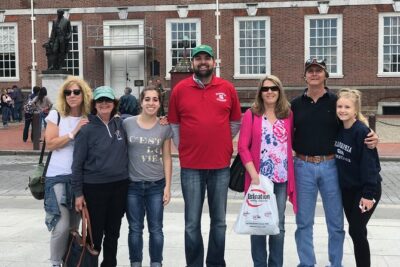
Meet your guide at the Signer Statue in Signer’s Garden. This is a sensible starting point because it places you close to Independence Mall and the cluster of buildings connected with the founding of the United States.
The opening moments matter. A good guide can explain the basic timeline before you begin moving, which helps you understand what follows. Guides such as Adam, Tom, David, Nina, and John have been praised for making the subject approachable without flattening it into a string of dates.
The guide assignments vary, so you should not book on the assumption that you will receive a particular person. The strongest pattern across the tour is the quality of the storytelling. Guides have been described as funny, patient, passionate, and ready to adapt the discussion to the group.
Independence Mall and Independence National Historical Park
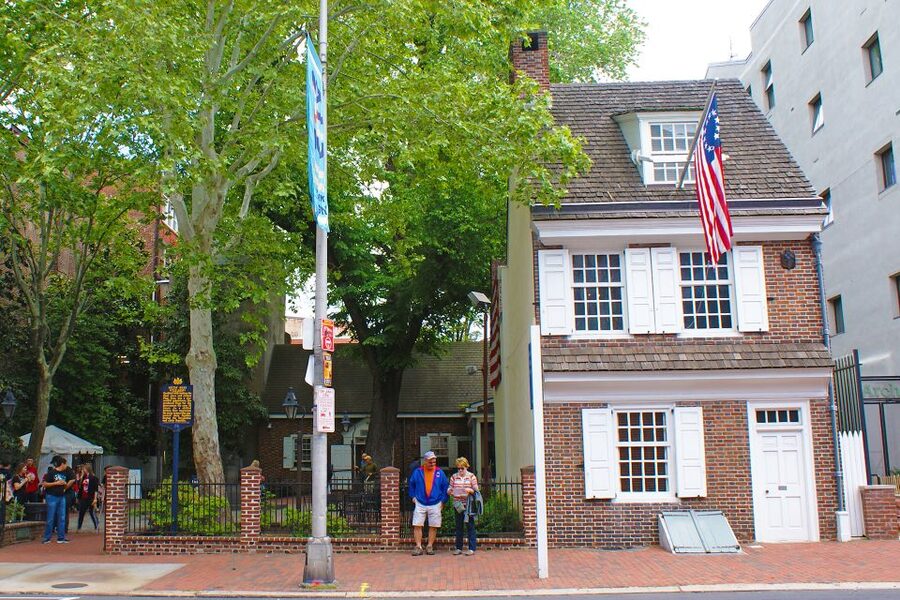
The first stretch takes you through Independence Mall and Independence National Historical Park. This is where Philadelphia’s most recognizable landmarks gather, but the setting can feel broad and open. The guide’s explanations give the space shape.
You’ll pass the major historic buildings and hear how the area functioned during the Revolutionary period. The value here is context. Independence Hall is not simply a grand old building, and the Liberty Bell is not just a cracked bell behind glass. Each belongs to a larger story about political argument, public symbolism, and the creation of a new government.
The tour passes by several sites rather than providing a full indoor visit to each one. That distinction matters. If you want to tour the interior of Independence Hall, you should treat this walk as an introduction and make separate plans for admission and timing.
Independence Hall and Congress Hall
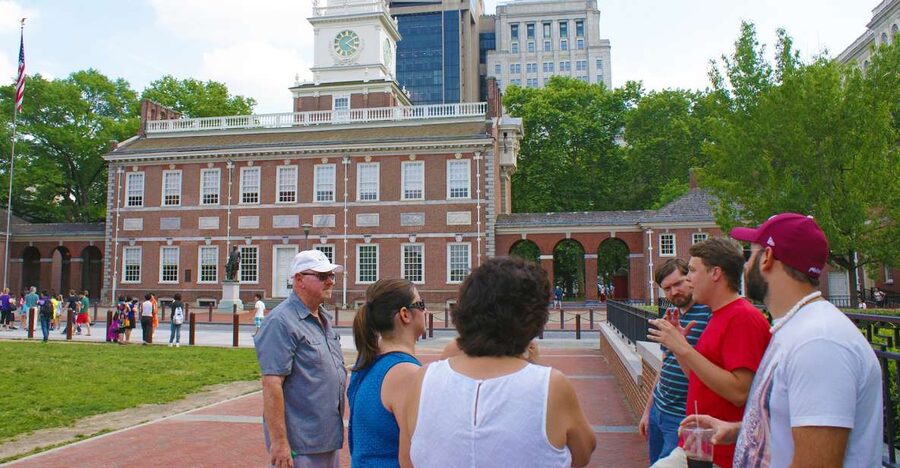
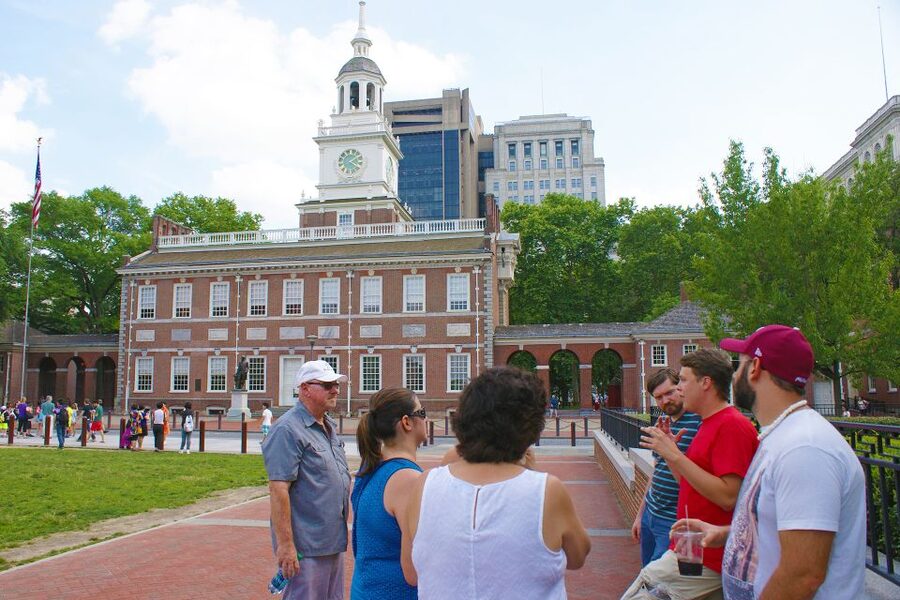
Independence Hall is the emotional center of the route. It is where the Declaration of Independence and the United States Constitution were created, making it one of the most important buildings in the country.
Your guide will explain the events connected with the building and point out details that are easy to miss when you simply walk past. You’ll get the political setting, the personalities involved, and the sense of uncertainty surrounding the new country.
Congress Hall sits nearby and adds another layer to the story. Philadelphia served as the national capital for a period, and Congress Hall helps show that the city’s importance continued after the Declaration and Constitution. Seeing these buildings together helps you understand that American independence was not a single afternoon in 1776. It was an ongoing process of debate, compromise, and institutional change.
The limitation is straightforward: this segment is a guided exterior visit. If you want a longer architectural or interior tour, you’ll need extra time beyond the 150-minute walk.
Same streets, a different story:
- New Orleans Premier Ghost, Voodoo and Vampire Walking Tour
★ 4.5 · 12,856 reviews - Little Havana Food and Walking Tour in Miami
★ 5.0 · 8,882 reviews - Chicago: Gangsters and Ghosts Walking Tour
★ 5.0 · 7,155 reviews - New Orleans Food Walking Tour of the French Quarter with Small-Group Option
★ 5.0 · 6,118 reviews
The Liberty Bell photo stop
The Liberty Bell is one of the strongest visual moments of the tour. You’ll have a chance to see it and take photographs while your guide explains why it became such a powerful symbol of American freedom.
The bell’s fame can make it easy to treat it as a quick box to check. The guide helps place it in a wider story, so the stop feels less like a photo line and more like a lesson in how objects acquire national meaning.
Expect this to be a photo stop and guided sightseeing rather than a promise of an extended exhibit visit. That makes the tour efficient, but it also means you should return independently if you want more time at the Liberty Bell or nearby exhibits.
Carpenters’ Hall and the working city
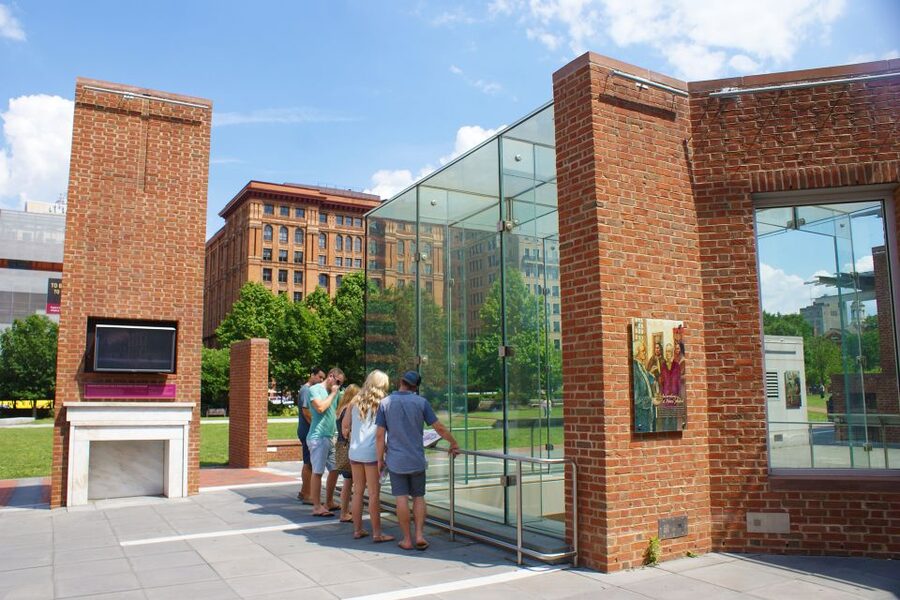
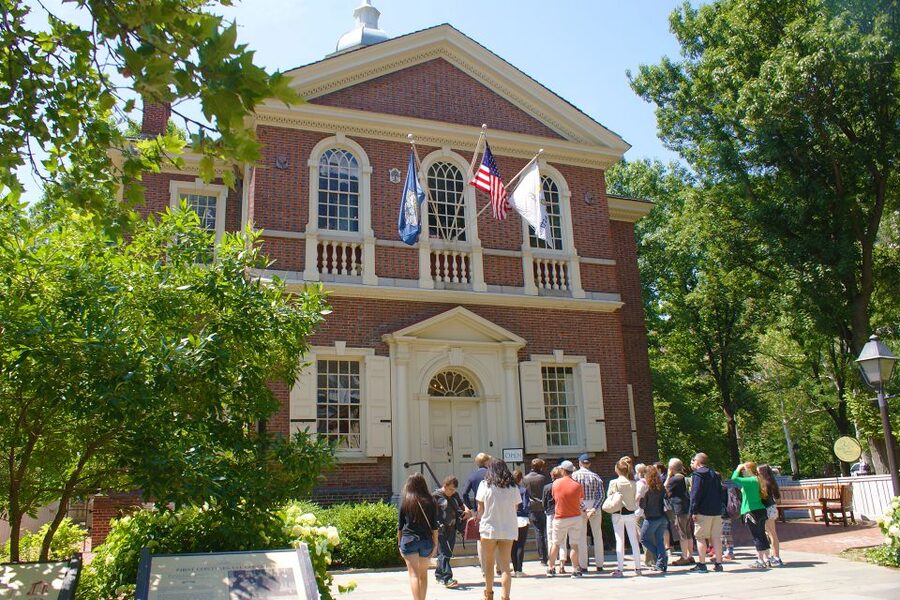
Carpenters’ Hall gives the walk a useful change of scale. Instead of focusing only on presidents and constitutional documents, the route points toward the craftsmen, tradespeople, and professional groups who helped shape Philadelphia.
This is one reason I prefer walking tours to a simple list of monuments. The city’s founding story took place in working buildings, meeting rooms, workshops, homes, and streets. Carpenters’ Hall helps you picture Philadelphia as a functioning city rather than a stage set for famous speeches.
Your guide may connect the building to the political discussions taking place in the city. Even if you already know the main Revolutionary dates, these smaller stops can make the period easier to picture.
The Museum of the American Revolution presentation
The Museum of the American Revolution is the tour’s main indoor element. The experience includes a special presentation featuring the tent George Washington used during the war, along with a demonstration or related presentation at the museum.
That addition gives the walk more weight than a standard monument tour. The tent is a personal object tied to the realities of military leadership, travel, uncertainty, and life during wartime. It shifts the story away from polished portraits and toward the practical conditions of the Revolution.
You also receive discounted admission to the museum after the tour. Full museum admission is not included in the $45 price, so consider this a useful invitation to return rather than a complete museum visit.
If you have only one afternoon in Philadelphia, the presentation gives you a taste of what the museum offers. If you have more time, I would return later and explore the galleries at your own pace. The walk gives you the timeline and major themes; the museum can then add objects, documents, and longer explanations.
Elfreth’s Alley and Old City streets
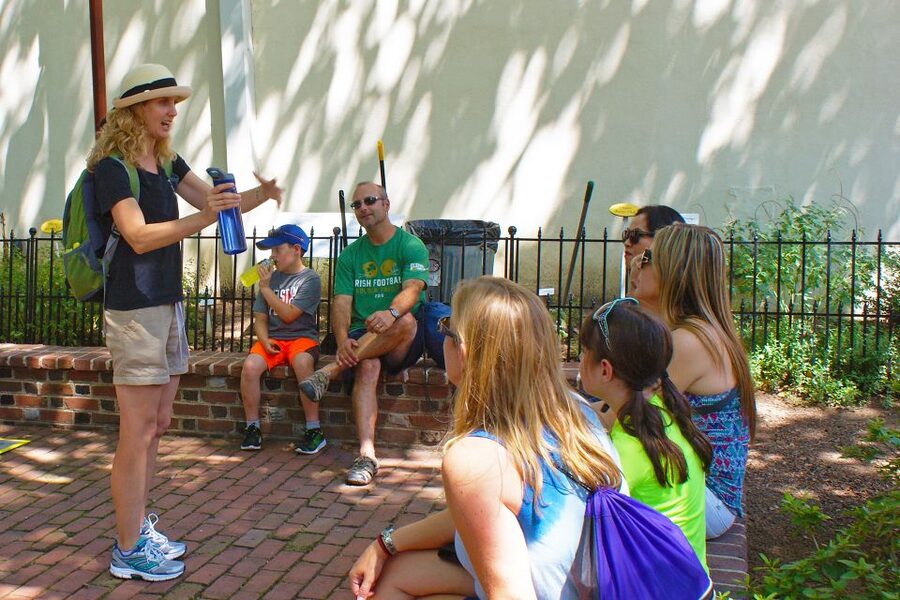
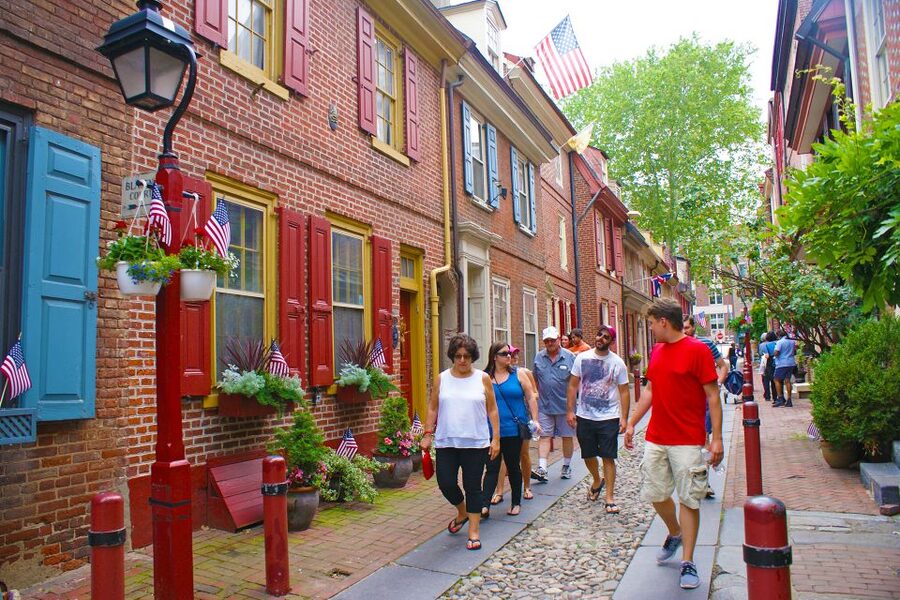
Elfreth’s Alley is one of the most memorable parts of the route. It is the nation’s oldest continuously inhabited residential street, and its narrow scale feels very different from Independence Mall.
Here, the story moves from national politics to everyday urban life. You’ll see historic homes and learn how ordinary residents lived in the same city where statesmen argued over independence and government.
This stop also provides a welcome change of scenery. The tour is not just a procession of official buildings. Elfreth’s Alley shows how much of Philadelphia’s identity is tied to its residential streets and old neighborhoods.
The street is narrow, so your guide will need to manage the group carefully. Keep your attention on the walking surface and be considerate of residents. The point is to see a living historic street, not a stage built only for tourists.
Betsy Ross House and the American flag story
The Betsy Ross House is another popular photo stop. Betsy Ross is traditionally credited with making the first American flag, and the house gives the tour a chance to discuss one of the best-known personal stories connected with the Revolution.
This is also a useful moment to listen for the difference between national legend and documented history. A thoughtful guide can explain why the story became so famous without presenting every detail as equally certain.
You’ll pass by and learn about the site rather than spending a long period inside the house. If you want to see the interior, plan a separate visit. The tour’s strength here is its ability to connect a familiar name with the streets and buildings of Old City.
Benjamin Franklin’s grave and the US Mint
The stop at Benjamin Franklin’s burial site adds a quieter note. Franklin was a printer, writer, scientist, diplomat, civic organizer, and political figure, and his grave gives you a physical place to consider the breadth of his life.
The stop is brief and includes time for photographs. It works well in the middle of the walk because it breaks up the larger national story with a personal landmark.
The route also takes in North 6th Street and Market Street, where you’ll see the US Mint and other important city sights. These streets help connect the colonial and Revolutionary-era core with the modern city around it.
You should not expect a full US Mint tour as part of this experience. It is a guided sightseeing stop, useful for orientation and context.
The President’s House and the stories left out
The recreated President’s House site is one of the tour’s most thoughtful sections. The guide discusses the two presidents who lived there and also the people whose labor and decisions helped make the early government function.
That broader focus matters. Philadelphia’s founding story is often told through declarations, battles, and famous political leaders. The President’s House site gives the guide room to discuss individuals who did not hold the highest office but still had important roles in the nation’s beginnings.
This can be especially valuable for families and students. Younger visitors often remember the personal stories more easily than a list of buildings. The tour keeps the subject grounded in real people, choices, and unequal experiences.
Guide style and the small-group feel
The guide is the heart of this experience. Names associated with recent departures include John, Adam, Nina, Tom, David, Caroline, PJ, Maria, Alex, Patricia, and others. You are not guaranteed a particular guide, but the range of comments points to a consistent focus on clear explanations and lively delivery.
Adam has been praised for answering questions fully and making familiar landmarks feel new. Tom has been noted for humor, historical detail, and keeping young people involved. Nina has been especially effective with mixed-age groups, while David has been valued for thoughtful explanations and local recommendations.
Several departures have been described as small groups. That usually makes it easier to ask questions, hear the guide, and adjust the pace. One guide even asked what people wanted to focus on and added detail where it fit the route.
The tour is not a theatrical reenactment. Its appeal is conversation, interpretation, and a guide who can move between a major political event and a small architectural detail without losing the group.
Is $45 a fair price?
At $45 per person, this is a reasonable price for a 150-minute guided introduction to Philadelphia’s historic center. The fee includes a local guide, the museum presentation, a donation to a local community organization, and the national park service fee.
The value is strongest if you are short on time. You can see many of the central sites in one outing, learn how they connect, and then decide which places deserve a longer return visit.
The price is less attractive if you expect full admission to Independence Hall, the Liberty Bell exhibits, and the Museum of the American Revolution. Those expectations would be too high. The museum offers discounted admission after the tour, but you still pay separately if you choose to go inside for a longer visit.
I would book it early in a Philadelphia stay. It gives you a useful map of Old City and helps you choose what to explore later. You may also finish near lunchtime, and guides have offered restaurant recommendations that can make the next part of your day easier.
Practical advice for the walk
Meet at the Signer Statue in Signer’s Garden. If you drive, allow extra time for parking. Old City has parking lots and garages, but street and metered parking is not a good plan because the maximum time is two hours, shorter than the tour itself.
Wear shoes you can walk in comfortably. The route includes outdoor streets, historic neighborhoods, and several stops where you may stand while listening. Philadelphia weather can change, and one departure was enjoyed even in wind and drizzle, but rain protection and water are sensible additions.
The tour is wheelchair accessible. Because the route includes historic streets and public spaces, ask at booking if you need details about a particular access point or surface.
Free cancellation is available up to 24 hours before the tour, and you can reserve now and pay later. The activity is offered in English.
Who should book this tour?
I would recommend it to first-time visitors, families, students, history fans, and anyone with only half a day in Philadelphia. It gives you a strong orientation without forcing you to spend the entire day inside museums.
It is also a good choice if you like history explained through people and places rather than dates alone. The combination of Independence Hall, the Liberty Bell, Elfreth’s Alley, Betsy Ross House, Franklin’s grave, and the museum presentation covers both the grand national story and the local street-level setting.
I would hesitate only if you want long interior visits at every major site or prefer to explore entirely on your own. This is a guided overview, not a series of extended museum tours.
Should you book the History, Highlights & Revolution Walking Tour?
Book it if you want a clear, lively introduction to Philadelphia’s Old City at a fair price. The tour’s strongest qualities are its route, its guides, and its effort to include people whose stories are often pushed aside by the famous names.
Think of it as your foundation for Philadelphia, not the final word. Afterward, use the museum discount, revisit the Liberty Bell or Independence Hall, and spend more time in the places that caught your interest. For a 150-minute walk that covers this much ground and gives you a human sense of the city, $45 is a sensible investment.
FAQ
How long does the Philadelphia walking tour last?
The tour lasts 150 minutes, or two and a half hours.
What is the starting point?
Meet your guide at the Signer Statue in Signer’s Garden.
What language is the tour conducted in?
The live tour is conducted in English.
Is the tour wheelchair accessible?
Yes, the activity is listed as wheelchair accessible.
Is admission to the Museum of the American Revolution included?
The tour includes a special presentation or demonstration at the museum and discounted admission that you can use after the tour. Full museum admission is not included.
Does the tour include Independence Hall?
Independence Hall is part of the guided sightseeing route, but the tour passes by the building rather than promising a full interior visit.
Is parking available near the meeting point?
There are several parking lots and garages throughout Old City. Street or metered parking is not recommended because the two-hour limit is shorter than the tour.
Can I cancel the booking?
Yes. You can cancel up to 24 hours in advance for a full refund. You can also reserve now and pay later.
More City Highlights Walking Tours in the USA
- Highlights of Charleston Guided Walking Tour
★ 5.0 · 2,206 reviews - Downtown Nashville Guided Sightseeing Walking Tour
★ 5.0 · 1,304 reviews - Boston History Tour: Scenic Walk Through Time & Landmarks
★ 5.0 · 627 reviews - Downtown Las Vegas Food Tour of 6 Iconic Dishes & Hidden Gems
★ 5.0 · 606 reviews
New walking tours around the USA
- NYC: Walking Tour with Local Guide and 30+ Top NYC Sights★ 4.5 · 248 reviews
- New York City: Gangsters and Ghosts 2-Hour Walking Tour★ 4.7 · 615 reviews
- NYC: History of Slavery & Underground Railroad Walking Tour★ 4.7 · 87 reviews
- New York City’s Hell’s Kitchen: Walking Food Tour★ 4.8 · 200 reviews
- New York City: Central Park Walking Tour★ 4.7 · 82 reviews
- NYC: Brooklyn Bridge and DUMBO Guided Walking Tour★ 4.8 · 93 reviews
- New Orleans: French Quarter Ghost and Legends Walking Tour★ 4.3 · 129 reviews
- New Orleans: Witches Coven Garden District Walking Tour★ 4.9 · 113 reviews
Philadelphia Walking Tours, side by side.
Philadelphia Old City Historic Walking Tour with 10+ Top Sites
Read our review →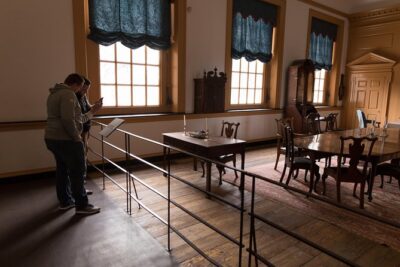
The Constitutional Walking Tour of Philadelphia
Read our review →