
Review · PHILADELPHIA
Philadelphia: Revolutionary Walk Through Historic Old City
Philadelphia’s Old City packs the American founding story into a walk of only 90 minutes. Starting at the Betsy Ross House, you follow the streets linked to Benjamin Franklin, the Revolution, and the creation of the United States, with stops at Independence Hall, the Liberty Bell, Elfreth’s Alley, and several less-famous historic sites.
I like the lively guide style, especially when Seamus, Jay, or Greg leads the group. These guides mix solid historical context with jokes and personal stories, making the tour work for adults, teenagers, and children. I also like how much ground the route covers, including Carpenter’s Hall, Christ Church, and the B. Free Franklin Post Office.
The main catch is simple: this is an outdoor walking tour, not an admission tour. You generally see the historic buildings from the street, and tickets for Independence Hall or other attractions are not included. If you want to go inside, plan a second visit and allow extra time.
Key points to know
- A fast introduction to Old City: See many of Philadelphia’s major Revolutionary-era sites in 90 minutes.
- A guide with classroom and comedy skills: Guides such as Seamus and Jay explain complicated events in a lively, easy-to-follow way.
- Elfreth’s Alley is a highlight: The narrow historic street adds a quieter, more intimate stop to the route.
- Mostly an exterior tour: The walk points out buildings and explains their importance, but admission fees and Independence Hall tickets are separate.
- Good for families: Reviews describe children, teenagers, and young adults staying engaged with the stories and humor.
- A useful first activity: The route gives you a clear map of Old City before you return to explore individual sites inside.
A quick walk through the American founding story
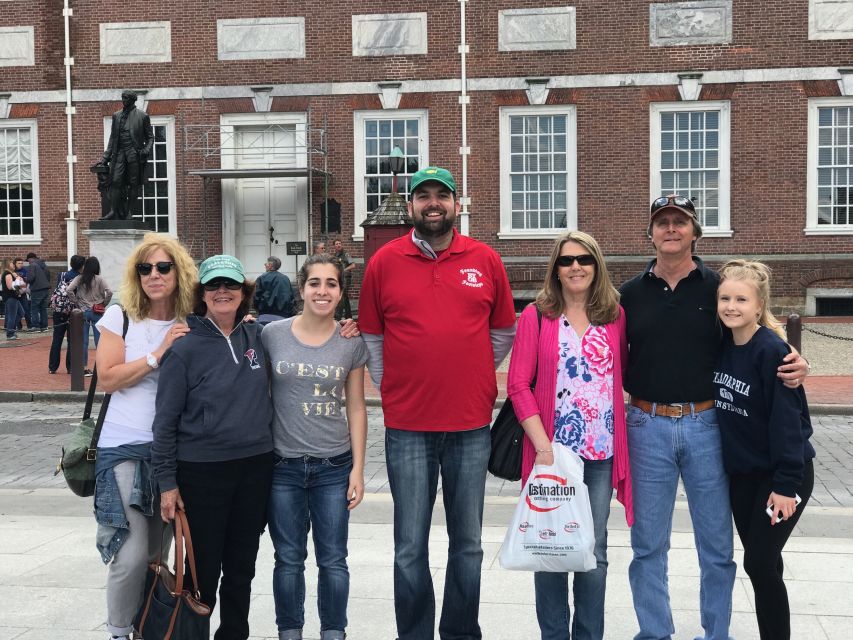
Founding Footsteps Tours keeps this Philadelphia experience focused. You meet at the Betsy Ross House, then move through Old City on foot, stopping at places tied to the Declaration of Independence, the Constitution, Benjamin Franklin, early American religion, and the city’s colonial streets.
The route is not a slow architectural study. It is a brisk story walk. You listen for several minutes at each stop, then move on. That pace lets you cover a lot, but it also means the tour cannot give every site the time it deserves.
I think that tradeoff makes sense for a first visit. Philadelphia’s historic core is compact but full of names and dates. Without a guide, it is easy to see Independence Hall, the Liberty Bell, and Elfreth’s Alley as separate sights. A good guide connects them into one story.
The guides bring different personalities to the same basic route. Seamus is repeatedly praised for being warm, funny, and clear. Jay is described as an engaging history teacher with a comic timing. Greg also gets credit for packing key facts and amusing stories into a short walk. Your guide may be someone else, but the experience is built around this teacher-meets-comedian approach.
More History Walking Tours in the USA
- History and Hauntings of Salem Guided Walking Tour
★ 5.0 · 14,564 reviews - Boston: Freedom Trail History Small Group Walking Tour
★ 5.0 · 6,450 reviews - Historic Charleston Guided Sightseeing Walking Tour
★ 5.0 · 6,216 reviews
Starting at the Betsy Ross House
The Betsy Ross House is a fitting meeting point. The building is associated with the story that Betsy Ross made the first American flag, though the tour presents the site as part of the larger founding story rather than treating it as the whole story of the Revolution.
From here, your guide sets the tone. Expect an introduction to Philadelphia’s role in the creation of the United States, along with stories about the people who shaped the city. The opening stop also helps you understand the difference between a simple sightseeing walk and a guided history tour: you are not only looking at old buildings, but learning why their locations mattered.
If you want to tour the house itself, you need to pay separately. The walking tour does not include admission to additional attractions. That detail matters because the word visit can suggest an interior tour, while this experience primarily shows the sites from outside.
Benjamin Franklin’s Philadelphia
Benjamin Franklin receives special attention, and rightly so. Philadelphia was central to his work as a printer, civic organizer, inventor, postmaster, and political thinker. The tour uses Franklin’s life to make the city feel personal rather than presenting the Revolution as a parade of famous names.
The B. Free Franklin Post Office is one of the route’s more unusual stops. It is easy to pass without understanding its importance, but the guide gives it a place in the story of Franklin and early American communication. This is the sort of stop I value on a walking tour because it adds texture to the better-known landmarks.
You also pass Christ Church, another important part of colonial Philadelphia. The church connects the political story with the religious and social life of the period. The guide explains the setting as part of the city’s wider development, giving you more than a quick photograph of a handsome old building.
The Franklin material also gives the tour a human center. Rather than talking only about battles and documents, the guide can show how one ambitious Philadelphian shaped everyday civic life. For children and teenagers, that can be easier to remember than a long list of dates.
Independence Hall and the Liberty Bell
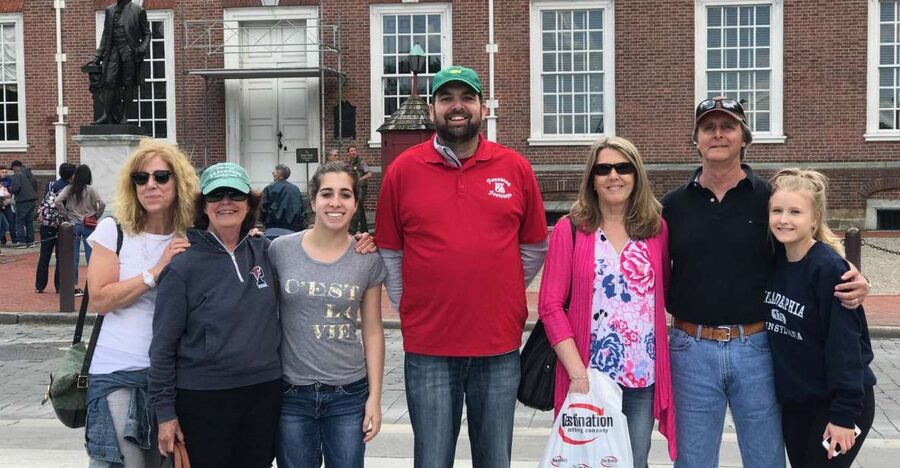
Independence Hall is the emotional center of the walk. Inside its rooms, the Declaration of Independence and the Constitution were debated and adopted. On this tour, you learn about that importance from the surrounding area rather than receiving a full interior visit.
That distinction is worth planning around. Independence Hall tickets are not included, and the tour does not replace an official admission visit. If standing inside the building is important to you, arrange a separate ticket and check the schedule before you arrive. The walking tour can give you the background first, which may make the interior visit more meaningful.
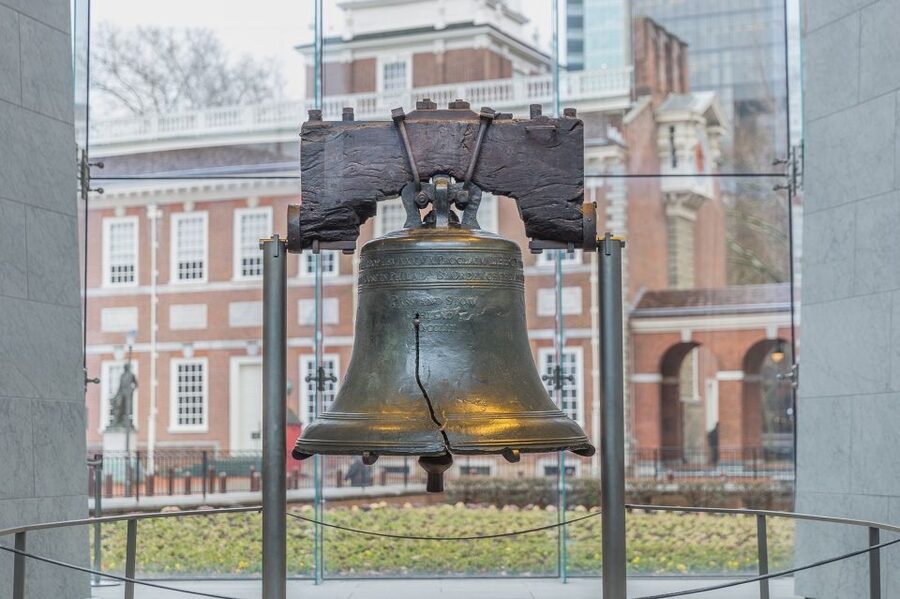
The Liberty Bell is another major stop. Its cracked surface and association with American independence make it one of the country’s most recognizable symbols. The guide places it in the larger setting of Philadelphia’s revolutionary story instead of treating it as an isolated photo opportunity.
You should expect crowds and city noise around these central sights. One past participant specifically wished for a microphone because busy streets made it harder to hear. If you have trouble hearing, stay close to the guide and choose a quieter position within the group when possible. A smaller group can help, though group size is not guaranteed.
More Old Town Walking Tours in the USA:
- Philadelphia Old City Historic Walking Tour with 10+ Top Sites
★ 5.0 · 2,020 reviews - Underground Vaults Walking Tour in Edinburgh Old Town
★ 4.5 · 8,506 reviews - Prague: 3-Hour Walking Tour of Old Town & Prague Castle
★ 4.7 · 5,696 reviews - Dubrovnik: Old Town Walking Tour
★ 4.8 · 5,174 reviews
Carpenter’s Hall and the less-famous stops
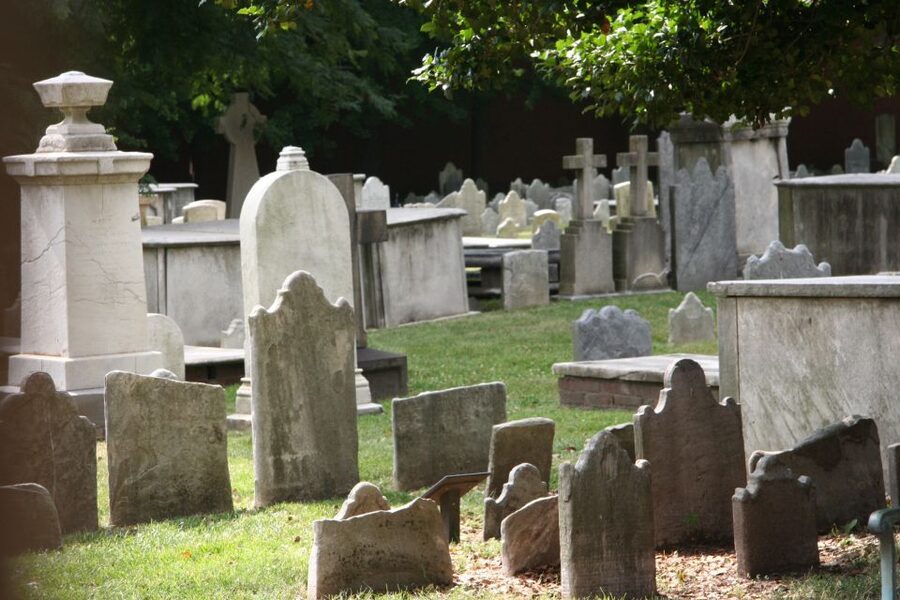
Carpenter’s Hall adds another layer to the story. It is linked to the First Continental Congress, when colonial representatives met before the Declaration of Independence. The stop helps show that the road to independence involved meetings, arguments, and political organizing long before the final break with Britain.
This is where a guide earns the $35 price. A building can look attractive from the pavement, but its importance is not always obvious. A clear explanation turns a façade into a scene in the political story.
The route also includes other locations that may not be at the top of your Philadelphia list. That variety keeps the walk from becoming only a circuit of the three most famous sights. Guides point out architectural details, local stories, and places that you might otherwise miss while moving between Independence Hall and the riverfront.
The route is information-heavy. Several people found it surprising how much they saw and learned in 90 minutes. That is a strength, but it can also feel rushed if you want long pauses for photographs or questions. Think of the walk as an introduction, not a full study of every building.
Elfreth’s Alley gives the walk a different mood
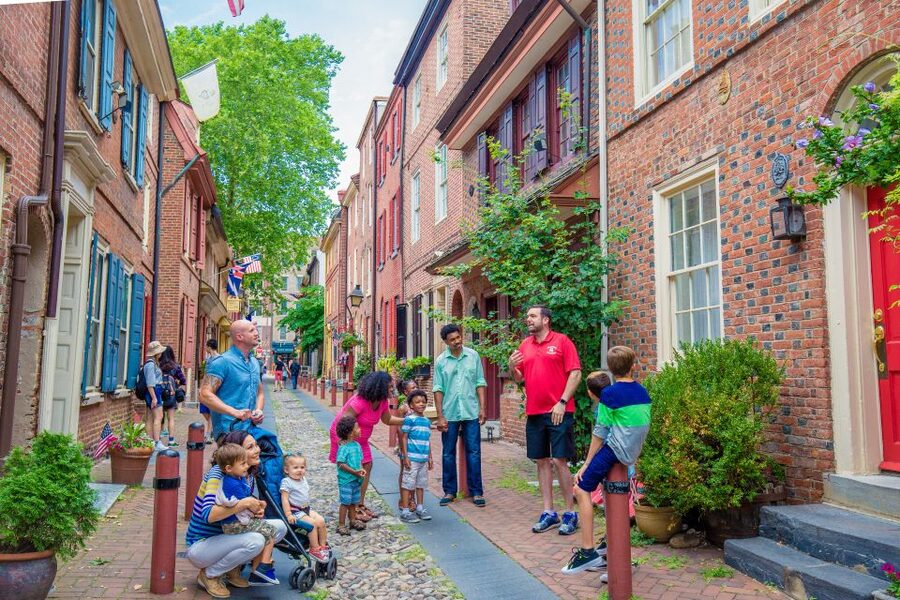
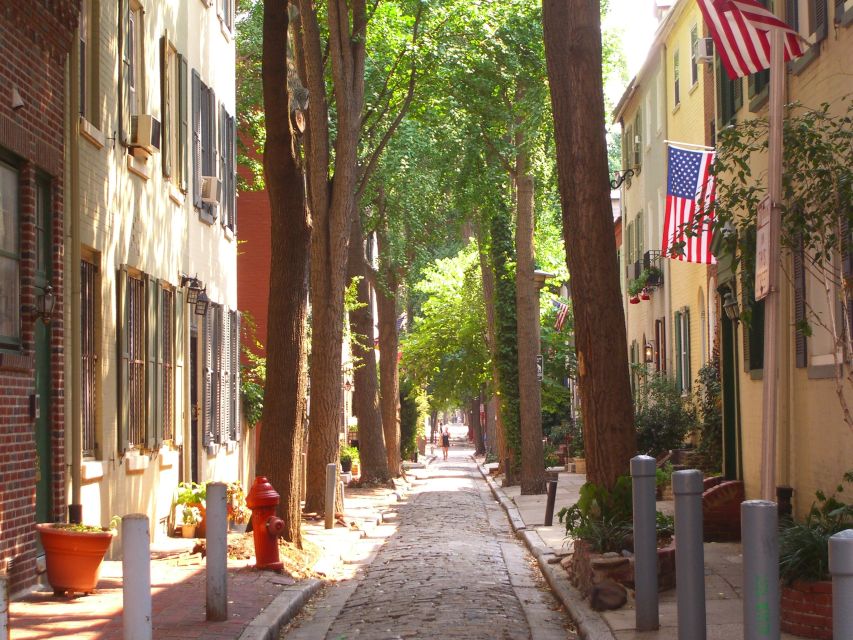
Elfreth’s Alley is one of the most appealing stops because it changes the scale of the experience. Instead of a large civic building connected to national events, you see a narrow residential street lined with historic homes.
The alley helps you picture ordinary city life in the colonial period. The Revolution was shaped by famous politicians, but it also unfolded in streets where tradespeople, families, printers, and merchants lived and worked. That contrast makes the route feel more grounded.
Many people single out Elfreth’s Alley as a favorite stop. I understand why. Independence Hall carries enormous symbolic weight, but Elfreth’s Alley gives you a more intimate sense of old Philadelphia. It is also one of the better places to slow down briefly and take in the setting.
Again, the walking tour does not function as a full interior tour of the homes. If you want to explore a particular site, return later and pay the required admission if available. This two-step approach works well: use the walk to choose what deserves more of your time.
The guide makes the difference
The most praised feature of this experience is the guide. Seamus is often described as approachable, funny, and well prepared. Jay gets praise for combining historical detail with the feel of a good classroom teacher. Greg is credited with making a short tour both informative and entertaining.
That pattern tells you what to expect from the experience. The tour is not a dry lecture, and it is not a stand-up routine with a few historical facts added. The aim is a balance: learn the political story, then hear a joke or memorable anecdote that helps it stick.
This style is especially useful for mixed groups. One family found the tour engaging for a 9-year-old, while other families said teenagers enjoyed it too. Young adults can follow the larger political story, and older visitors can ask questions or focus on architecture and civic history.
Guides also appear to adjust to the group. One participant with a child appreciated the patience shown during questions. Another praised the guide’s awareness of different ages and abilities. You should still expect to walk and stand, but the guide may offer brief chances to sit when needed.
What the 90-minute timing means
Ninety minutes is long enough to establish the story but short enough to fit into a busy Philadelphia day. I would schedule this near the beginning of your visit, especially if Old City is unfamiliar to you.
The route can help you decide how to spend the rest of your day. Afterward, you will know which places deserve an interior visit, where the Liberty Bell area sits, and how Elfreth’s Alley fits into the historic district. One person used the walk as the first activity after arriving in Philadelphia, which is a smart way to get your bearings.
The pace may feel quick in hot weather, rain, or heavy city traffic. A past group completed the tour during a sudden downpour, with the guide keeping the mood light, but weather still affects comfort. Wear comfortable shoes, bring weather-appropriate clothing, and do not assume every stop will provide a place to sit.
You also need to listen carefully. Since there is no stated audio system, street noise may make some explanations harder to catch. Stay near the guide and let the guide know if you cannot hear.
Is $35 a fair price?
At $35 per person, this is a reasonable price for a focused introduction to Old City. You are paying for a live English-speaking guide, a planned route, and the ability to understand the meaning behind many sites in a short period.
The value is strongest if you are in Philadelphia for a day or two, are visiting for the first time, or want a family activity that mixes learning with humor. A self-guided walk costs less, but you would need to research the sites and organize the route yourself. The guide’s storytelling is the main reason to pay.
The price is less attractive if you expect entry to the buildings. Food and drink are not included, and tickets for Independence Hall or other paid attractions are extra. Consider the $35 a fee for orientation and interpretation, not a pass covering Philadelphia’s historic sites.
Who should book this walk?
I would choose this tour for first-time visitors, families with school-age children, teenagers, and anyone who wants a clear overview before exploring on their own. It also suits people who like history presented with humor rather than a formal lecture.
It is a good fit for a short Philadelphia stay. The route covers enough ground to introduce the city’s major themes without taking half a day. It also works well for adults who enjoy asking questions and hearing stories about Benjamin Franklin, the Founding Fathers, and the people who lived in the city.
I would choose something else if your main goal is to spend time inside historic buildings. This tour points you toward those places, but you must arrange and pay for admission separately. It may also disappoint you if you prefer a slow photography walk with long pauses.
Should you book the Revolutionary Walk?
Book it if you want a lively orientation to Philadelphia’s Old City and appreciate a guide who can explain history without making it feel like homework. The $35 fee buys a lot of context in a short time, and the route includes the big names plus worthwhile stops such as Carpenter’s Hall, Christ Church, and the B. Free Franklin Post Office.
Just plan carefully. Wear comfortable shoes, stay close enough to hear, and reserve extra time for any interior attractions you want to enter. If you treat the walk as your introduction to Philadelphia rather than a complete admission tour, it offers strong value and a memorable start to your visit.
FAQ
Where does the Philadelphia Revolutionary Walk start?
The tour starts at the Betsy Ross House in Philadelphia’s Old City district.
How long does the walking tour last?
The tour lasts 90 minutes.
What language is the tour in?
The live tour is conducted in English.
How much does the tour cost?
The listed price is $35 per person.
Does the tour include Independence Hall tickets?
No. Independence Hall tickets are not included.
Do you enter all the historic buildings?
No. The walk primarily shows the sites from outside. Paid admission to additional sites is not included.
Which landmarks does the route cover?
The route includes the Betsy Ross House, Independence Hall, the Liberty Bell, Elfreth’s Alley, Christ Church, the B. Free Franklin Post Office, and Carpenter’s Hall.
Is food or drink included?
No. Food and drink are not included.
What should you wear or bring?
Bring comfortable shoes because the experience is a walking tour.
Can you cancel for a refund?
You can cancel up to 24 hours in advance for a full refund. You can also reserve now and pay later.
New walking tours around the USA
- NYC: Walking Tour with Local Guide and 30+ Top NYC Sights★ 4.5 · 248 reviews
- New York City: Gangsters and Ghosts 2-Hour Walking Tour★ 4.7 · 615 reviews
- NYC: History of Slavery & Underground Railroad Walking Tour★ 4.7 · 87 reviews
- New York City’s Hell’s Kitchen: Walking Food Tour★ 4.8 · 200 reviews
- New York City: Central Park Walking Tour★ 4.7 · 82 reviews
- NYC: Brooklyn Bridge and DUMBO Guided Walking Tour★ 4.8 · 93 reviews
- New Orleans: Witches Coven Garden District Walking Tour★ 4.9 · 113 reviews
- New Orleans: French Quarter Ghost and Legends Walking Tour★ 4.3 · 129 reviews
Philadelphia Walking Tours, side by side.
Philadelphia Old City Historic Walking Tour with 10+ Top Sites
Read our review →
The Constitutional Walking Tour of Philadelphia
Read our review →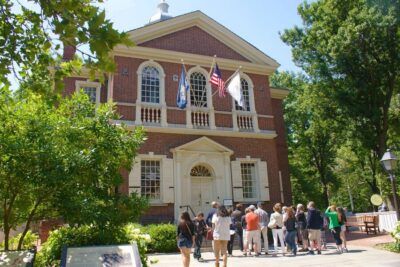
Philadelphia: History, Highlights & Revolution Walking Tour
Read our review →Lists this walk sits on