
Review · NORWAY
Bergen: Past & Present Small Group Guided Walking Tour
Bergen’s past and present meet on this compact walk. You begin with kings, fortresses, and Hanseatic traders, then leave the postcard streets to see residential lanes where locals live. I like the clear change of pace, from medieval Norway to house prices, cafés, work, and daily life in a rainy city.
I also like the practical help built into the walk. Guides such as Jeff, Janine, Emma, Eirik, Magda, and Serena are praised for useful restaurant, coffee, museum, and photo tips. The main drawback is simple: cobblestones, hills, cold, and wet weather make this a poor fit if you have mobility limits or dislike walking outdoors in rain.
Key points at a glance
- Bergenhus Fortress opens the story: Spend about 30 minutes with Bergen’s medieval past, Norway’s brief capital period, wartime occupation, and the fortress as it is used today.
- Bryggen is more than colorful wooden buildings: Learn how trade shaped Bergen and how the Hanseatic League operated here for about 400 years.
- The second half feels local: Quiet lanes around Wesenbergsmauet and Fjellgaten bring you into residential Bergen, away from the busiest sightseeing streets.
- You get present-day advice: Guides point out cafés, restaurants, museums, photo spots, and ways to spend the rest of your visit.
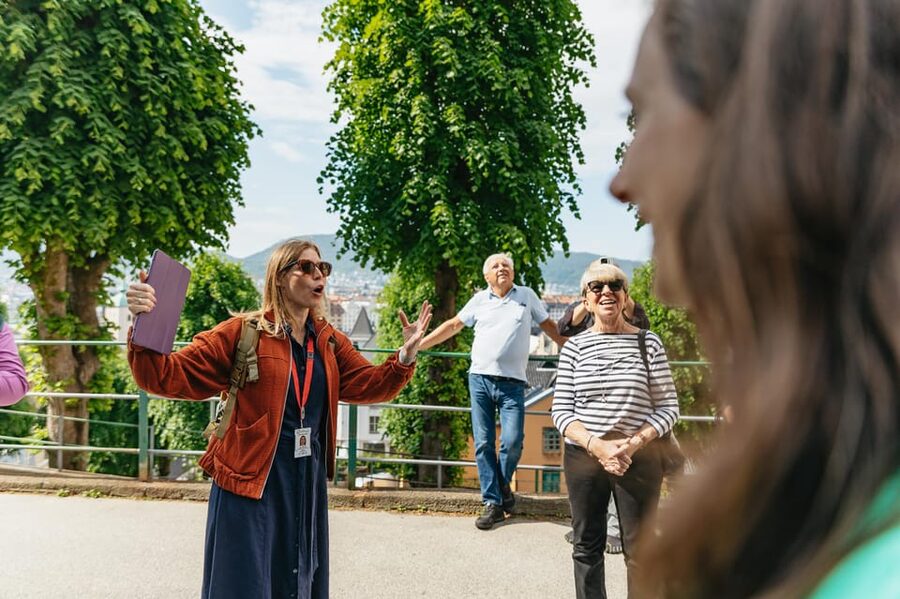
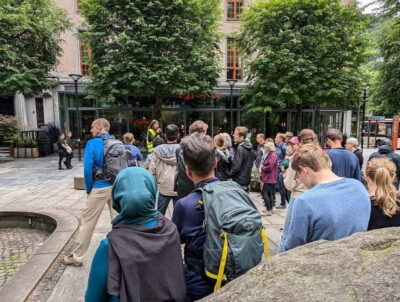
- Small groups make a difference: The group is kept limited so you can ask questions and move through residential areas without feeling like part of a crowd.
- Weather is part of the deal: Bring an umbrella and wear shoes that can handle uneven stone and uphill streets.
Why this two-hour walk works so well in Bergen
Bergen is easy to admire and surprisingly easy to misunderstand. You can photograph Bryggen, stroll the harbor, and ride Fløibanen without learning why the city grew where it did. This walk gives those sights a connecting thread.
The first half explains Bergen as a seat of power and trade. The second half asks a more useful question: what is it like to live here now? That structure keeps the tour from becoming a list of dates and names. You get a sense of how the old city still shapes the modern one.
The guides are authorized to operate in Bergen and live locally year-round. That matters because the tour is not limited to famous sights. The route includes side streets, residential corners, and the sort of details you are unlikely to notice while walking alone.
At $26 per person, the price is fair for two hours with a licensed guide. You are not paying for museum admission, and none is needed for the walk. You are paying for context, local direction, and a route that combines major sights with places you might otherwise skip.
The 4.9 rating from 1,609 reviews reflects a very consistent experience. Guide quality is a major part of that. Janine is often praised for warmth and clear explanations, Jeff for humor and depth, Emma for a good mix of history and modern life, and Eirik for strong storytelling. Other named guides include Serena, Magda, Anais, Dane, Neal, and Erik.
More Small-Group Walking Tours in the world:
- Amsterdam Anne Frank: Small-Group Walking Tour & Local Guide
★ 4.8 · 12,789 reviews - Boston: Freedom Trail History Small Group Walking Tour
★ 5.0 · 6,450 reviews - New Orleans Food Walking Tour of the French Quarter with Small-Group Option
★ 5.0 · 6,118 reviews
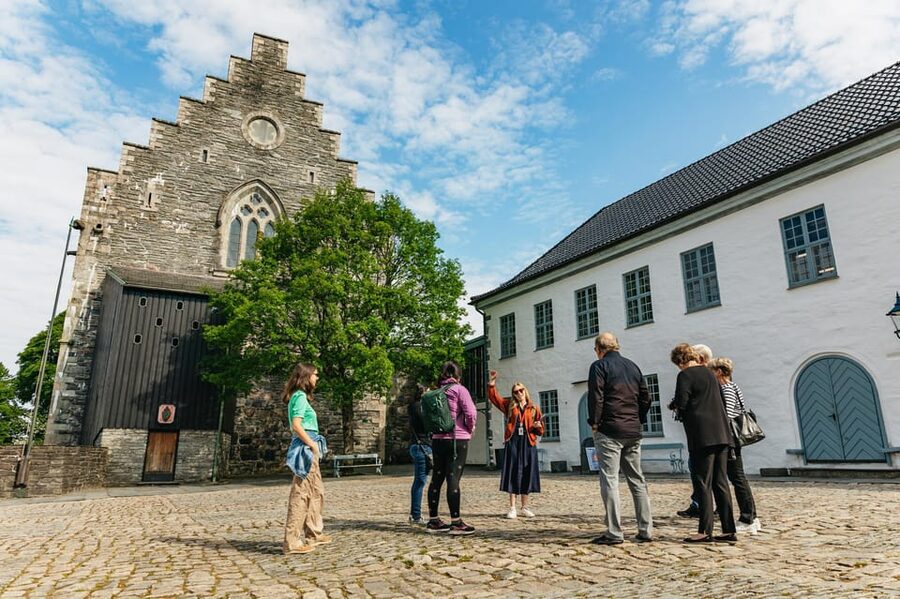
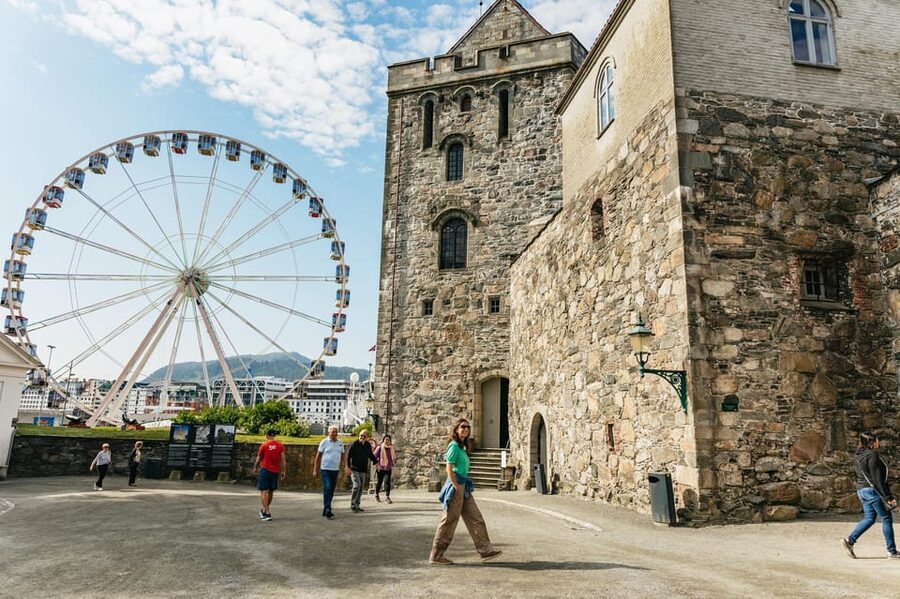
Starting at Bergenhus Fortress
The tour begins at one of two starting options near Bradbenken 1, with the exact meeting point depending on the booking you choose. From there, the walk heads into Bergenhus Fortress for roughly 30 minutes.
This is the right place to begin because Bergen’s political story starts here. You learn about medieval Bergen and its short period as Norway’s capital. King Håkon Håkonsson is part of the story, including his role in building up the fortress and strengthening Norway’s place in Europe.
One memorable detail is the early description of Bergen as a rainy city, connected with Håkon’s coronation. It is a small point, but it gives the weather a long local history. If rain arrives during your walk, you can feel that you are participating in a Bergen tradition rather than encountering an unusual inconvenience.
The fortress section also reaches beyond the Middle Ages. You hear about Norway under Danish and Swedish rule, the Nazi occupation, and the ways the fortress is used today. That broad time span helps you understand Norway as a country shaped by outside powers as well as its own rulers.
You should not expect a museum visit or a long indoor stop. The activity includes no entrance tickets, and the focus is an outdoor explanation of the complex. In wet or cold weather, that makes an umbrella and warm layers important.
Bryggen and 1,000 years of trade
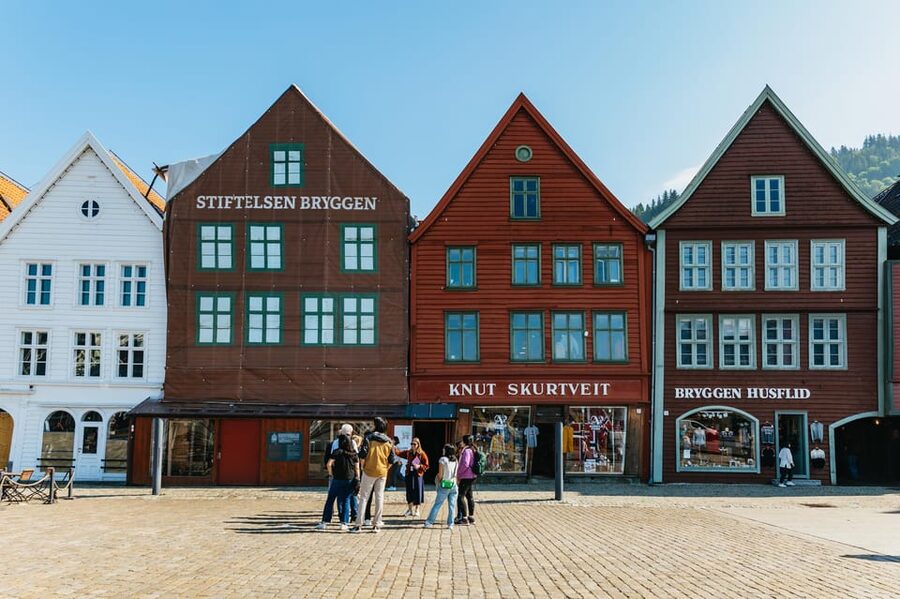
From the fortress, the route continues to Bryggen, Bergen’s UNESCO World Heritage Site. Allow about 30 minutes here for a guided walk, sightseeing, and photographs.
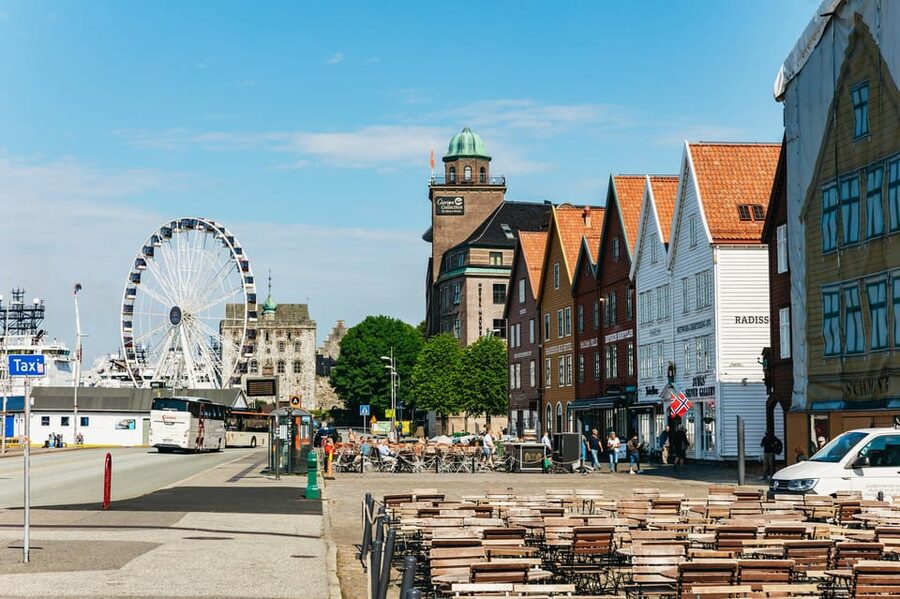
Bryggen is one of those places that can look familiar before you know anything about it. The wooden buildings are photogenic, but the real point is the trade network behind them. Bergen grew because of its position on the coast and its role as a major trading port.
The guide explains the Hanseatic League, the German trading organization that operated in Bergen for around 400 years. You learn why the city was founded and how commerce shaped its streets, buildings, and social life.
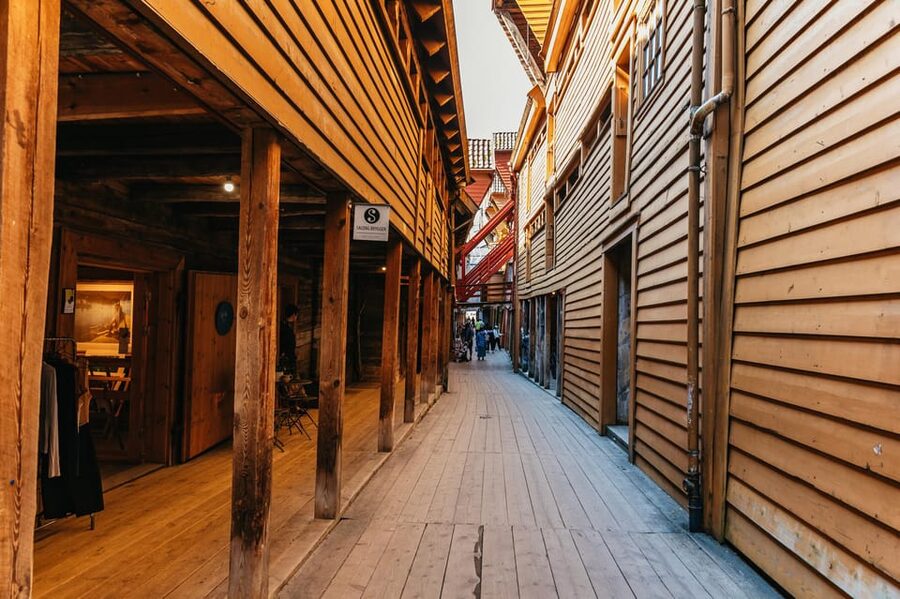
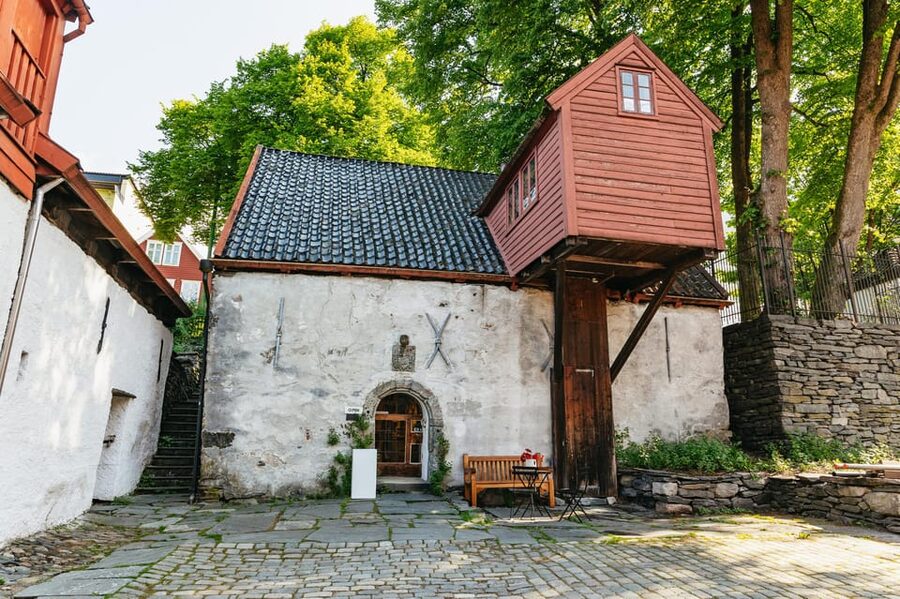
The old alleys are especially useful here. They are narrow, uneven, and full of atmosphere, but this is not just a photo opportunity. The guide helps you see how the buildings functioned and why the area developed in such a tight pattern.
The walk later passes St. Mary’s Church, described as the oldest building in Bergen. That gives the historical portion a natural finish. You have moved from political power at the fortress to commercial power at Bryggen, then to one of the city’s oldest surviving religious buildings.
Bryggen can be busy, so the small group format helps. You can hear the guide more easily and stop for photographs without being lost in a large crowd. Still, this is a walking tour, not a private photo session. You will need to keep moving with the group.
Wesenbergsmauet and the quieter side of town
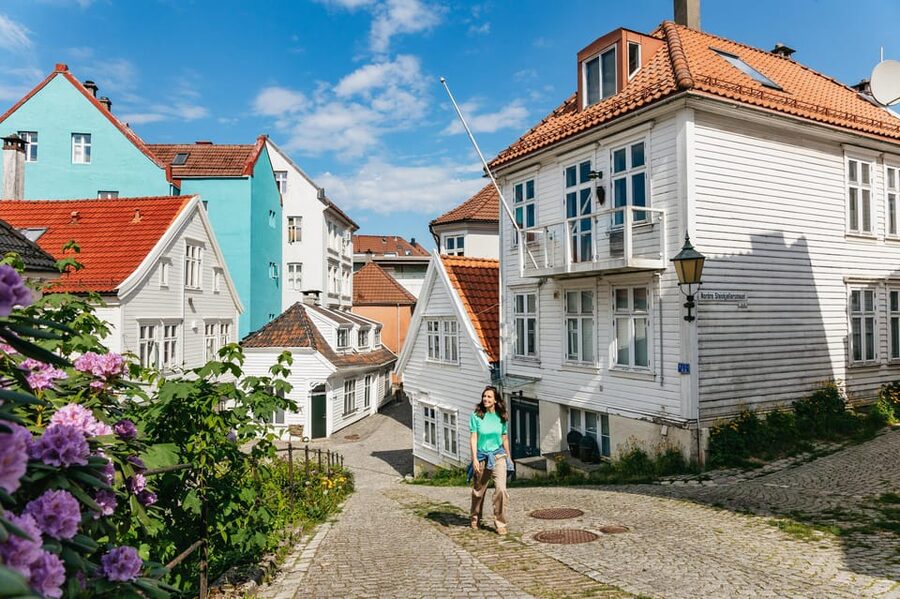
The second half changes character. Around Wesenbergsmauet 16, the route leaves the most obvious sightseeing area and moves into a neighborhood setting.
This is where the tour earns its past and present title. The guide talks about house prices, employment, leisure, and the everyday realities of living in Bergen. These subjects may sound ordinary, but they often tell you more about a city than another monument does.
The area is also described as one of the most picturesque parts of Bergen. Expect lanes and buildings that reward a slower look. You may see local cats along the way, a small detail that adds charm without turning the walk into a staged attraction.
The exact path can vary because the guide chooses it based on local interests and experience. That gives the walk some personality, though it also means you should not expect every departure to follow an identical route. The strength is local judgment. Your guide can choose streets that suit the weather, the group, and what is interesting that day.
A residential route requires courtesy. Keep your voice down when appropriate, avoid blocking doorways, and remember that people live in these attractive streets. The limited group size is meant to keep the walk comfortable for the neighborhood as well as for you.
More walks with a guide around the world:
- Magical London: Harry Potter Guided Walking Tour
★ 4.7 · 22,044 reviews - History and Hauntings of Salem Guided Walking Tour
★ 5.0 · 14,564 reviews - Edinburgh: Harry Potter Magical Guided Walking Tour
★ 4.8 · 11,944 reviews - Edinburgh Castle: Guided Walking Tour with Entry Ticket
★ 4.7 · 11,699 reviews
Fjellgaten and Fløibanen
The next listed stops are around Fjellgaten 2 and Fløibanen. These sections include photo stops, guided commentary, and some uphill walking.
Fjellgaten gives you a different view of Bergen’s built environment. Instead of seeing the city only from the waterfront, you get a sense of how streets climb into the hills and how daily life is arranged around that terrain. The uphill sections are part of the appeal, but they are also the main physical challenge.
Fløibanen is one of Bergen’s best-known attractions, but on this tour it is a reference point and viewing area rather than a separate ride. The walk includes a guided stop and photographs, not an included ticket for the funicular. If you plan to ride it later, the guide can help you understand where it fits into your day.
These stops are useful for orientation. Bergen’s harbor, old quarter, hills, and residential streets make more sense when you see how close they are to one another. You also gain photo opportunities beyond the standard Bryggen view.
Take your time on uneven ground. In winter, ice can add another problem. One guide was specifically praised for taking care with icy paths, but you should still bring stable footwear and walk at a pace you can manage.
Skostredet, cafés, and the end near the fish market
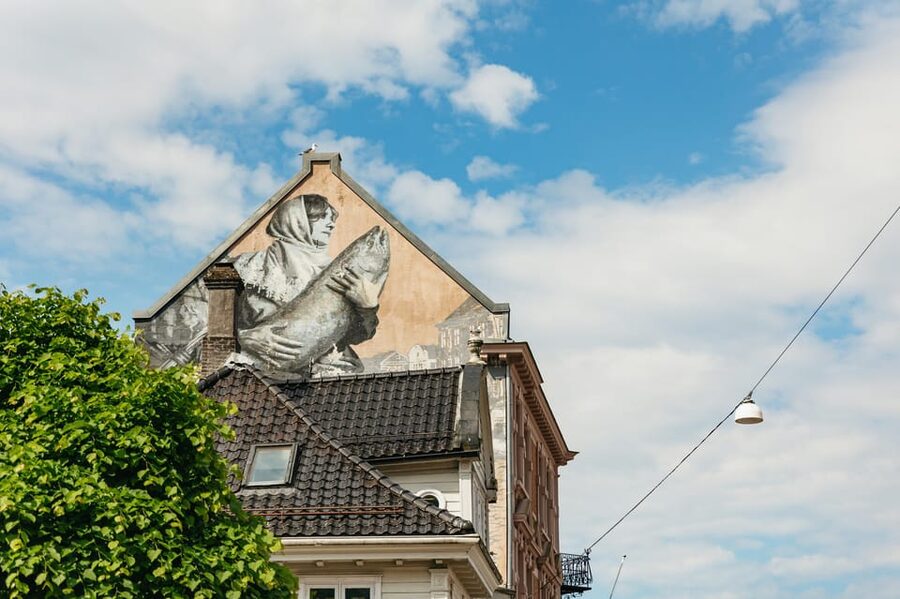
The walk continues through Skostredet, another stop with a visit, guided explanation, and photographs. This area helps connect Bergen’s older streets with its current food and social life.
By this point, the guide can give more direct advice about how to spend the rest of your visit. Coffee shops, lunch places, dinner spots, museums, shopping, and additional sights all come up naturally. Several guides are singled out for restaurant recommendations, and one suggestion led to a particularly good local meal at Pingvinen.
The tour ends near Strandkaien 1A, by Bergen’s fish market. That is a practical finish. You are close to the harbor and within easy reach of food, further walks, and other central sights.
I recommend taking notes during the final part. The advice is one of the most useful benefits of booking the walk early in your stay. You can use those suggestions for the rest of the day rather than trying to remember them later.
The route does not include a meal, museum admission, or funicular ticket. That keeps the $26 price down, but you should budget separately if you want to eat at the fish market, visit museums, or ride Fløibanen.
What the guides do best
The strongest feature is the guide’s ability to connect facts to ordinary life. A good explanation of the Hanseatic League is useful. It becomes more memorable when the same guide can also explain what people do for fun, how they handle constant rain, or why housing costs matter.
The named guides have different personalities. Jeff is praised for humor, steady pacing, and a strong grasp of the city. Janine brings a personal touch and gives practical advice. Emma mixes history, modern life, and recommendations. Eirik adds stories and humor to the timeline. Serena is described as warm and helpful when planning the rest of a stay.
Anais is another interesting possibility. She has a background in medieval European history and is known for connecting Bergen’s story with wider European events. Dane is praised for passion and funny historical stories, while Magda is noted for patience in cold and icy conditions.
You cannot choose a particular guide from the information provided, so treat the names as examples of the team rather than a promise. The consistent benefit is the local point of view and the chance to ask questions.
Pace, weather, and group size
Two hours is a good length for this route. You cover the central historical sights without giving up an entire day, and you get enough time for modern neighborhoods and questions.
The pace is intended to allow photographs and discussion. One group of 10 was described as a comfortable size, but the exact number can vary. The operator limits group size because part of the route passes through a residential neighborhood and because questions are encouraged.
The tour runs in all weather. Bergen rain is not a minor possibility, so bring an umbrella. Wear waterproof outer layers if you have them, and choose shoes with grip for cobblestones, slopes, and possibly ice.
This activity is not suitable for people with mobility impairments. It includes uneven cobbled paths and uphill sections. If you walk comfortably but slowly, ask questions about the route when you arrive and stay aware of the terrain.
The languages offered are English and German. The guide is live, so you can ask about places you have just seen, restaurants you are considering, or how to arrange the rest of your day.
Who should book this Bergen walking tour?
I would choose this tour near the beginning of a Bergen visit. The historical overview gives you a useful frame, while the food and café advice can shape your next meals. It also points you toward streets and areas you might not find on your own.
It suits first-time visitors, history fans, cruise passengers with a few hours in town, and anyone who prefers conversation to an audio guide. It is also a good choice if you want to see Bryggen but do not want your entire Bergen experience to remain on the main tourist route.
You may want a different activity if you need indoor shelter, dislike hills, or want extended time inside museums and historic buildings. This is an outdoor orientation walk, not a full architectural tour or a museum visit.
Should you book it?
Book it if you want Bergen explained by someone who lives there, not simply presented as a set of postcard views. The combination of Bergenhus Fortress, Bryggen, old lanes, residential streets, and practical recommendations gives you a strong first look at the city.
At $26, the value is especially good if you use the advice afterward. Plan to ask about cafés, restaurants, museums, photo spots, and local neighborhoods. Bring an umbrella, accept that your shoes may get wet, and be ready for hills. If those conditions suit you, this is a smart two-hour introduction to Bergen.
FAQ
How long does the Bergen Past and Present walking tour last?
The tour lasts two hours.
How much does the tour cost?
The listed price is $26 per person.
What languages are available?
The live tour is offered in English and German.
Where does the tour start?
There are two possible starting options, and the meeting point may vary depending on the option you book. One listed location is Bradbenken 1, at Norsildmel AS.
Where does the tour finish?
The tour has two possible drop-off locations. One listed ending point is Strandkaien 1A, near Bergen’s fish market.
Does the tour enter museums or historic buildings?
No. Entrance into museums and buildings is not included and is not needed for this walking tour.
What sights are included?
The route includes Bergenhus Fortress, Bryggen, Wesenbergsmauet, Fjellgaten, Fløibanen, and Skostredet. It also passes St. Mary’s Church during the historical portion.
Is the tour suitable for people with mobility impairments?
No. The route includes uneven cobblestone paths and uphill sections, and the activity is not suitable for people with mobility impairments.
What should I bring?
Bring an umbrella. The tour operates regardless of the weather, and Bergen is known for frequent rain.
Can I cancel the booking?
You can cancel up to 24 hours in advance for a full refund. Reserve now and pay later is also available.
New walking tours around the world
- Niagara Falls, Canada: White Water Walk Entry Ticket★ 4.5 · 147 reviews
- Zadar: Food Tasting & Old Town Walking Tour★ 5.0 · 94 reviews
- Niagara Falls: Walking Tour, Journey Behind Falls, & Cruise★ 4.8 · 773 reviews
- NYC: Walking Tour with Local Guide and 30+ Top NYC Sights★ 4.5 · 248 reviews
- New York City: Gangsters and Ghosts 2-Hour Walking Tour★ 4.7 · 615 reviews
- NYC: History of Slavery & Underground Railroad Walking Tour★ 4.7 · 87 reviews
- New York City’s Hell’s Kitchen: Walking Food Tour★ 4.8 · 200 reviews
- New York City: Central Park Walking Tour★ 4.7 · 82 reviews
Norway Walking Tours, side by side.
Walking Tour in Bergen of the Past and Present
Read our review →
Oslo: Guided Walking Tour of Central Oslo with Local Guide
Read our review →
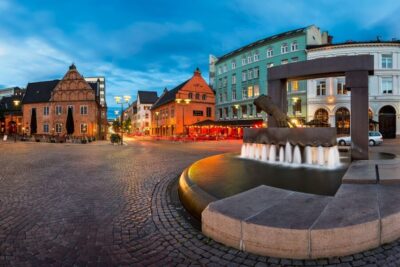
Oslo: Historic Myths & Legends Evening Walking Tour
Read our review →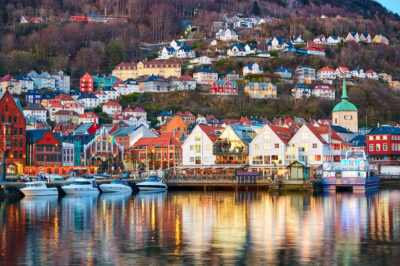
Bergen: Sightseeing Walking Tour with Ferry Ride
Read our review →
Lists this walk sits on