Review · CHARLESTON
Hidden Alleyways and Historic Sites Small-Group Walking Tour
Charleston’s best surprises are often tucked beside the famous sights. This two-hour walk takes you through narrow lanes, quiet passages, and residential streets that are easy to miss when you stick to the main roads. You’ll see Rainbow Row and the Old Exchange, but the hidden alleyways are the real draw.
I like the small group, capped at 13 people, and the chance to learn from a local guide rather than follow a long list of dates. I also like the price: $34 buys a useful first look at central Charleston. The main caution is that the history can depend heavily on your guide, and the tour does not enter any buildings.
Key points to know before you book
- Four to six alleys: The exact lanes vary by guide, but the route focuses on passages you may not notice on your own.
- A useful first-day walk: The tour begins and ends at 122 East Bay Street, making it easy to use for getting your bearings.
- Small group format: With no more than 13 people, you should have a fair chance to hear the guide and ask questions.
- Major sights plus quiet corners: Rainbow Row, the Old Exchange, St. Philip’s Episcopal Church, and residential South of Broad all appear alongside lesser-known lanes.
- No interior admissions: You see the Old Exchange and Provost Dungeon and other buildings from outside only.
- Guides with strong personalities: Duggar, Dennis, Evans Byrd, Al Mixson, Mark Jones, and Bruce have each been praised for storytelling, local knowledge, and personal attention.
Why Charleston’s side lanes make a better walk
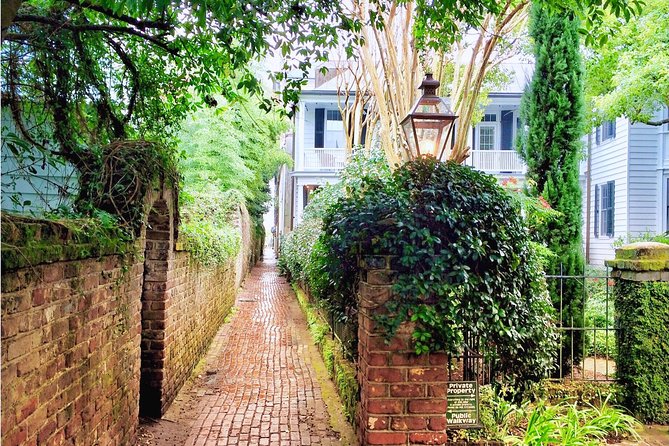
Charleston’s grand houses get most of the attention, but the city’s narrow alleys often reveal more about how the old center works. They connect streets, frame small gardens, and give you a close look at brickwork, gates, plants, and the backs and sides of historic buildings.
I like that this is not simply a march from one famous address to another. The guide points out places that barely seem like streets at all, then ties them to the city’s colonial, Revolutionary, and Civil War eras. That mix gives the walk a good rhythm: a major landmark, a quiet lane, a story, and then another turn into the old district.
The route covers the South of Broad area and the French Quarter. Those names matter because they are not just labels on a map. They identify two of the most atmospheric parts of Charleston’s historic center, where residential streets, churches, old commercial buildings, and lanes sit close together.
The experience is educational, but it is not presented as a classroom lecture. Several guides are described as warm, funny, passionate, and good at answering questions. Duggar is praised for making personal connections with the group, while Dennis is known for lively facts and an easy manner. Evans Byrd has also added plant knowledge and observations about Charleston’s gardens and trees.
Guide assignment matters here. One guide may focus on architecture and city politics, while another may spend more time on plants, local families, or lesser-known characters. That variety is part of the charm, though it also means the exact tone and emphasis are not fully predictable.
More History Walking Tours in the USA
- History and Hauntings of Salem Guided Walking Tour
★ 5.0 · 14,564 reviews - Boston: Freedom Trail History Small Group Walking Tour
★ 5.0 · 6,450 reviews - Historic Charleston Guided Sightseeing Walking Tour
★ 5.0 · 6,216 reviews
Starting beside the Old Exchange and Provost Dungeon
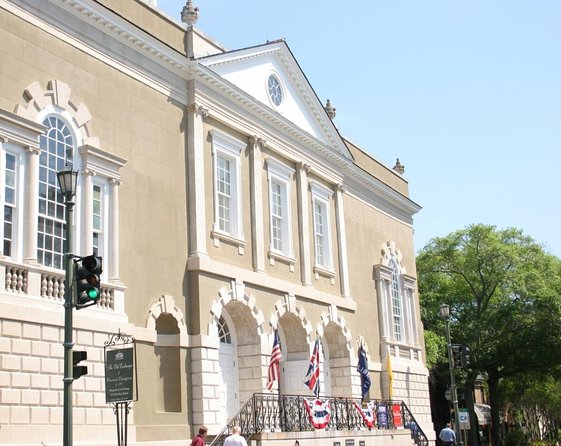
You meet at the north side of the Old Exchange and Provost Dungeon at 122 East Bay Street. This colonial building has a 300-year history tied to pirates, patriots, and presidents, so it is a fitting place to begin a walk through old Charleston.
The building is an exterior stop. You do not go inside, and admission is not included. That distinction is important if you hoped to tour the dungeon itself. The guide uses the site as a setting for stories and historical context before leading the group into the surrounding streets.
The first stop is listed at about 10 minutes, but the full walk can run a little over two hours. One group finished roughly 20 minutes late, so avoid booking a tight lunch reservation or timed attraction immediately afterward.
Starting on East Bay Street also makes practical sense. The route stays in the historic center, and the activity ends back at the same meeting point. You will not need a separate ride to retrieve a car or find your way back across town.
South of Broad and the quiet residential lanes
The South of Broad section is where the tour begins to feel different from a standard downtown stroll. You’ll explore four to six alleyways and lanes, though the exact choices vary with the guide. Some are in residential areas, so the walk offers a look at Charleston beyond its most photographed facades.
The appeal is not simply finding a secret shortcut. A guide can explain why these narrow passages exist, how they fit the street plan, and what makes the nearby houses and gardens important. You might otherwise walk past an opening without realizing it is open to pedestrians.
This part of the route also rewards people who enjoy small details. Guides have pointed out trees, plants, private gardens, architecture, and local stories. You should be respectful around homes, since portions of the route pass through lived-in neighborhoods rather than a museum complex.
The walk is described as easy, but it still involves about two hours on your feet. Charleston’s weather can make the same route feel very different from one day to the next. Wear comfortable shoes, bring water, and dress for the forecast. The tour operates in all weather conditions unless poor weather causes cancellation.
Rainbow Row, seen from the street
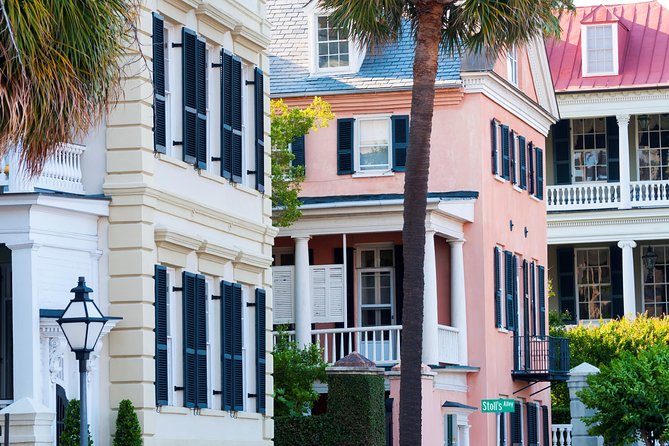
Rainbow Row is one of Charleston’s signature sights: a long run of Georgian row houses in varied colors along East Bay Street. It is often photographed, but a guide gives the scene a better sense of place by explaining how it fits into the old city.
You stop here for about 10 minutes. You do not enter any of the buildings, and there is no included interior visit. That makes this portion quick and visual, best suited to people who want context and photographs rather than a house tour.
Rainbow Row is also a good example of the balance built into this walk. You get the famous address, but it does not take over the whole experience. After seeing a landmark that appears in nearly every Charleston guidebook, you turn back toward lanes and passages that are easier to overlook.
Bring a phone or camera if you like taking architectural photographs, but keep your attention on the guide too. The value here is not just the colorful row. It is learning how the well-known view relates to the surrounding historic district.
More Small-Group Walking Tours in the USA
- New Orleans Food Walking Tour of the French Quarter with Small-Group Option
★ 5.0 · 6,118 reviews - The Full Revolutionary Story Epic Small Group Boston Walking Tour
★ 5.0 · 2,356 reviews - Boston: Freedom Trail History Small Group Walking Tour
★ 4.9 · 1,590 reviews - Beacon Hill Boston History + Photo Walking Tour (SMALL Group)
★ 5.0 · 163 reviews
The French Quarter and St. Philip’s Episcopal Church
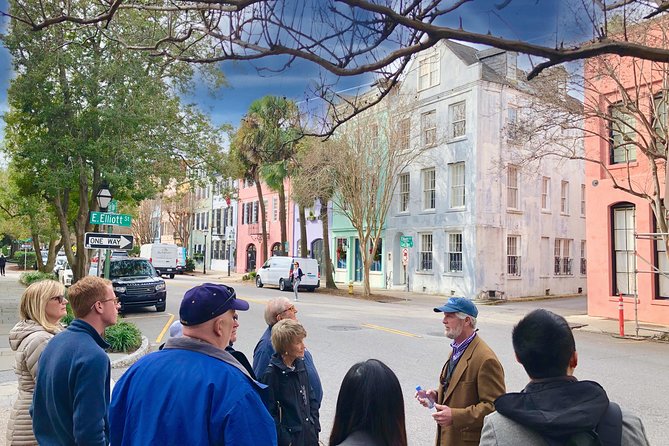
The French Quarter section includes several points of interest and another four to six alleyways. The name can suggest a single attraction, but this is really a walk through an older part of central Charleston, with streets, churches, buildings, and lanes connected by the guide’s narration.
St. Philip’s Episcopal Church is one of the notable sights along the broader route. The church helps anchor the story of Charleston’s civic and religious life, while the nearby lanes bring the scale back down to street level. You move between public landmarks and quiet corners instead of spending the entire time at one monument.
This is where the guide’s storytelling makes the greatest difference. The tour covers the founding of Charleston as a colony and moves through Revolutionary and Civil War events, along with anecdotes about people and places. Some guides also bring in the lives of unsung figures, local plant life, and present-day Charleston.
If you want a tightly scripted architectural tour, the changing route may feel less exact than expected. The itinerary is deliberately flexible, and the guide decides which lanes to use. I see that as a benefit for repeat visitors, though first-time visitors should understand that the exact sequence is not fixed.
Philadelphia Alley and the appeal of the unexpected
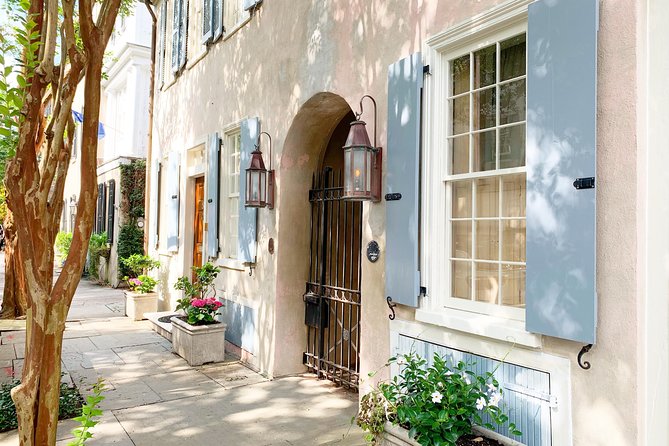
Philadelphia Alley is one of the possible alley stops, not a guaranteed final destination on every departure. In general, you should expect four to six different alleys or lanes across the full walk, with stops changing by guide.
That flexibility keeps the experience from feeling like a checklist. The guide can choose passages that fit the group, the day, and the available route. It also means you should not book this tour solely to see one specific alley. Book it for the larger idea: a guided look at Charleston’s small-scale streets and overlooked corners.
Philadelphia Alley is a good example of why this experience works best with a guide. A narrow passage may look pleasant but ordinary if you do not know its story. With context, it becomes part of the city’s larger record of commerce, neighborhoods, movement, and change.
The stop is listed at about 10 minutes, but the pace throughout is relaxed. One guide may pause for questions, while another may add a plant or architecture note. That helps explain why the walk can sometimes run beyond the advertised two hours.
What the history covers, and what to consider
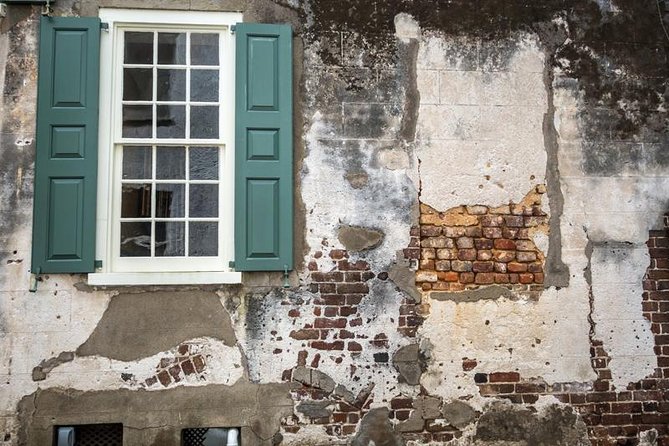
The tour covers Charleston from its colonial beginnings through the Revolutionary and Civil War periods. You’ll hear facts and anecdotes rather than only a string of dates. The best guides connect major events to streets, buildings, families, and ordinary spaces.
I do want to flag an important limitation. The historical treatment may not always give equal attention to every part of Charleston’s past. One rating specifically criticized an emphasis on Confederate history and the lack of discussion about Native people and slavery. That concern matters in Charleston, where any honest account should address the people and systems that shaped the city, not only its buildings and military stories.
Guide style can affect how fully those subjects are handled. Some guides have been praised for telling stories about unsung figures and for offering a broad account from the colonial era to the present. Still, if you want a tour centered specifically on African American history, slavery, Native history, or the Civil War, this walk may not meet your needs on its own.
I would use it as a general orientation tour, then choose a more focused museum or walking experience if you want to study those subjects in greater depth. That approach gives you the pleasant street-level introduction while avoiding the mistake of treating one two-hour walk as the whole story of Charleston.
Group size, pace, and guide style
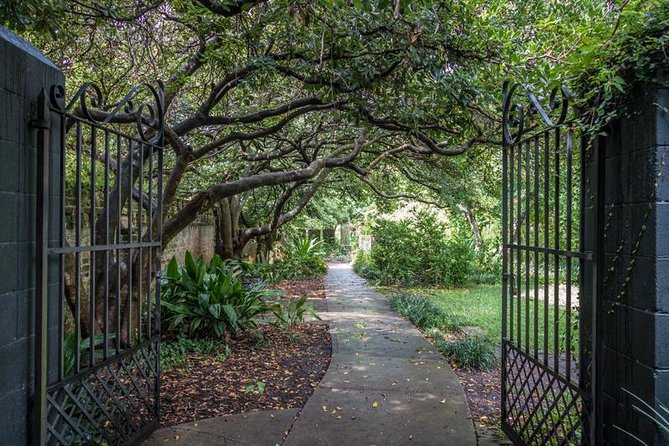
The maximum group size is 13 people. That is small enough for a more personal feel without making the tour private. You should be able to hear the guide more easily than on a large coach-style walk, and there is room for questions.
The walk is suitable for most people who can manage two hours on foot. Children must be accompanied by an adult, and service animals are allowed. Public transportation is nearby, and the round-trip format simplifies the end of the outing.
The strongest guide names associated with this experience include Duggar, Dennis, Evans Byrd, Al Mixson, Mark Jones, and Bruce. Duggar is often singled out for storytelling, warmth, and personal attention. Dennis is praised for making history fun, while Al Mixson is noted for his knowledge of architecture and evident love of Charleston.
Evans Byrd adds an unusual angle through horticulture and plant knowledge. Bruce brings the perspective of a multigenerational Charleston family, and Mark Jones is praised for an informative, engaging approach. You cannot assume which guide you will receive, but those names give you a sense of the range of personalities involved.
Is $34 a fair price?
At $34 per person, I consider this good value if you want orientation, local context, and a route you could not easily reproduce alone. The walk includes a professional licensed local guide and a small group, with no separate transportation costs during the tour.
The price does not include entry to the Old Exchange and Provost Dungeon or any other building. That is not a problem if your goal is outdoor sightseeing, but it matters if you want interiors. You may need to budget separately for museums and house tours.
The strongest value comes from taking the walk early in your stay. You’ll learn the basic shape of the historic center, notice alleys you can revisit, and get ideas for where to return with your own camera. One useful strategy is to book it on your first day, then use the rest of your visit to explore favorite stops at your own pace.
The experience is highly rated, with a 4.9 rating from 2,335 ratings and 98 percent of customers recommending it. Those numbers suggest dependable satisfaction, but they do not remove the need to choose based on your interests. The history coverage and guide assignment remain the two main variables.
Practical details for a comfortable walk
The tour is offered in English and uses a mobile ticket. Confirmation is provided when you book, and the meeting point is 122 East Bay Street. The activity ends at that same location.
Wear shoes that will stay comfortable for two hours. Bring a water bottle, especially in warm weather, and dress for changing conditions because the walk runs outdoors in all weather unless poor weather forces cancellation.
Free cancellation is available up to 24 hours before the start time. Cancel within 24 hours and you will not receive a refund. If poor weather or an insufficient number of bookings cancels the activity, you will be offered another date or experience, or a full refund.
Who should book this Charleston walk?
I would choose this tour if you want a gentle introduction to Charleston’s historic center and prefer stories to silent sightseeing. It suits first-time visitors, couples, families with older children, solo visitors, and anyone who enjoys architecture, gardens, local characters, and unusual street layouts.
It is also a good fit if you like small groups and do not mind that the route changes. The experience gives you major sights such as Rainbow Row while spending real time in alleys and residential areas.
I would think twice if you need wheelchair-specific route details, want to enter historic houses, or expect a tightly fixed itinerary. I would also pair it with a more focused history experience if slavery, Native history, or African American history is your main interest.
For most visitors, the smartest plan is simple: take the walk early, listen closely, note the lanes you want to revisit, and leave room afterward. At $34, it is an easy way to turn Charleston from a pretty collection of streets into a city with a clearer sense of place.
FAQ
Where does the Charleston alleyway tour begin?
The tour begins at the north side of the Old Exchange and Provost Dungeon, located at 122 East Bay Street, Charleston, South Carolina.
Where does the tour end?
The activity ends back at the meeting point on East Bay Street.
How long does the tour last?
The tour lasts approximately two hours. It may run about 20 minutes longer, depending on the guide and pace of the group.
How many people can join the tour?
The group has a maximum of 13 travelers.
Does the tour go inside the Old Exchange and Provost Dungeon?
No. The Old Exchange and Provost Dungeon is an exterior stop, and admission to the building is not included.
Which Charleston sights are included?
The walk can include Rainbow Row, the Heyward-Washington House museum from the outside, St. Philip’s Episcopal Church, Philadelphia Alley, the Old Exchange and Provost Dungeon, and several other historic sites.
How many alleys will I see?
You can generally expect to explore four to six alleys or lanes. The exact stops vary by guide.
What happens if I need to cancel?
You can cancel at least 24 hours before the start time for a full refund. Cancellations or changes made within 24 hours are not refunded or accepted. If poor weather or an insufficient number of bookings cancels the tour, you will be offered another date or a full refund.
New walking tours around the USA
- NYC: Walking Tour with Local Guide and 30+ Top NYC Sights★ 4.5 · 248 reviews
- New York City: Gangsters and Ghosts 2-Hour Walking Tour★ 4.7 · 615 reviews
- NYC: History of Slavery & Underground Railroad Walking Tour★ 4.7 · 87 reviews
- New York City’s Hell’s Kitchen: Walking Food Tour★ 4.8 · 200 reviews
- New York City: Central Park Walking Tour★ 4.7 · 82 reviews
- NYC: Brooklyn Bridge and DUMBO Guided Walking Tour★ 4.8 · 93 reviews
- New Orleans: French Quarter Ghost and Legends Walking Tour★ 4.3 · 129 reviews
- New Orleans: Witches Coven Garden District Walking Tour★ 4.9 · 113 reviews
Charleston Walking Tours, side by side.

Historic Charleston Guided Sightseeing Walking Tour
Read our review →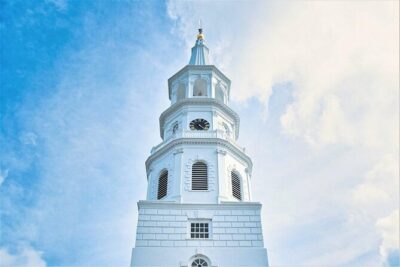
Ghosts of Charleston Night-Time Walking Tour with Unitarian Church Graveyard
Read our review →

Charleston French Quarter or Brunch Food Tour with 7+ Tastings
Read our review →
Charleston Haunted Booze and Boos Ghost Walking Tour
Read our review →
Charleston: Old Walled City Historical Walking Tour
Read our review →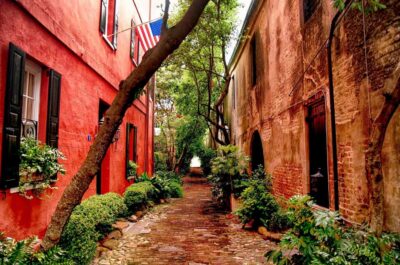
Charleston: History and Architecture Guided Walking Tour
Read our review →