
Review · VIENNA
Vienna Historic Center Small Group Walking Tour
Vienna’s historic center is compact, but its story is not. In about two and a half hours, this walk links imperial palaces, grand museums, political buildings, churches, cafés, and famous composers into one clear route. The small group, capped at 15, makes it easier to hear the guide and ask questions, while audio devices help in noisy streets.
I like the route’s range and its useful starting point for a first visit. You see the Hofburg, Ringstrasse, Rathaus, Graben, and St. Stephen’s Cathedral, while guides such as Dace, Giselle, Gabriela, and Beatrice add humor, historical context, and restaurant advice. The main drawback is simple: you mostly see buildings from outside, so anyone expecting museum or palace entry should choose a different tour or plan separate admissions.
Key points to know before booking
- A strong first-day orientation: The walk connects Vienna’s main central sights in a logical route.
- Small group of 15: You get a better chance to hear the guide and ask questions than on a large city tour.
- History with personality: Guides use stories about the Habsburgs, Beethoven, Freud, Lise Meitner, Hitler, and modern Austria.
- No museum admissions: The focus is exterior architecture, public spaces, churches, and commentary.
- A serious amount of walking: One review counted about 14,000 steps, so wear good shoes.
- Useful local advice: Guides offer suggestions for cafés, restaurants, food, and other sights to see during your stay.
Why this Vienna walk works so well for a first visit
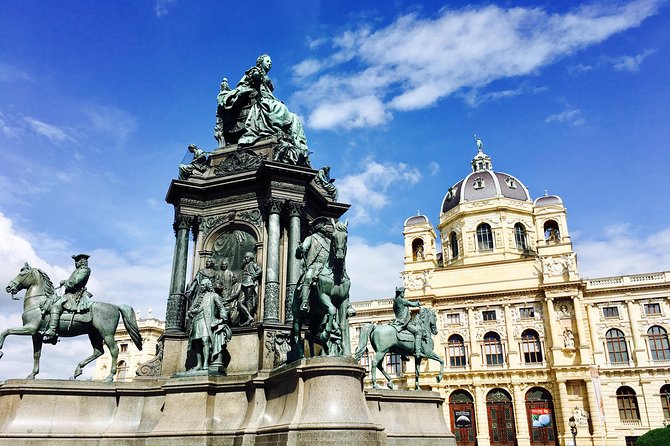
The tour begins at Maria-Theresien-Platz, between the Ringstrasse and MuseumsQuartier. This is a handsome opening scene: two matching museum buildings face one another across a broad square, with the monument to Empress Maria Theresa at the center.
You do not go inside the museums, but the guide explains what gives the square its shape and purpose. The Natural History Museum and Kunsthistorisches Museum reflect the Habsburg appetite for art, science, and collecting. For a newcomer, this stop quickly shows how Vienna mixes imperial ambition with public culture.
From here, the walk reaches the Ringstrasse. This grand boulevard follows the line of Vienna’s former fortifications, which were removed in the second half of the 19th century. The replacement was not a plain road. It became a showcase of public buildings in Classical, Gothic, Renaissance, and Baroque styles.
That variety is one reason the route is worth your time. Instead of seeing each building as an isolated photo stop, you learn that the Ringstrasse was part of a major redesign of the city. The Town Hall, Parliament, Burgtheater, University of Vienna, and State Opera all belong to this larger civic project.
More Old Town Walking Tours in the world:
- Underground Vaults Walking Tour in Edinburgh Old Town
★ 4.5 · 8,506 reviews - Prague: 3-Hour Walking Tour of Old Town & Prague Castle
★ 4.7 · 5,696 reviews - Dubrovnik: Old Town Walking Tour
★ 4.8 · 5,174 reviews
From Burgtor to the Hofburg’s imperial courtyards
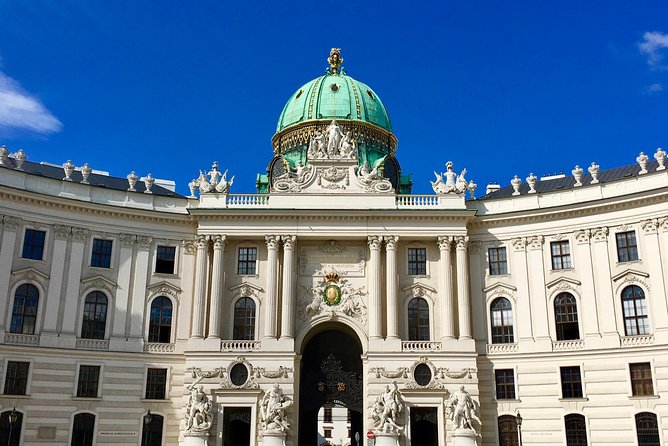
The neoclassical Burgtor marks the approach to the Hofburg. It was built after the Napoleonic Wars, and its formal design gives you a sense of how Vienna wanted to present imperial power in stone.
The Hofburg is not one single palace with one single style. It grew over centuries, and the tour uses its courtyards and façades to explain that change. You hear about emperors, empresses, court life, and the palace’s continuing role in Austrian public life.
This is one of the tour’s strongest sections because the Hofburg can feel confusing when you see it on your own. There are museums, official buildings, libraries, ceremonial spaces, and the Congress Centre in the larger complex. A guide helps separate the parts and gives them a human story.
The route also covers the New Castle, home to several museums, including the World Museum and the Imperial Armoury. You will see the exterior rather than visit those collections. The New Castle balcony also carries a dark 20th-century association: Adolf Hitler proclaimed Austria’s annexation into Nazi Germany from there in 1938. That history is handled as part of Vienna’s political past, not brushed aside beneath the palace grandeur.
Nearby, Heroes’ Square opens in front of the Hofburg. The space was created after the old bastions were demolished during the Napoleonic period. It is broad and open, with a very different feel from the tight lanes and courtyards of the old center.
The Austrian National Library and the Winter Riding School also enter the story. The latter is the famous setting for performances and training by the white Lipizzan horses. You may not attend a performance on this walk, but knowing where the school fits into the Hofburg makes it easier to plan a separate visit.
Churches, cafés, and the city’s working center
St. Michael’s Church dates to 1220 and offers a change of mood after the palace facades. The church is noted for its special atmosphere, and depending on the day, the route may include some indoor stops at churches, palaces, a university, or a café.
That qualification matters. This is not a guaranteed indoor-access tour. The core route remains outdoors, and any interior visit can depend on opening hours and the day’s conditions. Still, the possibility adds variety when it occurs.
The walk continues past the Office of the Federal Chancellor and toward Vienna’s neo-Gothic Rathaus. The City Hall is both an architectural showpiece and the seat of Vienna’s government. It also serves as an event venue, so your guide can connect the building to present-day city life instead of treating it as a silent façade.
The Burgtheater sits nearby. It is one of the world’s leading theaters and forms part of the cultural face of the Ringstrasse. Vienna’s public buildings are not only royal leftovers. They remain part of the city’s political and artistic life.
The route also touches coffeehouse culture. One stop recalls the famous café tradition where writers, composers, architects, painters, psychoanalysts, and political figures met over coffee, cake, and cigars. This is a useful reminder that Vienna’s history was shaped not only in palaces and ministries, but also at small tables.
Volksgarten, Beethoven, and Vienna’s intellectual side
Volksgarten provides a welcome green pause. At its center is the Theseus Temple, a small replica of the Hephaisteion in Athens. The temple was designed to house a sculpture by Antonio Canova, giving the park a classical accent amid the imperial buildings.
The park also recalls Vienna’s musical life. The Cortisches coffeehouse was once a place where Johann Strauss played his waltzes. Details like this make the route more than an architectural survey. You begin to see how music and café life were woven into everyday Vienna.
Beethoven appears at the Pasqualatihaus, a former residence of Ludwig van Beethoven on the ramp of the old city fortifications. The stop is brief, but it places one of Vienna’s most important composers within the actual city streets rather than leaving him as a name on a concert poster.
The University of Vienna adds another layer. The guide connects the institution to figures such as Sigmund Freud and Lise Meitner, the Jewish physicist whose work changed modern science. This section broadens the tour beyond emperors and composers and shows Vienna as a center of academic and scientific work.
You should expect a teaching-style walk here. The guide may use an iPad or images to make people and events easier to picture. That is helpful when a location has little to see beyond its exterior, though it also means the tour depends heavily on the guide’s delivery.
More History Walking Tours in the world:
- History and Hauntings of Salem Guided Walking Tour
★ 5.0 · 14,564 reviews - Lisbon: History, Stories and Lifestyle Walking Tour
★ 4.8 · 10,902 reviews - Boston: Freedom Trail History Small Group Walking Tour
★ 5.0 · 6,450 reviews - Historic Charleston Guided Sightseeing Walking Tour
★ 5.0 · 6,216 reviews
Freyung, Graben, and the final approach to St. Stephen’s
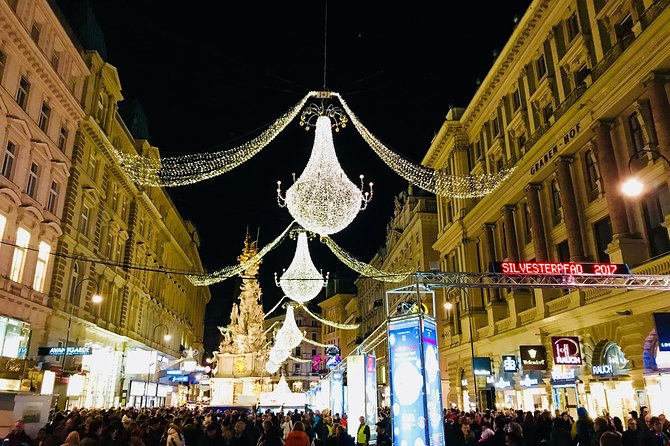
Freyung is one of the oldest squares in central Vienna. It feels more intimate than the Ringstrasse, and its picturesque setting offers a pleasant contrast to the larger imperial spaces.
From there, the route moves toward Graben and Kohlmarkt, among Vienna’s most elegant pedestrian streets. These streets are good places to notice the shift from political Vienna to commercial Vienna. Grand façades frame shops, cafés, and steady city traffic.
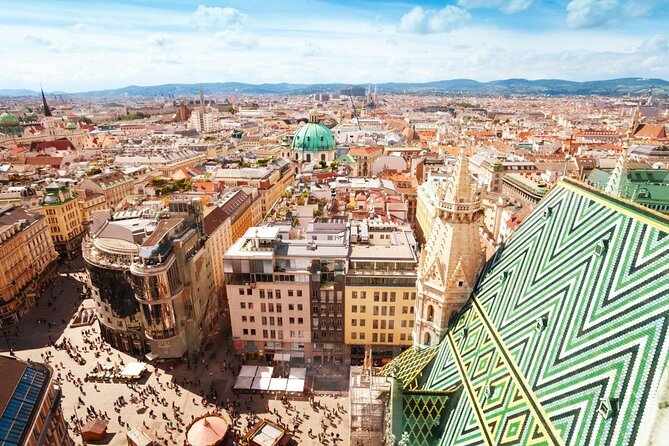
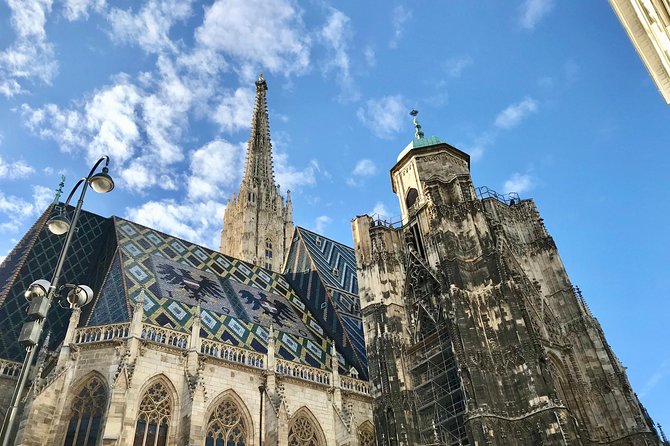
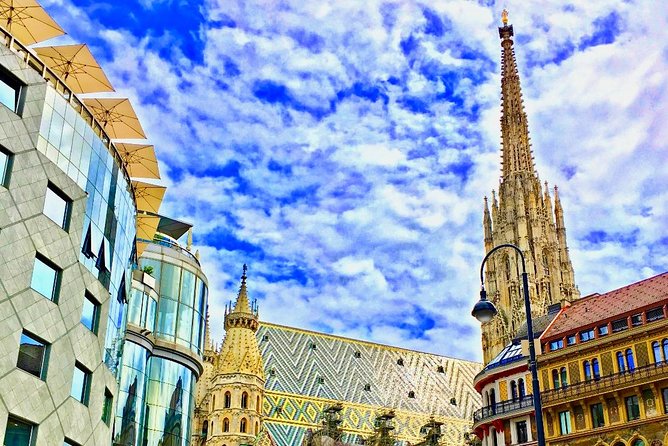
The final stretch reaches Stephansplatz, the central square at the heart of old Vienna. St. Stephen’s Cathedral dominates the scene and serves as the natural ending point. The cathedral is Vienna’s best-known landmark, and finishing here gives you an easy base for continuing on your own.
You can explore farther after the tour, visit the cathedral according to its opening arrangements, or use the guide’s suggestions for food and cafés. Ending in the center is practical. You are not left beside a distant attraction or required to find your way back to your hotel.
What the 2.5 hours feel like on foot
This is a brisk city walk, not a gentle stroll with long breaks. One account estimated roughly 14,000 steps over the two and a half hours. That number may vary, but it gives you the right idea: comfortable shoes are essential, and the tour is not suited to someone with walking difficulties.
The guide keeps the group moving between stops, with short explanations at many locations and longer attention at the Hofburg and other major sights. In crowded places, staying together matters. The group limit of 15 helps, but Vienna’s center can still be busy.
Audio devices are included so you can hear the guide without standing shoulder to shoulder. This is a small but important feature. A walking tour loses much of its value when you can see the guide but miss half the explanation.
Plan for weather. The experience requires good conditions and can be canceled if the weather is poor. Dress warmly in colder months, and remember that you will spend most of the time outside. The route has some opportunities to stop and warm up, but you should not count on an indoor shelter throughout.
The guide makes or breaks this experience
The strongest part of the walk is the guide’s presentation. Dace is described as funny, clear, and especially good at mixing personal observations with historical facts. Giselle is praised for her enthusiasm, steady pacing, and practical suggestions for places to eat and visit later.
Gabriela is noted for making sure the group had chances to recharge and warm up, while Beatrice brings passion to Vienna’s story. Guide assignments can change, so you should not book on the assumption that one particular person will lead your departure. Still, the repeated emphasis on humor, clear explanations, and personal attention tells you what kind of experience this is meant to be.
The guide also answers questions during the walk and offers advice beyond the fixed route. That is especially useful if you take this tour early in your stay. You can ask how to use the rest of your time, which sights deserve an inside visit, and where a coffee break might fit.
Is $72.56 a fair price?
At $72.56 per person, this is not the cheapest way to see Vienna’s center. You are paying for a certified local guide, a carefully planned route, audio equipment, a small group, and practical suggestions about food and culture.
The value depends on what you want. If you mainly need a quick orientation and prefer to read signs or use a guidebook, the price may feel high, especially since museum admissions are not included. One clear criticism of the tour is that you look at many attractions from the outside.
I see better value if you are visiting Vienna for the first time, have limited time, or want the city’s history explained in a connected way. The route covers a lot of ground, and a good guide helps you understand why the Hofburg, Ringstrasse, cafés, composers, and modern government belong in the same story.
You should also compare the price with your own schedule. Spending 2.5 hours on this tour can save time later because you finish with a clearer sense of where the central sights are and which places deserve a separate ticket.
Who should book this Vienna walking tour?
I would choose it for a first morning or first afternoon in Vienna. It gives you a useful map of the center and leaves you at Stephansplatz, where you can continue exploring without a long transfer.
It also suits history fans who enjoy context, anecdotes, and political detail. The tour reaches subjects from Habsburg court life to the Anschluss, from Beethoven to Freud, and from imperial architecture to modern government.
You may want another option if your priority is entering museums, spending a long time inside the Hofburg, or taking a slow photographic walk. The pace is active, the group keeps moving, and the tour covers many stops in a short period.
Free cancellation is available up to 24 hours before the start time. The tour can also be canceled if the minimum number is not met or if weather makes the walk unsuitable, with a new date or refund offered in those cases.
My recommendation
Book this tour if you want a lively, efficient introduction to Vienna and understand that it is mainly an outdoor history walk. The best reasons to go are the small group, strong guide commentary, audio devices, and wide-ranging route.
Skip it if you expect entry to museums and palaces for the $72.56 price. For everyone else, especially first-time visitors who want to get oriented quickly, this is a practical way to meet Vienna’s imperial center, hear its complicated stories, and receive useful advice for the days ahead.
FAQ
How long does the Vienna Historic Center Small Group Walking Tour last?
The tour lasts approximately 2 hours and 30 minutes.
Where does the tour begin?
It begins at Maria-Theresien-Platz in central Vienna, Austria.
Where does the tour end?
The tour ends at Stephansplatz, beside St. Stephen’s Cathedral.
How many people can join the group?
The tour has a maximum of 15 participants.
Is the tour offered in English?
Yes. The tour is offered in English.
Does the tour enter museums?
No. Museum admission and interior museum visits are not included. Depending on the weekday, the route may include some indoor locations such as churches, palaces, a university, or a café.
What sights are covered?
The route includes Maria-Theresien-Platz, the Ringstrasse, Burgtor, the Hofburg, Heroes’ Square, St. Michael’s Church, Rathaus, Burgtheater, Volksgarten, Beethoven’s Pasqualatihaus, the University of Vienna, Freyung, Graben, Kohlmarkt, Stephansplatz, and St. Stephen’s Cathedral.
Is the tour suitable for people with walking difficulties?
No. The tour requires a moderate level of physical fitness and is not recommended for people with walking disorders. Comfortable shoes are important because the route involves substantial walking.
More Small-Group Walking Tours in the world
- Amsterdam Anne Frank: Small-Group Walking Tour & Local Guide
★ 4.8 · 12,789 reviews - New Orleans Food Walking Tour of the French Quarter with Small-Group Option
★ 5.0 · 6,118 reviews - Barcelona Tapas and Wine Experience Small-Group Walking Tour
★ 5.0 · 5,804 reviews - Reykjavík Small group Walking Tour – by CityWalk
★ 5.0 · 5,076 reviews
New walking tours around the world
- Niagara Falls, Canada: White Water Walk Entry Ticket★ 4.5 · 147 reviews
- NYC: Walking Tour with Local Guide and 30+ Top NYC Sights★ 4.5 · 248 reviews
- Zadar: Food Tasting & Old Town Walking Tour★ 5.0 · 94 reviews
- Niagara Falls: Walking Tour, Journey Behind Falls, & Cruise★ 4.8 · 773 reviews
- New York City: Gangsters and Ghosts 2-Hour Walking Tour★ 4.7 · 615 reviews
- NYC: History of Slavery & Underground Railroad Walking Tour★ 4.7 · 87 reviews
- New York City’s Hell’s Kitchen: Walking Food Tour★ 4.8 · 200 reviews
- New York City: Central Park Walking Tour★ 4.7 · 82 reviews
Vienna Walking Tours, side by side.
Vienna: Guided Walking Tour of City Center Highlights
Read our review →
Vienna: Guided Walking Tour of City Highlights & Hidden Gems
Read our review →
Vienna: Viennese Underworld Guided Walking Tour
Read our review →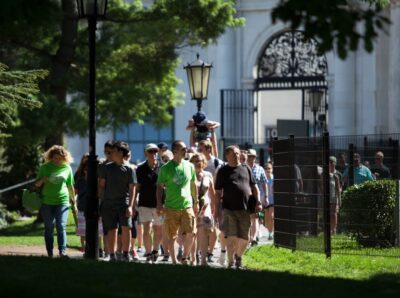
Lists this walk sits on