Review · DRESDEN
Dresden Old Town – Guided Walking Tour in English
Dresden’s Old Town is a place where beauty and loss sit side by side. This 2.5-hour walking tour connects the grand baroque buildings with the city’s Slavic beginnings, royal ambitions, wartime destruction, and painstaking return to form.
I like the way the route gives you a clear first look at Dresden without wasting time on transport. I also like the guides’ use of stories, jokes, and wider European history, especially the lively explanations from guides such as Nicola, Nicolo, and Dominica. The main drawback is practical: it is a fairly long walk with no scheduled toilet stop, so arrive prepared.
Key points to know before you go
- Meet at Martin Luther’s statue: Find the Walkative guide with the yellow umbrella at Neumarkt, beside Frauenkirche.
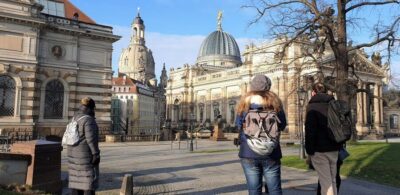
- See Dresden’s essential sights: The route takes in Frauenkirche, Fürstenzug, Dresden Castle, Brühl’s Terrace, Hofkirche, Semperoper, and Zwinger Palace.
- Expect history with context: The tour links Dresden’s medieval trade, Saxon rulers, Polish and Lithuanian connections, Nazi rule, World War II, and reconstruction.
- Guides shape the experience: Nicola, Nicolo, Dominica, James, and others have been praised for clear English, humor, and strong storytelling.
- Plan for a long stretch on foot: The advertised time is 2.5 hours, though some tours have lasted closer to three hours.
- The $35 price covers the booking fee and guide payment: This is described as a general pay-as-you-wish tour, so check the exact arrangement before booking.
Starting at Neumarkt and Frauenkirche
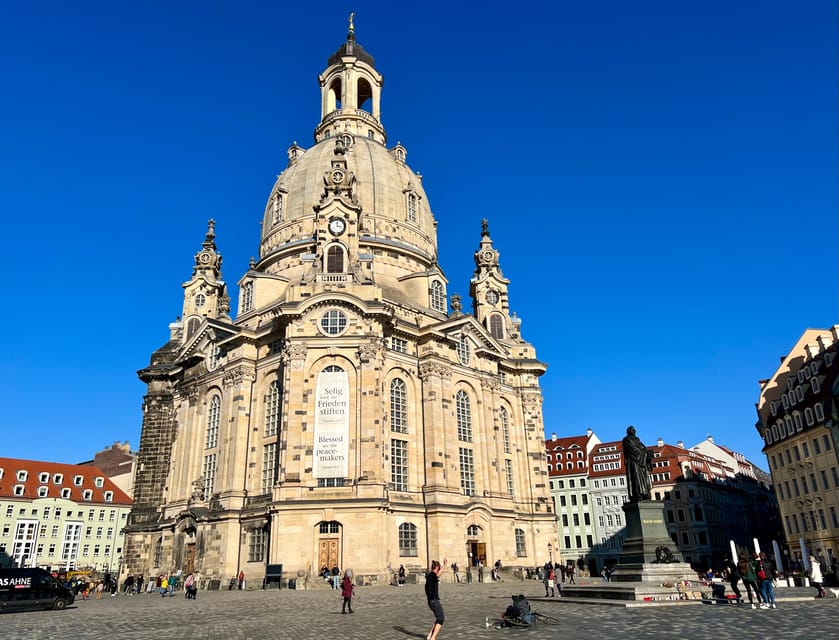
Your meeting point is easy to recognize: the Martin Luther statue in Neumarkt, beside Frauenkirche. Look for the guide holding a yellow umbrella, and arrive about 10 minutes early. Neumarkt is one of the best places in Dresden to begin because it shows the city’s central story in one square.
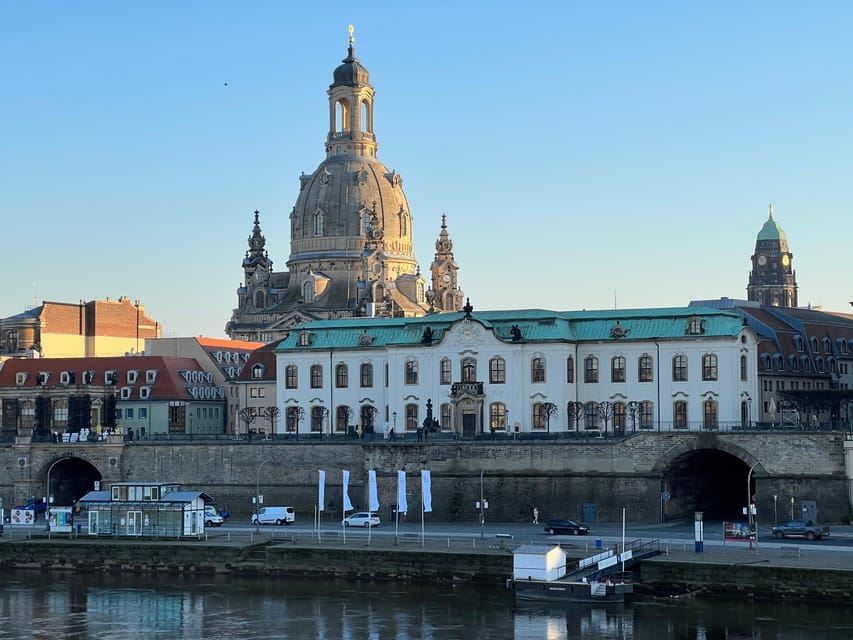
Frauenkirche is the visual anchor. Its stone dome and broad facade give the square a grand, almost theatrical feel. Yet the church also carries the memory of Dresden’s destruction during World War II. The building was reconstructed from old stones and design records after standing for years as a pile of ruins. That contrast makes the opening stop more than a photo opportunity.
The tour introduces Dresden as a meeting point between Germanic and Slavic worlds. The Elbe is often described as a dividing line, but the guide’s approach is to show how it also connects cultures. Dresden began as a small Slavic settlement, and its name still sounds familiar to people who speak Czech, Slovak, Polish, or Sorbian.
That opening context is useful. Instead of seeing the city as a collection of ornate buildings, you begin to understand why Dresden developed where it did and how its position shaped its identity.
More Old Town Walking Tours in Germany
- Nuremberg: Old Town Guided Walking Tour
★ 4.6 · 2,416 reviews - Munich: Old Town & Viktualienmarkt City Walk in German
★ 4.7 · 2,304 reviews - Heidelberg: Walking Tour of the Old Town
★ 4.6 · 1,742 reviews
Following Saxony’s rulers along Fürstenzug
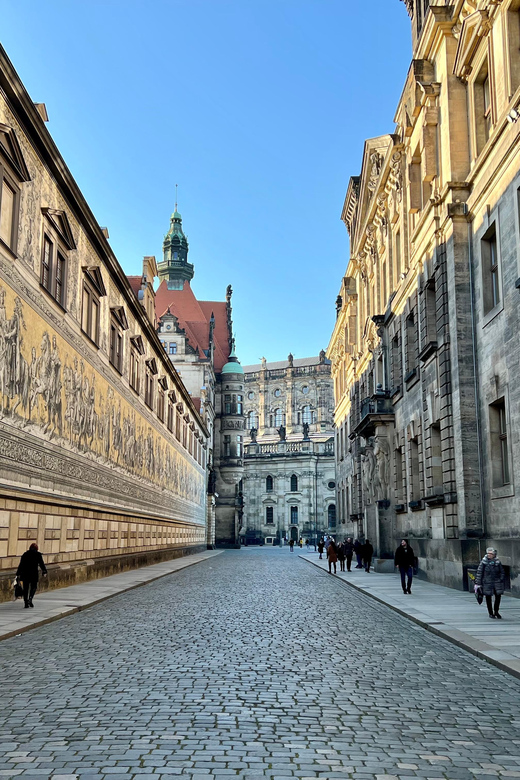
From Neumarkt, the walk moves toward Fürstenzug, the long outdoor gallery showing the rulers of Saxony. The work is one of Dresden’s most memorable public displays because it turns a wall into a history lesson.
The guide can help you read the procession rather than simply admire the pattern of figures and horses. Saxony’s rulers were not just local nobles. Their power grew as Dresden became a political center, and the Wettin dynasty later gained royal titles in Poland and the Grand Duchy of Lithuania.
That wider connection explains why Dresden acquired such grand buildings in the early 1700s. The city was no longer simply a regional trading town. It became a court city with ambitions to match its royal position.
I find this one of the tour’s strongest features: the buildings make more sense once you know who paid for them and why. You are not just looking at decoration. You are seeing political ambition carved into stone, painted onto walls, and arranged across public squares.
Dresden Castle and the making of a court city
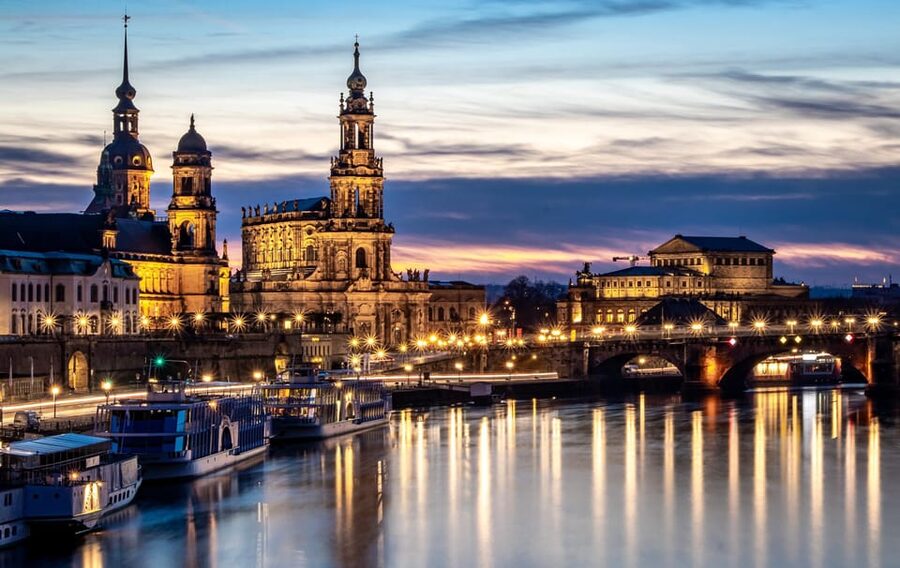
Dresden Castle brings the story closer to the ruling family. It developed around the city’s medieval center, when Dresden grew from a small settlement into a trading town in the 13th century. By the end of the Middle Ages, trade, silver, and lead from the nearby Rudavy mountains helped support the city’s growth.
The castle also helps explain Dresden’s changing status. In the late 15th century, the city became the seat of Saxony’s prince-electors, giving it a larger role within the Holy Roman Empire. Later, the Wettin rulers’ royal connections helped create the ceremonial Dresden that most people come to see.
Expect the guide to focus on how the city changed over time, not just on dates. The best parts of the tour use architecture as evidence. A palace facade, a church dome, or a long processional route becomes a clue to the power and wealth of the people who built it.
The castle area also shows the challenge of reading Dresden today. Much of the center looks old, but much of it was rebuilt. That does not make it less meaningful. Instead, it raises a useful question: how can a city restore its identity after almost total destruction?
Altmarkt, Kreuzkirche, and the city’s modern chapter
Altmarkt provides a change of mood. The square and nearby Kreuzkirche help the tour move beyond royal Dresden and into the city’s wider civic life. The Palace of Culture adds another layer, bringing the story into the period after the war and into the years when Dresden was part of East Germany.
This is where the tour’s attention to the 20th century matters most. A quick old-town walk can easily become a parade of baroque facades, leaving out the Nazi period, the bombing, and the decades of rebuilding. This route makes those events part of the main story.
Several people who took the tour valued its attention to Dresden’s modern past. That is important because the city’s polished center can hide how severe the damage was. The rebuilt streets and squares may look complete, but the history beneath them is not simple.
The Palace of Culture also helps you see that Dresden is more than a restored museum piece. It is a living city with buildings from different political periods sharing the same center.
Same streets, a different story:
- Discover Berlin Half-Day Walking Tour
★ 5.0 · 9,624 reviews - Berlin City walk Government District and Places of Democracy
★ 4.7 · 8,467 reviews - Berlin: Third Reich & Cold War Guided Walking Tour
★ 4.9 · 8,378 reviews - Munich: Third Reich & WWII Walking Tour
★ 4.6 · 6,181 reviews
Brühl’s Terrace and the Elbe connection
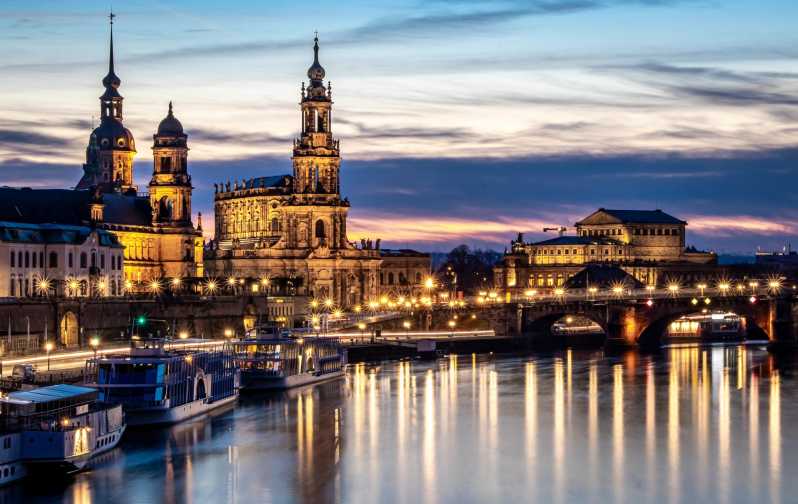
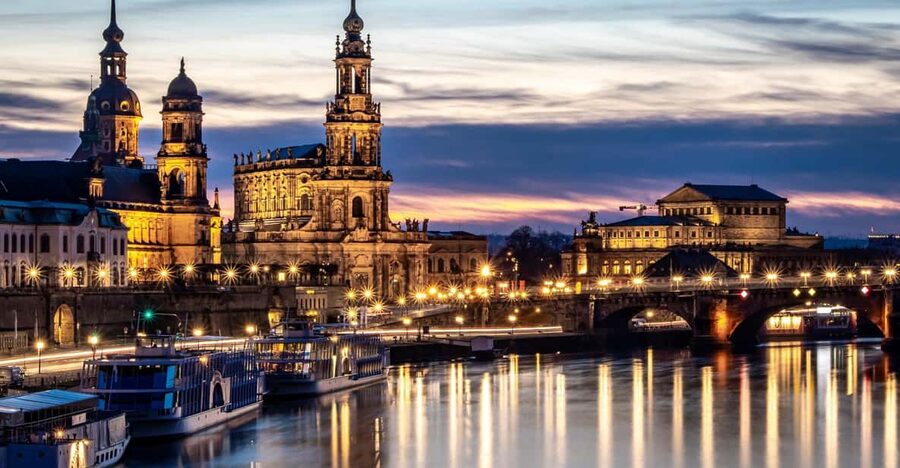
Brühl’s Terrace is one of the route’s most appealing outdoor sections. Set above the Elbe, it offers a chance to pause and look outward after spending time among palace walls and churches.
The river is central to Dresden’s identity. It helped the city trade, grow, and connect with nearby regions. It also gives the tour a natural way to return to the idea of Dresden as a link between Central European cultures.
You should not expect a long scenic walk along the river. This is still a city-history tour, with the focus on the old center and its buildings. But Brühl’s Terrace gives the route some breathing room and helps you understand why Dresden’s setting mattered to its rulers and merchants.
It is also a good place to take in the relationship between the historic center and the Elbe bridge area. The guide can show how the city’s monuments were arranged to create a powerful view from the river.
Hofkirche and Semperoper: church, court, and ceremony
Hofkirche is one of Dresden’s defining baroque buildings. Its position near the castle makes clear how closely religion and court power were linked. The church belongs to the same grand urban setting as the royal buildings, not as an isolated monument but as part of a carefully planned center.
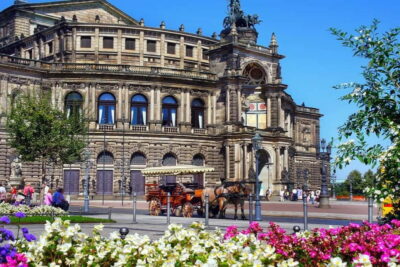
Semperoper brings another kind of ceremony. The opera house represents Dresden’s long connection with music, performance, and court culture. Even if you do not attend a performance, seeing it in relation to Hofkirche, the castle, and the Zwinger helps you understand the city’s ambition.
This is one reason a guided walk can be more useful than simply following a map. You can photograph each building on your own, but the guide helps explain how they work together. Dresden’s center was designed to impress, and the route lets you experience that design in sequence.
The guides are a major part of the appeal. Nicolo has been praised for keeping a long tour engaging with facts, jokes, and European context. Dominica has also been singled out for strong storytelling and passion. English is the working language, but accents and speaking speed can vary, so do not hesitate to ask for a point to be repeated.
Zwinger Palace near the Elbe bridge
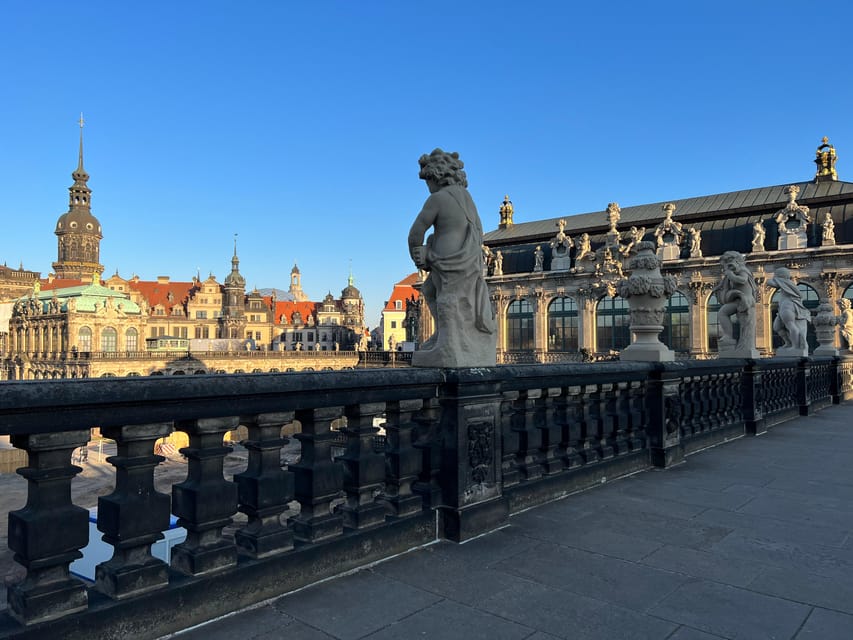
The walk ends near Zwinger Palace, one of Dresden’s most recognizable baroque complexes. Its open courtyards, sculpted details, and grand scale show how far the city had come from its medieval beginnings.
Zwinger was built for court life and display. Its form is less like a defensive castle and more like a stage for royal ceremony. That difference tells you something about Dresden in the early 18th century, when the Saxon rulers wanted their capital to look worthy of a European court.
The location near the Elbe bridge gives the final section a strong sense of place. You have moved through the political, religious, artistic, and civic center, then arrive at one of the buildings that best captures Dresden’s baroque image.
It is worth remembering that Zwinger, like much of the old center, has a complicated modern story. The city’s monuments were heavily damaged in World War II, and the historic center was restored with old techniques and design elements. The result can look so convincing that you may forget how recent much of the visible city is.
How the guides bring Dresden to life
The strongest praise for this walk centers on the guides, not on the route alone. Nicola and Nicolo are repeatedly described as clear, funny, and well prepared. Dominica is praised for storytelling, while James is noted for giving a useful orientation and historical explanation.
That variety matters because a walking tour depends heavily on the person holding the umbrella. One guide may focus more on architecture. Another may spend more time on political history, local anecdotes, or the city’s destruction and reconstruction.
The best match for this tour is someone who enjoys a guide who talks rather than simply points. The route includes many famous sights, but the value comes from connections between them. You will hear about Dresden’s Slavic origins, medieval trade, Saxon rulers, Polish and Lithuanian links, wartime destruction, and present-day identity in one continuous story.
The tone is generally lively. Guides have used humor and short stories to keep the group engaged, which helps during a long stretch on foot. Still, speaking speed can differ. One person found that an Italian guide spoke quickly at first, though the rhythm became easier to follow after a few minutes.
Price, pace, and practical comfort
At $35 per person, the tour offers solid value if you want a broad introduction to Dresden’s center. You see nearly all of the major Old Town sights in one outing, and you get historical context that would take considerable reading to assemble on your own.
The cost needs a little explanation. This is presented as a general pay-as-you-wish tour, with the booking fee and guide payment included in the amount shown. Read the payment terms carefully so you understand what the reservation price covers.
The walk lasts 2.5 hours, but allow extra time. Some outings have run closer to three hours, and one person specifically wished for a toilet stop. Use a restroom before meeting the group, wear comfortable shoes, and bring protection from the weather.
There is no transportation included. That is not a serious problem because the tour stays in the Old Town, but you should not expect a vehicle between sights. The route is wheelchair accessible according to the activity information, though historic paving and the length of the walk are still worth considering for your own comfort.
You can cancel up to 24 hours before the start for a full refund, and you can reserve now and pay later. Those terms are useful if your Dresden plans are still moving around.
Who should book this Dresden walk?
I would choose this tour early in a Dresden visit. It gives you a map in your head, explains the city’s major monuments, and helps you decide which places deserve a longer visit afterward.
It suits first-time visitors especially well, but it can also work for repeat visitors. One person who already knew Dresden found that the guide added much more context, particularly by placing local events within wider European history.
Families with adults and older children should find the storytelling format useful, provided everyone is comfortable walking for several hours. History fans will appreciate the mix of medieval beginnings, royal power, religious buildings, 20th-century catastrophe, and reconstruction.
You may want something else if you prefer small specialist tours, interior visits, or a slow architectural study of one building. The walk mainly explains sights from outside, and a tour of Frauenkirche is not included. If entering the church is important to you, arrange that separately.
Should you book it?
Book this tour if you want a lively, English-language introduction to Dresden that joins the city’s beauty to its difficult past. The route covers the essential Old Town sights, and the strongest guides add humor, clear explanations, and useful European context.
Skip it if a long walk without a planned toilet stop sounds uncomfortable, or if you want a tour focused mainly on interiors. For most first visits, though, $35 buys a useful orientation and a much clearer understanding of why Dresden looks both centuries old and newly rebuilt.
FAQ
Where does the Dresden Old Town walking tour meet?
Meet next to the Martin Luther statue at Neumarkt, beside Frauenkirche. Look for the guide with the yellow umbrella.
How long does the tour last?
The advertised duration is 2.5 hours. Some tours have lasted longer, so allow extra time in your schedule.
What language is the tour in?
The live tour is conducted in English.
Which sights are included?
The route includes Neumarkt and Frauenkirche, Fürstenzug, Dresden Castle, Altmarkt, Kreuzkirche, the Palace of Culture, Brühl’s Terrace, Hofkirche, Semperoper, and Zwinger Palace near the Elbe bridge.
Is transportation included?
No. This is a walking tour, and transportation is not included.
Is the tour wheelchair accessible?
Yes, the activity information describes the tour as wheelchair accessible. The route is still 2.5 hours or longer, so consider the walking time and historic paving when planning.
New walking tours around Germany
- Mystical Hamburg – Walking Tour in German★ 4.6 · 168 reviews
- Munich : Private Walking Tour with A Guide (Private tour)★ 4.5 · 85 reviews
- Munich: Raven Black Witches and Executioners Walking Tour★ 4.7 · 294 reviews
- Munich: Guided Food Walking Tour with Beer Tasting★ 4.7 · 183 reviews
- Munich Old Town – Guided Walking Tour in English★ 4.7 · 153 reviews
- Munich: Old Town Guided Walking Tour★ 4.6 · 479 reviews
- Munich: Old Town Walking Tour★ 4.7 · 589 reviews
- Munich: Birthplace of the Third Reich Guided Walking Tour★ 4.6 · 771 reviews
Dresden Walking Tours, side by side.
Dresden: City & Semperoper Guided Walking Tour
Read our review →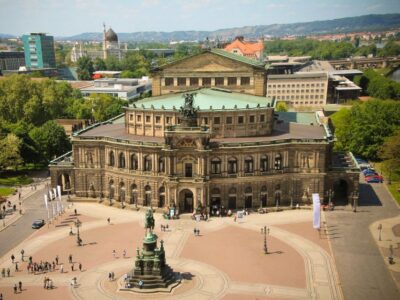
Dresden: Complete Walking Tour with Frauenkirche Visit
Read our review →
Dresden: Walking Tour with a Night Watchman including a Meal
Read our review →
Dresden: Guided Walking Tour and Chocolate Museum Ticket
Read our review →

Dresden: Neustadt District Street Art Guided Walking Tour
Read our review →