
Review · DRESDEN
Dresden: Guided City Walk
Dresden’s past is written in stone, from the medieval Stallhof to the grand Baroque Zwinger and the rebuilt Frauenkirche. This 90-minute city walk gives you the big picture without asking you to spend half a day indoors or chase sights across town.
I like the clear route through the old town, and I like that the guide connects royal splendor with the Peaceful Revolution of 1989. The stop at the Nymphenbad in the Zwinger is another nice touch. The main drawback is simple: the tour is offered in German only, so you need enough German to follow historical details and anecdotes.
Key points at a glance
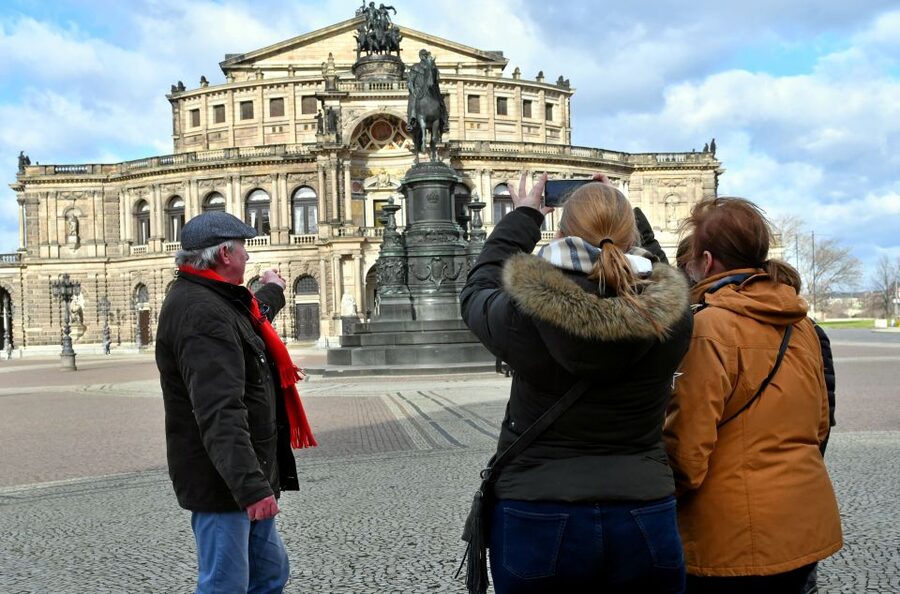
- A compact old-town route: See Frauenkirche, Dresden Castle, Fürstenzug, Brühl’s Terrace, Semperoper, and Zwinger in 90 minutes.
- History beyond grand facades: The guide covers the Middle Ages, Renaissance, Baroque Dresden, and the events of 1989.
- A worthwhile Zwinger detail: The tour includes the mysterious Nymphenbad, an easy-to-miss fountain courtyard.
- Useful local advice: You can ask for suggestions on restaurants, events, and leisure activities.
- Easy central finish: The walk ends near Frauenkirche, placing you close to many old-town sights.
- German-language format: The tour suits German speakers and may not work well if you need English commentary.
Why this Dresden walk works well for a first visit
Dresden can feel like a city built in chapters. One block gives you royal power and ornate Baroque stonework. The next raises questions about war, reconstruction, East Germany, and modern buildings that have not pleased everyone.
A good walking tour helps you read those changes. Instead of seeing the Frauenkirche, Semperoper, and Zwinger as separate photo stops, you learn how they fit into Dresden’s growth as a royal residence and cultural center. You also get a short introduction to the political changes that shaped the city after the Second World War and during the end of the German Democratic Republic.
The tour begins at Dresden Information in the lower level of the QF Passage. Look for the seating area there rather than waiting outside on the square. From the meeting point, you walk only about three minutes to the first major stop at Stallhof.
That central start is useful if you have just arrived in Dresden. It avoids a long transfer and puts you directly in the historic core. Since the entire program is on foot, wear shoes that can handle old-town paving and expect a steady pace between stops.
More walks with a guide around Germany:
- Berlin: Third Reich & Cold War Guided Walking Tour
★ 4.9 · 8,378 reviews - Berlin: Hidden Backyards Guided Walking Tour
★ 4.8 · 5,360 reviews - Bamberg: Guided Walking Tour
★ 4.6 · 3,202 reviews
Stallhof and the Fürstenzug: Dresden’s royal opening
Stallhof, or the stable courtyard, gives the walk an intimate start. It forms part of Dresden’s former royal complex and helps you understand that the city center was not simply a collection of churches and museums. It was also a working court, with spaces built for horses, ceremonies, and royal display.
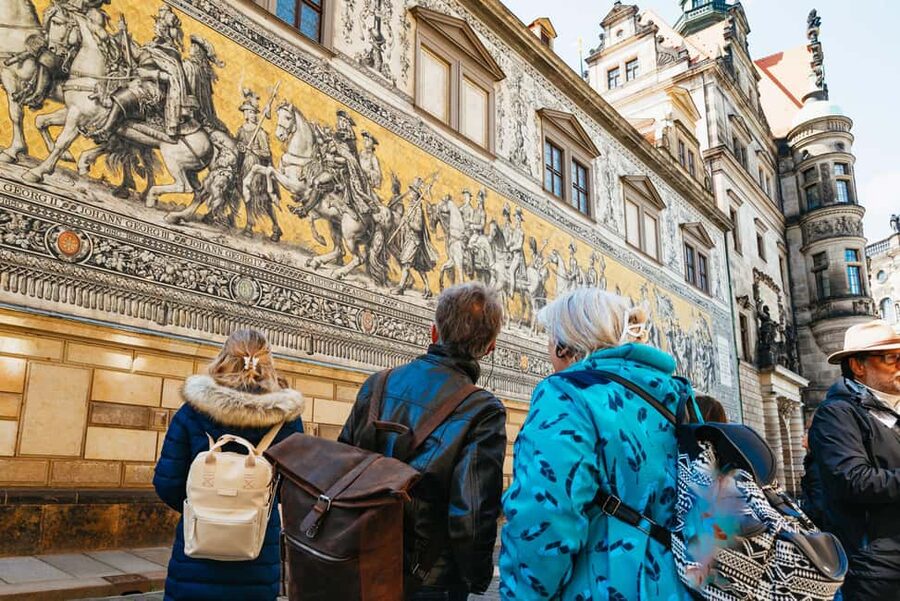
From there, the guide takes you to the Fürstenzug, the Procession of Princes. This long mural is one of Dresden’s most memorable outdoor sights. It presents the rulers of Saxony in a format that is easy to study while standing in the street.
The stop works especially well with a guide because a procession of rulers can otherwise become a blur of names. You get the political thread behind Dresden’s rise, along with the visual story told by the mural itself. Expect explanations about the ruling dynasty and the role of Saxony in the city’s development.
This is also a good early photo stop. Still, remember that the tour is not designed for long periods at each sight. If you want a careful look at every figure in the procession, return later on your own.
Brühl’s Terrace and the riverfront view
Next comes Brühl’s Terrace, the broad promenade above the Elbe. Its nickname, the Balcony of Europe, hints at the view and the sense of ceremony built into the setting.
Here, your guide can help you read Dresden from a wider angle. The terrace links the old town to the river and gives you a pause from tight courtyards and decorated facades. You may find this one of the best places on the route for photographs, especially because the setting opens up after the denser streets around the royal buildings.
The value of this stop is not only the view. Brühl’s Terrace also shows how Dresden’s public spaces changed from private or defensive areas into places for strolling and display. The tour uses that setting to explain the city’s growth and the forces that shaped its architecture.
The drawback is timing. Ninety minutes goes quickly, and you will not have much freedom to linger. If the light is good or the river view catches your attention, note the place and come back after the tour.
Semperoper: Dresden’s grand cultural face
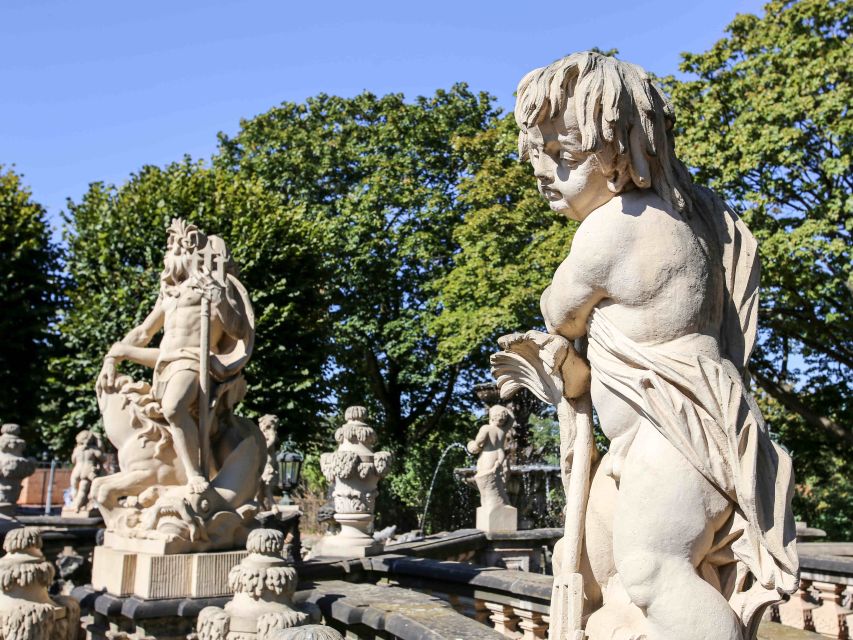
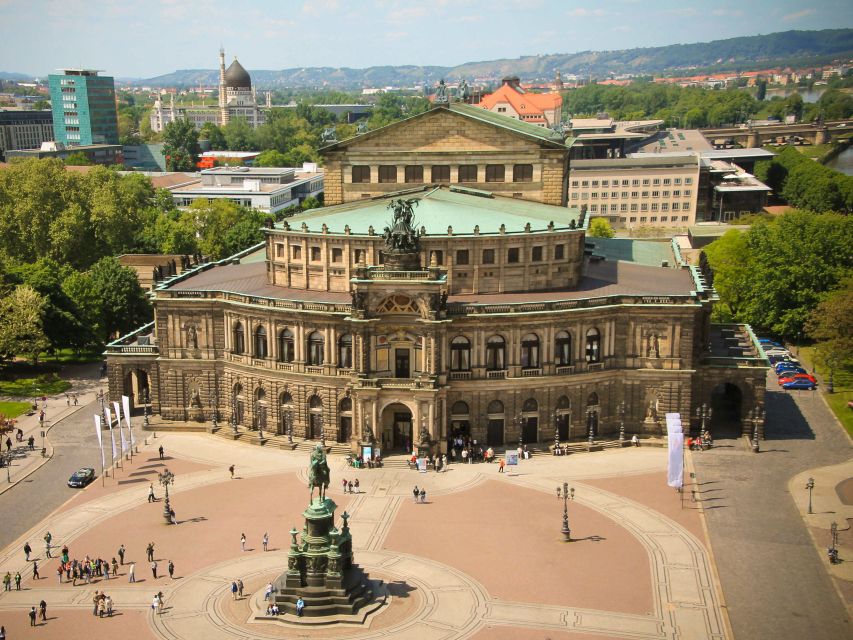
The Semperoper brings the story into Dresden’s cultural life. Its ornate exterior and prominent position make it one of the city’s essential sights, even if you are not attending a performance.
A guide can explain why opera, court music, and architecture mattered so much to Dresden’s rulers. The building also fits into the larger Baroque image of the old town, where royal authority was expressed through grand public architecture.
You should expect an exterior explanation rather than an indoor opera-house visit. The walking tour is built around city sights, not performances or long interior tours. That keeps the route moving, but it also means you will need a separate ticket and visit if you want to see the auditorium.
This is a good example of why context matters. On your own, you might photograph the Semperoper and move on. With the historical thread, it becomes part of the city’s larger story about power, art, and reconstruction.
More walking tours around Germany:
- Discover Berlin Half-Day Walking Tour
★ 5.0 · 9,624 reviews - Berlin City walk Government District and Places of Democracy
★ 4.7 · 8,467 reviews - Munich: Third Reich & WWII Walking Tour
★ 4.6 · 6,181 reviews - Berlin: Discover Berlin Walking Tour
★ 4.9 · 5,998 reviews
The Zwinger and the Nymphenbad
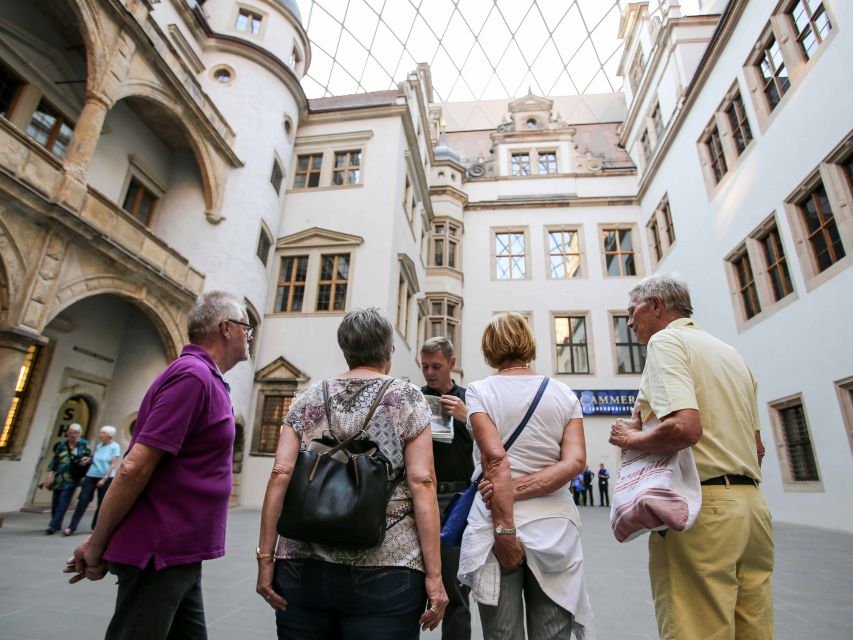
The Zwinger is likely to be one of the visual highlights. This Baroque complex is full of theatrical details, open courtyards, pavilions, sculptures, and carefully arranged views. It is the kind of place where you can spend an hour simply looking upward and finding another ornament.
The tour includes a visit to the Nymphenbad, a smaller fountain area within the Zwinger. Its name refers to nymphs, and the setting has a more secluded feel than the main courtyards. This is a useful inclusion because first-time visitors can easily focus on the Zwinger’s large spaces and miss its quieter decorative corners.
The guide’s role here is to connect decoration with purpose. Dresden’s Baroque buildings were not modest. They were designed to impress, and the Zwinger helped present the court as wealthy, cultured, and powerful.
Give yourself realistic expectations. The tour includes the Nymphenbad, but it does not promise a full museum visit or a detailed examination of every section of the complex. If you want the galleries inside the Zwinger, plan separate time after the walk.
Dresden Castle and the changing city

Dresden Castle adds another layer to the route. This was the seat of the Saxon rulers, and its buildings reflect the city’s long architectural development. The walk uses the castle to move between different periods, from older forms to Renaissance and Baroque additions.
This is where the guide’s historical storytelling becomes particularly useful. The city was not built in one clean style. It changed as rulers gained wealth, tastes shifted, and Dresden took on a larger political role.
The walk also addresses modern and controversial buildings. That matters because Dresden’s old town is not a perfectly preserved medieval scene. Some buildings were rebuilt, some were reconstructed, and some newer additions have sparked debate about how a historic center should look.
I like this less polished approach. You do not get a fantasy version of Dresden made only of ornate facades. You get a city still negotiating how to honor its past while making room for the present.
The Frauenkirche finish

The route continues toward Dresden Cathedral and the Taschenbergpalais before crossing or approaching the area around Augustus Bridge. It ends near the Frauenkirche on An der Frauenkirche.
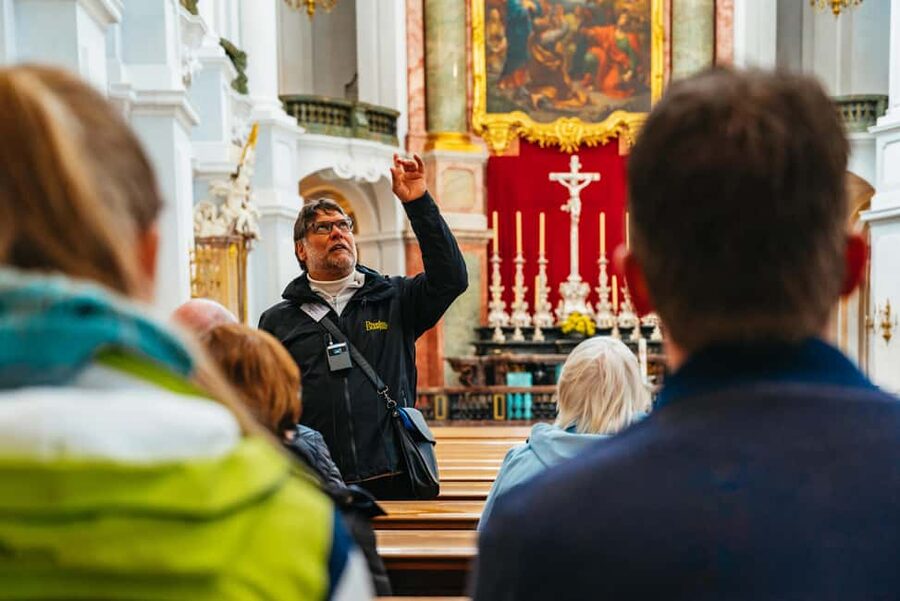
The Frauenkirche is Dresden’s best-known symbol and a natural place to finish. Its history touches nearly every major theme in the tour: Baroque ambition, wartime destruction, reconstruction, memory, and the city’s renewed public life.
The ending is practical. You are left in the heart of the old town, close to restaurants, cafes, shops, and other major sights. It is easy to continue sightseeing, stop for lunch, or return to a building that you want to explore more slowly.
You should not expect the walking tour to replace an interior visit to the Frauenkirche. The main benefit here is the setting and the historical explanation. If you want to go inside, check the church’s separate visiting arrangements after the walk.
The 1989 story gives the tour more weight
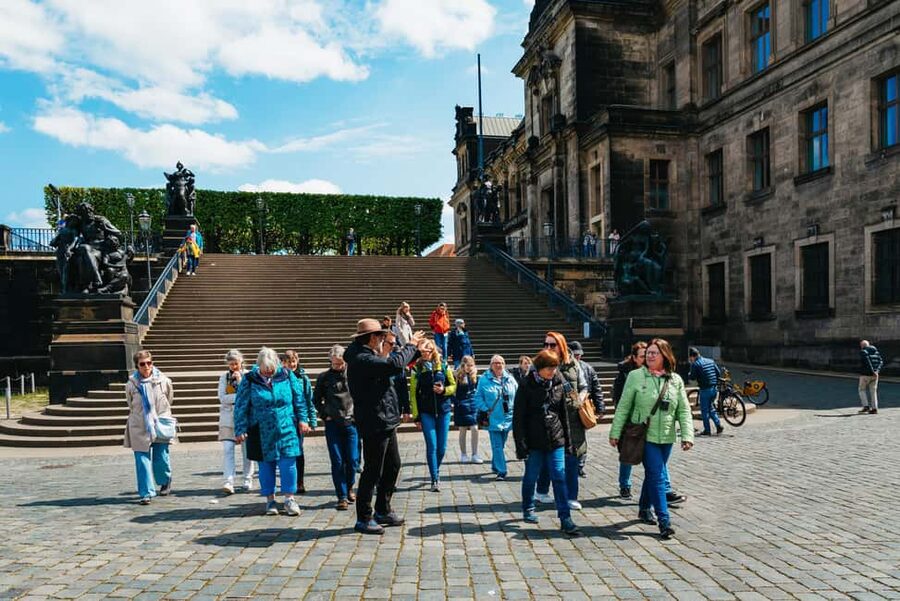
Many city walks stay safely in the distant past. This one also covers the Peaceful Revolution of 1989 and the experience of people in former East and West Germany.
That recent history gives the tour a human dimension. Dresden is not only a city of princes and Baroque architecture. It was also part of a divided country, and its residents lived through political restrictions, protest, and major change.
The description promises both broad events and the feeling of ordinary people during that period. You should expect a guide-led explanation rather than a dedicated political history seminar, but the subject helps connect Dresden’s monuments to living memory.
This section may be especially useful if you have limited knowledge of German reunification. It gives you a starting point for later visits to museums, memorials, or former East German sites. The guide can also answer questions, though the German-only format is important here. Historical and political vocabulary may be harder to follow than simple directions or sightseeing commentary.
What your 15 dollars buys

At $15 per person, this is a strong-value orientation tour if you plan to see several of Dresden’s major sights anyway. You are paying for a licensed, well-informed guide, a planned route, historical interpretation, photo stops, and practical advice on food and leisure activities.
The value comes from the number of major landmarks covered in a short time. A self-guided walk costs nothing, of course, but you would need to research the route and piece together the connections between the sights. The tour saves that preparation and gives you a way to ask questions as you go.
The price is less compelling if you already know Dresden well or plan to spend several days studying each building independently. It is also not the right purchase if you need English, since the live tour is in German only.
The 90-minute length is a good fit for a first morning or first afternoon. It gives you orientation without taking over your day. I would schedule it early in your Dresden visit, then use the guide’s restaurant and leisure tips to shape the rest of your stay.
Practical details before you book
The meeting point is in the lower level of the QF Passage, in the seating area of Dresden Information. Arrive with enough time to find the underground location, especially if you are unfamiliar with the passage.
The walk is wheelchair accessible. The tour is conducted in German, and the supplied information does not name individual guides, so you should not book expecting a particular guide. The organizers describe the guide as experienced and licensed.
Families should note that no more than four children’s tickets can be booked per adult. School classes and youth groups of 10 or more people, with participants under 15, are asked to arrange an exclusive group tour instead.
You can cancel up to 24 hours before the start for a full refund, and the reserve-now, pay-later option keeps your plans flexible. Those terms are useful if your Dresden schedule may change, but check the available start times before committing.
The tour has a rating of 4.6 from 2,075 ratings, and the strongest themes in the supplied comments are information, interest, and an entertaining presentation. One February booking described receiving a great deal of information about Dresden, while two others called the experience interesting and educational. That matches the tour’s main strength: it is built to explain the city, not just point at it.
Who should take this tour?
I would choose this walk if you are visiting Dresden for the first time, speak German, and want a quick framework for the old town. It is also a good choice if you have only a short stay and want to cover the main landmarks before deciding where to spend more time.
Families can benefit from the short format, provided children can manage a guided walk and the booking limits are respected. Students and history-minded visitors may appreciate the range of subjects, from medieval Dresden to 1989.
You should think twice if your priority is entering every major building. The route focuses on outdoor sightseeing and explanation. It also may not suit you if you need English commentary or prefer a slow pace with long photo stops.
Should you book the Dresden Guided City Walk?
Book it if you want an affordable, German-language introduction to Dresden’s old town, with the Frauenkirche, Semperoper, Zwinger, castle district, and Fürstenzug all tied into one story. The Nymphenbad and the 1989 history add more substance than a basic monument checklist.
Skip it if you cannot follow German or want detailed interior visits. For everyone else, $15 is a sensible price for a compact orientation, especially at the start of a Dresden stay. Bring comfortable shoes, arrive at Dresden Information in the QF Passage, and keep time afterward for the sights that deserve a slower look.
FAQ
How long does the Dresden Guided City Walk last?
The walking tour lasts 90 minutes.
What language is the tour offered in?
The live guided tour is available in German only.
Where does the tour begin?
It begins at Dresden Information, in the seating area in the lower level of the QF Passage.
Where does the tour finish?
The tour finishes near Frauenkirche at An der Frauenkirche, 01067 Dresden, Germany.
Which main sights are included?
The route includes Stallhof, the Fürstenzug, Brühl’s Terrace, Semperoper, the Zwinger, Dresden Castle, Dresden Cathedral, Taschenbergpalais, Augustus Bridge, and the Frauenkirche area.
Is the Nymphenbad included?
Yes. The tour includes a visit to the Nymphenbad in the Zwinger.
Is the tour wheelchair accessible?
Yes, the activity is listed as wheelchair accessible.
Does the tour include restaurant advice?
Yes. The guide provides insider tips about restaurants, events, and leisure activities.
Can I cancel for a full refund?
Yes. You can cancel up to 24 hours in advance for a full refund.
Can I reserve now and pay later?
Yes. The reserve-now, pay-later option lets you book without paying immediately.
How many children’s tickets can be booked per adult?
A maximum of four children’s tickets can be booked per adult.
New walking tours around Germany
- Mystical Hamburg – Walking Tour in German★ 4.6 · 168 reviews
- Munich : Private Walking Tour with A Guide (Private tour)★ 4.5 · 85 reviews
- Munich: Raven Black Witches and Executioners Walking Tour★ 4.7 · 294 reviews
- Munich: Guided Food Walking Tour with Beer Tasting★ 4.7 · 183 reviews
- Munich Old Town – Guided Walking Tour in English★ 4.7 · 153 reviews
- Munich: Old Town Guided Walking Tour★ 4.6 · 479 reviews
- Munich: Old Town Walking Tour★ 4.7 · 589 reviews
- Munich: Birthplace of the Third Reich Guided Walking Tour★ 4.6 · 771 reviews
Dresden Walking Tours, side by side.

Dresden: City & Semperoper Guided Walking Tour
Read our review →
Dresden: Complete Walking Tour with Frauenkirche Visit
Read our review →
Dresden: Walking Tour with a Night Watchman including a Meal
Read our review →
Dresden: Guided Walking Tour and Chocolate Museum Ticket
Read our review →

Dresden: Neustadt District Street Art Guided Walking Tour
Read our review →
Dresden: Guided City Walk and Panometer Entrance Ticket
Read our review →
Dresden: Shared Small Group Walking Tour in English
Read our review →Lists this walk sits on