
Review · ATHENS
Acropolis, Parthenon & Athens Old City Heritage Walking Tour
The best part of this tour is the way it connects the Acropolis monuments with everyday old Athens. You begin at the Theatre of Dionysus, climb past the Odeon of Herodes Atticus, and then move through the Parthenon and Erechtheion before walking downhill into Plaka.
I like the early start, which helps with the summer heat, and the wireless audio system, which lets you hear the guide even when other groups crowd the same paths. Guides including Michael, Kiki, Panagiota, and Christina are praised for turning dates and temple names into stories rather than a dry lecture.
The main drawback is the physical effort. The climb is demanding, there is little shade on the Acropolis, and the Plaka portion is only included with the upgraded option. Check carefully if your booking includes the entrance ticket, since the lower advertised price may not.
Key points to know before you book
- The route begins at the Theatre of Dionysus, the ancient venue linked with the birth of Greek drama.
- Early access matters, especially in July and August, when heat and crowds build quickly.
- The Parthenon is only part of the story, with time also given to the Erechtheion, Propylaea, Temple of Athena Nike, and Acropolis viewpoints.
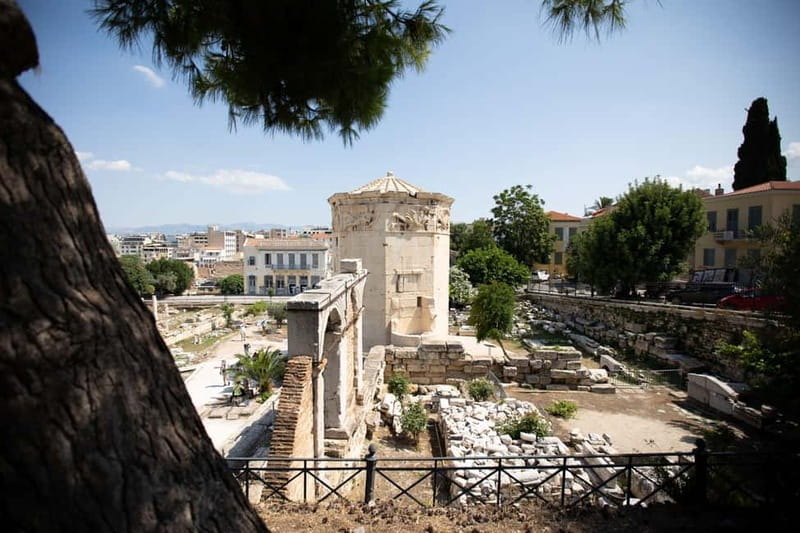
- The Plaka extension adds real value, taking you through Anafiotika, the Roman Forum, Tower of the Winds, and Monastiraki.
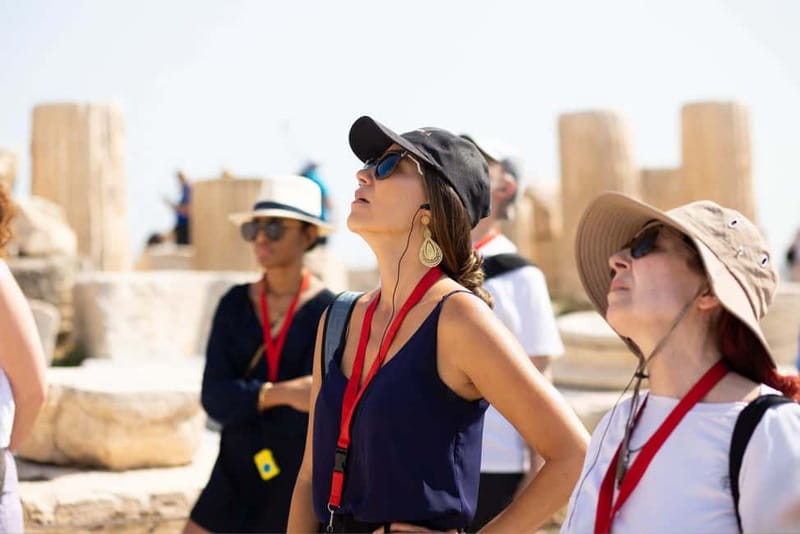
- Wireless audio devices make a difference, particularly when the site is crowded or the group is spread along the path.
- You need good walking shoes, water, sun protection, and a free hand, since large bags, luggage, strollers, and pets are not allowed.
Why this Acropolis route works well
A first visit to Athens can feel like a pile of famous names: Parthenon, Agora, Plaka, Hadrian’s Library. This walk gives those places an order. You start below the Acropolis, follow the approach used by ancient visitors, reach the hilltop monuments, and then descend into the modern city.
That sequence matters. You see the Acropolis not as an isolated photo stop, but as the high point of a larger Athenian center. From above, your guide can point out the Ancient Agora, Mars Hill, Filopappou Hill, the Pnyx, and the National Observatory. The view helps you understand how the old city fitted together.
The tour lasts about 210 minutes, or three and a half hours, for the full Acropolis and Plaka route. Some visits may run shorter depending on the group and conditions, so do not plan a tight lunch reservation immediately afterward. The experience is walking-heavy from the first step, and the climb becomes more tiring in hot weather.
The advertised price is $34 per person, but the value depends on the option you choose. If admission to the Acropolis is included, you are paying for the ticket, an experienced guide, early access, and the convenience of moving with a timed-entry group. If you choose the option without admission, you must arrange the ticket for the correct time slot yourself. Compare the final price, not just the headline figure.
More Old Town Walking Tours in Athens:
- Underground Vaults Walking Tour in Edinburgh Old Town
★ 4.5 · 8,506 reviews - Prague: 3-Hour Walking Tour of Old Town & Prague Castle
★ 4.7 · 5,696 reviews - Dubrovnik: Old Town Walking Tour
★ 4.8 · 5,174 reviews
Starting below the Acropolis at the Theatre of Dionysus
The meeting point is the Key Tours office, with the activity beginning near Athens Gate Apt. The opening section leads toward the south slope of the Acropolis and the Theatre of Dionysus.
This is a smart place to begin. The theatre is tied to the origins of ancient drama, and your guide can explain how performances, religious festivals, and civic life came together here. The stop is relatively short, listed at about 15 minutes of guided walking, but it gives the climb a clear purpose.
You then continue toward the Odeon of Herodes Atticus. Its curved stone structure remains one of the most striking sights on the southern approach. The route here is shared with other groups, so the wireless receiver is useful. You can look up at the monument without losing the guide’s explanation.
The early start is one of the strongest practical features. Athens can be hot even in the morning, and several people who took early departures found the temperature and crowd levels easier to manage. Do not expect an empty Acropolis at 8 or 9 a.m., especially in summer, but an early slot gives you a better chance of avoiding the worst heat and the heaviest flow of people.
Climbing through the Propylaea and Temple of Athena Nike
The path rises toward the Propylaea, the monumental entrance to the Acropolis. This is where the route begins to feel more strenuous. The paving can be uneven, and the upward walk requires steady effort rather than speed.
The Propylaea is more than a gateway. It was designed to create a grand transition from the lower city to the sacred hilltop. Your guide will explain the structure and its role before leading the group onward.
Near the entrance is the Temple of Athena Nike, a smaller monument with a powerful position above the approach. The stop is brief, around 10 minutes, but the location offers good views back toward Athens. This is one of the places where you will want your camera ready, though the guide will also need to keep the group moving.
There is little dependable shade on this part of the Acropolis. Wear a hat, use sunscreen, and carry water. One guide, Kiki, was praised for finding shade where possible and keeping the group comfortable, while other guides adjusted the pace for families and people who needed a break. That care can make a major difference on a hot day.
Seeing the Parthenon with context
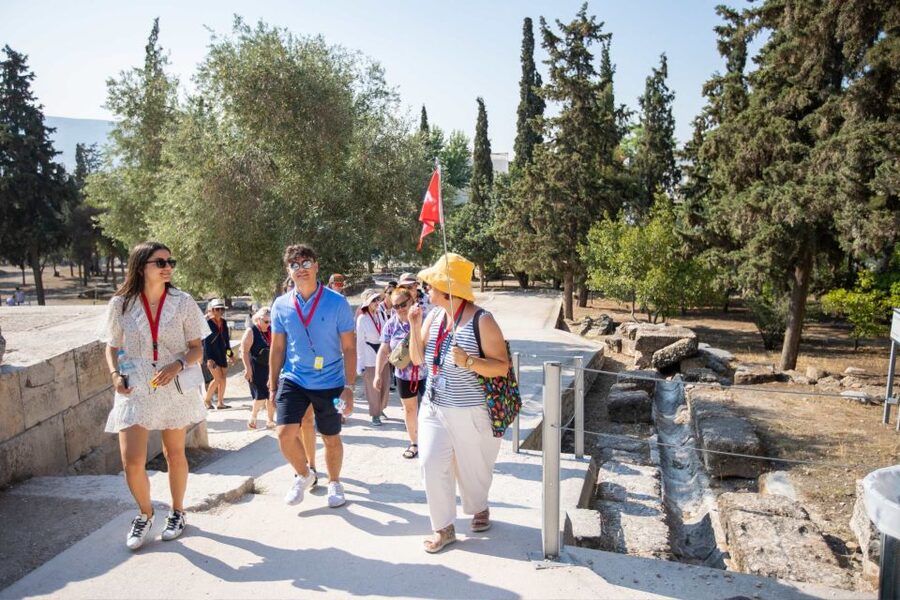
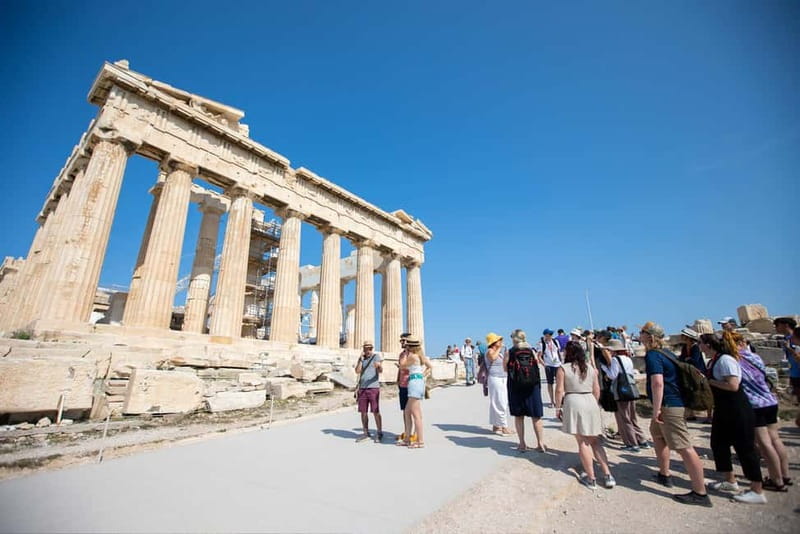
The Parthenon receives about 30 minutes in the stated route, making it the central stop. You will see the temple from different angles and hear about its design, religious role, later uses, and continuing importance to Athens.
A guide adds real value here. Without context, the Parthenon can become a quick photograph among a mass of visitors. With a good explanation, details such as the columns, sculptural program, and position on the Acropolis become part of a larger story about power, religion, art, and civic identity.
The guide does not simply stop at the front and recite facts. The best pacing allows you to listen, take photographs, and move to a new viewpoint. Michael, in particular, is praised for using humor and storytelling to hold attention in the heat. His ability to explain a complex monument without turning the visit into a barrage of information is exactly what you want from a group tour.
Crowds remain a fact of life. Even early departures can encounter many people around the Parthenon. A guide can help you find better angles and keep the group together, but no tour can remove the crowds entirely. If you want long periods of quiet contemplation or extensive independent photography, you may find the group format limiting.
More History Walking Tours in Athens:
- Athens: History of Rebellion Walking Tour
★ 5.0 · 110 reviews - Athens: Women in Ancient Greece Guided Walking Tour
★ 5.0 · 86 reviews - History and Hauntings of Salem Guided Walking Tour
★ 5.0 · 14,564 reviews - Lisbon: History, Stories and Lifestyle Walking Tour
★ 4.8 · 10,902 reviews
The Erechtheion and the wider Acropolis view
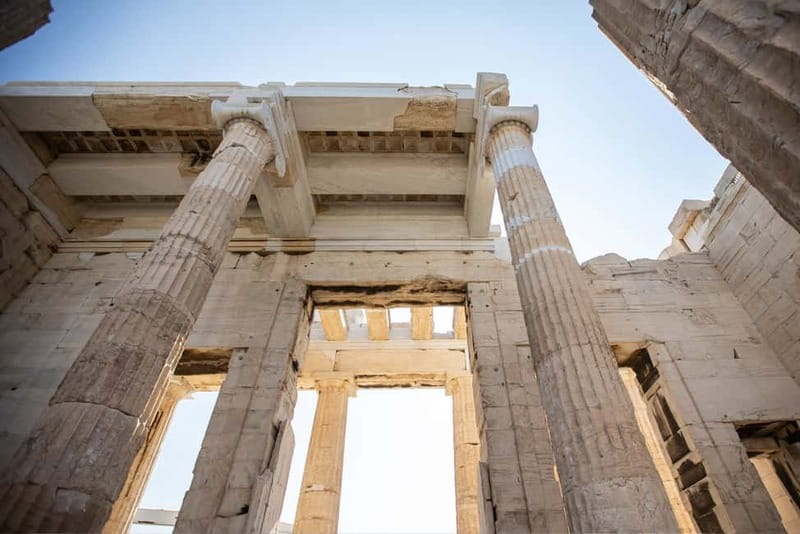
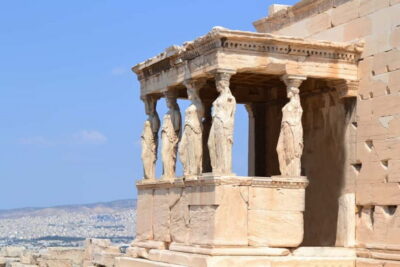
The route continues to the Erechtheion, usually with about 15 minutes of guided attention. Its unusual layout and famous Caryatid porch make it a necessary counterpoint to the more formal Parthenon.
This is a good point to listen carefully. The Acropolis is not a single temple complex built for one simple purpose. Different structures served different religious and civic roles, and the Erechtheion helps show that layered character. Your guide can explain why this building looks so different from the Parthenon and why its location mattered.
The visit then allows about 30 minutes for photographs and free time on the Acropolis. That is enough for a good look around, though not enough for a slow museum-style study of every visible detail. You will have time to take in Athens below, photograph the monuments, and locate the nearby hills and ancient sites your guide has discussed.
Look toward the Ancient Agora, Mars Hill, Filopappou Hill, and the Pnyx. The National Observatory is another useful landmark. These views help you place the Acropolis inside the city rather than treating it as a detached ruin.
Choosing the Plaka and Old Athens extension
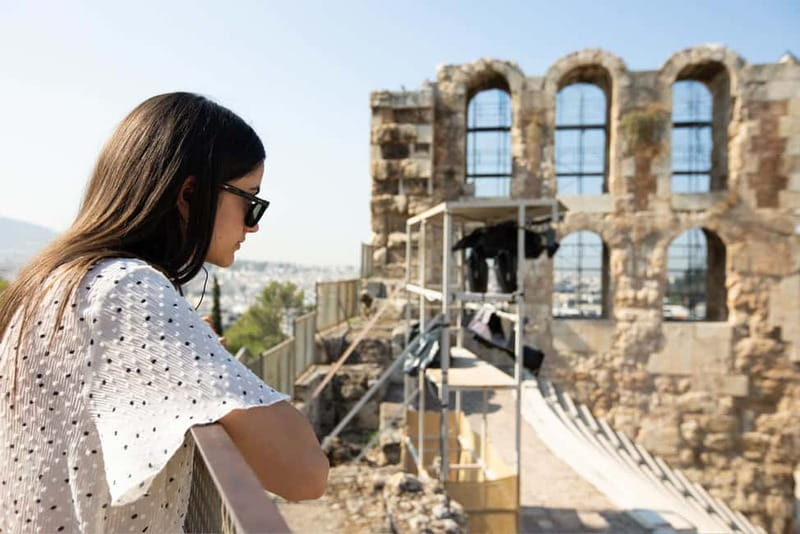
The Plaka portion is the choice that changes this from an Acropolis tour into a broader Athens walking experience. After leaving the hill, you head downhill through Anafiotika and the old neighborhood around the northern side of the Acropolis.
Anafiotika is especially appealing because its narrow lanes feel very different from the formal ruins above. The walk is listed at about 30 minutes, and your guide points out details and stories that are easy to miss when walking alone. You should not expect a long stop at every corner, but you will get a guided introduction to the area.
Plaka is Athens’ historic old neighborhood, with cobbled streets and a mix of homes, shops, churches, and archaeological remains. The walk is not only about taking photographs. It shows how ancient, Roman, Ottoman, and modern Athens sit close together.
Some people would prefer more free time here. A few hours cannot fully cover Plaka, and the route continues at a steady pace toward Monastiraki. Still, the extension is useful if you have limited time in Athens and want guidance through the old center rather than only the hilltop.
Roman Forum, Tower of the Winds, and old city remains
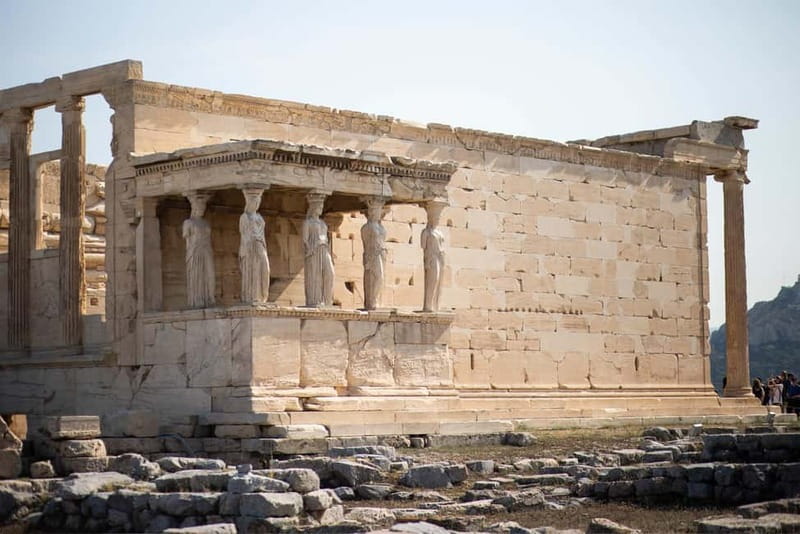
The route passes the Roman Forum of Athens, a reminder that the city continued to matter long after the classical period. The stop is scheduled for about 15 minutes, enough for an explanation and a look at the remains.
Next comes the Tower of the Winds, one of the most distinctive structures in the area. The visit is short, around five minutes, but the monument rewards a closer look. Its position and form connect practical measurement with the ancient city’s interest in weather, time, and the natural world.
The Fethiye Mosque Museum follows, with another brief stop. This adds an Ottoman layer to the walk and helps show that Athens’ story did not end with classical Greece. The nearby Hadrian’s Library receives about 15 minutes, giving you time to understand its place in the Roman city and to see how much of the ancient center remains woven into modern streets.
The final stops include Tzisdarakis Mosque and Monastiraki Square. The tour ends in Monastiraki, a convenient area for continuing on foot, finding food, or exploring independently. Hotel pickup and drop-off are not included, so you make your own way to the meeting point and onward after the tour.
What the guides add to the experience
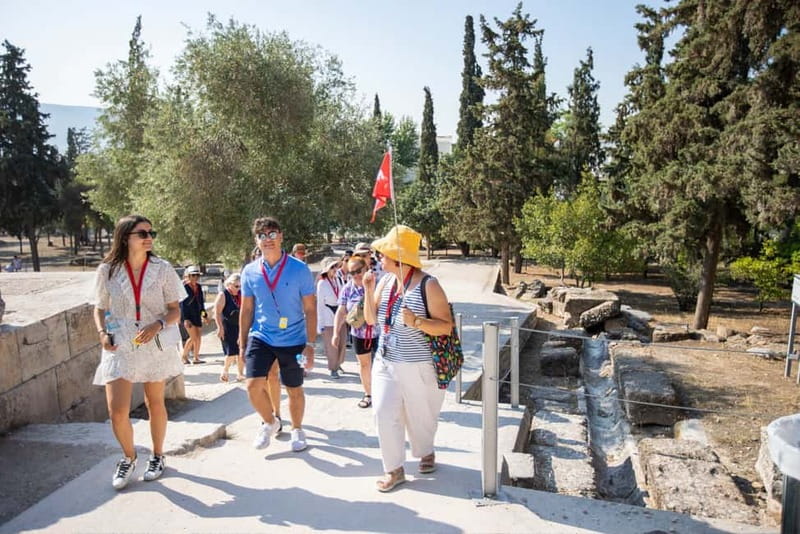
The guide is the biggest variable in any history walk, and this one has received especially strong praise for its staff. Names repeatedly highlighted include Michael, Kiki, Panagiota, Christina, Tina, Maria, Kostas, Yuli, Evri, and Stavros.
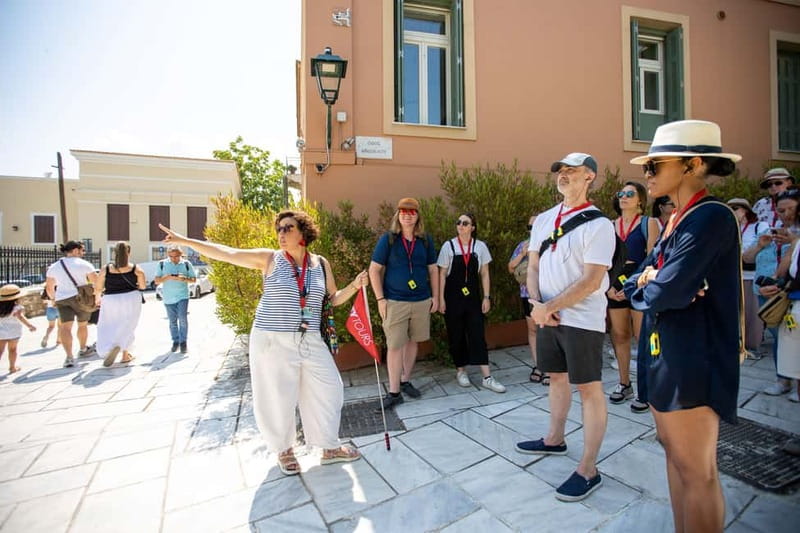
The common strength is not just factual command. Good guides keep the group together, explain where you are going next, allow time for photographs, and find shade when possible. Panagiota was noted for making the timing and route clear, while Michael was praised for humor, storytelling, and even singing during the Plaka walk.
That personal style can make the difference between remembering a place and merely seeing it. One guide used music to explain the acoustics of a church and the old neighborhood, an unusual touch that some people found memorable. You should not book expecting a performance, but it shows how a strong guide can make the walk feel connected to the city.
The wireless audio system is another practical advantage. You hear the guide without standing shoulder to shoulder around a single point, and you can glance at the monuments while still following the explanation. This matters on the Acropolis, where other groups and general crowd noise can quickly swallow a normal speaking voice.
Heat, crowds, and the physical demands

This is a moderate-difficulty walk, but that label should not be treated lightly. The ascent to the Acropolis is demanding, particularly in summer, and the route continues downhill through Plaka afterward.
Bring comfortable shoes, water, sunglasses, and a sun hat. Light clothing that protects you from the sun is sensible. There is no promise of shade at the main monuments, so an early departure is the best practical choice during hot months.
The tour is not suitable for wheelchair users or people with mobility impairments. Baby strollers, large bags, luggage, and pets are not allowed. Bring only what you need, since a heavy daypack will make the climb less pleasant.
The meeting point can be busy, with several groups gathering at the same office. Pay attention to the guide or group identification at the start. One practical weakness is that announcements can be hard to hear when multiple groups leave at once, so arrive early and confirm the correct departure time before the group moves.
Who should book this $34 experience?
I would choose this tour if you want the major Acropolis sights explained in clear English or Spanish and you also want a guided walk through Plaka. It suits first-time visitors, history fans, and anyone who would rather not manage timed entry and the route alone.
It is also a good fit for people with only a short stay in Athens. In one morning or afternoon, you cover the Theatre of Dionysus, Odeon of Herodes Atticus, Propylaea, Temple of Athena Nike, Parthenon, Erechtheion, Anafiotika, Roman Forum, Tower of the Winds, Fethiye Mosque Museum, Hadrian’s Library, Tzisdarakis Mosque, and Monastiraki Square.
I would think twice if you want a slow, independent visit with long periods inside each monument. The group must move, the Acropolis can be crowded, and Plaka receives only a guided introduction rather than an entire day of wandering.
The price is good when admission is included. It is less straightforward when the ticket is separate, especially for eligible younger visitors who may qualify for free admission but must arrange a timed ticket online in advance. Check the booking option carefully before paying.
Should you book the Acropolis and Plaka tour?
Book it if you want a well-organized first look at Athens, especially with an early start and the Plaka extension. The strongest reasons are the licensed guide, clear audio, useful historical connections, and the chance to see more than the Parthenon alone.
Choose the earliest available time, carry water, and wear proper shoes. Confirm whether the Acropolis ticket is included, and allow extra time after the tour rather than scheduling something immediately afterward.
If the climb is beyond your comfort level, or if you need wheelchair access, this is not the right choice. For most able-bodied visitors who want the famous monuments to make sense, the $34 starting price can be a sensible use of an Athens morning.
FAQ
How long does the Acropolis and Plaka tour last?
The full experience is advertised as 210 minutes, or about three and a half hours. The exact pace may vary with the group, crowds, and conditions.
What languages are available?
The live guide is available in English or Spanish.
Is the Acropolis entrance ticket included?
The entrance ticket is included only if you select the ticket-included option. If you choose the option without tickets, you must purchase admission before the activity at the tour departure time.
Where does the tour meet?
You meet at the Key Tours office. The stated starting location is Athens Gate Apt.
Does the tour include Plaka?
The Plaka and Old Athens walk is included with the option that features the extension. The route continues through Anafiotika, the Roman Forum, Tower of the Winds, Fethiye Mosque Museum, Hadrian’s Library, Tzisdarakis Mosque, and Monastiraki Square.
What should I bring?
Bring your passport or ID card, comfortable shoes, sunglasses, a sun hat, and water.
Are large bags allowed?
No. Luggage and large bags are not allowed. Baby strollers and pets are also not permitted.
Is the tour suitable for wheelchair users?
No. The tour is not suitable for wheelchair users or people with mobility impairments because of the climb and walking conditions.
Can younger visitors receive free admission?
EU citizens under 25 and non-EU citizens under 18 may qualify for free admission, but they must obtain the ticket online through the official archaeological site. Because entry is timed, availability at the preferred hour is not guaranteed on the day.
Can I cancel the booking?
You can cancel up to 24 hours in advance for a full refund. A reserve-now, pay-later option is also available.
New walking tours around Athens
- Athens: History of Rebellion Walking Tour★ 5.0 · 110 reviews
- Eat Your Way Through Athens: A Local Food Walk★ 4.9 · 97 reviews
- Athens: Private Walking Tour with a Local★ 4.5 · 93 reviews
- Athens: The Acropolis Walking Group Tour with a French Guide★ 4.7 · 469 reviews
- Athens: Women in Ancient Greece Guided Walking Tour★ 5.0 · 86 reviews
- Athens: Evening Food Walking Tour★ 4.9 · 422 reviews
- Athens: The Acropolis Guided Walking Tour in German★ 5.0 · 362 reviews
- Athens: The Acropolis Guided Walking Tour in Dutch★ 4.9 · 107 reviews
Athens Walking Tours, side by side.
Athens: Acropolis and Parthenon Guided Walking Tour
Read our review →

Athens: Guided Greek Food Walking Tour with Tastings
Read our review →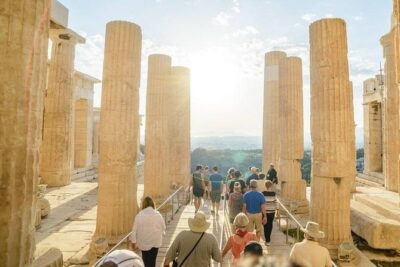
Acropolis monuments & Parthenon Walking Tour with Optional Acropolis Museum
Read our review →
Athens Authentic Greek Food Walking Tour (Small Group)
Read our review →
Athens: Ultimate Food Walking Tour with 15 Tastings
Read our review →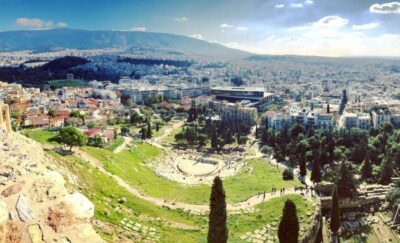
Athens: The Acropolis Walking Group Tour with a French Guide
Read our review →
Lists this walk sits on