
Review · ATHENS
Athens: Women in Ancient Greece Guided Walking Tour
Ancient Athens is usually told through its generals, philosophers, and lawmakers. This walking tour shifts the view to the women who lived under those systems, questioned them, or found ways around them. You’ll hear about daily work, marriage, religion, mythology, and women such as Sappho, Aspasia, and Agnodice while moving through the old city.
I like the route’s mix of famous places and less familiar stories. I also like the conversational style reported by many visitors, especially with guide Maelle, who asks questions and connects ancient customs with issues that still matter today. The main drawback is that you see archaeological sites from outside, so this works best alongside a separate Acropolis or Agora visit.
Key points to know before you book
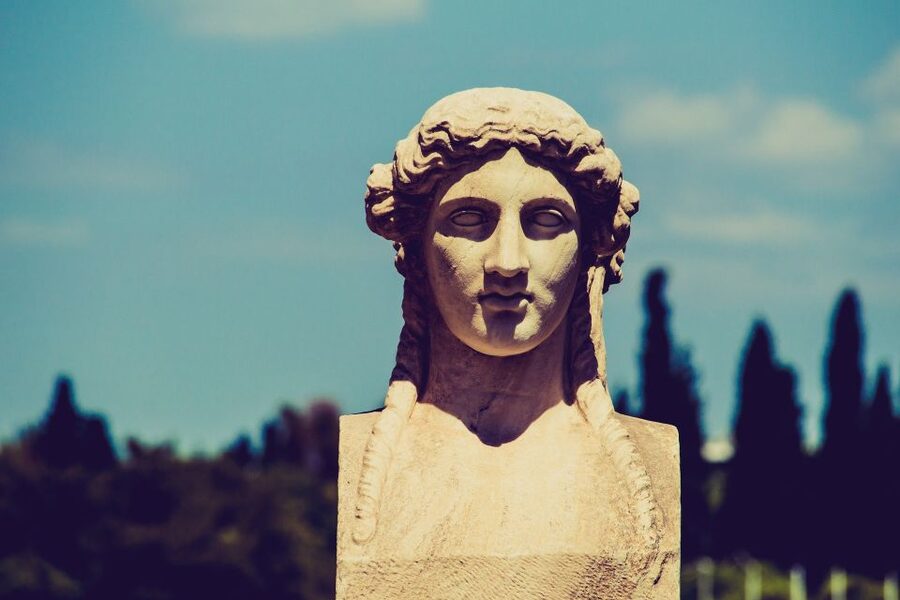
- A women-centered view of Athens: Explore familiar monuments through the lives, limits, work, and beliefs of women in ancient society.
- A thoughtful guide-led walk: Maelle is frequently praised for clear explanations, humor, enthusiasm, and her ability to handle wider questions about Athens.
- A varied two-hour route: Walk from Monastiraki through Plaka, the Ancient Agora area, Pnyx, and Filopappou Hill.
- Myth and real life together: Stories of Athena, Penelope, Demeter, Pandora, and the women’s festival help explain social expectations.
- Good value for a focused tour: At $44.04 per person, the price pays for a specialist subject and live guide, though site tickets and refreshments cost extra.
- Bring water and expect steps: The route includes hills and uneven walking, and it is not suitable for wheelchair users or people with serious mobility or heart concerns.
Why this tour gives Athens a different voice

A standard Athens walk often puts democracy, temples, and famous men at the center. This tour asks a sharper question: who was allowed to take part, and what happened to everyone kept outside the political room?
That question gives the ancient monuments a new purpose. The Agora becomes more than a market and civic center. The Pnyx becomes more than the birthplace of democratic voting. Mythology becomes more than a set of entertaining tales. Each place helps explain the rules that shaped women’s lives, from household duties to religious roles and social status.
The tour also avoids treating women in ancient Greece as one single group. You hear about women from different social positions, along with named figures who managed to gain influence as poets, thinkers, doctors, or leaders. That is important because the experience is not simply a list of famous goddesses. It connects myths with ordinary life and asks how those stories may have supported or challenged social ideas.
I especially like that the subject is not presented as a dry lecture. The guide asks questions, invites discussion, and makes room for your own observations. If you want a walking tour that gives you something to think about after you leave, this is a strong choice.
More History Walking Tours in Athens:
- Acropolis, Parthenon & Athens Old City Heritage Walking Tour
★ 4.5 · 876 reviews - Athens: History of Rebellion Walking Tour
★ 5.0 · 110 reviews - History and Hauntings of Salem Guided Walking Tour
★ 5.0 · 14,564 reviews
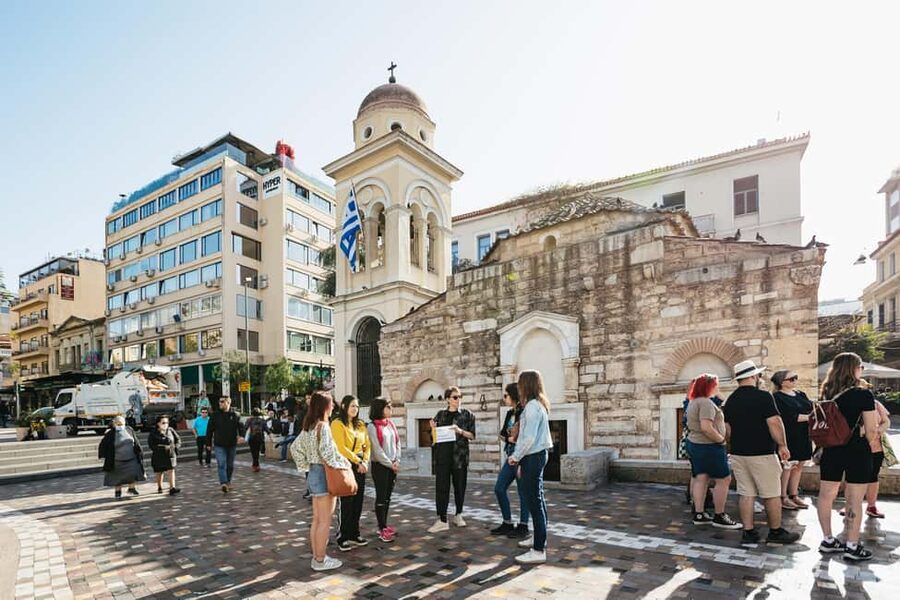
Starting at Monastiraki and Pantanassa Church
Meet your guide on Monastiraki Square, in front of the Holy Church of the Virgin Mary Pantanassa. Look for the guide holding a sign marked Women in Ancient Greece.
This is a practical meeting point in central Athens, but Monastiraki can be busy and confusing. Give yourself time to find the church rather than arriving at the last minute. The opening section takes place in one of the city’s most active districts, so the tour begins with modern Athens around you before moving toward the ancient sites.
Monastiraki is also a useful place to orient yourself. From here, you begin walking toward Hadrian’s Library and Plaka, with the Acropolis area close by. The route is not a museum visit and does not include transport. You spend the full two hours on foot, listening while moving between stops.
Hadrian’s Library and the women of the city
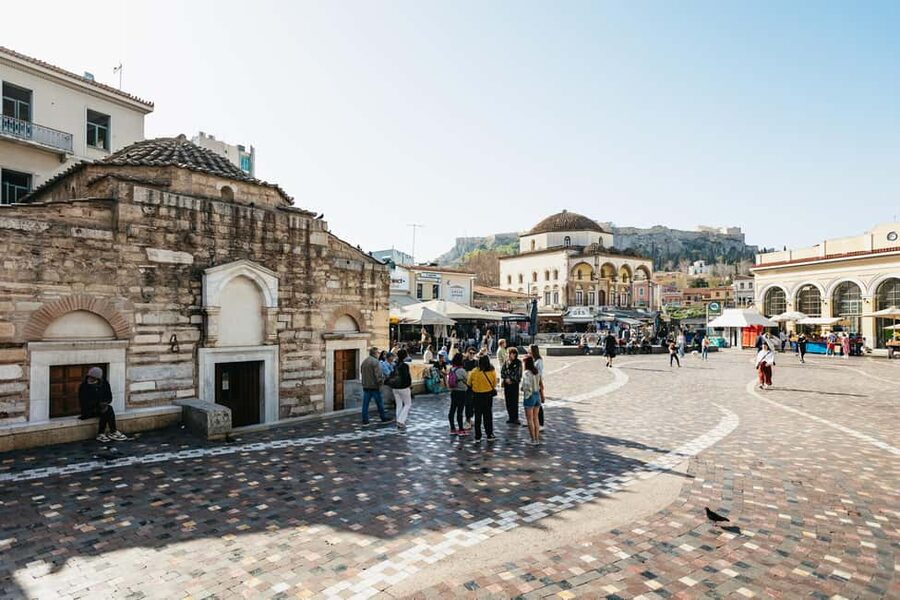
The first short stops include Monastiraki and Hadrian’s Library. You see these places from the outside, with around five minutes set aside at Hadrian’s Library for explanation and sightseeing.
The value here is not a long archaeological examination. Instead, the guide uses the remains to frame the role of learning, public life, and access to knowledge. Ancient Athens is often praised for philosophy and education, but the tour helps you consider who received formal recognition and who did not.
This is also where the stories of women who broke expected roles become useful. Sappho, Aspasia, and Agnodice represent different ways women could gain a public voice. Their stories help show that women were not absent from Greek history, even when the written record gave them less space.
The short stop means you should not expect a detailed architectural tour of Hadrian’s Library. If you want to study the site itself, plan a separate visit. Here, the ruins serve the larger theme.
Plaka, the Gate of Athena, and a secret stop
The route continues through Plaka, with about ten minutes for guided explanation. Plaka is an attractive place to walk, but its real role here is as a link between present-day Athens and the older city beneath it.
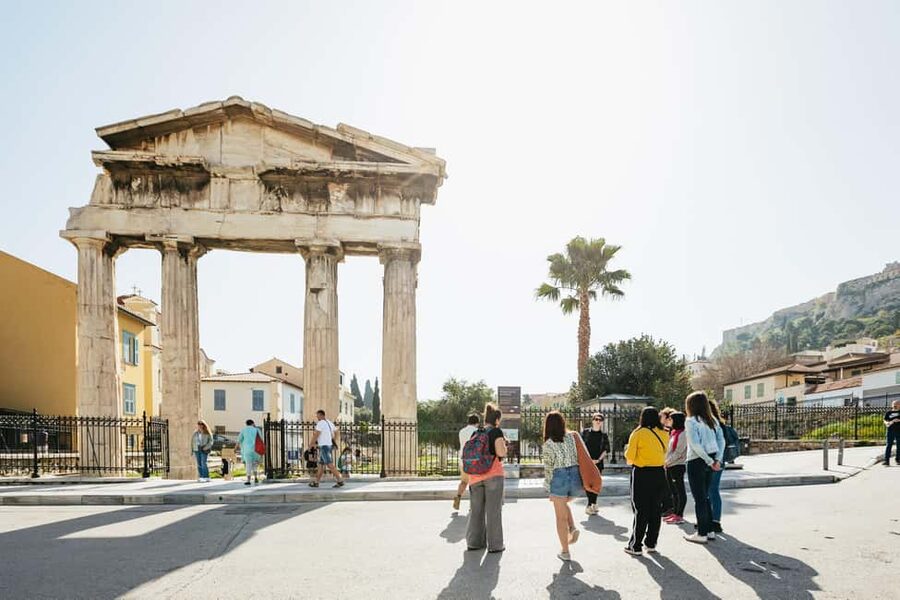
You then reach the Gate of Athena Archegetis, one of the more specific ancient landmarks on the walk. The guide discusses the site from a female perspective, connecting civic and religious life with the beliefs that shaped women’s place in society.
The tour also includes a secret stop. The exact details are not given in advance, which adds a small sense of discovery without turning the whole experience into a guessing game. Allow roughly ten minutes for this stop.
This part of the route is likely to appeal to you if you have already seen the Acropolis and want a fresh way to understand the surrounding streets. It is less suited to anyone seeking long blocks of free time for photographs or shopping. The guide controls the pace so the story can continue.
More walks with a guide around Athens:
- Athens: Acropolis and Parthenon Guided Walking Tour
★ 4.6 · 5,882 reviews - Acropolis and Parthenon Guided Walking Tour
★ 5.0 · 4,755 reviews - Acropolis: Acropolis and Parthenon Guided Walking Tour
★ 4.7 · 3,442 reviews - Athens: Guided Greek Food Walking Tour with Tastings
★ 4.9 · 2,859 reviews
The Ancient Agora and daily life
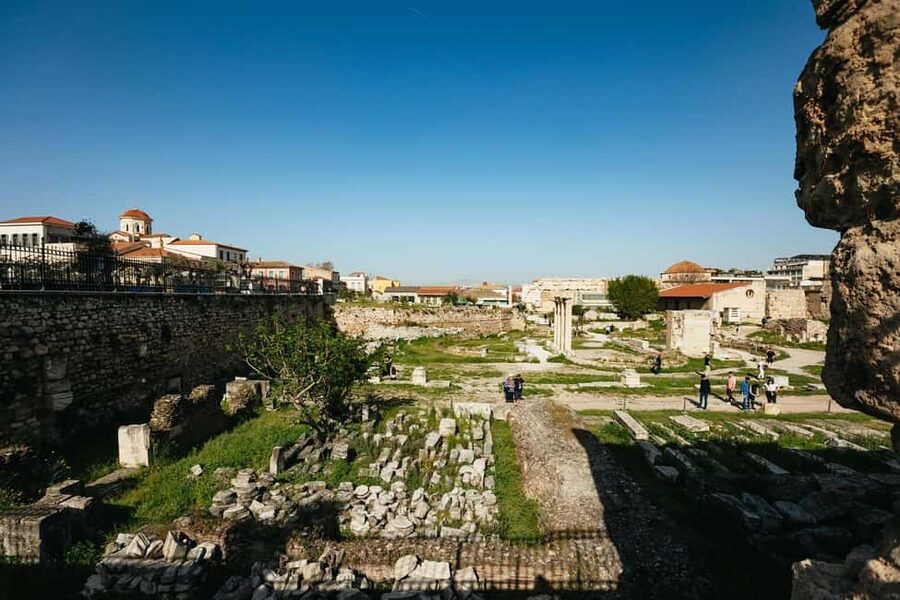
The Ancient Agora receives another ten-minute guided stop. The Agora is one of the most useful places for this subject because it was tied to the public life of Athens. It helps reveal the gap between the city’s democratic ideals and the limits placed on women.
The discussion is not simply about what women could not do. You hear about their daily duties, social expectations, religious activities, and the different roles available to them. Stories such as the kidnapped Spartan girls and the mysterious women’s festival in Athens add human detail to a subject that can otherwise feel abstract.
I value this part of the tour because it resists the easy claim that ancient Athens was either fully progressive or entirely closed. The reality was more complicated. Women’s experiences depended on family, status, location, and circumstance, and the guide’s approach brings those differences into the conversation.
Remember that admission to the archaeological sites is not included. The experience provides exterior views only, so you should not book this as a substitute for entering the Agora. It works better as a thematic walk before or after a formal archaeological visit.
Pnyx and the limits of democracy
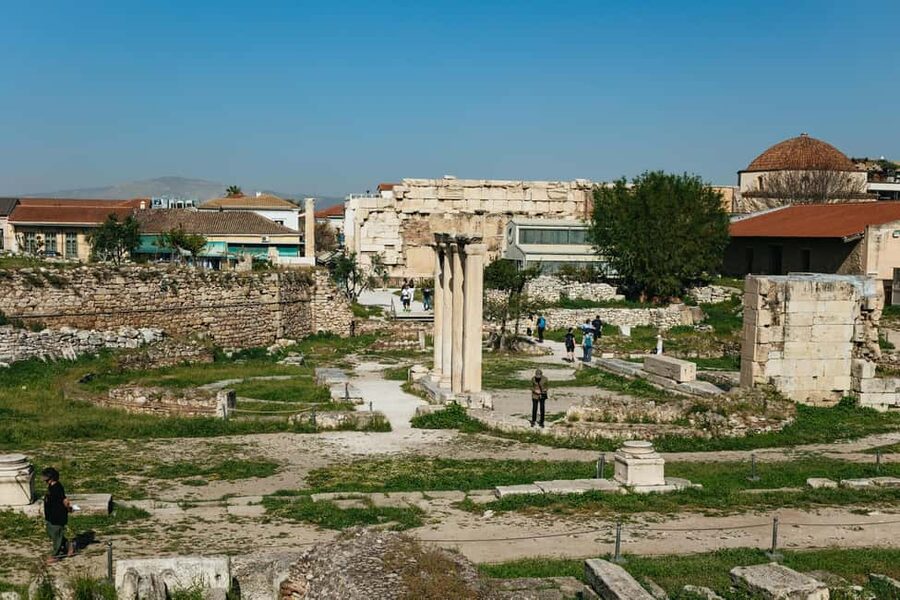
At Pnyx, the tour pauses for about fifteen minutes. This is one of the most meaningful stops because the site is linked with the first democratic votes.
Standing at a place associated with public decision-making gives the women’s perspective real weight. You can consider the contrast between the language of democracy and the people who were excluded from political participation. The guide uses that contrast to connect ancient Athens with modern questions about representation and minority rights.
Several visitors particularly value the way this tour encourages reflection instead of stopping at dates and names. You may be asked to think through the meaning of democracy, not just memorize where it began. That makes Pnyx more than a scenic pause.
The site also adds some physical effort. The route includes steps and uphill walking, and the ground may be uneven. Wear shoes suited to a two-hour walk and bring water, a sun hat, and sunscreen. On hot days, shade can be limited, although Maelle is praised for choosing shaded places when possible.
The viewpoint and Filopappou Hill

After Pnyx, the walk continues toward a viewpoint and then Filopappou Hill. The viewpoint provides about five minutes for scenery, while Filopappou Hill receives a final ten-minute guided stop.
This ending gives the tour room to breathe. You look back toward the Acropolis and the city while considering the stories you have heard. The view is a fitting close because the route has moved from busy Monastiraki into higher ground with a wider outlook.
Filopappou Hill is also where the walking demands become most noticeable. The tour is only two hours, but hills and steps can make it feel more active than a flat city stroll. It is not suitable for wheelchair users or people with mobility impairments, and the activity information also advises against joining if you have heart problems.
The tour ends back at the meeting point, with a drop-off location listed at the kiosk on Rovertou Galli 69. Confirm the exact end point with your guide at the start, especially if you have a timed reservation afterward.
Maelle’s guiding style
The guide can lead in English or French, and Maelle receives especially strong praise for her approach. The most useful detail is not just her subject knowledge. It is her ability to turn the walk into a conversation.
She asks questions, checks the group’s level of understanding, and welcomes questions beyond the central theme. That matters in Athens, where a question about women can quickly lead to mythology, politics, religion, architecture, or daily life.
You should also expect a guide who presents women from several angles. The stories include Sappho, Aspasia, and Agnodice, as well as Athena, Penelope, Demeter, and Pandora. The mythological figures are not treated as simple decoration. Their stories help explain ideas about wisdom, marriage, fertility, household duty, curiosity, and social order.
The tour’s strongest quality is its sense of purpose. It fills a gap left by many conventional ancient-world tours, while still answering broader questions about Greek society. The style may suit you less if you prefer a formal lecture with little audience participation. Here, curiosity is part of the experience.
Price, group size, and overall value

The price is $44.04 per person for two hours. That is not the cheapest way to see Athens, especially since archaeological admission, food, and drinks are not included. Still, the price is fair if you want a specialist guide and a subject that is rarely given this much attention.
You are paying for interpretation rather than entry tickets. The guide’s stories, connections, and questions are the main product. If you only want to see monuments, a self-guided walk will cost less. If you want to understand how women’s lives fit into the political, religious, and family structures of ancient Athens, the extra cost makes more sense.
A private group option is available. That can be useful if you want to ask many questions or keep the discussion closely focused. Shared group details are not specified, so check the available option when booking.
The tour has a rating of 5 from 86 reviews, with repeated praise for the guide’s warmth, subject knowledge, clear storytelling, and ability to make the walk thought-provoking. I would treat that as a strong sign that the guide is the key strength, while still remembering that the route is short and site entry is not part of the price.
Who should book this Athens walk?
Book it if you have already seen the major sights and want a new way to read them. It is especially suitable for anyone interested in women’s history, mythology, ancient politics, literature, or the development of democracy.
It also suits friends on a short Athens break, families with older children who can manage the walking, and solo visitors who enjoy asking questions. The conversational approach means you do not need specialist background knowledge.
You may want to skip it if you are looking for a long Acropolis visit, indoor shelter, a flat route, or a tour focused mainly on architecture. It is also not the right choice for wheelchair users or people who struggle with hills, steps, or extended walking.
Practical details for a smoother visit
Meet in front of Pantanassa Church on Monastiraki Square and look for the correct sign. Wear comfortable shoes, carry water, and use sun protection. The route is exposed in places and includes steps and hills.
The tour lasts two hours, but starting times vary, so check availability before planning other activities. Free cancellation is available up to 24 hours before the start, and you can reserve now and pay later, which helps if your Athens schedule is still changing.
If you want to visit the Ancient Agora or other archaeological sites inside, arrange those tickets separately. This walk gives you the outside setting and the social context, not a full entry-based archaeological tour.
Should you book Women in Ancient Greece?
I would book this tour if you want Athens to feel less predictable. Its best feature is the way it brings overlooked women into places normally explained through male politicians, philosophers, and warriors. The route also gives you views of the Agora, Pnyx, Acropolis, and Filopappou Hill without pretending that a two-hour walk can replace a full site visit.
The decision comes down to your priorities. For a fresh historical angle, an engaging guide, and thoughtful discussion, $44.04 is good value. For detailed ruins, flat walking, or a ticketed monument tour, choose something else or pair this with a separate Acropolis and Agora visit.
FAQ
Where does the Women in Ancient Greece tour start?
Meet your guide on Monastiraki Square in front of the Holy Church of the Virgin Mary Pantanassa. The guide will be holding a sign marked Women in Ancient Greece.
How long does the walking tour last?
The tour lasts two hours. Starting times vary, so check availability when booking.
Which languages are available?
The live tour guide is available in English and French.
Are archaeological site tickets included?
No. The tour offers exterior views of the archaeological sites, but entry tickets are not included.
Is the tour suitable for wheelchair users?
No. The route includes steps and is not suitable for wheelchair users or people with mobility impairments.
What should I bring?
Bring a sun hat, sunscreen, and water. Comfortable walking shoes are also sensible because the route includes steps and hills.
New walking tours around Athens
- Athens: History of Rebellion Walking Tour★ 5.0 · 110 reviews
- Eat Your Way Through Athens: A Local Food Walk★ 4.9 · 97 reviews
- Athens: Private Walking Tour with a Local★ 4.5 · 93 reviews
- Athens: The Acropolis Walking Group Tour with a French Guide★ 4.7 · 469 reviews
- Athens: Evening Food Walking Tour★ 4.9 · 422 reviews
- Athens: The Acropolis Guided Walking Tour in German★ 5.0 · 362 reviews
- Athens: The Acropolis Guided Walking Tour in Dutch★ 4.9 · 107 reviews
- Athens: Greek Food Discovery Small Group Walking Tour★ 4.9 · 336 reviews
Athens Walking Tours, side by side.
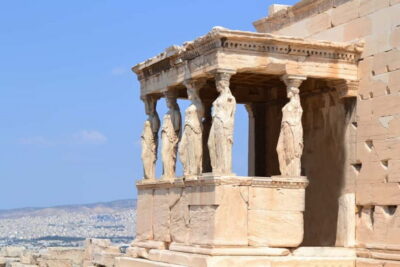
Athens: Acropolis and Parthenon Guided Walking Tour
Read our review →

Athens: Guided Greek Food Walking Tour with Tastings
Read our review →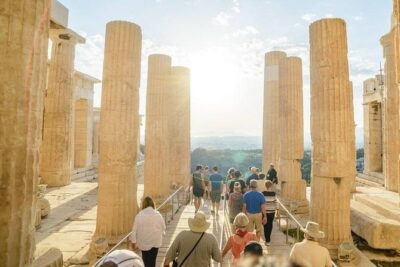
Acropolis monuments & Parthenon Walking Tour with Optional Acropolis Museum
Read our review →
Acropolis, Parthenon & Athens Old City Heritage Walking Tour
Read our review →
Athens Authentic Greek Food Walking Tour (Small Group)
Read our review →
Athens: Ultimate Food Walking Tour with 15 Tastings
Read our review →
Athens: The Acropolis Walking Group Tour with a French Guide
Read our review →Lists this walk sits on