Review · AMSTERDAM
Amsterdam: Guided Anne Frank Small-Group Walking Tour
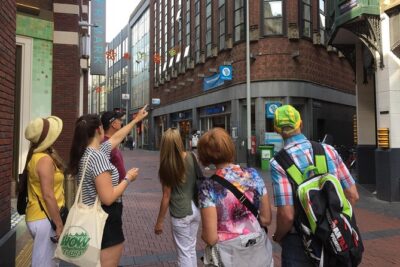
Amsterdam’s Anne Frank story becomes much clearer when you place it among the city’s Jewish quarter, wartime memorials, churches, canals, and old homes. This two-hour walking tour links those pieces, beginning at the Portuguese Synagogue and ending near the Anne Frank House, without taking you inside the house itself.
I like the thoughtful route and the guides’ personal way of telling it. Guides including Stefan, Sunil, Lola, Duncan, and Júlia have been praised for answering questions, adjusting the pace, and adding useful background about Amsterdam. I also like the modest $30 price, which buys a focused history lesson and a good orientation walk. The main drawback is important: Anne Frank House entry is not included, and the tour begins across town at Jonas Daniël Meijerplein.
Key points to know before you book
- Anne Frank House is not part of the tour: You see the Anne Frank Statue near the house, but you do not enter the museum. Tickets must be bought separately through the official website.
- The route begins in the Jewish Quarter: Meet beside the large dockworker statue at Jonas Daniël Meijerplein 21, directly in front of the Portuguese Synagogue.
- A serious subject is handled through varied stops: The route includes the Auschwitz Memorial, Holocaust memorial works, Rembrandt’s former home, Zuiderkerk, and Anne Frank’s memorial.
- The guide makes the difference: Stefan, Sunil, Lola, Duncan, and other guides have been singled out for clear explanations, warmth, humor, and patient answers.
- Plan for a full two hours outdoors: Wear comfortable shoes and dress for the weather. Rain and strong sun have both been part of the experience.
- Languages and access need a quick check: The activity details list English and Spanish, while the overview also mentions French. The tour is described as wheelchair accessible.
Starting at the Portuguese Synagogue in the Jewish Quarter
Your meeting point is Jonas Daniël Meijerplein, a square in Amsterdam’s former Jewish quarter. Look for the large statue of a dockworker, directly in front of the Portuguese Synagogue, also called Esnoga. This detail matters because the tour does not start at the Anne Frank House, and the two locations are not interchangeable.
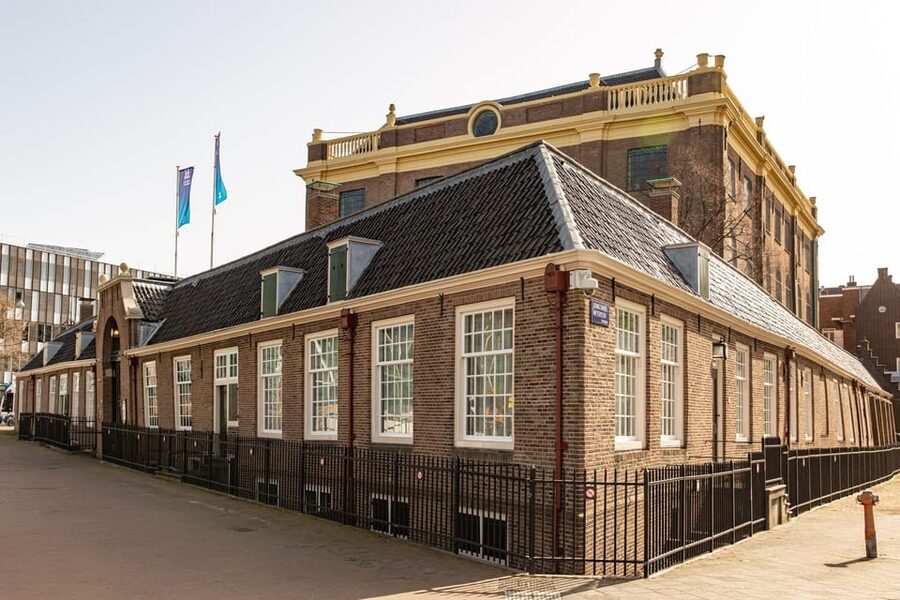
The Portuguese Synagogue is an impressive 17th-century building. The tour views it from outside, so you should not book this walk expecting an interior visit. Still, it is a fitting place to begin. The synagogue reflects Amsterdam’s Sephardic Jewish community and gives your guide a natural opening to discuss Jewish life in the city before the Second World War.
The building is known for its vast interior, wooden vaulted ceilings, and old-fashioned preservation. It has traditionally been kept without modern lighting or heating to retain its historic character. From the square, your guide can connect the building to the wider story of Jewish Amsterdam, migration, community life, and the destruction brought by Nazi occupation.
This first stop also gives you a useful sense of scale. Anne Frank’s story was not isolated inside one hiding place. It belongs to a much larger story involving families, religious communities, businesses, neighbors, deportation, resistance, and loss.
More Jewish Heritage Walking Tours around Amsterdam:
- Amsterdam Anne Frank: Small-Group Walking Tour & Local Guide
★ 4.8 · 12,789 reviews - Anne Frank’s Story – Guided Walking Tour through Amsterdam
★ 5.0 · 11,619 reviews - Amsterdam: Anne Frank Guided Walking Tour in DE/EN/IT/ES
★ 4.9 · 3,107 reviews
Understanding the Holocaust Memorial by Daniel Libeskind
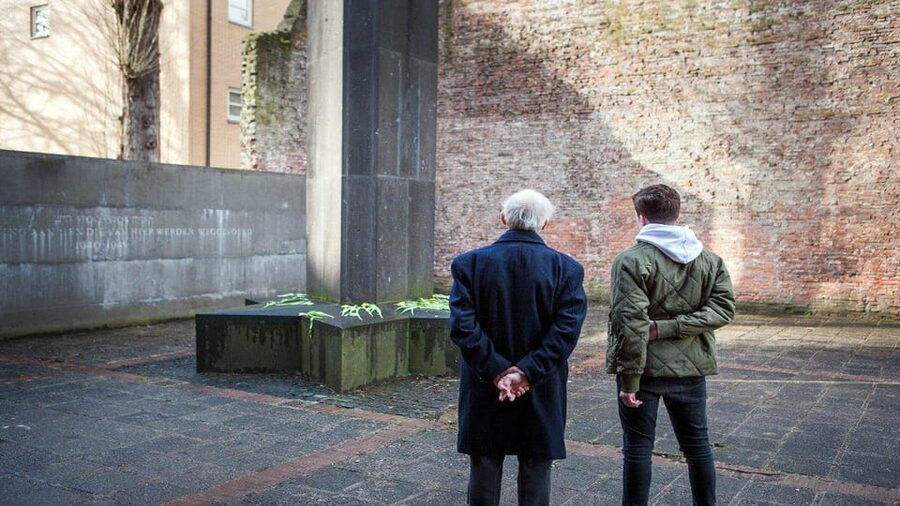
The route continues to a Holocaust Memorial designed by Daniel Libeskind. The supplied information describes the memorial as an important architectural tribute to Dutch victims of the Holocaust, with completion anticipated. Since the project’s status can change, I would treat this as a stop where your guide explains the design and its purpose rather than assuming every planned feature will be open or finished.
Libeskind’s work often uses architecture to create a sense of interruption, absence, and memory. That makes this a useful contrast to the Portuguese Synagogue. The synagogue points to a living community and its traditions, while the memorial asks you to consider what was taken away.
A good guide will keep this section grounded in people rather than only discussing architecture. Guides such as Lola and Stefan have been praised for explaining the significance of individual sites and handling painful material with care. That approach is especially valuable here because a quick photo stop would miss the reason the memorial exists.
Pausing at the broken mirrors of the Auschwitz Memorial

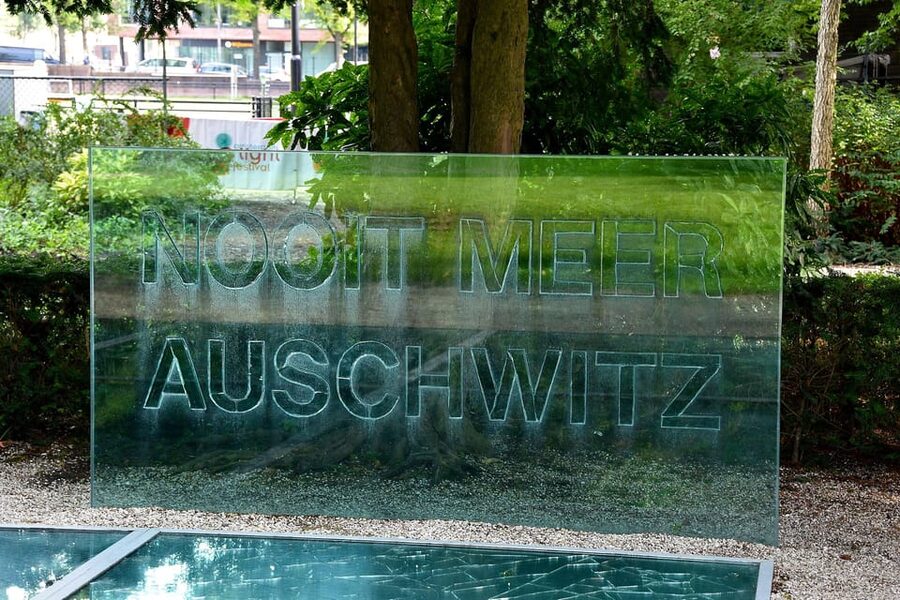
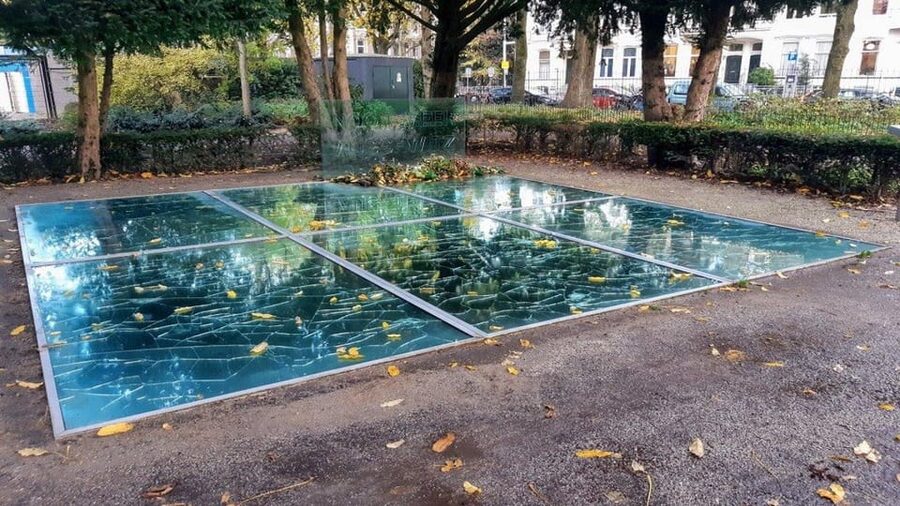
In Wertheimpark, you visit the Auschwitz Memorial, a work by Jan Wolkers. Its broken mirrors reflect the sky in fragments. The image is simple, but it carries a heavy meaning: lives and families shattered by the crimes of Auschwitz.
This is likely the quietest and most reflective part of the walk. The memorial does not rely on a long list of facts to make its point. You look down and see a broken sky, then consider the people represented by that image. Your guide’s explanation adds historical context, but the installation itself gives you space to think.
The stop also shows why a walking tour can be more useful than a lecture in a museum room. You move through real neighborhoods and public spaces, then pause at a memorial built into the city. Amsterdam’s past is not kept in one location. It appears in squares, parks, religious buildings, museums, and street views.
The subject is difficult, and this tour is not a light sightseeing stroll. Guides have used a little humor and less painful historical material between the heavier stops, but the central theme remains war, persecution, and the Holocaust. If you want only cheerful canal views, choose another walk. If you want a careful introduction to Amsterdam during the occupation, this route has purpose.
Passing Rembrandt’s former home
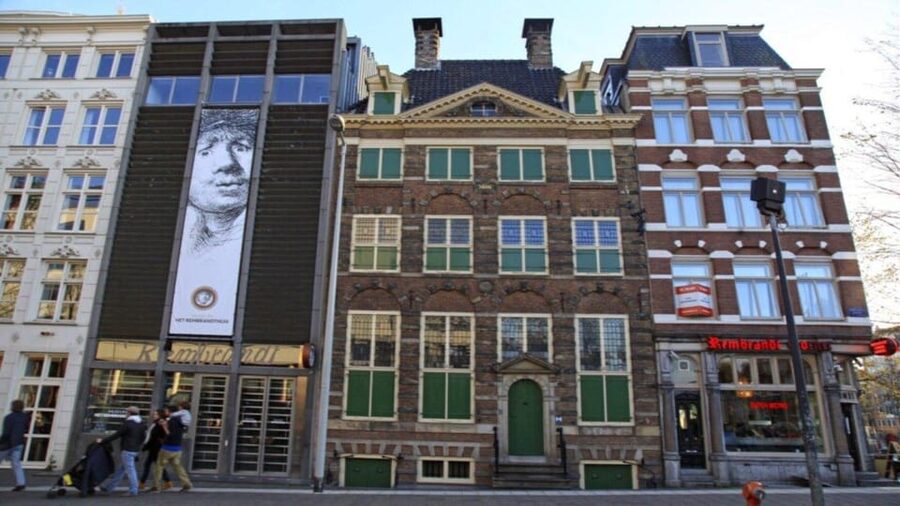
The next major stop is the Rembrandt House Museum. Rembrandt lived and worked here, and the building has been restored to reflect its earlier appearance. It presents his etchings, personal belongings, and working methods.
The tour passes the museum rather than including entry. That limitation is worth noting, but the stop broadens the walk beyond wartime history. Amsterdam can feel like a string of separate attractions if you visit only famous museums. Here, Rembrandt’s home becomes part of a larger explanation of how the city developed, who lived there, and how its neighborhoods changed over time.
You may also use this point to ask your guide about Amsterdam’s architecture and daily life. Several guides have been praised for connecting the Anne Frank story to the city’s wider development, not simply repeating a short biography. That extra context helps you understand the streets around you instead of viewing them as scenery between memorials.
If you want to visit the Rembrandt House Museum inside, plan that separately. The walking tour does not include food, drinks, or museum admissions.
More Small-Group Walking Tours in Amsterdam:
- Amsterdam: Anne Frank Guided Small Group Walking Tour
★ 4.8 · 2,722 reviews - Amsterdam Highlights Walking Tour: Small Group Experience
★ 5.0 · 1,132 reviews - Amsterdam Small-Group Walking Tour
★ 4.7 · 995 reviews - Amsterdam: Small-group Guided Walking Tour (French/English)
★ 5.0 · 289 reviews
Seeing the Zuiderkerk and its landmark tower
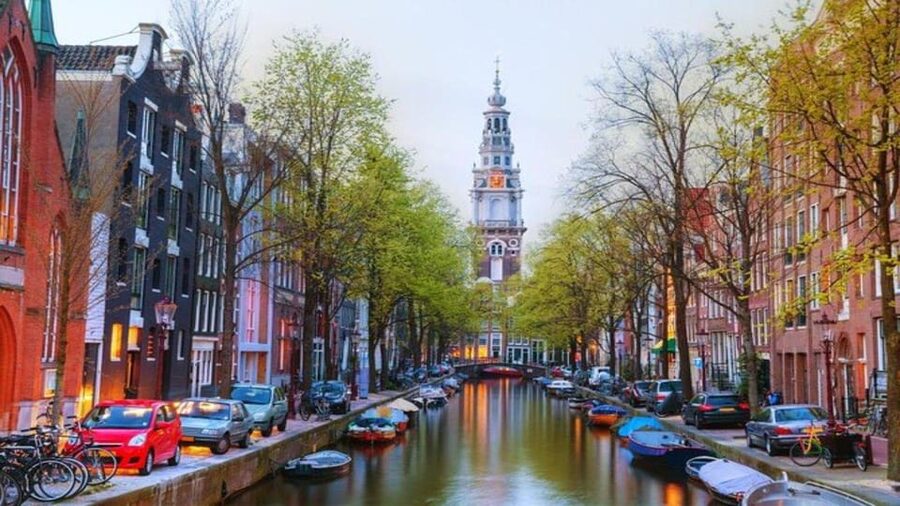
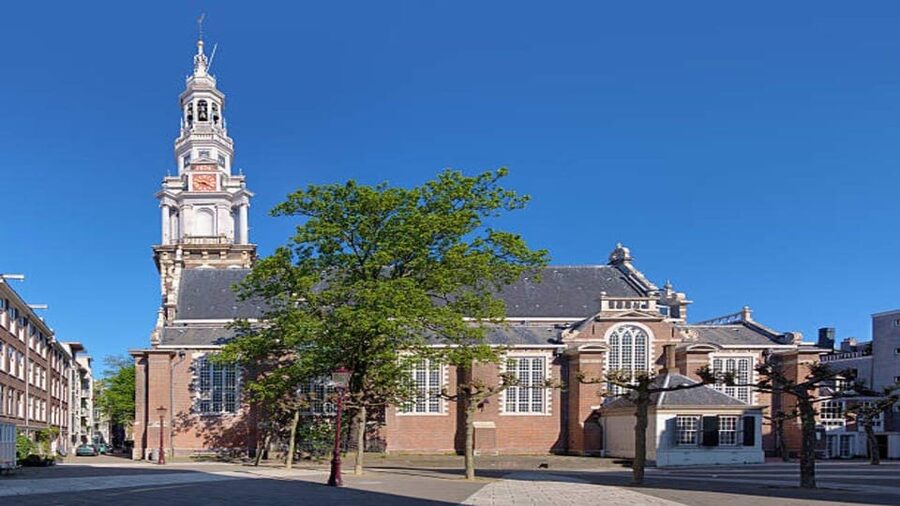
The walk also passes the Zuiderkerk, Amsterdam’s first Protestant church. Its tower is a notable feature and is associated with city views, although this tour does not promise a tower visit. Today, the building serves as a municipal information center, but it remains an important part of Amsterdam’s architectural story.
This stop may seem less directly connected to Anne Frank than the Jewish Quarter or the Auschwitz Memorial. That is exactly why it helps. The guide can place Jewish Amsterdam, Protestant Amsterdam, civic Amsterdam, and the wartime city in the same physical setting.
A route with several types of landmarks can prevent the experience from becoming repetitive. You are not standing beside one memorial after another while hearing the same kind of explanation. Instead, the walk shifts between faith, art, architecture, occupation, and personal history.
The pace has generally been described as steady rather than rushed. That is useful on a two-hour route with serious discussion. You need enough time to listen, look around, and ask questions without feeling that you are being pushed from one point to the next.
Ending at Anne Frank’s Statue near the Anne Frank House
The final stop is the Anne Frank Statue near the Anne Frank House. It is a tribute to Anne’s life and writing, but also a reminder of the consequences of intolerance. By arriving here after the Jewish Quarter and the wartime memorials, you see Anne’s story as part of a wider human tragedy rather than as a stand-alone celebrity story.
This is where expectations must be clear. You do not enter the Anne Frank House on this tour. You see the area and the statue, and your guide explains Anne’s legacy, but the museum interior requires a separate ticket purchased through the official website.
That distinction has surprised some people who assumed the title meant house admission. I would book this walking tour only if you understand that it is an outdoor history tour. If you already have Anne Frank House tickets, the walk can work well before or after your visit by giving you more context. If you want the house itself and nothing else, spend your time and budget on securing official museum admission instead.
The tour’s ending point also makes practical sense. You finish near one of Amsterdam’s most sought-after historic sites, with the story fresh in your mind. The guide may be able to offer general suggestions for the rest of your day, though you should not treat that as a guaranteed part of the service.
What the guides add to the experience
The strongest part of this tour is the human guide. The route has clear historical value, but the quality of the explanation will shape your experience.
Stefan has been praised for his grasp of Amsterdam, Anne Frank, the Jewish quarter, and the Holocaust. He is also described as friendly, willing to answer questions, and comfortable adding humor when the subject allows it. Sunil has received similar praise for his energy, warmth, and ability to connect wartime history with the wider Dutch experience.
Lola has been noted for a sensitive presentation of difficult material, while Duncan has been described as especially warm, funny, and flexible when a group’s size allowed for a more personal conversation. Júlia and Ana have also been recognized for making the walk clear and approachable.
You cannot choose your guide from the information provided, so I would not book expecting one particular person. The useful point is that the tour has attracted guides who do more than recite dates. They answer questions, adjust explanations, and sometimes tailor the walk to the group’s interests.
One unusual possibility is a very small group. On some departures, a few people have not shown up, leaving a near-private experience. You should not count on that, but a small group can make it easier to ask questions and discuss sensitive subjects.
How much value do you get for $30?
At $30 per person, this is a good-value introduction if you want interpretation rather than admission tickets. You are paying for two hours with a historian guide and a planned route through several significant parts of Amsterdam.
The price looks especially fair if you would otherwise walk between these sites without knowing what they mean. The Portuguese Synagogue, Holocaust Memorial, Auschwitz Memorial, Rembrandt House, Zuiderkerk, and Anne Frank Statue are not all part of one simple sightseeing path. The guide gives them a shared frame.
The value is lower if you already know Amsterdam’s wartime history well or prefer to explore alone. You will not enter the Portuguese Synagogue, Rembrandt House Museum, or Anne Frank House, and the tour does not include food, drinks, or transport. Think of it as a guided outdoor lesson, not an admission package.
The two-hour length is another strength. It is long enough to cover serious material but short enough to fit into a busy Amsterdam schedule. You will be walking the whole time, so comfortable shoes matter. There are no promises of umbrellas, drinks, or indoor shelter, so bring your own plan for rain and sun.
Meeting point, weather, languages, and access
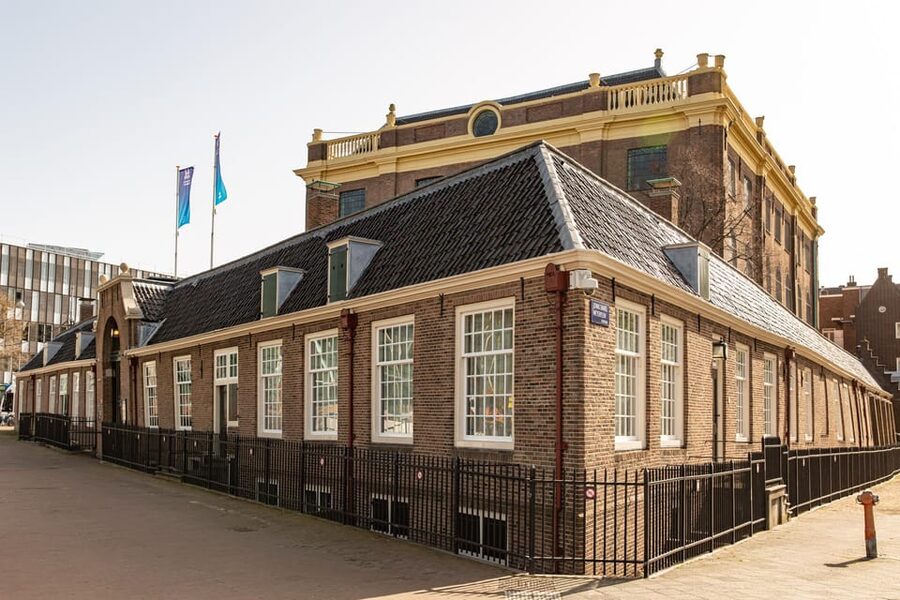
Give yourself time to find Jonas Daniël Meijerplein 21, 1011 RG Amsterdam. The large dockworker statue is the key marker, and the Portuguese Synagogue is directly in front of it. One practical concern is that the meeting point can be harder to locate than expected, particularly if you arrive in a hurry.
The route is outdoors, so wear weather-appropriate clothing. Bring comfortable shoes, and consider an umbrella or sun protection. The walk has gone ahead in rain and heat, and the guide may keep the group moving rather than provide shelter.
The activity details list English and Spanish as the available languages. The overview also mentions French, so check the language option shown for your chosen departure before paying. The tour is described as wheelchair accessible, but the route remains an urban walking route, so it is sensible to confirm any specific mobility needs in advance.
Free cancellation is available up to 24 hours before the start for a full refund. You can also reserve now and pay later, which helps if your Amsterdam schedule is still shifting.
Who should book this Amsterdam history walk?
I would recommend it to first-time visitors who want a clear introduction to Anne Frank, Jewish Amsterdam, and the Holocaust without spending an entire day in museums. It also suits anyone who likes walking tours that mix major memorials with ordinary streets and architecture.
Families with older children and teenagers may find the format easier to absorb than a long indoor presentation, though the subject matter is painful and requires maturity. History-minded adults will likely appreciate the connection between Anne Frank’s life and the larger story of Amsterdam.
I would be more cautious if you have limited mobility, dislike outdoor tours in uncertain weather, or want guaranteed entry to the Anne Frank House. I would also skip it if your main goal is Rembrandt or the Portuguese Synagogue interiors, since both are viewed from outside on this route.
Should you book it?
Book this tour if you want context, storytelling, and a useful two-hour route through Amsterdam’s Jewish quarter and wartime memorials. At $30, it offers solid value, especially with a guide such as Stefan, Sunil, Lola, or Duncan who can answer questions and adjust the tone.
Do not book it expecting Anne Frank House admission. Buy that ticket separately through the official website, then use this walk to understand the city and the people behind the name. For a short, serious, and well-priced introduction to Amsterdam’s wartime past, this is a sensible choice.
FAQ
Does the tour enter the Anne Frank House?
No. The tour ends near the Anne Frank Statue and Anne Frank House, but Anne Frank House entry is not included. Tickets for the house must be purchased separately through the official website.
Where does the Anne Frank walking tour begin?
It begins at Jonas Daniël Meijerplein 21, 1011 RG Amsterdam, in front of the Portuguese Synagogue, Esnoga. Look for the large statue of a dockworker.
How long does the tour last?
The walking tour lasts two hours. Check the selected date for available starting times.
What languages are available?
The activity details list English and Spanish. The overview also mentions French, so confirm the available language when choosing your departure.
Is the tour wheelchair accessible?
Yes. The activity information describes the tour as wheelchair accessible.
What should I bring?
Bring comfortable shoes and clothing suitable for the weather. The experience takes place outdoors and can continue in rain or hot conditions.
New walking tours around Amsterdam
- Amsterdam: Haunted History and Ghost Walking Tour★ 4.5 · 488 reviews
- Amsterdam: Food and Culture Walking Tour with Tastings★ 4.9 · 838 reviews
- Amsterdam: Small-group Guided Walking Tour (French/English)★ 5.0 · 289 reviews
- Amsterdam: Walking Tour, Jewish Museum & Synagogue Tickets★ 4.3 · 110 reviews
- Amsterdam: Treasure Hunt Walking Tour “A Secret Sender”★ 4.7 · 71 reviews
- Amsterdam: Sex, Drugs, and Freedom Walking Tour★ 4.6 · 74 reviews
- Amsterdam Small-Group Walking Tour★ 4.7 · 995 reviews
- Amsterdam: Jordaan District Local Food Walking Tour★ 4.8 · 311 reviews
Amsterdam Walking Tours, side by side.
Amsterdam Anne Frank: Small-Group Walking Tour & Local Guide
Read our review →
Anne Frank’s Story – Guided Walking Tour through Amsterdam
Read our review →
Absolutely Amsterdam – the Essential Introductory Walking Tour
Read our review →
Amsterdam: Anne Frank Guided Small Group Walking Tour
Read our review →
Anne Frank Walking Tour Amsterdam Including Jewish Cultural Quarter
Read our review →