
Review · THAILAND
Chiang Mai Untouched Elephant: Nature Walk & Waterfall Trek
The best part of this Chiang Mai outing is the simple routine: you help prepare food, feed rescued elephants, walk beside them without saddles, and follow them to the river. It feels closer to a mahout’s workday than to a staged animal show, with local families and their elephants sharing the same village life.
I like the no-riding policy and the fact that elephants are not forced to perform. I also like the home-cooked meal, the quiet jungle walk, and the chance to see the animals at their own pace. The possible catch is the journey. The drive can take about two hours each way, and some departures run closer to seven hours than the advertised five.
Key points at a glance
- Feed and walk with rescued elephants: Prepare food, offer it by hand, and watch the elephants move through the forest without chains, hooks, or saddles.
- A real mahout setting: Spend time in a traditional village where elephants have lived alongside local families for generations.
- River mud bath and wash: Join the elephants at the water for a natural, hands-on bathing session, provided they choose to take part.
- Home-cooked Thai lunch: Eat a complimentary local meal prepared with fresh ingredients after the morning with the elephants.
- Mae Wang Waterfall stop: Finish with about an hour of free time and walking at a popular Chiang Mai waterfall.
- Expect a rough-edged day: Transport may involve an older minibus and open-air or roofed 4×4 trucks, and the schedule follows the elephants rather than a strict clock.
Leaving Chiang Mai for the mahout village
Pickup is available from hotels in and around Chiang Mai Old Town, with a free transfer for accommodation within five kilometers of the Old City. You wait in the lobby from ten minutes before the agreed pickup time. Outside that area, a surcharge applies.
The transport can change during the journey. You may begin in a 12-seat air-conditioned van or an open-air pickup truck, then switch to a roofed 4×4 truck for the final approach to the sanctuary. This is part of the rural setting, but it is not the most comfortable way to spend a long ride.
Plan for a slow start and a potentially long return. One published description gives the total time as five hours, yet actual days have run about seven hours, and one visitor reported roughly two hours of driving from Chiang Mai. If you have a dinner booking, flight connection, or another fixed activity, leave plenty of space.
The ride is worthwhile for the change in surroundings. Chiang Mai’s streets give way to mountain roads and rural communities. The tour is designed to take you away from the city and into a place where elephant care is tied to family life, not just a short photo stop.
More walking tours around Thailand:
- Bangkok: City Highlights Temple and Market Walking Tour
★ 4.5 · 3,990 reviews - Bangkok: Grand Palace and Wat Phra Kaew Guided Walking Tour
★ 4.4 · 2,417 reviews - Bangkok: Wat Pho and Wat Arun Guided Walking Tour
★ 4.6 · 1,720 reviews
Meeting the elephants and their caretakers
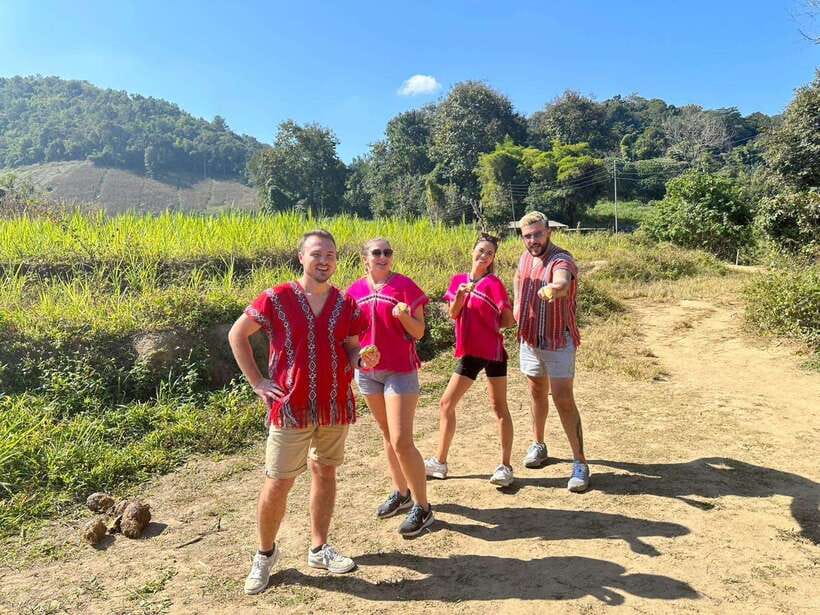
At the village, you meet local mahouts and the elephants they care for. The word mahout refers to an elephant caretaker, and the day gives you a practical look at that role rather than a lecture from behind a barrier.
The elephants are described as rescued animals. There are no chains or hooks at the park, and riding is not part of the experience. The animals are not made to perform tricks or follow a fixed set of commands for visitors.
That said, natural elephant care does not mean every moment will be quiet or private. Another group may be present, and one account found the experience more crowded than expected. The setting aims for a non-commercial feel, but its popularity can affect that goal.
The most important rule is flexibility. Activities depend on what the elephants want to do that day. You might spend more time feeding, walking, or watching than expected. That is a strength if you want animal welfare to guide the schedule, but it can disappoint you if you expect a carefully timed series of guaranteed encounters.
Preparing elephant food and feeding by hand
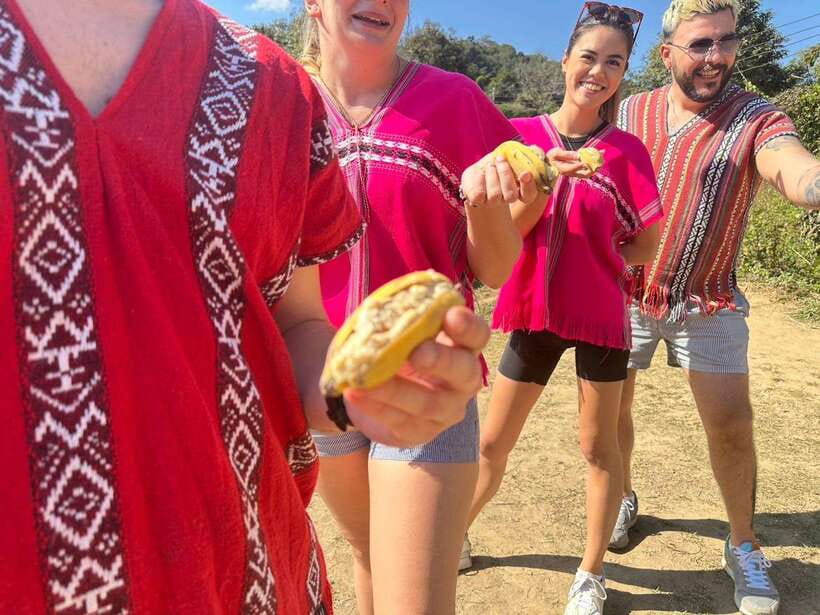
The morning begins with food preparation using traditional methods. You help get the elephants’ food ready, then offer it by hand. This is a small task, but it gives you a better sense of the daily work behind elephant care.
Feeding also lets you notice differences in behavior. The experience is not built around a performance. Instead, you watch how each elephant approaches, eats, and responds to the people around it.
You should follow the mahouts’ instructions closely. Elephants are large, powerful animals, even when they are calm and familiar with people. The setting may feel relaxed, but you are still taking part in an animal-care activity, not simply posing for photographs.
This is one of the strongest parts of the day for anyone who cares about responsible animal tourism. You are not paying for a ride or a trick. You are helping with basic care and observing the animals in a setting where their comfort controls the program.
Walking through the jungle without saddles
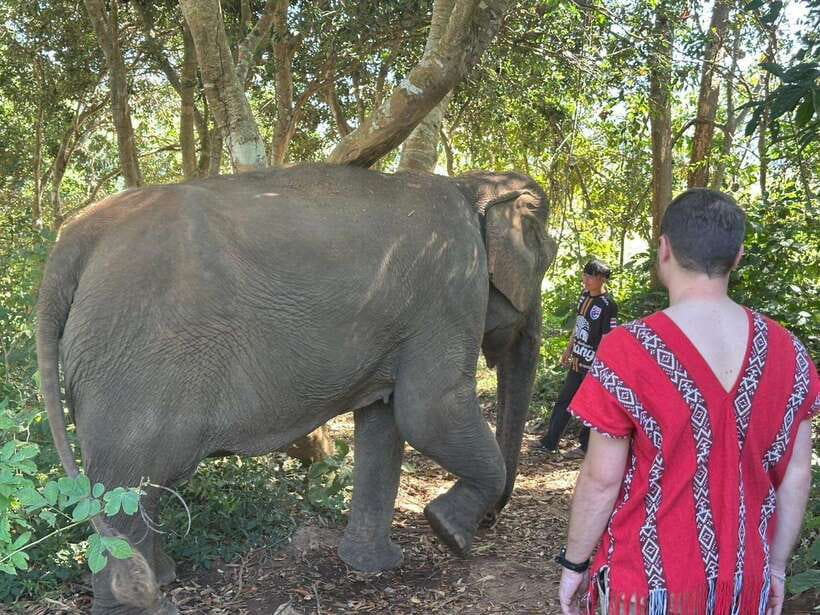
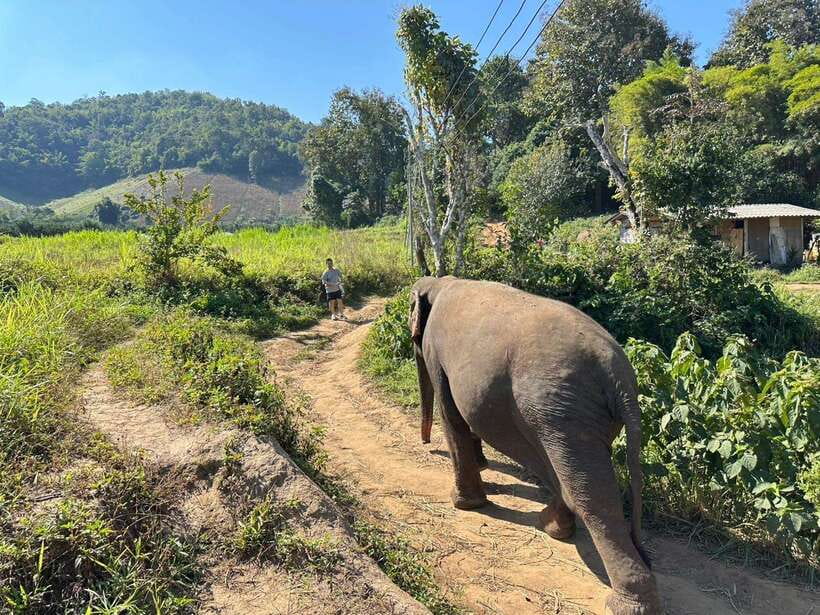
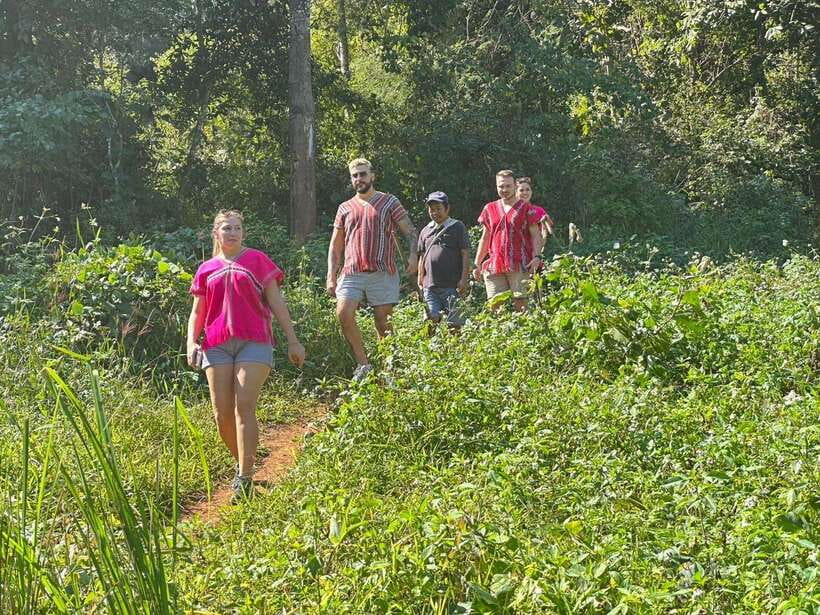
After feeding, you walk with the elephants through the surrounding forest. There are no saddles, and the elephants are not pushed through a planned routine. The walk is meant to show how they move and interact with their surroundings.
Do not expect a fast hike. The pace belongs to the elephants. You may pause while they eat, wander, or decide where to go next. That slower rhythm is the point, though it can feel unstructured if you are used to standard sightseeing tours.
The walk also adds physical demands. The activity includes trekking and outdoor movement, so a moderate level of fitness is needed. Wear shoes that can handle uneven ground, and expect heat, mud, and insects. The recommended items are sunglasses, a sun hat, sunscreen, and insect repellent.
You will want a change of clothes as well. One visitor specifically wished the information had advised bringing a swimsuit, towels, and dry clothing. The water portion can be wet and muddy, and you will enjoy it more if you are not trying to protect the outfit you plan to wear for the rest of the day.
Same streets, a different story:
- Chiang Mai: 3 Hour Old City and Temples Guided Walking Tour
★ 4.6 · 1,568 reviews - Bangkok Authentic Tasting Thai-Chinatown Walking Food Tour
★ 4.9 · 852 reviews - Chiang Mai: Historic Temples and City Guided Walking Tour
★ 4.7 · 650 reviews - Chiang Mai: Temple And City Walking Tour Part I
★ 4.7 · 244 reviews
The river, mud spa, and elephant bath
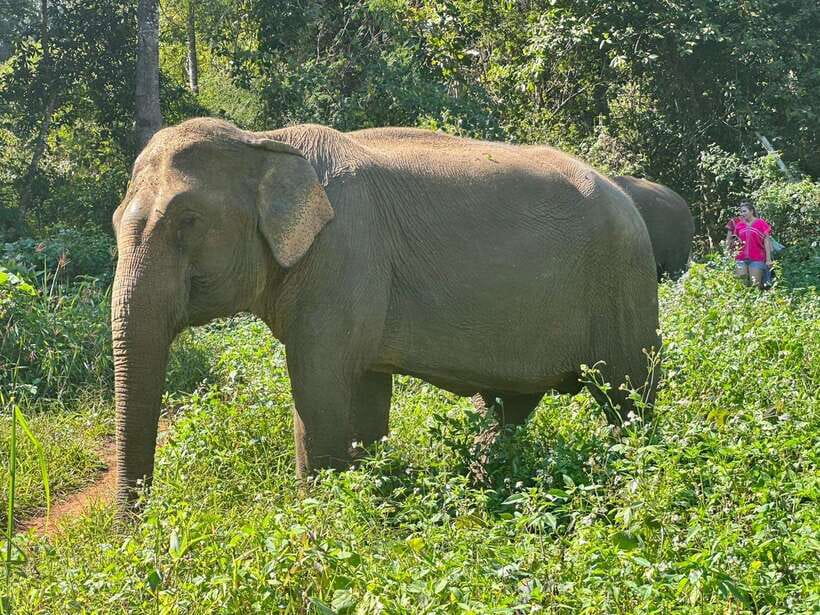
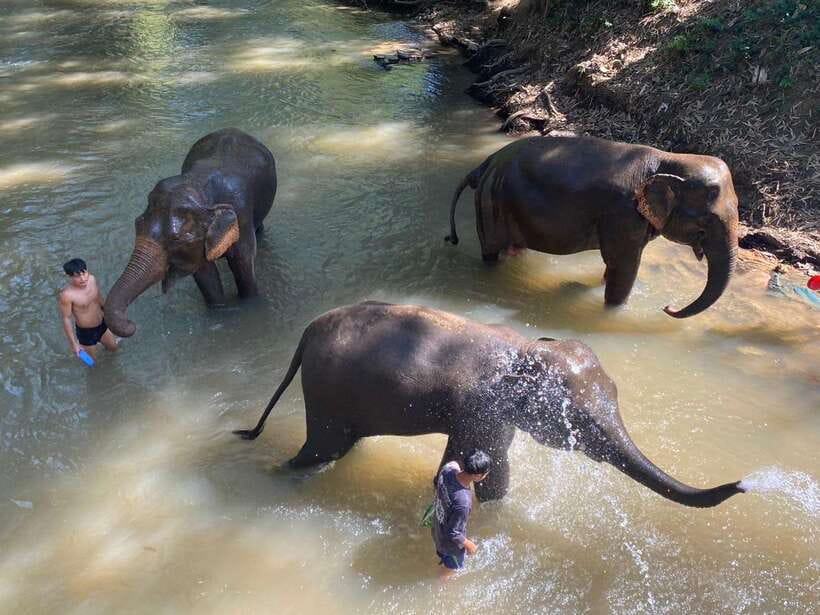
The elephants later head toward a river, where you may join them for a mud bath and wash. You can splash, scrub, and cool off alongside them, but the activity still depends on the animals’ mood and choices.
This is the most hands-on part of the experience, and it is also the part that requires the most common sense. Listen to the mahouts, keep your movements calm, and give the elephants room. The tour does not force the animals to take part, so the river stop may be brief or may become a longer period of watching and helping.
Bring a swimsuit, towel, and a full change of clothes even though they are not on the official list of suggested items. Pack your sun hat and insect repellent too. A waterproof bag for your phone would be useful, but that item is not specifically supplied, so plan your own protection for electronics.
The bath is valuable because it removes the usual distance between visitor and animal without turning the encounter into a ride. Still, do not judge the day by how long you spend in the water. The ethical promise here is that the elephants’ choices come first.
Lunch with a local family
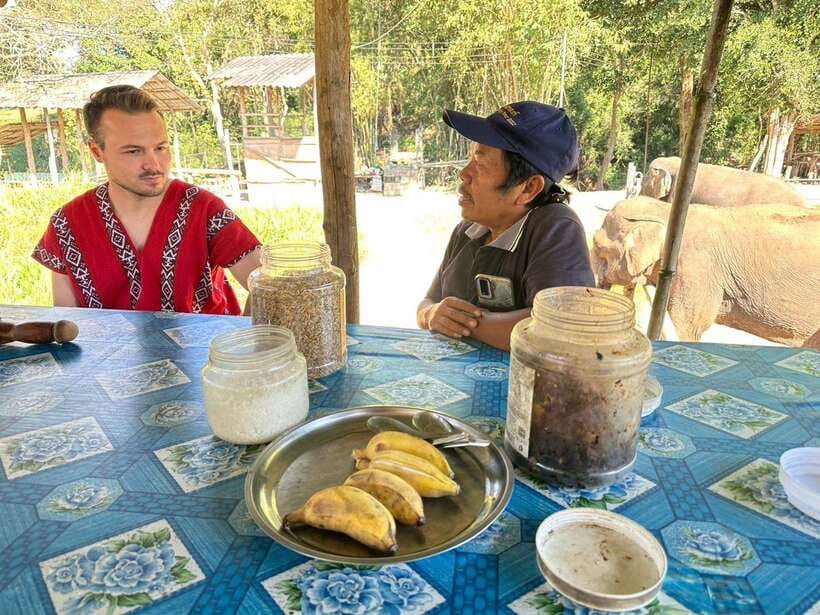
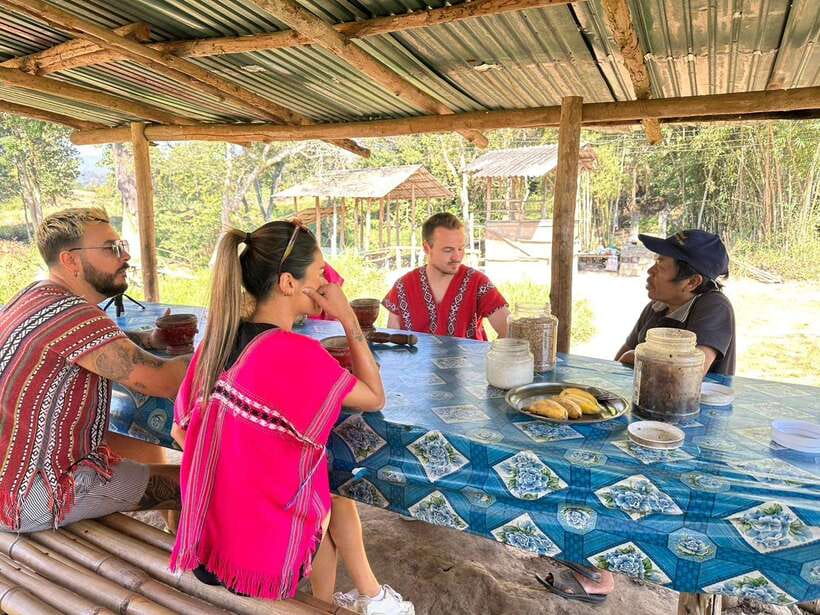
After the elephant activities, you return to the village for a complimentary local meal. It is prepared by local families with fresh ingredients and forms an important part of the visit, rather than being an afterthought between attractions.
Food was one of the most warmly praised parts of the experience. One meal was described as delicious, while another account noted that the chips arrived cold. That gives you a fair picture: expect a good home-cooked Thai lunch, but not a restaurant-style service or perfectly timed buffet.
Tell the operator about dietary restrictions in advance. The meal is part of the package, and early notice gives the local cooks a chance to plan. Drinking water is included.
Lunch also gives you time to slow down. The stated aim is to spend the afternoon as the mahouts do, helping with small daily tasks or simply resting in the village. There may not be a formal activity every minute. If you prefer a packed program, this pause may feel too loose. If you want a look at rural daily life, it is one of the more meaningful details.
Mae Wang Waterfall and the final hour
The last listed stop is Mae Wang Waterfall, with about an hour for walking and free time. It adds a second outdoor setting to the day and gives you a chance to cool off after the village activities.
The waterfall is not guaranteed to feel secluded. One account found it crowded, which is useful to know before booking a tour marketed around an untouched experience. You may find a pleasant natural stop, but you should not count on having the water entirely to yourself.
The visit is best treated as a short nature break rather than the main reason to book. The elephants and village remain the heart of the day. If you are already tired after the walk and river activities, the hour at the waterfall may feel like a gentle finish rather than another major excursion.
How the price compares with the experience
At $51 per person, the cost is reasonable if you value transport, a guide, lunch, drinking water, and access to a rescued-elephant setting. A private transfer into the mountains, a local meal, and a full day of elephant care would normally add up quickly, so the package offers solid value for the right kind of visitor.
You are not paying for polished entertainment. You are paying for a rural outing with basic transport, local participation, and a flexible schedule. The value drops if your priority is comfort, exact timing, or a private encounter.
The experience received a 4.7 rating from 77 bookings, with strong praise for the elephant care, welcoming staff, meal, and natural setting. Jimmy was singled out as a brilliant guide in one account, but guide assignments can vary, so do not assume he will lead your departure.
The main cost is not financial. It is time and comfort. The road journey can be tiring, the vehicles may feel cramped or old, and the day may stretch well beyond five hours. Older visitors in particular should think carefully about the open-air truck and the long ride.
Who will enjoy this elephant experience
I would choose this outing if you want to support a no-riding model and spend time around elephants without tricks or forced contact. It suits people who enjoy rural settings, simple meals, outdoor activity, and plans that can change according to the animals.
It is also a good fit if you want more than a short feeding session. You prepare food, walk with the elephants, visit the river, share lunch, and see how the caretakers’ daily routine works.
I would be cautious if you need a precise five-hour schedule. The journey may be long, and the actual day has sometimes run to seven hours. You should also reconsider if you dislike mud, heat, rough transport, or walking on uneven ground.
This is not the best pick for anyone seeking luxury. It is not ideal if you want a highly polished tour with a professional presentation at every stage. The English-speaking guide can help you through the day, but the village experience is intentionally informal.
Booking details worth checking before you go
Free cancellation is available up to 24 hours before the activity for a full refund. You can also reserve and pay later, which helps if your Chiang Mai plans are still moving around.
Pickup covers hotels in and around the Old Town within five kilometers. If your accommodation lies farther out, ask about the extra transfer cost before confirming.
The guide language listed is English. Wear clothes that can get wet and dirty, and bring sun protection, insect repellent, a swimsuit, towel, and spare clothes. Tell the operator about dietary needs ahead of time.
Should you book this tour?
Book it if you want an animal-first experience with rescued elephants, local mahouts, a simple village meal, and no riding. The feeding, jungle walk, and river visit offer a more respectful way to spend time with elephants than shows built around tricks or saddles.
Skip it if you need comfort, privacy, or a tightly controlled timetable. The long transfer, change of vehicles, possible crowds, and flexible schedule are real drawbacks.
For most people who care more about the quality of the elephant interaction than the polish of the transport, $51 is fair value. Just treat the five-hour label as an estimate, pack for water and mud, and leave your afternoon open.
FAQ
How long does the Chiang Mai elephant experience last?
The listed duration is five hours, but the full day may run longer. One reported outing lasted about seven hours, and the drive can take roughly two hours from Chiang Mai each way.
Where is hotel pickup available?
Pickup is available from hotels in and around Chiang Mai Old Town. Transfers are free for accommodation within five kilometers of the Old City. Locations outside that area incur a surcharge.
Are the elephants rescued?
Yes. The elephants at the park are described as rescued animals cared for by local mahouts.
Can I ride the elephants?
No. Elephant riding is not included. The elephants are not forced to perform, and the park does not use chains or hooks.
Will the elephants definitely take part in every activity?
No. The activities depend on what the elephants want to do that day. The schedule may change according to their behavior and comfort.
Is lunch included?
Yes. A complimentary local meal is included, along with drinking water. Tell the operator about dietary restrictions in advance.
What transport is used?
You may travel in a 12-seat air-conditioned van or an open-air pickup truck, then change to a roofed 4×4 truck for the route to the sanctuary.
What should I bring?
Bring sunglasses, a sun hat, sunscreen, and insect repellent. You should also pack a swimsuit, towel, and change of clothes because the river and mud bath can leave you wet.
Is this suitable for someone with limited fitness?
The tour includes trekking, walking, and outdoor activities, so a moderate fitness level is required. The transport may also be uncomfortable for people who find long rides or open-air trucks difficult.
New walking tours around Thailand
- Local Life, Culture & Food Walking Tour at Chinatown★ 4.7 · 119 reviews
- Khao Lak: Full-Day Khao Sok Jungle Walk and Canoeing Tour★ 4.7 · 149 reviews
- Chiang Mai: Temple And City Walking Tour Part I★ 4.7 · 244 reviews
- Chiang Mai: Historic Temples and City Guided Walking Tour★ 4.7 · 650 reviews
- Chiang Mai: Local Food and Markets Guided Walking Tour★ 4.3 · 175 reviews
- Bangkok: Grand Palace and Wat Arun Guided Walking Tour★ 4.5 · 118 reviews
- Bangkok: Grand Palace, Wat Pho, & Wat Arun Walking Tour★ 4.6 · 116 reviews
- Bangkok: Discover a Taste of Chinatown – 2 Hr Walking Tour★ 4.2 · 152 reviews
Thailand Walking Tours, side by side.
Bangkok: City Highlights Temple and Market Walking Tour
Read our review →
Bangkok: Grand Palace and Wat Phra Kaew Guided Walking Tour
Read our review →
Bangkok: Wat Pho and Wat Arun Guided Walking Tour
Read our review →
Chiang Mai: 3 Hour Old City and Temples Guided Walking Tour
Read our review →
Bangkok Authentic Tasting Thai-Chinatown Walking Food Tour
Read our review →
Chiang Mai: Historic Temples and City Guided Walking Tour
Read our review →
Chiang Mai: Temple And City Walking Tour Part I
Read our review →
Khao Lak: 2-Hour Elephant Sanctuary Eco-Walk with Guided
Read our review →Lists this walk sits on