
Review · ROMANIA
Cluj-Napoca: 2.5-Hour Guided Walking Tour
Cluj-Napoca’s old center is a history lesson you can walk through. In 2.5 hours, this tour links the city’s Hungarian, Romanian, and German past with Matthias Corvinus’s birth house, the Gothic bulk of St. Michael’s Church, old defensive walls, and the grand National Theatre.
I like the clear historical sweep, from the Dacians and Romans through the Middle Ages, world wars, Communism, and modern Cluj. I also like the human stories, including medieval witches, wine, guilds, and the city’s changing religious life. The main drawback is that the tour focuses more on history and religion than everyday culture, and it is not recommended for people with limited mobility.
Key points at a glance
- Matthias Corvinus’s birthplace: Visit the modest house associated with Hungary’s famous 15th-century king.
- Union Square’s Gothic centerpiece: See St. Michael’s Church and the large equestrian statue of Corvinus.
- A city shaped by several cultures: Follow Cluj’s Hungarian, Romanian, German, religious, and academic influences.
- Story-filled walking route: Hear about medieval witches, trade guilds, city defenses, and changing political eras.
- Grand Avram Iancu Square: Compare the 1930s Orthodox Cathedral with the 1906 National Theatre.
- Flexible guiding style: Guides including Daniela, David, Andrei, and others adjust their pace and explanations to the group.
Why this Cluj-Napoca walk works so well
At $34 per person, this is priced as a short city orientation rather than a full-day excursion. That makes sense for Cluj-Napoca, where the main historic sights sit within a walkable central area and where the real value comes from understanding how the pieces fit together.
You are not simply ticking off churches and squares. The guide explains why Cluj has Hungarian royal connections, Romanian national symbolism, German influence, major university institutions, and several religious traditions close together. That context helps you read the city for the rest of your stay.
The tour lasts the full 2.5 hours, which gives the guide time to provide background before moving from sight to sight. It is long enough to cover the historic core without becoming a rushed photo stop. A few guides also adjust the pace to the group, and one guide stayed longer to finish the planned material. That sort of flexibility can make a real difference if your group asks many questions.
The strongest part is the historical framing. Daniela, Andrei, David, and other guides are praised for explaining not just what a building is, but how Cluj changed through the Dacian and Roman periods, the Middle Ages, World War I, World War II, Communism, and the present day. If you want a quick orientation before exploring alone, this is a smart first activity.
More walks with a guide around the world:
- Magical London: Harry Potter Guided Walking Tour
★ 4.7 · 22,044 reviews - History and Hauntings of Salem Guided Walking Tour
★ 5.0 · 14,564 reviews - Amsterdam Anne Frank: Small-Group Walking Tour & Local Guide
★ 4.8 · 12,789 reviews
Matthias Corvinus and the city’s Hungarian past
The route includes the birthplace of Matthias Corvinus, one of Hungary’s best-known medieval kings. The house itself is an intimate counterpoint to the larger monuments later in the walk. It gives the story a physical starting point: a person, a family, and a local address before the king became a major European ruler.
This stop also opens the door to Cluj’s Hungarian identity. The city’s history cannot be told through a single national story. Its languages, rulers, churches, schools, and public monuments reflect several centuries of change, and Matthias Corvinus is one of the clearest links to the Hungarian period.
The guide also discusses the importance of wine in the region. That detail may sound small beside royal history, but it helps keep the walk grounded in ordinary life, trade, and local culture. I like these side paths because they prevent the tour from becoming a list of dates and rulers.
Expect the guide to give you a broader story than the house alone provides. The focus is not on a lengthy interior visit. If you want to spend a great deal of time inside historic buildings, this may feel limited. The tour is mainly about the surrounding city and the meaning behind its landmarks.
Union Square and St. Michael’s Church
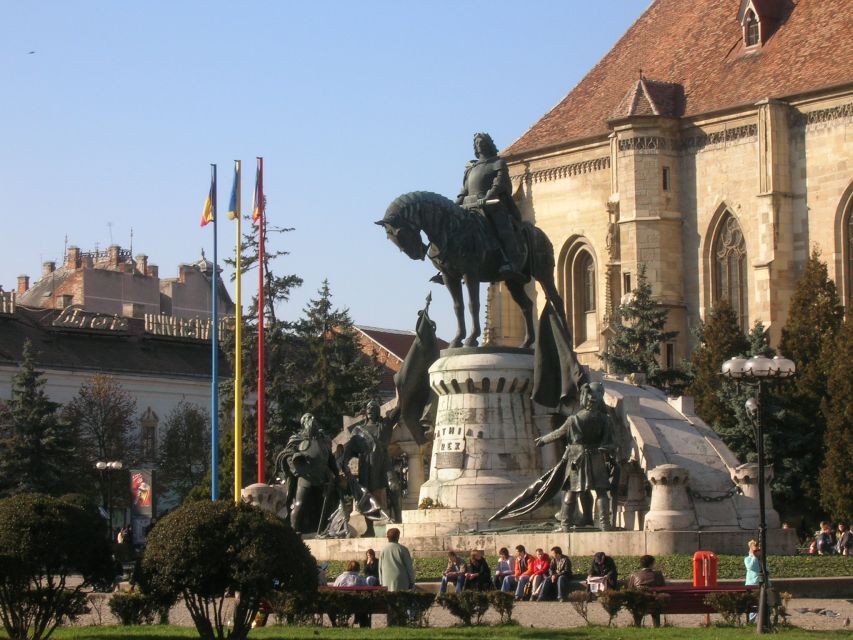
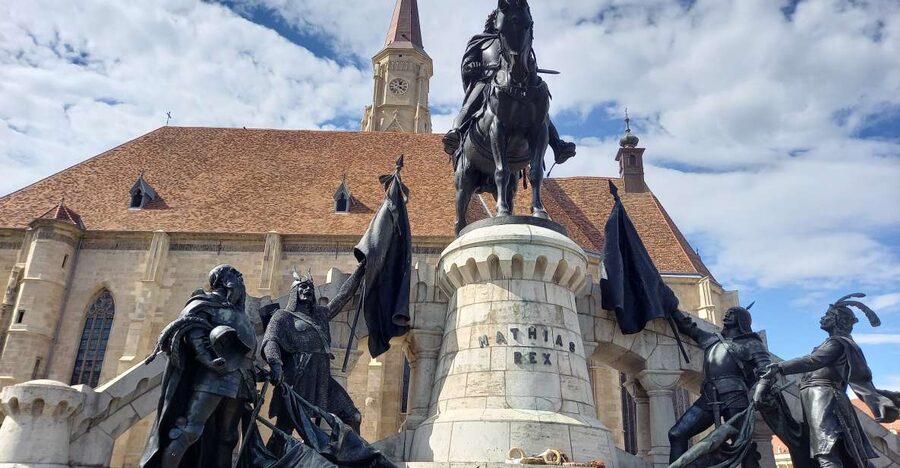
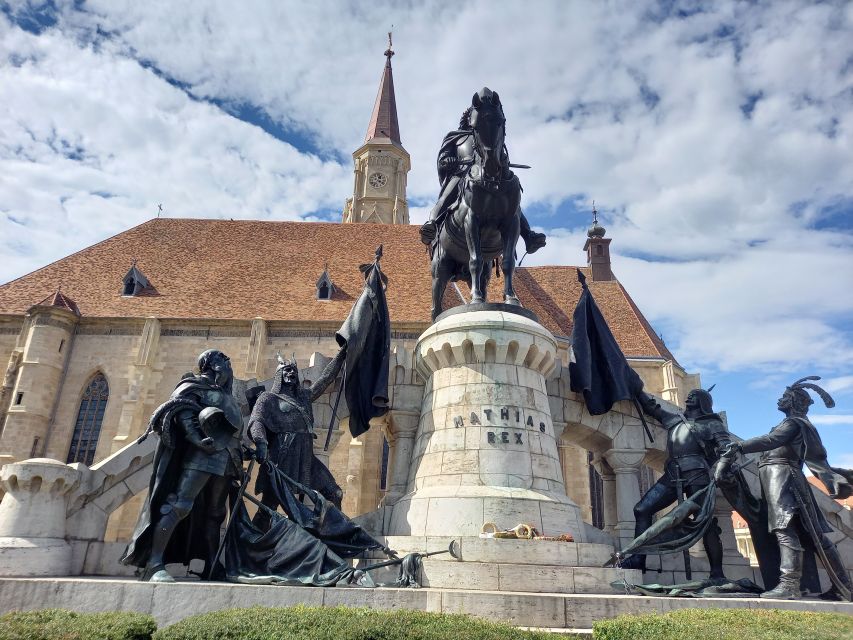
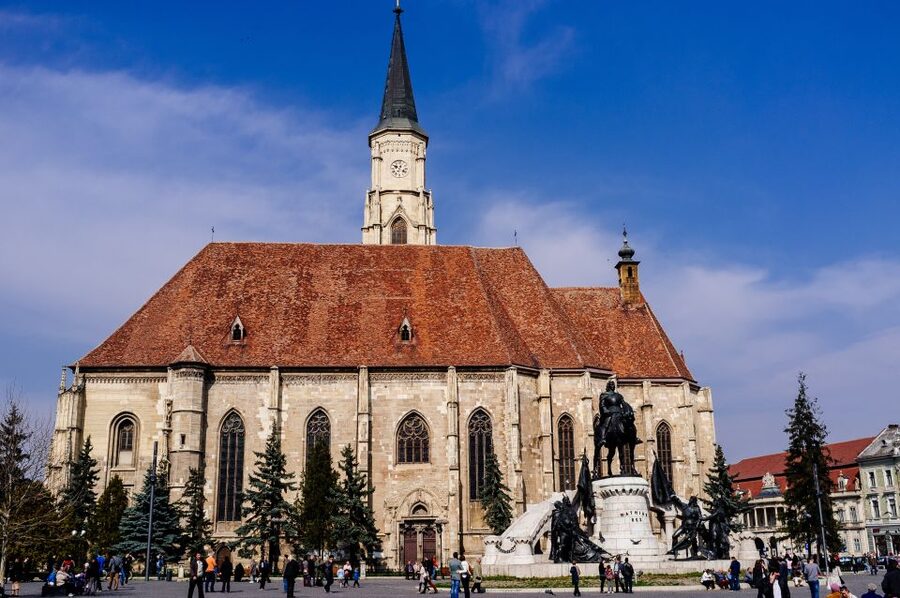
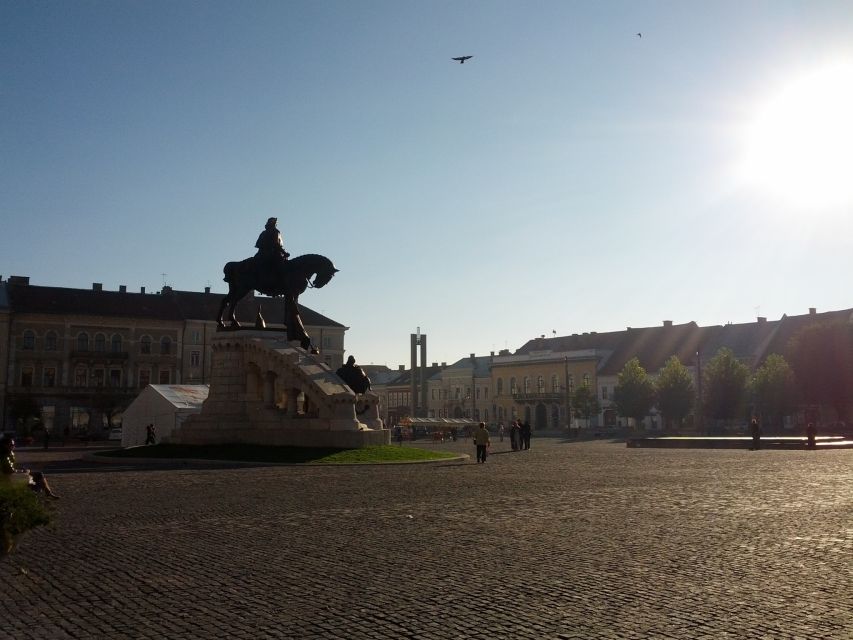
Union Square is the visual center of the walk. Here, the 14th-century St. Michael’s Church gives the square its Gothic weight, while the equestrian statue of Matthias Corvinus creates a strong link between architecture, royal memory, and public space.
The church is one of the tour’s key sights because it shows how powerful medieval religious architecture could be. Its Gothic style rewards a slow look upward, from the vertical lines of the building to the details around its entrances and upper sections. The guide’s explanation adds the political and religious setting that a quick visit on your own might miss.
The Corvinus statue is just as useful for understanding how cities choose to remember their past. It is not merely a monument to a king. It also reflects the Hungarian layer of Cluj’s identity and the way public spaces can carry more than one national meaning.
One practical point: interior access is not guaranteed as part of the experience. A past booking specifically wished for more interiors, so you should think of the church primarily as an architectural and historical stop from the outside unless your guide confirms entry. If seeing the inside matters greatly to you, ask before booking.
The Street of the Intellectuals and Babes-Bolyai University
From Union Square, the walk continues toward the area known as the Street of the Intellectuals. Its educational institutions, including Babes-Bolyai University, introduce another side of Cluj: the city as a center of learning and public debate.
This part of the route gives useful balance to the royal and religious sights. You see how schools and universities helped shape the city’s modern character, and you get a sense of why Cluj remains an important cultural and academic center in Romania.
The university connection also fits the multilingual story of the city. Cluj’s past has been shaped by Romanian and Hungarian communities, with German influence also part of the wider Central European setting. A good guide can explain those layers without pretending that the city’s history is simple.
Guides are especially helpful here because educational buildings can look ordinary if you do not know their background. Daniela has been praised for mixing historical detail with humor, while other guides have adapted their explanations to the group’s level of interest. If you are new to Romanian history, tell your guide early. You can then get the right amount of context rather than a flood of names and dates.
More walking tours around the world:
- Reykjavik Food Walk – Local Foodie Adventure in Iceland
★ 5.0 · 18,952 reviews - New Orleans Premier Ghost, Voodoo and Vampire Walking Tour
★ 4.5 · 12,856 reviews - Edinburgh: Harry Potter Magical Guided Walking Tour
★ 4.8 · 11,944 reviews - Edinburgh Castle: Guided Walking Tour with Entry Ticket
★ 4.7 · 11,699 reviews
Witches, guilds, and the texture of medieval Cluj
The walk becomes more personal when the guide turns to the fate of witches in medieval Cluj. This is the kind of story that brings a past period closer. It shows how fear, religion, law, and community pressure affected real people, not just rulers and architects.
The discussion of guilds adds another practical layer. Medieval guilds controlled trades, protected their members, and helped organize urban life. Their story explains how craftspeople and merchants fit into the city’s growth, even though the grandest monuments often focus on kings, churches, and politicians.
These details are among the tour’s best features because they break up the formal history. I would rather hear about a medieval worker, an accused witch, or the role of wine in local life than spend the entire walk memorizing construction dates. The guides appear to understand that balance, often adding stories and humor to keep the route moving.
Still, this is fundamentally a history tour. If your priority is food, nightlife, shopping, or current local customs, you may want to add another activity afterward. One criticism of the experience is that it could spend more time on culture beyond religion and political history.
The old walls and the shift toward Avram Iancu Square
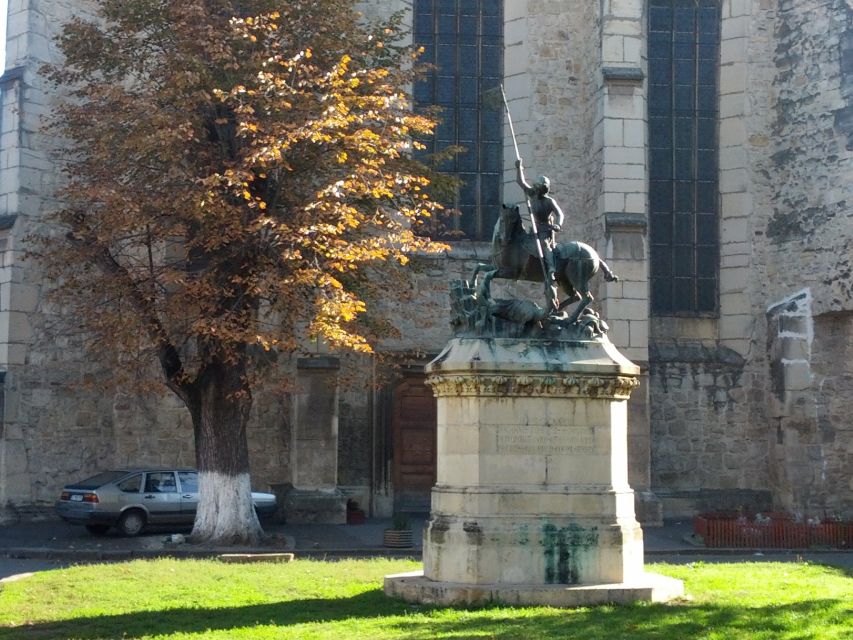
The remains of Cluj’s defensive walls mark a change in the walk. They are not as visually dominant as St. Michael’s Church or the National Theatre, but they help you picture the older city as a protected settlement with defined limits.
This is where the route connects monuments to urban growth. The city did not begin with grand modern squares. It expanded, changed its institutions, and developed new public spaces beyond the medieval core. The walk makes that movement visible as you leave the older center and approach Avram Iancu Square.
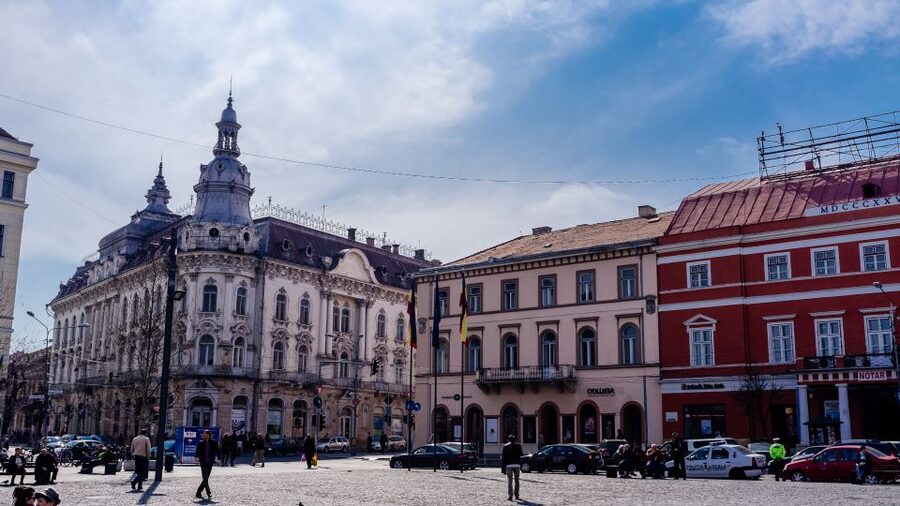
Avram Iancu Square represents a newer part of the old city. Its name carries Romanian national significance, and its buildings reflect a later period of public identity. The guide’s explanations are useful here because the square is best understood through the connection between architecture, politics, and national memory.
You should expect a steady walk rather than a series of long stops. The route includes several places to pause, and one visitor appreciated being able to sit down during the 2.5 hours. Still, wear comfortable shoes and plan for time on your feet.
The Orthodox Cathedral and National Theatre
Avram Iancu Square brings two major buildings into view. The Orthodox Cathedral was built in the 1930s, while the National Theatre dates from 1906 and was designed by Viennese architects. Together they show the city’s changing religious and cultural ambitions.
The cathedral gives the square a strong Romanian Orthodox presence. Its date matters because it belongs to a later period than the medieval church in Union Square. Seeing both on the same walk helps you compare how different eras expressed faith through architecture.
The National Theatre adds a more cosmopolitan note. Its Viennese design links Cluj with the wider Central European architectural world and shows how the city participated in artistic and cultural currents beyond Romania itself.
This closing section works well because it gathers the tour’s main ideas in one place: shifting borders, changing public identities, religious variety, and outside influence. It also gives you two substantial landmarks to remember after the smaller stories of witches, guilds, and city walls.
Guide quality and the feel of the walk
The experience is offered in English or German. Guide assignments vary, but names associated with the tour include Daniela, David, Andrei, Adrian, and Urzica. Daniela is repeatedly described as engaging and clear, while David is praised for showing lesser-known streets and explaining churches and buildings. Andrei is noted for keeping attention and welcoming questions.
Those details matter because a walking tour depends heavily on the person leading it. The strongest guides do more than recite facts. They adjust the level of detail, answer questions, add humor, and connect one sight to the next. That is especially useful in Cluj, where a short walk can cross several languages, faiths, and political periods.
The pace appears adjustable, and the full 2.5 hours allows for occasional seated pauses. The tour is also suitable for English and German speakers, which is helpful for mixed-language groups.
The provider marks the activity as wheelchair accessible but also says it is not recommended for people with mobility impairments. Treat that warning seriously. The route is lengthy, and the activity is built around walking between multiple historic areas. Ask for current route details before booking if mobility is a concern.
Is $34 good value?
For $34, you receive a full 2.5-hour guided tour rather than a brief introduction. The value is strongest if you are visiting Cluj for the first time or want a clear framework for the city’s past before exploring on your own.
You are paying for interpretation, not admission to a string of attractions. The included experience is the guided city walk, and the supplied details do not promise extensive interior visits or extra entry tickets. That distinction is important. If you want a museum-heavy tour or access inside every church and theatre, this is not the right product.
I consider the price fair for a private or very small-group experience if your date and time combination produces one. That has happened for some bookings, allowing the guide to adjust the pace and answer every question. You should not assume that result every time, but it is a welcome possibility.
Free cancellation up to 24 hours before the start and reserve-now, pay-later booking make it easier to fit the walk into a changing itinerary. Starting times depend on availability, so check the schedule before planning meals or other timed visits.
Who should book this Cluj walking tour?
I would choose this tour if you want:
- A first look at Cluj’s historic center
- A clear explanation of Romanian, Hungarian, and German influences
- Stories about medieval life, witches, guilds, and wine
- A guide who can explain churches, monuments, politics, and architecture
- A 2.5-hour activity that fits neatly near the start of a city break
- An English or German tour with room for questions
I would look elsewhere if you want a food tour, a nightlife introduction, extensive interior access, or a slow route designed for limited mobility. You may also find the emphasis too historical if your main interest is present-day culture.
Bring comfortable shoes and a sun hat. A face mask or protective covering is listed among the suggested items, and pets are not allowed.
Should you book it?
Book this tour if you want Cluj-Napoca to make sense before you explore it alone. The route covers the essential historic center, but its real strength is the connection between places: a king’s birthplace, a Gothic church, a university district, old walls, an Orthodox cathedral, and a Viennese-designed theatre.
The tour is especially worthwhile with a guide such as Daniela, David, or Andrei, though assignments can vary. Go in expecting history, religion, architecture, and public memory, with some human stories and humor along the way. If that sounds like your kind of introduction, $34 buys a useful and well-paced start to Cluj.
FAQ
How long does the Cluj-Napoca walking tour last?
The guided tour lasts 2.5 hours.
What languages are available?
The tour is offered in English and German.
What sights are included?
The route includes Matthias Corvinus’s birth house, Union Square, St. Michael’s Church, the equestrian statue of Corvinus, the Street of the Intellectuals, Babes-Bolyai University, remains of the old defensive walls, Avram Iancu Square, the Orthodox Cathedral, and the National Theatre.
Is the tour wheelchair accessible?
The activity is marked as wheelchair accessible, but it is also not recommended for people with mobility impairments. Ask for current route details if mobility is a concern.
What should I bring?
Bring comfortable shoes, a sun hat, and a face mask or protective covering.
Can I cancel for a full refund?
Yes. You can cancel up to 24 hours in advance for a full refund. The reserve-now, pay-later option lets you book without paying immediately.
New walking tours around the world
- Niagara Falls, Canada: White Water Walk Entry Ticket★ 4.5 · 147 reviews
- NYC: Walking Tour with Local Guide and 30+ Top NYC Sights★ 4.5 · 248 reviews
- Zadar: Food Tasting & Old Town Walking Tour★ 5.0 · 94 reviews
- Niagara Falls: Walking Tour, Journey Behind Falls, & Cruise★ 4.8 · 773 reviews
- New York City: Gangsters and Ghosts 2-Hour Walking Tour★ 4.7 · 615 reviews
- NYC: History of Slavery & Underground Railroad Walking Tour★ 4.7 · 87 reviews
- New York City’s Hell’s Kitchen: Walking Food Tour★ 4.8 · 200 reviews
- NYC: Brooklyn Bridge and DUMBO Guided Walking Tour★ 4.8 · 93 reviews
Romania Walking Tours, side by side.
Bucharest: City Highlights Guided Walking Tour
Read our review →
Bucharest: Communism and History Guided City Walking Tour
Read our review →
Bucharest: Hidden Markets Walking Tour with Tastings
Read our review →
Bucharest: Ghost Stories & Romanian Mythology Walking Tour
Read our review →
Bucharest: Guided Walking Tour with Romanian Snack
Read our review →
City Tour Sighisoara Legends & Landmarks A Walk Through Time
Read our review →Lists this walk sits on