
Review · ROMANIA
City Tour Sighisoara Legends & Landmarks A Walk Through Time
Sighișoara’s best trick is that it feels like a real town before it feels like a museum. You walk from the market square past painted burgher houses, old guild towers, and narrow stone lanes, then climb 164 wooden steps to the hilltop church. The Dracula connection gets attention, but the medieval town itself is the main event.
I like the way this tour connects architecture with everyday life, rather than treating the citadel as a collection of pretty façades. I also like the guides’ flexible approach. Peter, Charles, Carol, Andrea, and other local guides are praised for answering questions, showing old photographs, adjusting the route, and sometimes spending more than two hours with the group. The main drawback is the walking: steep sections, stairs, and uneven streets make this a poor fit for anyone with mobility limits. Entrance fees are also not included.
Key points at a glance
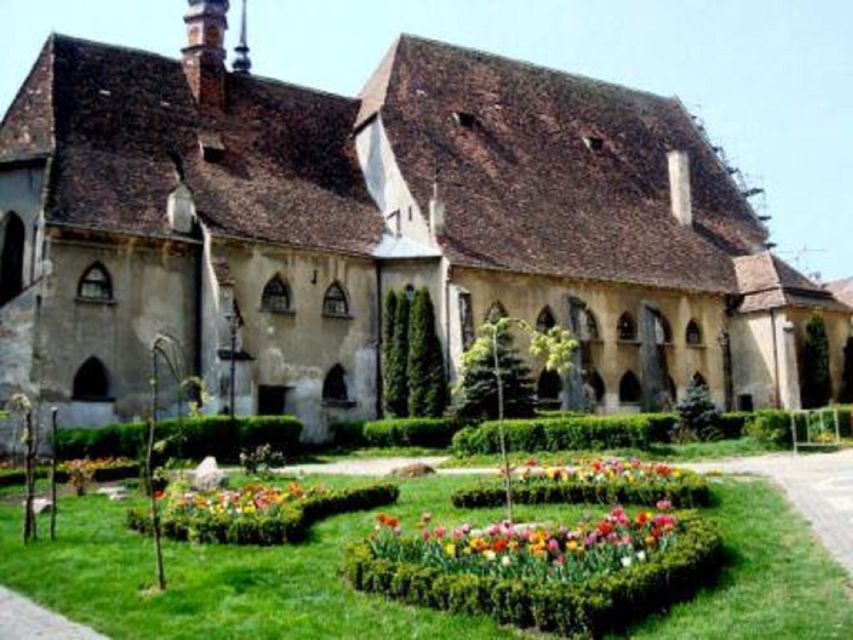
- A proper walk through the citadel: The route covers the market square, Clock Tower, guild towers, medieval houses, the cemetery, and the hilltop church.
- The Covered Staircase is part of the story: Its 164 steps were built to shelter schoolchildren heading uphill in bad weather.
- Dracula is placed in context: You visit Vlad the Impaler’s birthplace, but the tour gives you more than a quick vampire tale.
- The guides make the difference: Peter, Charles, Carol, Andrea, Jacob, and others are praised for clear English, local insight, patience, and flexibility.
- Plan for extra costs: The $45 price covers the guided walk, but food, drinks, entrance fees, and souvenir photos cost extra.
- A useful first-day activity: The central meeting point and compact route make this a good way to get your bearings before exploring alone.
Why Sighișoara works so well on foot
Sighișoara is one of Europe’s best-preserved medieval citadels and a UNESCO World Heritage Site. Its upper town is compact enough to explore on foot, yet packed with details that are easy to miss when you wander without context.
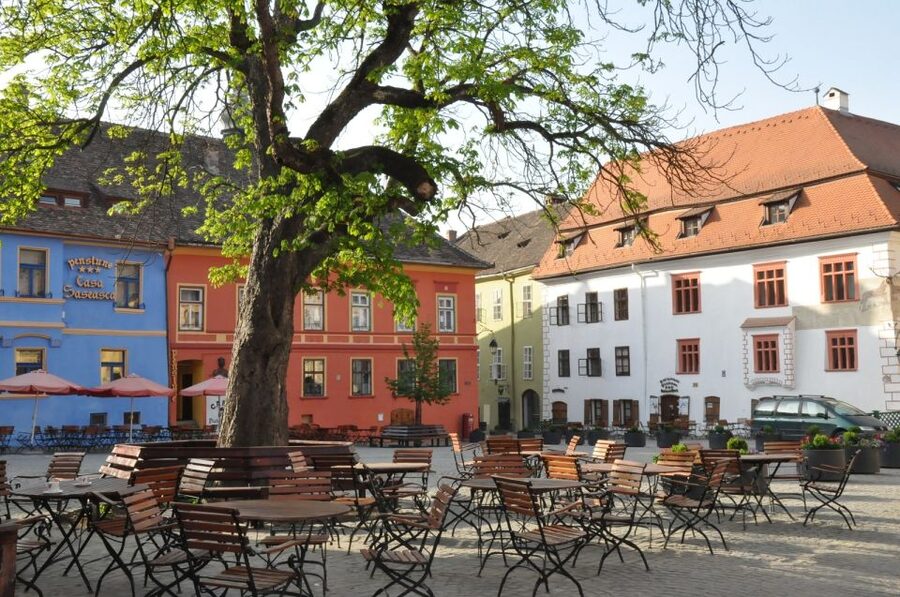
At 11:00, you meet in Piața Muzeului, in front of the Monastery Church, at number 5. The activity also lists number 6 as an alternate start and finish point, so check your booking details and look for the guide near the church. The tour returns to the same small area, with Piața Muzeului 5 and 6 listed as the drop-off points.
The two-hour route is not a bus tour or a quick photo stop. You walk through the old center, pause at important buildings, and climb uphill to the church and cemetery. Several people have found the pace thoughtful rather than rushed, with time for questions and occasional adjustments.
That matters in Sighișoara. The town’s appeal is not only in its headline sights. It is in the way a guild tower relates to the old defensive wall, how a house reveals the status of its former owners, and how the cemetery helps explain the town’s German-Saxon past. A good guide gives those connections a shape.
More crime and mystery walks around the world:
- Prague: Ghost Walking Tour Where Legends Come To Life
★ 4.4 · 5,253 reviews - Edinburgh Darkside Walking Tour: Mysteries, Murder and Legends
★ 5.0 · 3,862 reviews - Historical Walking Tour: Legends of Bruges
★ 5.0 · 2,541 reviews
The market square and the medieval citadel
The tour begins around the citadel’s market place, the central square surrounded by colorful burgher houses. This is a useful opening because it places you in the social heart of medieval Sighișoara, not just in front of an isolated monument.
Look up at the façades. The painted colors and decorative details make the square photogenic, but the guide’s explanation adds purpose. These buildings belonged to townspeople involved in trade, craft, and local government. Their appearance tells you that Sighișoara was a working town, not merely a fortress.
I would pay attention here to the proportions of the houses and the way the streets lead toward the towers. The compact layout helps you understand how the citadel functioned. The walls, gates, guild defenses, and homes all belonged to one tight urban system.
This opening section is also where the tour can help you get oriented. If Sighișoara is your first stop in the town, you will quickly learn where the main lanes, squares, towers, and hill route fit together. That can save time later, especially if you have only a day or two.
Dracula’s Birth House, with the legend kept in check
One of the most famous stops is the house associated with Vlad the Impaler, the historical figure who helped inspire the Dracula legend. It now operates as a restaurant and museum dedicated to Sighișoara’s past.
The value of seeing it with a guide is context. On your own, it is easy to reduce the stop to a Dracula photo opportunity. The tour places Vlad’s connection within the wider story of the town and Romania. Several guides are praised for explaining that there is much more to Vlad Dracul and Vlad the Impaler than the popular vampire image.
That distinction is important. Sighișoara is not a theme park built around Dracula. The birthplace is one thread in a larger medieval story involving rulers, trade, religion, guilds, defense, and daily life.
Do not expect the $45 fee to cover food, drinks, or admission inside attractions. The listed price is for the English-speaking guided experience, while entrance fees are separate. If you want to spend time inside the house or museum, carry some extra money and allow for that choice.
The Clock Tower and the view over the rooftops
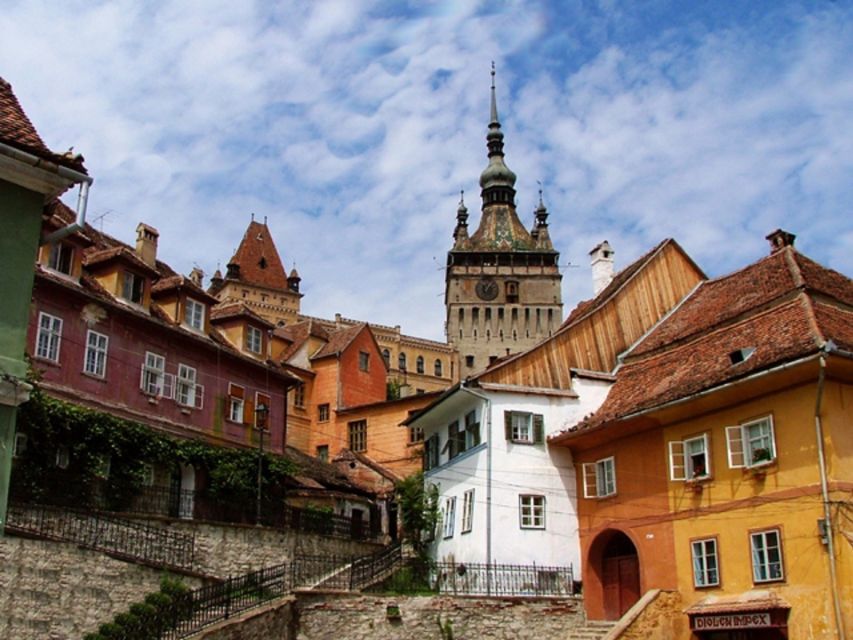
The Clock Tower is Sighișoara’s main landmark and the most obvious symbol of the citadel. At 64 meters, it rises above the old town and offers a panoramic view.
The tour explains the tower’s clock mechanism and historical objects inside. That makes the stop more useful than simply photographing the tower from below. You get a sense of how the structure served the town, both as a timekeeper and as a visible marker of civic importance.
The view is one of the strongest reasons to consider paying any separate entrance fee. From above, the red roofs, colored houses, defensive towers, and surrounding area come together. After walking through narrow streets, you finally see the full shape of the citadel.
The practical catch is that tower access is not included. The route includes the Clock Tower as a major attraction, but entrance fees remain separate. If your budget is tight, ask the guide which paid stops offer the best value for your interests. If you like city views and historic mechanisms, this is likely one of the better add-ons.
More City Highlights Walking Tours in the world:
- Historic Charleston Guided Sightseeing Walking Tour
★ 5.0 · 6,216 reviews - Dublin Highlights and Hidden Gems Guided Walking Tour
★ 5.0 · 6,020 reviews - Vienna: Guided Walking Tour of City Center Highlights
★ 4.7 · 4,989 reviews - Best of Lisbon Small-Group Guided Walking Tour
★ 5.0 · 4,869 reviews
The Covered Staircase and the climb to Church on the Hill
The Covered Staircase is one of the most memorable parts of the route. Its 164 wooden steps lead toward School Hill and the Church on the Hill, while the roof protects people from harsh weather.
The staircase was built in the 17th century for schoolchildren making the climb. That small detail turns a tiring ascent into a glimpse of ordinary life. You are not simply walking up a historic staircase. You are following a route shaped by the needs of students, teachers, and residents.
This is also the point where the tour becomes physically more demanding. The stairs are long, and the route continues uphill. Several guides have adapted the walk when needed. One guide began earlier and changed the route for visitors who needed to catch a train, leaving out the hill climb because they had already done it. That kind of flexibility is useful, but you should still judge your own stamina before booking.
At the top, Church on the Hill offers a quieter contrast to the lower citadel. It is a Gothic church with medieval frescoes and a notable interior. The building gives the guide a chance to explain religious life, local art, and the role of the hill within the town.
The tour description calls the church mysterious, and the setting helps explain why. The climb separates it from the main square. You leave the tight streets behind and reach a more open, reflective part of the citadel.
The German Cemetery and Sighișoara’s human story
The German Cemetery is one of the most worthwhile stops because it adds depth to the town’s story. Here, some of Sighișoara’s influential families are buried, and the cemetery helps you understand the town’s German-Saxon population and social structure.
A cemetery can tell you things a fortress wall cannot. Names, family groupings, dates, and memorial styles point toward the people who shaped local life. One especially useful aspect of this walk is the way the guide connects the cemetery to the town’s demographics rather than treating it as a spooky side trip.
This is also a quieter stop for anyone who wants more than postcard views. The cemetery slows the route down and gives you a chance to consider how the town changed over generations. Guides have been praised for bringing old photographs and explaining everyday customs, not only grand political events.
If you want a tour built around legends alone, this section may feel less dramatic. If you want to understand Sighișoara as a lived-in place, it is essential.
The guild towers and the defenses of the citadel
Sighișoara’s towers are tied to the craft guilds that defended the town. The Butchers’ Bastion and Tower, Tailors’ Tower, Furriers’ Tower, and Tin Moulders’ Tower each reveal a different part of the citadel’s defensive system.
The names can sound like a list at first. A good guide makes them practical. Medieval craft groups had a role in protecting specific sections of the walls, so the fortifications were connected to the town’s economy. The people who made clothing, prepared meat, worked fur, or shaped tin were also responsible for helping defend their home.
The Tailors’ Tower is particularly useful for understanding how vulnerable a gateway could be and why these structures were built with care. The Furriers’ Tower and Butchers’ Tower add more pieces to the same picture. You will not just see stone towers. You will see how trade, work, and defense overlapped.
The towers also make good photo stops, but the streets around them can be uneven. Wear shoes with a firm sole. Large luggage and oversize bags are not allowed, which is sensible on a walking route through tight lanes and stairways. Bring only what you need for two hours.
Venetian House and the House with the Deer Antler
The Venetian House adds a different architectural note. Its Renaissance style sets it apart from the more defensive towers and tightly packed medieval buildings. The guide explains its unusual history and points out details you might otherwise walk past.
This is where a local guide’s eye becomes valuable. You can photograph the façade in seconds, but learning why it is called the Venetian House gives the building a place in the town’s story. It also prevents the tour from becoming a march between only the most famous sights.
The route ends at the House with the Deer Antler, a distinctive medieval building recognized by the deer antlers mounted on its façade. It is an odd, memorable finish, and a fitting reminder that Sighișoara’s character comes from small details as much as major monuments.
By this point, you will have seen the citadel from several angles: civic square, defensive tower, religious hill, cemetery, and residential street. The route has a clear arc rather than a random collection of stops.
The guides and the value of a local voice
The strongest part of this experience is the guiding. The English-speaking guides named in the feedback include Peter, Charles, Carol, Andrea, Jacob, and Sebastian. Guide assignments can vary, so you should not assume a particular person unless the operator confirms it.
Peter receives repeated praise for his command of Romanian history and culture, use of old photographs, patience, humor, and willingness to spend extra time. Charles is described as clear, adaptable, and especially good at explaining architecture and history without speaking down to people. Carol and Andrea are praised for detailed local stories and an engaging manner.
The important pattern is not one magic guide. It is the tour’s local, conversational style. You can ask about Sighișoara, Transylvania, Romanian traditions, or modern life, and the route can respond to your interests. One guide even greeted local residents along the way, giving the walk a sense of connection to the town rather than a scripted performance.
That makes this a strong choice for history fans and first-time visitors. Families can also benefit. One guide handled children well, while another adjusted the route around physical needs and a train departure.
The group size is not specified. On some dates, only one booking group has turned up, creating a private-feeling walk without a separate private booking. You should not count on that, but the format appears to allow questions and conversation.
Price, timing, and what you actually receive
At $45 per person, the tour is not the cheapest way to walk around Sighișoara. You can see many façades and streets without paying for a guide. The value comes from the explanations, route planning, and access to local context.
For two hours, you cover a substantial section of the citadel. You get an English-speaking specialist guide, but not food, drinks, admission fees, or souvenir photos. There is also a stated supplement of EUR 20 per person for a private tour.
I think the price makes sense if you are visiting Sighișoara for the first time, care about history, or want to understand what you are seeing rather than simply photograph it. It is less necessary if you have already spent time with a good local guide or prefer wandering alone.
Book it early in your stay if possible. The route gives you a map in your head, and the guide can point out places worth returning to. The 11:00 departure also leaves your afternoon open for museums, lunch, or a slower second walk.
Free cancellation is available up to 24 hours before departure, and you can reserve now and pay later. Bring a passport or ID card. The activity is not suitable for people with mobility impairments, and the climb to Church on the Hill is the clearest reason.
Should you book City Tour Sighișoara?
I would book this walk if you want a meaningful introduction to the citadel, especially on your first day. It is well suited to people who enjoy medieval architecture, Romanian history, local legends, and patient conversation.
I would skip it if you dislike stairs, want a fully private experience without the extra charge, or prefer to explore every paid interior at your own pace. You should also budget for admission fees if the Clock Tower, museum, or church interiors are priorities.
For most able walkers, the combination of the market square, Dracula’s birthplace, Clock Tower, Covered Staircase, hilltop church, cemetery, and guild towers makes $45 reasonable. The route gives you the facts, but the best part is how the guides connect those facts to real people and daily life. That is what turns Sighișoara from a pretty stop into a place you understand.
FAQ
Where does the Sighișoara walking tour start?
The main meeting point is Piața Muzeului 5, in front of the Monastery Church. Piața Muzeului 6 is also listed as an alternate starting point, so check your booking information.
What time does the tour begin?
The stated departure time is 11:00.
How long does the tour last?
The planned duration is two hours. Guides may sometimes spend longer with the group, depending on questions, weather, and the route.
What language is the tour offered in?
The tour is offered in English with a live English-speaking guide.
Which sights are included on the walking route?
The route includes Sighișoara’s medieval citadel, the market place, Dracula’s Birth House, the Clock Tower, Covered Staircase, School Hill, Church on the Hill, German Cemetery, guild towers, Venetian House, and House with the Deer Antler.
Are entrance fees included in the $45 price?
No. Entrance fees are not included. Food, drinks, and souvenir photos are also separate.
Is a private tour available?
Yes. A private tour requires a supplement of EUR 20 per person.
What should I bring?
Bring a passport or ID card. Wear practical shoes for cobbled streets, stairs, and the climb to the church.
Is the tour suitable for someone with mobility impairments?
No. The activity is specifically listed as unsuitable for people with mobility impairments, and the route includes uneven streets and the 164-step Covered Staircase.
New walking tours around the world
- Niagara Falls, Canada: White Water Walk Entry Ticket★ 4.5 · 147 reviews
- NYC: Walking Tour with Local Guide and 30+ Top NYC Sights★ 4.5 · 248 reviews
- Zadar: Food Tasting & Old Town Walking Tour★ 5.0 · 94 reviews
- Niagara Falls: Walking Tour, Journey Behind Falls, & Cruise★ 4.8 · 773 reviews
- New York City: Gangsters and Ghosts 2-Hour Walking Tour★ 4.7 · 615 reviews
- NYC: History of Slavery & Underground Railroad Walking Tour★ 4.7 · 87 reviews
- New York City’s Hell’s Kitchen: Walking Food Tour★ 4.8 · 200 reviews
- New York City: Central Park Walking Tour★ 4.7 · 82 reviews
Romania Walking Tours, side by side.
Bucharest: City Highlights Guided Walking Tour
Read our review →
Bucharest: Communism and History Guided City Walking Tour
Read our review →
Bucharest: Hidden Markets Walking Tour with Tastings
Read our review →
Bucharest: Ghost Stories & Romanian Mythology Walking Tour
Read our review →
Bucharest: Guided Walking Tour with Romanian Snack
Read our review →
Lists this walk sits on