Review · SPLIT
Discover The Old Town Split 1.5h walking Small group tour
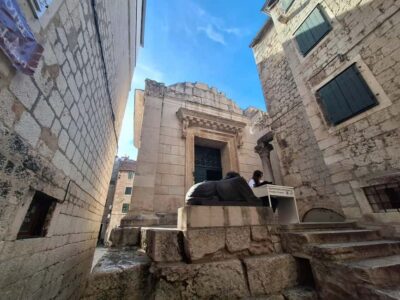
Split’s Old Town is not a museum sealed behind glass. Diocletian’s Palace still forms the heart of the city, with homes, cafés, shops, and narrow lanes fitted into its ancient walls. This 90-minute walk gives you a clear introduction to that unusual mix of Roman ruins and daily Croatian life.
I like the easy pace and the local perspective. Guides such as Ina, an archaeologist, and Roko, Marko, Toni, and Aneka have brought both Roman history and modern Split into the conversation. I also like the price: at $29, you get a licensed guide without paying for monument admission you may not want.
The main consideration is that entrance fees are not included, so some sights are viewed from outside unless you choose to pay separately. The tour is also on foot over old streets and is not suitable for wheelchair users.
Key points to know before booking
- Roman ruins are part of the living city: Diocletian’s Palace is not an isolated archaeological site. Shops, cafés, homes, and pedestrian lanes occupy its old structure.
- The 90-minute route covers the essentials: Expect the Riva meeting point, palace cellars, the Peristyle courtyard, the Cathedral of St. Domnius, and nearby medieval streets.
- Guide quality is a major strength: Named guides including Ina, Marko, Toni, Roko, and Aneka have been praised for clear explanations, humor, local tips, and personal attention.
- It is good value at $29: You pay for a professional local guide while keeping optional monument admissions separate.
- Shade and footwear matter: Split can be hot, and some guides have adjusted the route to find shade. Wear comfortable shoes and bring water.
- Small groups are intended, but size can vary: One past booking had 19 people, while others had only two couples or five participants.
Starting on the Riva promenade
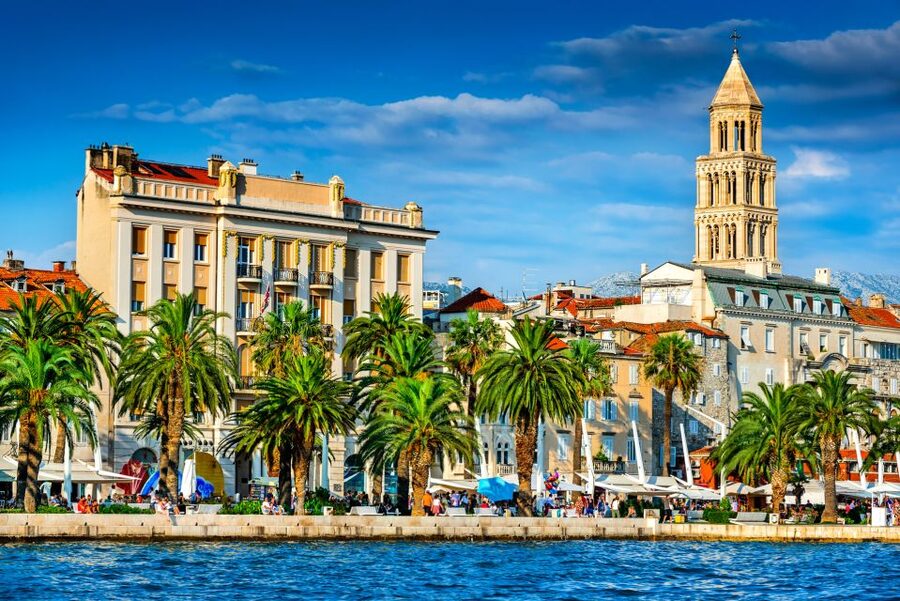
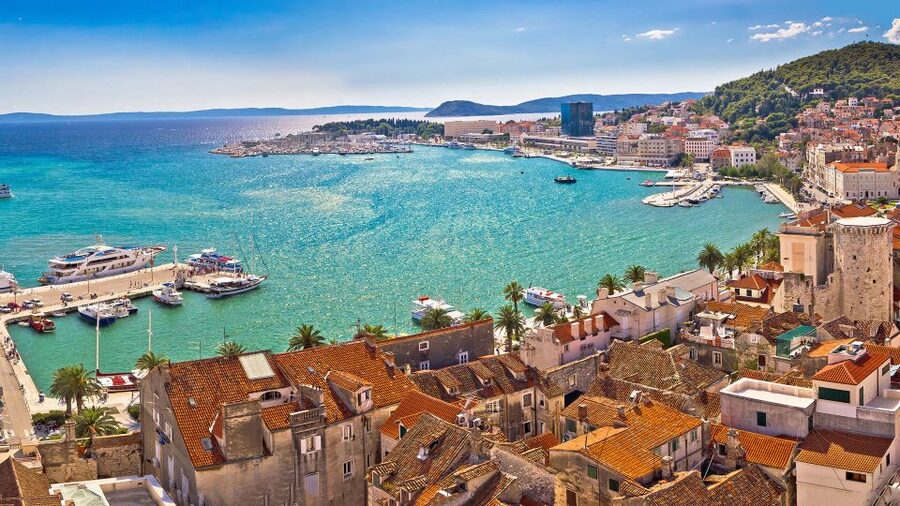
The tour begins at the local supplier’s office on Split’s famous Riva promenade, at Obala hrvatskog narodnog preporoda 21. Look for the company sign and staff wearing shirts with the same sign. You should arrive 15 minutes before departure for check-in.
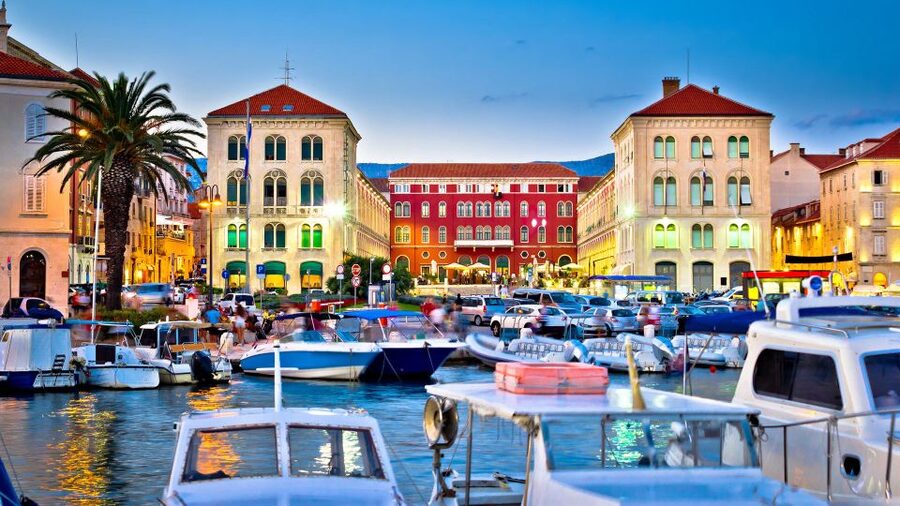
The Riva is a useful starting point because it gives you an immediate sense of Split’s setting. The promenade faces the harbor and runs along the southern edge of the Old Town. From here, your guide can explain how the ancient palace grew into the modern center of Split.
You have two listed starting point options: ATM, Auro Domus, or the Visit Split-Grayline office. The supplier’s office on the Riva is the detailed meeting location, so check your booking instructions carefully before setting out. Both listed drop-off options are in the same general supplier network.
This is not a bus tour. You meet your guide, then walk into the historic center, so the experience begins as soon as you leave the promenade. If you are arriving from a cruise ship, allow enough time to reach the meeting point and complete check-in.
More Old Town Walking Tours in Croatia
- Dubrovnik: Old Town Walking Tour
★ 4.8 · 5,174 reviews - Split: Old Town and Diocletian Palace Walking Tour
★ 4.9 · 4,727 reviews - Dubrovnik Discovery Old Town Walking Tour
★ 5.0 · 4,458 reviews
Entering Diocletian’s Palace
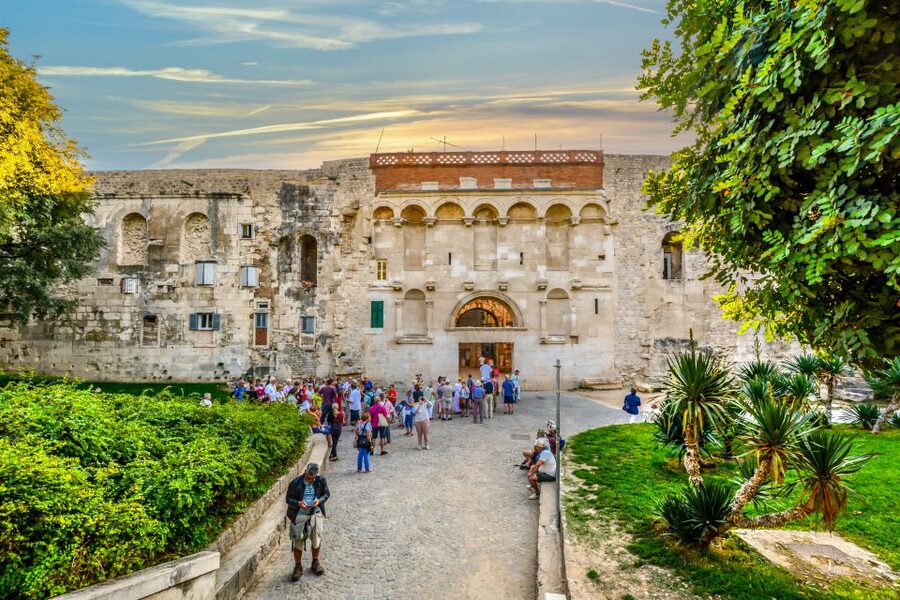
The central idea of the tour is simple but important: Diocletian’s Palace is much larger than a single ruined building. Its remains are woven through Split’s Old Town. As you walk, pieces of the Roman complex appear beside later buildings and ordinary city life.
The palace was built for the Roman emperor Diocletian. Your guide uses the surviving walls, gates, lanes, and underground spaces to explain how the complex once worked. You are not simply looking at disconnected stones. You are learning how an imperial residence and fortress became the foundation of a medieval and modern city.
That context is where a guide adds real value. Without help, you may see a handsome courtyard, a rough stone wall, or a dark passage and move on. With an explanation, those places connect to the Roman plan of the city and to the way Split changed after the imperial period.
The walk also shows why Split’s center earned UNESCO World Heritage recognition. Its importance comes not only from age, but from the way Roman, medieval, and later layers remain together in an active city.
The palace cellars and Peristyle courtyard
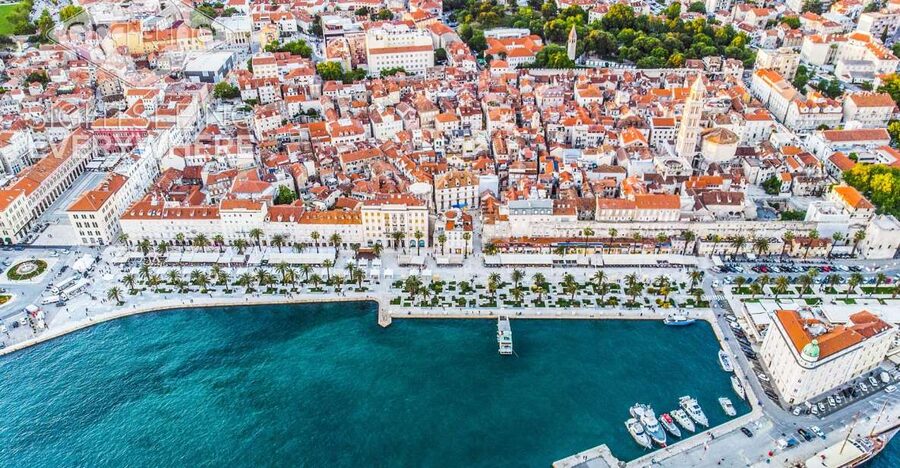
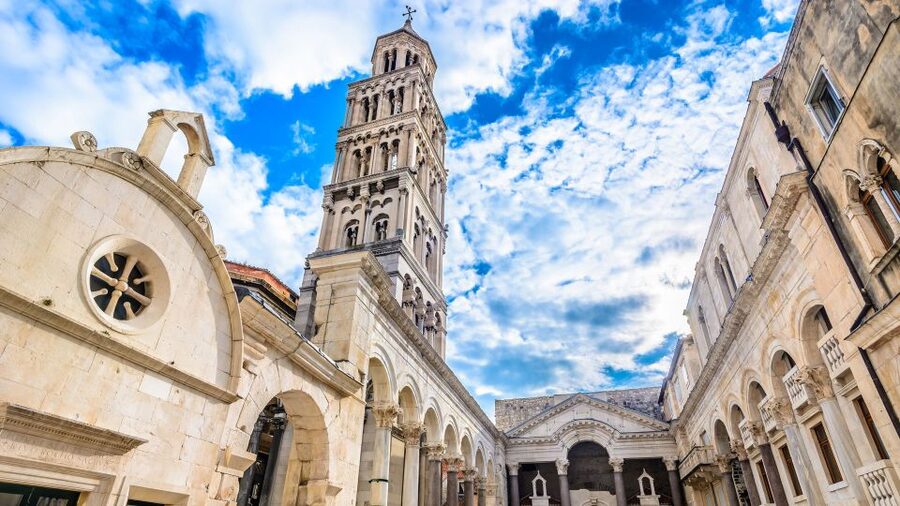
The palace cellars are one of the route’s most useful stops. These underground spaces preserve the shape and structure of the palace and help you understand the scale of the complex above. They also offer a different atmosphere from the bright streets and squares outside.
Admission to monuments is optional and not part of the $29 tour price. That means your guide can explain the area, but you should be prepared to pay separately if you want to enter a ticketed section. This arrangement keeps the basic tour cheaper, though it can create a decision during the walk if you want to see more than the public areas.
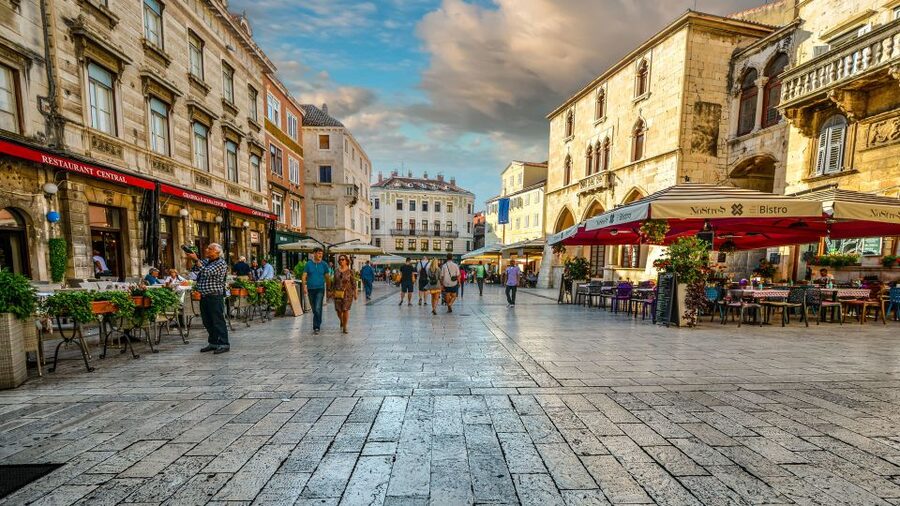
The Peristyle courtyard is another key stop. It is one of the most recognizable spaces in Diocletian’s Palace, framed by stone columns and surrounded by the old imperial complex. Here, a good guide can make the Roman design easier to read and explain how the courtyard relates to the emperor’s residence and ceremonial spaces.
The open courtyard can feel exposed in strong summer sun. That matters in Split, where walking tours often take place during hot parts of the day. One guide made a point of finding shade or places to sit, and that sort of practical judgment can make a short tour far more comfortable.
Cathedral of St. Domnius and Diocletian’s mausoleum
The Cathedral of St. Domnius occupies what was originally Diocletian’s mausoleum. That change tells you a great deal about Split’s past: an imperial Roman structure was later used as a Christian church and became one of the city’s best-known landmarks.
Your guide explains the connection between the emperor and the cathedral rather than treating the building as an unrelated church stop. The former mausoleum is a strong example of how old structures were reused instead of erased.
Entry to the cathedral or other monuments may require a separate fee. Since admissions are optional, this tour works well if you want an outside orientation first and prefer to decide later which sites deserve more of your time and money.
If you are particularly interested in Roman architecture or religious buildings, you may want to return after the walk for a slower visit. The 90-minute format gives you an introduction, not an exhaustive study of every interior.
Same streets, a different story:
- Dubrovnik: The Original Game of Thrones Tour & Lokrum Option
★ 4.8 · 5,064 reviews - Walking Tour of Split and Diocletian’s Palace
★ 5.0 · 2,588 reviews - Dubrovnik: Game of Thrones Walking Tour
★ 5.0 · 1,732 reviews - Dubrovnik Old Town History Walking Tour
★ 5.0 · 1,684 reviews
Medieval lanes, cafés, and souvenir shops

After the Roman core, the route moves through narrow streets and squares that reflect Split’s medieval development. This is where the tour feels less like a lesson in ancient history and more like an introduction to the city you are actually visiting.
The lanes are lined with cafés, shops, and souvenir stores. Some visitors may find the commercial side a little busy, but it is also part of the Old Town’s present-day character. You see how people use the old center now, not just how it looked under Roman rule.
This part of the walk is especially useful for getting your bearings. Your guide can point out places to revisit later, explain the layout of the center, and offer local suggestions. Roko, for example, was praised for sharing a restaurant recommendation, while other guides gave modern details alongside older facts.
The route is not limited to dates and rulers. Guides have included local people from Split, and their remarks can add a sense of how the city changed through the medieval period and into modern Croatia. That local angle is one reason I would choose a guided walk before exploring the Old Town alone.
What the guides add
The strongest part of this experience is the guide. The tour is conducted in English by a licensed local guide, and the past guide team has included several people with different strengths.
Ina was described as an archaeologist who explained the city’s development from Roman times through the medieval period. That background is especially useful at the palace, where architecture and archaeology overlap.
Aneka received praise for clear communication, local knowledge, friendliness, and humor. Marko was noted for being both informative and personable, while Toni was praised for explaining the city in a relaxed way and adding present-day details.
Roko brought enthusiasm for Split, along with practical restaurant advice and some pop-culture information. Daniella was singled out for making the history feel alive and for passing along discounts. Gabrijela Terze led a larger group while keeping the experience enjoyable, and Maja was described as warm, local, and deeply familiar with the area.
You cannot choose one of these guides with certainty unless the supplier allows it on your date. Still, the range of comments points to a consistent strength: the experience depends less on a memorized script and more on the guide’s ability to explain, answer questions, and adjust to the group.
That flexibility has shown up in small but meaningful ways. One guide tailored the talk to the group’s interests and found shaded places to stand or sit. Another tour ran beyond the scheduled 90 minutes because the guide had more to share. That extra time should be viewed as a pleasant possibility, not a promise, since your actual finish time may remain close to the stated duration.
How the 90-minute length works
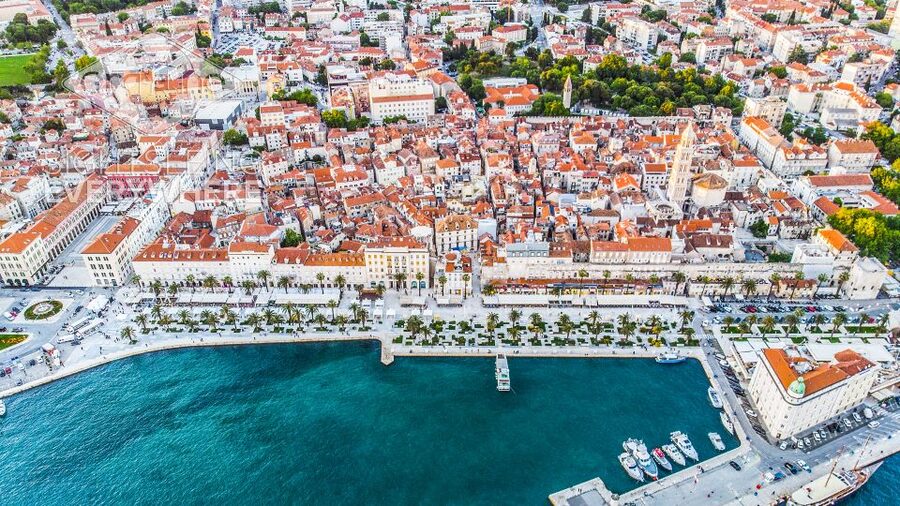
Ninety minutes is enough for a solid introduction to Split, but not enough for a full tour of every palace room, church, museum, and side street. I think that is the right length for a first visit, especially if you are in town for a day or arriving from a cruise ship.
The route gives you a framework. You learn where the palace is, how the Peristyle fits into it, why the cathedral matters, and how the medieval city grew around the Roman structure. Afterward, you can return to the places that caught your attention.
The short format also limits fatigue. Old-town streets can be uneven, and summer heat can turn a longer walk into hard work. You should still wear comfortable shoes, but you are not committing to a half-day outing.
Group size may vary. The product is described as a small-group tour, and one booking had only two couples while another had five people. A separate group reached 19 participants, so do not assume every departure will feel intimate. Smaller groups make questions and guide interaction easier, while a larger group may require you to stay close and listen carefully in crowded lanes.
Is $29 a fair price?

At $29 per person, this is a sensible way to get an organized introduction to Split. The fee covers the professional licensed guide, while optional monument admissions remain separate. That division is helpful if you want to keep costs down or decide later which interiors matter most.
A private tour would normally cost more, and exploring alone gives you less context. This walk occupies a useful middle ground: you get a human guide and a planned route without paying for private service or attractions you may not enter.
The value is strongest for first-time visitors. If you already know the palace well, have read extensively about Diocletian, or plan to spend several days with a detailed audio guide, the walk may repeat some material. Even then, the local recommendations and modern perspective can add something beyond a guidebook.
The price does not cover food, drinks, transportation, or admission tickets. The walk itself begins and ends at the listed supplier locations, so you do not need a separate vehicle or transfer.
Practical comfort and accessibility
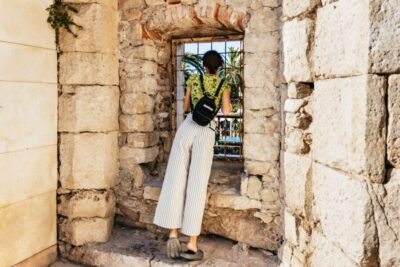
Wear comfortable shoes. The tour involves walking through old streets, narrow lanes, and historic areas where surfaces may not be perfectly smooth. Bring water, especially in summer.
Children must be accompanied by an adult. Pets are not allowed, and the tour is not wheelchair accessible. If you use a wheelchair or have serious mobility limits, this is not the right activity.
The route may include sunny squares and confined streets. Guides have sometimes chosen shaded places for comfort, but you should still plan for heat. A hat and sun protection are sensible additions, even though only comfortable shoes are specifically required.
The tour is conducted in English. If you need another language, this activity does not list one.
Cancellation and booking flexibility
You can cancel up to 24 hours before the tour for a full refund. You can also reserve now and pay later, which is useful if your Split plans may shift.
The 15-minute early arrival matters because the meeting point is an operating supplier’s office, not simply an unmarked street corner. Look for the company sign and matching staff shirts, then confirm the departure details at check-in.
Who should book this Split walking tour?
I would choose this tour if you want a clear introduction to Split without spending half a day inside monuments. It suits first-time visitors, cruise passengers, couples, families with older children, and anyone who prefers local explanation over reading plaques.
It is also a good choice if you want to decide about admission tickets after seeing the palace from the outside. The guide gives you the background first, so you can spend later time and money where your interests lead.
You may want something else if you need a fully accessible route, a private guide, a tour in a language other than English, or a detailed interior visit to every major monument. The 90-minute walk is an orientation, not a complete archaeological examination.
Should you book this tour?
Yes, if you want an affordable and well-paced first look at Split’s Roman and medieval center. The best reason to book is the guide-led interpretation: people such as Ina, Aneka, Marko, Toni, Roko, and Maja have made the city easier to understand through local stories, humor, practical tips, and clear historical explanation.
Go in knowing that ticketed entrances cost extra, group size can vary, and the route is not wheelchair accessible. Wear good shoes, arrive 15 minutes early, and treat the walk as your foundation for exploring Split afterward. At $29, it offers a useful balance of structure, local insight, and freedom to continue on your own.
FAQ
How long does the Split Old Town tour last?
The tour lasts 90 minutes, although one past departure continued for more than two hours because the guide had additional information to share. The exact finish time may vary.
What language is the tour conducted in?
The tour is conducted in English with a live local guide.
Where does the tour meet?
The detailed meeting point is the local supplier’s office on the Riva promenade at Obala Hrvatskog narodnog preporoda 21, 21000 Split, Croatia. Look for the supplier’s sign and staff wearing matching shirts.
How early should I arrive?
Arrive 15 minutes before departure for check-in.
What sights are included in the walking route?
The route includes Split’s Old Town, the remains of Diocletian’s Palace, the palace cellars, the Peristyle courtyard, the Cathedral of St. Domnius, and medieval streets with cafés and souvenir shops.
Are monument entrance fees included?
No. Entrance fees are not included. Admission to monuments is optional and paid separately.
Is the tour wheelchair accessible?
No. The tour is not suitable for wheelchair users.
Are children allowed?
Yes, but children must be accompanied by an adult.
Are pets allowed on the tour?
No. Pets are not allowed.
What should I bring?
Bring comfortable shoes. You should also be prepared for walking through sunny historic streets and squares.
Can I cancel for a refund?
Yes. You can cancel up to 24 hours in advance for a full refund.
Can I reserve now and pay later?
Yes. The activity allows you to reserve your place and pay later.
More Small-Group Walking Tours in Croatia
- Diocletian’s Palace and Old Town SMALL GROUP Walking Tour
★ 5.0 · 502 reviews - Amsterdam Anne Frank: Small-Group Walking Tour & Local Guide
★ 4.8 · 12,789 reviews - Boston: Freedom Trail History Small Group Walking Tour
★ 5.0 · 6,450 reviews - New Orleans Food Walking Tour of the French Quarter with Small-Group Option
★ 5.0 · 6,118 reviews
New walking tours around Croatia
- Zadar: Food Tasting & Old Town Walking Tour★ 5.0 · 94 reviews
- Livade: Guided Truffle Hunting Walking Tour★ 4.6 · 82 reviews
- From Split: Krka Waterfalls Cruise & Trogir Walking Tour★ 4.7 · 681 reviews
- Split: History and Heritage Walking Tour★ 4.9 · 650 reviews
- Dubrovnik: Old Town Walking Tour★ 4.9 · 792 reviews
- Dubrovnik: Walls and Wars Walking Tour★ 4.8 · 501 reviews
- Dubrovnik: Panoramic Ride and Old Town Guided Walking Tour★ 4.7 · 261 reviews
- Dubrovnik: Cable Car, Walking Tour and City Walls Combo★ 4.6 · 322 reviews
Split Walking Tours, side by side.
Split: Old Town and Diocletian Palace Walking Tour
Read our review →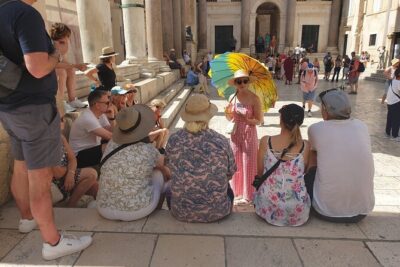
Walking Tour of Split and Diocletian’s Palace
Read our review →
Krka Waterfalls tour with Trogir Walking tour and Krka panoramic boat cruise
Read our review →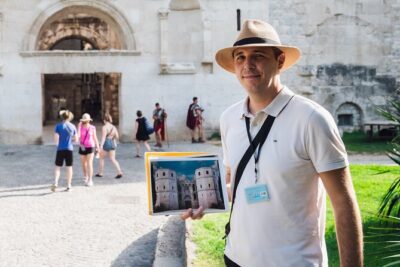
Walking Tour of Split with a ‘Magister’ of History
Read our review →
From Split: Krka Waterfalls Cruise & Trogir Walking Tour
Read our review →
Diocletian’s Palace and Old Town SMALL GROUP Walking Tour
Read our review →