Review · SPLIT
Split: Old Town and Diocletian Palace Walking Tour
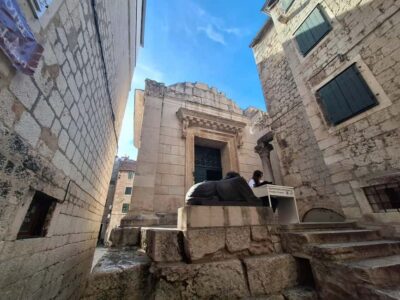
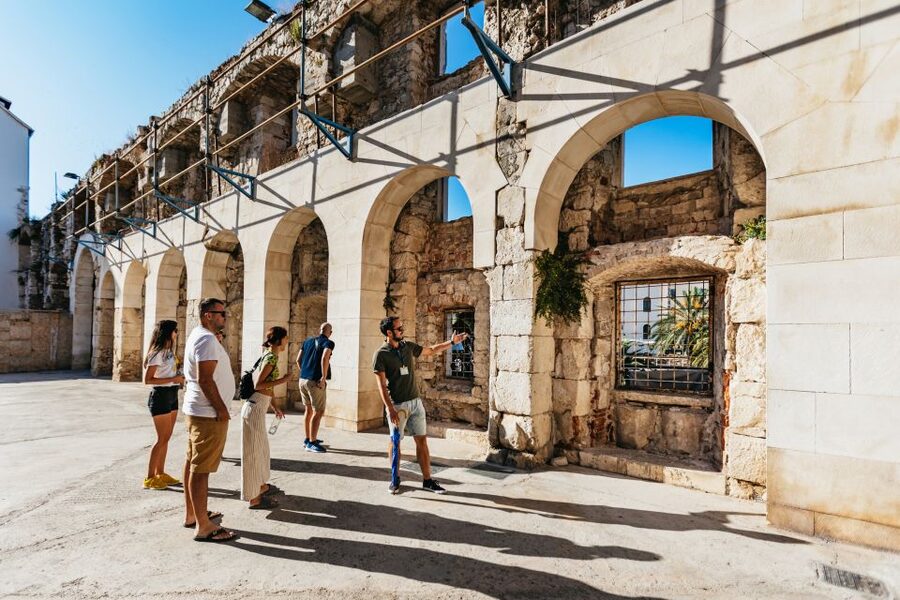
Split’s Diocletian Palace is not a quiet ruin behind a fence. It forms much of Split’s Old Town, with homes, shops, cafés, churches, and narrow lanes folded into the former Roman complex. This walking tour helps you read that jumble of ancient stone and modern life, starting at the Golden Gate and tracing about 1,700 years of change.
I like two things here. First, the tour puts the palace into context, especially at the Peristyle and Saint Domnius Cathedral. Second, the local guides add useful advice about restaurants, sightseeing, and tourist traps. The main drawback is that the standard tour is on foot and the exact duration can range from 90 minutes to six hours, depending on the option you book.
Key points to know before booking
- The Roman palace is still the city center: You walk through a living neighborhood rather than a separated archaeological site.
- The Peristyle is the visual heart of the tour: Open colonnades and surrounding imperial stone make the Roman plan easier to understand.
- Saint Domnius Cathedral has an unusual past: It began as Diocletian’s mausoleum and is described as the oldest Catholic cathedral still in use in its original form.
- Local guides shape the experience: Mia, Slavko, Antonia, Ivana, and other guides are praised for clear explanations, humor, and practical Split advice.
- The Riva adds sea views: The tour leaves the palace walls for the waterfront, with views toward Marjan Hill and the Adriatic.
- Optional extras change the day: Some bookings include food or wine tasting, while longer versions can include a Trogir visit.
Why a guided walk makes Split’s palace easier to read
Diocletian’s Palace can be confusing at first. You see Roman columns beside laundry, medieval walls beside restaurant signs, and ancient passageways leading into ordinary city streets. Without an explanation, it is easy to admire the stone and miss the story.
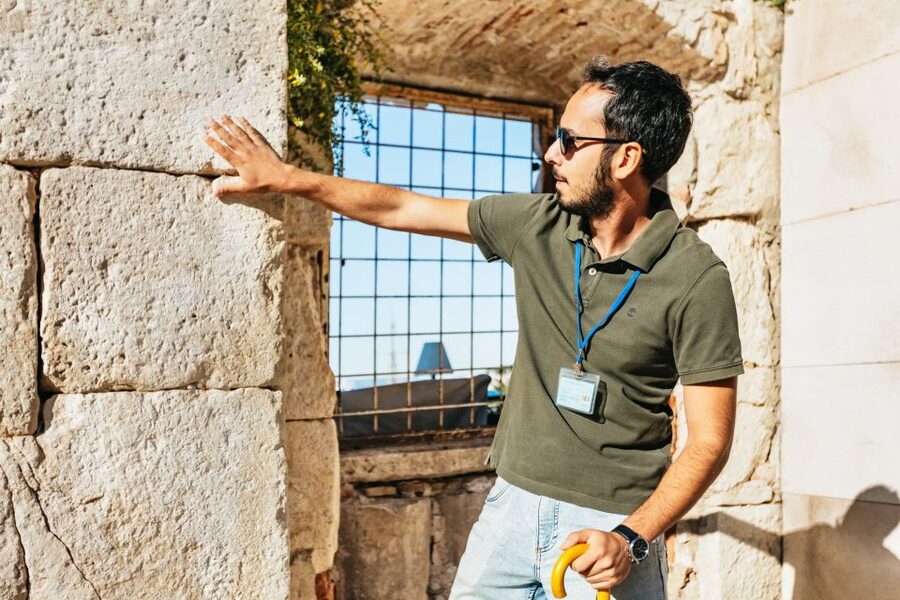
A guide gives you a working map. You learn where the palace once had its gates, which areas served the emperor, how later residents adapted the buildings, and why Split’s Old Town grew inside the Roman shell. That context is the real value of the tour.
The palace was built for the Roman emperor Diocletian in 305 CE. He chose the site near his birthplace in Dalmatia for a retirement residence, though the result was far more imposing than a simple country home. The complex combined imperial living quarters, religious buildings, courtyards, military defenses, and access to the sea.
The walk also connects the Roman period with Croatia’s later story. Guides such as Slavko are praised for linking palace architecture with Dalmatian and Croatian history, while Mia is described as mixing historical facts with dry humor and questions for the group. That style can make a long sequence of dates and rulers easier to follow.
More Old Town Walking Tours in Croatia
- Dubrovnik: Old Town Walking Tour
★ 4.8 · 5,174 reviews - Dubrovnik Discovery Old Town Walking Tour
★ 5.0 · 4,458 reviews - Dubrovnik Old Town History Walking Tour
★ 5.0 · 1,684 reviews
Starting at the Golden Gate
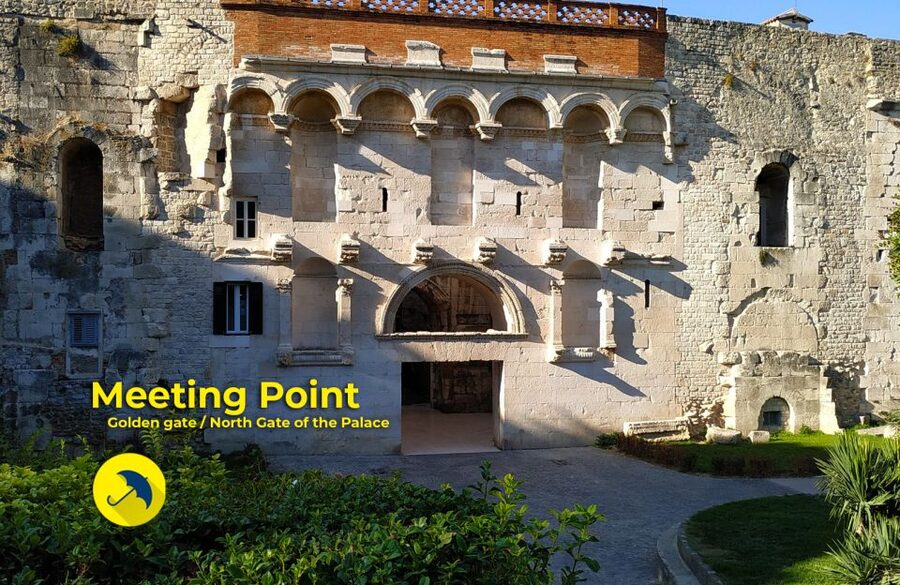
The meeting point is at the Golden Gate, the palace’s northern entrance. It is a sensible place to begin because the gate immediately shows the scale of the Roman project.
Look above and around the entrance before the walk moves on. The gate was part of a fortified complex, not a decorative arch added to a later town. From here, your guide helps you understand the palace as a planned enclosure, even though later building has altered its appearance.
You finish at the same place, which is useful for orientation. If this is your first activity in Split, you can continue exploring from the Golden Gate without having to find your way back from an unfamiliar neighborhood.
The exact meeting point can vary by booking option, so check the details you receive. Hotel pickup is not included. You should arrive in comfortable clothes and expect a walking route over historic streets rather than a seated presentation.
The Peristyle and the Roman center
The Peristyle is likely the most memorable stop. This central square is framed by open colonnades and gives you a clear sense of the palace’s ceremonial side.
The square was designed for imperial display. Here, the setting matters as much as the individual stones: columns, steps, arches, and the surrounding walls create a strong picture of how the emperor’s residence announced power. A guide can point out the difference between what was built in Roman times and what was changed or reused later.
I especially value this part of the tour because it turns architecture into a story. You are not simply told that the palace is old. You learn how spaces worked and why this particular courtyard mattered.
The Peristyle can be busy, especially during the main sightseeing hours. A larger group may make it harder to hear, so staying close to the guide matters. Several guide-led walks are described as small group experiences, including one with six people, but group size depends on the booking.
Some guides also use the square to explain how modern Split grew inside the palace. That is the key point: the ruins are not isolated remains. The city continued to use and alter them, which is why the palace feels like part archaeological site and part neighborhood.
Saint Domnius Cathedral and the palace’s changing purpose
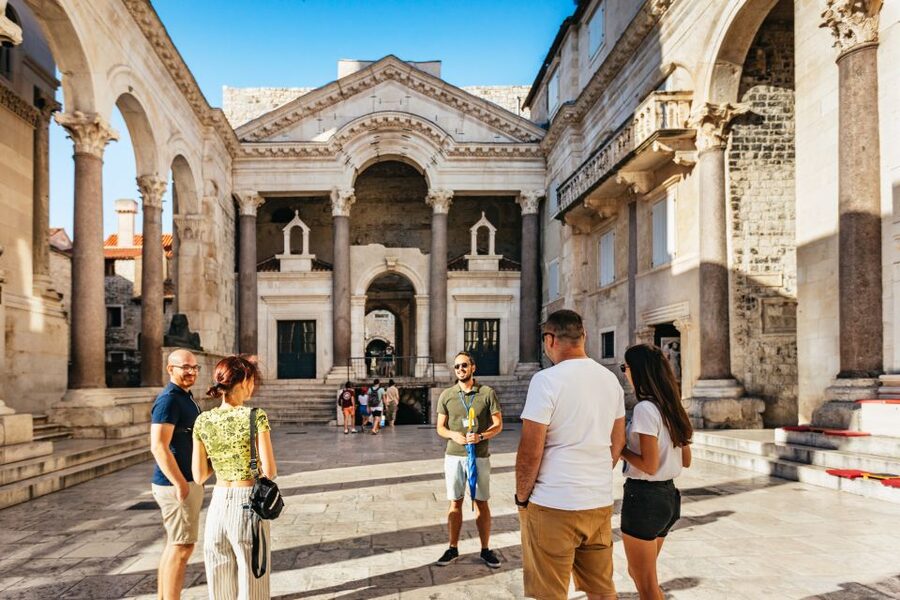
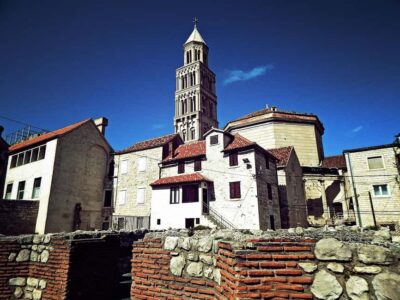
The route continues to Saint Domnius Cathedral, one of Split’s most important buildings. Its unusual story gives the palace a clear example of how one place can change purpose over time.
The cathedral is housed in what was originally built as Diocletian’s mausoleum. It is described as the oldest Catholic cathedral in the world still in use in its original form. That claim makes the building worth seeing even if you are not focused on religious architecture.
Your guide explains the building in relation to the emperor and the later Christian city. The shift from imperial mausoleum to cathedral is more revealing than a simple list of construction dates. It shows how Split repeatedly adapted older structures instead of replacing them outright.
The exterior and surrounding area are part of the walking experience. Entry inside may depend on the option booked, opening arrangements, or what is included, so do not assume the tour price covers every interior visit. The supplied tour details specifically promise a stop at the cathedral, not a separate paid admission.
This is also a good place to ask questions. Guides such as Frane, Ante, and Martha are praised for answering questions clearly and keeping the pace moving. That balance matters in a historic center where it is easy to spend too long at one doorway and lose the wider route.
More Castle and Palace Walking Tours around Croatia:
- Walking Tour of Split and Diocletian’s Palace
★ 5.0 · 2,588 reviews - Diocletian’s Palace and Old Town SMALL GROUP Walking Tour
★ 5.0 · 502 reviews - SPLIT-PRIVATE Walking Tour of Diocletian’s Palace & Old Town
★ 5.0 · 467 reviews - Edinburgh Castle: Guided Walking Tour with Entry Ticket
★ 4.7 · 11,699 reviews
Gregory of Nin in Giardin Park

At Giardin Park, you meet the story of Gregory of Nin beside his statue. Gregory was a medieval bishop associated with the use of the Croatian language in church services, and his statue has become one of Split’s best-known public landmarks.
The stop adds a human figure to the tour. After Roman emperors and ancient stone, you get a glimpse of the people and debates that shaped medieval Croatian identity.
Your guide may also point out the statue’s famous toe, polished by people touching it. The supplied information confirms the stop and the bishop’s importance, but it does not promise a particular ritual or presentation, so treat the visit mainly as a short historical pause within the Old Town walk.
This section is useful for understanding that Split is not only a Roman attraction. Its identity also comes from later Croatian, Dalmatian, religious, and local traditions. Guides who grew up in the palace or in Split can add personal perspective here. One guide is described as having lived within the palace, a reminder that these streets are part of daily life for local residents.
From palace stones to the Riva promenade
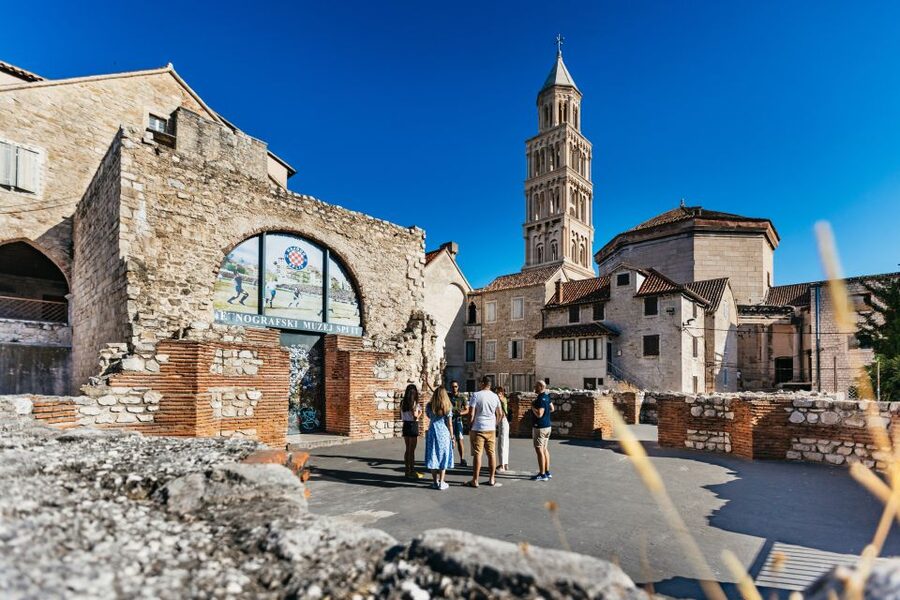
The walk eventually leaves the tight lanes for the Riva, Split’s waterfront promenade. This change of setting gives your eyes a break and helps you understand the palace’s relationship with the Adriatic.
From the Riva, you can look toward Marjan Hill and across the sea. The view is less about individual monuments and more about Split’s location: a coastal city built around an imperial residence, with water at its edge and a hill rising beyond town.
I like this part because it prevents the tour from becoming an indoor-feeling history lesson. You get architecture, public space, and a practical sense of where the Old Town sits in relation to the harbor and waterfront.
The Riva is also a useful place to gather recommendations. Many guides offer suggestions for meals and other sights, and several are praised for warning visitors about tourist traps. Take notes if your guide names particular places, but remember that restaurant advice is personal and can change over time.
The tour returns to the Golden Gate. That compact loop works well for a first morning or afternoon in Split because you finish with a clearer map of the center and can revisit the places that caught your interest.
The guide matters more than the script
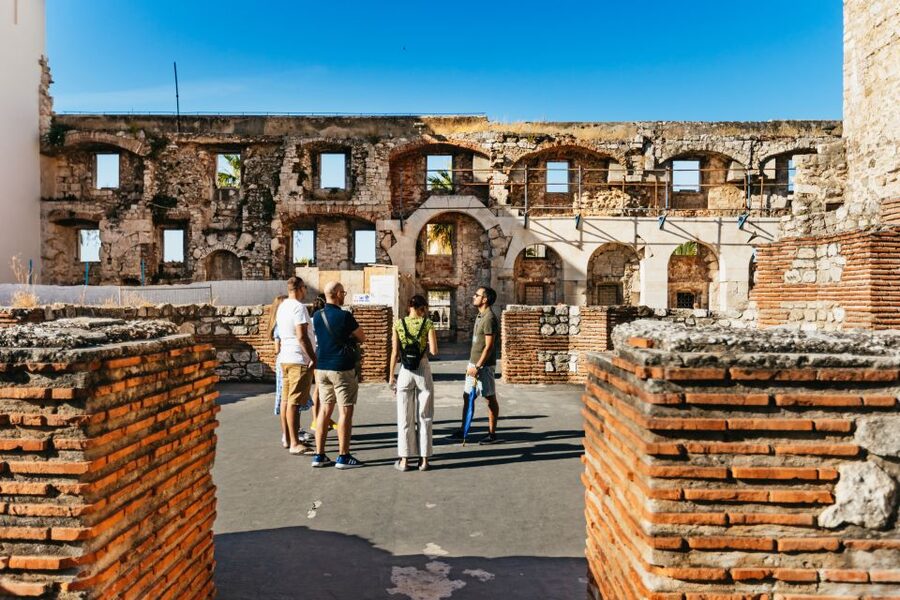
The strongest part of this experience is the guide’s delivery. Split’s palace is full of facts, but facts alone can blur together. The best guides make the chronology easy to follow and add local details without losing the main thread.
Mia is repeatedly praised for humor, clear explanations, and practical recommendations. She is also described as studying to become a history professor, which may appeal to anyone who wants a more structured account. Slavko is praised for his command of palace architecture, Croatian history, and personal stories from Split.
Antonia is described as an engaging storyteller who mixes humor with useful advice about food and sightseeing. Ivana is praised for enthusiasm and personal stories, while Ante is noted for balancing historical detail with an easy social manner.
These names are useful when you compare feedback, but you cannot choose the guide in advance based on the information provided. The important point is that the experience appears to depend heavily on who leads your departure. Ask questions, stay near the guide, and mention early if you need a slower pace or clearer explanations.
The available languages are English, Italian, Spanish, German, and French. A private group option is also available. A private booking may suit families or friends who want to ask many questions, while a shared walk usually offers better value for solo visitors and couples.
How long should you book?
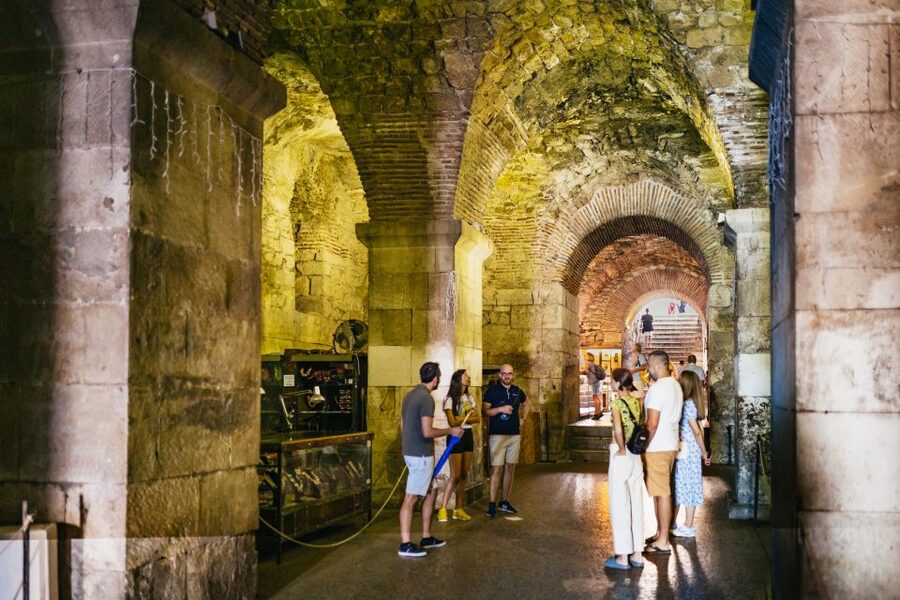
The base duration is listed as 90 minutes, but options range from 90 minutes to six hours. That is a major difference, so check the exact version before paying.
A 90-minute walk is enough for the core Old Town route: the Golden Gate, Peristyle, cathedral area, Gregory of Nin, and Riva. It suits a short stay, a cruise port call, or anyone who wants an introduction before exploring alone.
Longer options may add food tasting, wine tasting, or other locations. One reported extended booking included Trogir, about a 40-minute drive away, and described it as a worthwhile addition with a different character from Split. Since transport and inclusions vary by option, read the selected package carefully.
Food and wine tastings are included only if you choose the relevant option. They are not part of every booking. If your priority is architecture, the basic walk may be enough. If you want the tour to occupy much of a day, the extended version may offer better value.
Is $17 a fair price?
At $17 per person, the standard walking tour is priced reasonably for a guided introduction to one of Croatia’s most important historic centers. You are paying for a local guide, a planned route, and explanations that help you understand sights you could otherwise pass without noticing.
The value is strongest if this is your first time in Split. A self-guided walk costs nothing beyond your time, but you would need to research the palace layout, Diocletian, Saint Domnius, Gregory of Nin, and the city’s later development yourself.
The price does not include hotel pickup. Food and wine are separate unless you select an option that includes them. A private group will likely cost more than the listed per-person rate, though the supplied details do not give a private price.
I would book the standard tour early in your stay, then use the guide’s recommendations to plan your remaining time. The free cancellation policy allows a full refund when you cancel at least 24 hours in advance, and reserve-now, pay-later booking can help if your schedule is still changing.
Practical advice for a smoother walk
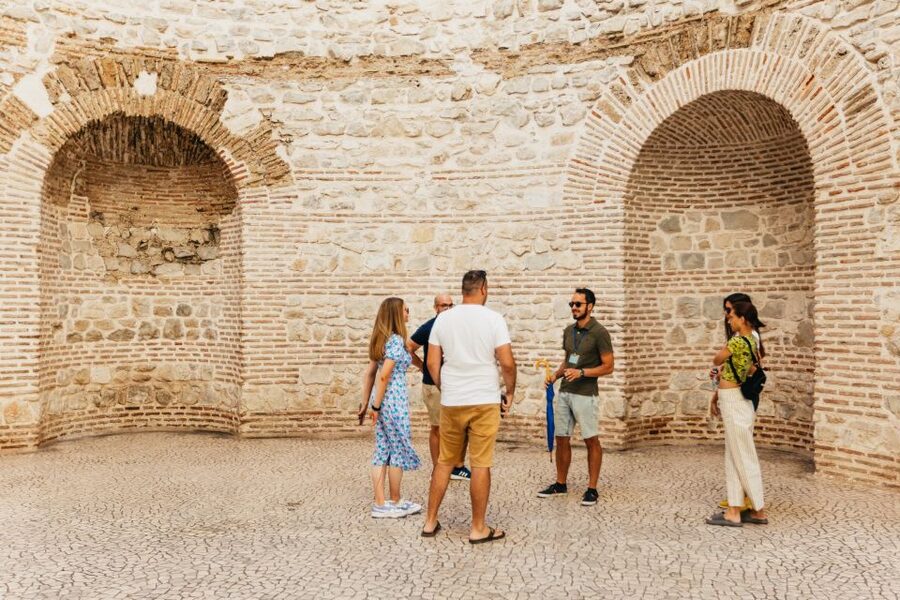
Wear comfortable clothes and shoes. The activity is not suitable for wheelchair users, and the route is through an old urban center with historic streets and uneven access.
You do not need to prepare a long history lesson before arriving. I would, however, remember three names: Diocletian, Saint Domnius, and Gregory of Nin. Knowing those names will help you connect the Roman, Christian, and medieval parts of the walk.
Consider an earlier or later departure if you have a choice. One booking noted that sunset was a good time because it was less crowded, though timing and conditions vary. In hot weather, shade matters. One guide was praised for finding shady places for explanations, but you should still bring water and dress for the conditions.
The tour is suitable for all ages. Families should be aware that the experience is primarily a walking history tour, not a children’s activity with games or dedicated entertainment.
Who should book this Split walking tour?
I recommend it most strongly to first-time visitors, history fans, cruise passengers, couples, and anyone who wants a useful introduction before exploring alone. It is also a good choice if you enjoy local stories more than audio guides and museum labels.
You may prefer to skip it if you already know the palace well, dislike group walking tours, or need step-free access. The long options may also be too much if you only want a quick look at the Old Town.
Book it if you want the palace to make sense, not just look old. The $17 standard option is a sensible starting point, and the local advice can save you time after the walk. Choose an extended option only if you specifically want tasting or a Trogir add-on.
FAQ
Where does the Split walking tour begin?
The tour generally begins at the Golden Gate of Diocletian’s Palace, although the meeting point may vary depending on the option booked.
Where does the tour finish?
The route finishes at the Golden Gate, where the walk began.
How long does the tour last?
Available options range from 90 minutes to six hours. Check the selected option for the exact duration.
What sights are included?
The route includes the Golden Gate, Diocletian’s Palace, the Peristyle, Saint Domnius Cathedral, Gregory of Nin’s statue in Giardin Park, and the Riva promenade.
Is hotel pickup included?
No. Hotel pickup is not included.
What languages are available?
Live guides are available in English, Italian, Spanish, German, and French.
Is food or wine tasting included?
Food and wine tasting are included only when you select an option that offers them.
Is the tour suitable for children?
Yes. The activity is described as suitable for all ages.
Is the tour wheelchair accessible?
No. The activity is not suitable for wheelchair users.
New walking tours around Croatia
- Zadar: Food Tasting & Old Town Walking Tour★ 5.0 · 94 reviews
- Livade: Guided Truffle Hunting Walking Tour★ 4.6 · 82 reviews
- From Split: Krka Waterfalls Cruise & Trogir Walking Tour★ 4.7 · 681 reviews
- Split: History and Heritage Walking Tour★ 4.9 · 650 reviews
- Dubrovnik: Old Town Walking Tour★ 4.9 · 792 reviews
- Dubrovnik: Walls and Wars Walking Tour★ 4.8 · 501 reviews
- Dubrovnik: Cable Car, Walking Tour and City Walls Combo★ 4.6 · 322 reviews
- Dubrovnik: Panoramic Ride and Old Town Guided Walking Tour★ 4.7 · 261 reviews
Split Walking Tours, side by side.
Walking Tour of Split and Diocletian’s Palace
Read our review →
Krka Waterfalls tour with Trogir Walking tour and Krka panoramic boat cruise
Read our review →
Walking Tour of Split with a ‘Magister’ of History
Read our review →
From Split: Krka Waterfalls Cruise & Trogir Walking Tour
Read our review →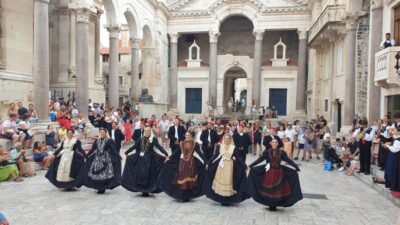
Diocletian’s Palace and Old Town SMALL GROUP Walking Tour
Read our review →
SPLIT-PRIVATE Walking Tour of Diocletian’s Palace & Old Town
Read our review →