
Review · BERLIN
Berlin: Hidden Backyards Guided Walking Tour
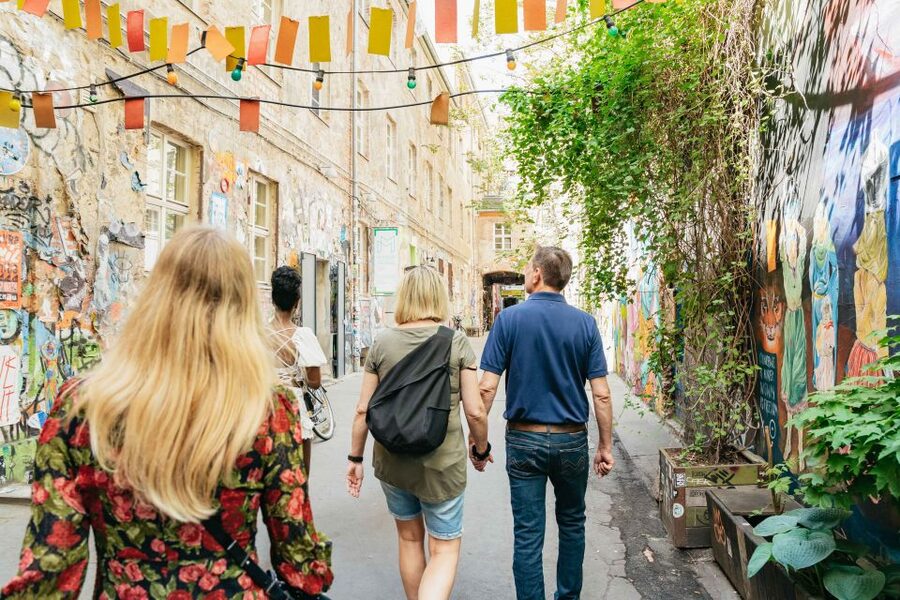
Berlin’s best surprises are often behind an ordinary doorway. This two-hour walk leads you from Hackescher Markt into courtyards where artists work, ivy climbs old walls, and Berlin’s Jewish, industrial, and creative past comes together. I love the way the tour connects architecture with everyday city life, rather than treating buildings as isolated sights.
I also like the route’s variety: the street-art-covered Schwarzenberg House feels rough and inventive, while Heckmann Höfe offers a calmer 19th-century courtyard setting. Guides such as Nick, Susanne, Lydia, and Nicolas have been praised for turning local history into clear, informal stories. The main consideration is language: tours are offered in English or German, but you should confirm your selected departure, since some participants have encountered a German-only tour.
Key points about Berlin’s courtyard tour
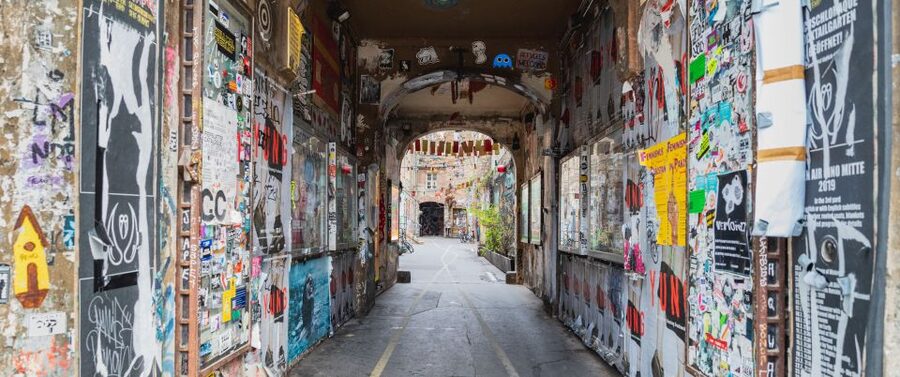
- Haus Schwarzenberg: See a worn historic courtyard now used by artists and creative studios, with striking street art on its walls.
- Jewish Berlin around the New Synagogue: Learn how Spandauer Vorstadt became a center of Jewish life and how the area changed over time.
- Hackesche Höfe and Rosenhöfe: Explore some of Mitte’s best-known courtyard complexes, where architecture and urban life meet.
- Heckmann Höfe: Step into a leafy 19th-century courtyard that feels far removed from the traffic outside.
- A short, easy-paced route: The two-hour walk covers several courtyards and passageways without requiring a full day.
- Rain or shine: Wear shoes with good grip and bring weather protection, since the tour runs in all conditions.
Why Berlin’s courtyards tell a better story than grand monuments
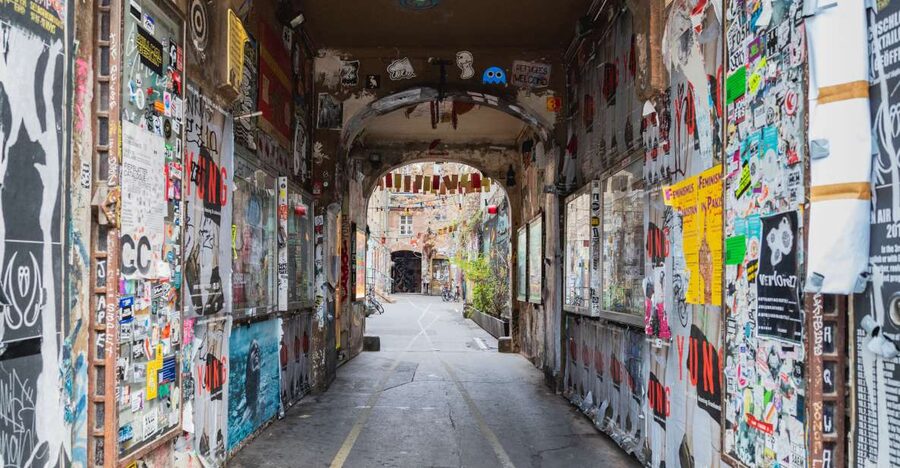
Many first-time visits to Berlin focus on major landmarks, museums, and Cold War sites. Those places matter, but they do not always show how the city worked at street level. In Spandauer Vorstadt, the courtyards reveal a different Berlin: crowded, commercial, religious, artistic, and constantly rebuilt.
The basic pattern is simple. A street entrance can lead into one or more interior courtyards, often surrounded by buildings that once held workshops, businesses, homes, and storage areas. From the pavement, you may see only a doorway. Inside, the scale changes, and the city feels quieter and more enclosed.
That is the central strength of this walk. You are not just looking at attractive facades. You are learning why these spaces existed, how they served residents and businesses, and how they later became studios, cultural venues, restaurants, and meeting places.
The guide also places the neighborhood within the longer story of Spandauer Vorstadt. The area developed through several phases, including the growth of Jewish life around the New Synagogue and later changes that helped make Mitte an international and fashionable district.
I find that context especially useful because Berlin’s polished streets can make the neighborhood’s past easy to miss. A guide helps you read the layers instead of seeing only renovated courtyards and colorful walls.
More walks with a guide around Berlin:
- Berlin: Third Reich & Cold War Guided Walking Tour
★ 4.9 · 8,378 reviews - Berlin: City Street Art Guided Walking Tour
★ 4.8 · 1,051 reviews - Berlin: History of the Third Reich Guided Walking Tour
★ 4.7 · 791 reviews
Meeting at Hackescher Markt and entering Spandauer Vorstadt
The tour begins in front of the BUTLERS shop at Hackescher Markt 4. This is a central and easy-to-recognize meeting point, but give yourself enough time to locate the exact storefront. The route then moves into Berlin-Mitte and the Spandauer Vorstadt.
The opening section sets up the neighborhood’s development. Your guide explains how this part of Berlin grew, changed function, and became an important center of Jewish life near the New Synagogue. The focus is not limited to one period, so you get a sense of how religious, social, economic, and cultural forces shaped the streets.
A good guide matters here. The strongest tours use stories to make the architecture readable, and this experience has been led by guides including Nick, Susanne, Lydia, Alex, Minit, and Nicolas. The guide can change, so do not book because you expect one particular person. Still, the repeated praise for clear explanations, humor, and a friendly presentation suggests that the human side of the tour is a major part of its value.
The walk is wheelchair accessible, according to the activity details. Since it takes place outdoors and runs rain or shine, your comfort will depend on the weather. Berlin rain can make courtyard paving slippery, and winter visitors should dress for standing outside while the guide explains each stop.
Haus Schwarzenberg and Berlin’s rough creative edge
Haus Schwarzenberg is one of the most memorable stops because it does not look polished in the usual Berlin-Mitte sense. The courtyard has historic buildings, walls covered in street art, and spaces now used by artists and creative workers.
This is a useful counterpoint to the restored courtyard complexes later in the route. You can see how an old building can gain a new purpose without losing every mark of its past. The rough surfaces and layers of paint give the place a sense of ongoing use rather than museum display.
The guide explains that the buildings have served different functions over the years. That detail helps you understand Berlin as a city of reinvention. A courtyard that once supported trade or industry can later become a place for studios, exhibitions, and informal cultural life.
I would pay attention to the walls here. The street art is not just decoration. It is part of the identity of the site, and it shows why this courtyard feels different from more carefully restored parts of the neighborhood.
The drawback is that this stop may appeal more to people interested in urban culture and social history than to visitors seeking perfect architecture. If you want only grand facades and formal design, Haus Schwarzenberg may feel untidy. That untidiness is precisely what gives it character.
Hackesche Höfe and the design of inner Berlin

The route continues to Hackesche Höfe, one of the best-known courtyard complexes in the area. The courtyards show a more decorative and organized side of Berlin’s interior architecture.
Here, the guide can help you notice details you might otherwise pass without understanding. The important point is not simply that the courtyards are attractive. It is that they show how Berlin combined housing, work, business, and movement within dense city blocks.
You may enter through a street facade and find a sequence of linked courtyards beyond it. That arrangement changes your sense of direction. A busy street can give way to a more sheltered space, then open into another courtyard with a different mood.
This is where the tour’s title becomes practical. These are not secret places, and some are well known. But the guide gives you a way to see them as part of a wider pattern rather than as isolated photo stops.
Expect other people around Hackesche Höfe, particularly because it is a popular part of Mitte. The experience is less about total solitude and more about learning how to look at a place that many people pass through quickly.
More walking tours around Berlin:
- Discover Berlin Half-Day Walking Tour
★ 5.0 · 9,624 reviews - Berlin City walk Government District and Places of Democracy
★ 4.7 · 8,467 reviews - Berlin: Discover Berlin Walking Tour
★ 4.9 · 5,998 reviews - Berlin’s Best: 2 Hour Walking Tour Third Reich and the Cold War
★ 5.0 · 5,486 reviews
Rosenhöfe and the small changes between courtyards
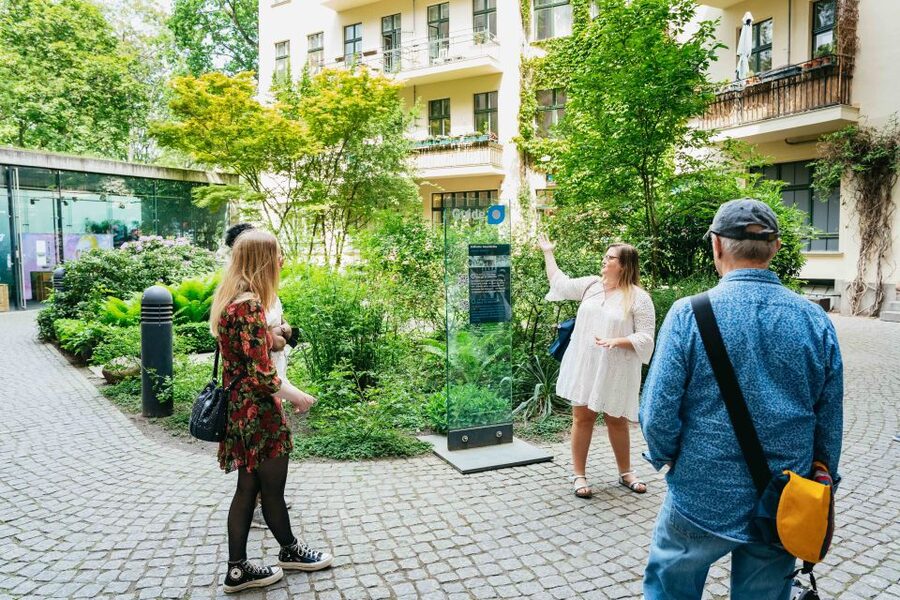
Rosenhöfe adds another variation to the route. Rather than treating every courtyard as interchangeable, the walk shows how small differences in design, condition, and use create a different feel from one interior space to the next.
This section is valuable because it slows you down. Berlin can be a visually busy city, with bold street art, large monuments, and a complicated past competing for attention. In a courtyard, you can focus on entrances, upper floors, paving, planting, and the way people move through the space.
Your guide also ties these physical details to social change. The neighborhood is not presented as a frozen historic quarter. It has been reshaped by changing industries, populations, artistic activity, and new businesses.
That is one reason the tour works well for a return visit to Berlin. If you have already seen the main sights, you can spend two hours learning how the city operates behind the street front. If it is your first visit, the tour gives you useful context before you explore Mitte on your own.
Sophienkirche and Auguststraße
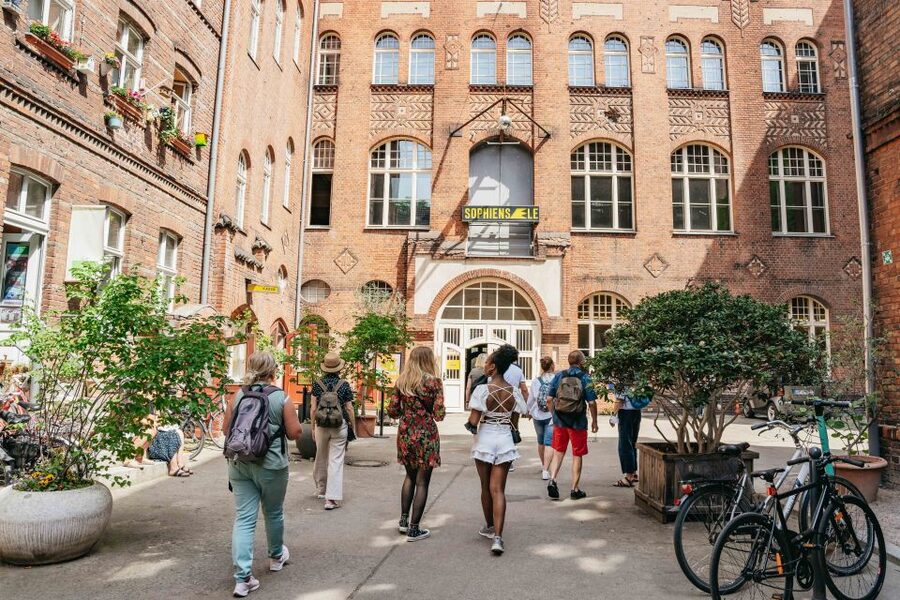
Sophienkirche and Auguststraße widen the tour beyond the courtyards themselves. The church adds a religious and architectural point of reference, while Auguststraße connects the interior spaces with the public streets of the neighborhood.
The route’s history is strongest when it shows connections. Jewish life, Christian institutions, commerce, housing, art, and public streets all occupy the same small part of Berlin, but not always in the same period or for the same purpose.
Guides have used stories about Berlin’s past to make this section approachable. One example is an anecdote about the first female rabbi, included by a guide while discussing the Jewish quarter. Details like this help turn broad social history into something easier to remember.
Do not expect a formal church tour or a long museum-style lecture. This is a walking experience, so the guide keeps moving between locations. The information comes in short explanations, anecdotes, and observations tied to what you can see around you.
For me, that pace is a plus. You receive enough background to understand the area without spending the whole afternoon indoors. If you prefer long, detailed lectures at each stop, the format may feel brisk.
Heckmann Höfe, the leafy finish
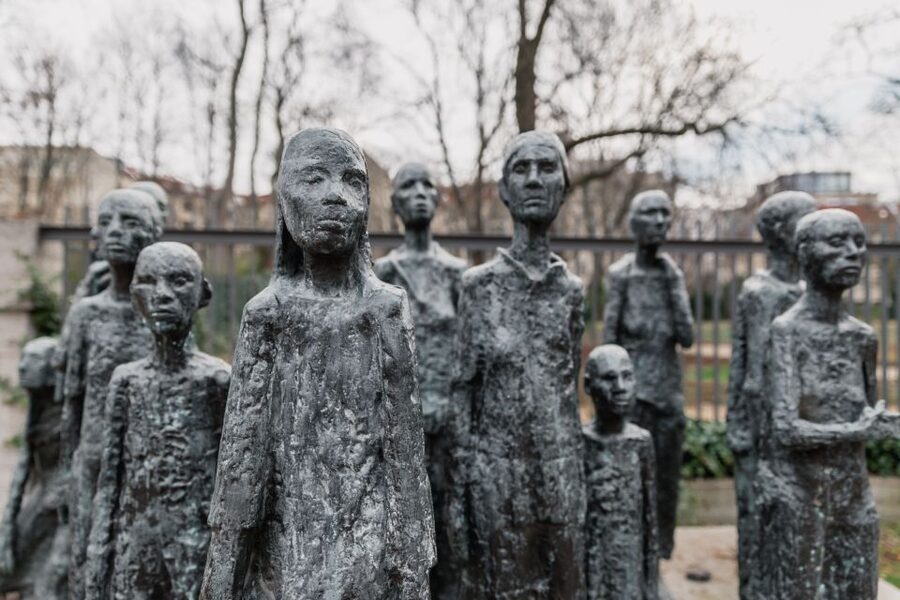
Heckmann Höfe is the route’s most relaxing stop. This 19th-century courtyard is described as a local hangout, with colorful surfaces, trees, and ivy-lined buildings creating a sheltered atmosphere away from Oranienburger Straße.
The setting gives the tour a pleasant change of mood. Haus Schwarzenberg feels raw and creative. Hackesche Höfe is more established and architectural. Heckmann Höfe feels like a place where people might pause for a meal, a drink, or a chat.
The courtyard also shows how old urban spaces can gain a new public life. You are not simply looking at preserved buildings. You are seeing a place used in the present, with shops and social spaces helping keep the courtyard active.
Take a moment here to compare the inside with the street outside. That contrast is the point: Berlin can shift from noisy and commercial to calm and enclosed within a few steps.
The tour finishes with drop-off locations on Oranienburger Straße. This is convenient for continuing your day near the New Synagogue, restaurants, shops, and other Mitte sights. It also means you are not returned to Hackescher Markt, so plan your next stop from Oranienburger Straße rather than assuming you will circle back.
What the two-hour pace feels like
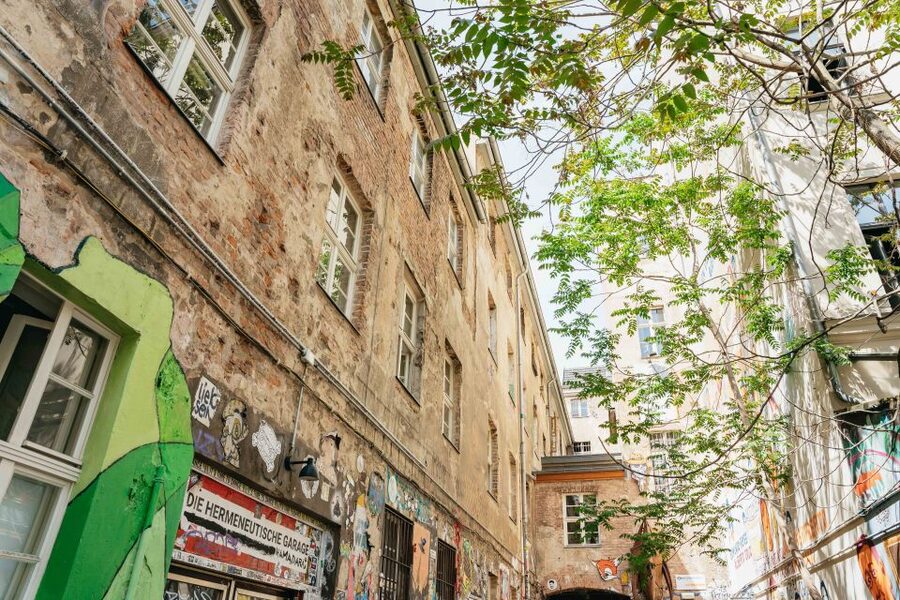
Two hours is enough time to cover the main courtyards and hear the neighborhood’s story without making the outing feel like a full-day commitment. The walk is described as easy, and one participant specifically found the pace comfortable.
You will spend much of the time walking, pausing, and listening. Some courtyards may invite a longer look, but the route keeps moving through several locations. Wear comfortable shoes, especially if you are combining this with a full day of sightseeing.
The tour takes place in small urban spaces where sound can carry. If you are hard of hearing, standing close to the guide may help. The activity is offered in English and German, but confirm the language before booking. One participant expected a bilingual tour and found it was conducted only in German, while another visitor with intermediate German managed well with a considerate guide.
Because the tour runs in all weather, a rainy day does not automatically spoil it. One participant enjoyed the walk during heavy rain, and another completed it in bitter cold. Still, the courtyards are outdoor spaces, so weather protection can make a major difference.
Is $23 a fair price?
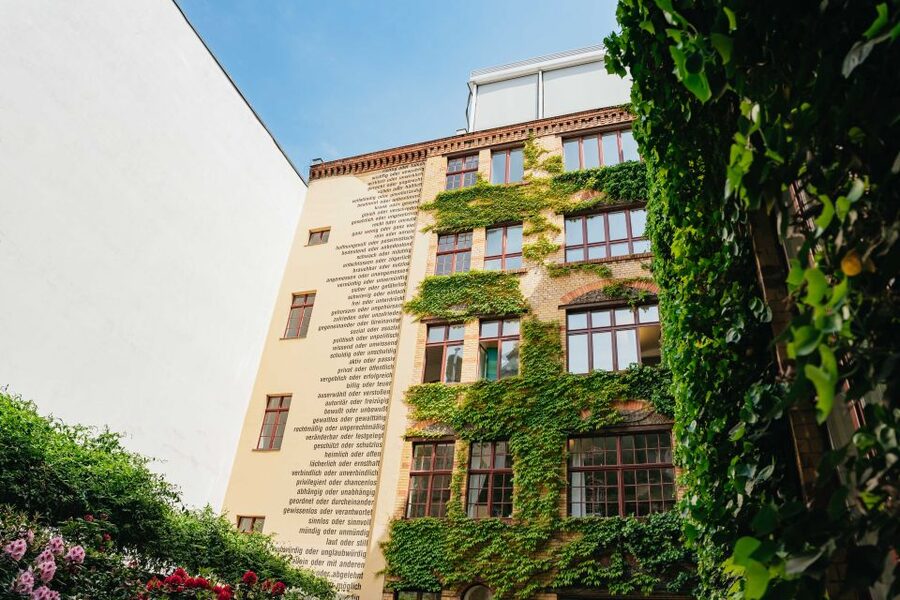
At $23 per person, this is a reasonable price for a guided two-hour walk in central Berlin. You are paying for local interpretation, access to a planned sequence of courtyards, and the time saved from trying to locate and understand these places alone.
You could walk through parts of Hackesche Höfe and Oranienburger Straße by yourself. The harder part is knowing which courtyards to enter, what their past functions were, and how they fit into the story of Spandauer Vorstadt. The guide provides that missing layer.
Food and drinks are not included, but that keeps the price straightforward. Since the route ends near Oranienburger Straße, you can choose your own place for a coffee, meal, or drink afterward rather than paying for a fixed stop.
The value is highest if you enjoy architecture, local history, Jewish Berlin, street art, and urban change. It is less useful if you want a broad introduction to every major Berlin sight, since the tour stays focused on one area.
Who should book this courtyard walk?
I would recommend it to anyone who has already seen Berlin’s major landmarks and wants to understand Mitte at a closer range. It is also a good first-day activity if you prefer to begin with a neighborhood walk rather than a large museum.
It suits people who enjoy stories about how buildings were used, not just how old they are. Families with older children may appreciate the short length and visual variety, while photographers will find plenty of textures, courtyards, artwork, and architectural details.
It is also a good choice for visitors interested in Jewish Berlin, though you should not treat it as a dedicated New Synagogue tour. The Jewish quarter is part of a wider story that includes architecture, commerce, religion, and later creative life.
I would hesitate only if you dislike walking in uncertain weather, need a fully indoor activity, or require a guaranteed English-language tour without checking the departure details. The experience is also less suited to someone seeking grand monuments or a chronological survey of all Berlin.
Should you book the Hidden Backyards Guided Walking Tour?
Book it if you want a focused look at Berlin behind its street facades, with enough history to explain what you are seeing. The strongest reason to go is the mix of places: the artistic roughness of Haus Schwarzenberg, the formal courtyards at Hackesche Höfe, the quieter Rosenhöfe, and the leafy setting of Heckmann Höfe.
The tour also earns its price through the guides. Nick, Susanne, Lydia, Alex, Minit, and Nicolas have each been praised for clear, friendly storytelling, but the assigned guide can vary. Confirm English or German before you commit, dress for the forecast, and plan to continue from Oranienburger Straße at the end.
For a short introduction to the less obvious side of Berlin-Mitte, this is a smart use of two hours.
FAQ
Where does the tour begin?
Meet your guide in front of the BUTLERS shop at Hackescher Markt 4 in Berlin.
How long does the walking tour last?
The tour lasts two hours.
Where does the tour finish?
The tour has drop-off locations on Oranienburger Straße.
What language is the tour offered in?
The live tour is offered in English or German. Confirm the language of your selected departure, as some departures may be conducted in only one language.
Is the tour wheelchair accessible?
Yes, the activity is listed as wheelchair accessible.
Does the tour include food or drinks?
No. Food and drinks are not included.
Does the tour run in bad weather?
Yes. The tour takes place rain or shine.
Which courtyards are included?
The route includes Haus Schwarzenberg, Hackesche Höfe, Rosenhöfe, and Heckmann Höfe, along with Sophienkirche and Auguststraße.
What neighborhood does the tour explore?
The walk explores Spandauer Vorstadt in Berlin-Mitte, including the area around the New Synagogue.
Can I cancel for a full refund?
Yes. You can cancel up to 24 hours in advance for a full refund.
New walking tours around Berlin
- Berlin: 2.5-Hour Walking Tour through Kreuzberg 61★ 4.9 · 525 reviews
- From Berlin: Potsdam & Sanssouci half day Walking Tour★ 4.9 · 85 reviews
- East Berlin and the Wall: Walking Tour★ 4.9 · 407 reviews
- Cold War, Berlin Wall, Spies and the East Side Gallery★ 4.8 · 254 reviews
- Berlin: Walking Tour of the Top 10 Sightseeing Attractions★ 4.7 · 150 reviews
- Berlin: The Time of National Socialism Walking Tour★ 5.0 · 220 reviews
- Berlin: walking tour about Charité★ 4.4 · 537 reviews
- Berlin: Kreuzberg Guided Walking Evening Tour★ 4.7 · 555 reviews
Berlin Walking Tours, side by side.
Berlin City walk Government District and Places of Democracy
Read our review →
Berlin: Third Reich & Cold War Guided Walking Tour
Read our review →

Berlin’s Best: 2 Hour Walking Tour Third Reich and the Cold War
Read our review →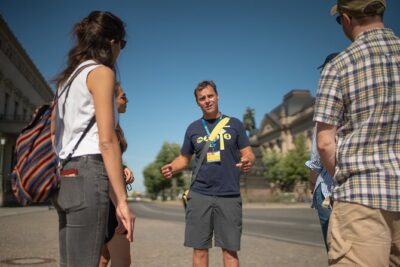
Explore Berlin: See All The Iconic Sights & Some Hidden Gems
Read our review →
Third Reich Berlin: Hitler and WWII Walking Tour
Read our review →
Berlin Center Food Tour with 8+ Authentic Local Tastings
Read our review →Lists this walk sits on