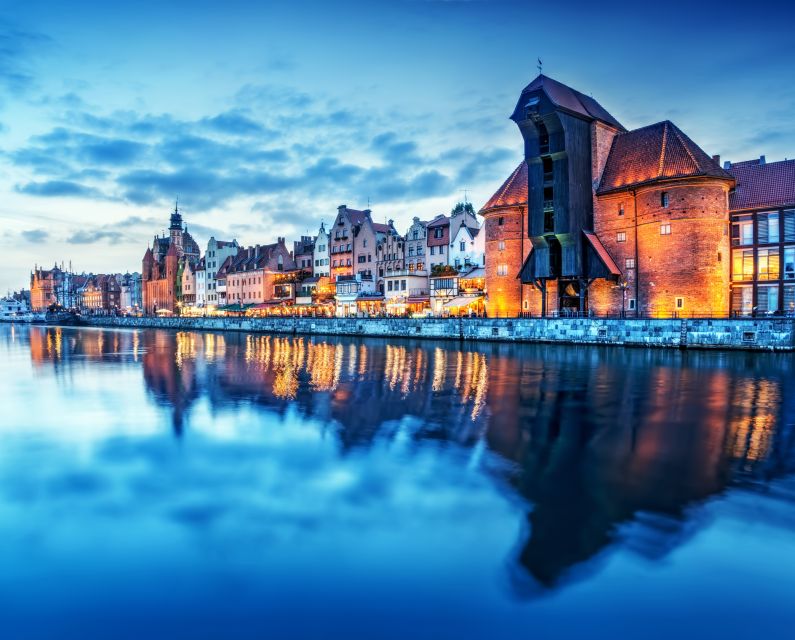
Review · POLAND
Gdańsk: Old Town Private Walking Tour with Legends and Facts
Gdańsk’s story is unusually compact: medieval trade, grand merchant houses, wartime destruction, shipyard protests, and the collapse of communism all meet within a walkable center. This private tour gives you that full sweep, beginning at the Upland Gate and ending, on the longest option, at the European Solidarity Centre. I especially like the choice of four tour lengths and the way a licensed local guide can adjust the pace. I also like the balance between grand sights such as Neptune’s Fountain and quieter stops such as St Bridget’s Church, where the amber altar and Solidarity doors add real substance.
The main drawback is simple: the 2-hour route can only introduce Gdańsk’s major sights, not explain every layer of the city. The 6-hour option covers much more, but it is a long walking day, and the European Solidarity Centre requires extra time if you want to read and study its displays properly.
What makes this Gdańsk walk worth your time

- You begin at the Upland Gate, the historic entrance to the city, then follow the Royal Route through the Golden Gate and Long Market.
- St Mary’s Basilica provides a powerful interior stop, with a vast brick hall, ornate altar, organ set, and royal chapel.
- The 3-hour route adds Motława’s warehouse islands, including Wyspa Spichrzów and Olowianka.
- St Bridget’s Church links faith, amber, and Solidarity, with a striking altar and doors showing key events from 1980 and 1981.
- The 6-hour option reaches the shipyard district, the Monument to the Fallen Shipyard Workers of 1970, and the European Solidarity Centre.
- Private guiding is the real advantage, with guides including Kaja, Karina, Krzysztof, Gabriella, and Weronika praised for clear explanations, warmth, and flexibility.
Starting at the Upland Gate and following the Royal Route
Meet your guide at the tourist information sign beneath the High Gate, also called Brama Wyżynna, at Wały Jagiellońskie 2A. It is about eight minutes from Gdańsk’s main railway station. If your accommodation is within 1.5 kilometers of the meeting point, pickup can be arranged in the Old Town when you provide the address during booking.
The Upland Gate is a sensible starting point because it places you at the edge of the old defensive city. From here, the walk moves through the Golden Gate and along Długa Street toward Long Market. This is the part of Gdańsk most visitors picture first: tall façades, decorative details, old merchant buildings, and a strong sense of ceremony.
Your guide fills in the basic city story as you walk. Gdańsk was a major port and industrial center, and its position on the Baltic shaped both its wealth and its troubles. The city’s past is not just a collection of pretty façades. Trade, war, shifting political control, and the modern struggle against communist rule all matter here.
A private guide helps with the details that are easy to miss. You can ask why a building looks the way it does, how the city center was rebuilt, or which parts of the route deserve another look later. Guides such as Kaja and Krzysztof have been praised for explaining local history clearly and answering questions without rushing.
More Old Town Walking Tours in Poland
- Warsaw: Old Town Highlights Walking Tour in English
★ 4.7 · 1,516 reviews - Old Town Krakow & Wawel Castle Walking Tour
★ 5.0 · 1,508 reviews - Krakow: The Old Town Walking Tour
★ 4.8 · 794 reviews
Long Market, Neptune’s Fountain, and Artus Court
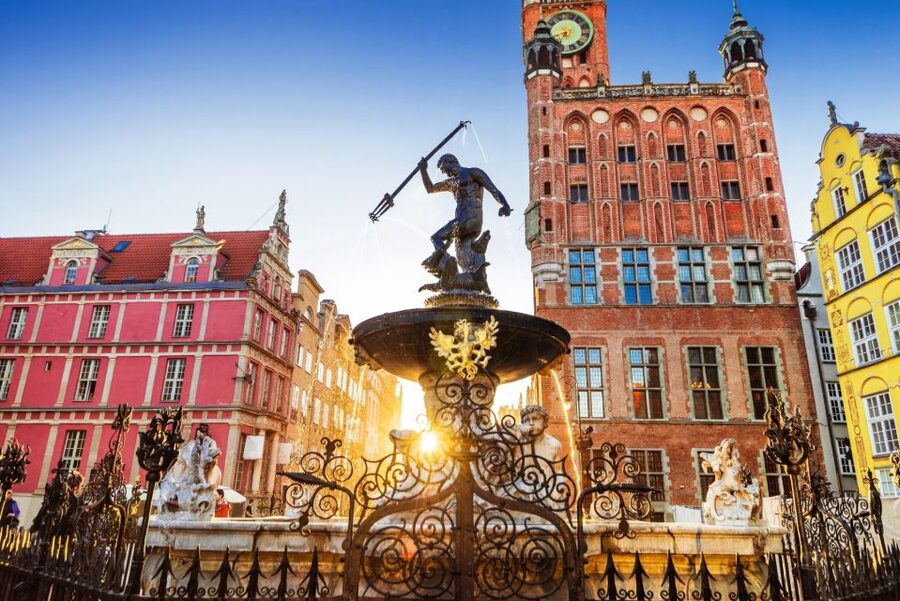
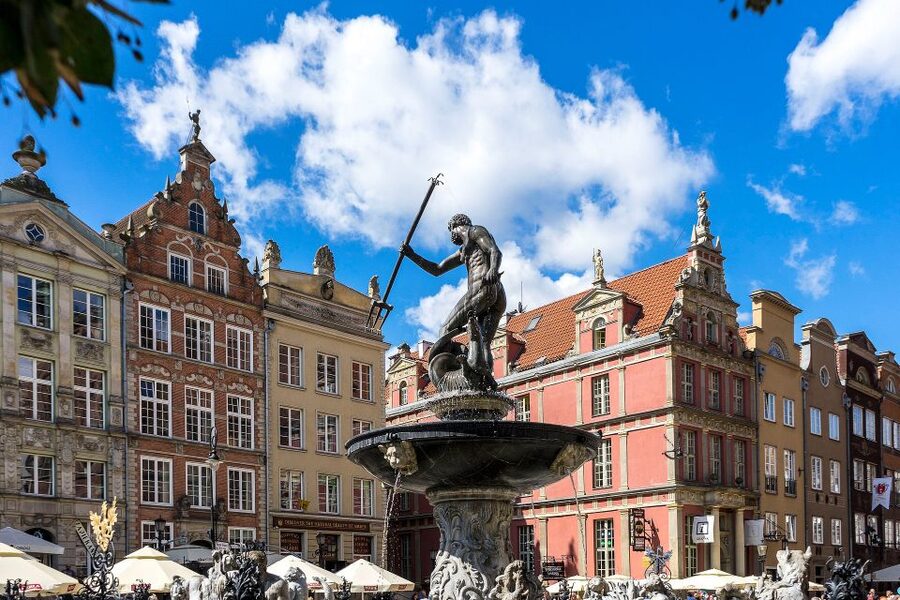
Long Market is the visual center of the classic Old Town route. Here you see the Gdańsk Town Hall, the Golden House, Neptune’s Fountain, and a long run of carefully decorated buildings. The 17th-century fountain is one of the city’s best-known landmarks, but it makes more sense when your guide explains its place in the old merchant quarter.
Artus Court is another key stop. Once a meeting place for the city’s merchants, it now forms part of the Gdańsk History Museum and contains local art and historical collections. The tour includes the exterior route and the setting around the court, while the listed inclusions do not promise a separate museum ticket for every option. If you want a detailed museum visit, ask your guide how much time is available and what admission applies.
This section suits first-time visitors who want a clear orientation. You get the major names quickly, then receive practical suggestions for restaurants, pubs, and souvenir shops. Those tips are useful because Gdańsk’s central streets can feel designed for passing through, while the better local choices may require a little guidance.
The route is also a good fit for families. Earlier guides, including Gabriella, have been praised for keeping children involved rather than speaking only to adults. Still, the streets and sights are dense with information, so younger children may prefer the shorter route.
Inside St Mary’s Basilica
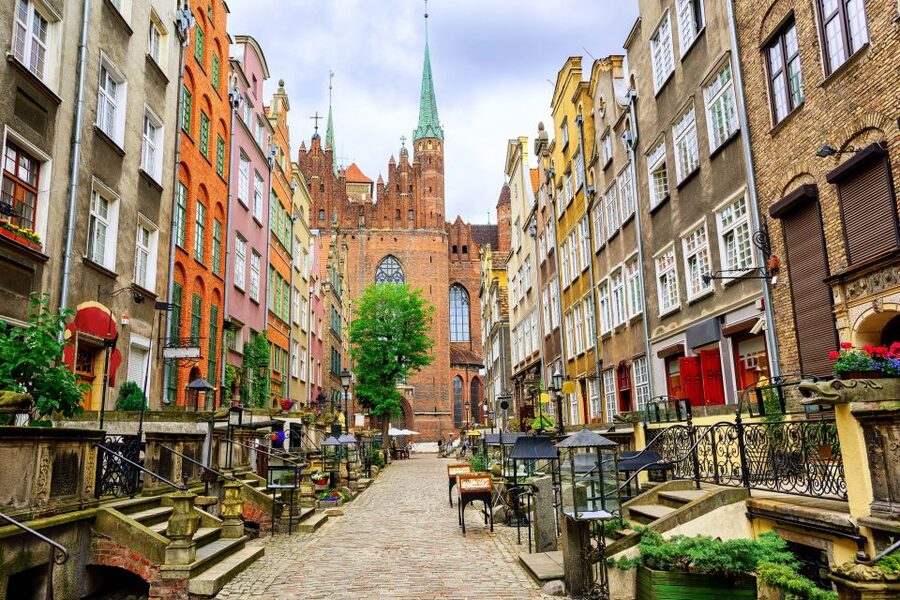
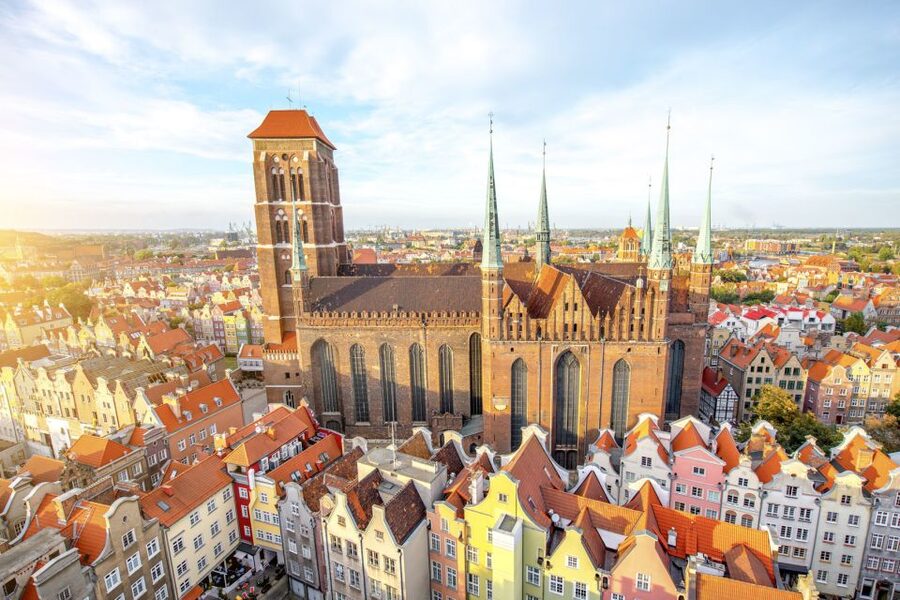
The walk continues to St Mary’s Basilica, one of the largest brick churches in the world. The church’s scale is the first thing you notice. Its interior is broad and lofty, with a grand hall, an ornate altar, an organ set, and a royal chapel.
Entry to the free parts of St Mary’s is included with every tour length. That distinction matters. The tour gives you an introduction to the church and time to see its main interior features, but it should not be treated as a full architectural or museum visit with every possible area included.
This is one of the tour’s strongest stops because the building explains something about Gdańsk that street façades cannot. The church reflects the city’s old wealth, religious life, and importance in the region. A guide can also point out details you might walk past on your own, then connect them to the wider story of the city.
The church is a working place of worship, so the visit may need to remain quiet and respectful. Your guide controls the route and explanation, but the pace may also depend on what is happening inside.
The Green Gate and views over the Motława
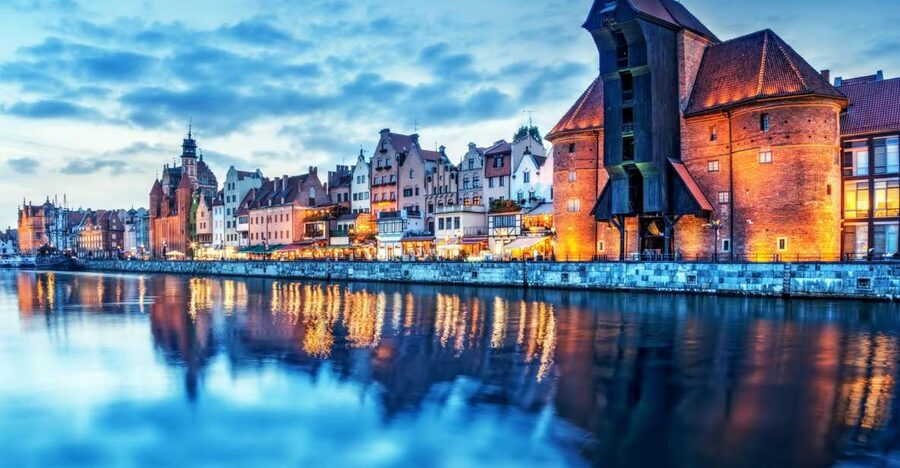
From the main Old Town route, the guide leads you toward the Green Gate and the Motława River. The riverfront gives you a welcome change from the enclosed streets. You can pause for views, take in the water, and see why the port shaped Gdańsk’s fortunes.
The Green Gate is also a useful transition point. It connects the formal merchant center with the river, warehouses, islands, and later industrial history. This is where the longer versions of the tour begin to feel different from a standard two-hour introduction.
The river section is included in the 3, 4, and 6-hour options. If you choose the shortest tour, you still see the main Old Town and the river view, but you do not get the extended island route. Keep that difference in mind when comparing prices and durations.
More crime and mystery walks around Poland:
- Krakow: Legends and Tales of Old Town Walking Tour
★ 4.8 · 227 reviews - Prague: Ghost Walking Tour Where Legends Come To Life
★ 4.4 · 5,253 reviews - Edinburgh Darkside Walking Tour: Mysteries, Murder and Legends
★ 5.0 · 3,862 reviews - Historical Walking Tour: Legends of Bruges
★ 5.0 · 2,541 reviews
Choosing the 3-hour route through Wyspa Spichrzów and Olowianka
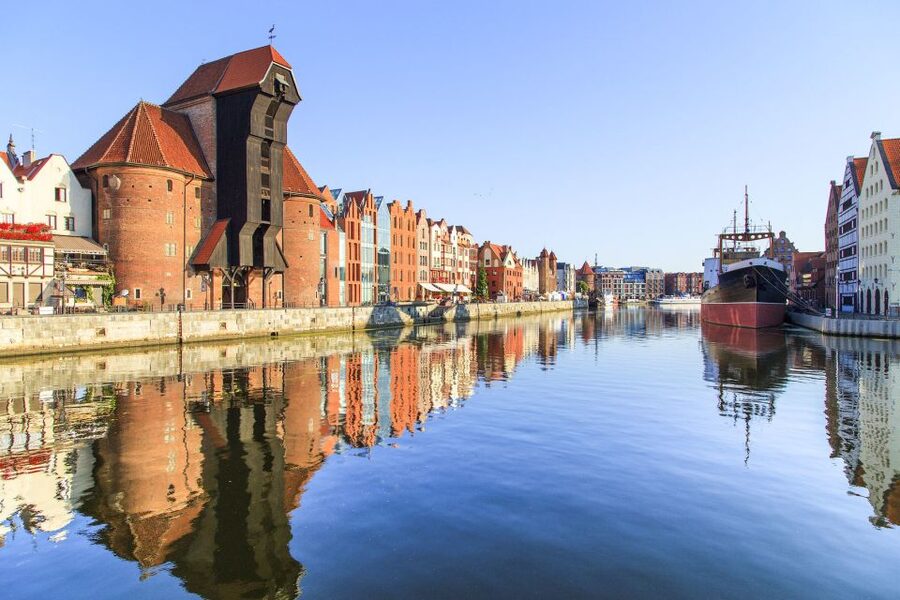
The 3-hour option adds Gdańsk’s river islands. On Wyspa Spichrzów, you walk among redeveloped areas, old brick structures, and warehouse ruins. These remains connect directly to the city’s trading past. The point is not simply to admire old walls. You learn how storage and shipping supported Gdańsk’s position as a commercial port.
This extra hour makes the route less polished and more varied. You move beyond the ceremonial streets into a part of the city shaped by trade, destruction, and renewal. It is a good choice if you already know you want more than the usual postcard route.
On Olowianka, you see the red brick Baltic Symphony Hall. The island section also gives you a different view back toward the city center. I would choose three hours for most first visits if your schedule allows. Two hours covers the essentials, but the extra time adds context rather than simply adding more buildings.
St Bridget’s Church and its amber altar on the 4-hour option
The 4-hour tour adds St Bridget’s Church, one of the most distinctive stops on the extended route. It served as a sanctuary for Solidarity leaders during martial law, giving the building a direct connection to the political struggle that shaped modern Poland.
One of the church doors shows scenes from August 1980 through the imposition of martial law in December 1981. That detail gives the history a human scale. Instead of hearing only about strikes and political change, you see the events represented on a place of worship used by people involved in the movement.
The church also contains religious objects and a remarkable amber altar. Amber is closely tied to the Baltic region, and this work gives you a clear sense of how local material, religious art, and modern Polish identity can meet in one room.
The 4-hour choice is especially good for anyone interested in Poland’s 20th-century history but not ready to spend six hours walking and studying museum displays. It also gives you more variety than a route focused only on historic architecture.
From shipyard memorial to the European Solidarity Centre
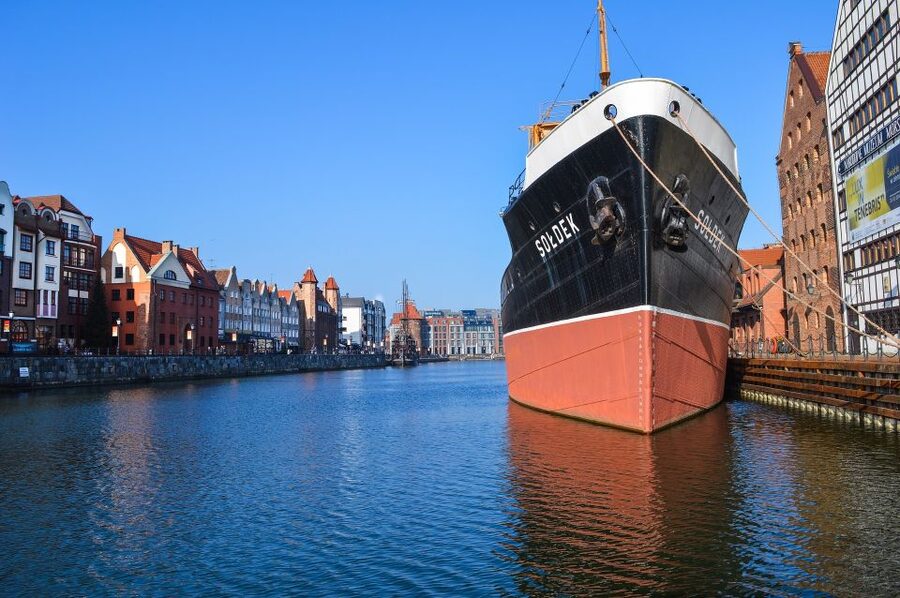
The 6-hour option extends beyond the old center toward the Main Town and shipyard area. You see the Monument to the Fallen Shipyard Workers of 1970, which commemorates workers killed during anti-government riots. The monument is a serious stop, and it prepares you for the European Solidarity Centre.
The center tells the story of the Solidarity movement, the trade union campaign, the strikes, and the events that helped bring communist government in Poland to an end. A skip-the-line ticket is included on the 6-hour option, which is useful because the museum needs more than a quick glance.
This is the history-focused version of the tour. If your main interest is medieval architecture, the first two or three hours may be enough. If you want to understand why Gdańsk matters far beyond its handsome streets, the shipyard and museum are essential.
Allow yourself mental energy for this section. Six hours of walking followed by a serious museum can feel demanding, even with a private guide. The benefit is a connected story: old port city, industrial center, workers’ protests, Solidarity, and political change.
What the private guide adds
The guide is the main reason to choose this experience over a self-guided walk. You receive a private tour with an official Gdańsk license, and live guiding is available in English, Spanish, French, Italian, German, Polish, Russian, Norwegian, and Swedish.
The strongest guide names associated with this experience include Kaja, Karina, Krzysztof Przyborowski, Gabriella, and Weronika. Kaja has been praised for warmth, humor, clear explanations, and obvious affection for her city. Krzysztof is noted for detailed local history and for answering questions fully. Gabriella has a strong record of making the walk work for both adults and children.
Private touring also gives you room to adjust the emphasis. One guide has been especially praised for making mid-tour changes after learning more about the group’s interests. That matters in Gdańsk, where one person may care most about churches and architecture while another wants shipyard history and modern politics.
Do not expect every guide to deliver the same personality or exact storytelling style. The experience depends on the person assigned. The official license and language choice provide a useful baseline, but your own questions will help shape the walk.
Is $107 per person good value?
At $107 per person, this is not the cheapest way to see Gdańsk. The value depends heavily on the route you choose and the number of people in your private group.
For two people taking a 2-hour walk, the price pays for a personal introduction, a licensed guide, local recommendations, and access to the free parts of St Mary’s. That may feel high if you only want a quick orientation. It becomes easier to justify if you value conversation, flexible pacing, and historical explanation.
The longer routes make the price more defensible. The 4-hour tour adds St Bridget’s Church and the amber altar. The 6-hour tour includes the European Solidarity Centre with a skip-the-line ticket, plus the shipyard memorial and the extended route. If you would otherwise pay separately for a guide and museum entry, the package has stronger value.
A larger private group can also change the calculation. The listed price is per person, but the private format may suit families or friends who prefer not to join strangers. Check the total booking cost and the exact inclusions before paying.
Practical details before you book
The meeting point is under the High Gate at Brama Wyżynna, Wały Jagiellońskie 2A, about eight minutes from the main railway station. Pickup is available only from accommodation in Gdańsk Old Town within 1.5 kilometers of the meeting point. If you do not provide your address, meet at the stated point.
The activity is wheelchair accessible, but the route length and historic streets may still affect comfort. Ask about the exact route if mobility is a concern, especially for the longer island and shipyard options.
You can cancel up to 24 hours before the start for a full refund, and reserve now while paying later. Starting times vary, so check availability for your date. Read the email sent the day before, since it contains important meeting information.
Wear comfortable shoes and choose the duration honestly. The 2-hour route is a focused introduction. Three or four hours gives you more of the city’s physical and political story. Six hours is for someone who wants Gdańsk’s full arc and can stay engaged through a museum visit.
Who should book this Gdańsk tour?
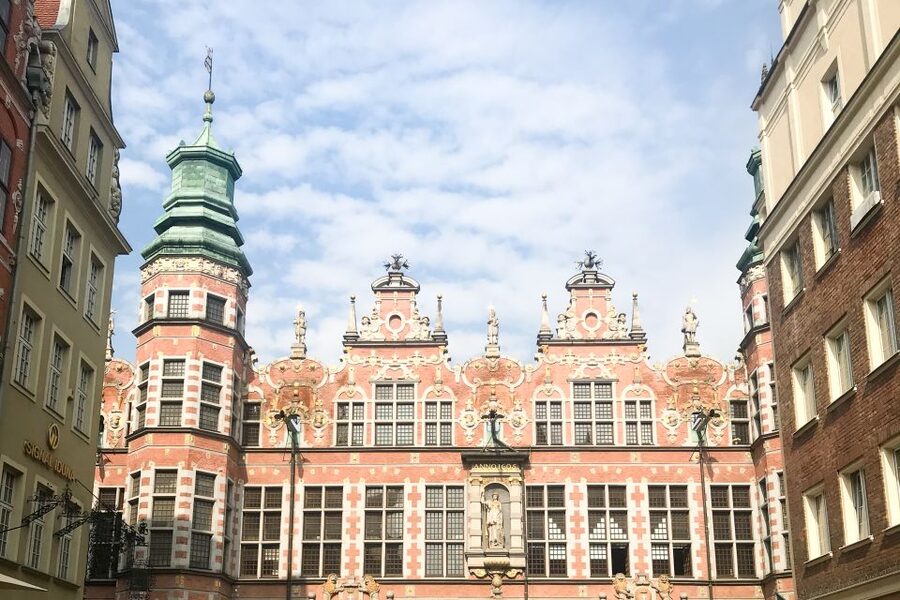
I would choose the 2-hour version if you have a short stop, are staying near the Old Town, or want an expert orientation before exploring alone. It covers the Royal Route, Long Market, St Mary’s, the Green Gate, and the Great Armoury.
Choose three hours if you want the river islands and warehouse history. Choose four hours if St Bridget’s Church, Solidarity, and amber art appeal to you. Pick six hours if the shipyard story and the European Solidarity Centre are central to your visit.
This tour suits first-time visitors, history fans, families wanting a flexible pace, and repeat visitors who want a fresh reading of familiar streets. It is less suited to anyone seeking a quiet, unstructured stroll or a very low-cost introduction.
Should you book it?
Yes, if you want Gdańsk explained by a local guide rather than simply photographed. The best reason to book is the progression from medieval gate to merchant street, church, river warehouses, Solidarity sanctuary, and shipyard museum.
For most people, I would choose the 3-hour or 4-hour option. They give you more than the standard center without turning the day into a long history seminar. Choose six hours when the end of communism and the Solidarity movement matter as much to you as Gdańsk’s architecture.
FAQ
Where does the tour begin?
The meeting point is in front of the tourist information sign under the High Gate, Brama Wyżynna, at Wały Jagiellońskie 2A in Gdańsk. It is about eight minutes from the Main Railway Station.
Can the guide pick me up at my accommodation?
Pickup is available from accommodation in Gdańsk Old Town within 1.5 kilometers of the meeting point. You need to provide the accommodation address when booking. Otherwise, meet the guide at the specified meeting point.
How long can I book the tour for?
You can choose a 2, 3, 4, or 6-hour option, subject to availability and starting times.
What languages are available?
Live guiding is available in English, Spanish, French, Italian, German, Polish, Russian, Norwegian, and Swedish.
Is entry to St Mary’s Church included?
Entry to the free parts of St Mary’s Church is included with all tour options.
What is included in the 6-hour tour?
The 6-hour option includes sightseeing from the Old Town to the Main Town, the Monument to the Fallen Shipyard Workers of 1970, the European Solidarity Centre, and a skip-the-line ticket to the center.
Can I cancel the booking?
You can cancel up to 24 hours in advance for a full refund. A reserve-now, pay-later option is also available.
More Private Walking Tours in Poland
- Krakow: Old Town Highlights Private Walking Tour
★ 4.9 · 79 reviews - Beijing: Forbidden City Tour(Group/Private)-Tickets Included
★ 4.8 · 7,974 reviews - Private Walking Grand Tour of Copenhagen
★ 5.0 · 3,953 reviews - Private 3 hrs Venice Tour: St Mark’s, Walking tour & Boat tour
★ 4.0 · 3,372 reviews
New walking tours around Poland
- Krakow: Old Town Highlights Walking Tour★ 4.5 · 173 reviews
- Kraków: Old Town & Wawel Castle Walking Tour in English★ 4.8 · 532 reviews
- Krakow: Street Food Walking Tour★ 4.8 · 285 reviews
- Krakow: 2h Kazimierz (Jewish Quarter) Walking Tour★ 4.5 · 75 reviews
- Krakow: Legends and Tales of Old Town Walking Tour★ 4.8 · 227 reviews
- Krakow: Jewish Ghetto Walking Tour★ 4.6 · 349 reviews
- Krakow: Spooky Tales Guided Walking Tour★ 4.6 · 164 reviews
- Krakow: Evening Walking Tour with Spooky Stories★ 4.7 · 500 reviews
Poland Walking Tours, side by side.
Warsaw: Old Town Highlights Walking Tour in English
Read our review →
Gdańsk City Sights & History Guided Walking Tour in English
Read our review →