
Review · JERUSALEM
Jerusalem: Guided Walking Tour of the Old City
Jerusalem’s Old City is best understood on foot, where a turn through a stone lane can shift you from a Jewish prayer plaza to a Muslim market or the Christian route of the Via Dolorosa. This tour links the major sacred sites in four hours, with an English-speaking guide to explain what you are seeing and why it matters.
I like the way the walk brings all three major faiths into the same story, rather than treating Jerusalem as a collection of separate monuments. I also like the strong guides, including Tania, Shahar, Yoni, and Alex, who are repeatedly praised for clear storytelling, patience, humor, and careful pacing.
The main drawback is the physical demand. You will walk for four hours over old stone streets, often in sun and crowds, and Temple Mount access is not guaranteed on Fridays, Saturdays, or religious holidays. People with mobility impairments or wheelchair users should choose another way to see the city.
Key points to know before you book
- Four quarters in one walk: You pass through the Jewish, Muslim, Christian, and Armenian Quarters while learning how they fit together.
- Three faiths, one complicated city: The route connects the Western Wall, Temple Mount, Via Dolorosa, and Church of the Holy Sepulchre.
- Temple Mount access varies: The Dome of the Rock and Al-Aqsa Mosque are closed to visitors every Friday, Saturday, and during various Muslim and Jewish holidays. A viewpoint is used instead.
- Guide quality matters here: Strong English and good pacing are central to the experience. Tania, Shahar, Yoni, Alex, and several other guides receive especially warm praise.
- Plan for serious walking: Wear sturdy, comfortable shoes, carry water, and bring a sun hat and scarf.
- Good first-day orientation: At $57 per person, the tour gives you a useful framework before you return to favorite sites on your own.
Starting at Jaffa Gate, Jerusalem’s Old City doorway
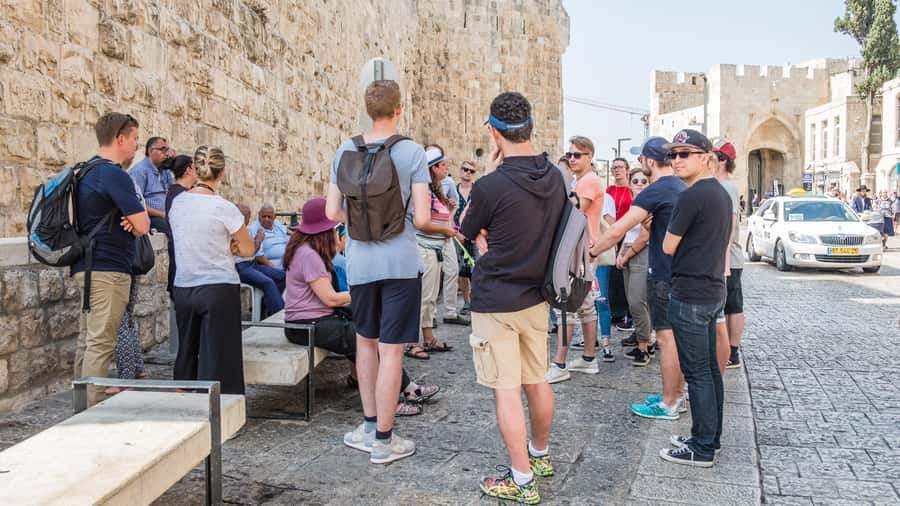
The meeting point is the stone bench just outside Jaffa Gate. Look for a guide in a green shirt with Guide written in yellow on the back.
Jaffa Gate is a sensible starting place because it gives you an immediate sense of Jerusalem’s scale and layers. You enter through the walls and leave the modern city behind, though the Old City is not a quiet museum. It is a working place of prayer, trade, worship, study, and daily life.
From here, the walk moves through the Old City’s quarters. The guide does more than point out old stones. The useful part is the context: which community considers a site sacred, how religious traditions developed around it, and how the same patch of ground can carry several meanings at once.
This is also where a guide earns the $57 price. Without help, you can certainly find the major buildings, but it is harder to understand why one alley matters, why a doorway draws worshippers, or why access rules change from day to day.
More Old Town Walking Tours in the world:
- Underground Vaults Walking Tour in Edinburgh Old Town
★ 4.5 · 8,506 reviews - Prague: 3-Hour Walking Tour of Old Town & Prague Castle
★ 4.7 · 5,696 reviews - Dubrovnik: Old Town Walking Tour
★ 4.8 · 5,174 reviews
The Jewish Quarter and the Western Wall
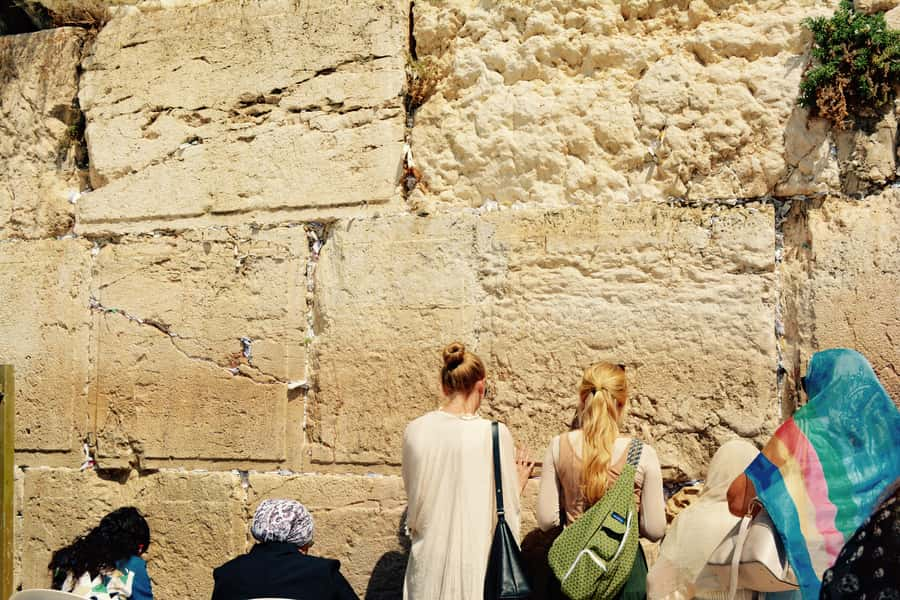
The Jewish Quarter brings you toward the Western Wall, one of the most important stops on the walk. The wall is described as the last remains of the Jewish Temple complex, and it remains a place of prayer and devotion for Jewish visitors from around the world.
Your guide places the wall within the story of the Jewish nation and the ancient temple that once stood on the Temple Mount. That background matters because the visible stone surface is only part of the experience. The religious meaning comes from the connection between the wall, the temple, Jerusalem, and centuries of Jewish prayer.
The route may also include King David’s Tomb, another site important to Jewish tradition. The tour uses these places to explain the foundations of Judaism rather than simply rushing you from one photo stop to the next.
Allow yourself a little patience here. The Old City does not operate on the rhythm of a neat sightseeing circuit. Prayer, ceremonies, closures, and crowds can affect how long you remain at a site. A good guide, such as Shahar or Yoni, helps the group keep moving without making the visit feel hurried.
Temple Mount, the Dome of the Rock, and Al-Aqsa Mosque

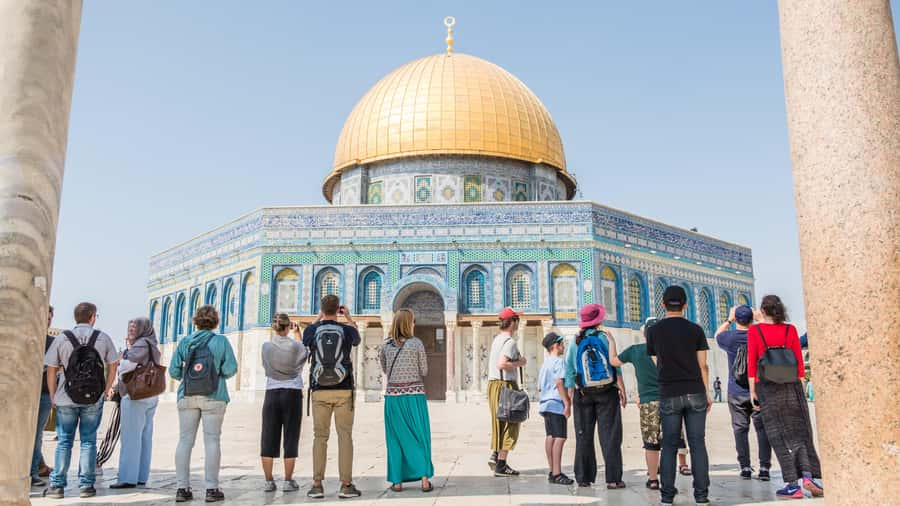
The Temple Mount is the point where Jerusalem’s religious and political sensitivities become especially clear. For Muslims, the area includes the Dome of the Rock, associated with the Prophet Mohammed’s ascent to heaven, and Al-Aqsa Mosque. For Jews, it is the site of the ancient temples and one of the most sacred places in Jewish tradition.
The tour explains the Muslim connection through the Five Pillars of Islam and the importance of the holy compound. You are not just looking at a famous golden dome. You are learning how this place fits into Muslim belief and into Jerusalem’s wider story.
Access is the key practical issue. The Temple Mount, including the Dome of the Rock and Al-Aqsa Mosque, is closed to visitors every Friday, Saturday, and during various Muslim and Jewish holidays. On those days, the guide provides a viewpoint overlooking the compound instead.
That substitution can still be useful, especially if the guide explains what you are seeing from outside. But you should book this walk with realistic expectations. If stepping inside the compound is your top priority, check the operating day before paying. Even on an open day, access conditions can affect the route.
One of the strongest experiences described for this tour involved reaching a special spot near the Western Wall and seeing the Dome of the Rock area up close. That kind of access depends on the day and current rules, so treat it as a possibility, not a promise.
Walking the Via Dolorosa
The Via Dolorosa is the Christian heart of the route. According to Christian tradition, this is the path Jesus walked carrying the cross toward his crucifixion. The streets are narrow, uneven, and active, which makes the setting feel less like a formal memorial and more like a route woven into the daily life of the Old City.
Your guide explains the stations and the religious stories connected with them. The value here is not only seeing the route. It is understanding how Christian pilgrims have used these streets, how the tradition developed, and how the path leads toward the Church of the Holy Sepulchre.
The walk can be emotionally powerful, but your experience will depend on the crowd, weather, and worship schedule. In hot weather, shade matters. One guide, Hagar, was praised for seeking shade when possible, a small detail that makes a long walking tour much easier.
Rain can change the mood completely. During one stormy outing, the wet streets made the Via Dolorosa feel unusually solemn. That will not be everyone’s preferred condition, but it shows why you should check the forecast and bring a scarf or light protection if needed.
More walks with a guide around the world:
- Magical London: Harry Potter Guided Walking Tour
★ 4.7 · 22,044 reviews - History and Hauntings of Salem Guided Walking Tour
★ 5.0 · 14,564 reviews - Amsterdam Anne Frank: Small-Group Walking Tour & Local Guide
★ 4.8 · 12,789 reviews - Edinburgh: Harry Potter Magical Guided Walking Tour
★ 4.8 · 11,944 reviews
Inside the Church of the Holy Sepulchre
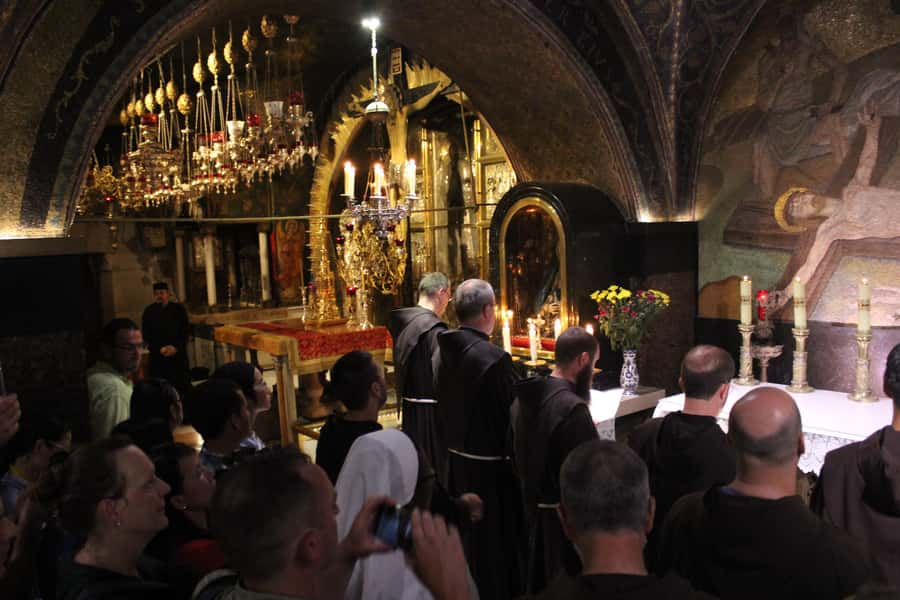
The Church of the Holy Sepulchre is the tour’s major Christian site. It contains places connected by Christian tradition with the crucifixion, burial, and resurrection of Jesus, including the slab associated with the preparation of his body.
Inside, expect a place of worship rather than a polished attraction. Different Christian communities share responsibility for the church, and the building contains chapels, shrines, candles, processions, and prayer. Your guide helps you identify the key areas and explains the story of the True Cross.
This is one of the stops where a guide can prevent confusion. The church has many rooms and religious details, and it is easy to miss the meaning of a particular object or corner when you are trying to follow the group. The tour gives you a clear first visit, though you may want to return later if you wish to spend more time in prayer or quiet observation.
Do not expect a leisurely, private visit. The church is a major pilgrimage site, and the atmosphere can be intense. That is part of its character, but people who prefer slow museum-style sightseeing may find the pace and crowd challenging.
Four quarters, one layered story
A major strength of this walk is its range. In a single morning or afternoon, you move through the Jewish Quarter, Muslim Quarter, Christian Quarter, and Armenian Quarter.
The Armenian Quarter receives less attention in many quick visits to Jerusalem, so passing through it helps widen your view of the Old City. The tour does not treat the quarters as sealed compartments. Instead, it shows how they meet in streets, markets, religious buildings, and shared public spaces.
The guide also explains how different cultures and religions interact in Jerusalem. That is valuable because the Old City can feel confusing at first. A lane may look like a simple shortcut, but it can lead to a shrine, a prayer area, or a market with rules and customs you would not understand without explanation.
The best guides keep this discussion focused on place and history rather than turning the walk into a political speech. Tania was especially praised for staying calm, clear, and nonjudgmental while answering difficult questions. That tone suits Jerusalem, where a quick opinion can flatten a very complicated subject.
Pace, group feel, and guide quality
The activity lasts four hours and is conducted in English. Several guide names appear in the feedback for this experience, including Tania, Tanya, Shahar, Yoni, Alex, Nimrod, Hagar, Shimon, Nirit, Orna, Dror, and Ram.
The exact personality will depend on who leads your departure, but the strongest pattern is clear: the guide makes or breaks the day. You want someone who can explain religious ideas without preaching, answer questions without losing the route, and keep a mixed group together on crowded lanes.
The pacing appears designed to cover a lot without turning the walk into a race. One guide was praised for giving each major site the right amount of time, while another kept the group moving through four hours of heat without making the outing feel rushed. You should still expect an active schedule. This is an orientation walk, not a series of long seated talks.
The group may also stop briefly at a shop. That can give you a chance to see local crafts or religious items, but shopping is not the main purpose of the experience. If you buy something, compare prices and bargain politely. One outing included chess sets and Shabbat candles, with the practical advice to keep some money for other shops.
Food and drinks are not included. A falafel stop may happen in the course of a particular outing, but you should not count on a meal being part of the package. Carry water and plan your own food around the four-hour schedule.
What to wear and carry
You need comfortable shoes. The Old City’s stone streets and long walking time make footwear one of the most important choices you will make.
Bring water, a sun hat, and a scarf. These items help with heat, glare, and modesty requirements. Shorts and sleeveless shirts are not allowed, so dress in a way that covers your shoulders and legs.
Carry your passport, or a copy of it. The activity information specifically asks you to bring one of these. Keep it secure and easy to reach if needed.
This is not a suitable tour for wheelchair users or people with mobility impairments. The route involves sustained walking through old streets, and the practical limitations are part of the setting rather than a minor inconvenience.
Is $57 a fair price for four hours?
At $57 per person, this is a reasonable price if you want a guided introduction to Jerusalem’s core sacred sites. You cover several major areas in one outing, including places that are difficult to understand from a map alone.
The value comes from the guide’s interpretation. You are paying for the connections between the Western Wall, Temple Mount, Via Dolorosa, and Church of the Holy Sepulchre, not simply for entry to a collection of buildings. The tour also helps you decide where to return later with more time.
It is less compelling if you already know Jerusalem well or want a slow, private visit at each shrine. Four hours gives you breadth, but not unlimited time inside every site. The best use is early in your stay, when you need a clear introduction before exploring independently.
The activity offers free cancellation up to 24 hours before the start and allows you to reserve now and pay later. Those terms are useful when your plans are still shifting, but the more important decision is choosing a date when Temple Mount access matches your priorities.
Who should book this Old City walk?
I would choose this tour for a first visit to Jerusalem, especially if you want the major religious sites explained in one coherent route. It also suits curious visitors who want to compare Jewish, Muslim, and Christian traditions without booking separate walks.
It works well for families with older children who can handle four hours of walking. Several guides use humor and clear storytelling, and one was praised for keeping children engaged during hot weather. Still, young children may tire before the final church.
I would also suggest it to solo visitors who want a structured introduction and to couples who prefer history and culture over a short sightseeing loop. If you need a wheelchair-accessible route, dislike crowds, or want a relaxed pace with long breaks, this is not the right choice.
Final call: book it for orientation, not for solitude
Book this walk if you want Jerusalem’s main sacred places put into context by a strong English-speaking guide. The combination of four quarters, three major faiths, the Western Wall, Temple Mount, Via Dolorosa, and Church of the Holy Sepulchre gives you a strong base for the rest of your stay.
Go in prepared for uneven streets, sun, crowds, modest dress, and possible changes at Temple Mount. If you can accept those limits, $57 buys a useful and memorable introduction. If you want private reflection, easy access, or a gentle stroll, explore the Old City on your own instead.
FAQ
Where does the tour begin?
It begins at the stone bench just outside Jaffa Gate in Jerusalem’s Old City. Look for a guide wearing a green shirt with Guide written in yellow on the back.
How long does the walking tour last?
The tour lasts four hours. Starting times vary, so you need to check availability for the date you want.
What language is the tour conducted in?
The live tour guide speaks English.
Which major sites are included?
The route includes the Western Wall, Temple Mount or a viewpoint overlooking it, the Via Dolorosa, and the Church of the Holy Sepulchre. It may also include King David’s Tomb, the Dome of the Rock, and Al-Aqsa Mosque when access is available.
Can I visit the Dome of the Rock and Al-Aqsa Mosque?
Temple Mount, including the Dome of the Rock and Al-Aqsa Mosque, is closed to visitors every Friday, Saturday, and during various Muslim and Jewish holidays. On those dates, the tour includes a viewpoint overlooking the area instead.
What should I bring?
Bring comfortable shoes, a sun hat, water, a scarf, and your passport. A copy of your passport is accepted.
What clothing is not allowed?
Shorts and sleeveless shirts are not allowed. Dress modestly to meet the requirements of the religious sites.
Is the tour suitable for wheelchair users?
No. The activity is not suitable for wheelchair users or people with mobility impairments.
Is food included?
No. Food and drinks are not included in the price.
What is the cancellation policy?
You can cancel up to 24 hours in advance for a full refund. You can also reserve your place and pay later.
New walking tours around the world
- Niagara Falls, Canada: White Water Walk Entry Ticket★ 4.5 · 147 reviews
- NYC: Walking Tour with Local Guide and 30+ Top NYC Sights★ 4.5 · 248 reviews
- Zadar: Food Tasting & Old Town Walking Tour★ 5.0 · 94 reviews
- Niagara Falls: Walking Tour, Journey Behind Falls, & Cruise★ 4.8 · 773 reviews
- New York City: Gangsters and Ghosts 2-Hour Walking Tour★ 4.7 · 615 reviews
- NYC: History of Slavery & Underground Railroad Walking Tour★ 4.7 · 87 reviews
- New York City’s Hell’s Kitchen: Walking Food Tour★ 4.8 · 200 reviews
- New York City: Central Park Walking Tour★ 4.7 · 82 reviews
Old Town Walking Tours, side by side.
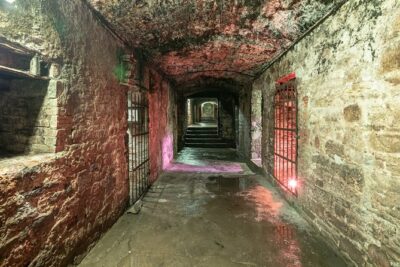
Underground Vaults Walking Tour in Edinburgh Old Town
Read our review →
Prague: 3-Hour Walking Tour of Old Town & Prague Castle
Read our review →
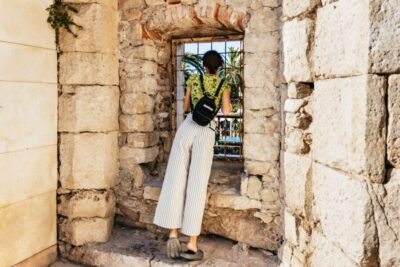
Split: Old Town and Diocletian Palace Walking Tour
Read our review →

Prague: Old Town and Jewish Quarter Guided Walking Tour
Read our review →
Cartagena: Historic Center and Getsemaní Shared Walking Tour
Read our review →
Prague Ghost and Legend of Old Town Walking Tour
Read our review →Lists this walk sits on