
Review · FRANCE
Marseille: Essential Guided Walking Tour of the City
Marseille’s story comes into focus on foot, from the imposing La Major Cathedral to the narrow lanes of Le Panier and the open waterfront at Le Pharo. This tour gives you a useful first look at a city shaped by Greek settlers, Roman power, trade, war, and a very strong sense of place.
I like the small group size, capped at eight, and I like the way the route links major sights with streets you could easily miss alone. Charles, the bilingual local guide, is praised for clear English, humor, historic photos, maps, and thoughtful restaurant and museum suggestions. The main consideration is the 5-kilometer walk, with hills, uneven streets, and no wheelchair access.
Key points to know before booking
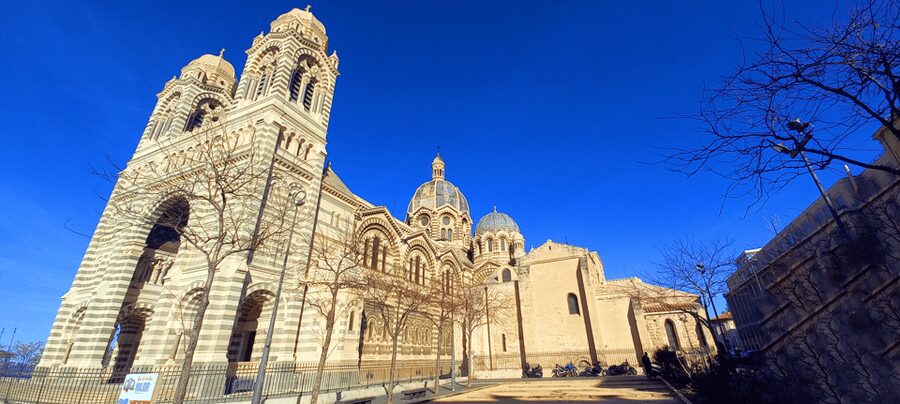
- Starts at La Major Cathedral: Meet Charles in front of the cathedral, marked by his white cap.
- Le Panier is the heart of the walk: Expect murals, old lanes, the Vieille Charité, and a quieter stop at Windmill Hill.
- History comes with visual aids: Charles uses photos and maps to explain how Marseille changed over time.
- Covers the essential waterfront: The route takes in the Old Port, Canebière, Cours Honoré d’Estienne d’Orves, Saint-Victor, and Le Pharo.
- Small and personal: The group limit of eight leaves room for questions and tailored suggestions.
- Bring water and good shoes: The tour lasts 150 minutes and covers about 5 kilometers.
Starting beneath La Major Cathedral

Your walk begins in front of Cathédrale Basilique Sainte-Marie-Majeure, usually called La Major. Its Neo-Byzantine and Romanesque design makes an immediate impression, with striped stonework and a grand scale that fits Marseille’s long connection with the Mediterranean.
The cathedral is a useful starting point because it places you beside the city’s old harbor districts rather than in a modern commercial quarter. Charles sets the scene here, introducing Marseille as a city with about 2,600 years of history. This is not just a parade of dates. The tour connects the city’s ancient Greek and Roman beginnings to the streets, docks, churches, and forts you see later.
You should arrive ready to walk rather than linger indoors. The planned stop at La Major is about 10 minutes, and the focus is on orientation and explanation before moving into the older neighborhood nearby.
More walks with a guide around France:
- Paris Top Sights Half Day Walking Tour with a Fun Guide
★ 5.0 · 2,893 reviews - Paris: Montmartre Highlights Walking Tour with a Local Guide
★ 4.9 · 2,318 reviews - Paris: Montmartre Cheese, Wine & Pastry Guided Walking Tour
★ 4.8 · 2,255 reviews
Le Panier, Marseille’s old hillside quarter
From La Major, the route heads into Le Panier, one of the city’s oldest districts. This is where the tour begins to feel less like a checklist and more like a walk through a lived-in neighborhood.
Le Panier rises on a hillside above the Old Port, so you can expect narrow streets, changes in level, and some walking that requires steady footing. In return, you get a better sense of Marseille’s layered character. Street-art murals appear beside old façades, while small lanes lead away from the main flow of the waterfront.
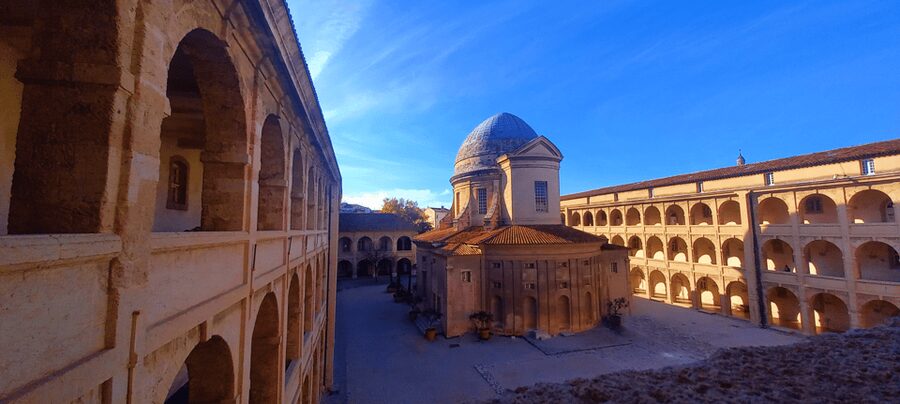
The Vieille Charité is one of the key sights here. This former hospital is one of the area’s most important historic buildings, and Charles explains its place in the story of Marseille. The stop at Windmill Hill adds a quieter pause, with a different feel from the harbor below.
The planned time in Le Panier is about 30 minutes, making it the longest neighborhood stop. I think that is sensible. A rushed walk through these streets would miss much of their charm, while too much time could make the overall route difficult to finish.
Churches, old streets, and the route toward the harbor
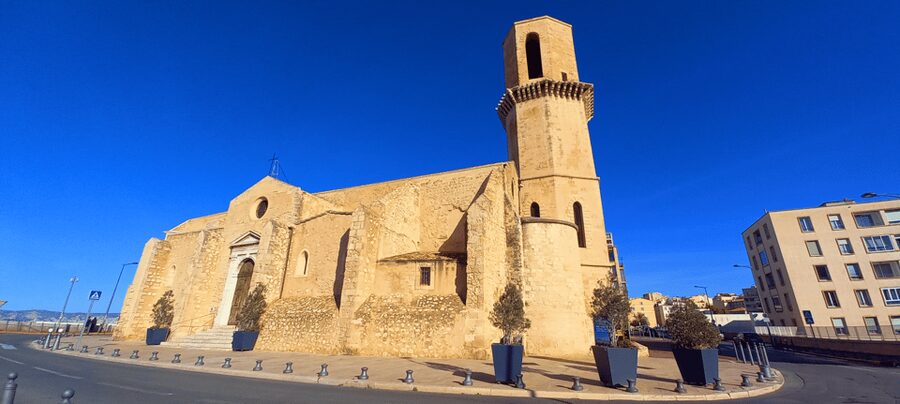
The Church of Accoules comes next, with roughly 10 minutes for a guided visit. This stop adds another layer to the city’s religious and civic past without turning the tour into a long church tour.
You then continue along Rue de la République. The street provides a change of scale after Le Panier’s tight lanes. Here, the route helps you see how Marseille developed beyond its oldest core, linking the older quarter to the waterfront.
The contrast is useful. In a short stretch, you move from small streets and painted walls to a broader urban avenue. Charles keeps the history tied to what is in front of you, which is one reason this tour works well for a first visit. You do not need to memorize a long timeline before you can understand the basic shape of the city.
The Old Port and Canebière
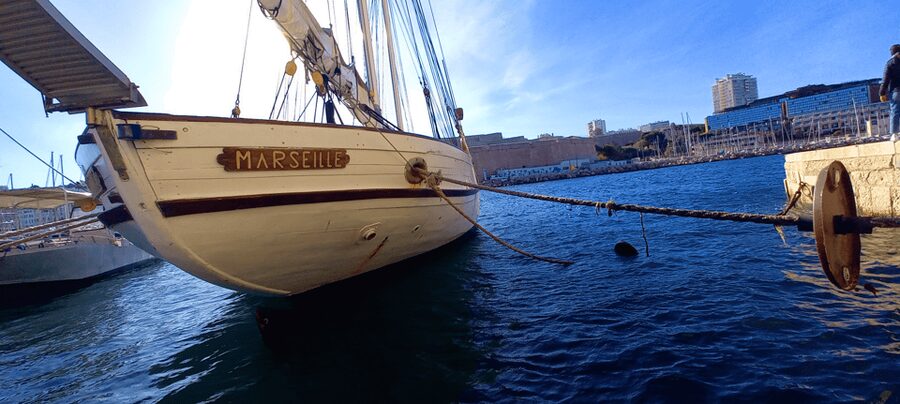
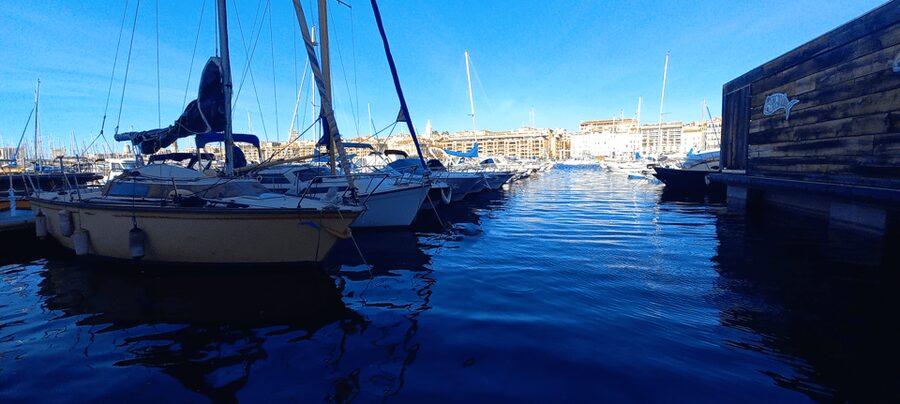
The Old Port is Marseille’s natural center and one of the strongest parts of the walk. Boats and yachts sit in the harbor, while the surrounding quays show why this inlet has mattered since ancient times.
The port is guarded by Fort Saint-Jean and Fort Saint-Nicolas, two powerful reminders that access to Marseille was never only about trade. The route gives you time to look across the water and understand the harbor as both a working space and a setting for city life.
The planned guided stop here is about 15 minutes. That is enough for an overview, though not enough for a detailed visit to every fort or museum. If you want to explore the forts, you will need to return on your own.
From the harbor, the walk continues to Cours Honoré d’Estienne d’Orves and then along the Canebière. The Canebière is Marseille’s famous central street, lined with cafés, restaurants, boutiques, workshops, galleries, and shops. I like this part because it keeps the tour from becoming only an ancient-history lesson. You see how Marseille’s commercial life continues to shape its public spaces.
Do not expect a long café break here. The tour is designed to show you the street and explain its role, not to stop for food. Bring water, especially in warm weather, and plan a separate meal before or after the walk.
More walking tours around France:
- Montmartre Hidden Gems and Scenic Highlights Walking Tour
★ 5.0 · 2,684 reviews - Montmartre Hill French Gourmet Food and Wine Tasting Walking Tour
★ 5.0 · 2,588 reviews - Paris Île de la Cité and Notre-Dame Walking Tour With Crypt
★ 5.0 · 2,272 reviews - Paris in a Day: Louvre or Orsay, Eiffel Tower, City Walk & Cruise
★ 5.0 · 1,956 reviews
Saint-Victor and Marseille’s older foundations
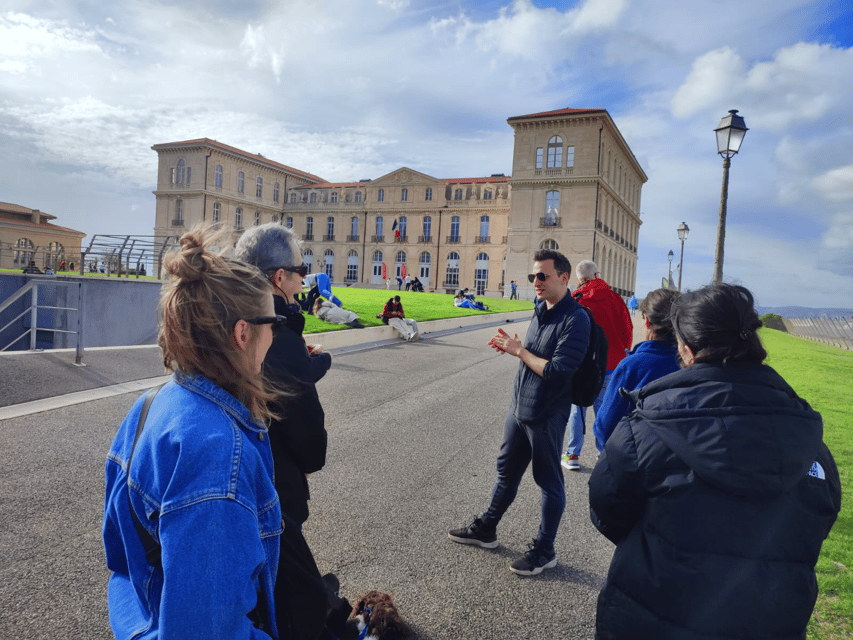
The route then reaches the Abbaye Saint-Victor, one of Marseille’s most important religious monuments. The planned visit lasts about 15 minutes, followed by a 20-minute break for sightseeing and views along the way.
Saint-Victor helps tie together the city’s ancient and medieval past. The abbey is associated with the early Christian story of Marseille, while its setting near the water keeps the connection to the city’s port and coastal identity.
The pause here is useful. A 150-minute walk with several historic stops can become tiring if every minute is spent moving. The break gives you time to take in the setting, ask Charles questions, and catch your breath before the final section.
Still, this is not a slow, café-based tour. The break is part of the sightseeing rhythm, not a meal stop. If you need frequent rests, keep the route length in mind when booking.
Le Pharo and the final coastal views
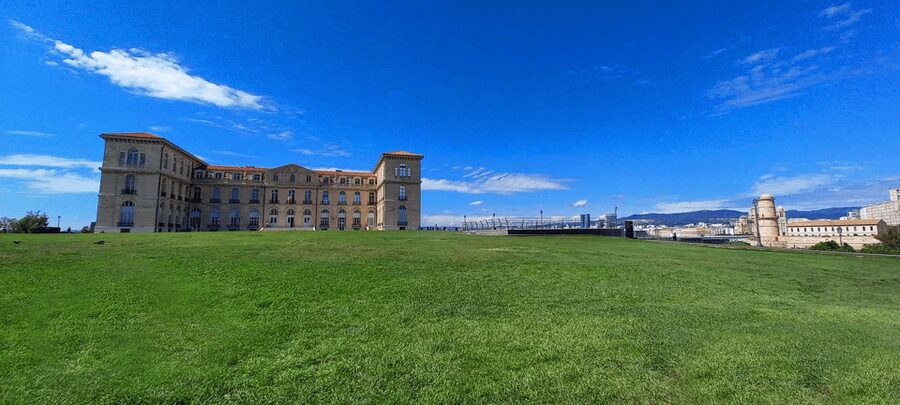
The last major stop is Le Pharo, where you can see the Palais du Pharo and enjoy sweeping views over the harbor and sea. The palace was built in the mid-19th century by Emperor Napoleon III for Empress Eugénie, giving the final section a change of tone from ancient streets and religious buildings to imperial architecture.
The planned stop here is about 30 minutes, the second-longest portion of the tour. That extra time matters because the setting is open and scenic. You are not simply looking at a façade. You can take in the terraces, the water, the forts, and the wider shape of Marseille from the coast.
The nearby Abbaye Saint-Victor also comes into the route before or around this section, adding a strong architectural contrast. The route ends with a fuller picture of Marseille: an old port city, a hillside neighborhood, a modern commercial center, and a coastal city shaped by movement across the Mediterranean.
You finish either at the Old Port or at Palais du Pharo. That gives you a practical choice. If you want lunch, shopping, or more time around the harbor, the Old Port is convenient. If you prefer to stay near the final views, Le Pharo is the better endpoint.
Charles’s guiding style
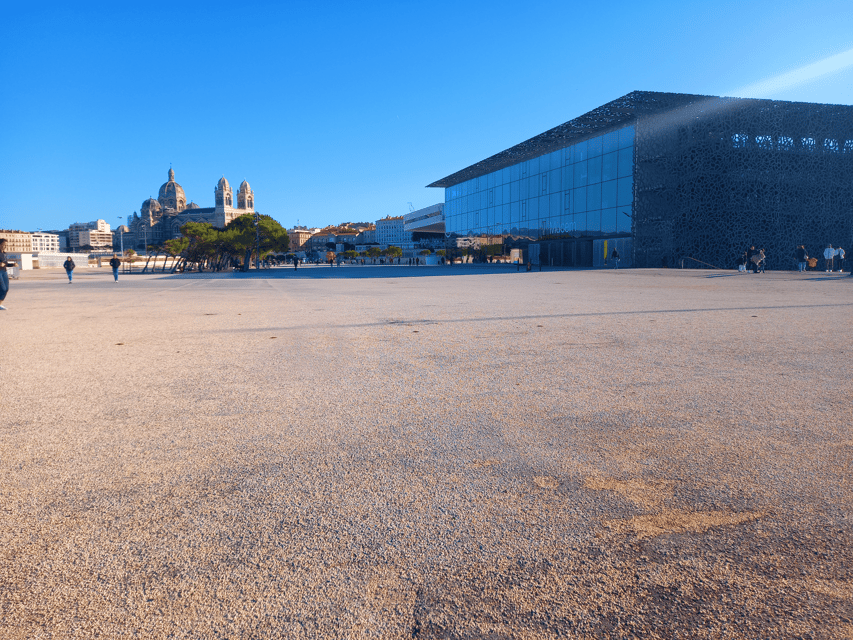
The guide is Charles, a local French and English-speaking guide. His strongest quality is his ability to make history feel connected to the street in front of you. He uses maps, old photographs, and visual comparisons to show how Marseille changed, which can make a complicated past easier to follow.
His approach also leaves room for questions. You can ask about architecture, local food, museums, restaurants, or other places to visit during your stay. Several people received useful recommendations after the walk, including advice on where to eat and what to see next.
The small group limit of eight is important here. It lets Charles speak with each person and adjust the pace or emphasis to suit the group. Solo visitors can expect a more personal experience, while couples and families have room to ask questions without holding up a large crowd.
The tour is offered in French and English. Charles is especially praised for his English, humor, warmth, and clear explanations. That combination matters in Marseille, where the history can be complicated and the city’s character does not fit neatly into a single story.
How much walking is involved

The route covers about 5 kilometers over 150 minutes. That is a steady sightseeing walk, not a race, but you will be on your feet for most of the time.
Le Panier includes hillside streets and older paving. Comfortable shoes are essential. Water, sunglasses, weather-appropriate clothing, and comfortable clothes are also sensible choices. In strong sun, the open stretch near Le Pharo can feel quite different from the shaded lanes of Le Panier.
The tour is not suitable for wheelchair users. The route includes slopes, uneven streets, and a long distance between stops. If you have limited mobility, you should assess the route carefully before booking.
Is $41 a fair price?
At $41 per person, this is not the cheapest way to see Marseille, but the value is solid if you want context rather than a simple orientation walk. The price includes a live guide and a 150-minute small-group tour, with the group limited to eight.
You are paying for Charles’s local perspective, the history tied to each stop, and the chance to ask questions along the way. You also cover a useful range of the city in one outing: La Major, Le Panier, Accoules, Rue de la République, the Old Port, the Canebière, Saint-Victor, and Le Pharo.
The value is strongest when you take it early in your stay. Charles can point you toward museums, restaurants, and areas worth returning to. The tour can save you time by helping you decide which places deserve a longer visit.
It is less useful if you want extended interior visits at the cathedral, abbey, forts, or Vieille Charité. This experience is an overview with meaningful stops, not a ticketed museum tour.
Who should book this Marseille walk?
I would choose this tour for a first visit, especially if you have only a day or two in Marseille. It gives you the city’s main historic districts and waterfront in one continuous route.
It also suits solo visitors and couples who prefer conversation over a large tour group. The small format makes it easier to ask about local food, museums, architecture, and practical plans for the rest of your stay.
History fans should enjoy the Greek, Roman, religious, wartime, and imperial threads. You do not need a background in history, though. Charles’s use of anecdotes, photographs, and maps keeps the material accessible.
I would think twice if you dislike hills, cannot walk 5 kilometers, or want a relaxed food-focused outing. Food and drinks are not included, and the schedule leaves little time for sitting in cafés.
Cancellation is free up to 24 hours before the start, and you can reserve now and pay later. Those terms are useful if your Marseille plans depend on a cruise schedule or changing weather.
Should you book this tour?
Book it if you want a strong first look at Marseille with a local guide who combines history, humor, views, and practical advice. The route is well balanced, moving from La Major and Le Panier to the Old Port, Canebière, Saint-Victor, and Le Pharo.
Skip it if you want deep access inside every monument or an easy, mostly flat stroll. For most able-bodied visitors who want to understand Marseille quickly, Charles’s small-group walk is a worthwhile introduction, and the best timing is near the start of your stay so you can use his recommendations afterward.
FAQ
Where does the Marseille walking tour begin?
The tour begins in front of Cathédrale Basilique Sainte-Marie-Majeure, also called La Major, in Marseille.
How do I identify the guide?
Charles will be wearing a white cap at the meeting point.
How long does the tour last?
The scheduled duration is 150 minutes, or two and a half hours.
How far does the tour cover?
The tour covers about 5 kilometers.
Which languages are available?
The tour is available in French and English.
How large is the group?
The group is limited to eight participants.
What sights are included?
The route includes La Major Cathedral, Le Panier, the Church of Accoules, Rue de la République, the Old Port, Cours Honoré d’Estienne d’Orves, Saint-Victor’s Abbey, and Palais du Pharo.
Is food included?
No. Food and drinks are not included, so you should bring water and arrange your own meal.
What should I bring?
Bring comfortable shoes, water, food or snacks if needed, sunglasses, comfortable clothing, and clothing suited to the weather.
Is the tour suitable for wheelchair users?
No. The tour is not suitable for wheelchair users.
Can I cancel the booking?
Yes. You can cancel up to 24 hours in advance for a full refund. You can also reserve now and pay later.
New walking tours around France
- Montmartre Walking Tour with a Local Guide★ 4.9 · 478 reviews
- Paris: Montmartre Small Group Guided Walking Tour★ 4.8 · 139 reviews
- Paris: Montmartre Hidden Gems and Highlights Walking Tour★ 4.7 · 378 reviews
- Montmartre & Sacré Coeur: 2.5-Hour Walking Tour★ 4.9 · 71 reviews
- Mont Saint Michel: Walking Tour & Optional Abbey Ticket★ 4.3 · 562 reviews
- Montmartre for Art Lovers – Walking tour with Expert Guide★ 5.0 · 456 reviews
- Mont Saint Michel: Village History and Legends Walking Tour★ 4.8 · 96 reviews
- Mont-saint-Michel : Walk in the heart of the Bay★ 4.7 · 167 reviews
France Walking Tours, side by side.

Authentic Parisian Gourmet Food Tour with 10 Local Dishes & Wines
Read our review →
Paris Top Sights Half Day Walking Tour with a Fun Guide
Read our review →
Montmartre Hidden Gems and Scenic Highlights Walking Tour
Read our review →
Montmartre Hill French Gourmet Food and Wine Tasting Walking Tour
Read our review →
Paris: Montmartre Highlights Walking Tour with a Local Guide
Read our review →
Paris Île de la Cité and Notre-Dame Walking Tour With Crypt
Read our review →
Paris: Montmartre Cheese, Wine & Pastry Guided Walking Tour
Read our review →
Paris in a Day: Louvre or Orsay, Eiffel Tower, City Walk & Cruise
Read our review →Lists this walk sits on