Review · PARIS
Paris: Montmartre Highlights Walking Tour with a Local Guide
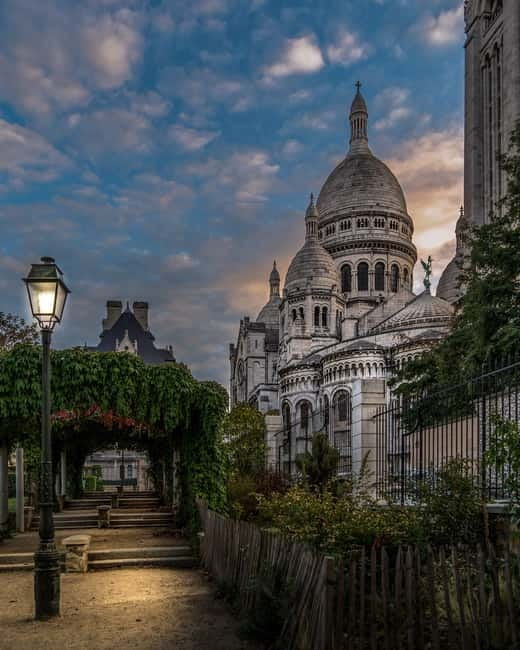
Montmartre’s best stories are tucked behind the postcard views. This 140-minute walking tour takes you from the foot of Sacré-Cœur through old lanes, artists’ haunts, vineyards, courtyards, and cabaret corners before finishing at Place du Tertre. The focus is not just on what you see, but on the people who made this hill famous.
I like the way the tour connects art, music, politics, and daily life. I also like the small groups of no more than 16, plus the guide’s habit of using pictures and music to make the past easier to picture. The main consideration is the hill itself: the route is manageable, but you should still wear good shoes and expect some walking outdoors in wind or rain.
Key points at a glance
- Start below Sacré-Cœur: Meet near the carrousel at Place Saint-Pierre and begin with wide views across Paris.
- See more than the famous façades: The route includes Bateau-Lavoir, Moulin de la Galette, Maison Rose, vineyards, courtyards, and old passageways.
- Hear stories tied to real artists: Picasso, Modigliani, Van Gogh, Dalida, Aznavour, and Dalí all enter the tale.
- Expect an engaging guide: Yazid is often the guide, with Zoe, Sylvia, and Marcela also leading tours at times.
- Finish beside the basilica: The tour ends at Place du Tertre, with advice for visiting Sacré-Cœur afterward.
- Good value at $23: For less than the cost of many Paris museum tickets, you get more than two hours of local commentary and guided sightseeing.
Why Montmartre works best on foot
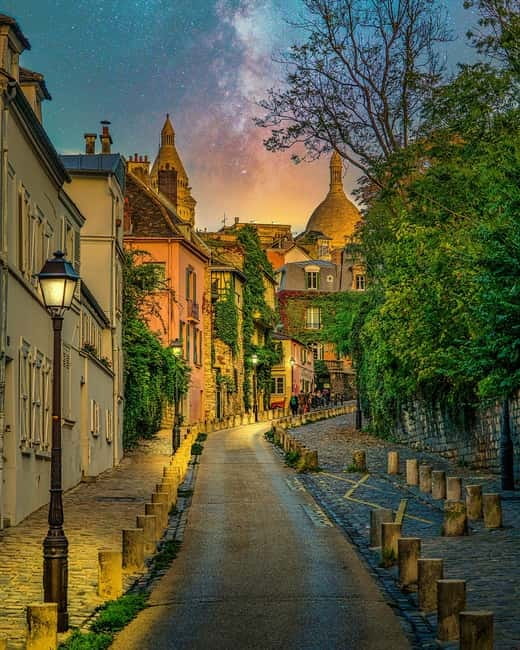
Montmartre can look simple on a map. You see Sacré-Cœur at the top, Place du Tertre nearby, and a few famous cafés marked along the way. The trouble is that a map does not explain why the neighborhood matters, or which corners still carry the feel of its artistic past.
A walking guide fills in those gaps. You move slowly enough to notice small details, and you can ask questions as the route unfolds. Instead of racing from one photo stop to another, you get a sense of how Montmartre changed from a village on the edge of Paris into a gathering place for painters, singers, writers, rebels, and performers.
I especially like the way this route links famous names to actual locations. The artists are not treated as a list to memorize. You hear where they lived, worked, met friends, and helped shape the neighborhood. The guide also brings in music and images, which gives the stories a more human feel.
The tour is conducted in English. Guide Yazid receives especially strong praise for his energy, humor, and preparation. He has used artwork images and music from local performers during the walk. Other guides, including Zoe, Sylvia, and Marcela, have also led groups, so the exact personality of your tour may vary.
More City Highlights Walking Tours in France
- Montmartre Hidden Gems and Scenic Highlights Walking Tour
★ 5.0 · 2,684 reviews - Paris: Montmartre Hidden Gems and Highlights Walking Tour
★ 4.7 · 378 reviews - Lyon: City Highlights Walking Tour
★ 4.9 · 847 reviews
Place Saint-Pierre and the view below Sacré-Cœur
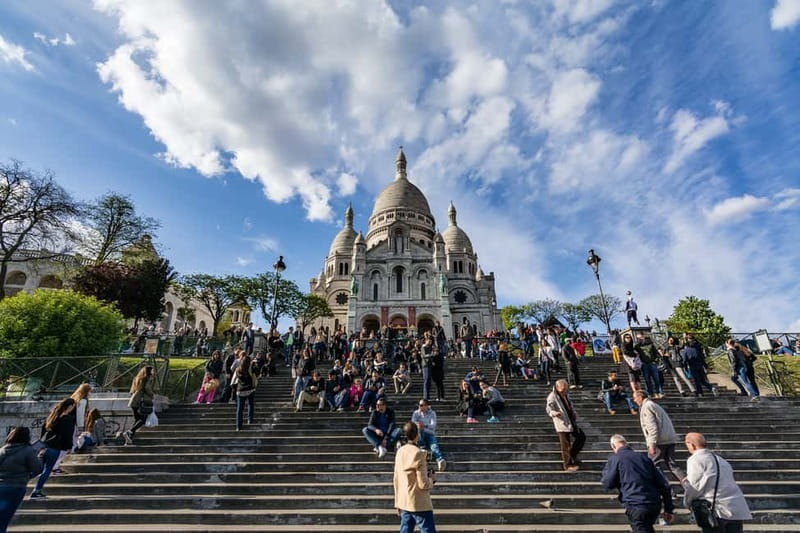
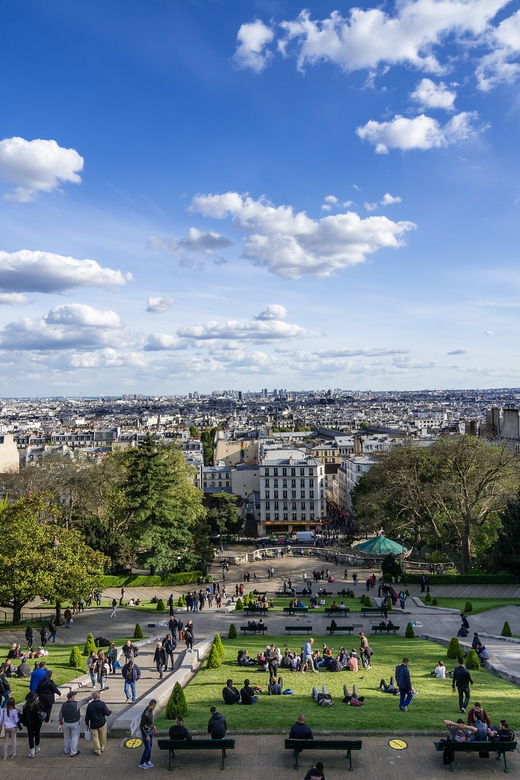
The meeting point is Place Saint-Pierre, near the carrousel and below the Sacré-Cœur basilica. Look for the Paris Tours Experiences team near the carousel. This is a practical starting point because you begin close to one of Montmartre’s most famous sights without immediately committing to the crowded steps and terraces around the church.
Your guide begins with the view over Paris and the broad story of Montmartre. From this angle, the basilica rises above you, while the city spreads out below. It is a useful orientation before the group turns into the neighborhood streets.
The route gradually works upward, though it does not simply send you straight up one long staircase. Several stops break up the walking. Guides have also been praised for keeping a comfortable pace and pausing often, which helps you focus on the stories rather than only on catching your breath.
Montmartre can be windy, especially in colder months. Bring a warm layer in winter, and do not mistake the relaxed pace for a completely flat walk. Comfortable shoes are essential.
The Wall of Love and the softer side of Montmartre

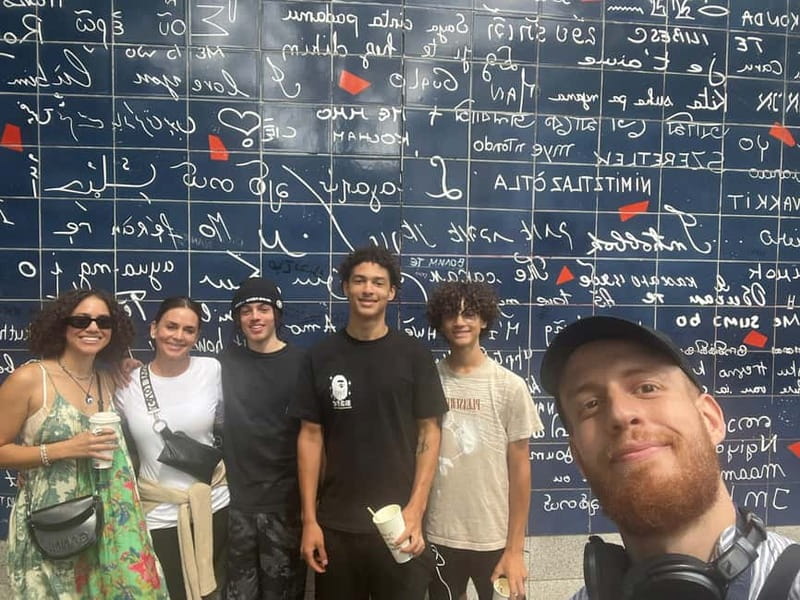
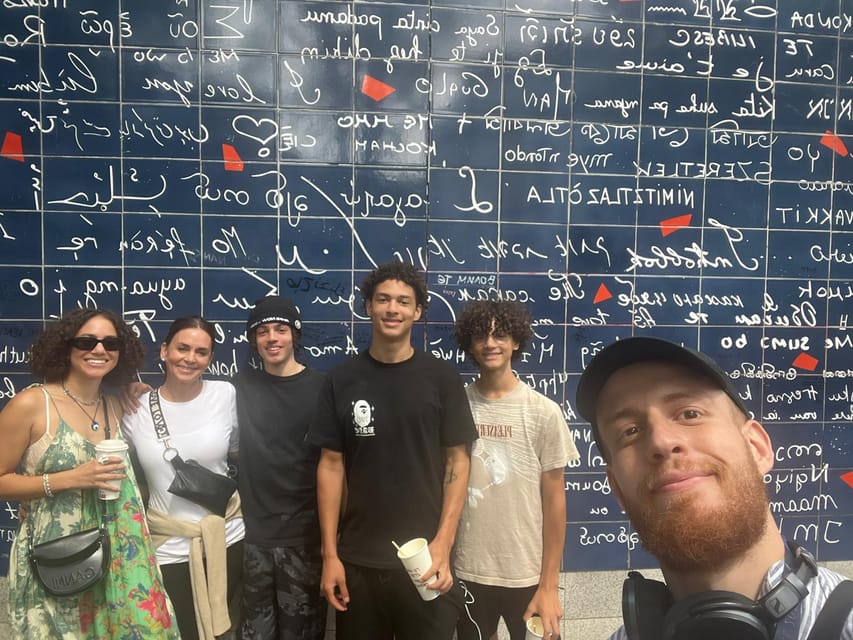
The Wall of Love is one of the tour’s more modern and romantic stops. The artwork presents 311 versions of the words I love you in dozens of languages. Your guide gives you time to look and take photos while explaining why this small square has become such a popular stop.
This is a good early pause because it changes the mood. Montmartre is often introduced through painters and nightlife, but the Wall of Love shows the neighborhood’s gentler side. It also gives you an easy photo opportunity before the route leads into narrower streets.
The stop is listed as about 30 minutes, though the exact timing can depend on the group and the guide. Expect commentary, time for pictures, and questions rather than a formal indoor visit. If you want a photograph without other people in it, be ready to move efficiently when the guide gives the group a moment.
Bateau-Lavoir and the making of modern art
Bateau-Lavoir is the artistic heart of the walk. This former artists’ residence is associated with Picasso, Modigliani, and other painters who worked in Montmartre when the neighborhood was far less polished than it is now.
The value here comes from context. You see the place, then hear how artists gathered, shared ideas, and developed new ways of working. The building itself is not a grand museum interior, so do not expect a long indoor exhibition. Its importance lies in the lives and creative exchanges connected to it.
A good guide makes this stop more than a name on a street. Yazid has been praised for showing images of artworks during the walk, which helps you connect the building to the paintings that came out of this period. If you already know Picasso, the stop adds a useful sense of place. If modern art is new to you, the explanation gives you a clearer starting point.
This is also where the tour moves beyond the standard Montmartre checklist. You are not only photographing a famous address. You are learning why this particular neighborhood attracted artists and how the artists, in turn, changed its identity.
More City Highlights Walking Tours in Paris:
- Ho Chi Minh City Street Food Tour & Sightseeing By Motorbike
★ 5.0 · 9,413 reviews - Historic Charleston Guided Sightseeing Walking Tour
★ 5.0 · 6,216 reviews - Dublin Highlights and Hidden Gems Guided Walking Tour
★ 5.0 · 6,020 reviews - Vienna: Guided Walking Tour of City Center Highlights
★ 4.7 · 4,989 reviews
Moulin de la Galette and the village atmosphere
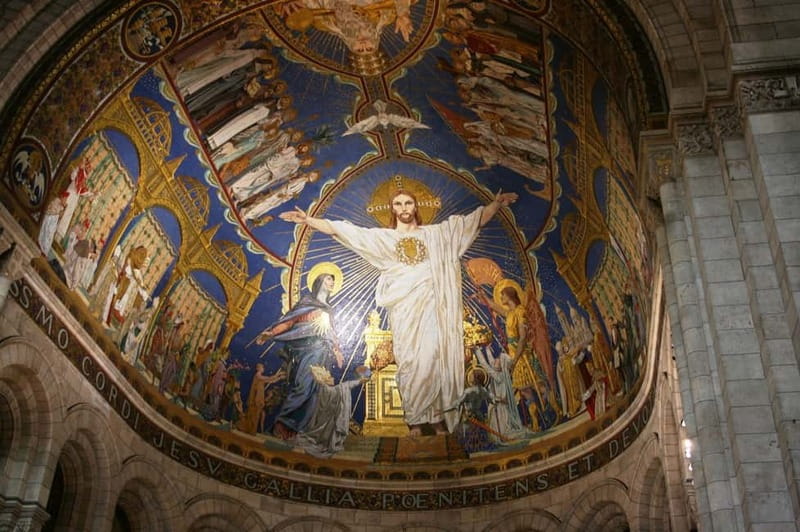
The Moulin de la Galette is both a photo stop and a doorway into Montmartre’s rural past. The windmill was once a real working mill, and later became a well-known subject in Impressionist painting.
Today, you see an urban neighborhood, but the windmill helps explain that Montmartre was once separate from central Paris in feel and function. The guide can connect the old mill, the village setting, and the artists who recorded the area in paint.
This part of the walk is especially useful for anyone who enjoys art but does not want a museum-only experience. You stand in the actual streets that inspired paintings, then hear how the setting looked and felt in another period. You do not need a detailed background in Impressionism to enjoy it.
The stop also gives the group another chance to slow down. Guides tend to use these pauses for pictures and questions. That rhythm is one of the tour’s strengths. You get a steady stream of information, but the walk does not feel like a lecture delivered while marching.
Maison Rose and the quieter lanes
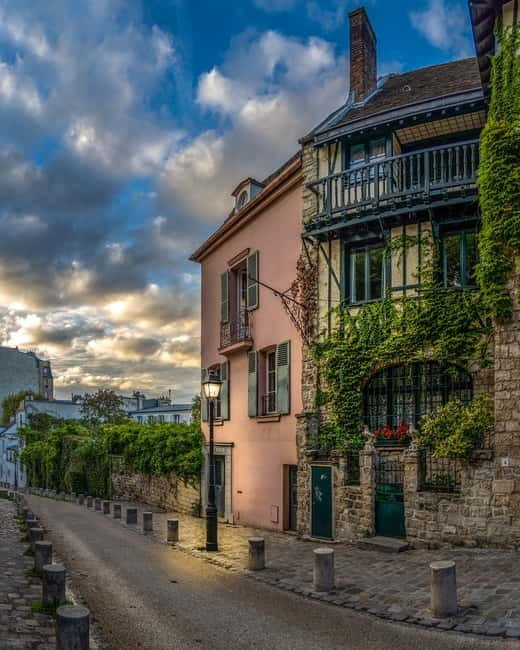
Maison Rose is one of Montmartre’s most photographed buildings, thanks to its pink façade and charming position on a narrow street. It is an obvious camera stop, but the guide’s explanation gives it more value than a quick snapshot.
After Maison Rose, the route moves into less expected parts of the neighborhood. You might pass vineyards, quiet courtyards, older cabaret sites, and passageways that are easy to overlook when walking alone. These sections are why I would choose a guided tour instead of simply following a list of famous addresses.
Montmartre rewards curiosity. A pink house or winding lane can look attractive without telling you much. The guide supplies the missing connections, linking places to stories of eccentric residents, performers, political upheaval, resistance, and artistic life.
The group may also pause for a short break around this point. Since food is not included, plan to buy anything you want before or after the tour. The practical upside is that you are not tied to a restaurant schedule during the walk.
From Van Gogh to Dalida, a wider view of Montmartre
Many Montmartre tours focus almost entirely on painters. This one casts a wider net. The stories include Van Gogh, Dalida, Charles Aznavour, Salvador Dalí, and other figures connected with the neighborhood’s music and cultural life.
That broader approach makes the district feel less like a preserved art-history display. Montmartre’s identity came from many kinds of people, including singers, cabaret performers, outsiders, and political figures. Music is part of the experience, too. Yazid has used songs from well-known local artists to give the stories an audible connection to the place.
This variety also helps hold the attention of mixed groups. Families with children have found the pace workable, and teenagers have responded well when the guide combines stories, images, humor, and music. If everyone in your party is already an art specialist, you may want a more narrowly focused art tour. For most visitors, the wider subject range makes the walk easier to enjoy.
The guide’s style matters here. A dry list of names would quickly blur together. The strongest guides make the figures distinct and explain why each person mattered. Yazid is particularly associated with a lively presentation, but the other guides have also been praised for answering questions and helping with photos.
Place du Tertre and the best way to continue
The tour ends at Place du Tertre, the square where artists still work outdoors. It is one of the busiest and most recognizable spots in Montmartre, so ending here makes sense. By the time you arrive, you have heard enough background to understand why the square became a symbol of the neighborhood.
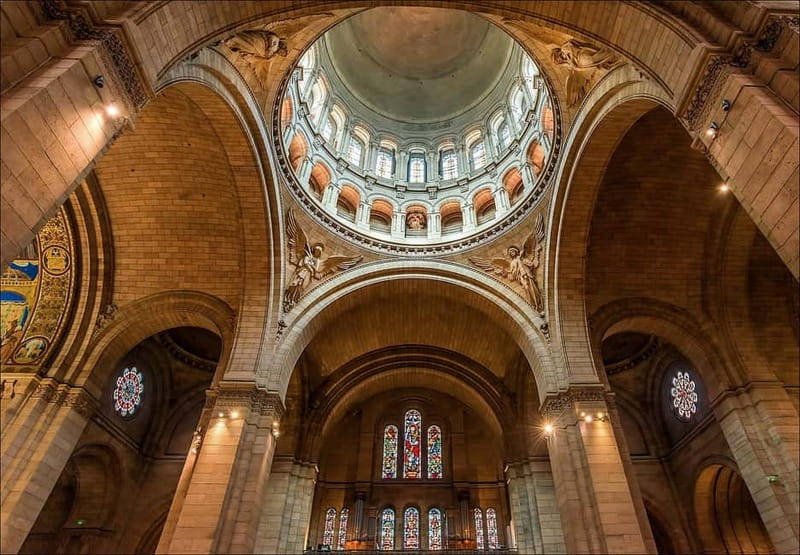
The square is also a useful place to continue exploring on your own. Your guide gives suggestions for visiting Sacré-Cœur, which is only a short distance away. The timing works well if you want to enter the basilica after the walk, though the tour itself does not include admission or a guided visit inside.
You may also want to stay in Montmartre for a meal, a drink, or another look at the streets near Maison Rose. One useful tip is to leave some time after the tour rather than scheduling another attraction immediately. The walking route gives you an introduction, not every possible corner of the hill.
Price, timing, and group size
At $23 per person, this is a strong value for a two-hour-plus guided walk. Paris sightseeing costs add up quickly, and a tour at this price gives you a local guide, a clear route, stories at each major stop, and help with photographs.
The group size is capped at 16. That is not private touring, but it is small enough for the guide to keep people together and respond to questions. It also makes stopping on narrow streets easier than it would be with a large coach group.
The published duration is 140 minutes. In practice, allow a little extra time around the start and finish, especially if you plan to visit Sacré-Cœur afterward. The route includes outdoor walking throughout, and food is not included.
You can cancel up to 24 hours ahead for a full refund, and the reserve-now, pay-later option keeps your plans flexible. Bring cash, comfortable clothing, and shoes. Oversize luggage is not permitted.
Who should book this Montmartre walk
I would choose this tour if you want Montmartre explained rather than simply photographed. It suits people interested in art, music, local stories, photography, and Paris neighborhoods that reward slow exploration.
It is also a good choice for families. The route is adapted for children, and the use of music, images, and short stops gives younger visitors several ways to stay interested. The walk does not require specialist knowledge, and the guides appear comfortable with questions from different ages.
You should think twice if you need a wheelchair-accessible route or have a significant mobility impairment. The tour is not suitable for wheelchair users, and Montmartre’s slopes and uneven streets can still be tiring even with regular pauses.
Likewise, this is not the right pick if you want a quiet private walk or a museum-style art lecture. The group may include up to 16 people, and the experience depends partly on the guide leading that day. Its strength is the lively mix of history, personal stories, pictures, music, and street-level observation.
Should you book it?
Book this tour if you want a warm introduction to Montmartre with real local color. The combination of Bateau-Lavoir, Moulin de la Galette, Maison Rose, the Wall of Love, and Place du Tertre covers the key sights, while the side streets and personal stories keep the route from feeling like a basic highlight reel.
The strongest reason to go is the guide’s presentation. Yazid is often singled out for his humor, energy, artwork images, and music, while Zoe, Sylvia, and Marcela have also led engaging walks. The main caution is practical: wear good shoes, dress for wind or rain, and be ready for a hill.
At $23, I would book it early in a Paris stay. You will leave with a better sense of where to wander next, and Sacré-Cœur is perfectly placed for a follow-up visit.
FAQ
How long does the Montmartre walking tour last?
The tour lasts 140 minutes, or just over two hours.
Where does the tour start?
It starts at Place Saint-Pierre, near the carrousel beneath Sacré-Cœur. Look for Paris Tours Experiences near the carrousel.
Where does the tour end?
The walk ends at Place du Tertre, close to the Sacré-Cœur basilica.
What language is the tour in?
The live guided tour is conducted in English.
What places are included?
The route includes the Wall of Love, Bateau-Lavoir, Moulin de la Galette, Maison Rose, Place du Tertre, and additional streets, courtyards, vineyards, cabaret sites, and passageways in Montmartre.
Is the tour suitable for children?
Yes. The walk is adapted for children, and family groups have found the pace suitable for different ages.
Is the tour wheelchair accessible?
No. The activity is not suitable for wheelchair users or people with mobility impairments.
What should I bring?
Bring comfortable clothes, comfortable shoes, and cash. Oversize luggage is not allowed, and food is not included.
New walking tours around Paris
- Montmartre Walking Tour with a Local Guide★ 4.9 · 478 reviews
- Paris: Montmartre Small Group Guided Walking Tour★ 4.8 · 139 reviews
- Paris: Montmartre Hidden Gems and Highlights Walking Tour★ 4.7 · 378 reviews
- Montmartre & Sacré Coeur: 2.5-Hour Walking Tour★ 4.9 · 71 reviews
- Montmartre for Art Lovers – Walking tour with Expert Guide★ 5.0 · 456 reviews
- Paris: Louvre Museum Entry Ticket and Garden Walking Tour★ 4.2 · 326 reviews
- Le Marais Walking Food Tour with Cheese, Wine & Pastries★ 4.7 · 339 reviews
- Historic Paris Walking Tour in English★ 4.9 · 78 reviews
Paris Walking Tours, side by side.

Authentic Parisian Gourmet Food Tour with 10 Local Dishes & Wines
Read our review →
Paris Top Sights Half Day Walking Tour with a Fun Guide
Read our review →
Montmartre Hidden Gems and Scenic Highlights Walking Tour
Read our review →
Montmartre Hill French Gourmet Food and Wine Tasting Walking Tour
Read our review →
Paris Île de la Cité and Notre-Dame Walking Tour With Crypt
Read our review →
Paris: Montmartre Cheese, Wine & Pastry Guided Walking Tour
Read our review →
Paris in a Day: Louvre or Orsay, Eiffel Tower, City Walk & Cruise
Read our review →