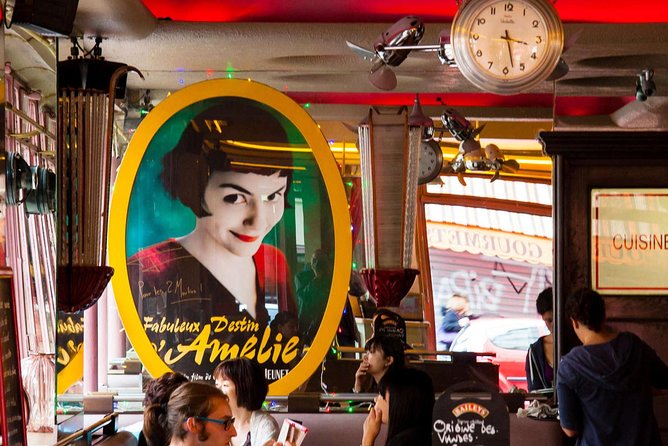
Review · PARIS
Montmartre Hill French Gourmet Food and Wine Tasting Walking Tour
Montmartre is at its best when you experience it with both eyes and appetite. This three to three-and-a-half-hour walk starts near the Moulin Rouge, winds through cobbled lanes and old artists’ corners, and finishes at Sacré-Cœur with a broad view over Paris. Along the way, you stop at eight food venues for cheese, cured meat, pastries, macarons, chocolate, and wine.
I like the way the tour joins food with local stories, rather than treating Montmartre as a simple parade of postcard sights. I also like the small-group format, capped at 15 people, and the chance to learn from guides who live in or know the neighborhood well, including Julie, Marie, Oscar, and Pierre-Edouard.
The main drawback is value for money if you expect a full meal at every stop. Portions are tasting-sized, and several stops lean toward sweets. You will also walk uphill, use cobbled streets, and have limited bathroom access, so wear good shoes and go before you arrive.
Key points to know before booking
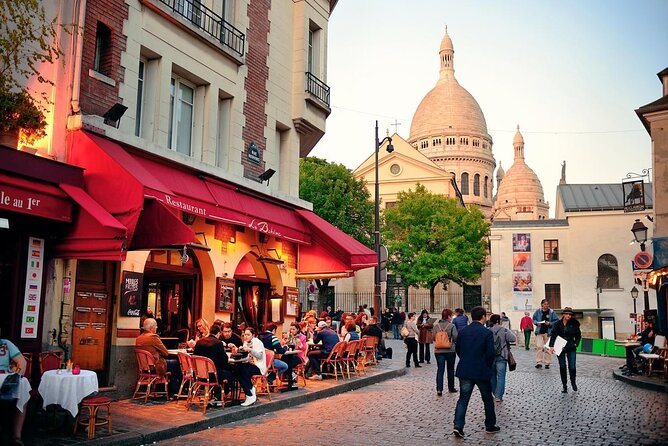
- Eight tasting stops: Expect a broad sampling of French sweets, cheeses, cured meats, and wine rather than one large meal.
- Starts by the Moulin Rouge: The meeting point is at 5 Place Blanche, a convenient place to begin exploring Montmartre.
- Ends at Sacré-Cœur: The walk saves the hilltop view for the finale, with taxis and a metro station nearby.
- A real neighborhood focus: You pass the Wall of Love, Place du Tertre, the Moulin de la Galette area, and the Clos des Vignes vineyard.
- Small groups matter: The maximum of 15 makes it easier to hear the guide and ask about food, art, and Parisian life.
- Plan for hills and sweets: Bring water, eat lightly beforehand, and tell the company about dietary needs when booking.
Why food is the right way into Montmartre
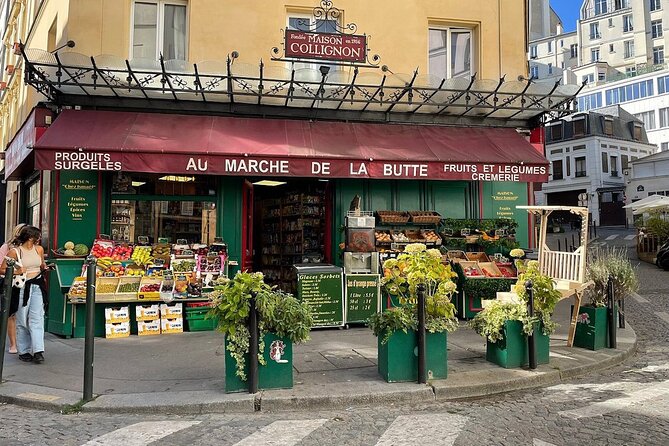
Montmartre is often reduced to the white domes of Sacré-Cœur and the painters around Place du Tertre. Those sights are worth seeing, but they tell only part of the neighborhood’s story. Food gives you another way in.
This part of Paris has long attracted artists, café regulars, shopkeepers, and people looking for a little village life inside the capital. On the walk, your guide connects the food shops to the streets around them. A bakery or delicatessen becomes more than a quick stop for a snack. It becomes part of the way Montmartre has functioned as a neighborhood.
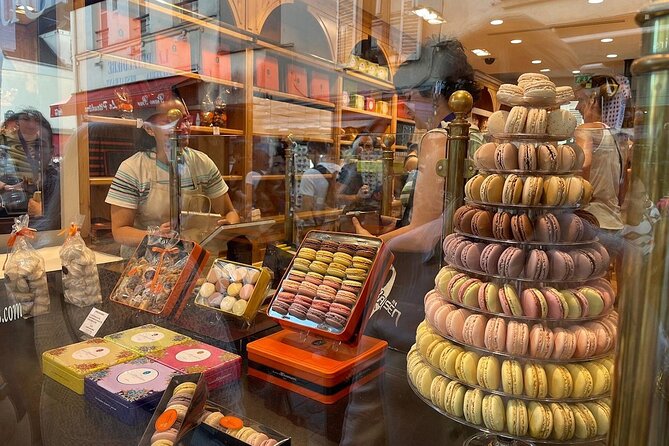
The tastings are designed to build across the walk. You might begin with small sweet bites, then move to savory food, then pause for cheese and wine. The exact selection can vary, but the stated range includes macarons, cheeses, cured meats, handmade chocolates, pastries, roasted chestnuts, and tartiflette.
That variety is one of the strongest parts of the experience. You are not simply eating the same type of pastry at six different shops. You get a sense of how French food moves from a casual sweet to an apéritif plate, with wine helping tie the savory portion together.
Come hungry, but not ravenous. The portions are meant to let you keep walking and continue tasting. They are not intended to replace lunch or dinner, and one three-star review found the servings too small for the price. That criticism is fair if your main goal is quantity.
More Food Walking Tours in France
- Authentic Parisian Gourmet Food Tour with 10 Local Dishes & Wines
★ 5.0 · 4,754 reviews - Private Montmartre Food Tour with Wine, Cheese & Pastries
★ 5.0 · 1,027 reviews - Paris Le Marais Food Tour With 10+ Tastings, Cheese, Wine & More
★ 5.0 · 985 reviews
Starting at Place Blanche and the Moulin Rouge
The tour begins at 5 Place Blanche, across from the Moulin Rouge. This gives you an easy landmark for finding the group and places the opening scene at the southern edge of Montmartre.
The Moulin Rouge itself is one of Paris’s best-known entertainment landmarks, but the tour does not appear to be a cabaret visit. You stop to take in the area before moving into the quieter streets that climb toward the hill.
From here, the walk follows Montmartre’s slopes and side streets. You should expect cobbles, steps or uneven sections, and a gradual climb. The route is not described as a strenuous hike, and guides can break up the ascent with food stops and pauses, but this is still a walking tour for people with moderate physical fitness.
The gradual route is helpful. Instead of charging straight to the top, the walk uses food, art, and small sights to divide the climb into manageable pieces. A guide can also keep conversation going while the group catches its breath.
Artisan shops, cafés, and the eight tasting stops
The food portion takes place at traditional cafés, bakeries, delicatessens, and artisan shops. This is where the price needs a fair reading. You are paying not only for the food, but also for access to several prepared stops, a guide, group coordination, and the time spent explaining what you are tasting.
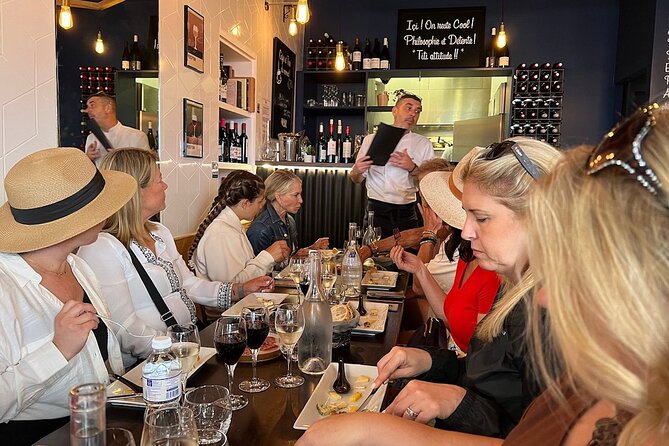
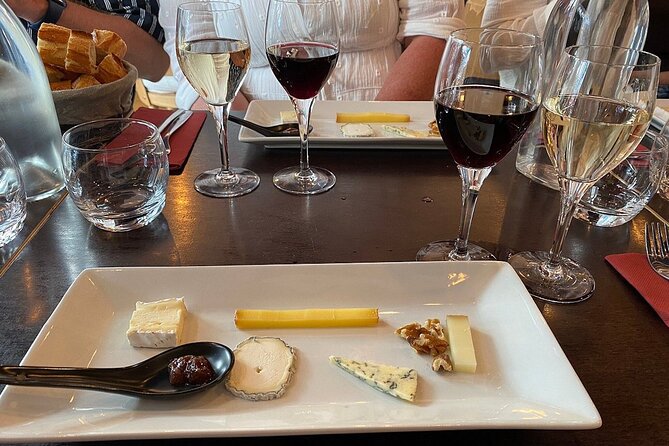
The tasting list has a pleasant French rhythm. Sweet items such as macarons, pastries, and chocolates bring the fun early in the walk. Savory bites, including cheeses and cured meats, give the tour more substance. Wine is served with the cheese and meat portion, creating the apéritif moment that many people find most memorable.
A review describing two glasses of wine and a plate of cheese gives a useful picture of that part of the tour, though the exact serving can depend on the day. The wine stop takes place in a well-known Montmartre restaurant, rather than being just a quick sip in the street.
The strongest guides explain not only what you are eating, but why it matters. Julie is repeatedly singled out for her warmth, humor, and command of Montmartre’s food and local stories. Marie is described as a local presence who could introduce people to neighbors and explain the district naturally. Oscar and Pierre-Edouard also receive praise for combining food, art, and neighborhood tales.
You may find that some stops are brief. That is part of the format. The tour aims to give you many small discoveries, not a long seated meal at each venue. If you want to shop for larger portions or linger inside every store, the schedule may feel brisk.
Dietary needs should be reported when you book. The tour company says it can accommodate specific requirements, and one family group found the guide handled restrictions well. Still, you should state your needs clearly in advance instead of relying on a last-minute explanation.
The Wall of Love and Montmartre’s romantic side
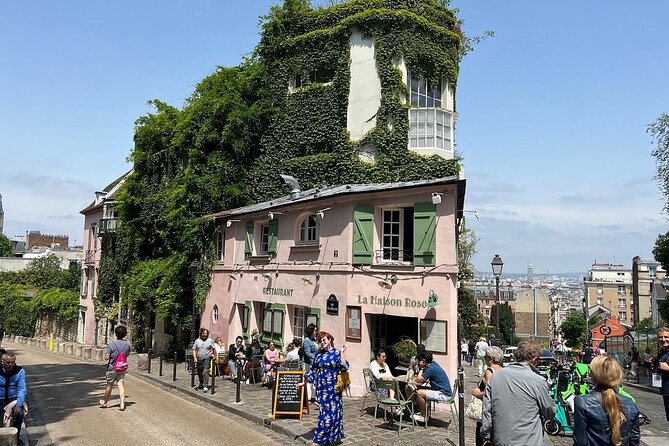
The Wall of Love, or Le Mur des Je t’aime, is a short stop of about five minutes. Its blue-tiled surface displays I love you in many languages, including less common ones such as Navajo, Inuit, Bambara, and Esperanto.
This is not a major food stop, but it adds a lighter visual break to the route. It also gives the guide a chance to talk about Montmartre’s romantic image without turning the whole walk into a parade of clichés.
The stop is brief, so do not expect a long visit. It works best as a quick photograph and a small cultural detail between tastings.
More Food Walking Tours in Paris
- Le Marais Walking Food Tour with Cheese, Wine & Pastries
★ 4.7 · 339 reviews
Place du Tertre and the artists’ quarter
Place du Tertre is the central square of the Montmartre village area, often called the artists’ corner. It is one of the places most closely tied to the district’s reputation as a home for painters, writers, theater people, art dealers, and other creative figures.
The tour also follows in the footsteps of artists such as Pablo Picasso. That does not mean you visit a private studio or enter a major museum. Instead, the guide uses the streets and squares to explain how Montmartre became a meeting place for artists in the late 19th and early 20th centuries.
This part of the tour is especially useful if you are seeing Montmartre for the first time. A guide can point out the connection between the popular image of the neighborhood and the daily life that still sits beneath it.
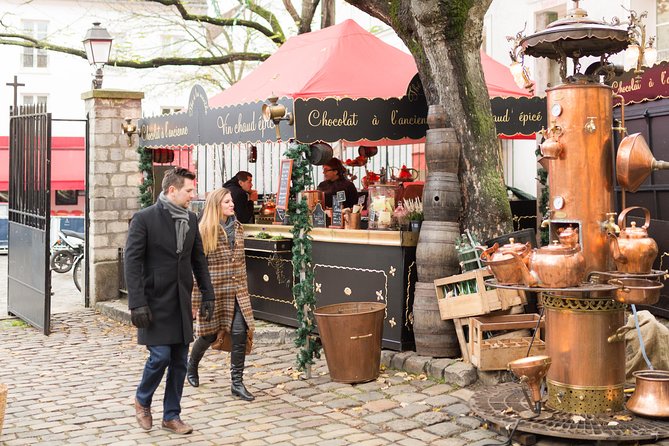
Place du Tertre can be busy, and the square has a more public, commercial feel than some of the side streets. That contrast is worth noticing. You get the famous artist setting, then move on to smaller food shops and lanes where the neighborhood feels more local.
The vineyard and the old windmill
One of the more unusual details on the route is the Clos des Vignes, described as the only vineyard in Paris. It is a reminder that Montmartre was once less urban than it appears today.
The vineyard is not likely to satisfy anyone looking for a full winery visit. Its value is historical and visual. It helps explain why the hill has a village character and why wine belongs naturally in the story of this neighborhood.
The route also includes an early 17th-century windmill associated with Montmartre’s local past. This is another small sight that can easily be missed if you race from the Moulin Rouge to Sacré-Cœur by yourself.
These stops give the walk its shape. You are not simply climbing a famous hill while eating snacks. You are moving through traces of farming, art, entertainment, and neighborhood life.
The final climb to Sacré-Cœur
The walk finishes in front of the Basilica of the Sacred Heart, or Sacré-Cœur. This is the high point of the route in both senses, and saving the panorama for the end is smart.
From the basilica area, you get one of the most open views over Paris. The climb is the part most likely to test your legs, but the route is broken up by stops and pauses. Comfortable shoes are essential, and a raincoat is sensible because the tour operates outdoors and can be canceled in poor weather.
The end point is not the same as the starting point. That matters when planning the rest of your day. You finish at 35 Rue du Chevalier de la Barre, with taxis and a metro station close by, so you can continue into another part of Paris without returning to Place Blanche.
You may want to schedule the basilica interior or more time around the square after the tour. The food walk finishes in front of Sacré-Cœur, but the tour itself is not presented as a guided interior visit.
Price, group size, and overall value
At $145.12 per person, this is not a cheap snack walk. The value depends on how you measure a food tour.
If you count only the food, the price may feel high, especially since portions are tasting-sized and several stops center on sweets. If you value a local guide, eight organized stops, wine and cheese, neighborhood stories, and a three-hour route through one of Paris’s most confusing districts, the price is easier to justify.
The small-group limit of 15 improves the experience. You can usually hear the guide, ask questions, and move through shops without the unwieldy feel of a large coach group. On some dates, the group may be smaller than the maximum, and the experience can become more personal.
The booking pattern also suggests you should reserve ahead. This tour is booked an average of 46 days in advance, so leaving it until the last moment may not work, especially for a preferred morning or afternoon time.
The rating is 4.8 from 2,588 reviews, with 94 percent recommending it. That strong record matches the main strengths of the tour: guides who bring personality, a wide range of tastings, and a satisfying finish at Sacré-Cœur. The price concern is the main counterpoint, not a lack of food or poor organization.
Who will enjoy this walk most
I would choose this tour for a first visit to Montmartre, especially if you want an introduction that mixes food with art and local geography. It gives you a useful orientation before you return on your own to explore galleries, cafés, or the basilica.
It also suits families with older children and teenagers. The food keeps the walk active, while the art stories and city views prevent it from feeling like a standard shopping trip.
Food-focused visitors should know what kind of experience this is. It is a tasting walk, not a restaurant crawl with full plates. If you want to sample several French specialties and still have room for dinner, that format works well.
You should think twice if hills, cobbles, or standing for several hours are difficult for you. Children must be accompanied by an adult, and everyone in the group should have a moderate level of fitness.
Bring your own water, since it is not listed among the inclusions. Go to the bathroom before meeting the guide because there may be only one available midway through the route.
Should you book the Montmartre food and wine tour?
I would book it if you want a friendly, food-led introduction to Montmartre and care as much about the guide’s stories as the number of bites on the plate. The route covers the Moulin Rouge, the Wall of Love, Place du Tertre, the vineyard, the windmill, and Sacré-Cœur, while the tastings give you a practical feel for French specialties.
I would skip it if you want large portions, long restaurant meals, or a low-cost way to eat your way through Paris. At $145.12, you are buying a guided neighborhood experience with food, not simply purchasing $145 worth of snacks.
For most first-time visitors who can handle the climb, the combination is persuasive. Book ahead, mention dietary needs, wear comfortable shoes, and treat the tasting portions as a series of discoveries rather than lunch.
FAQ
How long does the Montmartre food and wine tour last?
The tour lasts approximately three to three-and-a-half hours.
Where does the tour start?
It starts at 5 Place Blanche in Paris, across from the Moulin Rouge.
Where does the tour end?
The tour ends in front of Sacré-Cœur at 35 Rue du Chevalier de la Barre.
What food is included?
The tastings include items such as macarons, cheeses, cured meats, pastries, handmade chocolates, roasted chestnuts, and tartiflette. The exact selection may vary.
Is wine included?
Yes. Wine tasting and alcoholic beverages are included, along with a cheese and cured-meat tasting.
How many places do you visit for tastings?
The route includes stops at eight venues, including cafés, bakeries, delicatessens, and artisan food shops.
How large is the group?
The tour has a maximum of 15 people.
Should I bring anything?
Bring your own water, wear comfortable shoes, and consider taking a raincoat. You should also use the bathroom before the tour because bathroom access is limited along the route.
Can dietary requirements be accommodated?
You should provide any specific dietary requirements when booking. Children must be accompanied by an adult.
More Wine and Tapas Walking Tours around Paris
- Paris: Montmartre Cheese, Wine & Pastry Guided Walking Tour
★ 4.8 · 2,255 reviews - Barcelona Tapas and Wine Experience Small-Group Walking Tour
★ 5.0 · 5,804 reviews - Barcelona: Tapas Walking Tour with Food, Wine, and History
★ 4.8 · 4,261 reviews - Lisbon: Food and Wine Small Group Walking Tour
★ 4.9 · 4,082 reviews
New walking tours around Paris
- Montmartre Walking Tour with a Local Guide★ 4.9 · 478 reviews
- Paris: Montmartre Small Group Guided Walking Tour★ 4.8 · 139 reviews
- Paris: Montmartre Hidden Gems and Highlights Walking Tour★ 4.7 · 378 reviews
- Montmartre & Sacré Coeur: 2.5-Hour Walking Tour★ 4.9 · 71 reviews
- Montmartre for Art Lovers – Walking tour with Expert Guide★ 5.0 · 456 reviews
- Paris: Louvre Museum Entry Ticket and Garden Walking Tour★ 4.2 · 326 reviews
- Le Marais Walking Food Tour with Cheese, Wine & Pastries★ 4.7 · 339 reviews
- Historic Paris Walking Tour in English★ 4.9 · 78 reviews
Paris Walking Tours, side by side.

Authentic Parisian Gourmet Food Tour with 10 Local Dishes & Wines
Read our review →
Paris Top Sights Half Day Walking Tour with a Fun Guide
Read our review →
Montmartre Hidden Gems and Scenic Highlights Walking Tour
Read our review →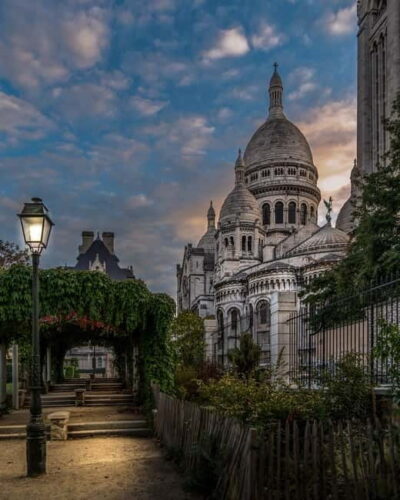
Paris: Montmartre Highlights Walking Tour with a Local Guide
Read our review →
Paris Île de la Cité and Notre-Dame Walking Tour With Crypt
Read our review →
Paris: Montmartre Cheese, Wine & Pastry Guided Walking Tour
Read our review →
Paris in a Day: Louvre or Orsay, Eiffel Tower, City Walk & Cruise
Read our review →