
Review · NUREMBERG
Nuremberg Old Town and Nazi Party Rally Grounds Walking Tour in English
Nuremberg’s story changes sharply halfway through this tour. You begin among medieval walls, churches, market stalls, and the Imperial Castle, then take public transport to the enormous Nazi Party Rally Grounds, where the scale of Hitler’s plans becomes clear. I like the strong contrast between old Nuremberg and the Third Reich sites, and I like that transport is included rather than left for you to figure out.
I also appreciate the short lunch break at the market and the chance to stay longer at the Documentation Center. The main drawback is the pace: four hours involves a lot of walking, including an uphill section to the castle, and some people find the Rally Grounds less dramatic than expected because several structures were never completed.
Key points to know before booking
- Two very different halves: Spend roughly the first part in the Old Town and the later part at the Nazi Party Rally Grounds.
- Public transport included: A bus or train ride connects central Nuremberg with the Rally Grounds.
- Four hours is active: Expect cobblestones, hills, standing, and a fair amount of walking.
- The guide shapes the day: Hannes, Natasha, Nick, Niklas, Dimitri, and others have led this tour at different times.
- A short food break is built in: You have time to buy lunch around the Hauptmarkt.
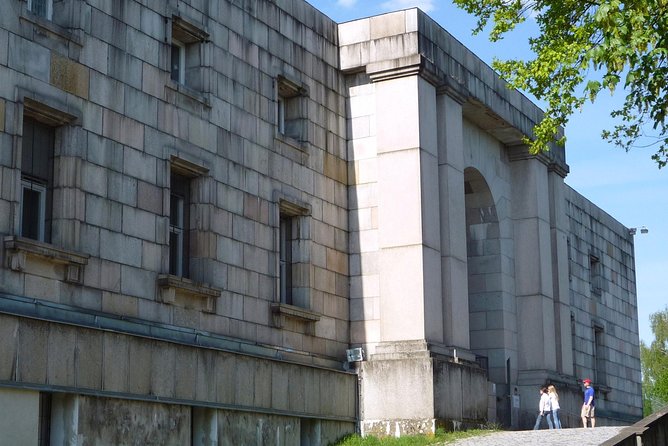
- The Rally Grounds are partly unfinished: The Great Street and Congress Hall are powerful places, but the site may not match your mental picture of a preserved Nazi complex.
From the station to Nuremberg’s medieval heart
Meet at 10:00 a.m. in front of Nuremberg Central Station. This is a practical starting point because the station is easy to find and the tour later uses the city’s transport network. Your guide gathers the group, outlines the plan, and leads you toward the Old Town.
The first stop is the Handwerkerhof, or Craftsmen’s Courtyard, beside the station. It is a recreation of a traditional craft market, with small shops and restaurants selling items linked to local trades such as glass cutting, leather work, gold and silversmithing, and stained glass. I see this as a pleasant introduction rather than a major historical site. It gives you a quick look at the kind of handwork associated with Nuremberg, but you only spend about ten minutes here.
From there, the route passes the former medieval Customs House and granary, now connected with one of the city’s breweries. This is a small stop, yet it helps explain how commerce shaped Nuremberg. The city grew wealthy through trade, craft production, and its place within the Holy Roman Empire. Your guide can connect these plain-looking buildings with that larger story, which is difficult to grasp from a guidebook alone.
More Old Town Walking Tours in Germany
- Nuremberg: Old Town Guided Walking Tour
★ 4.6 · 2,416 reviews - Munich: Old Town & Viktualienmarkt City Walk in German
★ 4.7 · 2,304 reviews - Heidelberg: Walking Tour of the Old Town
★ 4.6 · 1,742 reviews
Walking the walls and the old city gates
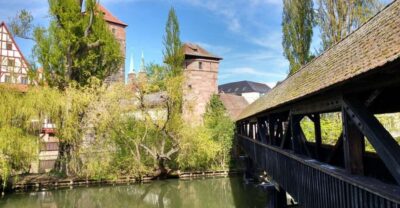
Nuremberg’s Old Town is surrounded by roughly four kilometers of surviving city walls. You will not walk the entire circuit, but the walls make the city’s medieval shape easy to understand. They are not just a scenic backdrop. They show how Nuremberg was protected, organized, and separated from the surrounding countryside.
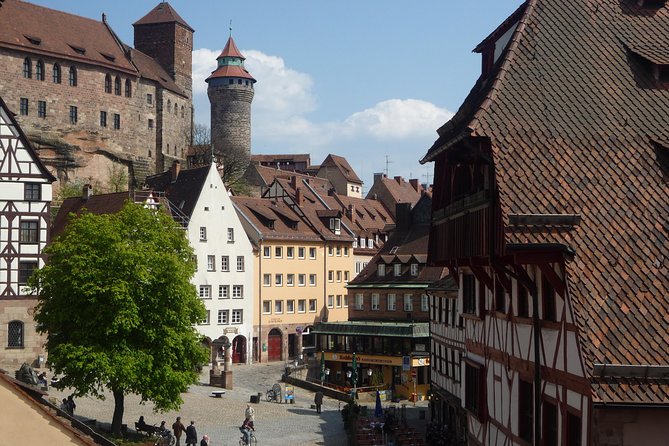
The route continues through the old streets toward the Hauptmarkt. Along the way, the guide may point out timber-framed buildings, restored façades, and places linked with Nuremberg’s religious and commercial past. Much of the Old Town was damaged during World War II, so the buildings you see are part of a city that was rebuilt as well as preserved.
That is one reason a guide adds value here. If you walk alone, you can admire the cobblestones and attractive façades. With a good guide, you learn which parts are medieval, which were rebuilt, and how the city’s identity changed over time. Hannes, Natasha, Nick, and Niklas have received particularly strong praise for clear storytelling, humor, and their ability to answer questions.
Hauptmarkt, churches, and the Beautiful Fountain
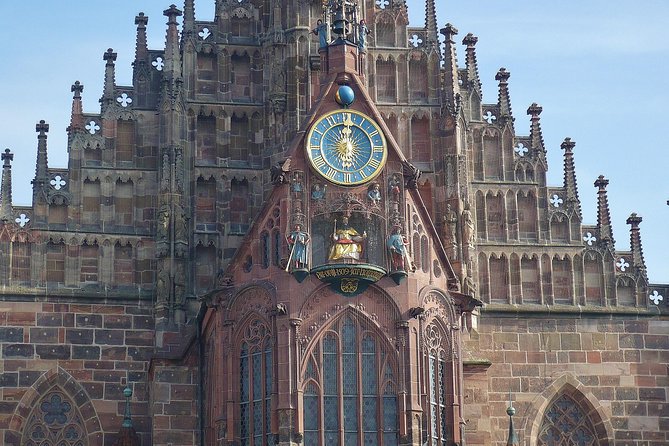
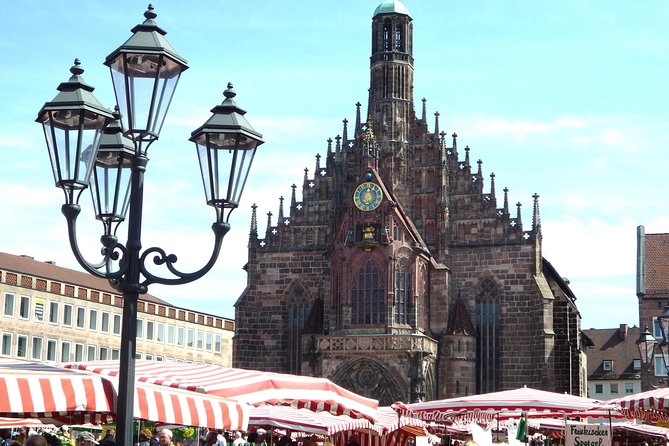
The Hauptmarkt has been the center of Nuremberg since the 1300s. It is a useful place to pause because several layers of the city meet here: commerce, religion, public celebrations, and seasonal markets.
At Christmas, this is the setting for the Nürnberger Christkindlesmarkt, one of Germany’s best-known Christmas markets. The market can make the square atmospheric and colorful, but it also brings crowds, noise, and slower walking. If you want easier listening, a weekday outside the Christmas season should be more comfortable than a busy weekend in December.
You then see the Church of St. Sebald, the oldest church in Nuremberg and the home of the city’s patron saint. The tour allows only about five minutes at this stop, and admission is not included. Treat it as an exterior introduction rather than a full church visit.
Nearby is the Schöner Brunnen, or Beautiful Fountain, a Gothic tower with a famous wishing ring. The stop is brief, but it gives your guide a chance to explain one of the small traditions that make the Old Town more than a collection of monuments. The fountain is free to see, and it sits directly in the market area.
The Old Town Hall follows, with its Renaissance design and completion date of 1622. Again, the tour focuses on the outside and the surrounding story. You should not expect a long interior visit.
The climb to the Imperial Castle
The route continues past Albrecht Dürer’s former home, now a museum, and uphill toward Kaiserburg, Nuremberg’s Imperial Castle. Dürer was one of the great German Renaissance artists, and his house helps connect Nuremberg’s medieval wealth with its later artistic reputation.
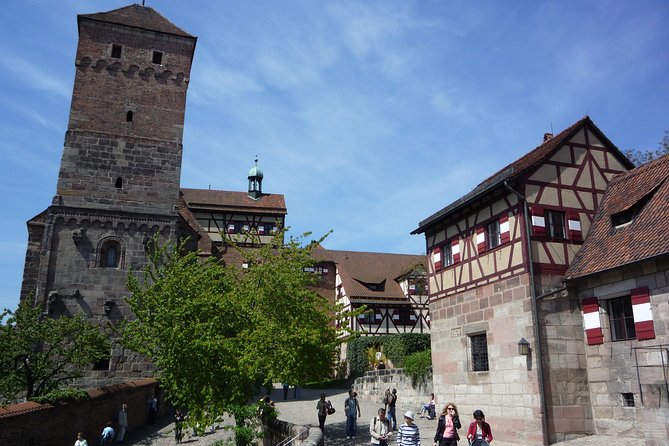
The castle dates back at least to 1050 and once served as a seat of German emperors. From the courtyards, you get a strong sense of the city’s political importance. The tour does not include admission to the castle interiors, so the emphasis is on the courtyards, exterior views, and historical explanation.
This is the part of the walk where you need to judge your fitness honestly. The route climbs, and the surface includes old streets and cobblestones. One guide also showed a less obvious passage where you could walk along part of the medieval wall and look down over the Old Town. That sort of detail is exactly what can make a guided walk worthwhile, though the route and guide may vary.
You should wear comfortable shoes and leave room in your schedule. One four-hour tour finished about 35 minutes later than the advertised time, so avoid booking a tight train connection immediately afterward.
Same streets, a different story:
- Discover Berlin Half-Day Walking Tour
★ 5.0 · 9,624 reviews - Berlin City walk Government District and Places of Democracy
★ 4.7 · 8,467 reviews - Berlin: Third Reich & Cold War Guided Walking Tour
★ 4.9 · 8,378 reviews - Munich: Third Reich & WWII Walking Tour
★ 4.6 · 6,181 reviews
A useful pause at the Hauptmarkt
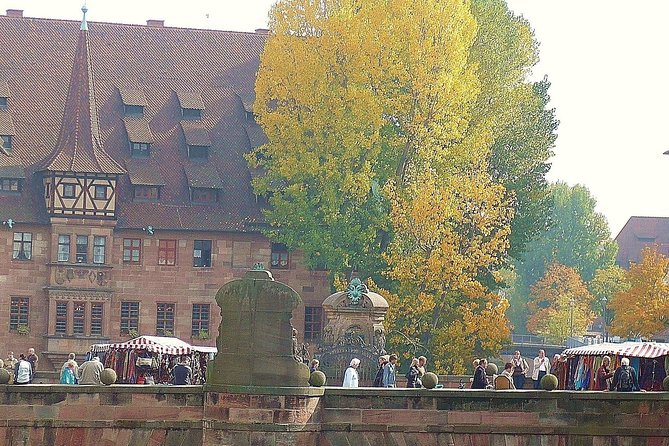
The tour includes a short lunch break at the market, often around 30 minutes. Food and drinks are not included, so you pay for your own meal. This is a sensible arrangement: you can choose something quick rather than sit through a long restaurant stop.
The break also gives your legs a rest before the second half. The morning section is not nonstop walking, but it does involve plenty of standing and listening. I would use the pause to buy water and something easy to carry. If you want a full meal, this may not be enough time.
Taking public transport to the Nazi Party Rally Grounds
After the Old Town, the group takes a bus or train toward the former Nazi Party Rally Grounds. Public transport is included in the tour price, which makes the transition simple and removes the need to buy a separate ticket or work out the route yourself.
The ride also creates a natural break between the two subjects. You leave the medieval center and arrive at a wide, open site designed for mass political theatre. That physical change matters. The Rally Grounds were not built for intimate meetings. They were built to impress through size, symmetry, crowds, and controlled movement.
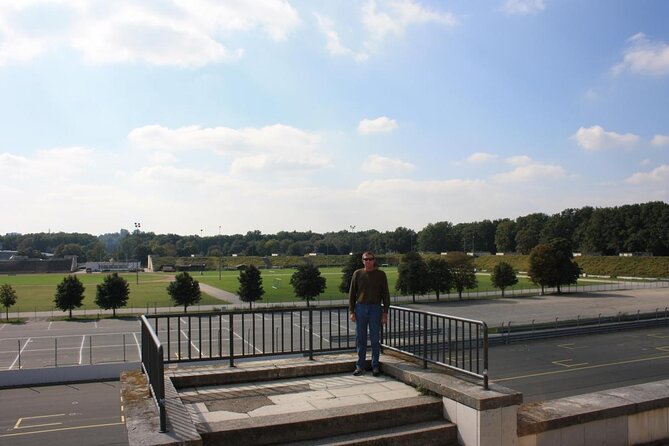
The first major area is Volksfestplatz, the fairgrounds used for the Nuremberg Rallies. The site can look surprisingly ordinary at first. It is open, spread out, and partly absorbed into modern Nuremberg. Your guide’s photos and explanations help show what it looked like during the Third Reich and how the rallies were staged.
Great Street and Congress Hall
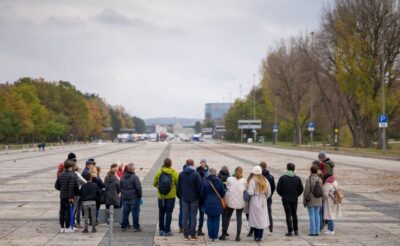
The Great Street was designed by Albert Speer as the central axis of the Rally Grounds. Its scale is the point. Even if you know the facts already, walking through the space helps you understand how architecture was used to make the individual feel small and the regime appear permanent.
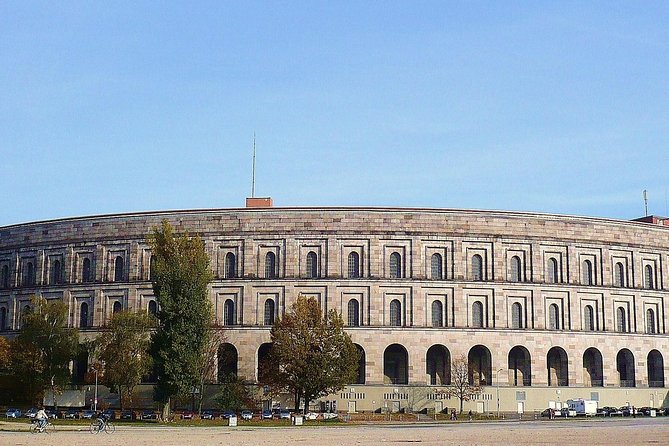
Congress Hall is the unfinished structure planned for Nazi Party meetings. It is among the largest surviving Third Reich buildings in the area. Its incomplete state is important. You are not looking at a finished monument in active use, but at an enormous project abandoned before it could fulfill its intended purpose.
Congress Hall now houses the Documentation Center, which covers key wartime and post-war events, including the Nuremberg Trials. The tour points out the building and explains its role, but you should check how much museum time is available during your visit. The walking tour does not turn into a long, detailed museum session.
You can stay at the Documentation Center after the guided portion for a longer visit, or return toward central Nuremberg with the group. This flexibility is useful if the museum is your main reason for coming. If you want to study the exhibits carefully, plan to remain afterward rather than expecting the guided walk to cover everything.
What the guide adds to the difficult history
The Third Reich portion requires more than a list of dates and buildings. The strongest guides connect the architecture with propaganda, mass gatherings, wartime events, and the Nuremberg Trials. Nick and Niklas, in particular, have been praised for combining clear facts with humor and strong pacing. Hannes is also frequently singled out for his command of Nuremberg’s medieval and wartime past.
Guide quality can vary, as it does on any group tour. One guide may use old photographs to connect today’s views with the past. Another may be more reserved. A few people had difficulty hearing in a noisy group, especially on busy Christmas-market days. If you cannot hear, ask the guide to speak louder or move closer rather than waiting until the end.
The group can reach up to 25 people. That is small enough to stay together, but not intimate. On a crowded Saturday, street noise can make the commentary harder to catch. I would choose a weekday if your dates allow, especially during the Christmas market.
Is $44.74 good value?
At $44.74 per person, this is a fair price for a four-hour guided experience that combines two separate parts of Nuremberg. Public transport is included, and you get a local guide rather than paying for a walk in the Old Town and then arranging a separate visit to the Rally Grounds.
The value depends on your interests. If you only want medieval Nuremberg, a shorter Old Town tour may suit you better. If your main aim is the Documentation Center museum, a self-guided visit may give you more time with the exhibits.
For a first visit, I like the combination. You see the castle, walls, market, churches, Dürer’s house, and Town Hall, then gain context for the Nazi sites. The tour also saves you the trouble of planning the bus or train connection. At four hours, it is not a cheap quick look, but it covers a lot of ground and provides a useful framework for further exploring.
Who should book this walk?
I would choose this tour if you want a broad first look at Nuremberg and prefer explanations to a silent stroll. It suits history fans, couples, solo visitors, and anyone interested in how a city can carry medieval, Renaissance, Nazi, and post-war stories in one day.
You should be ready to walk uphill, stand for long periods, cross cobblestones, and keep moving with the group. Most people can participate, and service animals are allowed, but the tour is not designed for someone seeking a slow, fully accessible route.
The tone is serious at the Rally Grounds, but the Old Town section includes architecture, craft traditions, markets, and local stories. You do not need to be a World War II specialist. The guide provides the basic setting and then adds detail for those who want it.
Should you book the Nuremberg Old Town and Rally Grounds tour?
Book it if you want one organized morning and afternoon that explains both Nuremberg’s proud medieval past and its role during the Third Reich. The best reasons are the combined route, included transport, skilled English-speaking guides such as Hannes, Natasha, Nick, and Niklas, and the chance to continue at the Documentation Center afterward.
Skip it if you dislike group walking tours, need a guaranteed finish time, or want several quiet hours inside the museum. Also think twice about a busy Christmas-market Saturday if hearing every word matters to you.
For most first-time visitors with good walking ability, I think the tour offers a useful and honest introduction. It does not make the Rally Grounds look more complete or dramatic than they are. Instead, it lets you see the scale, the unfinished buildings, and the gap between Nazi ambition and what remains today.
FAQ
How long does the Nuremberg Old Town and Rally Grounds tour last?
The tour lasts approximately four hours. It includes the Old Town walk, a short lunch break, public transport to the Rally Grounds, and the guided visit there.
Where does the tour begin?
The tour begins at 10:00 a.m. in front of Nuremberg Central Station, at Bahnhofsplatz, 90443 Nürnberg, Germany.
Is public transportation included?
Yes. Public transportation by bus or train to the Nazi Party Rally Grounds is included in the tour price.
Is food included?
No. Food and drinks are not included, but the tour has a short lunch break at the market where you can buy your own meal.
Does the tour visit the Documentation Center?
The tour visits the Documentation Center area and explains its role. You can stay longer afterward for a museum visit or return toward central Nuremberg.
How many people can join the tour?
The tour has a maximum of 25 participants.
Can I cancel for a full refund?
Yes. You can cancel at least 24 hours before the local start time for a full refund. Changes or cancellations made less than 24 hours before the start time are not accepted, and poor weather may lead to a different date or a full refund.
New walking tours around Germany
- Mystical Hamburg – Walking Tour in German★ 4.6 · 168 reviews
- Munich : Private Walking Tour with A Guide (Private tour)★ 4.5 · 85 reviews
- Munich: Raven Black Witches and Executioners Walking Tour★ 4.7 · 294 reviews
- Munich: Guided Food Walking Tour with Beer Tasting★ 4.7 · 183 reviews
- Munich Old Town – Guided Walking Tour in English★ 4.7 · 153 reviews
- Munich: Old Town Guided Walking Tour★ 4.6 · 479 reviews
- Munich: Old Town Walking Tour★ 4.7 · 589 reviews
- Munich: Birthplace of the Third Reich Guided Walking Tour★ 4.6 · 771 reviews
Nuremberg Walking Tours, side by side.
Nuremberg: Walking Tour of Former Nazi Party Rally Grounds
Read our review →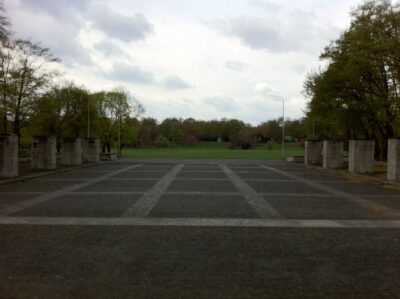
Nuremberg Old Town and Nazi Rally Grounds Walking Tour
Read our review →Lists this walk sits on