
Review · NUREMBERG
Nuremberg: Walking Tour of Former Nazi Party Rally Grounds
The vast former Nazi Party Rally Grounds show how architecture can become a weapon. In two hours, you walk from the unfinished Congress Hall along the Great Road to Zeppelin Field, while your guide explains how buildings, crowds, symbols, and carefully staged rallies served Nazi propaganda.
I like two things especially: the old photographs, which help you picture the grounds as they once looked, and the careful focus on how propaganda worked rather than on military trivia alone. Guides such as Sylvia, Kai, Anita, and Andreas have been praised for clear, thoughtful explanations. The main drawback is simple: this is a large site, and you will walk a lot. In winter, some tours reach Zeppelin Field after dark.
Key points
- The Congress Hall reaches about 40 meters high, giving you an immediate sense of the planned scale.
- The Great Road formed the north-south axis of the rally grounds and links the main sites.
- Zeppelin Field and its Tribune reveal how mass gatherings were staged for up to 200,000 people.
- Guides use historic photographs to compare the surviving ruins with the original Nazi plans.
- The tour examines propaganda and persecution, including the connection between rallies and the concentration camp system.
- The route lasts two hours and covers roughly 5,000 steps, with no shelter guaranteed in bad weather.
Why Nuremberg built a stage for mass politics
Nuremberg is closely linked with the Nazi era for more than one reason. It was the setting for the postwar trials, but before that it became the chosen stage for huge National Socialist Party rallies. The rally grounds were designed to make the movement appear permanent, disciplined, and overwhelming.
That is the key to this walk. You are not simply looking at damaged buildings. You are learning how space was arranged to influence people. The size of the structures, the long sightlines, the ordered movement of crowds, and the use of ceremony all helped turn politics into a carefully managed public show.
The tour also explains the National Socialist view of history and the way the party presented itself as the answer to Germany’s political and social problems. This matters because the grounds make propaganda physical. Instead of hearing only about speeches and slogans, you see the places built to give those messages force.
I find that approach more useful than a simple list of dates. It helps you understand how a dictatorship tried to make itself look natural, historic, and unstoppable.
More walking tours around Germany:
- Discover Berlin Half-Day Walking Tour
★ 5.0 · 9,624 reviews - Berlin City walk Government District and Places of Democracy
★ 4.7 · 8,467 reviews - Berlin: Third Reich & Cold War Guided Walking Tour
★ 4.9 · 8,378 reviews
Meeting at the Documentation Center
The standard meeting point is beside the entrance stairs to the Documentation Center Nazi Party Rally Grounds at Bayernstraße 110. Your guide carries a picture folder and wears a name tag identifying Geschichte Für Alle e.V., the organization providing the tour.
There are two listed starting-location options connected with the Documentation Center area, so check your booking details carefully. The meeting point itself is specific, but large historic sites can still cause confusion if you arrive at the last minute. Give yourself time to find the entrance stairs and identify the guide.
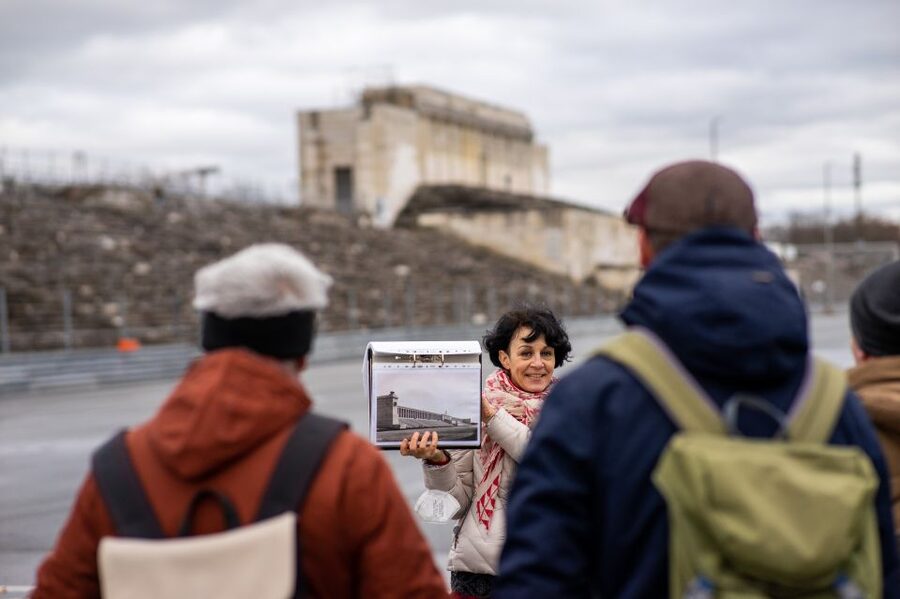
The tour is available in German or English. The guide does not simply lead you from one monument to another. The picture folder is an important part of the experience, since current ruins can be hard to read without visual help. Historic images show the intended appearance and original use of the buildings, making the gap between Nazi plans and what remains today easier to grasp.
Guides have different styles, but the strongest feedback consistently points to clear explanations and room for questions. Sylvia has been praised for her command of the subject and helpful answers in both English and German. Kai is noted for patient, detailed explanations, while Andreas, a political scientist, has been described as especially engaging in English. You may be led by someone else, but the provider uses guides with a serious grounding in the subject.
Congress Hall: an imposing first lesson
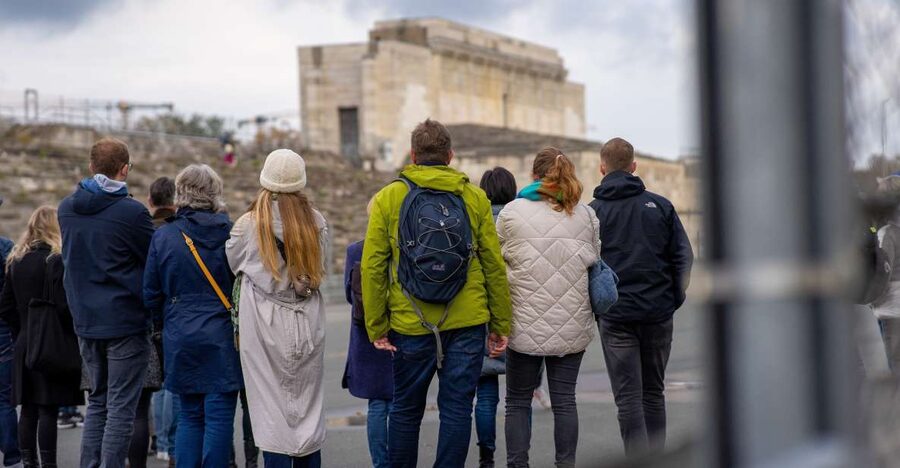
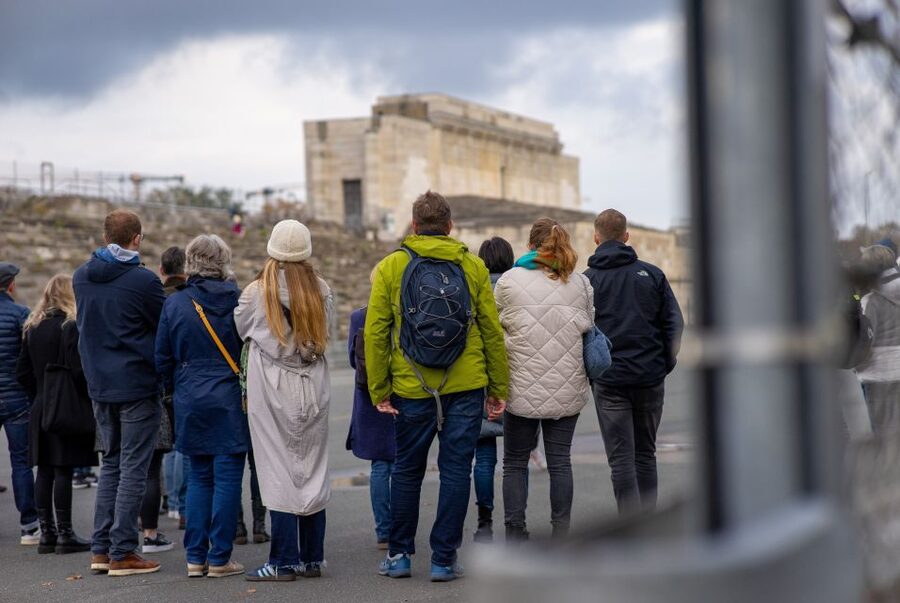
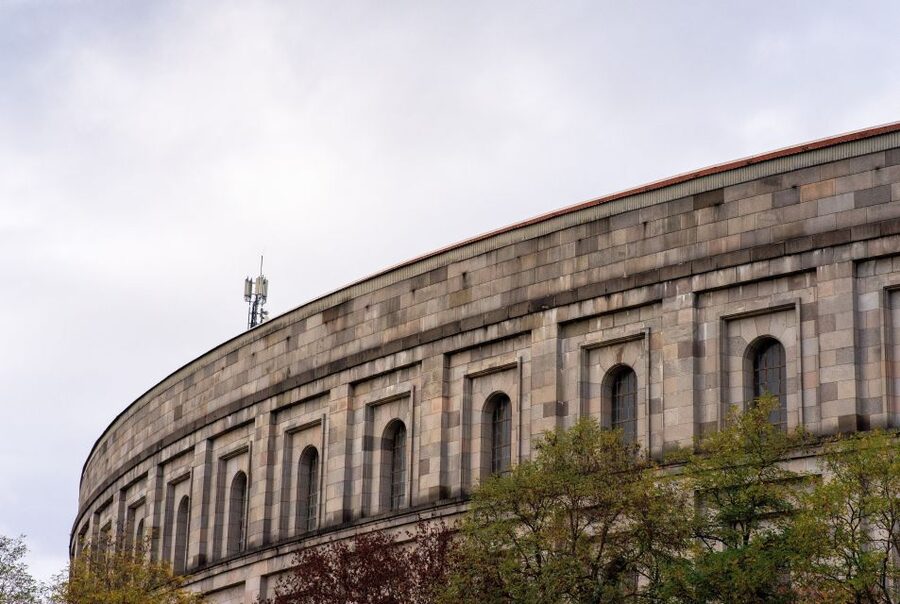
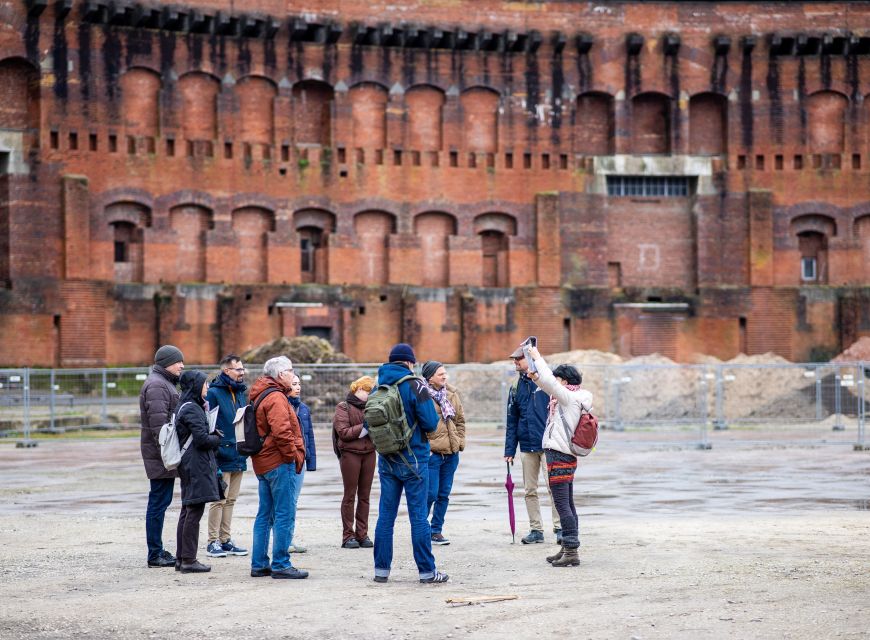
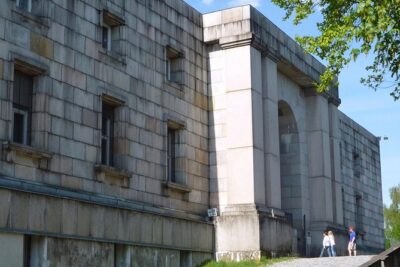
The first major stop is the Congress Hall, the enormous unfinished structure that greets you at the rally grounds. Its surviving walls rise about 40 meters, and that height is difficult to understand from a book or photograph. You see at once that the project was not meant to feel modest or welcoming.
Your guide explains the building’s intended function and the role of architecture in National Socialist presentation. The building was planned to communicate authority through sheer size. Its unfinished state is part of the story, too. What remains allows you to see the ambition of the project without pretending that the original plans were ever fully realized.
This is a good place to pay attention to scale. A political movement that wanted to appear eternal needed buildings that looked too large for ordinary civic life. The Congress Hall was part of that visual message. It was designed to make the individual feel small and the state feel immense.
The stop also introduces the difficult question of what should happen to such a site today. Nuremberg has chosen to confront the remains rather than erase them. The current discussion about how the grounds should be used is part of the tour, giving you a link between the past and the city’s present responsibility.
The downside is that this is an outdoor visit, not a full indoor museum tour. The tour information says you walk around the historic sites, and food and drinks are not included. If you want the exhibits inside the Documentation Center, treat that as a separate part of your visit and allow extra time.
Walking the Great Road
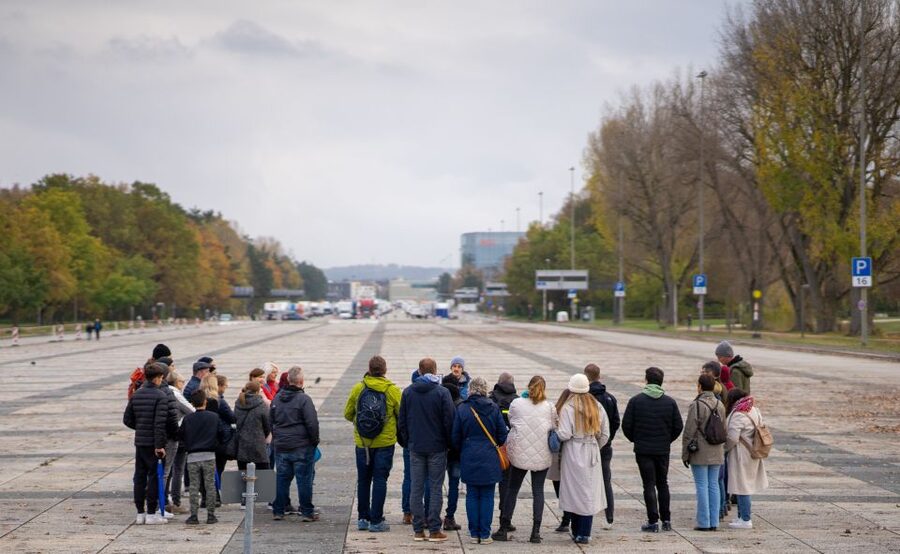
From the Congress Hall, the group continues on foot for about 10 minutes to the Great Road, or Große Straße. This long north-south axis was designed to organize movement and ceremony across the rally grounds.
The walk between sites is not dead time. It helps you understand distance as part of the design. A grand avenue can make a gathering feel ordered before anyone speaks. The route gives you a physical sense of how people would have been directed, positioned, and presented as part of a mass event.
Your guide explains the staging of the Nazi Party rallies and the effect of architecture on those attending. The point is not only that many people gathered. It is that the setting, movement, timing, and visual order were planned to produce an emotional response.
This section is also where historic photographs can be especially helpful. You can compare the open space in front of you with images of organized crowds and decorations from the Nazi period. The present-day grounds are quieter and less complete, which makes the contrast sharp.
Expect an easy walking surface in some areas, but do not mistake an easy pace for a short route. The entire visit covers a large area. One person calculated roughly 5,000 steps in two hours, while others found the amount of walking greater than expected. Both impressions can be true depending on your pace, weather, and personal mobility.
Same streets, a different story:
- Munich: Third Reich & WWII Walking Tour
★ 4.6 · 6,181 reviews - Berlin: Discover Berlin Walking Tour
★ 4.9 · 5,998 reviews - Berlin’s Best: 2 Hour Walking Tour Third Reich and the Cold War
★ 5.0 · 5,486 reviews - Berlin: Hidden Backyards Guided Walking Tour
★ 4.8 · 5,360 reviews
Zeppelin Field and the Tribune
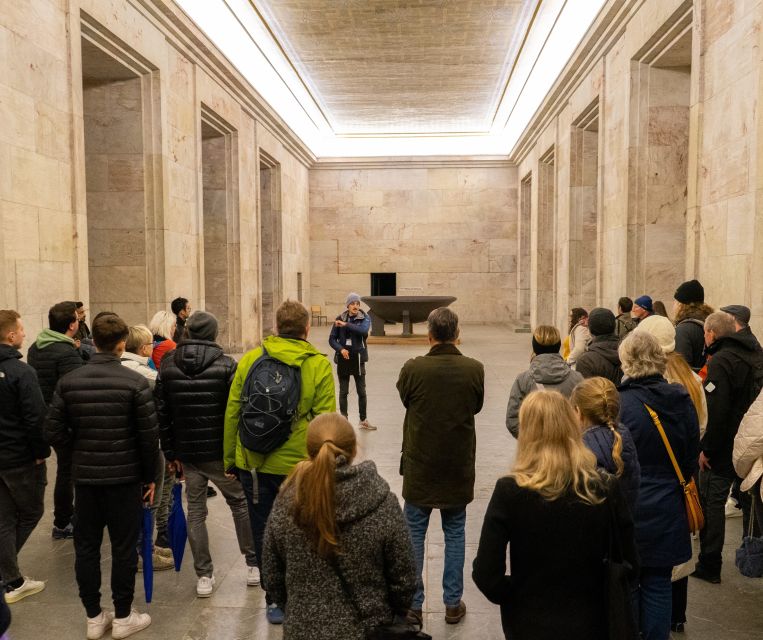
The route continues on foot for about 15 minutes to Zeppelin Field, the best-known rally area on the walk. The tour finishes here, at the Zeppelin Tribune, a structure designed to hold up to 200,000 people.
This is where the scale of the rallies becomes most direct. Your guide explains how the field was used, how the crowds were arranged, and how the Tribune worked as a focal point. The architecture did not merely provide a backdrop. It helped turn party events into mass propaganda shows.
The term mass propaganda is important. These rallies were designed to make participation feel like proof of national unity. Huge numbers, repeated symbols, formal movement, and powerful speakers created an appearance of collective agreement. The tour places that spectacle beside the crimes of the regime, helping you see the connection between public persuasion and political control.
The Tribune is also a place where you should slow down and look at the surviving structure rather than rushing for a photograph. The physical remains are impressive, but the guide’s explanation keeps the visit from becoming a celebration of monumental design. The purpose is to understand what the monument did and what it was meant to make people feel.
A practical warning: the route can finish in darkness during late autumn and winter. Several visitors specifically wished the start time had been moved earlier so Zeppelin Field could be seen properly. If daylight matters to you, choose the earliest suitable departure and check the sunset before booking. The site can still be explained after dark, but you will lose some visual detail.
Propaganda, persecution, and the harder questions
The subject is heavy, and a good guide must keep the history accurate without turning the visit into a spectacle of its own. The tour addresses Nazi crimes, the concentration camp system, and the other side of the public rallies. It also explains how mass events helped the regime shape public opinion.
That balance is one of the strongest reasons to choose a guided walk. A self-guided visit can show you the buildings, but it may not explain how they worked together. Guides ask questions about intention and effect, encouraging you to think about why a space was built in a particular way and how people might have responded to it.
This is not a tour for light entertainment. The subject includes dictatorship, racism, persecution, and mass violence. Still, the teaching style appears to be measured and respectful. The best guides have been described as compassionate, clear, and willing to answer difficult questions directly.
I also value the way the walk connects past propaganda with present-day civic concerns without forcing a simple modern comparison. The tour raises the question of how societies should handle places created by a criminal regime. You are given historical tools, not a ready-made emotional response.
How the guides shape the experience
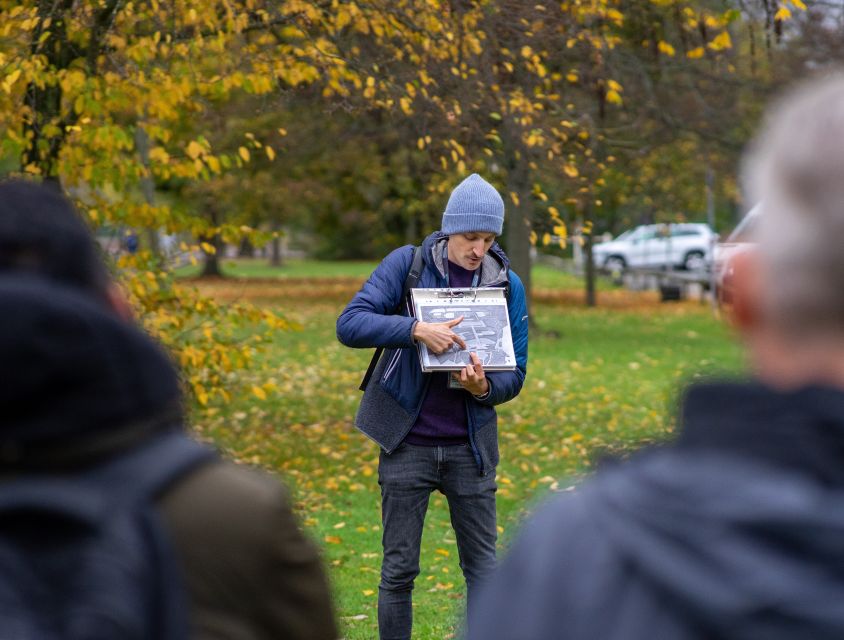
The guide is central here. The buildings are large, but the meaning is not always obvious. A skilled guide adds the missing layers: the original purpose, the planned effect, the people involved, and the difference between the Nazi image of the rallies and the reality of the regime’s crimes.
The available feedback names many guides, including Frank, Bettina, Marina, Kristina, Ralf, Michael, Anita, Alan, Anne, Mike, and Kristin O. That range suggests you should not book around one specific person unless the departure listing names them. Still, the repeated strengths are clear: strong command of the subject, understandable English, careful handling of questions, and frequent use of old photographs.
Some guides make the tour interactive by asking the group to consider how the buildings were intended to affect people. Others focus more on a clear historical explanation. Both styles can work. If you enjoy discussion, listen for a guide who invites questions. If you prefer a structured lesson, the tour’s route provides a firm framework from the Congress Hall to the Tribune.
One practical detail matters: arrive on time. A late arrival can interrupt a walking tour, and the group may already be moving away from the meeting point. The guide has a planned route, and the wide grounds make catching up harder than it would be in a compact old town.
Price, pace, and weather
At $15 per person, this is a strong value if you want context rather than a quick look at the ruins. The price covers the two-hour guided walk, and that direct explanation is the main thing you are paying for. You can see the outdoor structures without a guide, but you would miss the organized story linking the Congress Hall, Great Road, and Zeppelin Field.
The cost is particularly reasonable for anyone interested in twentieth-century history, political propaganda, architecture, or the Nuremberg trials. It is also useful if you have already visited the Documentation Center and want to understand how the larger grounds functioned.
The route is not suitable for people with mobility impairments, according to the tour information. Even if you walk comfortably, wear solid shoes. The distance is spread across a large open site, and you may be standing while listening for much of the two hours.
Dress for the forecast. The tour runs in rain or shine, and the grounds offer no promise of shelter during explanations. Cold weather can be especially tiring, though guides have still delivered effective tours on very cold days. Bring water in warm weather, since food and drinks are not included.
You can cancel up to 24 hours before the tour for a full refund, and the reserve-now, pay-later option keeps your plans flexible. GetYourGuide bookings do not receive a separate invoice, but the booking confirmation serves as proof of payment.
Who should book this walk
I would choose this tour if you want to understand how the Nazi regime used public space to shape political belief. It suits history students, teachers, military-history fans, architecture enthusiasts, and anyone who wants more than photographs of monumental ruins.
It also works well for a first visit to the rally grounds because the route gives the site a clear order. You start with the Congress Hall, follow the Great Road, and finish at the Zeppelin Field. That sequence helps you build a mental map instead of seeing isolated fragments.
You may want to skip it if you dislike long outdoor walks, need step-free access, or want a short stop with lots of indoor exhibits. You should also think about timing in winter. A late departure may mean reaching the most important open area after sunset.
For families with older children or teenagers, the tour can be valuable if they are ready for a serious discussion of Nazi crimes and propaganda. The subject is not softened, but the guides aim to explain it carefully. Younger children may find two hours of walking and historical discussion demanding.
Should you book the Nuremberg rally grounds tour?
Yes, if you want the buildings explained in their political setting. The $15 price buys a clear route, a live German or English-speaking guide, historic photographs, and an explanation of how architecture and spectacle supported Nazi rule.
Choose an early departure when daylight is limited, arrive at the Congress Hall meeting point with time to spare, and wear shoes suited to a large outdoor site. If you can manage the walking and the difficult subject, this is one of the more useful ways to visit the former rally grounds. It leaves you with more than an image of imposing ruins. You leave understanding why those ruins were built, how they were used, and why Nuremberg still has to decide how they should be remembered.
FAQ
How long does the walking tour last?
The tour lasts two hours, including the guided visits to the Congress Hall, Great Road, and Zeppelin Field.
What language is the tour offered in?
The tour is offered in German and English. The guide holds a picture folder and wears a Geschichte Für Alle e.V. name tag.
Where does the tour meet?
Meet beside the entrance stairs to the Documentation Center Nazi Party Rally Grounds at Bayernstraße 110 in Nuremberg. The tour information lists two starting-location options in the Documentation Center area, so check your booking confirmation.
What sites will I see?
You will visit the Congress Hall, walk along the Great Road, and finish at Zeppelin Field and its Tribune.
Is the tour suitable for people with mobility impairments?
No. The activity is listed as unsuitable for people with mobility impairments, and the route involves substantial walking across the former rally grounds.
What happens if it rains?
The tour takes place rain or shine. Food and drinks are not included, so dress for the weather and bring anything you need during the two-hour walk.
New walking tours around Germany
- Mystical Hamburg – Walking Tour in German★ 4.6 · 168 reviews
- Munich: Raven Black Witches and Executioners Walking Tour★ 4.7 · 294 reviews
- Munich : Private Walking Tour with A Guide (Private tour)★ 4.5 · 85 reviews
- Munich: Guided Food Walking Tour with Beer Tasting★ 4.7 · 183 reviews
- Munich Old Town – Guided Walking Tour in English★ 4.7 · 153 reviews
- Munich: Old Town Guided Walking Tour★ 4.6 · 479 reviews
- Munich: Old Town Walking Tour★ 4.7 · 589 reviews
- Munich: Birthplace of the Third Reich Guided Walking Tour★ 4.6 · 771 reviews
Nuremberg Walking Tours, side by side.
Nuremberg Old Town and Nazi Party Rally Grounds Walking Tour in English
Read our review →Lists this walk sits on