Review · SPLIT
SPLIT-PRIVATE Walking Tour of Diocletian’s Palace & Old Town
The most striking part of this Split walking tour is how ordinary city life fits inside a Roman emperor’s retirement palace. You move from the Riva promenade into Diocletian’s Palace, then through medieval lanes, market squares, and ancient stone rooms that are still part of daily life. A good guide makes those layers easier to read, and Joško is repeatedly praised for turning dates and rulers into clear, entertaining stories.
I like the private format, which lets your group ask questions, adjust the pace, and hear extra local detail instead of following a large crowd. I also like the mix of major sights and small orientation stops, from the Peristyle and Golden Gate to Fruit’s Square and the old city clock. The main consideration is that the tour is history-led, not simply a quick sightseeing walk, and much of the palace visit focuses on the cellars.
Key points
- Private for up to 12 people: Your group has the guide to itself, with a custom-designed route and room for questions.
- Joško is a major strength: The guide is praised for humor, clear storytelling, local pride, and an ability to keep children and adults interested.
- The cellars matter: Diocletian’s Palace Substructures are described as the best-preserved part of the palace, but entry costs €10 per person.
- A strong first look at Split: The route links Roman, medieval, and modern Split in about two hours.
- Extra admissions are optional: The cathedral costs €3.50 per person and the Temple of Jupiter costs €1.50 per person if you go inside.
- It begins and ends on the Riva: The meeting point is Obala Hrvatskog narodnog preporoda 22, beside Split’s main waterfront promenade.
Why this private Split walk works so well
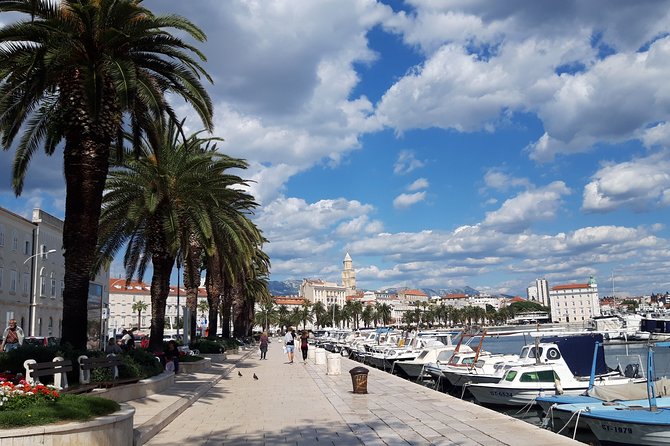
Split can feel confusing at first because Diocletian’s Palace is not an isolated archaeological site. It is the center of the modern city. People live, shop, eat, and walk through its ancient streets. Without context, you may see a few impressive columns and stone walls without understanding how a Roman imperial residence became a medieval town and then a living Croatian city.
This tour gives you that framework. The route connects the emperor’s private quarters, public ceremonial spaces, Christian buildings, medieval squares, and the waterfront. You are not just looking at ruins. You are learning how the city changed hands, changed purpose, and kept building over the old Roman plan.
The guide also appears to be central to the quality of the outing. Joško, also referred to as Josko or Josip in the supplied material, is praised for presenting a large amount of material in manageable pieces. He uses humor, fun facts, and stories about Split rather than delivering a long lecture.
That style matters here. Roman history can become a blur of emperors and dates, especially if you are jet-lagged or visiting with teenagers. The strongest comments describe a guide who keeps the material moving and makes the palace feel like a place where people lived, ruled, worshiped, traded, and argued.
More Old Town Walking Tours in Croatia
- Dubrovnik: Old Town Walking Tour
★ 4.8 · 5,174 reviews - Split: Old Town and Diocletian Palace Walking Tour
★ 4.9 · 4,727 reviews - Dubrovnik Discovery Old Town Walking Tour
★ 5.0 · 4,458 reviews
Starting on the Riva and entering the palace
The meeting point is at Obala Hrvatskog narodnog preporoda 22, on the Riva, Split’s main promenade. The tour both starts and finishes there, which makes it easy to fit into a day of exploring the center. You do not need a separate transfer to reach the historic core.
From the waterfront, the route leads into Diocletian’s Palace. The palace was built in AD 305 as the retirement residence of Emperor Diocletian, and its scale explains much about Split’s character. This was not merely a small country house. It combined a military camp, imperial residence, religious buildings, ceremonial courts, and service areas.
The first main palace portion lasts about 25 minutes. That is enough for a clear introduction, though not enough to examine every corner or museum display. The guide’s job is to explain the plan and the emperor’s role, then show you how the original Roman structure survives beneath later construction.
The palace is a UNESCO World Heritage Site, but the best part of the visit is not simply the label. It is the way the ancient plan remains legible while modern Split operates inside it. A café, shop, or apartment may occupy a space that once had a very different function.
The Peristyle, Vestibule, and the emperor’s private world
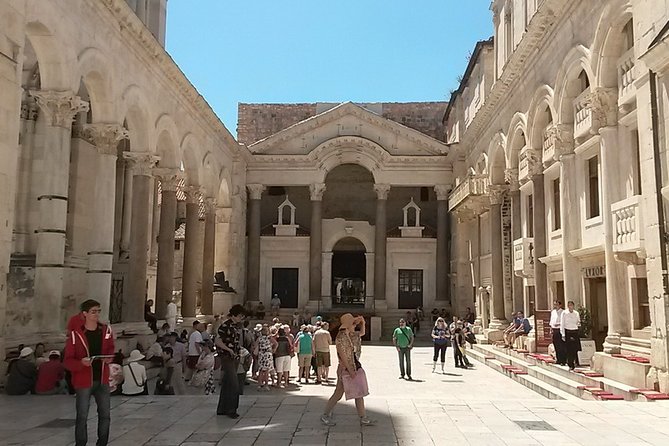
The Peristyle is the ceremonial heart of Diocletian’s Palace. This open square, framed by columns and monumental stonework, was designed to impress. It is one of the places where the power of the Roman emperor becomes easy to understand, even if you know little about Roman politics.
You will also see the Vestibule, the main entrance to Diocletian’s private residence. The stop is short, about five minutes, but it helps explain the separation between formal public spaces and the emperor’s personal quarters.
The route does not treat Diocletian as a distant name on a plaque. The guide places his rule within the larger story of the palace and the city. Several comments praise the way the history is arranged into a clear timeline, including later rulers and changes over more than 1,700 years.
This is especially useful if you enjoy architecture but do not want a specialist lecture. The guide explains why a particular gate, courtyard, or wall matters, then keeps the group moving. You get the larger picture without spending the entire morning on one column.
The Cathedral of Saint Domnius and the Temple of Jupiter
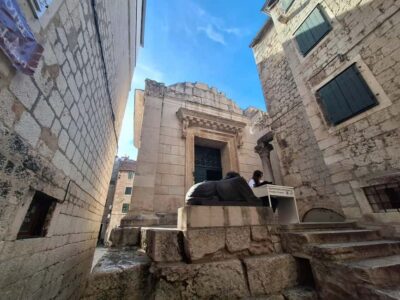
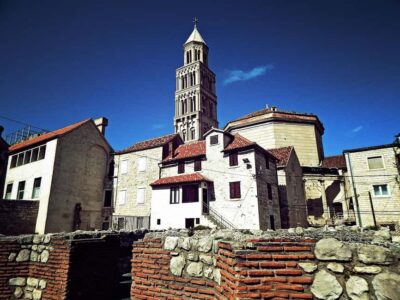
The Cathedral of Saint Domnius is visited from the outside as part of the standard route. The building occupies a former Roman mausoleum, a useful reminder that Split’s Christian story grew directly out of the imperial palace.
You may choose to go inside, but the €3.50 admission fee per person is not included. The short stop outside gives you the essential historical connection. Paying to enter makes more sense if you want to see the interior and have enough time for an additional look after the guided portion.
The Temple of Jupiter is another short exterior stop. It was dedicated to the main Roman god and later adapted for Christian use. Inside, there is an additional €1.50 fee per person. The guide can explain the building’s earlier purpose and later changes, while you decide if the interior visit fits your interests.
These optional fees are modest, but they are worth noting when you compare the price of the tour. The €240 charge covers the private guide and organization, not every paid site along the route. A group of two will feel the cost more sharply than a group of eight or ten, while a larger family or multigenerational party may find the arrangement quite practical.
More Private Walking Tours in Croatia
- Tour The Game of Thrones – Private Walking Tour
★ 5.0 · 464 reviews - Dubrovnik: Old Town & City Walls Private Walking Tour
★ 5.0 · 206 reviews - Zagreb Unveiled: Private walking tour with a local guide
★ 5.0 · 185 reviews
Old Split through Fruit’s Square and People’s Square
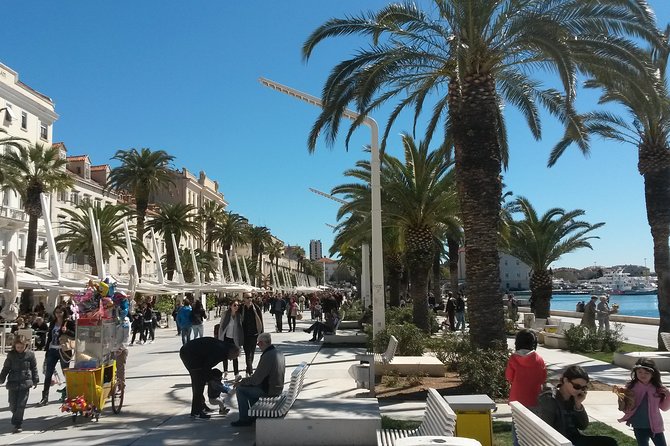
The Old Split portion lasts about 25 minutes and adds a welcome change of scale. The palace is monumental, but the medieval town is about narrow passages, irregular buildings, small squares, and the way later generations worked around Roman foundations.
Fruit’s Square, or Trg Braće Radić, occupies the site of a former green market. It includes a statue of Marko Marulić, often called the father of Croatian literature. This stop gives the tour a cultural focus beyond emperors and military power.
Narodni Trg, or People’s Square, is the largest and liveliest piazza in the old town. It helps you understand how Split’s public life shifted away from the original palace spaces. The route also includes the 500-year-old city clock, a detail that connects the medieval town to more recent civic history.
I like this section because it helps you get your bearings. The palace can feel like a maze, especially on a first visit. By the end, you should have a clearer sense of where the waterfront, palace gates, squares, cathedral, and nearby streets fit together.
One point to keep in mind: the published schedule gives several Old Town stops only about five minutes each. If you want a long, unhurried stroll through every lane, this may feel brief. The tour is designed as an overview with explanations, not as an extended shopping or café walk.
Grgur Ninski and the Golden Gate
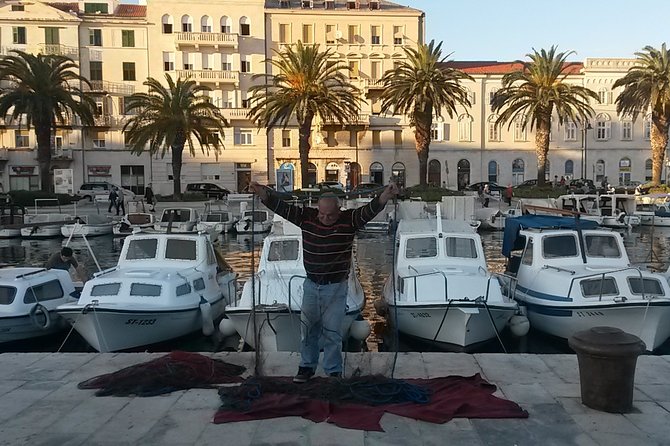
The statue of Grgur Ninski introduces one of Croatia’s important historical figures. This is another place where the guide’s local perspective can make a short stop more useful. Instead of passing a statue without knowing why it matters, you receive a compact explanation of the person and his place in Croatian history.
The Golden Gate is the main and most ornate entrance to Diocletian’s Palace. It is a strong final palace landmark because it shows how visitors originally approached the imperial complex. Its scale and decoration make the political message clear: this was an entrance to an emperor’s world.
The tour’s short stops may sound repetitive on paper, but they create a useful rhythm. You pause at a significant feature, get its story, and then continue through the city. That approach suits people who want a strong introduction before exploring independently.
The guide may also respond to your interests along the way. The private format is important here. The supplied comments describe extra sites, restaurant and sightseeing suggestions, flexibility around weather, and even help taking group photographs. These are small things, but they are much harder to arrange on a crowded group walk.
The palace cellars, the best-preserved section
The Diocletian Palace Substructures are the most important paid portion of the route. They are described as the best-preserved part of the palace, and the visit lasts about 20 minutes. Admission to the museum area costs €10 per person and is not included.
This is also the part that requires the clearest expectation-setting. The tour is not only an outdoor walk among handsome façades. A large share of the palace interpretation takes place below ground, in the cellars and substructures. One especially useful description of the outing warns that it is an historical tour rather than a simple sightseeing circuit.
The cellars help you see the original layout more clearly than the upper city sometimes allows. Their preserved walls and rooms show how the imperial residence was supported and organized. The guide can connect what you see below with the streets and buildings above.
If you dislike enclosed or underground spaces, ask yourself how much of the palace experience you want to include before paying for entry. If you enjoy archaeology, architecture, and stories about how a city developed, this is likely the most rewarding part of the route.
The separate fee is the largest extra cost, so budget for it if you want the full palace visit. You can still take the walking tour without counting every optional admission, but skipping the cellars means missing one of the clearest views of the Roman structure.
A guide who keeps history moving
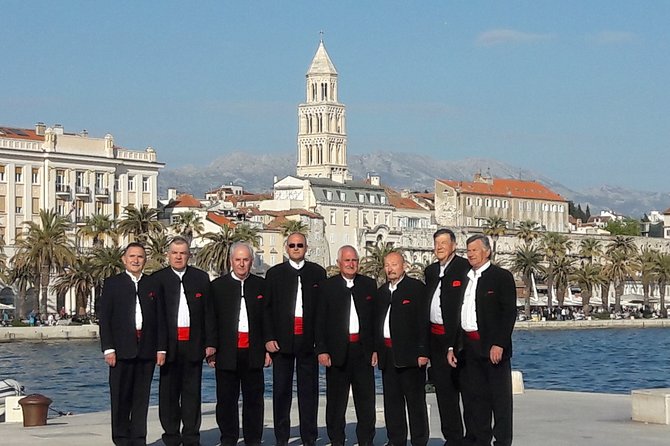
The strongest praise focuses on the guides, especially Joško. The comments describe him as funny, professional, warm, and highly informed about Diocletian, Roman rule, Split’s buildings, and the city’s later development.
The recurring strength is delivery. You receive a great deal of information, but it is presented in digestible sections rather than as a mass of dates. A family with children aged 12 and 14 found the pace engaging, and another group specifically appreciated the way the guide kept the material interesting for teenagers.
That does not mean every minute is light entertainment. This is a history tour, and the subject matter is substantial. If you want only photo stops and quick facts, the explanations may feel longer than expected. If you want to understand why Split looks the way it does, the detail is the point.
The private setup also allows the guide to adapt. You can ask about Roman history, Croatian literature, local life, architecture, or what to see next. One family had a rainy-day date changed, while another group appreciated being guided toward shade when the weather was hot. The supplied details do not promise that every request can be accommodated, but the private structure makes that kind of adjustment possible.
Price, group size, and overall value
The price is $240 per group of up to 12 people. That is not the cheapest way to see Split if you are alone or traveling as a couple. For a full group, though, the per-person cost becomes much more reasonable, especially compared with booking several separate places on a group walk.
The value comes from the private guide rather than included admissions. You are paying for a licensed local resident guide, a custom-designed route, and an experience limited to your own group. Cathedral, Temple of Jupiter, and cellars fees are extra, and gratuities are not included.
For two people, I would book this only if personal attention and historical explanation matter more to you than keeping costs low. For a family, group of friends, or extended party, the price can make good sense. You are not paying separately for each person’s place in a large group, and you can ask questions without worrying about holding up strangers.
The advertised duration is approximately two hours. The listed stop times add up to about that amount, though one supplied account describes a longer outing. I would avoid scheduling a ferry, meal reservation, or other fixed activity immediately afterward. The tour may finish close to its planned time, but a private guide can spend longer on questions or extra points of interest.
Who should book this Split tour
I would choose this walk if you are visiting Split for the first time and want the palace and Old Town to make sense quickly. It is particularly useful early in your stay, since you can use the orientation to plan later visits to museums, markets, churches, and streets you want to explore at leisure.
It also suits families. The stories and humor help keep younger visitors involved, while the private format lets adults ask more detailed questions. History teachers, architecture fans, and anyone curious about the transition from Roman palace to living city should find plenty to hold their attention.
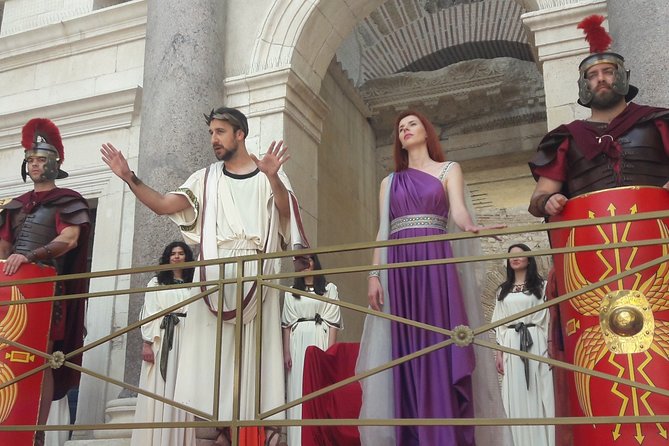
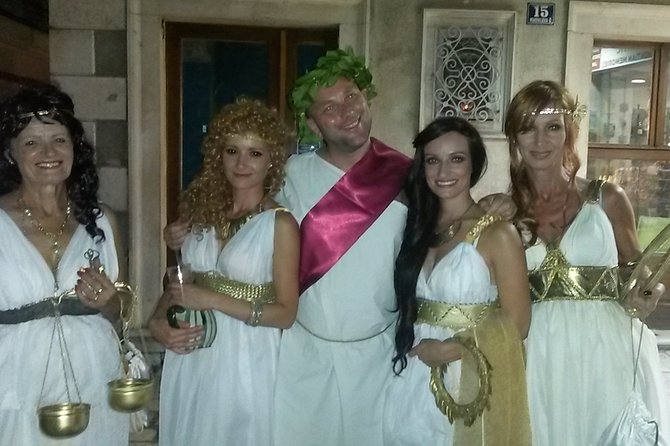
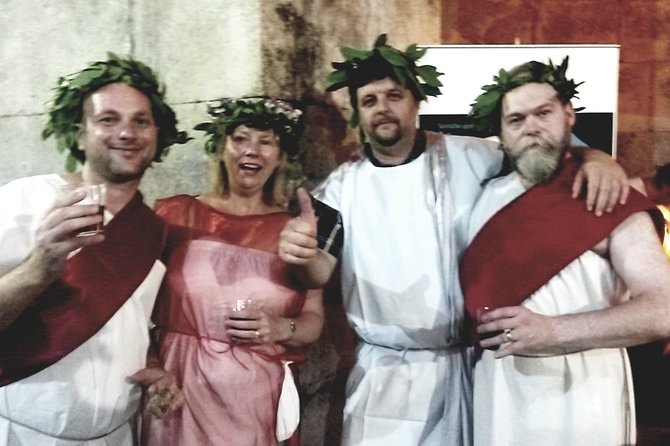
I would be more cautious if you want a long free-form walk, a food tour, a costumed show, or a visit built around theatrical performance. The tour does not include a costumed theatre show or similar appearance. It is a guided historical walk, with the cellars and palace structure at its center.
Wear comfortable walking shoes and expect uneven historic surfaces. The supplied information confirms that most people can participate and that the meeting point is near public transportation, but it does not provide a detailed accessibility assessment for every passage or cellar area.
Should you book it?
Book it if you want a private, English-language introduction to Diocletian’s Palace that goes beyond naming the main sights. Joško’s storytelling, the ability to ask questions, and the connection between Roman, medieval, and modern Split are the main reasons to choose it.
Think twice if you are a couple watching every dollar, want to spend most of the time outdoors, or prefer to explore without a set historical focus. Also budget separately for the €10 cellars, €3.50 cathedral, and €1.50 Temple of Jupiter admissions if you want to enter them.
For a family or group of friends, I see the strongest value. You get a local guide, a manageable two-hour framework, and a much better chance of leaving Split with the city’s unusual layers firmly in place.
FAQ
How long is the tour?
The advertised duration is approximately two hours. The itinerary includes short stops throughout the palace and Old Town, including a 20-minute visit to the palace substructures.
Is this a private tour?
Yes. Only your group participates, with a maximum group size of 12 people.
What language is the tour offered in?
The tour is offered in English.
Where does the tour start and finish?
It starts at Obala Hrvatskog narodnog preporoda 22, 21000 Split, Croatia, on the main Riva promenade. It finishes back at the same meeting point.
Are entrance fees included?
No. The cathedral costs €3.50 per person if you choose to enter, the Temple of Jupiter costs €1.50 per person, and the Museum of Diocletian’s Cellars costs €10 per person. These fees are separate from the tour price.
What happens if the weather is poor?
The experience requires good weather. If it is canceled because of poor weather, you will be offered a different date or a full refund. Free cancellation is available when you cancel at least 24 hours before the start time.
More Castle and Palace Walking Tours around Croatia
- Walking Tour of Split and Diocletian’s Palace
★ 5.0 · 2,588 reviews - Diocletian’s Palace and Old Town SMALL GROUP Walking Tour
★ 5.0 · 502 reviews - Edinburgh Castle: Guided Walking Tour with Entry Ticket
★ 4.7 · 11,699 reviews - Venice: Doge’s Palace and St Mark’s Basilica Walking Tour
★ 4.4 · 6,291 reviews
New walking tours around Croatia
- Zadar: Food Tasting & Old Town Walking Tour★ 5.0 · 94 reviews
- Livade: Guided Truffle Hunting Walking Tour★ 4.6 · 82 reviews
- From Split: Krka Waterfalls Cruise & Trogir Walking Tour★ 4.7 · 681 reviews
- Split: History and Heritage Walking Tour★ 4.9 · 650 reviews
- Dubrovnik: Old Town Walking Tour★ 4.9 · 792 reviews
- Dubrovnik: Walls and Wars Walking Tour★ 4.8 · 501 reviews
- Dubrovnik: Cable Car, Walking Tour and City Walls Combo★ 4.6 · 322 reviews
- Dubrovnik: Panoramic Ride and Old Town Guided Walking Tour★ 4.7 · 261 reviews
Split Walking Tours, side by side.
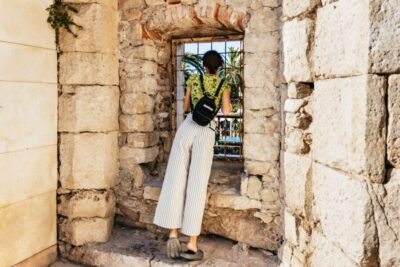
Split: Old Town and Diocletian Palace Walking Tour
Read our review →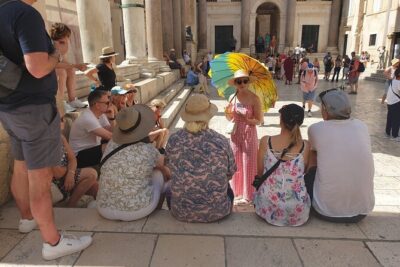
Walking Tour of Split and Diocletian’s Palace
Read our review →
Krka Waterfalls tour with Trogir Walking tour and Krka panoramic boat cruise
Read our review →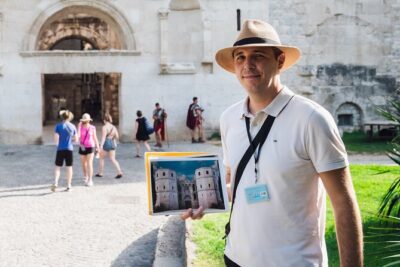
Walking Tour of Split with a ‘Magister’ of History
Read our review →
From Split: Krka Waterfalls Cruise & Trogir Walking Tour
Read our review →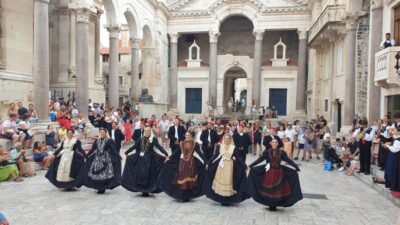
Diocletian’s Palace and Old Town SMALL GROUP Walking Tour
Read our review →