
Review · CROATIA
Zagreb: City & History Walking Tour & WW2 Tunnels
The most unusual part of this Zagreb walk is the Grič Tunnel, a wartime passage beneath the Upper Town that gives the city tour a darker, more recent chapter. You also get the classic sights: the cathedral, Dolac Market, Tkalčićeva Street, St. Mark’s Church, and Stone Gate.
I like the small-group feel, which makes it easier to hear and ask questions. I also like the local touch: guides such as Petra, Tomislav, Tomas, and Maja add personal stories, restaurant advice, and even well-timed stops for Zagreb’s noon cannon. The main drawback is that this is a walking tour with steps and uneven historic streets, so it is not suitable for wheelchair users. The funicular is also closed for renovation until March 2026.
Key points to know before you book
- The Grič Tunnel adds a wartime layer: Walk through Zagreb’s former World War II shelter instead of seeing only the postcard sights.
- The route covers both Lower and Upper Town: Start in Zrinjevac and finish at Ban Jelačić Square after reaching Gradec.
- Local guides shape the experience: Petra, Tomislav, Tomas, and Maja are praised for clear English, humor, personal stories, and useful recommendations.
- Dolac Market matters most in the morning: It closes in the afternoon and on public holidays.
- The tour is a strong value at $11: Two and a half hours with a licensed guide costs less than many short city walks.
- Plan for walking, steps, and weather: Wear comfortable shoes and remember that the funicular is unavailable until March 2026.
Why this Zagreb walk works so well
Zagreb can feel spread across two different cities. The Lower Town has broad streets, formal parks, and grand public buildings. The Upper Town, called Gradec, feels older and more intimate, with stone lanes, medieval gates, church towers, and views over the rooftops.
This tour connects those parts in one easy-to-follow story. You begin at Zrinjevac Park and finish at Ban Jelačić Square, so you get your bearings quickly. Along the way, the guide explains not just what each place is, but why it matters to Zagreb.
That difference is important. A guide can point out the cathedral, but a good guide also explains its repeated damage and rebuilding. A guide can lead you through Stone Gate, but a local guide can tell you why people still pause at the small chapel inside. The strongest part of this experience is the conversation between the landmarks.
At $11, the value is unusually good. You receive 150 minutes with a licensed English-speaking guide, and the route covers many of the city center’s key sights. Food, drinks, entrance fees, and transportation are not included, but this is primarily an orientation walk rather than a paid-entry museum tour.
More History Walking Tours in Croatia
- Dubrovnik Old Town History Walking Tour
★ 5.0 · 1,684 reviews - Dubrovnik: Ancient City Walls & Wars Walking Tour
★ 5.0 · 1,270 reviews - Walking Tour of Split with a ‘Magister’ of History
★ 5.0 · 1,122 reviews
Starting among the plane trees at Zrinjevac
Meet beside the meteorological station on the north side of Zrinjevac Park, at Zrinjevac 2. The meeting point is a small display showing the temperature and barometric pressure, so it should be easy to identify.
Zrinjevac is a graceful introduction to Zagreb. Its formal paths and public spaces give the guide a natural place to explain the city’s layout and development before the group moves toward the center. The first guided stop lasts about 15 minutes, with time for photographs and an opening look at Zagreb’s past.
This is a useful starting point for a first morning in town. You are not rushed straight into a dense old quarter. Instead, you begin in a calm park and gradually move toward the city’s busiest public spaces.
Ban Jelačić Square and the story behind Zagreb
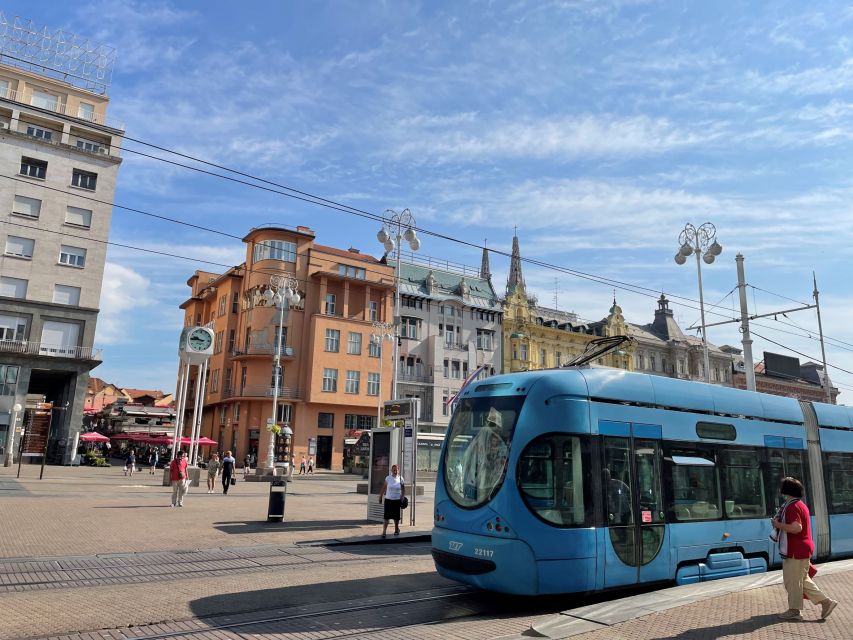
The next major stop is Ban Josip Jelačić Square, Zagreb’s central meeting place. It is the point where several parts of the city come together, and it makes sense as the setting for stories about Zagreb’s name and its founding legends.
Expect about 15 minutes here. The guide will point out the square’s role in city life and give you the basic historical frame needed for the rest of the walk.
I like this early stop because it turns a central square into more than a place to meet for coffee. After the explanation, you begin to recognize the square as the city’s social and geographic heart. It is also where the tour ends, so you will know exactly where to return after the walk.
Zagreb Cathedral, restoration, and changing centuries
From the square, the route continues to Zagreb Cathedral, formally the Cathedral of the Assumption of the Blessed Virgin Mary. It is one of the city’s most recognizable buildings and a natural place to discuss Zagreb’s religious and architectural past.
The guide spends about 15 minutes explaining the cathedral’s origins, difficult periods, and repeated restoration. That context matters because the building is not a frozen medieval object. Its appearance reflects earthquakes, damage, repairs, and changing approaches to preservation.
The stop is listed as a photo stop and guided visit rather than a guaranteed interior tour. If entering the cathedral is important to you, check the day’s conditions and plan a separate visit if needed. The tour’s purpose here is to explain the building and its place in Zagreb, not to provide an extended church visit.
Same streets, a different story:
- Dubrovnik: Old Town Walking Tour
★ 4.8 · 5,174 reviews - Dubrovnik: The Original Game of Thrones Tour & Lokrum Option
★ 4.8 · 5,064 reviews - Split: Old Town and Diocletian Palace Walking Tour
★ 4.9 · 4,727 reviews - Dubrovnik Discovery Old Town Walking Tour
★ 5.0 · 4,458 reviews
Dolac Market, the belly of Zagreb
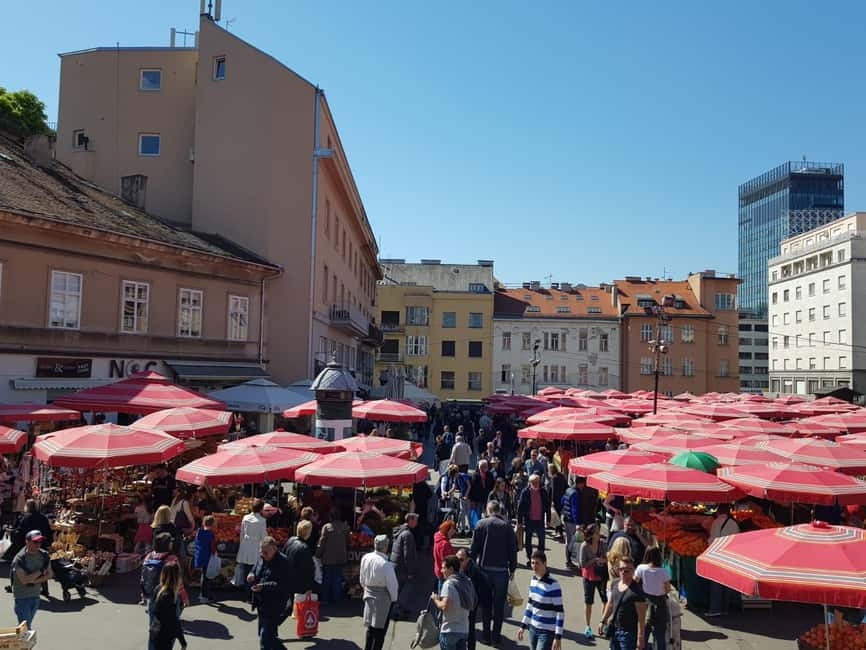
Dolac Market is one of the most useful stops for understanding everyday Zagreb. Locals come here for fresh produce and ordinary shopping, and the market offers a stronger sense of daily life than a polished monument can provide.
The guide gives you about 15 minutes to look around, take photographs, and hear why Dolac is known as the city’s belly. This is a short stop, so do not expect a full food tour or time for a long breakfast. Food and drinks are not included.
Timing matters here. Dolac Market is closed in the afternoon and on public holidays, so book a morning departure if the market is a priority. If your schedule only allows an afternoon walk, the guide can still explain the area, but the market itself may not be operating.
Tkalčićeva Street and Zagreb’s café culture
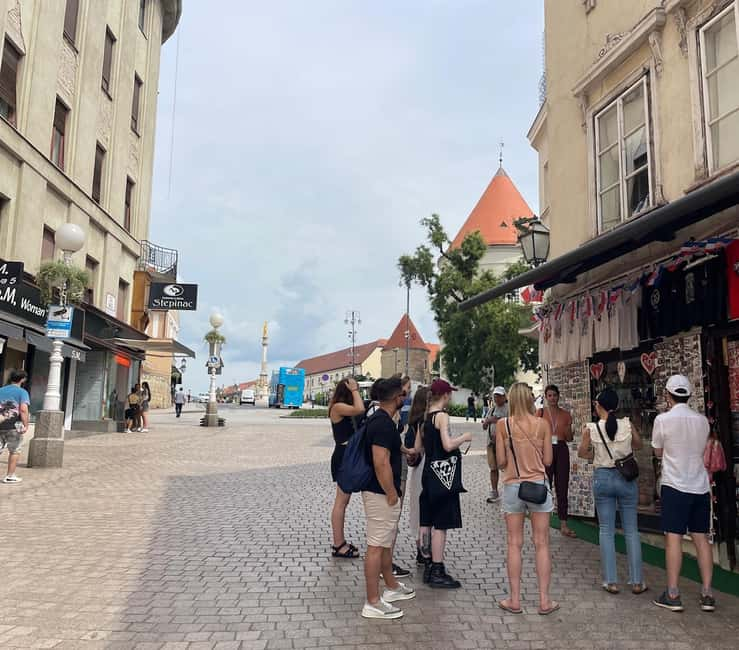
The walk continues through Tkalčićeva Street, a popular place for cafés and relaxed social life. This is where the guide explains the local art of sitting, talking, and taking time over a drink.
The stop helps correct a common mistake in city sightseeing. Zagreb is not only its monuments. Its café habit is part of the culture, and Tkalčićeva gives you a visible example of how public life works here.
You will not spend the tour sitting in a café, since food and drinks are not part of the package. Still, the guide’s advice can help you decide where to return later. Several guides also offer restaurant suggestions at the end, which is especially useful if Zagreb is your first stop in Croatia.
Inside the Grič Tunnel
The Grič Tunnel is the tour’s most distinctive stop. This underground passage beneath Zagreb’s Upper Town once served as a wartime shelter during World War II. Walking through it shifts the subject from medieval legends and church architecture to the fear and uncertainty of the twentieth century.
The tunnel visit lasts about 20 minutes. It is not simply a quick photo stop. The guide uses the passage to explain a less visible part of Zagreb’s past, and the setting itself makes the story more immediate.
There is one important condition. The tunnel can be closed when an exhibition, theater performance, or another event is taking place inside. If that happens, the tour cannot visit it. This is worth accepting before booking, since the tunnel is a major reason to choose this particular walk.
Reaching Gradec and the Upper Town
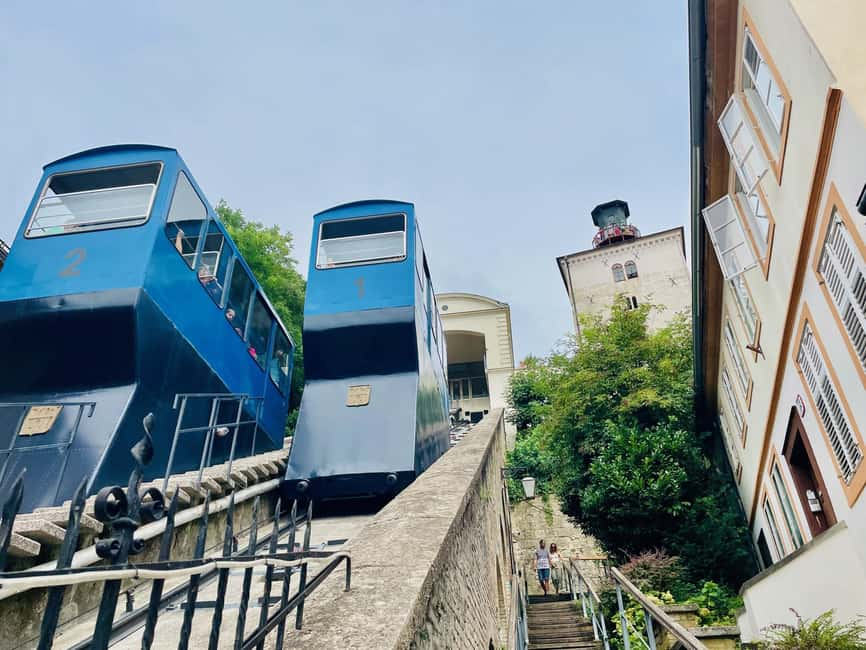
After the tunnel, the group heads toward Upper Town, or Gradec, one of Zagreb’s original medieval settlements. The route changes here. Streets become older, the pace becomes quieter, and the views open up.
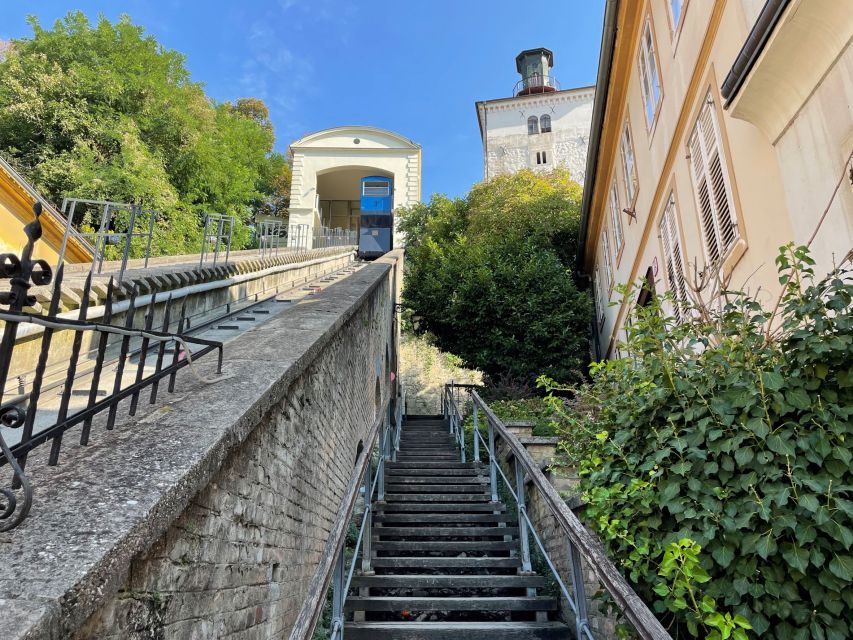
The itinerary allows a short guided stop in the Upper Town, followed by a longer visit around Lotrščak Tower. The walk includes scenic views along the way, but it remains a city stroll rather than a dedicated viewpoint excursion.
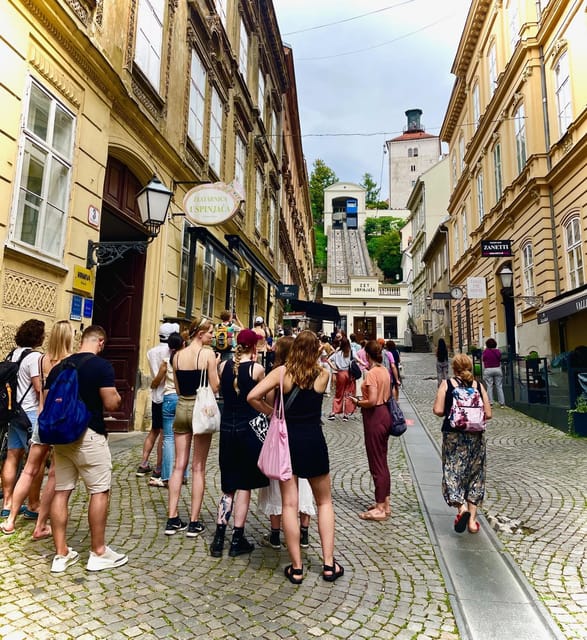
The funicular normally offers a charming way up this hill, but it is closed for renovation until March 2026. Do not book this tour expecting a funicular ride. You will walk up instead, and that makes comfortable footwear more important.
Strossmayer Promenade and Lotrščak Tower
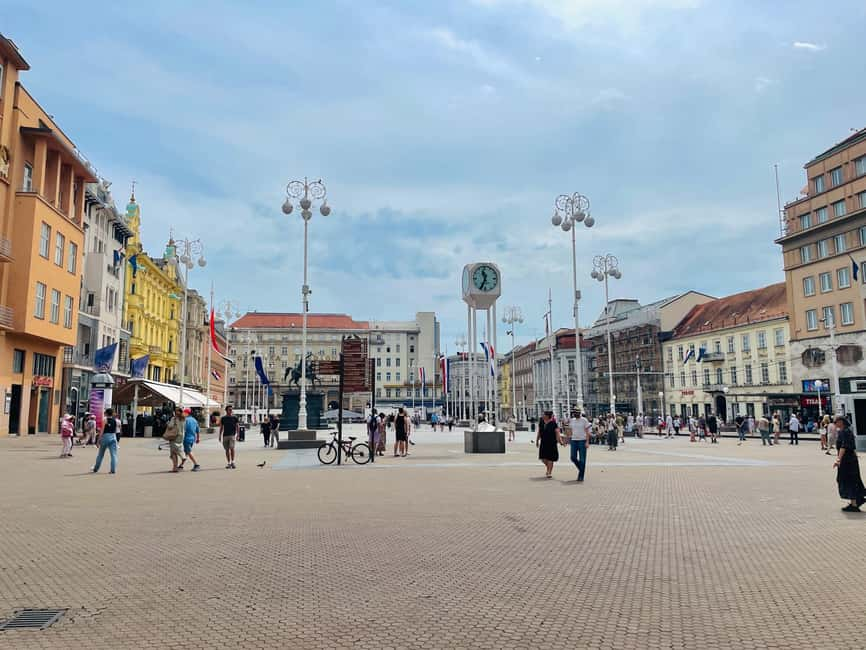
Strossmayer Promenade is a leafy terrace along the Upper Town with broad views over Zagreb. It gives you a chance to pause after the climb and understand the relationship between the older hilltop settlement and the newer city below.
Lotrščak Tower receives about 20 minutes of guided attention. The tower is tied to Zagreb’s old defenses and remains one of the most recognizable points in Gradec. Guides also use this area to explain the noon cannon, a local tradition that can be a pleasant surprise when the timing works.
Several guides, including Petra and Tomislav, have made a point of getting groups near the cannon at noon. That is not something to count on for every departure, but a morning tour gives you the best chance. Ask the guide about timing when you meet.
The tower area can be busy, especially in good weather. A small group helps here because you can hear the guide without standing at the back of a large crowd.
St. Mark’s Square and the colorful roof
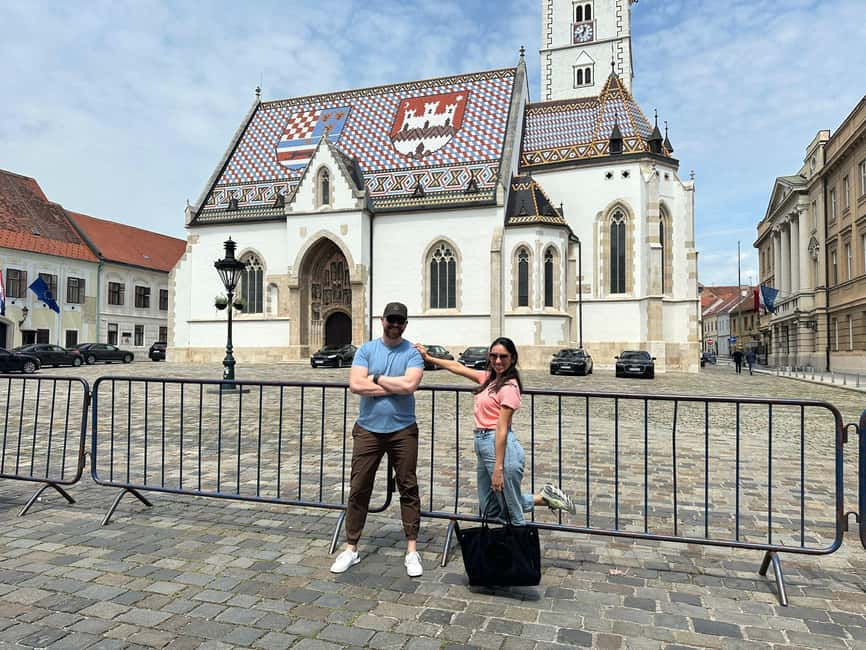
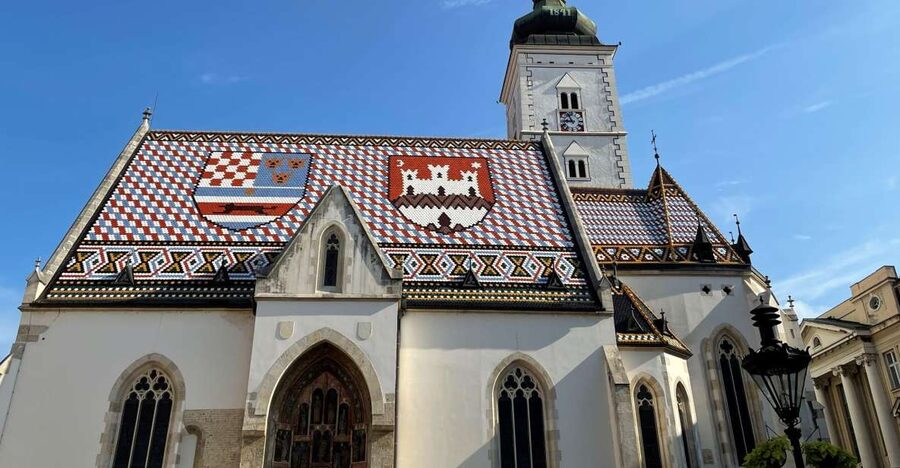
St. Mark’s Square is one of Zagreb’s most photographed places. St. Mark’s Church is easy to recognize by its patterned tiled roof, which gives the square a strong visual focal point.
The guide spends about 15 minutes here. You will hear about the church and the square’s place in Zagreb’s political and civic life, while also getting time for photographs.
This stop is brief, and access to the church interior is not promised. Treat it as an architectural and historical explanation from outside. The square is also a good example of why a guide helps: the roof catches your eye immediately, but the surrounding buildings and the square’s role add meaning to the photograph.
Museum of Broken Relationships and Stone Gate
The tour passes the Museum of Broken Relationships for about 10 minutes. It is a photo stop from outside, not a museum visit. If the subject interests you, save it for another time because the tour does not include entry.
Stone Gate is a more intimate stop. It is the only surviving gate from Zagreb’s old fortifications, and inside it is a small chapel with a painting of Our Lady. The painting is regarded by local people as miraculous, and the chapel remains a place of quiet devotion.
The guide allows about 10 minutes here. This is not a grand hall or a wide square. It is a compact, meaningful place, so be respectful and keep your voice low. I like this stop because it shows how Zagreb’s history remains part of ordinary life, not just something displayed behind glass.
The secret stop and the finish at Ban Jelačić Square
Near the end, the guide includes a short pass-by at a less obvious local point. The exact stop is not specified in advance, which is part of the fun, but you should not expect a long visit. It is one of the small additions that can make the route feel more personal than a standard checklist of monuments.
The tour finishes at Ban Jelačić Square, the same central area you visited earlier. This is practical. You can continue shopping, return to your hotel, find lunch, or ask the guide for ideas about museums and restaurants.
Guides such as Petra, Tomislav, Tomas, and Maja are especially useful at this stage because they welcome questions. Their strengths, based on the experience described by the operator, include clear English, humor, patience, historical explanation, and local recommendations.
Group size, pace, and comfort
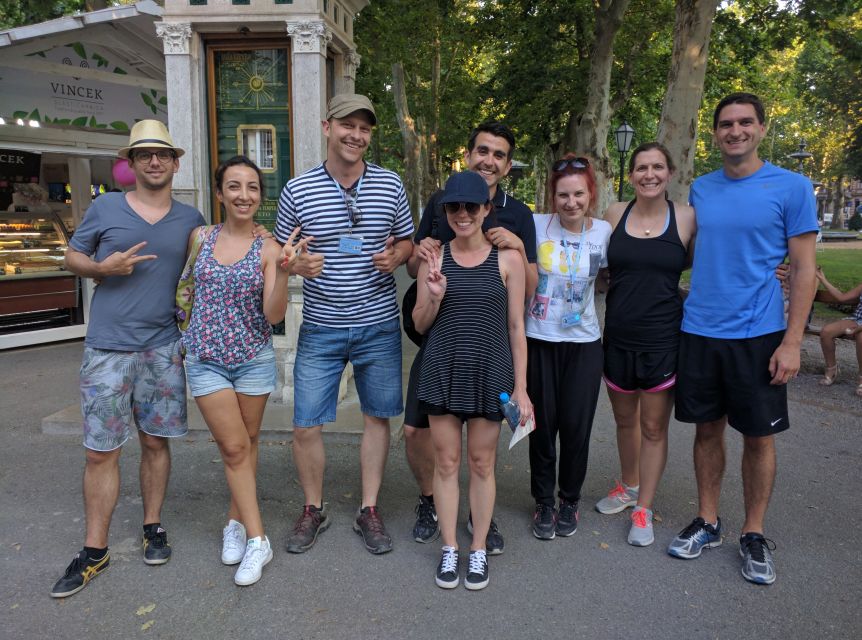
The tour is designed for a small group, and one reported departure had eight people. That size allows a more conversational walk than a group of 20 or more. You can hear the guide, ask follow-up questions, and stay connected when the route moves through crowded streets.
The pace is moderate rather than punishing. One guide was praised for finding shade on a hot day, and another kept the experience enjoyable during rain. Still, you will be outdoors for 150 minutes, with an uphill section and historic streets underfoot.
Bring comfortable shoes and dress for the weather. There is no food or drink included, so carry water, especially in summer. The walk is not suitable for wheelchair users, and the closed funicular means there is no current ride option to avoid the climb.
Who should book this walk?
I would choose this tour on a first day in Zagreb. It gives you the city’s basic shape, introduces the main sights, and leaves you at the central square with enough advice to plan the rest of your stay.
It also suits anyone who wants history explained in plain language rather than a long academic lecture. The guides combine dates and architecture with stories, humor, personal observations, and practical suggestions. That balance is why the 2.5 hours can feel shorter than expected.
You may want something else if you prefer spending long periods inside monuments, visiting museums, or moving at your own pace. The cathedral and Museum of Broken Relationships are not extended interior visits, and the Grič Tunnel may be unavailable during an event.
At $11, it is easy to recommend for budget-conscious visitors. The tour covers a lot of ground, offers local context, and gives you a useful introduction before you explore Zagreb independently.
Should you book the Zagreb City and History Walk?
Book it if you want a friendly overview with more substance than a quick photo circuit. The combination of Zrinjevac, Dolac Market, the cathedral, Upper Town, Stone Gate, and the Grič Tunnel gives you a well-shaped introduction to Zagreb.
Choose a morning departure if Dolac Market and the noon cannon matter to you. Accept that the tunnel can close and that the funicular is unavailable until March 2026. If those conditions suit your plans, this is one of the better-value ways to get oriented, hear local stories, and leave with a practical list of places to return to.
FAQ
How long does the Zagreb walking tour last?
The tour lasts 150 minutes, or two and a half hours.
What language is the tour conducted in?
The live tour guide speaks English.
Where does the tour begin?
It begins at Zrinjevac Park, Trg Nikola Šubić Zrinski 2, beside the meteorological station on the north side of the park.
Where does the tour finish?
The tour ends at Ban Josip Jelačić Square in central Zagreb.
Is the Grič Tunnel always included?
The tour normally visits the WWII-era Grič Tunnel, but it may be closed when an exhibition, theater performance, or similar event is taking place.
Can I ride the Zagreb funicular during this tour?
No. The funicular is closed for renovation until March 2026, so the route goes on foot.
Will I visit Dolac Market in the afternoon?
Dolac Market is closed in the afternoon and on public holidays. Choose a morning tour if seeing the active market is important to you.
Is the tour suitable for wheelchair users?
No. The tour is not suitable for wheelchair users.
New walking tours around Croatia
- Zadar: Food Tasting & Old Town Walking Tour★ 5.0 · 94 reviews
- Livade: Guided Truffle Hunting Walking Tour★ 4.6 · 82 reviews
- From Split: Krka Waterfalls Cruise & Trogir Walking Tour★ 4.7 · 681 reviews
- Split: History and Heritage Walking Tour★ 4.9 · 650 reviews
- Dubrovnik: Old Town Walking Tour★ 4.9 · 792 reviews
- Dubrovnik: Walls and Wars Walking Tour★ 4.8 · 501 reviews
- Dubrovnik: Cable Car, Walking Tour and City Walls Combo★ 4.6 · 322 reviews
- Dubrovnik: Panoramic Ride and Old Town Guided Walking Tour★ 4.7 · 261 reviews
Croatia Walking Tours, side by side.
Dubrovnik: The Original Game of Thrones Tour & Lokrum Option
Read our review →
Split: Old Town and Diocletian Palace Walking Tour
Read our review →
Walking Tour of Split and Diocletian’s Palace
Read our review →

Krka Waterfalls tour with Trogir Walking tour and Krka panoramic boat cruise
Read our review →
Dubrovnik: City Walls Early Morning or Sunset Walking Tour
Read our review →
Dubrovnik: Ancient City Walls & Wars Walking Tour
Read our review →Lists this walk sits on