
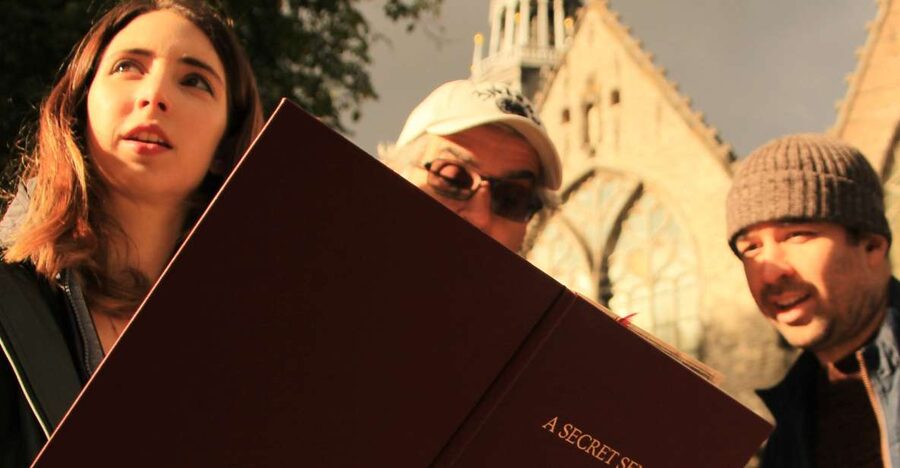
Review · AMSTERDAM
Amsterdam: Treasure Hunt Walking Tour “A Secret Sender”
Amsterdam’s best feature is also the setting for this game: the city center is compact enough to explore on foot, yet packed with clues from different centuries. You follow a map, inspect details at five historic stops, and work out the identity of a secret society member while carrying a locked treasure box.
I like the private format, since you can move at your own pace without strangers at your elbow. I also like the mix of sightseeing and puzzles, especially for families and friends who want more than a standard walk. The main drawback is distance: two hours is the planned time, but you may need longer, and the route includes the Red Light District.
Key points to know before you go

- Five central Amsterdam stops: The route links Nieuwmarkt, Oude Kerk, Torensluis Bridge, Sint Luciënsteeg, and Westerkerk.
- A hands-on mystery: You carry a map, puzzle book, locked box, and special tools instead of simply listening to a guide.
- Plan for more than two hours: The game is timed for two hours, but eating, taking photos, and exploring can stretch it to four.
- Private group play: Your party gets its own game, with no mixed group sharing the clues.
- Good for families with older children: Children age 7 and up can play with parents, but the game is not recommended for children under 6.
- Comfortable shoes matter: The route involves plenty of walking, and rain will not stop the outdoor portions.
A secret society sends you into central Amsterdam
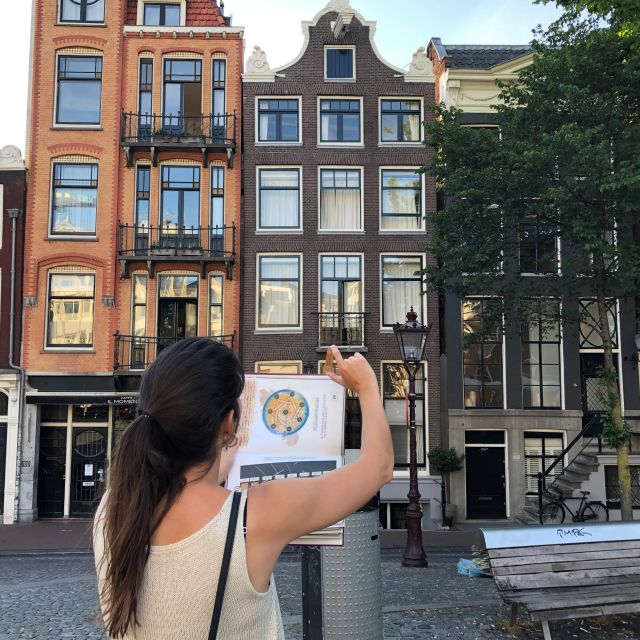
Your starting point is Mystery City Games at Zwanenburgwal 178, near Waterlooplein. Look for the Mystery City Games sign, which marks the Secret Headquarters. Here you collect a backpack filled with the working parts of the adventure: a treasure map, an ancient book of puzzles, a locked treasure box, and what the activity calls magical tools.
The story gives your walk a clear purpose. A secret society wants you to identify one of its most famous members. Each location provides a piece of the answer, and each challenge opens another lock on the box.
That setup changes how you see Amsterdam. Instead of passing the Oude Kerk or a narrow lane as background scenery, you stop to search for details and connect them to the city’s Golden Age. You are not just following arrows on a phone. You are handling objects, turning pages, studying clues, and making decisions with your group.
The activity is self-guided, so do not expect a guide to lead you from one stop to the next. A host or greeter helps you get started, and the materials direct the game. The available support languages are English, Dutch, Spanish, French, German, and Italian.
More Hidden Gems Walking Tours in Amsterdam:
- Dublin Highlights and Hidden Gems Guided Walking Tour
★ 5.0 · 6,020 reviews - Explore Berlin: See All The Iconic Sights & Some Hidden Gems
★ 5.0 · 4,429 reviews - Kyoto Geisha Walking Tour: Gion District & Hidden Gems
★ 4.7 · 3,273 reviews
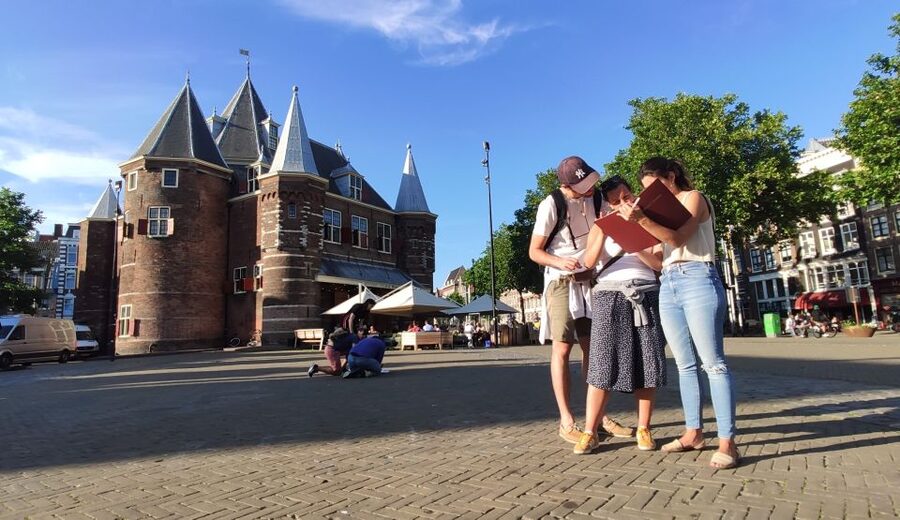
Nieuwmarkt begins the five-stop route
Nieuwmarkt is the first major stop, with about 20 minutes set aside for the challenge. This large square gives you a good opening view of central Amsterdam and helps set the historical tone before the route moves into older streets.
The attraction here is not just the square itself. The puzzle asks you to look more closely at a place you might otherwise cross quickly. That is the basic strength of the format: a challenge gives you a reason to pause.
You should resist the urge to rush through the first clue. The game is designed to make you notice small details, and the opening puzzle helps your group understand how the map and book work together. If you have children playing, this is a useful point to let them take the lead.
Nieuwmarkt is also a practical place to get your bearings. You have just picked up the backpack, and you may need a moment to organize the map, book, and box. Keep the materials together and assign different jobs within your party. One person can hold the map, another can read the puzzle, and a third can examine the surroundings.
Oude Kerk brings the route into Amsterdam’s oldest core
From Nieuwmarkt, the walk continues to Oude Kerk, one of the city’s most important historic landmarks. You have another suggested 20 minutes here, though the time needed will depend on how quickly your group reads and solves the challenge.
Oude Kerk gives the game a stronger sense of place. Its setting in the old center links the puzzle to Amsterdam’s early development, while the surrounding streets remind you how close the city’s major sights are to one another. The route also begins to show why this is more than a scavenger hunt. You are moving between places that help explain Amsterdam’s growth during the Golden Age.
The Red Light District forms part of the route, so this section may not suit every family or visitor. The activity warns you about that in advance, which is useful. Parents should decide if the setting is appropriate for their children, rather than assuming the entire walk follows a quiet sightseeing route.
The challenge at Oude Kerk may also slow you down. Some puzzles are straightforward, while others are quite tricky. That is a plus if you enjoy working things out, but it can test your patience if your group wants quick answers and constant movement.
Torensluis Bridge adds a change of scenery
The next stop is Torensluis Bridge, with around 20 minutes for the visit and its clue. The route now shifts from the dense old church district to a bridge setting, giving you a different view of central Amsterdam’s waterways and streets.
This change matters because the five stops are spread across the city center rather than grouped around one block. You get a better sense of Amsterdam by walking between them, but you also need to budget energy for the distances. One practical lesson from the experience is simple: the listed two hours describes the game, not necessarily the full outing.
At Torensluis, the map and book keep your attention on the surroundings. The challenge is meant to help you spot something you might miss during an ordinary walk. I like that approach because it turns sightseeing into an active task without requiring a formal history lecture.
Still, keep your schedule flexible. If you stop for a drink, take photographs, or pause to enjoy the views, the route can stretch well beyond its planned length. One group completed the activity in about four hours because there was so much to see and eat along the way. That sounds like the right way to use the map if you have time.
More walking tours around Amsterdam:
- Amsterdam Anne Frank: Small-Group Walking Tour & Local Guide
★ 4.8 · 12,789 reviews - Anne Frank’s Story – Guided Walking Tour through Amsterdam
★ 5.0 · 11,619 reviews - Absolutely Amsterdam – the Essential Introductory Walking Tour
★ 5.0 · 3,629 reviews - Amsterdam: Anne Frank Guided Walking Tour in DE/EN/IT/ES
★ 4.9 · 3,107 reviews
Sint Luciënsteeg rewards slower walking
Sint Luciënsteeg is a narrower, more intimate stop on the route. The game allows about 20 minutes here, and the change from larger squares and landmarks encourages you to pay attention to the smaller parts of Amsterdam.
This is where the treasure-hunt idea makes particular sense. A narrow passage or tucked-away corner can be easy to overlook when you are walking toward a famous building. The clue gives you a reason to slow down and check your surroundings.
The activity’s map also points out places to stop for food, drinks, and photographs. Those suggestions help you turn the game into a flexible city walk instead of a race from one lock to the next. You can solve a challenge, take a short break, and then continue when your group is ready.
For food lovers, this may be one of the best features of the whole experience, though the materials do not promise specific dishes or venues. You should treat the marked stops as useful options rather than a fixed meal plan. If your group is hungry, allow extra time and accept that you may not finish in two hours.
Westerkerk provides the final major challenge
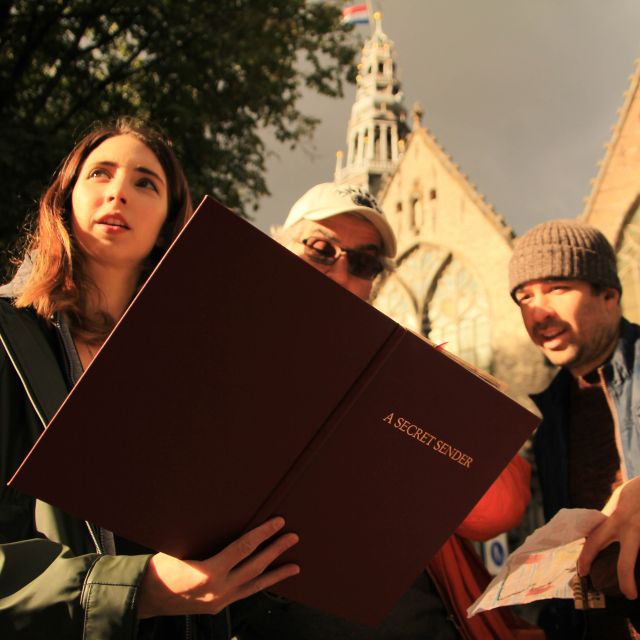
Westerkerk is the fifth and final stop. As with the other locations, the planned visit lasts about 20 minutes. By this stage, your group has followed the route through several different parts of the center and collected the information needed for the last lock.
The final challenge gives the walk a clear payoff. You are not simply finishing at a landmark and heading back. You are trying to complete the chain of puzzles, identify the secret society member, and open every lock on the treasure box.
That ending works best for groups that enjoy a little suspense. It also gives children a visible goal, since the box and its locks make progress easy to understand. Adults may appreciate the historical clues, while younger players can focus on maps, codes, and the physical puzzle pieces.
The route then returns to Mystery City Games. You bring the box back to the shop, claim your prize, and finish the story at the same place where you began.
Why the private format matters
Every booking is private. You play only with your own group, while other parties complete their own games separately. This makes a real difference if your party has different ages, walking speeds, or puzzle-solving styles.
You can stop without holding up strangers. You can discuss a clue openly. If one person needs more time to inspect the book or map, your group can wait without feeling that it is slowing a larger tour.
The format is especially useful for families, couples, and friend groups. It is not designed for someone who wants a polished explanation at every stop, since the experience depends on your group doing the work. If you prefer a traditional guided walk, this may feel too independent.
The game is intended for adults but works for children age 7 and older when they play with their parents. I would avoid booking it for a group of very young children. The walking, reading, and tricky clues may be too much for children under 6, who are specifically not suited to the activity.
The experience is listed as wheelchair accessible, but rain preparation is still necessary. Bring suitable clothing and comfortable shoes, since the route takes place outdoors and includes substantial walking.
Is $29 good value for a two-hour game?
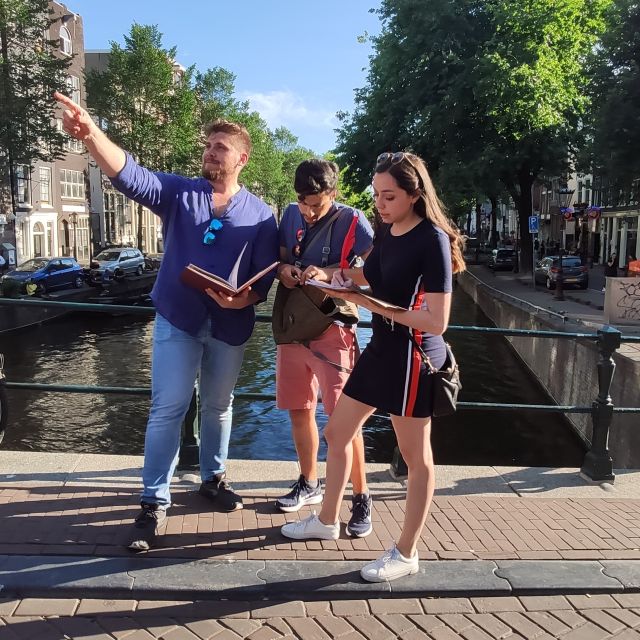
At $29 per person, this costs more than simply walking through Amsterdam’s center with a free map. The value comes from the complete kit and the structure: you receive the map, puzzle book, locked treasure box, and special tools, then use them at five notable locations.
The price makes the most sense for a private group that would otherwise pay for a guided activity. You are buying an organized story, a physical game, and a sightseeing route in one package. If you use the map’s food and photo suggestions and spend three or four hours out, the experience offers more than the basic two-hour estimate.
It is less attractive if your main goal is detailed historical interpretation. The puzzles introduce stories from Amsterdam’s past, but no guide is walking beside you to answer every question or add personal context. You should choose this for interaction and discovery, not for a full history lecture.
The reserve-now-and-pay-later option gives you some flexibility, and cancellation is free up to 24 hours before the start time. Check the available starting times when booking, since the activity lasts two hours and the exact schedule can affect your day.
How to make the game run well
Wear comfortable shoes and plan for more walking than the simple time estimate suggests. The stops are central, but they are spread across the city rather than placed side by side.
Give yourself room for breaks. The map points toward places for drinks, pictures, and local specialties, and those stops are part of the appeal. If you rush from clue to clue, you may finish the game but miss much of what makes the route enjoyable.
Rain deserves attention. The game does not move indoors just because the weather changes, so bring waterproof clothing or another practical way to stay dry. A wet map and puzzle book would make the challenge much less pleasant.
Keep the box and all materials secure. The whole experience depends on the physical items, and your group needs them from the opening briefing at the shop through the final return.
Finally, agree on a group style before you start. Some people will want to solve every clue themselves. Others will want to keep walking and ask for help. Since you control the pace, a quick plan can prevent one difficult puzzle from taking over the entire afternoon.
Who should book A Secret Sender?
I would choose this for a family with older children, a group of friends, or a couple that likes puzzles and wants to explore Amsterdam without joining a standard tour. It suits people who enjoy noticing details, reading clues, and making their own route decisions.
It is also a good fit if you have already seen Amsterdam’s main center but want a fresh reason to walk through it again. Familiar streets can feel different when you are searching for a clue tied to a story.
I would skip it if you dislike puzzles, have limited walking stamina, or want a guide providing continuous historical commentary. The Red Light District section also deserves a clear look before booking, especially for families.
Should you book this Amsterdam treasure hunt?
Book it if you want a private, active way to see five central sights and you are happy to let the game set the pace. The strongest reasons are the hands-on box, the varied route, and the freedom to stop for food and photos.
Allow more than two hours, wear good shoes, and treat the route as a relaxed city outing rather than a timed race. If you do that, the $29 price can be fair value for a small group seeking a playful introduction to Amsterdam’s old center.
FAQ
Where does the Amsterdam treasure hunt start?
You meet at Mystery City Games, Zwanenburgwal 178, 1011 JH Amsterdam. Look for the Mystery City Games sign at the Secret Headquarters.
How long does A Secret Sender take?
The game is planned for two hours. You can take longer to explore, eat, stop for drinks, and take photographs along the route.
Which places does the route visit?
The route goes to Nieuwmarkt Square, Oude Kerk, Torensluis Bridge, Sint Luciënsteeg, and Westerkerk before returning to Mystery City Games.
Is the activity guided?
It is self-guided. You receive a treasure map, puzzle book, locked treasure box, and special tools, then follow the clues with your private group.
Can children join the game?
The activity is designed for adults but is suitable for children age 7 and older when they play with their parents. It is not suitable for children under 6.
Does the route pass through the Red Light District?
Yes. Part of the game goes through the Red Light District, so consider this when deciding if the activity suits your group.
Is the experience wheelchair accessible?
The activity is listed as wheelchair accessible. Comfortable shoes are recommended, and you should prepare for rain because parts of the game take place outdoors.
New walking tours around Amsterdam
- Amsterdam: Haunted History and Ghost Walking Tour★ 4.5 · 488 reviews
- Amsterdam: Food and Culture Walking Tour with Tastings★ 4.9 · 838 reviews
- Amsterdam: Small-group Guided Walking Tour (French/English)★ 5.0 · 289 reviews
- Amsterdam: Walking Tour, Jewish Museum & Synagogue Tickets★ 4.3 · 110 reviews
- Amsterdam: Sex, Drugs, and Freedom Walking Tour★ 4.6 · 74 reviews
- Amsterdam Small-Group Walking Tour★ 4.7 · 995 reviews
- Amsterdam: Jordaan District Local Food Walking Tour★ 4.8 · 311 reviews
- Amsterdam Walking Tour and Canal Cruise★ 4.6 · 117 reviews
Amsterdam Walking Tours, side by side.

Amsterdam Anne Frank: Small-Group Walking Tour & Local Guide
Read our review →
Anne Frank’s Story – Guided Walking Tour through Amsterdam
Read our review →
Absolutely Amsterdam – the Essential Introductory Walking Tour
Read our review →
Amsterdam: Anne Frank Guided Small Group Walking Tour
Read our review →


Anne Frank Walking Tour Amsterdam Including Jewish Cultural Quarter
Read our review →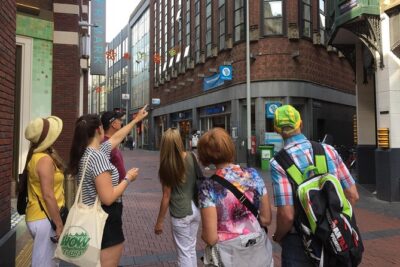
Amsterdam Highlights Walking Tour: Small Group Experience
Read our review →Lists this walk sits on