
Review · GERMANY
Keitum: Guided Village Walking Tour
Keitum is more than a pretty village of thatched roofs. Its winding lanes lead through centuries of Frisian life, from Stone Age burial mounds to homes built around 1640 and workshops still used by local artisans. Guide Jörg Ridder gives the walk a personal twist, bringing in stories about real island life and contacts with local residents.
I like the tour’s small-group size, which makes a 2.5-hour walk feel more like a conversation than a lecture. I also like the unusual mix of village architecture, sea air, artistic work, and ancient archaeology. The main consideration is that the tour is in German, and Jörg’s style may suit you better if you prefer stories and local encounters over a long list of dates.
One criticism is worth noting: some guests have felt that the opening included too much sales material and not enough information about the village’s captain houses. If your main goal is a formal architectural lesson, this may not be the perfect fit. If you want a lively, personal look at Keitum, it offers something less predictable.
Key points to know before you book
- Jörg Ridder’s personal style: Expect humor, questions, local connections, and stories about island life rather than a standard recital of dates.
- Stone Age sites near the sea: The route includes the ancient burial mounds of Harhoog and Tipkenhoog on the tidal side of Keitum.
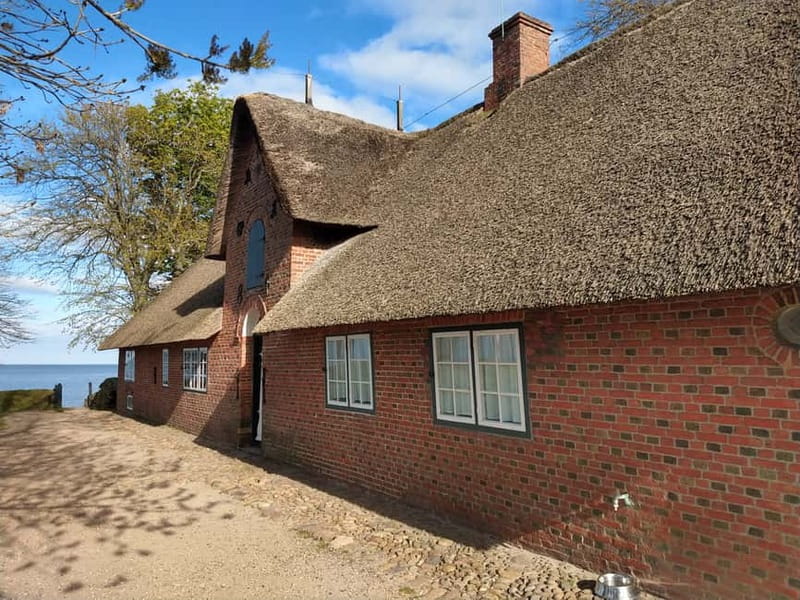
- Frisian village details: Look for thatched roofs, old homes, garden walls, narrow lanes, and houses dating as far back as 1640.
- A small German-language group: The tour is limited to 10 people, but no English-language guiding is offered.
- A weatherproof walk: The tour runs rain or shine, so bring comfortable shoes, rain gear, and clothing suited to the day.
- A good value for curious walkers: At $22 per person, the price is modest for two and a half hours with a live guide, especially if you enjoy local stories more than a quick photo stop.
Beginning at Keitum Mitte
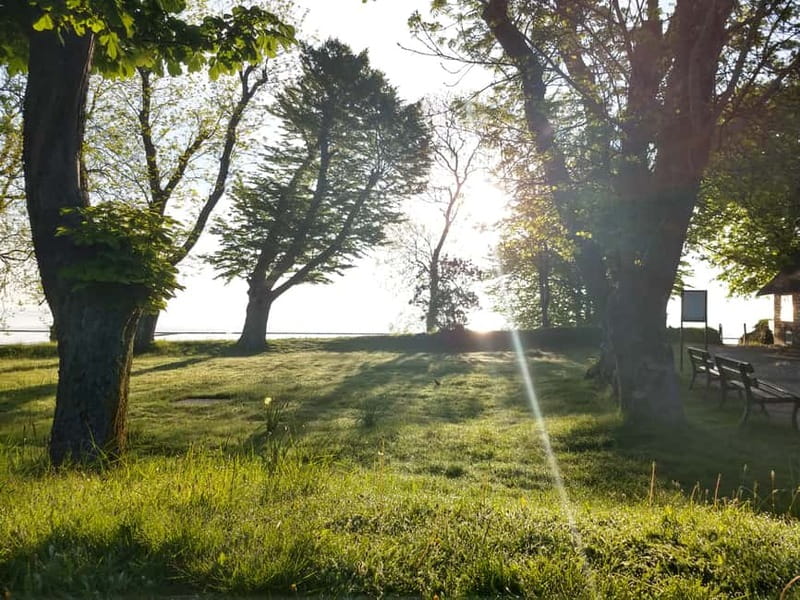
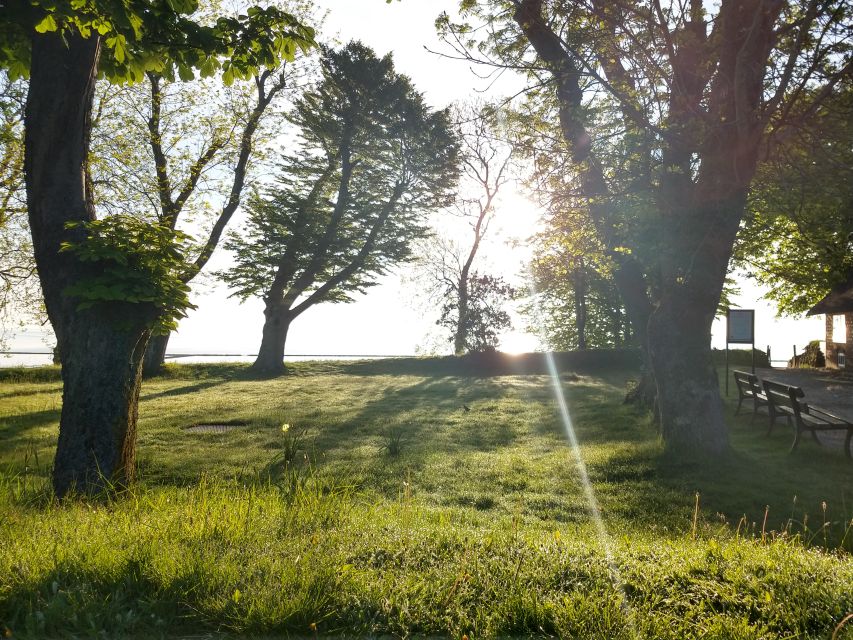
You meet at the bus station called Keitum Mitte, in the center of the village. That is a practical starting point because the walk begins among the old homes rather than with a long transfer from another part of Sylt.
The first minutes are about getting your bearings. Keitum is known as the green heart of the island, and its character comes from small lanes, traditional houses, gardens, and old walls rather than one single monument. You will soon leave the feel of a normal bus stop behind and enter a quieter village setting.
The pace is leisurely. That matters here. Keitum rewards close looking: the shape of a roof, the way a garden is enclosed, or the narrow turn of an alley can tell you more than a rushed list of dates. Wear shoes you can walk in comfortably for 2.5 hours, since this is a proper village walk rather than a short orientation stroll.
More walks with a guide around Germany:
- Berlin: Third Reich & Cold War Guided Walking Tour
★ 4.9 · 8,378 reviews - Berlin: Hidden Backyards Guided Walking Tour
★ 4.8 · 5,360 reviews - Bamberg: Guided Walking Tour
★ 4.6 · 3,202 reviews
Thatched roofs and Frisian homes
Keitum’s houses are the visual heart of the tour. Their thatched roofs and North Sea island design give the village a strong sense of place, while the narrow lanes let you see the buildings from unusual angles.
Some of the homes are as old as 1640. That does not mean every house is presented as a museum piece. The value is seeing old architecture within a living village, with gardens, walls, workshops, and everyday activity around it.
The traditional Frisian walls are especially useful for understanding the village. They frame gardens and paths, adding privacy and shelter while giving Keitum its distinctive look. The tour invites you to notice how these details work together instead of treating each building as an isolated attraction.
I like this part of the route because it gives you time to compare one home with the next. A thatched roof may catch your eye first, but the garden layout and wall construction often make the stronger impression. You also get a better sense of why Keitum is considered one of Sylt’s most characterful villages.
Narrow lanes and working artisan shops

The walk continues through twisting alleyways lined with historic homes and small artisan businesses. Glassblowers and goldsmiths are part of Keitum’s modern cultural life, so the village is not presented only as a relic of the past.
That balance is important. You see the old houses, but you also learn that Keitum has an active creative side. The presence of workshops gives the lanes a practical purpose and helps explain why the village still attracts people interested in craft and design.
Do not expect a long shopping session to be the main event. The focus is walking and interpretation. Still, passing glassblowing and goldsmith workshops adds texture to the route, particularly if you like places where traditional buildings are used by working artists rather than simply preserved for photographs.
Jörg’s approach appears to be interactive. He may ask questions, offer small surprises, and connect the village’s past with the people who live there now. That can make the walk more engaging for you, but it also means the exact rhythm may vary. You are not signing up for a tightly scripted procession from one numbered stop to another.
From whaling wealth to island culture
Keitum’s past reaches well beyond its buildings. During the 18th century, Sylt had a strong whaling economy, and the village developed a lively cultural life connected to that period.
This is where a guide adds real value. A row of old houses can look charming without explaining how the people who built them made their living. Stories about whaling and the island’s cultural scene give the architecture a human setting.
You will hear about the transition from an older maritime economy to the island community you see today. The supplied information does not promise a detailed lecture on every family or building, so you should expect broad historical context mixed with local anecdotes rather than an academic treatment.
That distinction matters when choosing the tour. I would recommend it if you want history presented through stories and conversation. If you want exact dates, lengthy explanations of each captain house, and a formal architectural survey, check your expectations before booking. One critical comment specifically pointed to limited information about the village and captain houses, while other feedback praised the personal style. Both points can be true: the tour is strong in human detail, but it may not satisfy someone seeking exhaustive architecture notes.
More walking tours around Germany:
- Discover Berlin Half-Day Walking Tour
★ 5.0 · 9,624 reviews - Berlin City walk Government District and Places of Democracy
★ 4.7 · 8,467 reviews - Munich: Third Reich & WWII Walking Tour
★ 4.6 · 6,181 reviews - Berlin: Discover Berlin Walking Tour
★ 4.9 · 5,998 reviews
Meeting island residents through Jörg’s connections
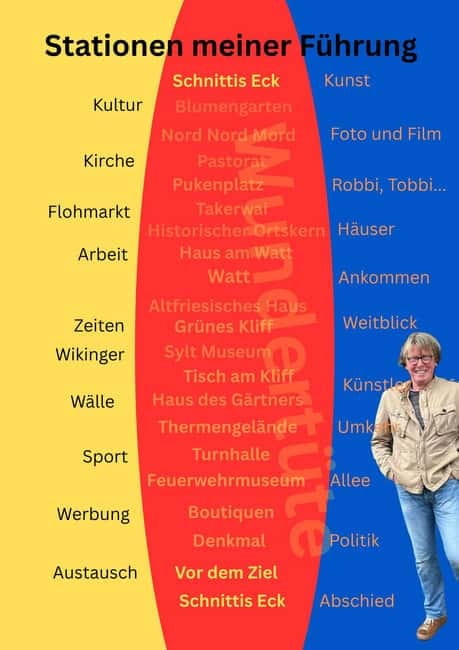
The most unusual part of this experience is the possibility of direct contact with local people. Jörg is praised for using his connections to bring personal stories about life on Sylt, both past and present.
That helps explain why the walk can feel less like a standard local tour. You may hear about the island through individual experiences rather than only through official history. For many people, that is the difference between recognizing a pretty village and understanding something about how it functions as a home.
I value this kind of contact when it stays respectful and relevant. It can show you how the old buildings fit into modern island life, and it may reveal details that are not obvious from the street. It also creates a less predictable tour. The experience depends partly on Jörg’s personality, timing, and the people available to speak with.
The feedback is strongly positive about his humor and ability to involve the group. He is described as making the tour lively, encouraging conversation, and helping people connect with locals. One person even planned to return the following year. Those details suggest that Jörg himself is a major part of the experience, not simply a person delivering information at set stops.
The shoreline and the Wadden Sea
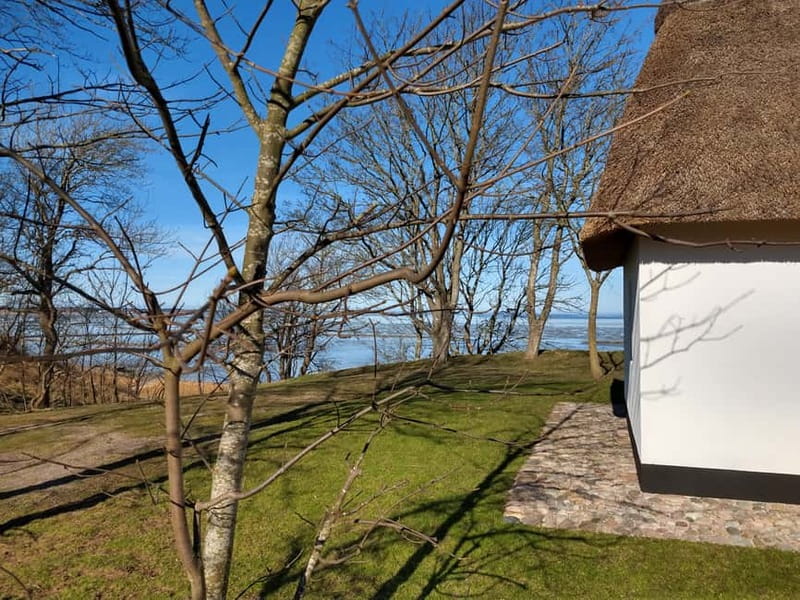
After the village lanes, the walk heads toward the shoreline. The change in setting is welcome. You move from enclosed paths and garden walls to open views over the Wadden Sea, with the fresh breeze that comes from the coast.
This is a good point to slow down and look outward. The sea view gives you a clearer sense of Sylt as an island and shows how closely Keitum’s identity is tied to water. The tidal side is not just a scenic backdrop. It connects the village to the forces that shaped its work, history, and settlement.
The coastal section can also be the most weather-sensitive part of the tour. On a calm day, it should feel spacious and refreshing. In rain or strong wind, it may feel more demanding, especially after you have already been walking for some time. The tour runs in all weather, so do not treat rain gear as an optional extra.
There is no food or drink included. That is not unusual for a walking tour, but you should plan around the 2.5-hour duration. The supplied details do not specify a refreshment stop, so carry what you need rather than counting on a café break during the route.
Harhoog and Tipkenhoog, Keitum’s oldest chapters
The tour’s oldest sights are the Stone Age burial mounds of Harhoog and Tipkenhoog. These ancient sites offer a sharp contrast with the 17th and 18th-century homes you have just seen.
A burial mound can look simple at first. Without explanation, it may seem like a low rise in the ground. With a guide, you can place it in a much longer story of settlement on the island. Keitum’s roots reach back to the Stone Age, long before Frisian houses, whaling ships, or artisan workshops.
These mounds are a strong reason to choose this walk over a basic village orientation. You get more than architecture and sea views. The route connects several periods of history in one outing, from prehistoric burial customs to the modern creative community.
Do keep your expectations measured. The information provided identifies the mounds as stops and says Jörg explains Keitum’s Stone Age roots, but it does not promise excavation details or a specialist archaeology talk. Think of this as an introduction that places the sites in context, not a full archaeological field course.
What Jörg’s guiding style means for you

Jörg’s style is the defining feature of the tour. The strongest feedback describes him as humorous, personal, engaging, and skilled at involving the group. He reportedly brings local stories into the walk and offers small touches that make the outing feel different from a standard village tour.
That style suits you if you enjoy a guide who talks with the group rather than at it. It may also work well for people who have already seen the main sights of Sylt and want a more local angle.
The tradeoff is structure. A highly personal guide may spend more time on an unexpected story and less time covering every building in detail. One piece of feedback found the opening too sales-focused and the information about captain houses too thin. That is a fair caution, particularly if your reason for booking is formal historical detail.
The tour is conducted in German, and the group is limited to 10 people. The small size should make it easier to hear Jörg and ask questions, but a German-language tour is not a practical choice if you cannot follow German. No English guiding is listed.
Is $22 a fair price?
At $22 per person, this is a reasonable price for a 2.5-hour guided walk in a place where the main attractions are spread through the village and shoreline. You are paying for more than a route map. The fee covers a live guide, local interpretation, and access to stories that are hard to get from simply walking around alone.
The value is highest if you take advantage of the personal side of the tour. Listen for the links between old houses and island life, ask questions, and pay attention when the route shifts from architecture to craft, whaling, or Stone Age remains.
The value is lower if you only want a quick look at thatched houses. You can see much of Keitum’s visual appeal without a guide, though you will miss the explanation of the burial mounds and the wider historical links.
The reserve-now-and-pay-later option gives you some planning flexibility, and cancellation is free up to 24 hours before the start for a full refund. Keep those policies in mind if the weather forecast looks uncertain, though the tour itself still operates in rain or shine.
Who should book this Keitum walk?
I would choose this tour if you want a slow introduction to Keitum with several layers: Frisian architecture, artisan work, maritime history, local stories, coastal views, and prehistoric remains.
It is especially suited to:
- People who prefer small groups to large coach tours
- Visitors who enjoy personal stories and conversation
- Anyone interested in the connection between old buildings and present-day island life
- Walkers who want both village streets and open sea views
- German speakers looking for a local guide with an individual style
You may want another option if you need English guiding, a detailed architectural study, or a fully predictable schedule. The route also calls for weather-ready clothing, and the 2.5-hour length may be more walking than you want if you are looking only for a brief stop.
Should you book the Keitum Guided Village Walking Tour?
Book it if Jörg’s personal approach appeals to you. The best parts are the small group, the local contacts, the mix of living village life with old history, and the unusual finish at Harhoog and Tipkenhoog. At $22, it is a solid buy for a German-speaking visitor who wants more than photographs of thatched roofs.
Skip it if your priority is a formal tour of captain houses or a guide who delivers a dense stream of historical facts. The occasional sales-oriented opening and lighter architectural detail are real considerations.
For most curious walkers, I would book it, bring sturdy shoes and rain gear, and arrive ready for a tour that may surprise you. Keitum is the setting, but Jörg’s way of connecting its people, places, and past is the main attraction.
FAQ
Where does the Keitum walking tour begin?
The meeting point is the bus station called Keitum Mitte.
How long does the tour last?
The walking tour lasts 2.5 hours.
What language is the tour conducted in?
The live tour guide speaks German. No other tour language is listed.
How large is the group?
The tour is limited to 10 participants.
What should I bring?
Bring comfortable shoes, rain gear, and clothing suitable for the weather. The tour runs rain or shine.
Are food and drinks included?
No. Food and drinks are not included in the tour price.
New walking tours around Germany
- Mystical Hamburg – Walking Tour in German★ 4.6 · 168 reviews
- Munich : Private Walking Tour with A Guide (Private tour)★ 4.5 · 85 reviews
- Munich: Raven Black Witches and Executioners Walking Tour★ 4.7 · 294 reviews
- Munich: Old Town Guided Walking Tour★ 4.6 · 479 reviews
- Munich: Guided Food Walking Tour with Beer Tasting★ 4.7 · 183 reviews
- Munich Old Town – Guided Walking Tour in English★ 4.7 · 153 reviews
- Munich: Old Town Walking Tour★ 4.7 · 589 reviews
- Munich: Birthplace of the Third Reich Guided Walking Tour★ 4.6 · 771 reviews
Germany Walking Tours, side by side.


Berlin City walk Government District and Places of Democracy
Read our review →
Berlin: Third Reich & Cold War Guided Walking Tour
Read our review →


Berlin’s Best: 2 Hour Walking Tour Third Reich and the Cold War
Read our review →

Explore Berlin: See All The Iconic Sights & Some Hidden Gems
Read our review →Lists this walk sits on