
Review · GERMANY
Leipzig: 2-Hour Guided Walking Tour in German
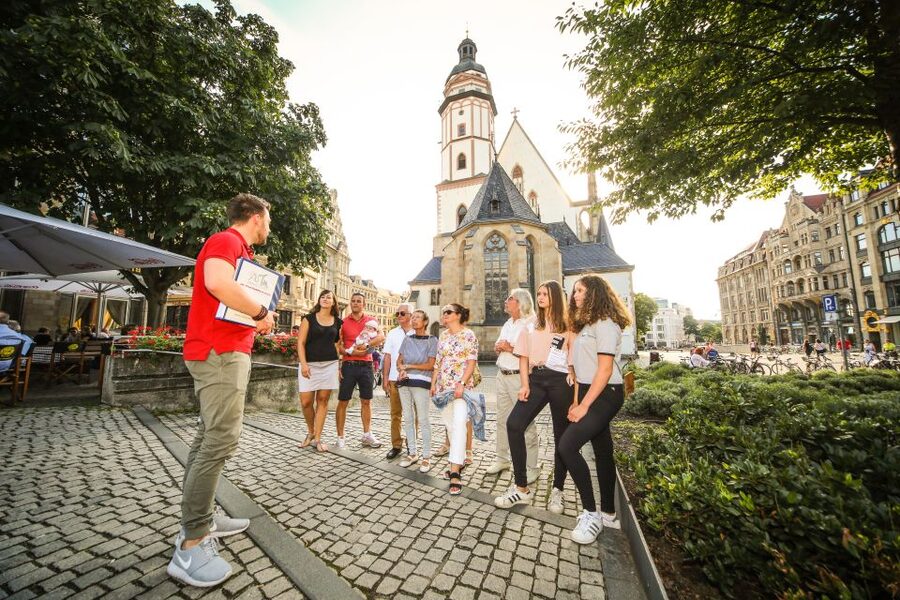
Leipzig’s best story is not confined to one grand building. It unfolds across the city center, from Nikolai Church, where events tied to German reunification gathered force in 1989, to the Old Town Hall and Auerbachs Keller. This tour gives you that story in a tidy two-hour walk.
I like the route for two reasons: it packs in major sights without wasting time on transport, and it connects architecture with Leipzig’s changing political and economic life. I also like the human touch. Guides such as Herr Hannemann have been praised for an engaging, humorous style, while another guide brought together architecture, older history, recent history, and business life.
The main catch is language. This is a German-language tour, and two hours is enough for an overview, not for long interior visits or a detailed study of every building. Church interiors are not included, and the booking information gives conflicting notes about wheelchair access, so check before reserving if that matters to you.
Key points at a glance
- 1989 at Nikolai Church: Learn why this church became central to the events surrounding German reunification.
- A compact city-center route: See Augustus Square, Specks Hof, the Old Exchange, Auerbachs Keller, the Old Town Hall, and St. Thomas Church without arranging local transport.
- Leipzig’s grand arcades: Walk through Specks Hof and the Mädler arcade, two handsome passages that show the city’s long trading tradition.
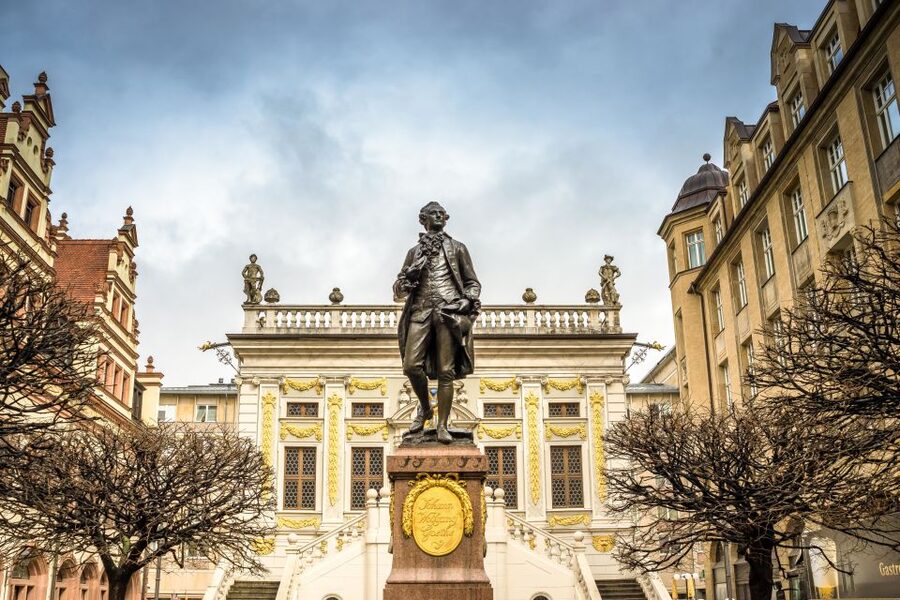
- Auerbachs Keller and Faust: Pause outside one of Leipzig’s best-known historic restaurants, linked to Goethe’s famous literary setting.
- Barfußgässchen: Finish the central sightseeing stretch among restaurants and pubs on Leipzig’s best-known lane.
- A German-speaking guide: The tour suits you best if you can follow explanations in German and want a lively overview rather than a museum visit.
Why this two-hour Leipzig walk works well
Leipzig’s historic center is compact, but it can feel like a puzzle on your first visit. Streets shift from broad ceremonial squares to narrow passages, and important buildings sit close together without always explaining themselves. This walk gives you a useful route through the center, with a guide filling in the links.
At $18 per person, the price is modest for two hours of live guiding. You are paying for orientation, local context, and a planned sequence of sights. The value is strongest at the start of a Leipzig stay, when you want to know which places deserve a longer return visit.
I would not book this as a substitute for visiting museums, entering every church, or spending a full day on Leipzig’s music and political story. I would book it as a first look. You get the city’s main central landmarks in one sitting, then can return on your own to the places that catch your interest.
The tour begins at the Tourist-Information on Katharinenstrasse 8. That central meeting point makes sense for a walking route, since the stops ahead are concentrated in the old center. Starting there also helps you avoid losing the first part of the tour while trying to find an out-of-the-way meeting place.
More two-hour walks around Germany:
- Berlin’s Best: 2 Hour Walking Tour Third Reich and the Cold War
★ 5.0 · 5,486 reviews - Discover Munich 2-Hour Small Group Walking Tour
★ 4.6 · 491 reviews - Heidelberg: 2-Hour Walking Tour with Night Watchman
★ 4.4 · 134 reviews
Augustus Square sets the musical tone
The route includes Augustus Square, one of the city center’s broadest and most important open spaces. Here you see the opera house and the Gewandhaus concert hall, two buildings that point to Leipzig’s lasting place in German musical life.
You do not need to be a serious concertgoer to appreciate this stop. It gives the tour a clear theme: Leipzig is not only a city of old civic buildings and trade. It is also a major center of performance and music. The nearby Nikolai Church adds a very different layer, moving the story from concert halls to public pressure and political change.
The square is also a good early orientation point. Rather than beginning with a maze of narrow streets, the tour starts with a broad view of the modern city center and its major cultural institutions. I find that useful because it gives you a mental map before the walk turns into arcades, lanes, and market squares.
Nikolai Church and the events of 1989
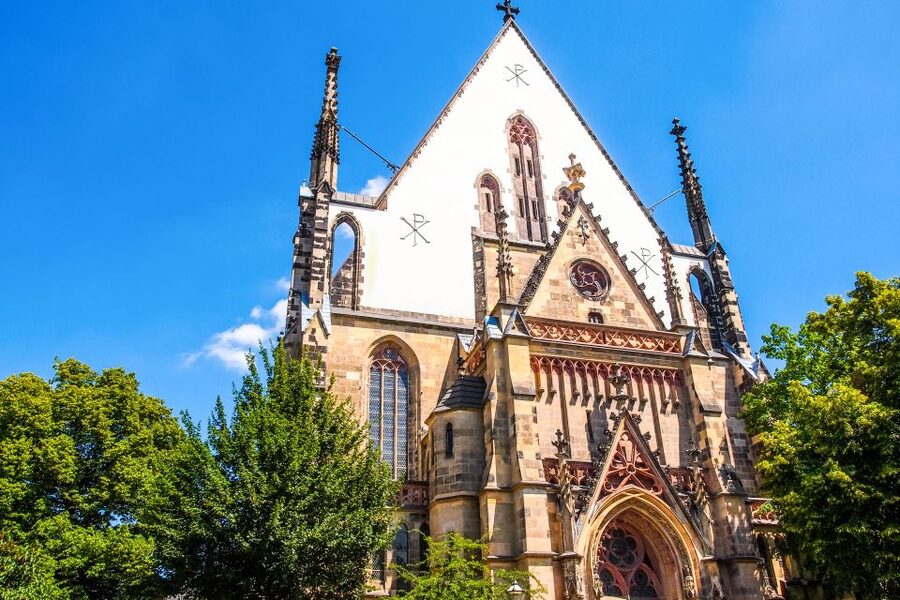
Nikolai Church is one of the most important stops on the route. It was at the center of events connected with German reunification in 1989, so the guide can place Leipzig inside one of the defining political changes of modern Germany.
This is where the tour’s recent history becomes especially valuable. Old Town architecture can sometimes feel distant, but the events linked to Nikolai Church are close enough in time to connect with family memories and modern German identity. Listen for the guide’s explanation of how the church became associated with public action and change.
You should also set your expectations correctly. The tour does not include interior visits to the churches. You may see the church from outside and hear about its role, but entry is not part of the paid experience. If you want to study the inside of Nikolai Church, plan a separate visit.
One recent tour account noted that the guide covered both older and newer history in a relaxed way. That balance is important here. Nikolai Church works best when it is not treated as an isolated monument, but as part of Leipzig’s long civic story.
Specks Hof and the Old Exchange
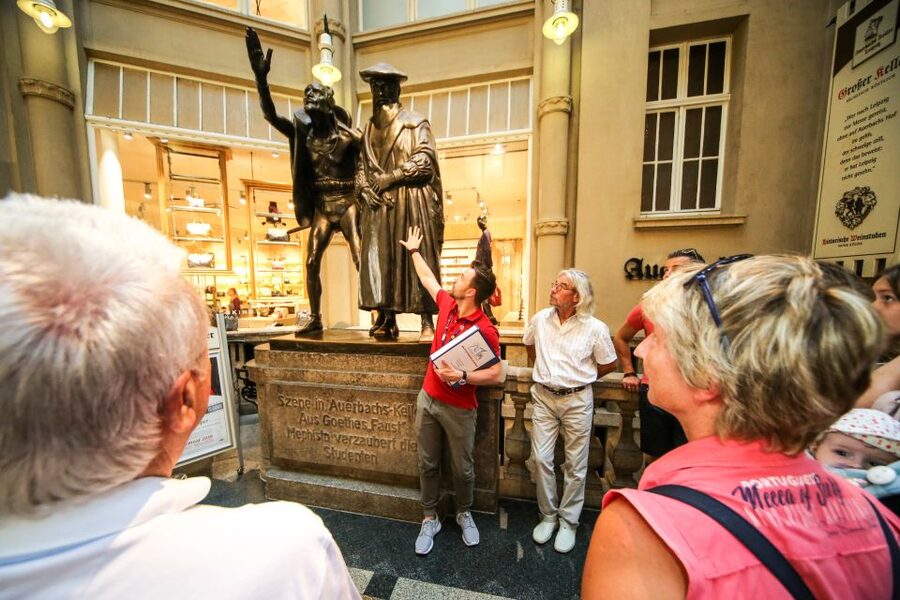
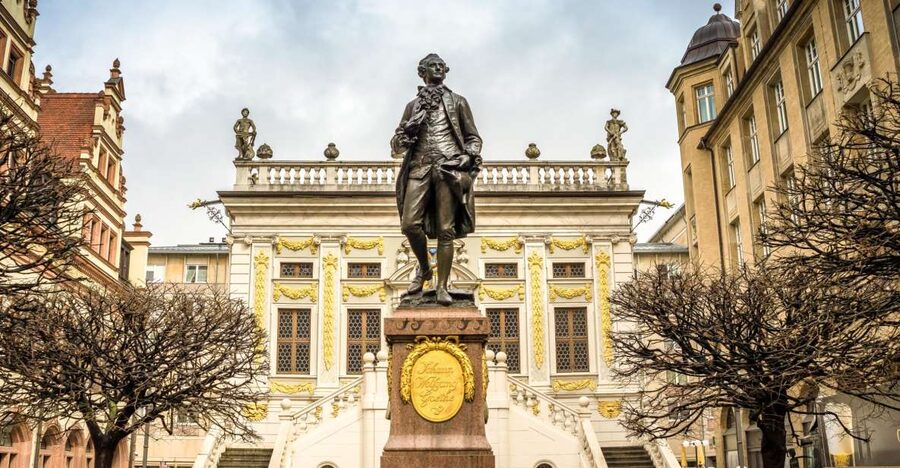
From the church area, the walk continues through the modern Specks Hof arcade toward Naschmarkt Square and the Old Exchange. Leipzig’s arcades are among the most distinctive parts of the central route. They are not simply shortcuts. They reflect the city’s long connection with commerce and trade.
Specks Hof gives you a change of pace from the large public square. You move through a covered passage, then emerge near Naschmarkt. This kind of route is one reason I prefer a guided walk in Leipzig’s center. A guide can point out why these passages matter instead of letting them blur into ordinary shopping streets.
At Naschmarkt, the Old Exchange provides another architectural marker. The stop helps explain Leipzig’s economic importance and the way business shaped the center. One of the strongest themes to listen for is how the city’s role changed over time. The tour is not only a parade of attractive façades. It also addresses the economic meaning of the center.
The arcade portion may be less memorable if you are seeking long historical lectures at each stop. The benefit is breadth. You see several connected pieces of Leipzig’s central design in a short time.
More walks with a guide around Germany:
- Berlin: Third Reich & Cold War Guided Walking Tour
★ 4.9 · 8,378 reviews - Berlin: Hidden Backyards Guided Walking Tour
★ 4.8 · 5,360 reviews - Bamberg: Guided Walking Tour
★ 4.6 · 3,202 reviews - Dortmund: BVB Self-Guided Stadium Walk
★ 4.5 · 3,195 reviews
Mädler arcade and Auerbachs Keller
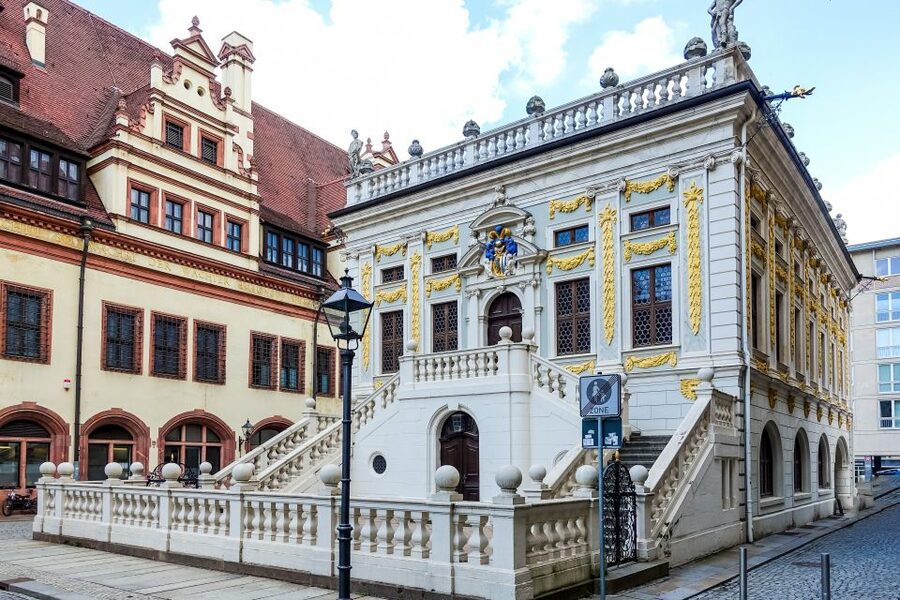
Directly opposite the Old Exchange is the Mädler arcade. A little farther on, you reach Auerbachs Keller, the historic restaurant that gives this section of the walk its strongest literary connection.
Auerbachs Keller is famous far beyond Leipzig because of its association with Goethe’s Faust. You do not need to dine there to understand why it matters on this route. Seeing the place in its setting adds a useful layer to the city’s cultural story, connecting Leipzig’s historic center with one of Germany’s best-known literary works.
This stop is also practical. A restaurant with such a long public life shows how Leipzig’s center has been used over time, not merely preserved as scenery. The guide can make that connection between daily city life, commerce, literature, and tourism.
If you are hoping to sit down for a meal during the tour, do not count on it. A two-hour walking tour moves through the area and includes the historic restaurant as a sight. The activity includes guiding, not food or a reserved restaurant visit.
The Old Town Hall on Market Square
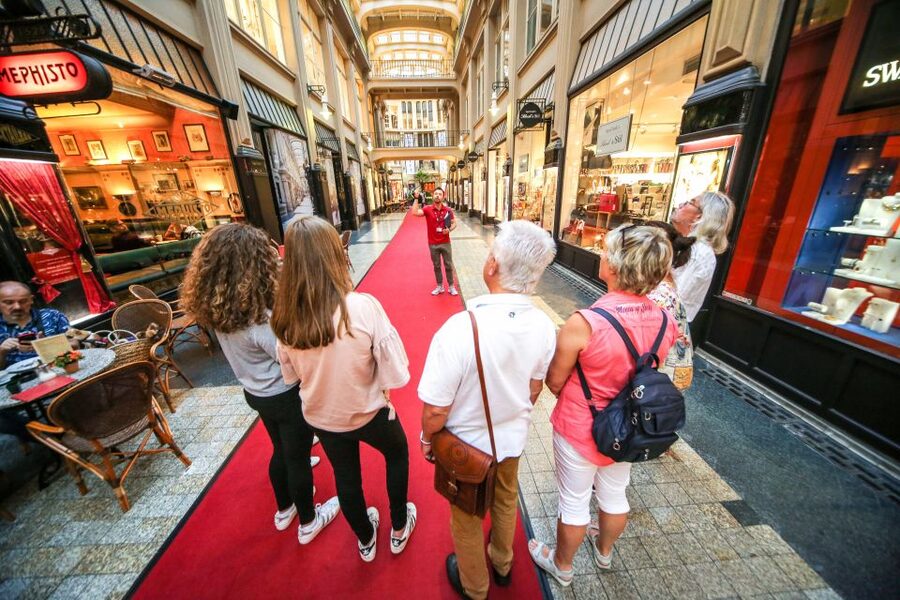
The Old Town Hall is one of the visual high points of the walk. It faces the market square and is presented as one of Germany’s most beautiful Renaissance buildings. Even if you have seen plenty of European town halls, this one earns close attention for its place in Leipzig’s civic center.
The market square gives the building room to be seen properly. That matters because the route has just taken you through tighter arcades and lanes. Here, the scale opens up again, and the Old Town Hall reads as the city’s public face.
I like this stop because it brings together beauty and function. The building is not just an ornate backdrop. A town hall tells you where civic authority met, where business and public life overlapped, and how the city represented itself.
The tour does not promise a full interior visit. If you want the museum or interior spaces associated with the building, you should arrange that separately. On this walk, the emphasis is the exterior, the market square, and the building’s place in Leipzig’s story.
Barthels Hof and the character of the old center
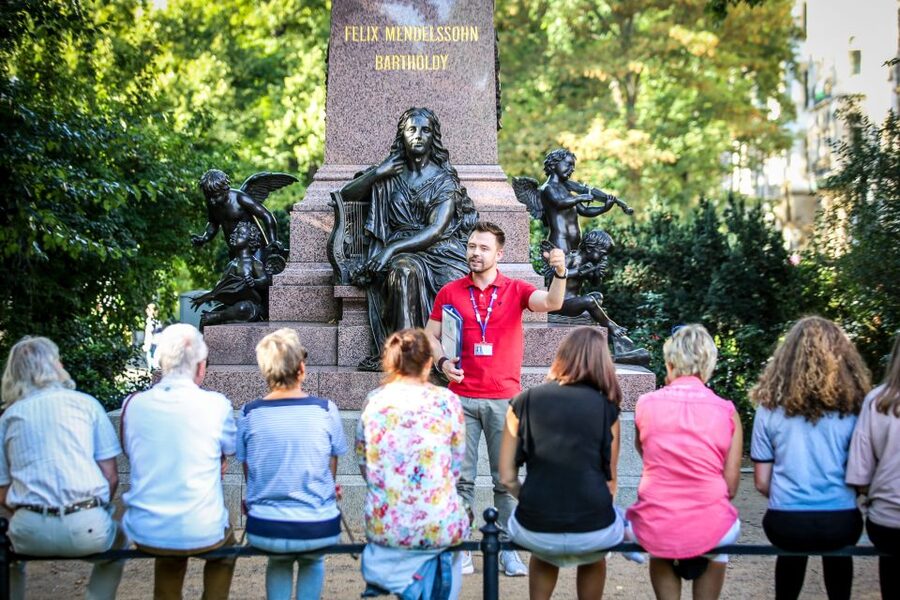
The route continues to Barthels Hof, another historic stop in the central district. Together with Specks Hof, the Mädler arcade, and Auerbachs Keller, it shows how much of Leipzig’s old commercial life survives in passages and courtyards rather than only on broad streets.
This is the sort of place where a guide earns the $18 fee. Without context, you may see an attractive historic complex and move on. With explanation, you can understand how the buildings fit the city’s trading past and why Leipzig’s center developed such a distinctive network of passageways.
The tour’s best quality is its range. In two hours, you move from opera and concerts to political change, trade, literature, civic government, restaurants, and church music. None of those subjects receives a full lecture, but together they give you a sound first portrait.
The tradeoff is pace. You should expect to keep moving. Wear comfortable shoes and dress for the weather, since this is an outdoor walking tour with stops in public streets and squares. A January booking received praise for its content but also noted that the day was very cold. That is a useful warning: winter weather can affect your comfort even when the guide is excellent.
Barfußgässchen brings the city into the present
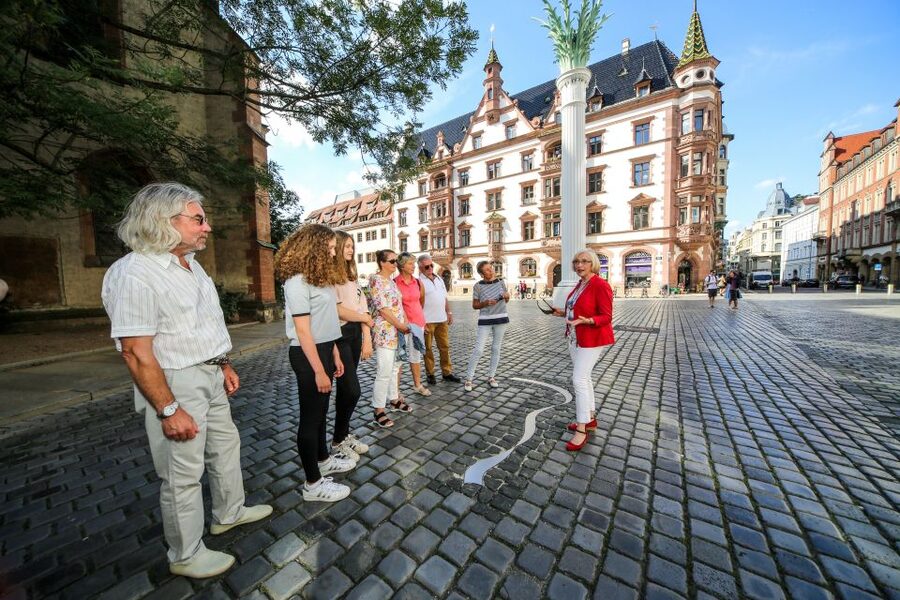
Barfußgässchen is Leipzig’s best-known street and one of the liveliest points on the route. It is lined with restaurants and pubs, giving the walk a more modern, social finish after its run of churches, arcades, and civic buildings.
I like ending here because it reminds you that Leipzig’s center is not a museum set. People eat, meet, and go out here. You can note a restaurant for later or simply enjoy the shift in mood.
The lane may be crowded or noisy at times, but that is part of its appeal. This is not the place for a quiet architectural study. It is the place to see how the old center functions after the sightseeing stops are over.
The route does not include drinks or a meal. If you want to make an evening of Barfußgässchen, use the tour’s finish as a scouting trip and return afterward.
St. Thomas Church closes the route with music
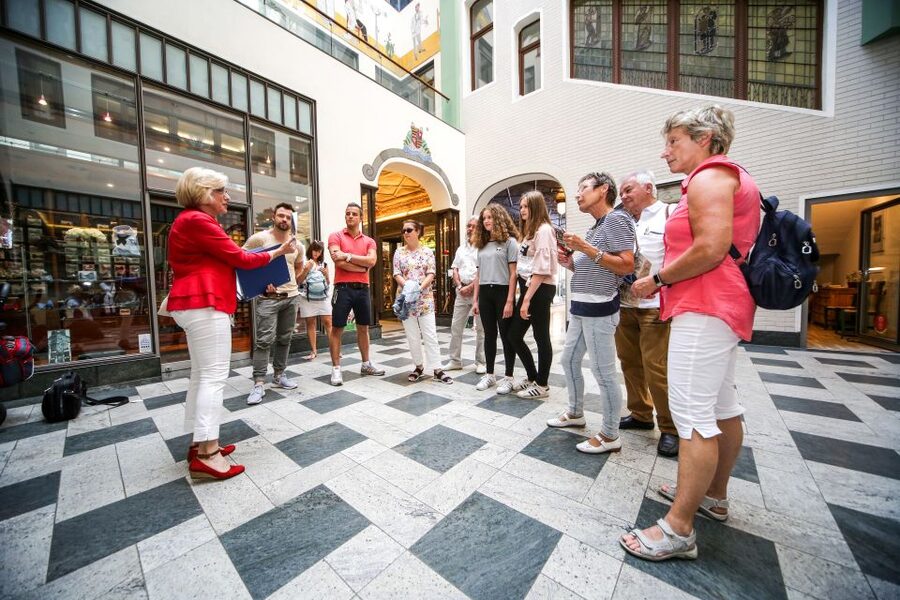
The final major sight is St. Thomas Church, home of the globally renowned St. Thomas Choir of Leipzig. It gives the walk a strong ending, especially after the earlier stop at the opera house and Gewandhaus.
St. Thomas Church is also where the tour’s musical thread comes full circle. Leipzig’s connection to music is not limited to major concert buildings. It also lives in its churches and choirs. One recent participant happened to hear a few concert sounds inside the church during the visit, though you should not book expecting a performance.
Again, interior visits to churches are not included. You may see St. Thomas Church and hear its importance explained, but any separate entry or concert experience would need its own plan.
This final stop may be especially appealing if you are interested in music, church history, or Leipzig’s cultural identity. If your priority is only the 1989 story, Nikolai Church will likely be your key moment. If music matters most, St. Thomas Church and Augustus Square give the tour much of its appeal.
Guide style, language, and pace
The guide language is German, and that should be your first booking check. The tour will be most useful if you can follow spoken German comfortably. There is no indication of an English-language option.
The guiding style appears to vary by person, as it does on any scheduled city walk. Herr Hannemann has been singled out for an entertaining and committed presentation. Another guide was praised for a relaxed explanation of architecture, older and newer history, and Leipzig’s economic changes. Those details suggest that the experience is not meant to be a dry recital of dates.
At the same time, a lively guide cannot remove the language barrier. If you understand only basic German, you may recognize the buildings but miss the connections that make the route worthwhile.
The walking format also means you should plan for outdoor conditions. The tour lasts two hours and includes several city streets, squares, arcades, and church exteriors. The activity information marks it as wheelchair accessible, but it also lists wheelchair users under not suitable. Because those details conflict, contact the provider before booking if you use a wheelchair or need a fully step-free route.
Who should book this Leipzig tour?
I would recommend it to you if you want a short, central introduction to Leipzig and can follow German. It suits a first day in the city, a quick visit, or anyone who prefers a guide to explain the meaning behind the buildings.
It is also a good fit if you care about several subjects at once: music, architecture, trade, literature, civic life, and the events of 1989. The route gives each one a place without requiring a full day.
You may want something else if you need English, want detailed interior access, dislike walking outdoors, or prefer to spend a long time at each sight. The tour offers breadth and context, not extended visits.
At $18, I see it as a fair orientation price. You get two hours with a live guide and a route covering many of Leipzig’s best-known central sights. The value depends mainly on your German ability and your expectations about depth.
Should you book it?
Book this tour if you want Leipzig’s center explained in German, with a good mix of famous buildings and meaningful local history. The strongest moments are Nikolai Church, the Old Town Hall, Auerbachs Keller, Barfußgässchen, and St. Thomas Church.
Skip it if you need English or plan to enter the churches as part of the same activity. If you do book, dress for the weather, wear comfortable shoes, and keep a little time afterward for a return visit to the sight that interests you most.
FAQ
How long does the Leipzig walking tour last?
The tour lasts two hours.
What language is the tour conducted in?
The tour is conducted in German with a German-speaking live guide.
Where does the tour begin?
The meeting point is the Tourist-Information at Katharinenstrasse 8 in Leipzig.
What major sights are included?
The route includes Augustus Square, the opera house, the Gewandhaus concert hall, Nikolai Church, Specks Hof, Naschmarkt Square, the Old Exchange, the Mädler arcade, Auerbachs Keller, the Old Town Hall, Barthels Hof, Barfußgässchen, and St. Thomas Church.
Are church interiors included?
No. Interior visits to the churches are not included.
How much does the tour cost?
The listed price is $18 per person.
Can I cancel and receive a full refund?
Yes. You can cancel up to 24 hours in advance for a full refund.
Is the tour suitable for wheelchair users?
The activity information gives conflicting details, marking it as wheelchair accessible while also listing it as not suitable for wheelchair users. Contact the provider before booking to confirm access for your needs.
New walking tours around Germany
- Mystical Hamburg – Walking Tour in German★ 4.6 · 168 reviews
- Munich : Private Walking Tour with A Guide (Private tour)★ 4.5 · 85 reviews
- Munich: Raven Black Witches and Executioners Walking Tour★ 4.7 · 294 reviews
- Munich: Guided Food Walking Tour with Beer Tasting★ 4.7 · 183 reviews
- Munich Old Town – Guided Walking Tour in English★ 4.7 · 153 reviews
- Munich: Old Town Guided Walking Tour★ 4.6 · 479 reviews
- Munich: Old Town Walking Tour★ 4.7 · 589 reviews
- Munich: Birthplace of the Third Reich Guided Walking Tour★ 4.6 · 771 reviews
Germany Walking Tours, side by side.
Berlin City walk Government District and Places of Democracy
Read our review →
Berlin: Third Reich & Cold War Guided Walking Tour
Read our review →
Berlin’s Best: 2 Hour Walking Tour Third Reich and the Cold War
Read our review →

Explore Berlin: See All The Iconic Sights & Some Hidden Gems
Read our review →Lists this walk sits on