
Review · NUREMBERG
Nuremberg Old Town and Nazi Rally Grounds Walking Tour
Nuremberg’s most useful history lesson comes in two very different parts. First, you walk through a handsome medieval city of walls, churches, markets, and castle courtyards. Then you see the huge former Nazi Rally Grounds, where the scale of Hitler’s propaganda machine becomes difficult to ignore. The contrast gives you a better sense of Nuremberg than either subject could provide alone.
I like the tour’s strong mix of old and modern history, and I like that public transport to and from the Rally Grounds is included. Guides such as Hannes, Natasha, Nic, and Dimitri are praised for clear English, humor, and thoughtful explanations. The main drawback is simple: this is a four-hour walking tour held rain or shine, so it is not a good fit if you have trouble walking or dislike standing outdoors in poor weather.
Key points to know before booking
- The tour links two Nurembergs: You see the medieval Imperial city before confronting the monumental remains of the Nazi era.
- The Imperial Castle courtyards provide the best city outlook: You get a useful sense of Nuremberg’s layout without paying for a separate castle visit.
- The 30-minute market break matters: Use it for lunch, coffee, a sausage roll, or a seasonal drink rather than expecting a sit-down meal.
- The Rally Grounds are spread out: The bus ride is practical, but you still walk and stand across large open areas.
- The Nazi past is handled directly: Guides explain propaganda, architecture, and Nuremberg’s efforts to face its history today.
- The $43 price includes transit: Lunch and entry to the Documentation Center are extra, so budget for those separately.
Why this combination works so well
Many Nuremberg tours focus on the old center or the Nazi Rally Grounds, but this one puts both subjects into a single morning or afternoon. That matters because Nuremberg is not only a beautiful old Bavarian city, and it is not only a place of Nazi history. You see how a long-established imperial center was later used as a stage for one of the darkest political movements in Europe.
I especially like the order. The Old Town gives you a pleasant, human-scale introduction to the city. You see workshops, market stalls, churches, and narrow streets before heading to an area built for enormous crowds and political theater. The shift is striking without needing dramatic commentary.
The guides also add flexibility to the experience. Hannes is frequently praised for combining detail with humor, while Natasha, Nic, Nickolai, Dimitri, and Jax are among the other guides named in feedback about the tour. You should not book expecting one particular guide unless the provider confirms it, but the repeated praise for clear English and engaging storytelling is encouraging.
More Old Town Walking Tours in Germany
- Nuremberg: Old Town Guided Walking Tour
★ 4.6 · 2,416 reviews - Munich: Old Town & Viktualienmarkt City Walk in German
★ 4.7 · 2,304 reviews - Heidelberg: Walking Tour of the Old Town
★ 4.6 · 1,742 reviews
Starting at Nuremberg Central Station
Meet outside the large arched entrance of Nuremberg Hauptbahnhof. Look for the guide holding a red and white Nuremberg Tours in English sign, and arrive a few minutes early so the group can check in without delay.
Starting at the station is practical. You can reach it easily by train, and the tour also ends there. That makes this a good first activity after arriving in Nuremberg, especially if you want help getting your bearings before exploring on your own.
Wear comfortable shoes. Four hours is a long time to spend walking and standing, and the tour continues in wet or cold weather. Winter can be particularly demanding around the open Rally Grounds, even though the Old Town portion includes indoor or sheltered sights along the way.
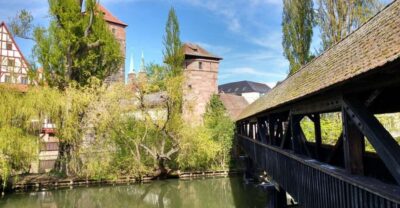
Handwerkerhof and the medieval city walls
The first stop is Handwerkerhof, or the Craftsmen’s Court, just beside the station. This small area presents traditional local crafts and materials in a compact setting. It is a quick introduction rather than a long museum visit, but it helps you see Nuremberg as a working city rather than a collection of old façades.
From here, the route moves toward Mauthalle and the medieval fortifications. Nuremberg has some of the best-preserved old defensive structures in Europe, and the walk gives you a sense of how the walled city was organized.
I find this opening useful because the guide can explain the city’s growth while you are physically moving through it. Instead of hearing a list of dates in a classroom-like setting, you see the walls, gates, and historic streets in context.
Churches, artists, and the Hauptmarkt
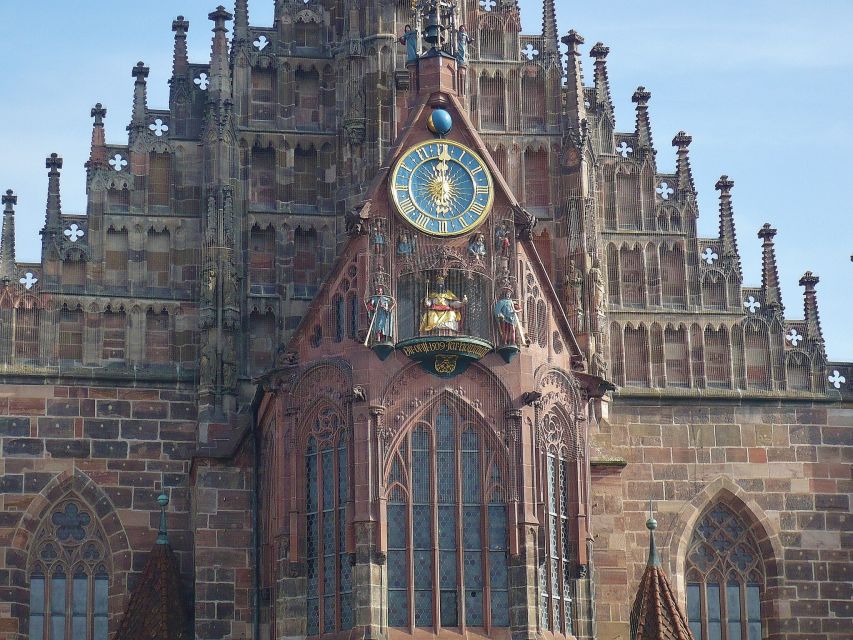
The route passes St. Lorenz Church, one of the Old Town’s major Gothic landmarks. You do not receive a dedicated interior visit as part of the listed itinerary, but the church helps establish the artistic and religious importance of central Nuremberg.
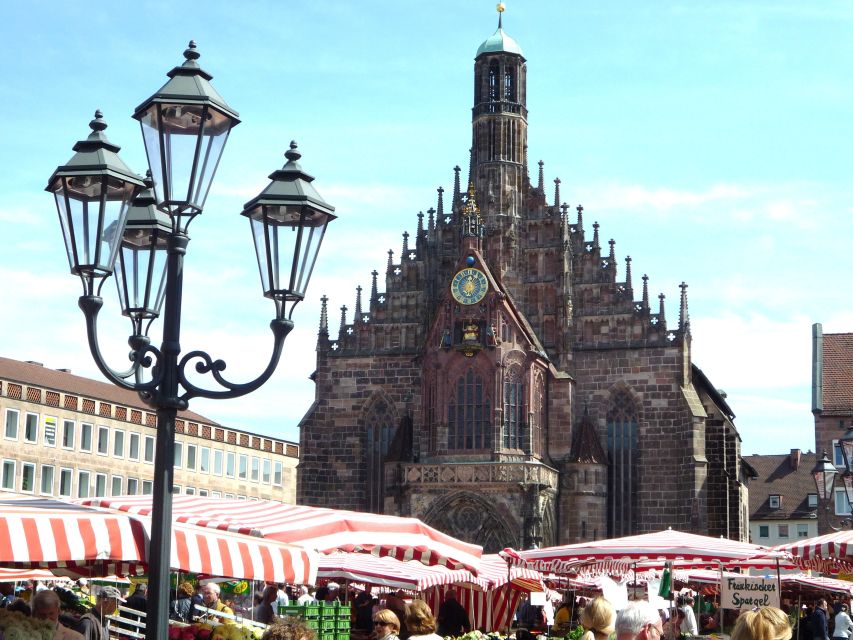
You then reach Hauptmarkt, the city’s main market square. Markets have been held here for nearly 700 years, and in December it becomes the setting for Nuremberg’s famous Christmas market. Seasonal decorations and crowds can change the feel of the square, so your experience will depend heavily on the time of year.
The market stop is also where the tour becomes especially practical. Your guide can point out places for local food, beer, and wine, including Nuremberg’s famous sausages and amber lager. You may hear recommendations for a quick sausage snack rather than a formal meal, which fits the limited break later in the tour.
Same streets, a different story:
- Discover Berlin Half-Day Walking Tour
★ 5.0 · 9,624 reviews - Berlin City walk Government District and Places of Democracy
★ 4.7 · 8,467 reviews - Berlin: Third Reich & Cold War Guided Walking Tour
★ 4.9 · 8,378 reviews - Munich: Third Reich & WWII Walking Tour
★ 4.6 · 6,181 reviews
Town Hall, St. Sebaldus, and the Imperial Castle
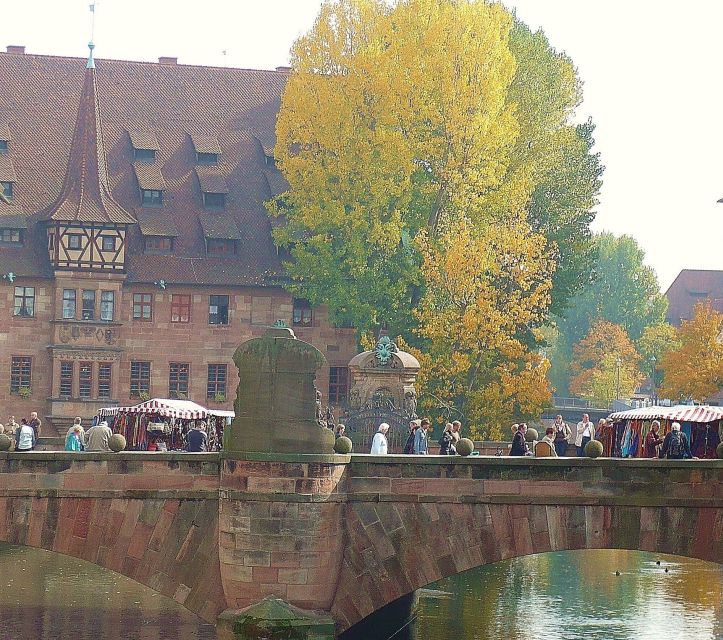
Old City Hall and St. Sebaldus Church add more layers to the walk. The route passes the church rather than promising a full interior tour, while the Old City Hall receives a guided explanation. Together, these stops show how civic and religious power shaped the old center.
The Imperial Castle is the major payoff of the medieval section. The tour visits its courtyards, where Holy Roman Emperors ruled Germany for more than 500 years. You should not confuse this with a full ticketed visit to every castle interior or museum room. The emphasis here is on the courtyards, history, and views across Nuremberg.
Those views are valuable early in your visit. From above, you can better understand the old walls, church towers, and compact city center. The guide can also connect the castle to Nuremberg’s role in the Holy Roman Empire, giving you a useful frame for the streets you have just walked.
Albrecht Dürer’s House and the market break
The route includes Albrecht Dürer’s House, associated with one of Germany’s best-known Renaissance artists. The listed stop is guided, but the tour does not promise a separate admission visit through the museum rooms. Treat it as an introduction to Dürer and his place in Nuremberg’s cultural past.
After the Old Town walk, you receive about 30 minutes of free time around Hauptmarkt. This is not included lunch, so you pay for your own food. The break is short, but it gives you time for a quick meal, coffee, a restroom stop, or a seasonal drink such as glühwein during the Christmas market period.
Plan this pause sensibly. A full restaurant meal could make the second half feel rushed. A sausage roll or other quick market food is more realistic, and one piece of practical advice from the tour is that three small Nuremberg sausages make an easy local snack.
Taking the bus to the Rally Grounds
After lunch, the group takes public transport toward the former Nazi Party Rally Grounds. The bus ride takes about 15 minutes, and the fare is included in the $43 price. That saves you the trouble of working out the route yourself and keeps the group together.
The change in setting is sharp. The Old Town is compact and full of everyday city life. The Rally Grounds are broad, formal, and built to control the movement and attention of huge crowds. Even before the guide begins explaining the details, the scale tells you that this was architecture used as political theater.
You should expect outdoor walking and standing here. Bring weatherproof clothing in winter and protection from rain in other seasons. Since the grounds are large, comfortable shoes are not a minor suggestion.
Luitpoldhain, Volksfestplatz, and Zeppelin Field
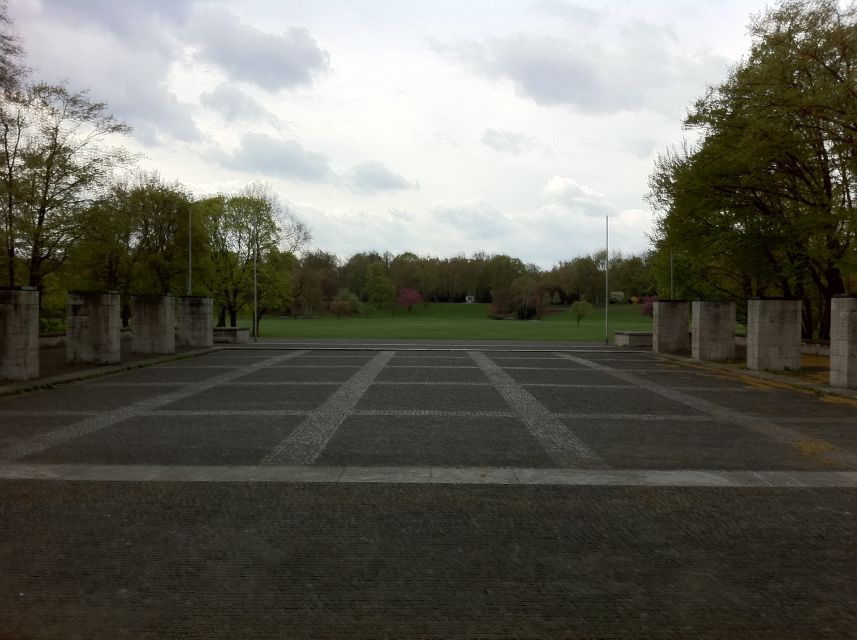
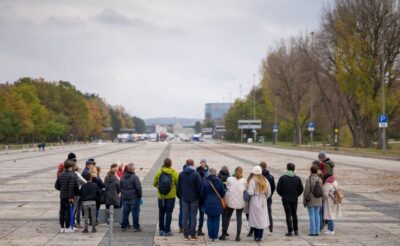
The Rally Grounds section includes Luitpoldhain and Volksfestplatz, along with the former parade areas. These spaces were used for mass gatherings, ceremonies, and Nazi propaganda events. The guide explains how Adolf Hitler inspected columns of SS men and staged carefully planned rituals before large crowds.
This is not a light sightseeing stop, and the tour is right to treat it seriously. The important point is not simply that large buildings remain. It is how architecture, movement, symbols, spectacle, and crowd control were combined to create a political myth.
The open spaces can be hard to absorb without explanation. A skilled guide makes the scale easier to understand by showing where crowds gathered and how the area was used. Some guides supplement the visit with photographs on an iPad, which can help you compare the present remains with the original events.
Congress Hall and the unfinished Roman idea
Congress Hall is one of the most memorable structures on the route. It was Hitler’s unfinished attempt to create a Roman Colosseum on a vast scale. The surviving shell is imposing, but its unfinished state also reveals the gap between Nazi ambition and what was actually completed.
The tour enters the remains of Congress Hall for a guided explanation. Admission to the Documentation Center is not included after the tour, so you should think of this walk as an introduction rather than a complete museum visit.
That distinction is important. The outdoor tour gives you the physical scale and major context. If you want a longer, more detailed examination of Nazi architecture, propaganda, persecution, and the war years, you may want to continue independently at the Documentation Center afterward. The tour does not include that admission, and its official route ends before a full museum visit.
How Nuremberg deals with its past
One of the strongest parts of this experience is its attention to Nuremberg today. The guide does not present the Rally Grounds as a strange relic detached from modern life. You learn how the city explains, preserves, and confronts the remains of the Third Reich.
That approach helps prevent the visit from becoming architecture alone. The buildings were designed to glorify a dictatorship, and their present use as historical sites raises difficult questions about memory, education, and public space. You may leave with a better understanding of why the city keeps these structures rather than simply removing every trace.
The subject is handled with seriousness, but the overall tour is not grim from beginning to end. The Old Town section includes legends, food suggestions, local customs, and humor. Guides such as Hannes and Nic are praised for keeping people engaged without making the difficult material feel casual or disrespectful.
Price, pace, and practical value
At $43 per person, the tour is fairly priced if you want both major sides of Nuremberg in one outing. The English-speaking guide is the main value, especially because the Rally Grounds are easier to understand with someone explaining the site’s purpose and scale. Public transportation to the grounds and back is also included.
The price does not cover lunch or admission to the Documentation Center. That keeps the basic cost clear, but you should add money for food and decide separately if you want the museum afterward.
The pace appears suited to people who want a broad introduction rather than a slow study of every building. You cover many Old Town sights, take a short break, use public transport, and walk through several large Rally Grounds areas within four hours. That is efficient, but not leisurely.
Families with older children may find the mix useful, especially if a child can stay focused during historical explanations. One guide was specifically praised for keeping a 12-year-old engaged. Younger children may find the long walking route and serious subject matter harder.
Who should book this tour?
I would choose this tour if you have one day in Nuremberg and want a clear introduction before exploring alone. It works particularly well for first-time visitors, history-minded visitors, English-speaking couples, and anyone who wants practical food and sightseeing advice along with the major landmarks.
It is also a strong choice if you are unsure how to reach the Rally Grounds. The included bus and tram rides remove the transport puzzle, and the guide gives the site a human and political context that signs alone cannot provide.
I would hesitate if you have limited mobility, dislike walking in bad weather, or want extended time inside museums. The tour takes place rain or shine, and the Rally Grounds require outdoor movement across a broad area. It is also not the right pick if you want a dedicated food tour or a detailed interior tour of the Imperial Castle.
Should you book the Nuremberg Old Town and Nazi Rally Grounds tour?
Book it if you want the city’s medieval beauty and its Nazi past presented together, with a guide to connect the two. The strongest reasons are the well-planned route, included transport, useful market break, and the care taken with a difficult subject.
Skip it if you need a fully accessible route, prefer to explore at your own pace, or want to spend several hours inside the Documentation Center. For most able walkers, though, $43 buys a solid introduction to Nuremberg, plus enough practical advice to make the rest of your stay easier.
FAQ
Where does the tour begin?
The tour begins outside the large central arched entrance of Nuremberg Hauptbahnhof. Look for the guide holding a red and white Nuremberg Tours in English sign.
Where does the tour end?
The tour returns to Nuremberg Hauptbahnhof after the group takes a tram from the Rally Grounds area.
How long does the tour last?
The total duration is about four hours, including the lunch break and public transport journeys.
Is the tour conducted in English?
Yes. The tour has a live English-speaking guide.
Is public transportation included?
Yes. Public transportation to the former Rally Grounds and the return journey are included in the tour price.
Is lunch included?
No. Lunch is not included. You receive about 30 minutes of free time in the Hauptmarkt area to buy food or drinks.
Is admission to the Documentation Center included?
No. Admission to the Documentation Center is not included after the tour.
What should I bring?
Bring comfortable shoes. The tour takes place rain or shine, so weather-appropriate clothing is also sensible.
Is the tour suitable for people with mobility impairments?
No. The tour is not suitable for people who have trouble walking or have mobility impairments.
New walking tours around Germany
- Mystical Hamburg – Walking Tour in German★ 4.6 · 168 reviews
- Munich: Raven Black Witches and Executioners Walking Tour★ 4.7 · 294 reviews
- Munich : Private Walking Tour with A Guide (Private tour)★ 4.5 · 85 reviews
- Munich: Guided Food Walking Tour with Beer Tasting★ 4.7 · 183 reviews
- Munich Old Town – Guided Walking Tour in English★ 4.7 · 153 reviews
- Munich: Old Town Guided Walking Tour★ 4.6 · 479 reviews
- Munich: Old Town Walking Tour★ 4.7 · 589 reviews
- Munich: Birthplace of the Third Reich Guided Walking Tour★ 4.6 · 771 reviews
Nuremberg Walking Tours, side by side.
Nuremberg: Walking Tour of Former Nazi Party Rally Grounds
Read our review →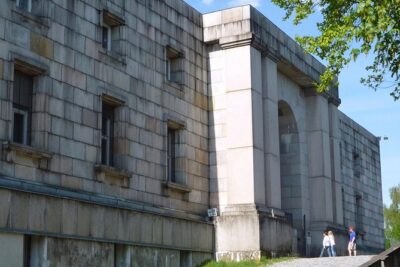
Nuremberg Old Town and Nazi Party Rally Grounds Walking Tour in English
Read our review →Lists this walk sits on