
Review · GERMANY
Frankfurt Highlights English Walking Tour
Frankfurt may be best understood on foot, where medieval streets, wartime loss, modern rebuilding, and glass towers all meet within a compact center. This tour follows that story from the cathedral and Römerberg to the Jewish quarter, the new Old Town, and the Main River.
I like the small maximum group of 20, which keeps the walk personal, and I like the guides’ mix of history, daily life, food advice, and odd little city facts. Guides such as Jennifer, Hannes, Anne, Anna, and Philip have been praised for clear storytelling and for handling questions rather than simply reciting a script.
The main drawback is the pace and length. The walk can run close to three hours, and some people find that tiring or a bit quick, especially in cold weather or with back, knee, or mobility concerns. Sunday closures also change part of the route.
Key points at a glance
- A compact route with a wide story: You cover imperial ceremonies, medieval Jewish life, wartime memory, reconstruction, and modern city planning.
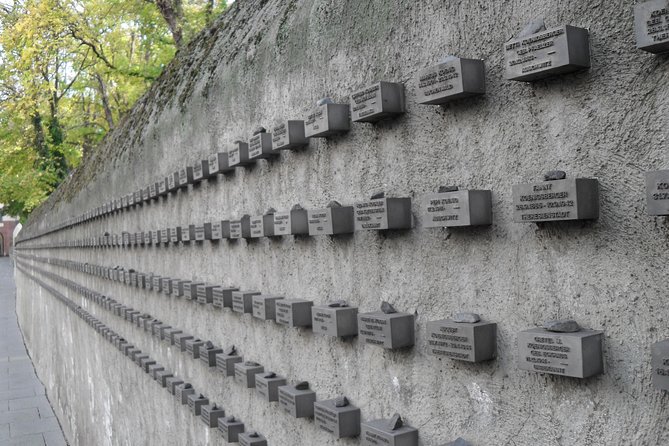
- The Jewish cemetery is a serious highlight: You view the site through its gate and see the Holocaust Remembrance Wall surrounding the medieval cemetery.
- Kleinmarkthalle adds everyday Frankfurt: The indoor market is a useful stop for seeing local food culture and planning a snack break.
- The New Old Town is part of the conversation: You hear how Frankfurt rebuilt a historic-looking center and how it fits the former coronation route.
- Eiserner Steg gives the best visual change of pace: From the bridge, you look across the Main toward Sachsenhausen, the museum riverbank, and the European Central Bank.
- The tour rewards questions: The strongest guides connect isolated dates and buildings into a clear story about how Frankfurt became the city you see today.
Starting at Braubachstraße 41 at 10 a.m.
You meet at Braubachstraße 41, 60311 Frankfurt am Main, at 10:00 a.m. This is in the old center, close to the cathedral and Römerberg, so the tour begins in the heart of the historic district rather than at a distant bus stop.
Pay close attention to the address. One booking map has reportedly placed the meeting marker about a block away from the printed address, which caused someone to miss the walk in wet, snowy weather. I would trust the written meeting address, arrive early, and check the map before setting out.
The tour ends back at the meeting point after roughly two to three hours. It is offered in English, confirmed instantly when booked, and available with a mobile ticket. The group limit of 20 is useful here. Frankfurt’s old center has narrow passages and busy public spaces, and a smaller group makes it easier to hear the guide and ask questions.
You do not need to arrange entry tickets for the listed stops. The price is $36.28 per person, which is fair if you want a structured introduction to Frankfurt and intend to make good use of the guide’s advice about food, museums, and other places to visit. It is less attractive if you only want a quick photo walk, since several hours is a serious portion of a sightseeing day.
More City Highlights Walking Tours in Germany
- Explore Berlin: See All The Iconic Sights & Some Hidden Gems
★ 5.0 · 4,429 reviews - Cologne: Old Town Highlights Walking Tour
★ 4.6 · 1,093 reviews - Explore Berlin: Walking Tour of All The Iconic Sites
★ 4.9 · 855 reviews
Frankfurt Cathedral and the imperial city

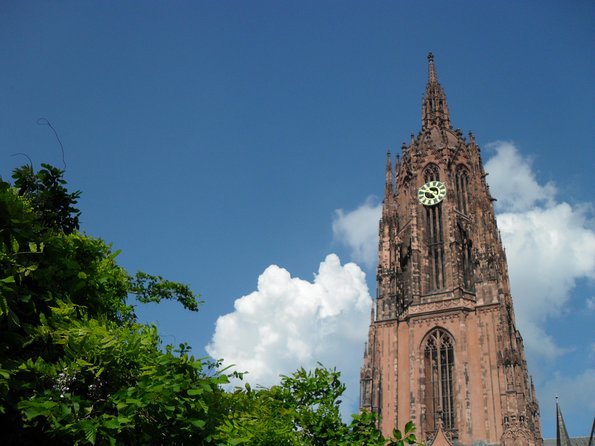
The first stop is Frankfurt Cathedral, or Kaiserdom, an imposing church tied to the Holy Roman Empire. Elections and coronations of Holy Roman Emperors took place here, giving the building more political weight than its exterior might first suggest.
You spend about 20 minutes at the cathedral. The guide can set the church within the larger story of Frankfurt as a place where power, trade, religion, and politics met. This is a good opening because it gives the rest of the walk a clear frame: Frankfurt was not simply a commercial city, but also a ceremonial center.
On Sundays, the cathedral is viewed from the outside only. That matters if you are hoping to see the interior. The tour still includes the site and its history, but you should not expect the same visit as on a regular weekday.
Römerberg, Justicia, and the Book Burning Memorial
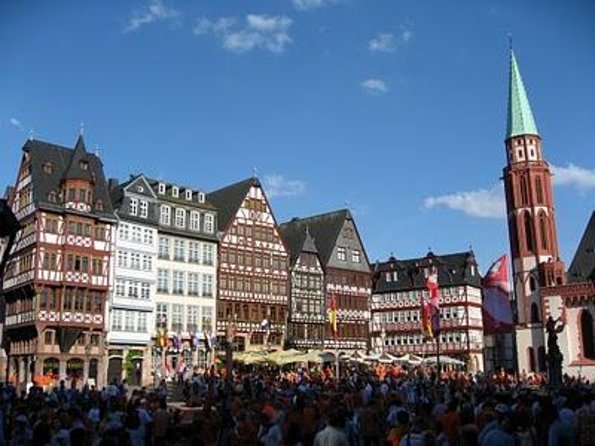
From the cathedral, the walk continues to Römerberg, Frankfurt’s central old-town square. Here you see the Römer, the city hall, along with the Justicia statue and the Book Burning Memorial.
The stop lasts about 15 minutes, but the subjects reach well beyond the square. The Römer represents civic authority and Frankfurt’s long public life. Justicia, associated with justice, is an easy landmark to spot. The Book Burning Memorial brings a darker chapter into the open, reminding you that German history cannot be told only through grand buildings and imperial ceremonies.
I appreciate this mix of subjects. The guide is not asked to present a postcard version of Frankfurt. You get civic pride, political power, cultural loss, and public memory in the same small area. That makes the city easier to understand and gives the attractive square more meaning than a quick photograph provides.
Alte Nikolaikirche and the old center
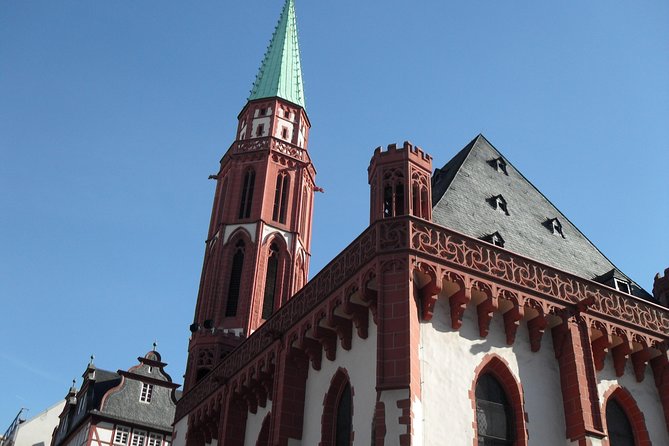
The Old Nicholas Church, or Alte Nikolaikirche, is one of Frankfurt’s oldest churches. You spend about 10 minutes here, normally seeing the exterior on Sundays.
This is a short stop, but it helps fill in the old center’s religious and civic map. The church sits close to the city hall and main square, so the guide can explain how these buildings worked together in the historic city. Do not expect a long interior visit or a separate church tour. The value comes from the setting and the surrounding explanation.
The central section of the walk involves plenty of standing while the guide talks. That means the tour can feel less like a continuous march and more like a series of short outdoor lessons. Some people appreciate the frequent stops. If you prefer constant movement, the first part may feel slower than expected.
Same streets, a different story:
- Discover Berlin Half-Day Walking Tour
★ 5.0 · 9,624 reviews - Berlin City walk Government District and Places of Democracy
★ 4.7 · 8,467 reviews - Berlin: Third Reich & Cold War Guided Walking Tour
★ 4.9 · 8,378 reviews - Munich: Third Reich & WWII Walking Tour
★ 4.6 · 6,181 reviews
Karmeliterkloster and medieval wall paintings
At Karmeliterkloster, you see wall paintings made between 1513 and 1521. This stop lasts about 15 minutes and adds a more intimate artistic layer to the tour.
The monastery is a useful counterpoint to the large cathedral and formal Römerberg. Instead of focusing only on rulers and city government, the route turns to religious art and the visual world of early sixteenth-century Frankfurt. The dates help place the paintings within the late medieval and early modern period.
The tour’s strength here depends heavily on the guide. A well-prepared guide can point out why the paintings matter and connect them to the city’s wider past. Jennifer, Hannes, Anne, Anna, and Philip have each been praised for making historical material clear and engaging, though your exact guide will vary.
Kleinmarkthalle: Frankfurt through food
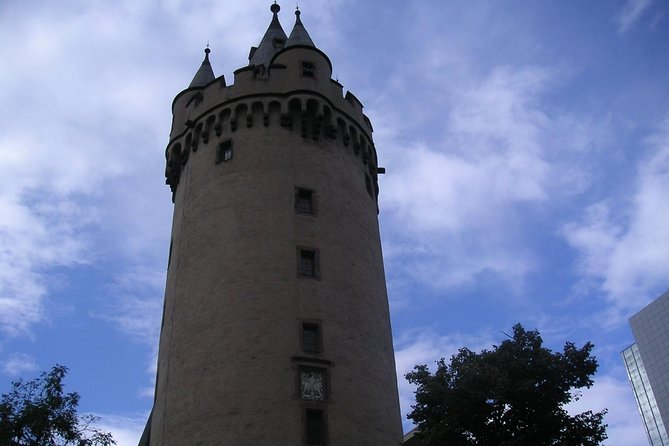
Kleinmarkthalle is an indoor market filled with produce, chocolates, cheeses, meats, pastries, and other food. The scheduled stop is about 15 minutes, though the market may tempt you to linger after the tour.
This is one of my favorite kinds of sightseeing stop because it brings history down to everyday life. You are not only looking at old stone. You are seeing what people buy, eat, and share in the city now. The market also gives you a practical chance to note foods or snacks you might want to return for later.
Kleinmarkthalle is not open for this tour on Sundays or German public holidays. That is an important planning detail, since the route changes when the market cannot be included. The tour still visits other major sights, but you lose one of its most useful breaks and one of its best links to modern Frankfurt.
Several guides have offered food and drink suggestions during the walk, and this is the natural point to ask about them. Bathroom and snack pauses have also been worked into some tours, which can make a three-hour morning much easier.
Frankfurt’s Jewish past at the old cemetery
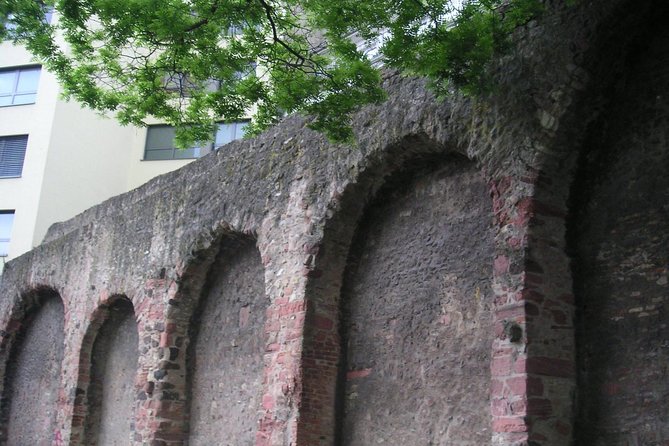
The Old Jewish Cemetery is the most solemn stop on the route and lasts about 30 minutes. You learn about Frankfurt’s Jewish community, present since the 1100s, and about the medieval Jewish ghetto. The cemetery itself is viewed through the gate, while the Jewish Holocaust Remembrance Wall surrounds the medieval burial ground.
This stop deserves time and quiet attention. It moves the tour away from imperial ceremonies and attractive squares and toward the long, often painful story of Jewish life in Frankfurt. The wall’s presence makes the connection between medieval history and the Holocaust impossible to treat as separate subjects.
I would not approach this as a casual photo stop. The cemetery is seen from outside rather than entered, and the experience is primarily about context and remembrance. For many people, it becomes the emotional center of the walk.
It also shows why a local guide adds value. Dates and names alone can feel remote. A clear explanation of where the Jewish community lived, how the medieval ghetto fit into Frankfurt, and how memory is marked today gives the surrounding streets a human meaning.
City planning and the model of present-day Frankfurt
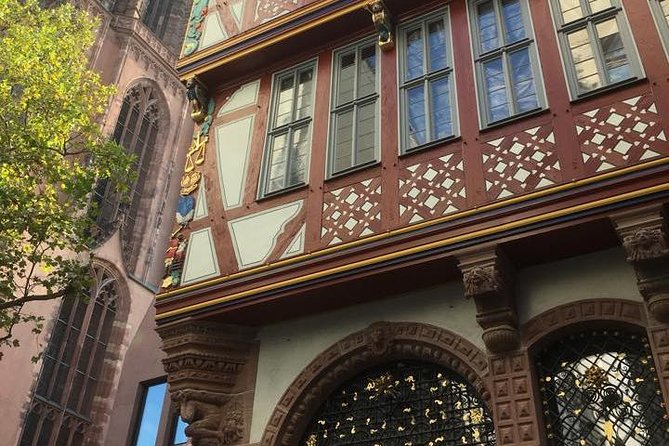
At the Stadtplanungsamt, or City Planning Department, you see a large-scale model of present-day Frankfurt. The stop lasts about 15 minutes and is not available on weekends or German holidays.
This is an unusual inclusion in a city walk. Most sightseeing tours stay with churches, squares, and monuments. Here, you get a look at how Frankfurt is shaped as a modern city, including the relationship between its historic core and newer development.
The model helps you think beyond the old center. Frankfurt is not frozen in its medieval outline. It is a working city, and this stop gives the guide a way to discuss how planners manage old buildings, new construction, public spaces, and daily life.
If you take the tour on a weekend or German holiday, this stop will not be available. That is not a flaw in the tour so much as a practical limitation of visiting a public planning office. Still, weekday visitors get a more unusual experience than they might expect from a standard highlights walk.
The New Old Town and the coronation route
The New Old Town follows the former coronation path used by Holy Roman Emperors. You spend about 20 minutes walking through this rebuilt section of central Frankfurt.
This part of the tour is especially useful because it raises a question many visitors have: what is old, and what has been rebuilt? The New Old Town presents historic-looking streets and buildings, but the wider story includes destruction, reconstruction, and decisions about how the city should represent its past.
Your guide can connect the New Old Town to the cathedral and Römerberg, showing how the historic route once functioned as a ceremonial passage. The walk becomes less about isolated sights and more about movement through a city designed to display power.
I like this section because it encourages you to look closely. Notice the contrast between the restored or recreated old center and Frankfurt’s modern skyline. The city’s identity is not one clean historical period. You see layers placed side by side.
Eiserner Steg and the Main River view
The Eiserner Steg, often called the Love-lock Bridge, provides the tour’s broadest view. From both sides of the Main, you can look toward the European Central Bank, the museum riverbank, and Sachsenhausen.
After several stops in compact streets and squares, the bridge gives you room to see Frankfurt as a whole. The river divides and connects the city, while the view brings together finance, museums, residential districts, and the old center.
This is also a good place to take photographs, though the tour’s value is more than the view. The guide can point out landmarks and explain how Frankfurt’s different districts relate to one another. You get a useful mental map before continuing to the final historic sites.
The bridge may feel exposed in cold or wet weather. Dress for conditions, and remember that the walk continues afterward. Several people have completed the tour in poor weather, but comfort can affect how much attention you have left for the final stops.
Staufenmauer and the medieval Jewish wall
The final listed stop is the Staufenmauer, a city wall dating from the 1100s and part of the medieval Jewish wall. You spend about 15 minutes here before returning to the meeting point.
This is a fitting ending because the wall brings together several of the tour’s main threads: medieval Frankfurt, defensive construction, Jewish life, and the changing shape of the city. It is less grand than the cathedral or Römer, but that is precisely why a guide helps. Without context, an old wall can be easy to pass by.
The route finishes back at Braubachstraße 41. By then, you have covered the best-known old-town sights along with places many independent walkers might miss, especially the planning model, cemetery, monastery paintings, and remnants of the medieval wall.
Pace, access, and who will enjoy it
The tour is described as suitable for most people and stroller-friendly. Service animals are allowed, and the meeting point is near public transportation. There are some intermittent steps, so I would ask the guide for help or an adjustment if steps are a concern.
The walk is not necessarily strenuous in the athletic sense, but it is long enough to matter. You may stand at ten stops, walk between them, and spend up to three hours outside. One guide has adjusted the pace for people who needed extra care, while another assessment found the pace unsuitable for some older participants. The practical lesson is simple: tell the guide early if you need a slower pace or more frequent pauses.
I would choose this tour if you want a serious introduction to Frankfurt, enjoy history told through places, and like asking questions. It suits first-time visitors, short-stay visitors, and anyone who wants food, drink, museum, and sightseeing suggestions before exploring alone.
I would think twice if you want a fast orientation, dislike long explanations, or have difficulty walking and standing for several hours. The route is stroller-friendly, but that does not mean every section is effortless for every mobility level.
Is $36.28 a fair price?
At $36.28, the tour offers good value if you would otherwise spend time figuring out Frankfurt’s old center on your own. You get a local English-speaking guide, a route covering ten distinct stops, historical interpretation, and practical advice about the city. No paid admission is required at the listed stops, so most of the price goes toward the guide’s time and preparation.
The value is strongest when your guide, such as Hannes or Jennifer, builds a connected story and answers questions beyond the basic facts. Hannes has been praised for linking ancient and Roman references with present-day Frankfurt, while Jennifer has been praised for keeping a full three-hour talk lively and clear. Other guides, including Anne, Anna, Anika, Anneke, and Philip, have also received strong marks for clear explanations, friendliness, and useful local suggestions.
The value is weaker if you see the tour mainly as transportation between photo stops. You spend much of the time in and around the old center, and one person wanted more walking and more sites. This is primarily a guided history walk with short transfers, not a nonstop city hike.
What to know before booking
Book at least a little ahead if possible. The experience is often reserved about 27 days in advance, which suggests that the 10 a.m. English departure can fill before a visit.
Check the day of the week. Sundays affect interior access at Frankfurt Cathedral and Alte Nikolaikirche, while Kleinmarkthalle and Stadtplanungsamt are not included on Sundays or German holidays. The route remains worthwhile, but weekday visitors receive the fullest version.
Wear comfortable shoes and bring weather protection. The walk can run three hours, and reviews describe everything from drizzle to bitter cold. If you need breaks, say so. Guides have included snack and bathroom pauses, but it is better to communicate your needs than hope the pace will suit you.
Free cancellation is available up to 24 hours before the start time. After that, the payment is not refunded, and changes made within 24 hours are not accepted.
Should you book this Frankfurt walking tour?
I would book it if you want Frankfurt explained rather than simply photographed. The route covers the cathedral, Römerberg, churches, market, Jewish cemetery, New Old Town, river, and medieval wall, but its real strength is the connection between those places.
Choose a weekday for the widest itinerary, arrive early at the exact Braubachstraße address, and allow the full morning. If you prefer a quick orientation or cannot comfortably walk and stand for up to three hours, choose a shorter option instead. For most first visits, though, this is a well-priced way to understand Frankfurt’s old center and the modern city growing around it.
FAQ
How long does the Frankfurt Highlights English Walking Tour last?
The tour lasts approximately two to three hours. Many departures run close to three hours, depending on the guide, pace, questions, and route conditions.
What time and where does the tour start?
It starts at 10:00 a.m. at Braubachstraße 41, 60311 Frankfurt am Main, Germany. The activity ends back at the same meeting point.
Is the tour offered in English?
Yes. The tour is offered in English and uses a mobile ticket.
Is the tour available on Sundays?
Yes, but parts of the itinerary change. Frankfurt Cathedral and Alte Nikolaikirche are viewed from the exterior only on Sundays. Kleinmarkthalle and the Stadtplanungsamt are not included on Sundays or German holidays.
Is the walking tour suitable for people using a stroller?
The route is described as stroller-friendly, and most people can participate. There are some intermittent steps, so you should tell the guide about any mobility needs.
Can I cancel for a full refund?
Yes. You can cancel for a full refund up to 24 hours before the experience starts. Cancellations or changes made less than 24 hours before the start time are not accepted for a refund.
New walking tours around Germany
- Mystical Hamburg – Walking Tour in German★ 4.6 · 168 reviews
- Munich : Private Walking Tour with A Guide (Private tour)★ 4.5 · 85 reviews
- Munich: Raven Black Witches and Executioners Walking Tour★ 4.7 · 294 reviews
- Munich: Guided Food Walking Tour with Beer Tasting★ 4.7 · 183 reviews
- Munich Old Town – Guided Walking Tour in English★ 4.7 · 153 reviews
- Munich: Old Town Guided Walking Tour★ 4.6 · 479 reviews
- Munich: Old Town Walking Tour★ 4.7 · 589 reviews
- Munich: Birthplace of the Third Reich Guided Walking Tour★ 4.6 · 771 reviews
Germany Walking Tours, side by side.
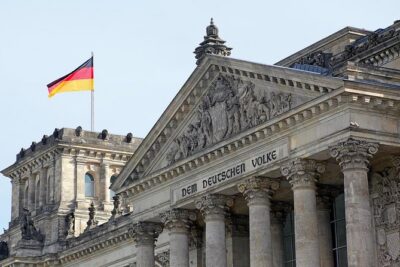
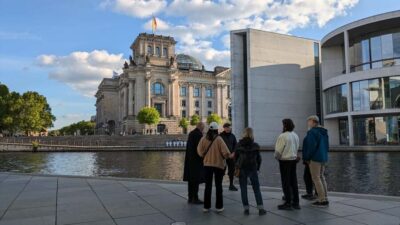
Berlin City walk Government District and Places of Democracy
Read our review →
Berlin: Third Reich & Cold War Guided Walking Tour
Read our review →
Berlin’s Best: 2 Hour Walking Tour Third Reich and the Cold War
Read our review →

Explore Berlin: See All The Iconic Sights & Some Hidden Gems
Read our review →Lists this walk sits on