
Review · ATHENS
Athens: Acropolis and Parthenon Guided Walking Tour
The real strength of this Athens tour is the route. You approach the Acropolis from its southern slope, starting with the Theater of Dionysus and the Odeon of Herodes Atticus before reaching the hilltop monuments. I like the licensed local guides and the personal earsets, which help you follow the commentary even when the site is crowded. The Parthenon is impressive on its own, but the stories make the broken stones easier to understand.
I also like that the tour covers more than the headline monument. You see the Erechtheion, Propylaea, Temple of Athena Nike, Asklepieion, and the views toward Athens’ surrounding hills. The main caution is the strict entry time: arrive 20 minutes early, bring the correct ticket if you choose the no-ticket option, and expect heat, stairs, uneven ground, and possible security delays.
Key points to know before booking
- A south-slope approach: Begin at the Sanctuary and Theater of Dionysus, then walk uphill through several important ancient sites.
- Clear commentary: Personal earsets make it easier to hear the English-speaking guide in crowded spaces.
- More than the Parthenon: The route includes the Erechtheion, Propylaea, Temple of Athena Nike, Asklepieion, and Odeon of Herodes Atticus.
- Strong guide-led storytelling: Guides such as Eva, Dory, Maria, Victor, Kalli, Antonis, Andrea, and Giota have been praised for clear explanations, myths, family-friendly stories, and good group control.
- Ticket choice matters: You can select an option with entry arranged, or buy your own official Acropolis ticket immediately after booking.
- Plan for the conditions: Wear sturdy shoes, carry water, use sun protection, and leave large bags and strollers behind.
Why this approach to the Acropolis works
Many people picture the Acropolis as one building, usually the Parthenon. The experience is far better when you treat it as a hilltop complex reached through a sequence of theaters, sanctuaries, gates, temples, and viewpoints.
This tour follows that natural progression. You meet on Dionysiou Areopagitou Street, close to Hadrian’s Arch and the pedestrian route toward the Acropolis. From there, you walk toward the southern entrance and begin with the lower monuments before climbing to the summit.
I like this arrangement because it gives you time to adjust to the setting. You are not dropped straight in front of the Parthenon with a pile of names to remember. Instead, the guide can explain how theater, worship, healing, civic life, and religious ceremony fit together before you reach the most famous ruins.
The tour has been operating for 20 years, and its rating of 4.6 from 5,882 reviews suggests a well-established operation. The strongest praise centers on the guides. Eva is described as warm, clear, and attentive to the group. Dory is praised for keeping people together at a comfortable pace. Maria held children’s attention with stories, while Victor used prepared images to make the ancient remains easier to picture.
Those details matter. A good Acropolis guide is not simply reciting dates. The guide needs to control a group in a busy place, find spots where people can hear, explain complicated religious stories in plain English, and keep the walk moving without turning it into a race.
More walks with a guide around Athens:
- Acropolis and Parthenon Guided Walking Tour
★ 5.0 · 4,755 reviews - Acropolis: Acropolis and Parthenon Guided Walking Tour
★ 4.7 · 3,442 reviews - Athens: Guided Greek Food Walking Tour with Tastings
★ 4.9 · 2,859 reviews
Meeting on Dionysiou Areopagitou Street
The meeting point is at 3 Dionysiou Areopagitou Street. Look for the orange Athens Walking Tours sign at the beginning of the pedestrian walkway leading toward the Acropolis from Hadrian’s Arch and Syngrou Avenue, also written as Siggrou Avenue.
Arrive 20 minutes before departure. This is not a tour where arriving at the advertised start time is good enough. The Acropolis uses timed entry, and the group cannot simply wait for late arrivals. Missing the entry window can mean losing both the tour and the ticket cost.
The route has two possible starting location options, so check your booking details carefully. The meeting area is central and pedestrian-friendly, but you should still allow time to find the orange sign, gather with the group, and receive your earset.
The tour is offered in English. It does not include hotel pickup, transport, food, or drinks. Bring water with you, since there is no refreshment service included.
Theater of Dionysus and the first climb
The walk begins at the Sanctuary of Dionysus and the Theater of Dionysus. This is an excellent first stop because it gives the Acropolis a human scale. Before you look at marble temples, you see the place associated with ancient performance and public gatherings.
The guide explains the setting and the myths connected with the monuments. This is where the storytelling element begins, and it can help younger visitors stay interested before the steeper part of the route.
You then walk uphill for about 10 minutes toward the Acropolis monuments. The climb is not just a transfer between stops. It opens views across Athens and gives you a sense of how the Acropolis rises above the modern city.
Take photographs as you go, but keep one ear open to the guide. The views toward the city, the Ancient Agora, the National Observatory, and the hills of Filopappos, Mars, and Pnyx are part of the experience, not merely background scenery.
Asklepieion and the Odeon of Herodes Atticus
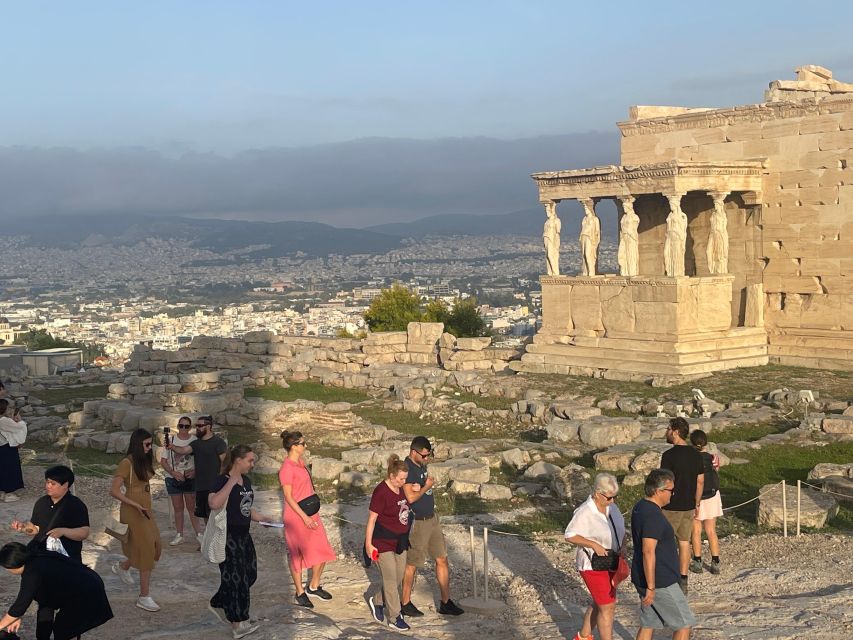
The Asklepieion is the next important stop. This sanctuary was connected with healing, adding another layer to the religious life of the Acropolis. The guide can help you see the hill as a working sacred center, not just a collection of ruined columns.
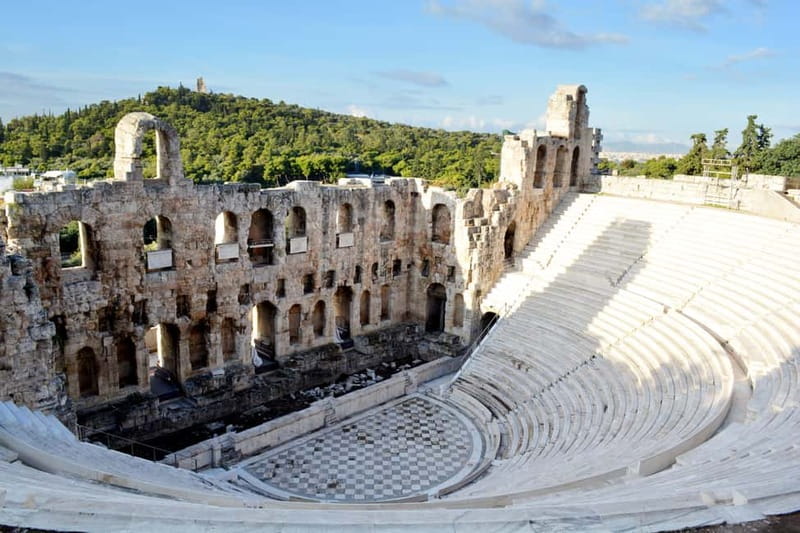
The route then reaches the Odeon of Herodes Atticus, the large stone theater below the Acropolis. Its curved structure is one of the most recognizable sights on the southern slope, and its position makes a strong contrast with the older remains around it.
The walk between stops is generally short, with pauses for explanation. That rhythm is useful in the heat. Still, you should expect exposed areas and limited shade. One guide was specifically praised for maintaining a good pace but was also encouraged to seek more shade during the longer stops. That is a fair point: the quality of the guiding may be excellent, but the Acropolis itself offers little relief from strong sun.
More walking tours around Athens:
- Greek Food Walking Tour in Athens
★ 5.0 · 4,740 reviews - Acropolis monuments & Parthenon Walking Tour with Optional Acropolis Museum
★ 5.0 · 2,678 reviews - Acropolis, Parthenon & Athens Old City Heritage Walking Tour
★ 4.5 · 876 reviews - Athens Authentic Greek Food Walking Tour (Small Group)
★ 5.0 · 809 reviews
Propylaea and the Temple of Athena Nike
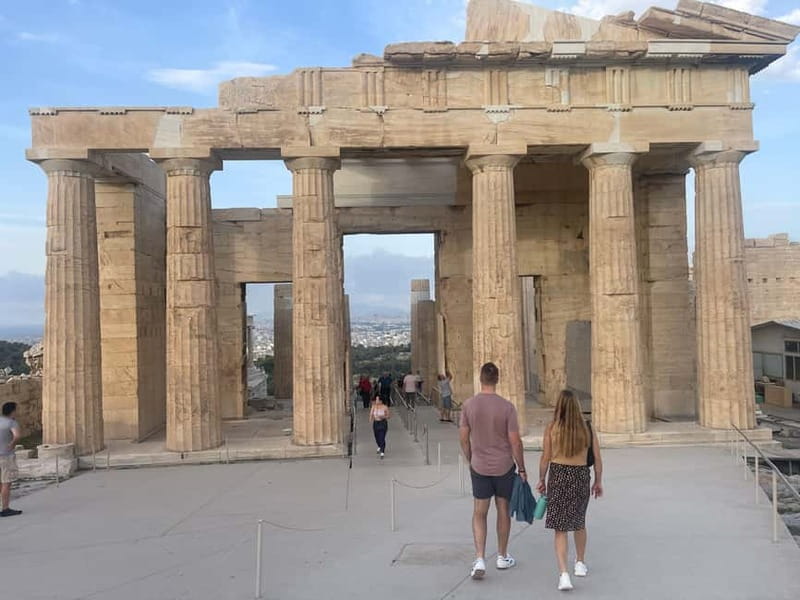
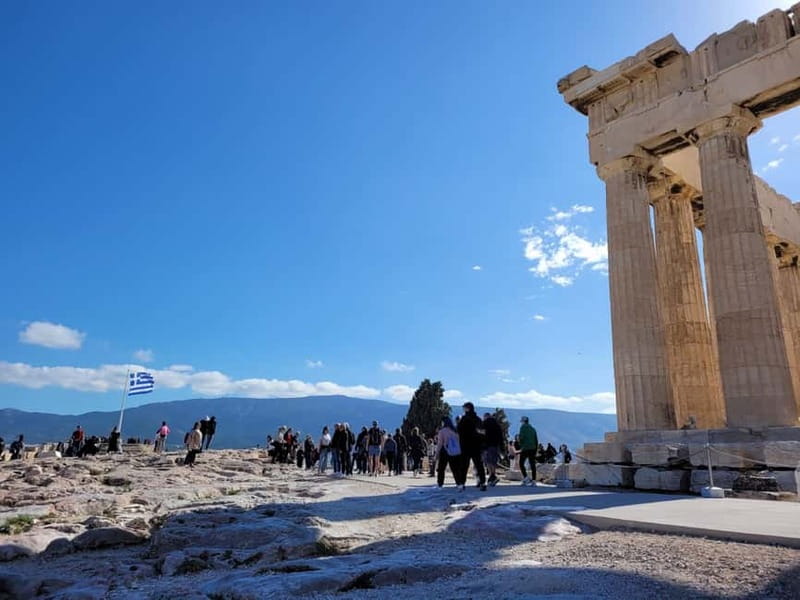
At the top, you approach through the Propylaea, the monumental gateway to the Acropolis. This is one of the best moments to listen closely. The entrance frames the hilltop and prepares you for the buildings beyond it.
The Temple of Athena Nike sits near the entrance and is easy to miss if you are focused only on the Parthenon. Its position and compact size make it a good example of why a guide adds value. You are more likely to notice a smaller structure when someone points out its purpose and place in the complex.
The Propylaea and Temple of Athena Nike also show why comfortable shoes matter. The route includes uphill walking and ancient surfaces that are not designed for modern footwear. The experience is not suitable for wheelchair users or people with mobility impairments, and baby strollers are not allowed. Large bags and luggage are also prohibited.
Erechtheion and the Parthenon
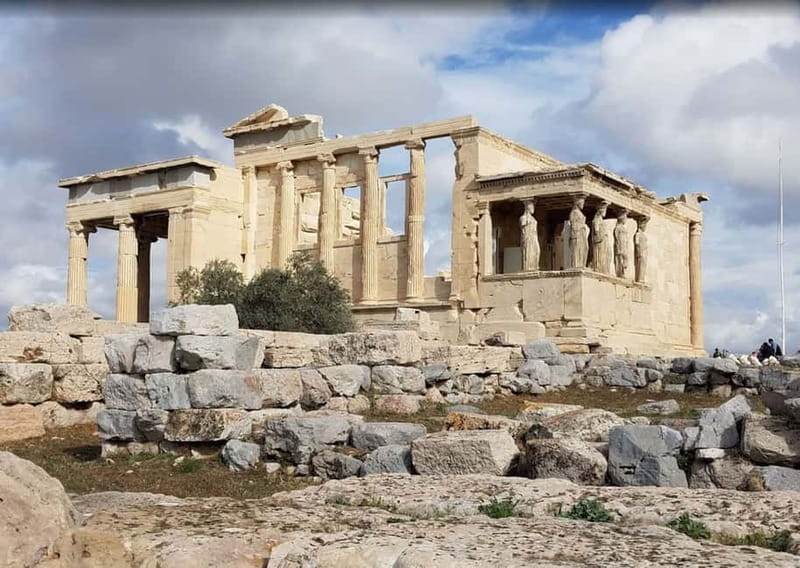
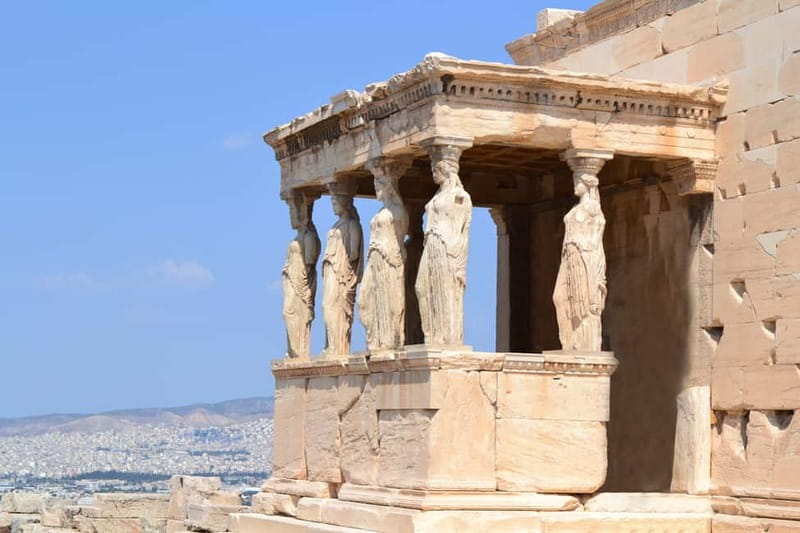
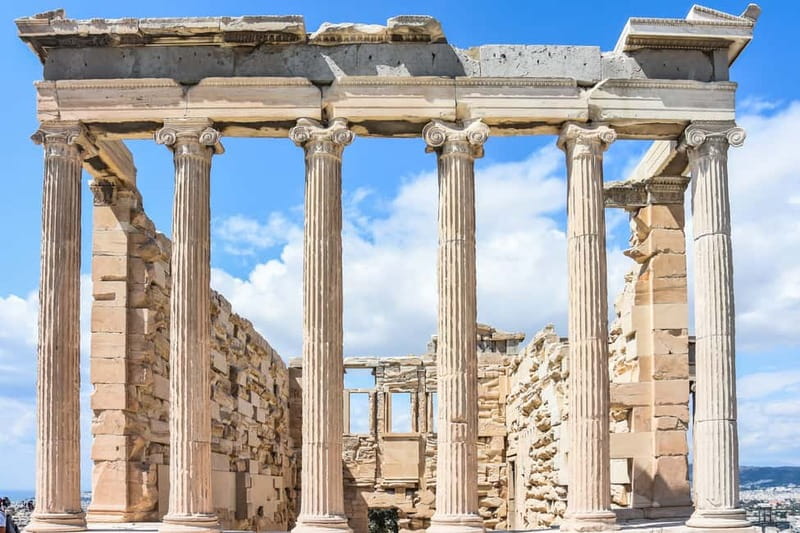
The Erechtheion is one of the tour’s most rewarding stops. Its unusual design and famous Caryatid figures make it visually different from the Parthenon. It is also tied to several myths, giving the guide room to connect architecture with the stories of Athena and the early identity of Athens.
This is the kind of place where a myth-based explanation can make a difference. Kalli, also referred to as Kali in one account, was praised for combining researched historical information with the mythical side of the site. That approach suits the Acropolis well. You need both: the surviving evidence and the stories ancient Athenians used to explain their world.
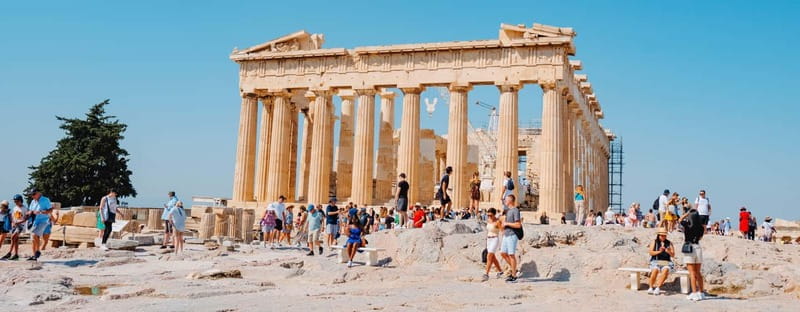
The Parthenon comes later, after the other monuments have set the scene. You can expect roughly 20 minutes around this final major stop, although the exact pace depends on crowd levels and the guide’s timing.
The guide explains the building’s purpose, design, and place in Athenian history. You also get time for photographs and views. The structure is partly covered by ongoing conservation work, so do not expect an untouched ancient building. The columns, scaffolding, missing sculptures, and open sky are all part of what you see today.
The tour ends at the Acropolis according to the route description. The meeting information also says the activity ends back at the meeting point, so confirm the return arrangement when you book. Either way, plan your next stop rather than assuming you will be escorted to your hotel.
What the personal earsets add
The earsets are one of the most practical features. At a site where several groups may be listening to different guides, a normal speaking voice can quickly disappear. With personal audio, you can stand slightly apart, take a photograph, and still follow the explanation.
This is especially useful at the major stops, where the group may gather near other tour groups. Several guides have been praised for easy-to-understand English and for keeping everyone together, but the earsets provide an extra layer of security.
They do not remove every problem. You still need to stay within the group and watch where you step. If you stop too far away for a photograph, you may miss the next movement. Treat the device as a way to hear better, not permission to wander off.
Guides, families, and the pace of the walk
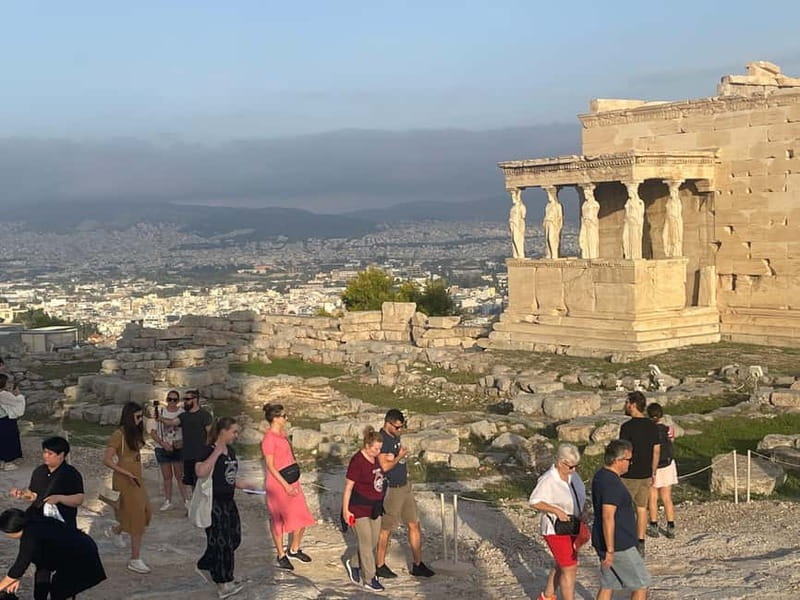
The guides are the heart of the experience. Eva is praised for her enthusiasm, kindness, and attention to the group. Dory is noted for a comfortable pace and good organization. Maria kept children involved with stories, and another guide used a Lego reconstruction of the Acropolis when younger children began to tire.
Victor is described as personable and prepared with visual material. Andrea is praised for patience and strong historical explanation. Antonis is credited with giving clear instructions and keeping the tour moving. Giota is valued for anecdotes that helped connect the monuments to the surrounding city.
These are useful clues for deciding if a guided visit suits you. The tour works best if you want context, stories, and steady direction. It is less suitable if you prefer to wander alone, read every sign at your own pace, or spend a long time photographing one building.
Families can manage the route, but the combination of sun, stairs, crowds, and walking can test young children. One account describes the tour as doable with a two-year-old, yet that does not mean every family will find it easy. Bring patience, water, and realistic expectations.
Timing, crowds, and heat
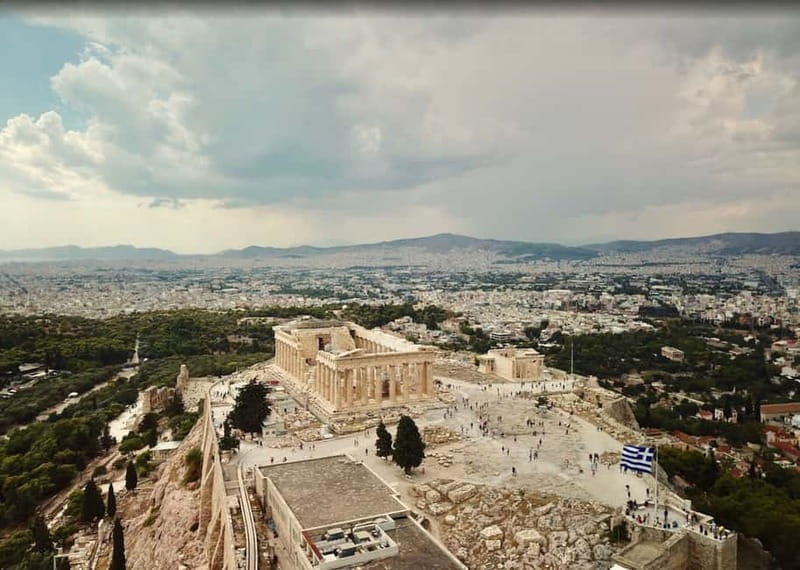
The duration is listed as two to three and a half hours, depending on the selected option and timing. That range is important. A short visit can cover the major stops briskly, while a longer version may include more explanation or the museum.
An early start can help with heat and crowds. An 8:30 a.m. departure has been singled out as a good choice. A late afternoon start, including a 5:30 p.m. departure, can bring softer light and cooler conditions, although the site may still be busy.
Security checks can take 30 minutes or more during peak season. The tour operates in rain or sunshine, so pack for the forecast. Sunglasses, a hat, sunscreen, comfortable clothing, and supportive shoes are sensible. The hilltop has exposed sections, and you may be standing in the sun while listening.
The group does not wait for late arrivals because Acropolis entry times are strict. This is the most important practical rule of the day. Arrive early, keep your identification and booking details accessible, and do not count on buying a ticket at the last moment.
Choosing the ticket option and judging the value
The listed price is $38.39 per person, but the final value depends on the option you select. Some choices include the Acropolis entry ticket. Others do not, and you must purchase your own ticket through the official website.
If you choose the no-ticket option, buy the official admission immediately after booking. Your ticket must match the exact date, time, and category selected for the tour, including adult or student status. A wrong ticket can prevent entry, and the tour fee is not refundable if you cannot enter because your admission is invalid.
The ticket-included option is simpler. You avoid one more booking step and reduce the chance of selecting the wrong entry time. That convenience may be worth the difference, especially if you have only one day in Athens.
Some options also include the Acropolis Museum and a museum tour. Check the exact package before paying, since museum access is not included in every choice. An Athens map and Athens Guide magazine are included, which can help you plan the rest of your visit, but food and drinks are not.
At this price, I see the best value in the guide, the audio equipment, and the organized entry process. You could walk around the Acropolis on your own, but the mythological and architectural details are easy to miss. If you already have strong knowledge of ancient Greek sites and want total freedom, self-guiding may suit you better.
What to bring and what to leave behind
Pack light. Large bags, luggage, and baby strollers are not allowed. Bring identification, especially if your booking or ticket category requires it.
Your useful kit is simple:
- Comfortable shoes with a reliable grip
- Water
- Sunglasses
- A sun hat
- Sunscreen
- Light, comfortable clothes
- Your passport or ID card
- A phone or camera with enough battery for the views
Do not plan the Acropolis as a quick stop between flights if your schedule is tight. Security delays, the fixed entry time, and the uphill route all require a little spare time.
Should you book this Acropolis walking tour?
Book it if you want the major monuments explained in plain English, prefer a set route, or are visiting Athens for the first time. The south-slope approach, personal earsets, local licensed guides, and strong focus on myths and historical context make the experience more useful than simply walking up to the Parthenon and taking pictures.
It is also a good choice for families who want help keeping children interested, though the heat and uneven ground still require planning. The early morning and late afternoon departures are the most appealing choices for comfort and photographs.
Skip it if you dislike group tours, need wheelchair access, want to linger alone at each monument, or cannot commit to arriving early. For everyone else, the ticket-included option is the safer booking choice. Pick your time carefully, wear proper shoes, and let the guide turn a famous ruin into a place with a clear story.
FAQ
How long does the Acropolis and Parthenon tour last?
The tour lasts between two and three and a half hours. Check the available departure times and selected option when booking.
What language is the tour in?
The live tour guide speaks English.
Where does the tour meet?
Meet at 3 Dionysiou Areopagitou Street. Look for the orange Athens Walking Tours sign at the start of the pedestrian walkway leading toward the Acropolis from Hadrian’s Arch and Syngrou Avenue.
How early should I arrive?
Arrive 20 minutes before the scheduled departure time. Acropolis entry times are strict, and the group cannot wait for late arrivals.
Is the Acropolis entry ticket included?
It depends on the option you choose. The ticket-included option provides Acropolis admission. With the no-ticket option, you must buy your own official ticket immediately after booking.
What happens if I choose the no-ticket option?
You are responsible for purchasing your own Acropolis admission ticket. It must match the correct date, time, and ticket category for the tour.
Does the tour include the Acropolis Museum?
The museum ticket and museum tour are included only with the applicable selected option. Check the booking choice before purchase.
Are headphones provided?
Yes. Personal earsets are provided so you can hear the guide more clearly during the walk.
Is the tour suitable for wheelchair users?
No. The activity is not suitable for wheelchair users or people with mobility impairments.
What should I bring?
Bring your passport or ID card, comfortable shoes, sunglasses, a sun hat, sunscreen, and comfortable clothing. Water is also sensible, since food and drinks are not included.
Can I cancel the tour?
You can cancel up to 24 hours in advance for a full refund. The tour runs in rain or sunshine.
New walking tours around Athens
- Athens: History of Rebellion Walking Tour★ 5.0 · 110 reviews
- Eat Your Way Through Athens: A Local Food Walk★ 4.9 · 97 reviews
- Athens: Private Walking Tour with a Local★ 4.5 · 93 reviews
- Athens: The Acropolis Walking Group Tour with a French Guide★ 4.7 · 469 reviews
- Athens: Women in Ancient Greece Guided Walking Tour★ 5.0 · 86 reviews
- Athens: Evening Food Walking Tour★ 4.9 · 422 reviews
- Athens: The Acropolis Guided Walking Tour in German★ 5.0 · 362 reviews
- Athens: The Acropolis Guided Walking Tour in Dutch★ 4.9 · 107 reviews
Athens Walking Tours, side by side.



Athens: Guided Greek Food Walking Tour with Tastings
Read our review →
Acropolis monuments & Parthenon Walking Tour with Optional Acropolis Museum
Read our review →
Acropolis, Parthenon & Athens Old City Heritage Walking Tour
Read our review →
Athens Authentic Greek Food Walking Tour (Small Group)
Read our review →
Athens: Ultimate Food Walking Tour with 15 Tastings
Read our review →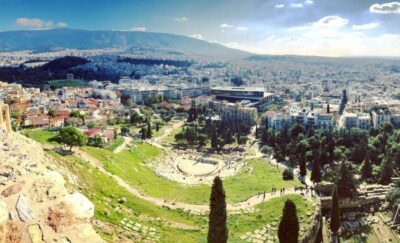
Athens: The Acropolis Walking Group Tour with a French Guide
Read our review →Lists this walk sits on