Review · BORDEAUX
Bordeaux: City Highlights Guided Walking Tour
Bordeaux reveals itself best on foot, and this two-hour city walk gives you a useful first look at the old center without swallowing half your day. You move from the cathedral and Grand Théâtre to medieval gates, riverfront squares, and the famous Miroir d’eau, with a local guide explaining what you are seeing.
I like the route’s mix of grand architecture and ordinary city life. You get the big sights, but also Rue Saint Catherine, Place Camille Jullian, and Saint-Pierre, where Bordeaux feels lived in rather than arranged for photographs. I also like the practical advice offered by guides such as Camilla, Mark, Tammy, and Caz, especially tips on cafés, restaurants, and wine bars.
The main drawback is the brisk coverage. Two hours is enough for orientation and exterior sightseeing, but not for long visits inside every building. The experience is in English only, and the walking route may not suit anyone with mobility problems, despite the activity also being described as wheelchair accessible.
Key points to know before you book
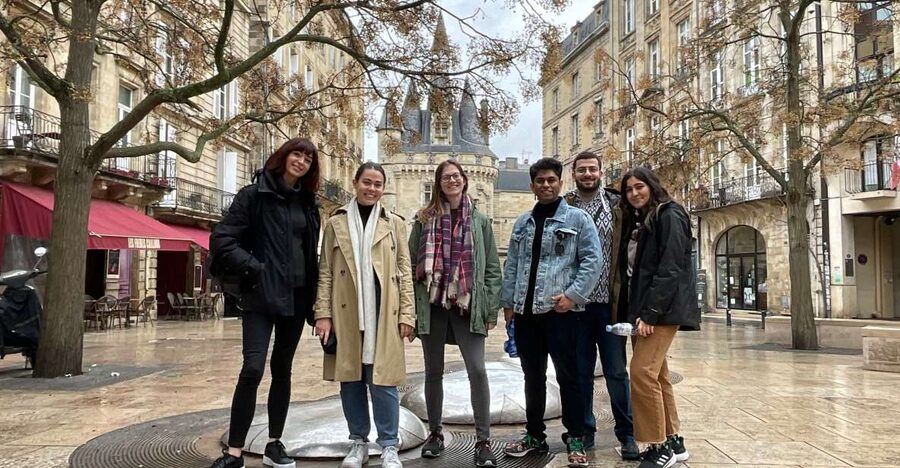
- The route covers Bordeaux’s essential old-center sights: Cathedral Saint André, Grand Théâtre, Porte Cailhau, Place de la Bourse, Tour Pey-Berland, Miroir d’eau, and Saint-Pierre.
- The guides add more than dates and names: Camilla, Mark, Tammy, Caz, Raphael, Emma, and others are praised for connecting architecture with French culture, politics, and daily life.
- Two hours works well for a first morning: You get your bearings quickly, then have time to return to places that catch your eye.
- The meeting point is easy to identify: Look beside the Statue of Jacques Chaban Delmas at Place Pey Berland for a guide with a red umbrella.
- The listed price is remarkably low: At $4.12 per person, the tour offers strong value if you want an orientation rather than private guiding.
- Comfortable shoes matter: This is a walking tour through city streets, with no transport included.
Why this route works as a first look at Bordeaux
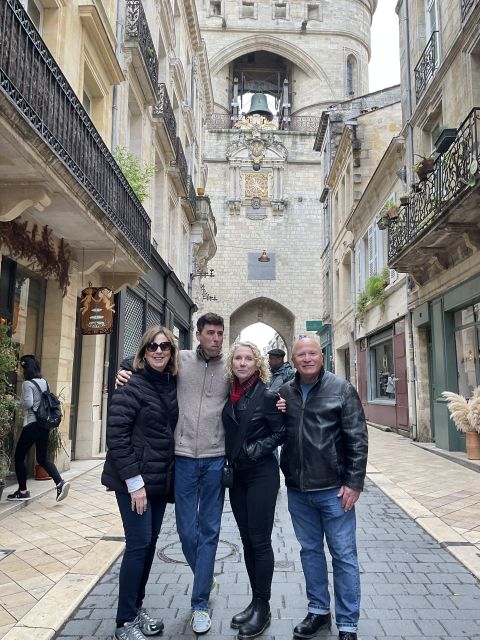
Bordeaux can seem spread out when you first arrive. Its historic center contains grand civic buildings, religious monuments, medieval lanes, shopping streets, and broad squares, but the connections between them are not always obvious.
This route helps you build a mental map. You begin near the city hall and cathedral, cross toward the Grand Théâtre, then work through the old quarter toward Porte Cailhau and Place de la Bourse. You finish near Place de la Comédie, close to the theater and central shopping streets.
I would book this for your first day, not your last. Several guides give advice about places to eat, drink coffee, and find wine bars, and that information becomes useful immediately. One guide also recommended Café Phia, which gave a traveler a successful coffee stop for later in the visit.
The tour is not designed as a deep archaeological study or an inside tour of Bordeaux’s monuments. Think of it as a well-paced introduction. You will hear the main stories, spot the buildings worth revisiting, and learn enough city background to make your next walk more meaningful.
More City Highlights Walking Tours in France
- Montmartre Hidden Gems and Scenic Highlights Walking Tour
★ 5.0 · 2,684 reviews - Paris: Montmartre Highlights Walking Tour with a Local Guide
★ 4.9 · 2,318 reviews - Lyon: City Highlights Walking Tour
★ 4.9 · 847 reviews
Starting at Place Pey Berland and Bordeaux City Hall
Meet beside the Statue of Jacques Chaban Delmas at Place Pey Berland. The red umbrella is the key detail. In a busy square, that bright marker should make the group easier to find.
The first stop is the Hôtel de Ville de Bordeaux, or city hall. The planned guided visit here is brief, about 10 minutes, so expect an introduction to the civic heart of the city rather than a long interior tour.
This opening works because it gives you a sense of Bordeaux as a political center. Guides also use the early part of the walk to place the city in its wider French setting. The strongest experiences here include discussion of culture, politics, and how past decisions shaped the Bordeaux you see now.
I like starting in this area because you are not thrown straight into a list of monuments. You begin with the city’s public life, then move toward its religious and architectural landmarks.
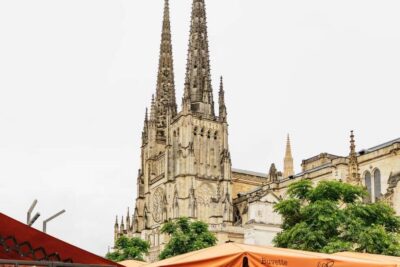
Cathedral Saint André and Tour Pey-Berland
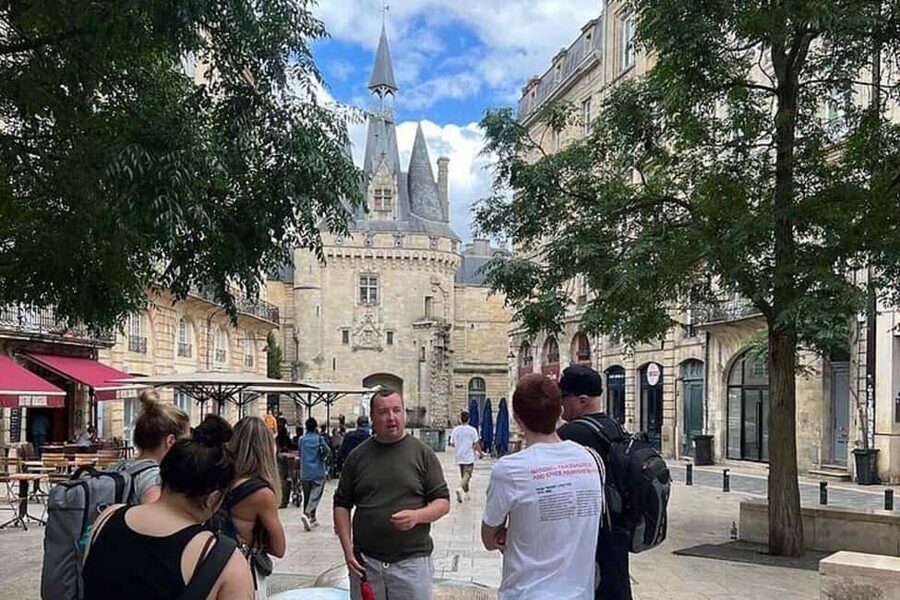
The Cathedral Saint André is one of the major visual moments of the walk. Its scale and age provide a strong counterpoint to the elegant eighteenth-century buildings you will see later.
The guide explains the cathedral’s place in Bordeaux’s story and points out details that are easy to miss when you are simply passing through the square. You should expect sightseeing and commentary, with the possibility of entering a church during the route depending on the guide and conditions.
Tour Pey-Berland is nearby and adds another layer to the cathedral area. The separate tower helps you understand how the religious quarter developed, even if your schedule does not include climbing it.
Do not expect time to explore every church or tower at length. The value here lies in the connection between the buildings. A good guide helps you see the cathedral not as an isolated photo stop, but as part of the city’s long religious and civic story.
Grand Théâtre and the polished face of Bordeaux
From the cathedral area, the walk heads toward the Grand Théâtre de Bordeaux. This is one of the city’s most graceful landmarks, and the surrounding Place de la Comédie gives the route a change of mood.
Here, you can expect the guide to discuss the building’s architecture and Bordeaux’s period of urban refinement. The theater represents the city’s formal, prosperous side, with a broad public setting that invites you to pause and look up.
The finish at Place de la Comédie is useful if you want to return later for photographs or continue into the shopping district. Rue Saint Catherine is also part of the experience, bringing you from monumental Bordeaux into a busier everyday street.
This contrast is one of the tour’s strengths. You are not shown only the postcard version of the city. You see grand squares, shopping streets, church façades, and old lanes within one compact route.
Same streets, a different story:
- Authentic Parisian Gourmet Food Tour with 10 Local Dishes & Wines
★ 5.0 · 4,754 reviews - Paris Top Sights Half Day Walking Tour with a Fun Guide
★ 5.0 · 2,893 reviews - Montmartre Hill French Gourmet Food and Wine Tasting Walking Tour
★ 5.0 · 2,588 reviews - Paris Île de la Cité and Notre-Dame Walking Tour With Crypt
★ 5.0 · 2,272 reviews
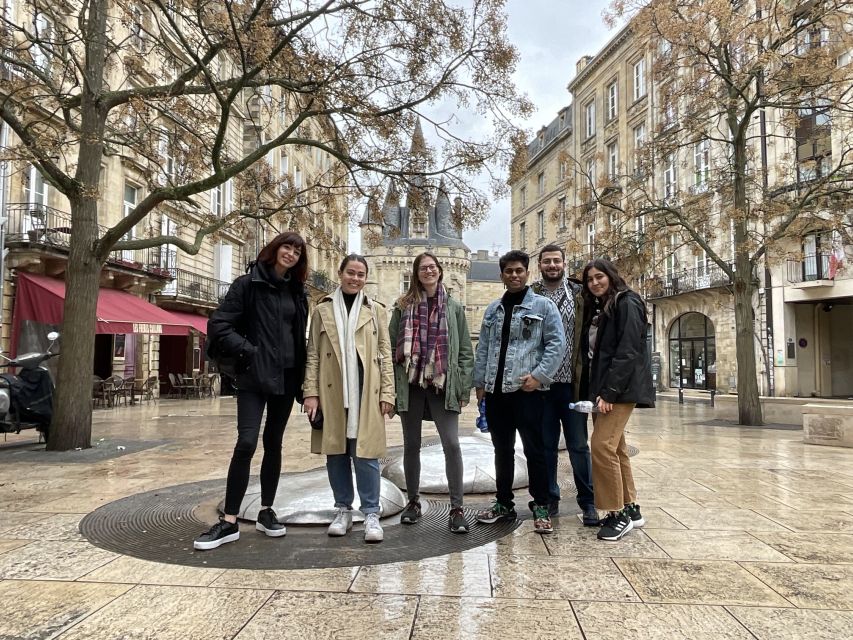
Porte Cailhau and the medieval quarter
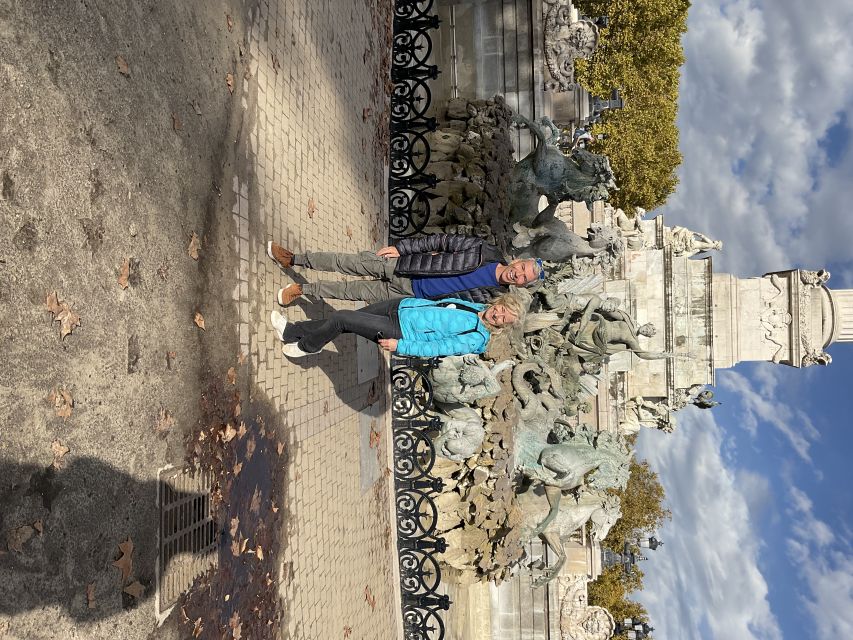
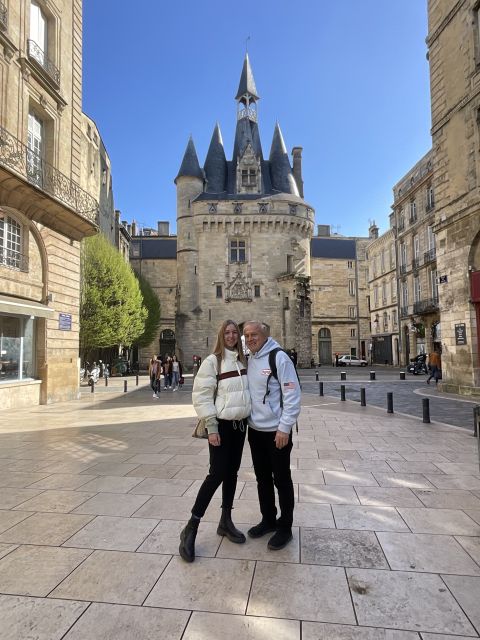
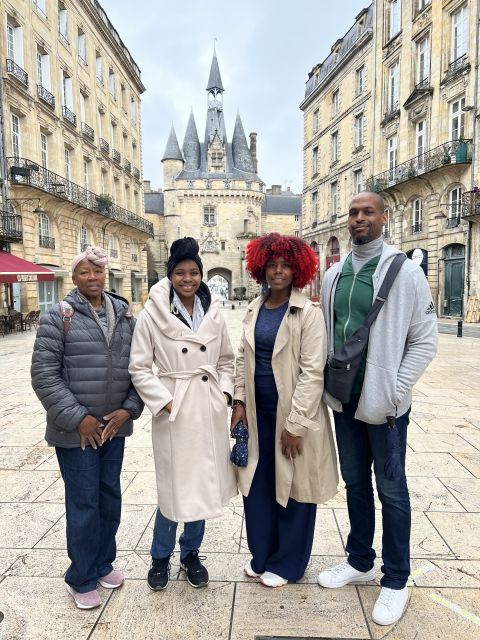
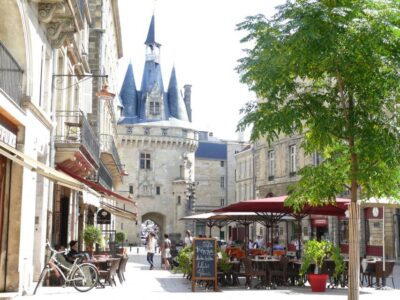
Porte Cailhau brings you into Bordeaux’s older defensive story. The medieval gate is a memorable change from the open spaces around the theater and cathedral.
The guide explains why the gate matters and how it fits into the city’s past. You will mainly view and discuss it from the outside, so anyone wanting a full interior visit should plan separate time.
From here, the route continues toward Saint-Pierre. The streets feel older and more intimate, with smaller spaces and a stronger sense of the historic center’s earlier form.
This section suits anyone who enjoys architecture but wants context along with photographs. You learn how Bordeaux developed, rather than simply collecting a series of famous façades. The trade-off is that the group cannot stop at every lane or door. The pace needs to keep moving to reach the later sights.
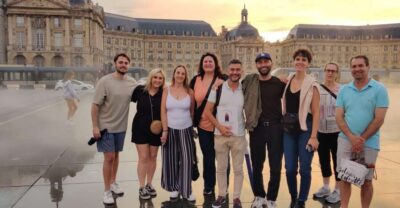
Place de la Bourse and the Miroir d’eau
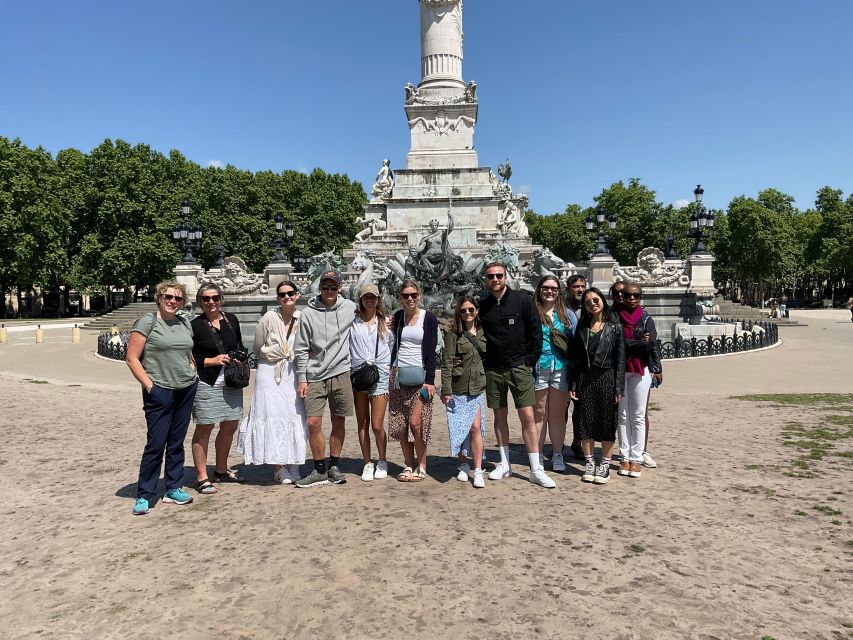
Place de la Bourse is the tour’s grand riverfront set piece. Its formal architecture and open space show Bordeaux at its most carefully planned.
The Miroir d’eau sits opposite the square and gives you one of the city’s most recognizable views. Depending on the operating conditions, you may see its reflective surface, mist, or a changing water effect. The provided tour details confirm the stop, but not a specific water schedule, so do not plan your entire day around one particular display.
This is a good place to listen, then take your own photographs. The guide can explain how the square and waterfront fit into Bordeaux’s urban identity, while you get a clear view of the relationship between old buildings, public space, and the riverfront.
I would not expect a long break here. The tour is only two hours and includes many stops. If you want quiet photographs without a group around you, return at another time, perhaps early or later in the day.
Place Camille Jullian and Saint-Pierre Church
Place Camille Jullian gives the walk a more relaxed neighborhood feel. It is an attractive pause between the larger monuments and the Saint-Pierre quarter.
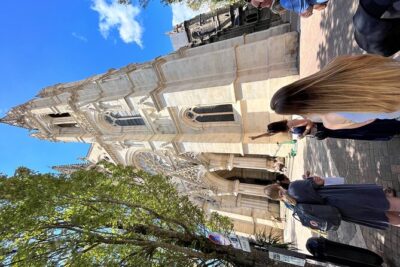
The route then reaches Saint-Pierre Church, a medieval church dating to the 12th century. This is where the tour’s movement through time becomes especially clear. You have seen civic buildings, a cathedral, a medieval gate, and now another religious site with a more intimate scale.
Some guides may take the group into a church during the walk. That depends on access and timing, so treat the interior as a possible addition rather than a guaranteed extended visit.
I like this portion because it slows the visual rhythm. You can compare the church with the cathedral instead of treating both as identical religious monuments. The guide’s storytelling matters here, especially if you want more than a quick list of construction dates.
What the guides add to the walk
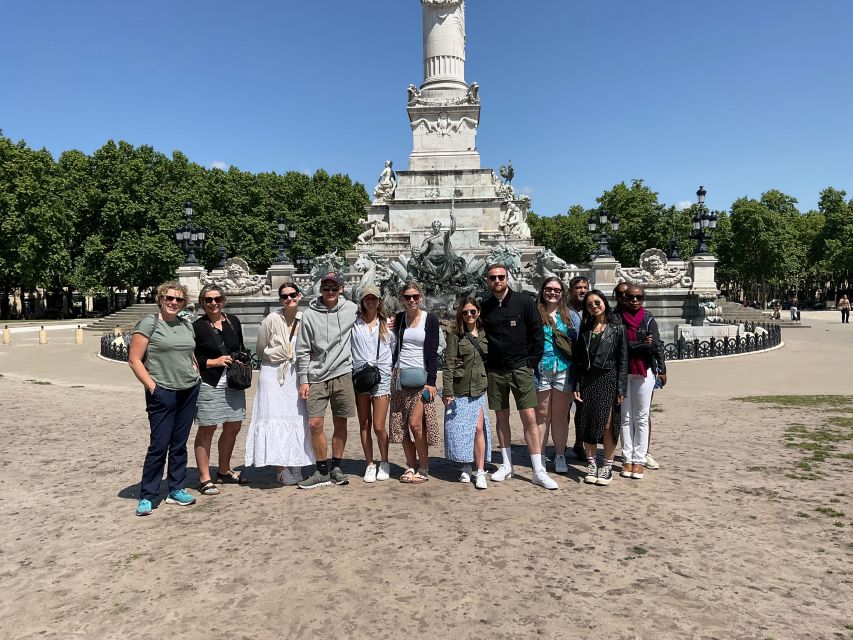
The guide is the deciding factor in a city tour, and this experience uses several English-speaking guides. Names associated with the tour include Camilla, Mark, Tammy, Caz, Raphael, Emma, Marc, and Colten.
The strongest pattern is clear explanation with an easy manner. Mark is especially praised for mixing history, architecture, culture, and present-day Bordeaux. Camilla is often described as engaging and helpful with food and activity suggestions. Tammy brings warmth and enthusiasm for the city, while Caz is noted for clear knowledge of Bordeaux and its wine region.
You may also hear about difficult subjects. One guide addressed the treatment of Jews during World War II, French collaboration, and the political issues behind the city’s past. That makes the walk more useful than a string of cheerful architectural facts, though the tone can vary by guide.
A guide may also adapt to the conditions. One morning, Mark made an effort to keep the group in the shade during hot weather. That sort of small adjustment matters on a sunny day, particularly because much of the route takes place in open squares.
Pace, walking conditions, and what to bring
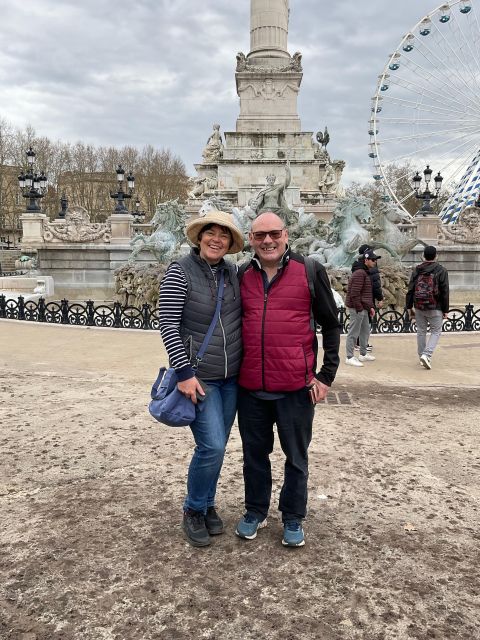
Bring comfortable shoes. The route covers several central districts on foot, and you will spend much of the two hours moving between stops.
Wear weather-appropriate clothing and be ready for sun or rain. Some sections offer shade, but you should not assume the whole walk will be sheltered. A water bottle is a sensible personal addition, though it is not listed as a required item.
The pace is generally intended to be manageable. You should still expect regular walking and standing while the guide speaks. Anyone with a mobility impairment should check suitability before booking because the information gives two different signals: the activity is marked wheelchair accessible, but it is also listed as unsuitable for people with mobility impairments.
The tour is in English only. That is helpful if you want detailed commentary without translating as you walk, but it is not the right choice if you need French, Spanish, or another language.
Is $4.12 a good value?
At the listed price of $4.12 per person, this is unusually inexpensive for a two-hour guided tour. Even if you use it only to orient yourself, the cost is low enough that the route can pay off through better decisions about the rest of your stay.
The value comes from the guide and the route, not from included admissions. There is no promise of entry to every monument, no transport, and no meal or tasting. You are paying for an English-speaking walking guide who explains the places along the way.
That makes the tour a strong choice for first-time visitors on a budget. It is also useful if you have only one free morning. If you prefer a private experience, long interior visits, or a specialist focus on wine, art, or architecture, you may need a different tour.
Free cancellation up to 24 hours before the start and reserve-now, pay-later booking make the low-cost option easier to fit into a changing schedule. Check the available start times before booking, since the tour lasts two hours but the exact departure time is not fixed in the supplied details.
Who should book this Bordeaux walk?
I would choose this tour if you want a fast, clear introduction to Bordeaux before exploring on your own. It suits history fans, architecture lovers, first-time visitors, and anyone who wants restaurant and wine-bar suggestions from a local guide.
It also works well for travelers who prefer stories over silent sightseeing. The best guides discuss French culture and politics along with buildings, and some are willing to address uncomfortable parts of the past.
You may want something else if you dislike group walks, need frequent rest stops, or want to enter every major monument. The tour covers a lot in two hours, so the experience favors breadth over a slow look at one place.
Should you book it?
Yes, if you want an inexpensive first orientation to Bordeaux. The route links the cathedral, Grand Théâtre, Porte Cailhau, Place de la Bourse, Miroir d’eau, and Saint-Pierre in a sensible two-hour sweep, while guides such as Mark, Camilla, Tammy, and Caz add useful local advice.
Book it early in your stay so you can use the recommendations afterward. Wear good shoes, expect mostly exterior sightseeing, and confirm the mobility information if you have accessibility needs. At $4.12, it offers a lot of city context for very little money, provided you understand that it is a brisk introduction rather than a full monument tour.
FAQ
How long does the Bordeaux walking tour last?
The tour lasts two hours.
What language is the tour conducted in?
The tour is conducted in English only, with an English-speaking live guide.
Where does the tour meet?
Meet beside the Statue of Jacques Chaban Delmas in Place Pey Berland. The guide will be holding a red umbrella.
Where does the tour finish?
The tour finishes at Place de la Comédie.
Which Bordeaux sights are included?
The route includes Bordeaux City Hall, Cathedral Saint André, Grand Théâtre de Bordeaux, Porte Cailhau, Place de la Bourse, Tour Pey-Berland, Miroir d’eau, Place Camille Jullian, and Saint-Pierre.
Is this tour suitable for wheelchair users?
The activity information describes the tour as wheelchair accessible, but it also says it is not suitable for people with mobility impairments. Contact the provider before booking if you need specific accessibility support.
What should I bring?
Bring comfortable shoes, comfortable clothing, and clothing suited to the weather.
Can I cancel the tour for a refund?
You can cancel up to 24 hours in advance for a full refund. The reserve-now, pay-later option lets you hold a place without paying immediately.
New walking tours around France
- Montmartre Walking Tour with a Local Guide★ 4.9 · 478 reviews
- Paris: Montmartre Small Group Guided Walking Tour★ 4.8 · 139 reviews
- Paris: Montmartre Hidden Gems and Highlights Walking Tour★ 4.7 · 378 reviews
- Montmartre & Sacré Coeur: 2.5-Hour Walking Tour★ 4.9 · 71 reviews
- Mont Saint Michel: Walking Tour & Optional Abbey Ticket★ 4.3 · 562 reviews
- Montmartre for Art Lovers – Walking tour with Expert Guide★ 5.0 · 456 reviews
- Mont Saint Michel: Village History and Legends Walking Tour★ 4.8 · 96 reviews
- Mont-saint-Michel : Walk in the heart of the Bay★ 4.7 · 167 reviews
Bordeaux Walking Tours, side by side.
Private – Best of Bordeaux Walking Tour + Glass of Bordeaux Wine
Read our review →
Professional – Bordeaux Wine and Cheese Tasting with a walking tour
Read our review →