
Review · BORDEAUX
Bordeaux: Guided Walking Tour
Bordeaux’s big surprise is how much of its story is written into its streets. This walking tour moves from the broad, orderly avenues around Place des Quinconces to the tight lanes of Saint-Pierre, then finishes near the gleaming reflecting pool at Place de la Bourse. In less than two hours, you get a useful first look at the city’s architecture, politics, wine trade, and long redevelopment.
I like the strong local storytelling, with guides such as Bruno, Alcide, Christine, and Veronique explaining everything from balcony details to Enlightenment planning. I also like the price: at about $17 per person, it gives you a well-priced orientation before you spend money on museums, wine bars, and restaurants.
The main trade-off is the bilingual format. If French and English are mixed in one group, every explanation takes longer, and some English speakers feel they get less detail. A large group, rain, street noise, or a guide who speaks too softly can make listening harder.
Key points to know before you book
- The route shows two very different Bord eaux: grand neo-classical avenues lead into the narrow paved lanes of Saint-Pierre.
- Place de la Bourse and its reflecting pool provide one of the tour’s best photo stops and a clear view of Bordeaux’s modern makeover.
- Guides bring more than dates and names: expect explanations of balconies, window carvings, city planning, wine culture, and local food.
- Morning is the safer choice for English speakers: the morning tour is bilingual, while Saturday afternoon is French only.
- The tour lasts 105 minutes to two hours: that is enough for an orientation, but not a full visit to Bordeaux’s museums or interiors.
- Comfortable shoes matter: luggage and large bags are not allowed, and the walk covers paved city streets.
Starting at the Tourist Office on Cours du 30 Juillet
The meeting point is by the Bordeaux Tourist Office on Cours du 30 Juillet. Arrive 10 minutes early, with your downloaded or printed ticket ready for each person in your party. This is not the sort of activity where you should arrive at the last minute and hope to find the group by chance.
The starting point puts you near some of central Bordeaux’s most important spaces. From here, the guide can quickly set up the city’s larger story: Bordeaux was shaped by trade, wealth, royal ambition, Enlightenment ideas, and later efforts to make the center cleaner and easier to navigate.
I would book this tour early in your stay. You will hear names, see landmarks, and get restaurant or wine suggestions that can help you plan the rest of your time. Several guides, including Alcide and Al, have also helped visitors choose places for lunch or pointed them toward further sights.
The exact pace depends on the guide and group. Some walks cover ground at a steady clip, while others pause often for architectural details. That variation is useful if you enjoy explanation, but it means the tour may feel less like a brisk sightseeing circuit and more like an outdoor history lesson.
More walks with a guide around France:
- Paris Top Sights Half Day Walking Tour with a Fun Guide
★ 5.0 · 2,893 reviews - Paris: Montmartre Highlights Walking Tour with a Local Guide
★ 4.9 · 2,318 reviews - Paris: Montmartre Cheese, Wine & Pastry Guided Walking Tour
★ 4.8 · 2,255 reviews
Place des Quinconces and Bordeaux’s grand scale
Place des Quinconces is one of the first major sights, and its size gives you a feel for Bordeaux’s public face. The broad square and surrounding avenues belong to the city’s neo-classical side, where symmetry, open space, and impressive civic buildings matter as much as individual monuments.
The guide uses this area to explain how Bordeaux grew into an important port and commercial center. You are not just looking at a large empty space. You are learning why the city created such formal avenues and how urban design reflected wealth, power, and changing political ideas.
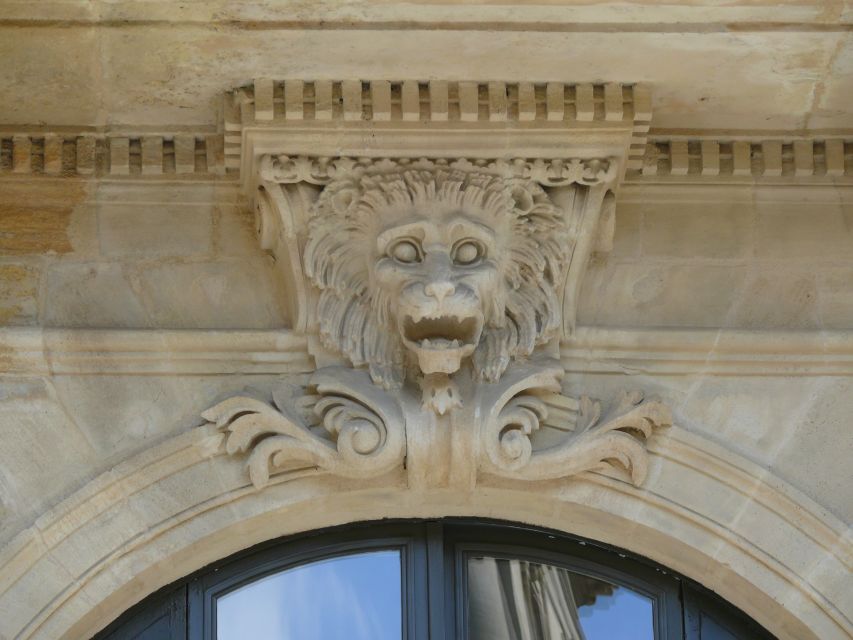
The nearby Monument aux Girondins is another useful stop. Its scale and sculpture give the guide an opening to discuss the French Revolution and Bordeaux’s political identity. One especially strong feature of these tours is the attention to details that are easy to miss when you walk alone. You might hear why balconies differ from one building to the next, or what figures and symbols around windows were meant to communicate.
This part of the route can feel spacious and exposed. On a hot day, there may not be much shade, although one guide made a point of moving the group into shadier spots during a warm walk. On a wet day, the open square also offers little shelter, so bring weather-appropriate clothing.
The Grand Theater and Bordeaux’s public architecture
From the wide avenues, the route leads toward the Grand Theater and the formal center of Bordeaux. The theater is a good example of the city’s polished public architecture, and it helps connect the grand scale of Quinconces with the more intimate streets that follow.
Expect the guide to talk about theaters, town halls, private mansions, squares, fountains, and the way these buildings fit together. The point is not simply to collect postcard views. You are learning how Bordeaux’s center was planned as a complete urban setting.
I find this kind of explanation more useful than a fast list of dates. A guide can show you why one facade feels restrained, why another uses elaborate stonework, and how the city’s architecture reflects the wealth created by trade. The best guides, including Bruno and Christine, make these points with stories rather than a string of facts.
Listening conditions matter here. Groups can be large, and traffic or nearby conversation may cut across the guide’s voice. Some tours use an audio link, which can help you hear from the back of the group, although one visitor experienced a Bluetooth system that cut in and out.
Try to stay reasonably close to the guide, especially if you have hearing difficulties. If you are at the rear of a large group, you may miss small comments about carvings, street names, or the meaning of a building’s decoration.
Saint-Pierre’s narrow streets and small shops
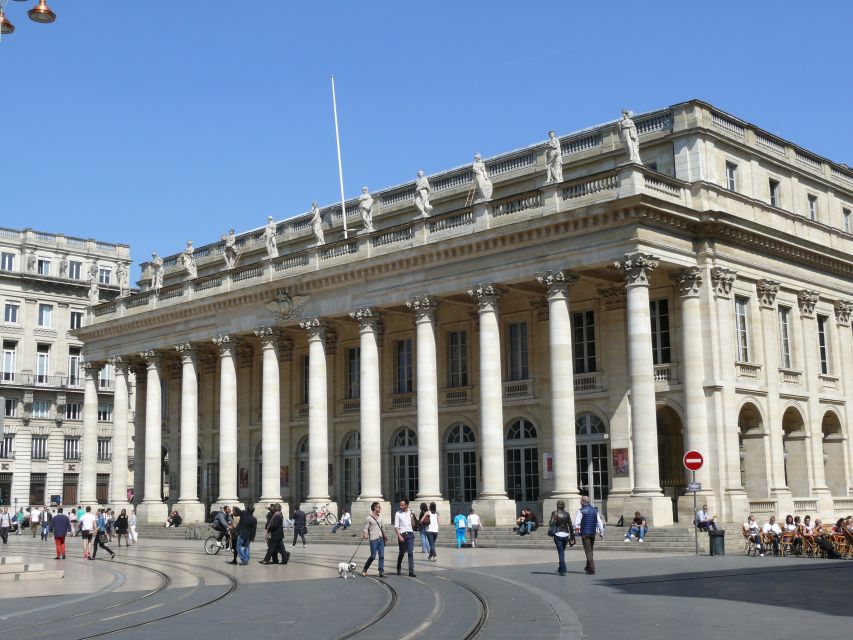
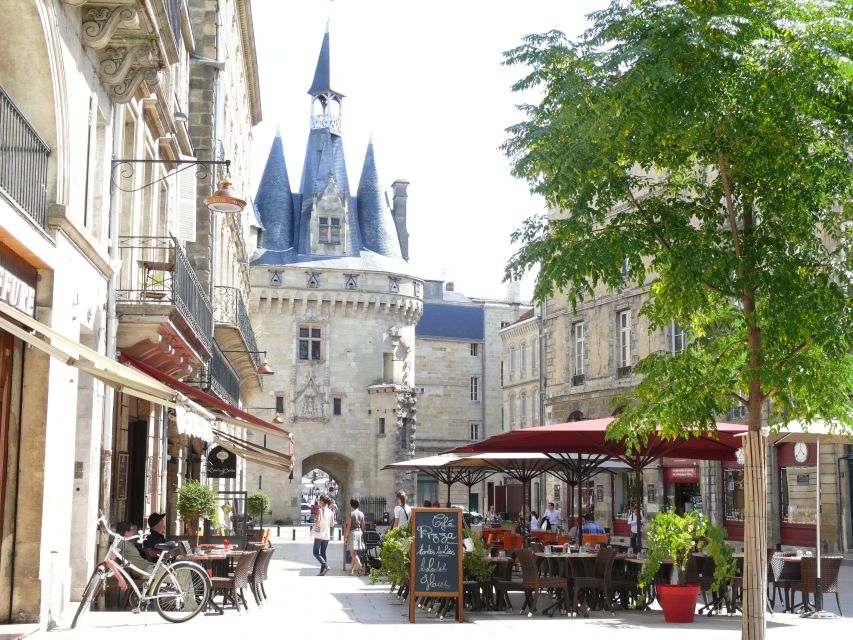
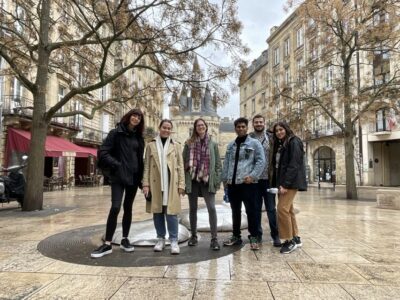
The route changes character in the Saint-Pierre neighborhood. Broad avenues give way to narrow paved streets, old facades, small shops, and a more intimate sense of Bordeaux. This is the section many people find most enjoyable because it feels less formal and more connected to everyday city life.
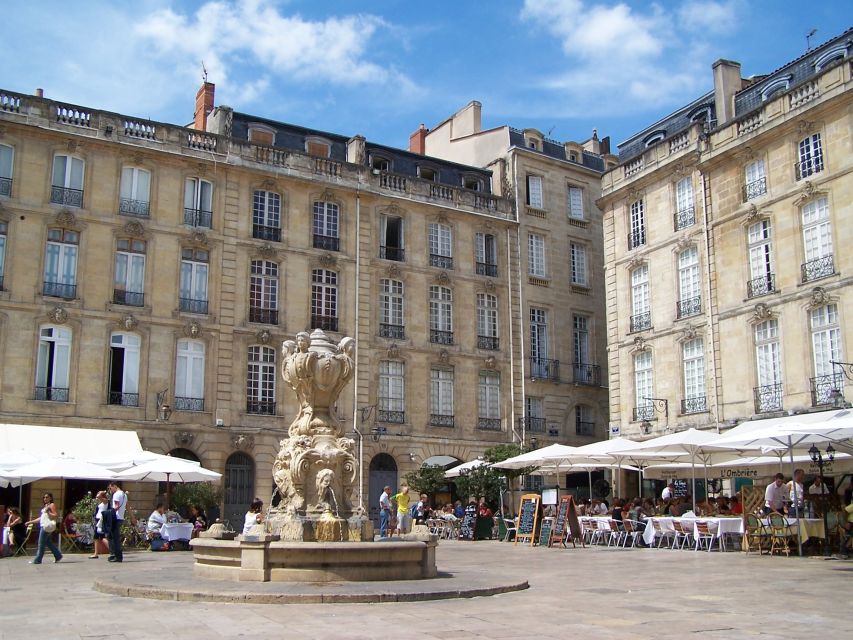
The contrast is the lesson. Bordeaux is not only grand squares and monumental buildings. Its historic center also has compact lanes that lead you from one public space to another. You begin to see how the city’s older street pattern sits beside its later neo-classical planning.
This is a good place to ask questions. Guides often explain how the old center developed and can suggest areas for food or drinks after the walk. Alcide has been especially good at adding wine and restaurant advice, while other guides have pointed out places worth returning to later.
The route does not promise extended shopping time, and this is still a guided walk rather than a free afternoon in the old town. If a small shop catches your eye, make a note of its location and return after the tour. Stopping for long periods would make it difficult for the group to keep its schedule.
The Saint-Pierre streets are paved, so sturdy, comfortable shoes are more useful than fashionable footwear. The operator does not allow luggage or large bags, which is another reason to leave suitcases at your accommodation or in storage before joining the group.
More walking tours around France:
- Montmartre Hidden Gems and Scenic Highlights Walking Tour
★ 5.0 · 2,684 reviews - Montmartre Hill French Gourmet Food and Wine Tasting Walking Tour
★ 5.0 · 2,588 reviews - Paris Île de la Cité and Notre-Dame Walking Tour With Crypt
★ 5.0 · 2,272 reviews - Paris in a Day: Louvre or Orsay, Eiffel Tower, City Walk & Cruise
★ 5.0 · 1,956 reviews
Place de la Bourse and the reflecting pool
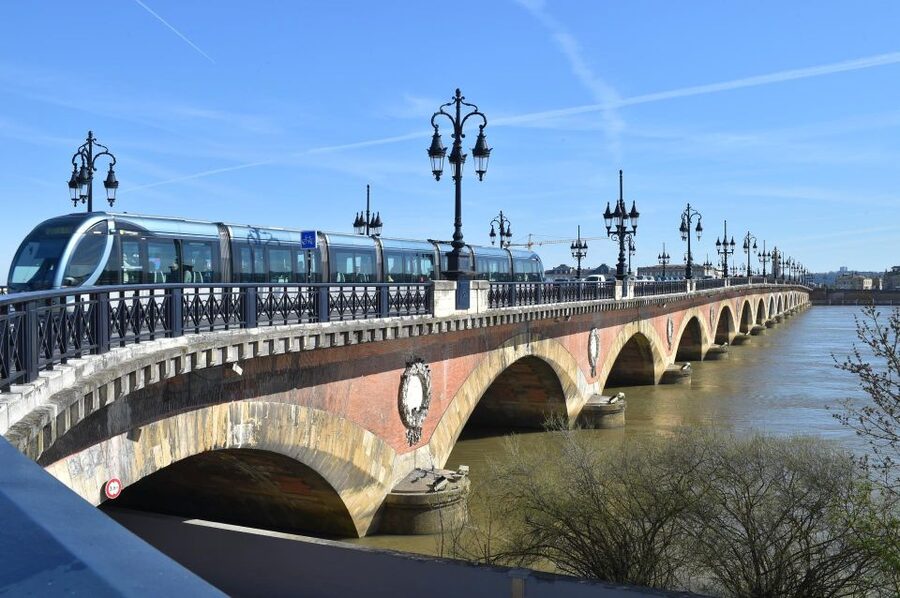
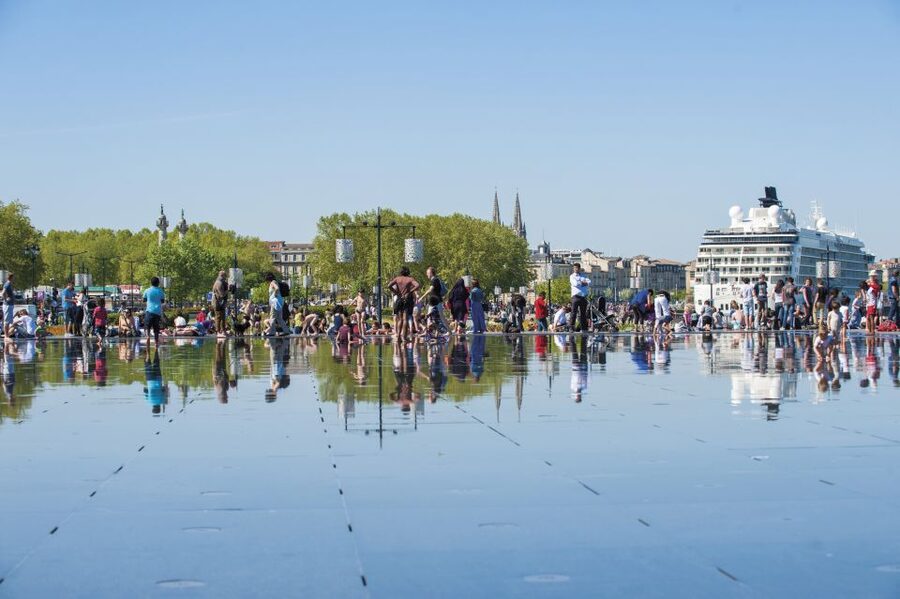
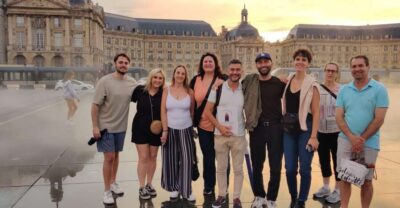
Place de la Bourse is the visual centerpiece of the walk. Its grand buildings face the reflecting pool, known as the Miroir d’eau, which creates the familiar effect of historic facades reflected in a thin sheet of water.
This stop shows Bordeaux at its most photogenic, but the guide also explains why the square matters. It was part of the city’s effort to open itself toward the Garonne and create a more impressive public frontage. The modern reflecting pool adds a new layer to an older architectural setting.
You may spend a little time here taking photographs, but the tour is not designed as a long photo session. The guide needs to keep the group moving, especially when the square is crowded or the weather is poor. Still, this is one place where I would keep your camera ready and listen for the explanation of how the square fits into Bordeaux’s urban development.
The reflecting pool can be particularly striking in changing light, but the experience depends on conditions. Rain, wind, or maintenance can affect the mirror effect. The buildings remain the main attraction, so even a less-than-perfect pool visit still gives you a strong introduction to Bordeaux’s central architecture.
Wine culture, the Garonne, and the bridges
Bordeaux’s wine identity comes up during the walk, but this is not a tasting tour. The focus is the city itself, with wine discussed as part of its trade, culture, and daily life. Some guides also recommend wine bars and explain where you can learn more after the tour.
The Bordeaux Wine School is one stop that some groups particularly enjoy, and the guide may connect it with the city’s wider wine culture. Do not book this walk expecting a full tasting session, though. The included activity is the guided walk, not a guaranteed wine tasting.
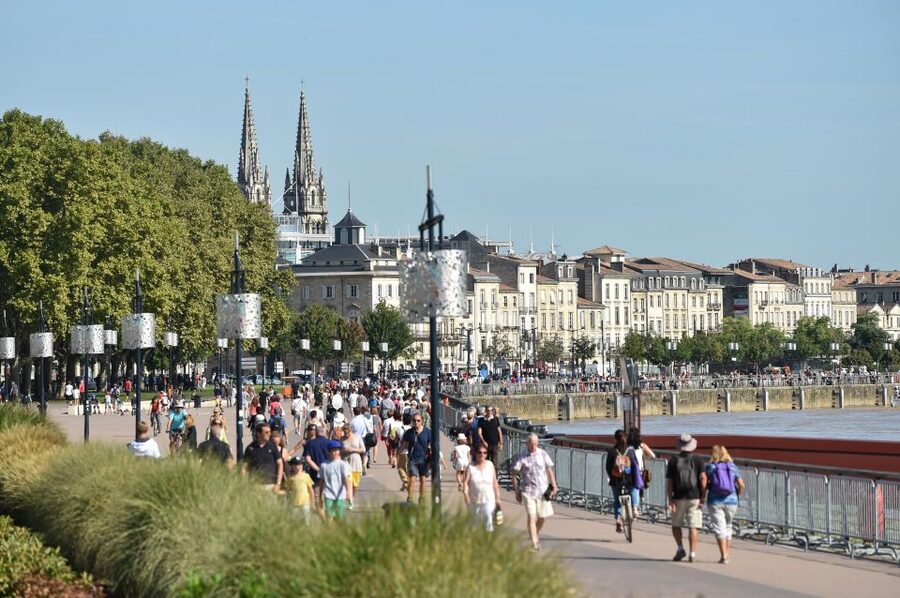
The route also takes in the Garonne and its romantic bridges. These views help you understand Bordeaux as a river city rather than a collection of inland streets. The water, bridges, quays, and grand facades show how commerce and public space have shaped the city.
This riverfront section can be a pleasant change after the tighter streets of the old center. It is also a good time to ask about places to continue walking on your own. The guide may recommend other sights or help you work out where to go for lunch and drinks.
Keep in mind that the tour’s stated highlights do not mean every part of the riverfront receives a long stop. The walk has a lot to cover, and the amount of time at each landmark depends on the day’s pace, group size, and the guide’s approach.
The story behind the UNESCO center
Bordeaux’s historic center was named a UNESCO World Heritage Site because of the way its streets, squares, riverfront, and buildings form a large, coherent urban area. This tour helps you see that connection instead of treating each monument as an isolated attraction.
The Enlightenment is an important part of the explanation. Philosophers and civic planners influenced the way Bordeaux reshaped its streets and public spaces. The guide uses architecture to show how ideas about order, openness, commerce, and public life became physical features of the city.
I especially like this approach because it gives you a way to read Bordeaux after the tour. You begin noticing the relationship between a private mansion and a public square, or between a narrow medieval lane and a later avenue. Even if you forget a few dates, you will understand why the center looks the way it does.
The city is also undergoing ongoing artistic and economic change. The tour points to newer projects alongside older buildings, giving you a sense of Bordeaux as a living city rather than a preserved museum. That balance is important. The historic center remains the focus, but the guide also shows how the city continues to change.
Bilingual delivery and guide quality
The morning tour is offered in French and English. On Saturday afternoons, the tour is listed as French only, so check the departure details carefully if you need English.
A bilingual walk can work well when the guide is organized. Bruno, Alcide, Al, Christine, and other guides have been praised for clear explanations, warmth, humor, and patience. A strong guide can move between languages quickly and still keep the group engaged.
The cost is time. If each point is explained first in French and then in English, the tour covers less material than a single-language walk in the same period. English speakers have sometimes found that French takes up most of the time, especially when the group is large or English speakers are in the minority.
This is the biggest decision point for English-speaking visitors. If you want a relaxed introduction and do not mind pauses for translation, the bilingual format can be pleasant. If you want the maximum amount of English content, choose a clearly English-led departure if one is available, and avoid the Saturday afternoon French-only option.
Guide delivery also varies. Some guides speak with a strong, easy-to-follow voice. Others may be harder to hear in rain or city noise. Stay near the guide, use any audio equipment carefully, and ask for clarification if you miss an important point.
Is $17 good value for the time?
At about $17, this is a good-value introduction to central Bordeaux. You get a live guide, a planned route, local context, and practical advice for less than the cost of many paid museum visits.
The value is greatest if you are staying only a short time or feel unsure where to begin. Two hours on foot can save you from wandering past important buildings without understanding them. It can also help you decide which areas deserve a second visit.
The tour is less useful if you already know Bordeaux well or want long interior visits. You will see many landmarks from the outside, but the activity is not built around entering churches, museums, or private buildings. One advantage is that you keep moving through streets and squares instead of spending the entire time in a single interior.
Free cancellation is available up to two days before the tour for a full refund. Since weather affects an outdoor walk, that policy gives you some room to adjust your plans.
Who should book this Bordeaux walk?
I would recommend it to first-time visitors, short-stay visitors, couples, solo travelers, and anyone who likes architecture explained in plain language. It is also useful for people who want local restaurant and wine suggestions before making evening plans.
It suits you particularly well if you enjoy details. The best moments are not only the famous views, but also the explanations of balconies, stonework, street planning, sculptures, and symbols around windows.
Families and older visitors should consider the pace and paving. The walk is not described as strenuous, but it lasts close to two hours and takes place outdoors. Wear comfortable shoes, carry only a small bag, and be prepared for rain or sun.
You may want a different option if you dislike bilingual tours, large groups, or repeated explanations. In that case, a single-language walk would likely give you more information in the same amount of time.
Should you book it?
Book this tour if you want an affordable, well-organized first look at Bordeaux with a strong focus on architecture, city planning, and local stories. The route covers the essential center, from Place des Quinconces and the Grand Theater to Saint-Pierre, Place de la Bourse, and the Garonne.
Choose a morning departure for English, arrive early, and stay close enough to hear the guide. If you accept the slower bilingual format, the tour offers a useful orientation and plenty of ideas for the rest of your stay.
Skip it if you want a wine tasting, extensive time inside monuments, or a fast, single-language sightseeing circuit. For most first visits, though, $17 is a sensible price for two hours of context that will make Bordeaux’s streets much easier to understand.
FAQ
Where does the Bordeaux walking tour start?
The tour starts by the Bordeaux Tourist Office on Cours du 30 Juillet.
How long does the tour last?
The tour lasts between 105 minutes and two hours, depending on the departure and pace.
Is the tour offered in English?
Morning tours are bilingual in French and English. The listed Saturday afternoon tour is French only, so check the available departure before booking.
What sights are included?
The route includes Place des Quinconces, the Grand Theater area, the Saint-Pierre old town, Place de la Bourse and its reflecting pool, and views of the Garonne and its bridges.
What should I bring?
Bring comfortable shoes and your downloaded or printed e-ticket. You must present the ticket for each person in your group.
Can I bring luggage or cancel my booking?
Large bags and luggage are not allowed. You can cancel up to two days in advance for a full refund.
New walking tours around France
- Montmartre Walking Tour with a Local Guide★ 4.9 · 478 reviews
- Montmartre & Sacré Coeur: 2.5-Hour Walking Tour★ 4.9 · 71 reviews
- Paris: Montmartre Small Group Guided Walking Tour★ 4.8 · 139 reviews
- Paris: Montmartre Hidden Gems and Highlights Walking Tour★ 4.7 · 378 reviews
- Mont Saint Michel: Walking Tour & Optional Abbey Ticket★ 4.3 · 562 reviews
- Montmartre for Art Lovers – Walking tour with Expert Guide★ 5.0 · 456 reviews
- Mont Saint Michel: Village History and Legends Walking Tour★ 4.8 · 96 reviews
- Mont-saint-Michel : Walk in the heart of the Bay★ 4.7 · 167 reviews
Bordeaux Walking Tours, side by side.
Private – Best of Bordeaux Walking Tour + Glass of Bordeaux Wine
Read our review →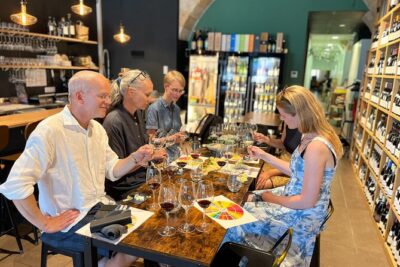
Professional – Bordeaux Wine and Cheese Tasting with a walking tour
Read our review →
Exclusive! Bordeaux: Nighttime Highlights Walking Tour
Read our review →Lists this walk sits on