
Review · GERMANY
Bremen: Walking Tour of Historic Schnoor District
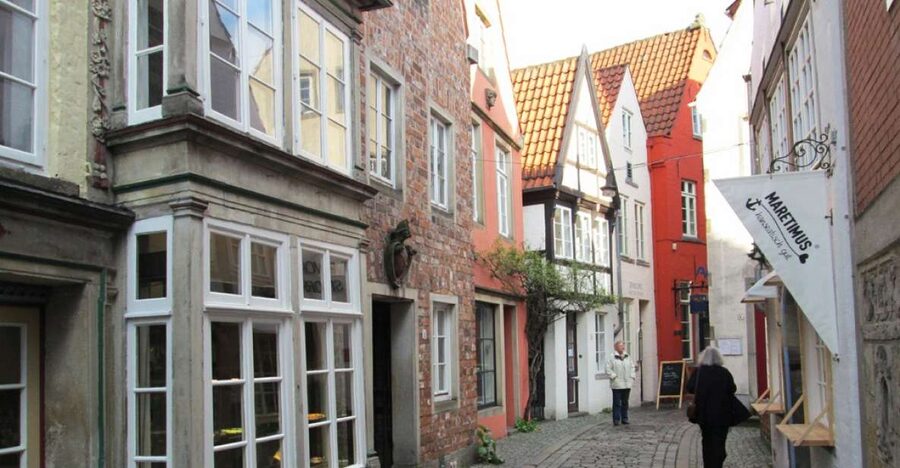
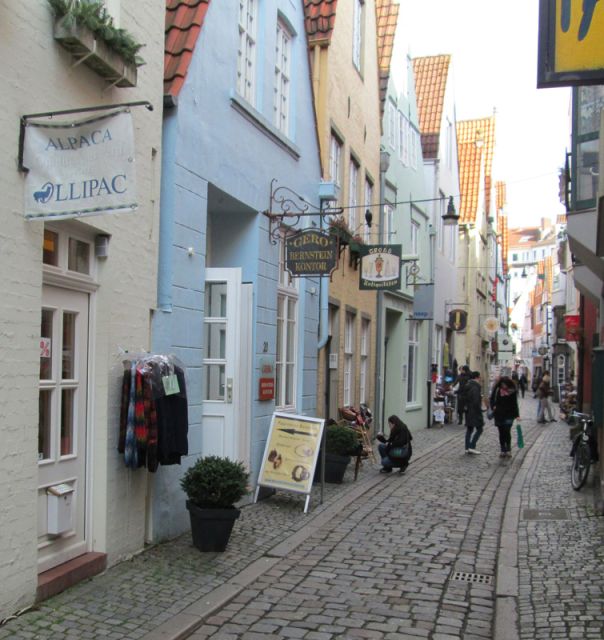
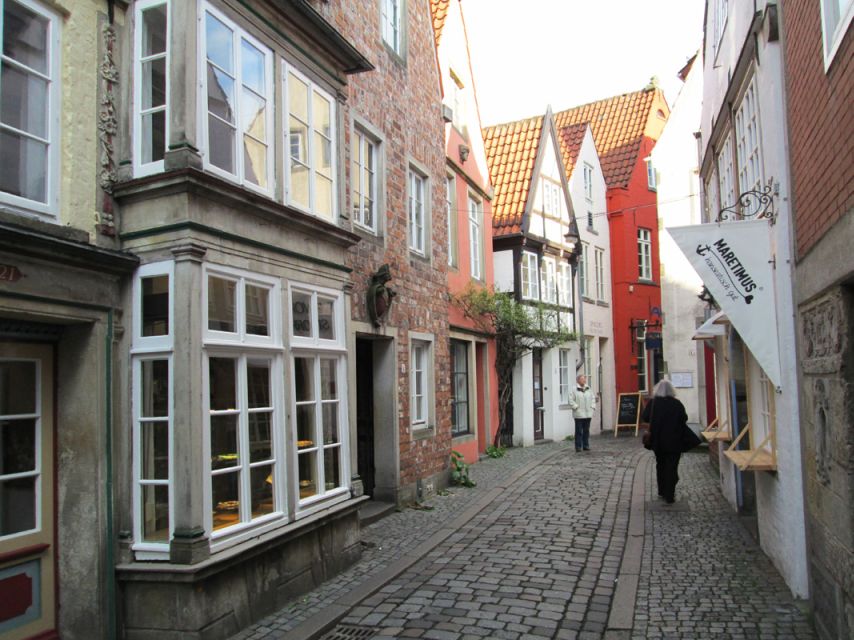
The best part of this one-hour Schnoor walking tour is the setting itself: tiny lanes, crooked façades, and houses packed close together beside Bremen’s old center. The quarter feels less like a formal monument and more like a small village folded into the city.
I like the tour’s low price of $14 and its focus on details you could easily miss alone, from the old Franciscan connection to buildings rebuilt according to historical plans. The main catch is that the tour is in German and all buildings are seen from outside, so you will need comfortable shoes and an interest in architecture and local stories.
Key Points at a Glance
- Medieval lanes in central Bremen: Walk through the Schnoor quarter, where narrow streets and small houses create one of the city’s most distinctive scenes.
- Four centuries of architecture: See Gothic, Baroque, Renaissance, classicist, and historicist details in a compact area.
- Important old buildings: Look for St. John’s Church, Haus Schnoor 15, also called Brasilhaus, and Packhaus Schnoor 2.
- German-language guiding: The tour is led in German, with guides such as Sönke known for adding humor and local stories.
- One hour, good value: At $14 per person, it works well as a short introduction before exploring Bremen on your own.
- Exterior viewing only: You will not go inside the buildings, and the tour is not suitable for wheelchair users.
Entering Schnoor Through Bremen’s Old Center
Your meeting point is in front of Die Glocke concert hall at Domsheide 6. Look for the guide holding a sign that says Bremen Tour Guide.
This is a practical starting place because it puts you near Bremen’s central sights and within easy reach of Schnoor. You do not begin in a distant suburb or spend the first part of the hour getting there. Once the guide gathers the group, the walk moves toward the historic quarter and its tight network of lanes.
The change in scale is part of the pleasure. Bremen’s central streets can feel broad and formal, while Schnoor quickly narrows into a cluster of small houses and winding passages. I like this contrast because it helps you understand why the district feels so separate, even though it is close to the city center.
The tour is available as a shared walk or a private group. The private option may suit families or small groups that want to ask more questions, while the shared version keeps the cost at the advertised $14 per person.
More History Walking Tours in Germany
- Leipzig: 1.5-Hour Historical Walking Tour in German
★ 4.7 · 2,217 reviews - Berlin: History of the Third Reich Guided Walking Tour
★ 4.7 · 791 reviews - Trier: Guided Old Town Highlights and History Walking Tour
★ 4.7 · 687 reviews
Why Schnoor’s Narrow Lanes Matter
Schnoor is not a single grand building. Its appeal comes from how the little houses fit together. They are strung along the lanes almost like beads, with changing rooflines, close-set façades, and passages that turn without warning.
The first written reference to Schnoor dates to the 13th century. Around that time, a Franciscan monastery was built at the edge of the area. Only the monastery church remains today, but that early religious connection gives the quarter a useful starting point.
A guide can give these lanes a human scale. Instead of seeing only attractive façades, you learn how the district developed and who lived and worked there. The tour explains Schnoor and its inhabitants while pointing out features that can be easy to pass without notice.
I would not book this walk expecting a museum visit or a long historical lecture. The hour is short, and the experience works best as a focused introduction. You see the key streets and buildings, then return later if a shop, church, or façade catches your eye.
St. John’s Church and the Franciscan Past
St. John’s Church is one of the clearest historic markers in Schnoor. The present Catholic church was built in the 14th century in redbrick Gothic style.
The brickwork gives the church a different character from the small half-timbered houses nearby. It also helps you picture the religious foundation of the district, where the earlier Franciscan monastery once shaped local life.
The church is part of an exterior walking route, so you should not expect an interior visit. Still, its presence adds variety to the walk. One minute you are studying a narrow domestic building, and the next you are facing a larger religious structure with centuries of history behind it.
The guide’s explanation matters here. Without context, St. John’s may look like one more old church in a city full of historic buildings. With the monastery connection, it becomes a clue to how Schnoor grew around work, worship, and close neighborhood life.
Haus Schnoor 15 and Packhaus Schnoor 2
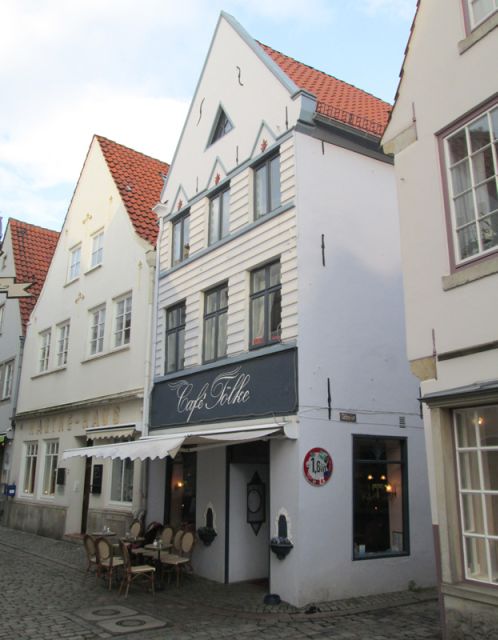
Two of the most important secular buildings on the route are Haus Schnoor 15, also known as Brasilhaus, and Packhaus Schnoor 2. Both date to the 15th century.
These buildings help shift the focus away from churches and famous public monuments. They show that Schnoor’s story also belongs to merchants, tradespeople, and ordinary homes. In a district made of many small structures, dates like these reveal how much of the built fabric reaches back to the late medieval period.
You will see both from the outside. That limitation is worth knowing before you book, especially if you prefer tours that include historic rooms or museum interiors. Here, the reward is in the shape of the façades, the relationship between the buildings, and the explanation supplied by the guide.
Some structures in the quarter have been recreated according to historical specifications. Others now consist only of façades, with the original buildings once located elsewhere. That mix can raise questions about what is original, what was rebuilt, and how historic districts are kept intact. This is one of the more useful parts of the tour because it adds honesty to the pretty picture.
Same streets, a different story:
- Discover Berlin Half-Day Walking Tour
★ 5.0 · 9,624 reviews - Berlin City walk Government District and Places of Democracy
★ 4.7 · 8,467 reviews - Berlin: Third Reich & Cold War Guided Walking Tour
★ 4.9 · 8,378 reviews - Munich: Third Reich & WWII Walking Tour
★ 4.6 · 6,181 reviews
Half-Timbered Houses and Changing Building Styles
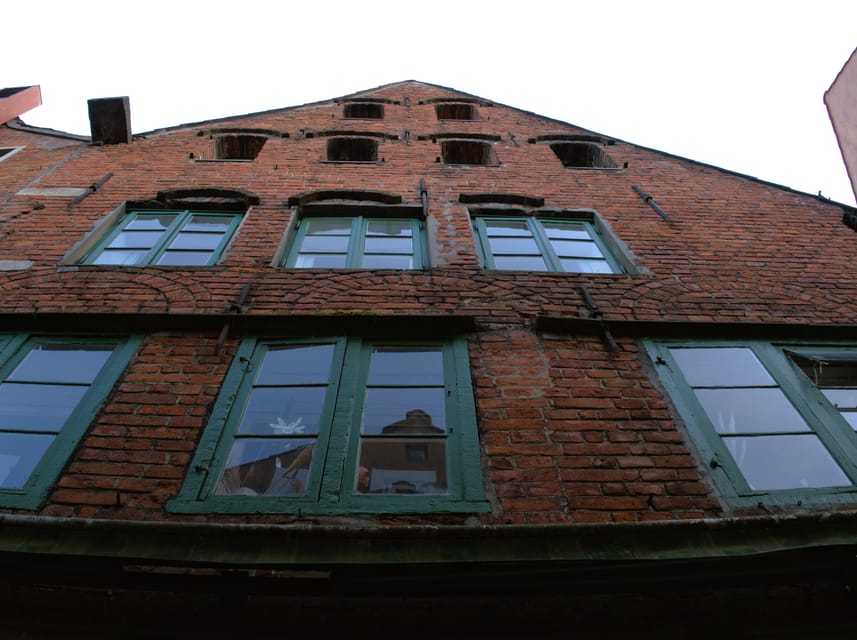
Schnoor brings several building styles into a very small area. You may see medieval forms beside later work from the 17th and 18th centuries, along with signs of Baroque, Renaissance, classicism, and historicism.
Many of the older homes from the 17th and 18th centuries remain in their original state. Their survival gives the quarter a strong sense of earlier domestic life, but the tour does not reduce the buildings to one romantic story. The guide explains how different periods left their mark.
A half-timbered house with a tea room is one of the memorable details along the route. Its design shows the practical, close-built character of Schnoor, while the tea room gives the building a present-day use.
You will also pass narrow half-timbered houses near the Weser River. Their proximity to the river helps explain why this small district developed as a working neighborhood rather than as a grand ceremonial quarter.
I like this part of the walk because it rewards close looking. Pay attention to timber patterns, brick, roof angles, and the spacing between doors. Schnoor is compact, so you can compare several styles without walking far.
Goldsmiths, Handicrafts, and Present-Day Schnoor
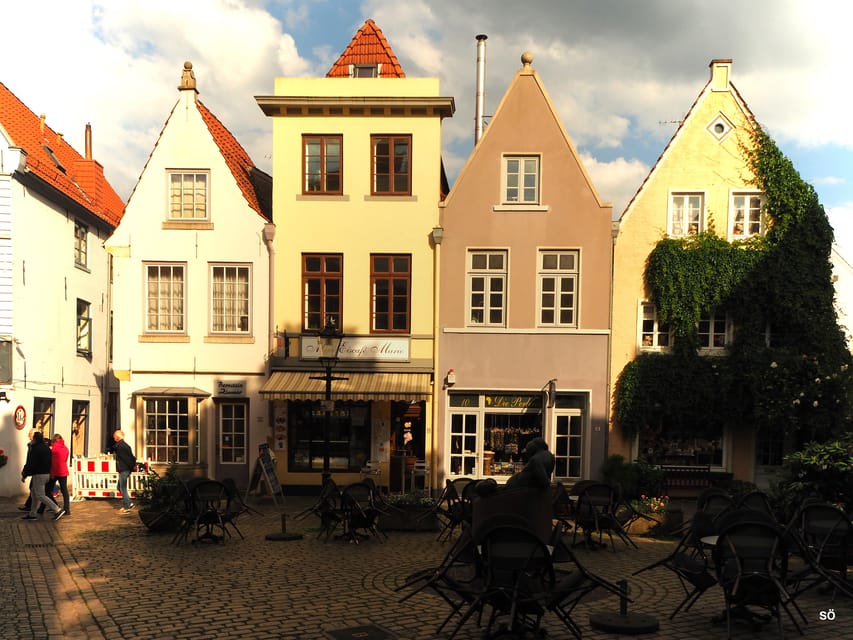
The old quarter is not preserved as an empty stage set. Goldsmiths and shops selling local handicrafts now occupy many of the small buildings.
That makes the walk more useful than a simple architecture lesson. You see how an old neighborhood continues to function, with shops fitted into spaces that were shaped long before modern retail arrived.
The commercial side also gives you a reason to return after the tour. During the guided walk, you can focus on the stories and the façades. Later, you might browse the craft shops at your own pace, though the tour price does not include food, drinks, or purchases.
I would keep your expectations measured. The tour does not promise tastings, shopping discounts, or time set aside for browsing. Its purpose is to explain the quarter, so treat the shops as part of the setting rather than the main activity.
The Guide’s German Stories and Sense of Humor
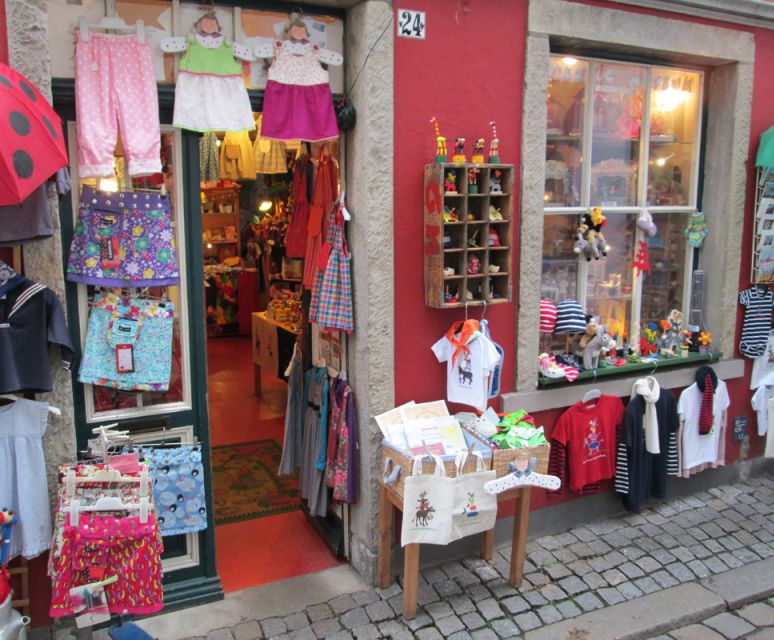
The tour is conducted in German. That is the most important booking point for many people. If you do not understand German well, you may still enjoy the architecture, but much of the tour’s value comes from the spoken history and local anecdotes.
Guide Sönke has been singled out for a warm, funny style and for telling many entertaining stories about Schnoor and Bremen. His approach gives the walk personality. Instead of receiving only dates and labels, you get a sense of the people connected with the streets.
The strongest praise for this experience centers on the guides making the hour informative, lively, and easy to follow. That matters because a compact district can become repetitive if the guide only recites building dates. Humor and stories help connect the details.
The exact guide may vary, so you should not book solely on the expectation of meeting Sönke. Still, the tour’s format clearly leaves room for a personable local guide to shape the experience.
Is One Hour Enough for Schnoor?
One hour is enough for an introduction, not a full exploration. You can see important buildings, hear the basic story of the quarter, and get your bearings for a later independent walk.
The short duration is a strength if you have limited time in Bremen. It fits before lunch, between city sights, or during a brief stop. At $14, it also carries little financial risk if you want a quick orientation rather than a large organized excursion.
The short duration becomes a limitation if you want long photo stops, extended shopping, or detailed interior visits. The guide must keep moving to cover the district, and the group may not pause at every building for as long as you would like.
I would plan to spend more time in Schnoor after the tour if the area interests you. The guided hour tells you what to look for. Your own later walk lets you return to the lanes, revisit the façades, and browse the craft shops without listening to the clock.
Practical Details Before You Book
Wear comfortable shoes. Schnoor’s narrow lanes are the focus of the experience, and the tour is spent walking rather than sitting. The supplied information does not give a route length, so comfortable footwear is the sensible choice.
The meeting point is specific: in front of Die Glocke concert hall at Domsheide 6, Bremen, 28195. Your guide will wait there with a Bremen Tour Guide sign.
The tour is offered in German, and private groups are available. Food and drinks are not included, so plan those separately before or after the walk.
The tour is not suitable for wheelchair users. The buildings are viewed from outside only, which means the experience may not meet your needs if you are looking for step-free interior access or a museum-style visit.
You can cancel up to 24 hours in advance for a full refund. The reserve-now-and-pay-later option also lets you keep your plans flexible and pay nothing at the time of booking.
Who Will Get the Most From This Walk?
I would choose this tour if you enjoy architecture, local history, and small urban districts that reward slow looking. It is particularly useful if Schnoor is new to you and you want a guide to point out the significant houses instead of wandering without context.
It also suits families and first-time visitors who prefer a short activity. The light humor and stories can make the hour more engaging than a formal lecture, though the German language requirement remains important.
History fans should appreciate the range of periods in one compact quarter, from the 14th-century church to older secular buildings and later homes from the 17th and 18th centuries. People who want interiors, food, or a long craft-shopping session should choose something else or add independent time afterward.
The tour is also a good fit for a private group that wants a focused introduction. A private walk gives your group its own guide, but the basic route still centers on outdoor sights and German commentary.
Should You Book the Bremen Schnoor Tour?
Book it if you want a concise, affordable introduction to Bremen’s most atmospheric old quarter. The combination of narrow lanes, old houses, St. John’s Church, medieval secular buildings, and local stories gives you a clear sense of why Schnoor matters.
At $14 for an hour, the value is strong, especially if a guide such as Sönke brings the history to life with humor. Just make sure you understand the limits: the tour is in German, buildings are viewed from outside, and the walk is not suitable for wheelchair users.
If those points work for you, this is a smart first step. Afterward, you can explore Schnoor at your own pace, knowing which façades and streets deserve a second look.
FAQ
How long is the Bremen Schnoor walking tour?
The tour lasts one hour.
How much does the tour cost?
The listed price is $14 per person.
Where does the tour meet?
The meeting point is in front of Die Glocke concert hall at Domsheide 6, Bremen, 28195.
How will I recognize the guide?
The guide will be waiting at the meeting point with a sign saying Bremen Tour Guide.
What language is the tour conducted in?
The live tour guide speaks German.
Are the tours shared or private?
You can choose a shared walking tour, and a private group option is also available.
Do I go inside the historic buildings?
No. The buildings viewed during the tour are seen from the outside only.
What should I bring, and is the tour wheelchair accessible?
Bring comfortable shoes. The tour is not suitable for wheelchair users.
New walking tours around Germany
- Mystical Hamburg – Walking Tour in German★ 4.6 · 168 reviews
- Munich : Private Walking Tour with A Guide (Private tour)★ 4.5 · 85 reviews
- Munich: Raven Black Witches and Executioners Walking Tour★ 4.7 · 294 reviews
- Munich: Guided Food Walking Tour with Beer Tasting★ 4.7 · 183 reviews
- Munich Old Town – Guided Walking Tour in English★ 4.7 · 153 reviews
- Munich: Old Town Guided Walking Tour★ 4.6 · 479 reviews
- Munich: Old Town Walking Tour★ 4.7 · 589 reviews
- Munich: Birthplace of the Third Reich Guided Walking Tour★ 4.6 · 771 reviews
Germany Walking Tours, side by side.


Berlin City walk Government District and Places of Democracy
Read our review →
Berlin: Third Reich & Cold War Guided Walking Tour
Read our review →

Berlin’s Best: 2 Hour Walking Tour Third Reich and the Cold War
Read our review →

Explore Berlin: See All The Iconic Sights & Some Hidden Gems
Read our review →Lists this walk sits on