
Review · BUDAPEST
Budapest 3-Hour Walking Tour in Italian
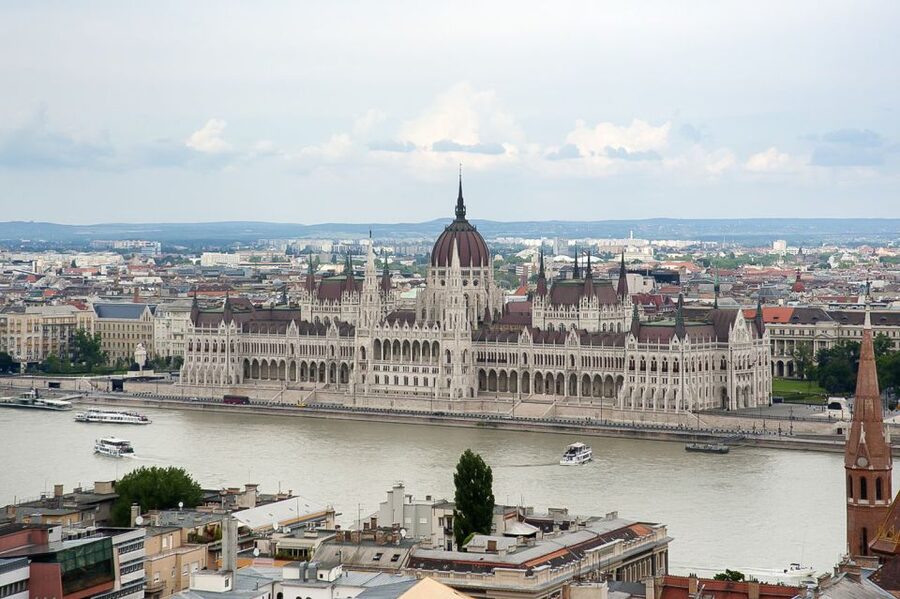
Budapest’s best introduction often comes from seeing Pest and Buda in one walk, and this three-hour Italian tour does exactly that. You begin at St. Stephen’s Basilica, cross the Danube by public transport, and finish among the castle walls, Gothic stonework, and broad city views of Buda.
I like the Italian-speaking guides, especially because Katalin, Caterina, and Elisabetta are praised for clear, detailed explanations and a warm manner. I also like the efficient route, which links major sights without asking you to spend a full day on one district. The main drawback is that three hours is tight for such a large subject, and four public transport tickets cost an extra 1,400 HUF per person.
Key points to know before booking
- Two historic districts in three hours: Visit central Pest and the Buda Castle area in one compact route.
- Italian throughout: The tour is conducted in Italian, with guides including Katalin, Caterina, and Elisabetta named in recent bookings.
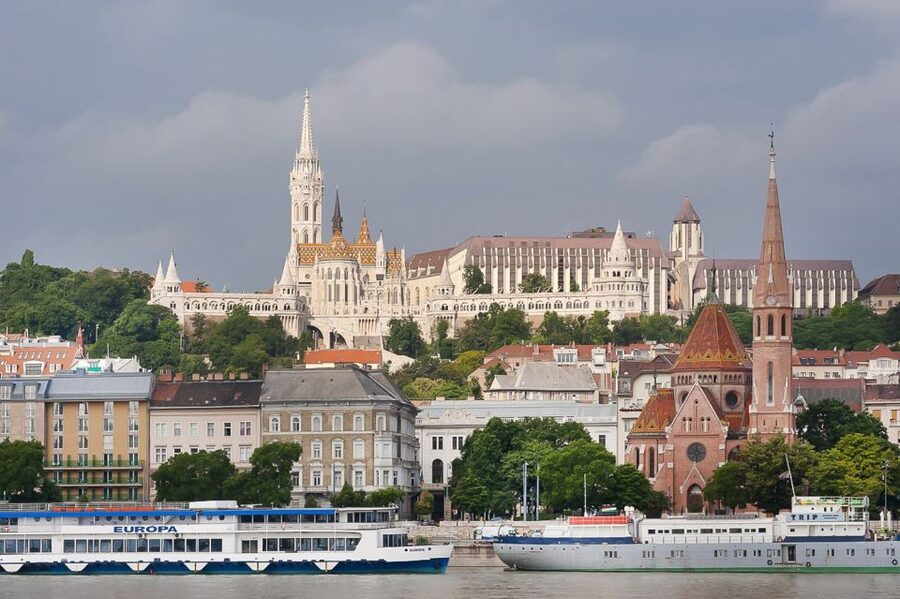
- Major Budapest landmarks: See St. Stephen’s Basilica, the Royal Palace, Matthias Church, Fishermen’s Bastion, and the President’s Palace.
- Public transport is part of the route: You will use the metro and bus to cross from Pest to Buda.
- Private or small-group choices: A private version may suit you if you want more time for questions and explanations.
- Bring the right clothes: Wear comfortable shoes, and do not wear shorts or sleeveless shirts.
Starting beside St. Stephen’s Basilica
The meeting point is next to St. Stephen’s Basilica, in front of California Coffee Company. That is a useful place to begin because the basilica gives you an immediate sense of Budapest’s scale and style, even before the walking starts.
Your guide introduces the route from here and begins placing the city in context. The subject is not just a list of buildings. You hear about roughly 1,100 years of Hungarian history, from the country’s conquest through more recent democratic changes.
I like starting in Pest because it lets you begin with the city’s grand urban face. The basilica is one of Budapest’s most striking landmarks, and its setting gives your guide a natural opening for discussing Hungary’s national story, religion, architecture, and political past.
You should not expect a long interior visit at every monument. The advertised focus is a guided walk and an explanation of the places you see, so the value comes from the route and the guide’s interpretation rather than from extended time inside individual buildings.
More three-hour walks around Budapest:
- 3-Hour Orientation Walking Tour of Buda and Pest
★ 4.8 · 1,834 reviews - Budapest: 3-Hour Grand City Tour and Castle Walk
★ 4.3 · 1,437 reviews - Budapest: 3-hour City Tour with Castle Walk + 1-hour Cruise
★ 4.1 · 204 reviews
Walking through central Pest
The first part of the experience takes place in central Pest. This side of the Danube is the flatter, more urban half of the capital, and the route gives you a chance to see how Budapest’s public buildings and major landmarks fit together.
St. Stephen’s Basilica is the key starting sight, but the walk is also about orientation. If Budapest is new to you, a guide can help turn separate names on a map into a clear picture of the city: Pest on one side of the river, Buda on the other, and the Danube connecting them.
The guide also gives you a framework for understanding Hungary as a central European nation with a proud but turbulent past. That broader explanation is important because Budapest’s monuments reflect many different eras rather than one single period.
This portion is likely to feel brisk. Three hours must cover both sides of the river, so you will not spend a slow afternoon lingering at each square or taking every possible photograph. I would treat this as an orientation walk, then return later to the sights that catch your interest.
Crossing the Danube by public transport
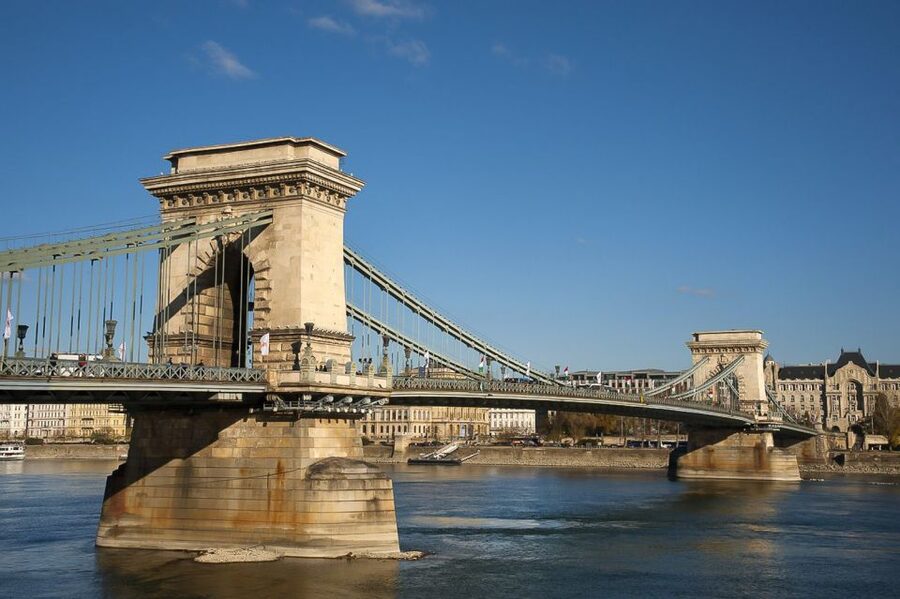
The tour does not remain entirely on foot. You use public transport, including metro and bus services, to cross from Pest to Buda. That makes the route more practical, but it also means you need to budget for the transport tickets yourself.
The additional cost is 1,400 HUF per person for four tickets. The price of the tour is $41 per person, and the guide is included, so this transport charge is modest but worth knowing before you book. Carry enough local currency or be prepared to purchase the required tickets according to the city’s current transport system.
The crossing matters because it changes the feel of the tour. Pest offers broad city streets and central landmarks. Buda brings a hillier setting, fortified walls, older lanes, and some of the best views across the river.
I like that the transport connection lets you cover both districts in one short outing. The tradeoff is that part of your three-hour schedule is spent moving between areas rather than looking at monuments. That is a fair exchange if you have only a short stay in Budapest.
Reaching the fortified Buda Castle area
On the Buda side, the route turns toward the castle district. The Buda Castle area is the older, fortified part of the city included in the tour, and it gives the experience its strongest sense of place.
You see the Royal Palace and the President’s Palace, along with the Castle Quarter. These sights help explain the political importance of Buda and the way power was concentrated on the hill above the Danube.
The route also includes ancient ruins and medieval castle features in its wider historical account. Since no specific ruin is named, you should not book this expecting a dedicated archaeological visit. Instead, think of the ruins and fortifications as part of the historical setting you pass through with the guide.
This is where the guide’s skill matters most. Stone walls and grand buildings can look impressive on their own, but a good explanation tells you why the district developed here and how Hungary’s changing political story shaped what you see.
Recent guide names give you a useful sense of the people leading the experience. Katalin is praised for being prepared, welcoming, and helpful. Caterina is described as especially attentive and detailed, while Elisabetta is noted for her fluent Italian and the large amount of information she provides.
Those details suggest a tour with a personal tone rather than a purely mechanical march from one landmark to another. Still, guide assignments can change, so you should regard those names as examples, not a guarantee of who will lead your departure.
More walking tours around Budapest:
- Budapest: Buda Castle Walk with Saint Stephen’s Hall
★ 4.5 · 3,012 reviews - Big Bus Budapest Hop-On Hop-Off Bus and Walking Tour
★ 3.5 · 2,206 reviews - Budapest: Buda Castle District Walking Tour
★ 4.6 · 2,108 reviews - Budapest City Landmarks Walking Tour in 2 Hours
★ 5.0 · 2,048 reviews
Matthias Church and Gothic Budapest
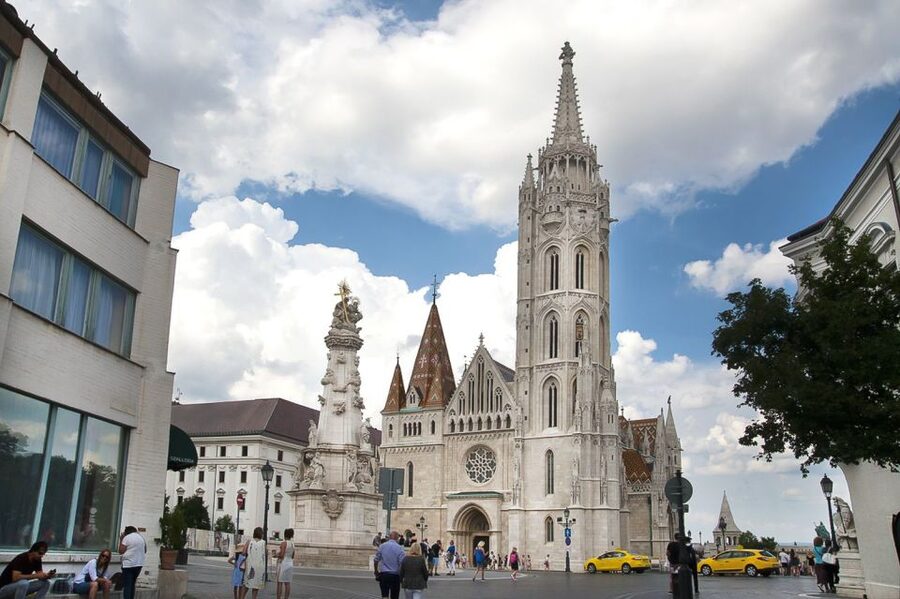
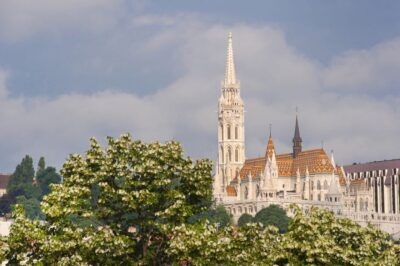
Matthias Church is one of the main reasons to visit the castle district. Its Gothic architecture gives the tour a strong visual contrast with the grander spaces of central Pest.
Your guide explains the church as part of the city’s longer story, helping you connect architecture with the political and religious changes that shaped Hungary. You may find that this context makes the building easier to appreciate than a quick photograph from outside.
The available details do not promise an extended interior visit or admission to the church. Plan on seeing the landmark and learning about its place in Budapest rather than assuming that an entrance ticket is part of the $41 price.
I would give yourself extra time after the tour if Matthias Church becomes a personal priority. The three-hour schedule is designed to introduce several major sights, not to offer a full architectural study of one building.
Fishermen’s Bastion and the best city views
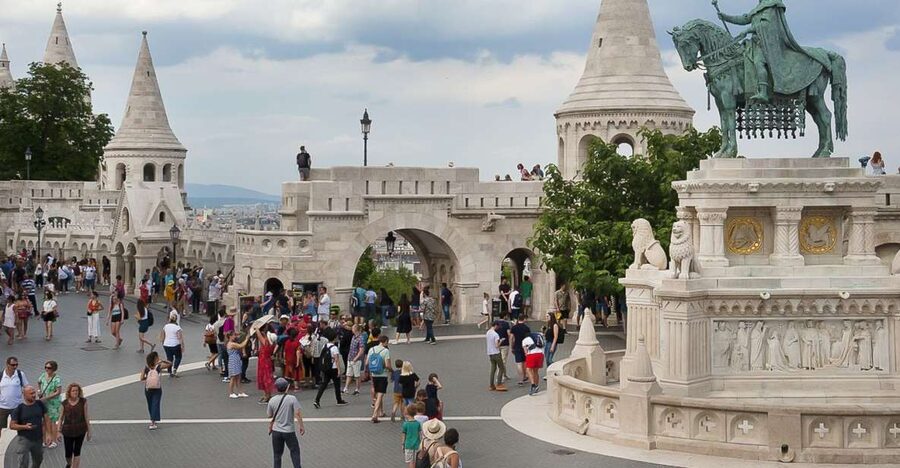
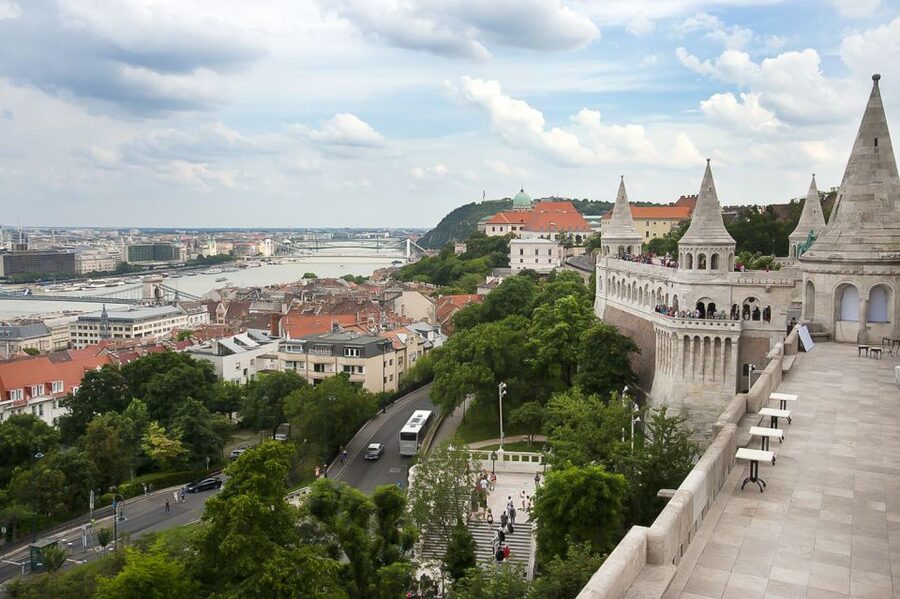
Fishermen’s Bastion is another central stop in the Buda Castle area. It is included for its striking architecture and its views over Budapest, giving you one of the clearest visual payoffs of the day.
From the Buda side, you can take in the relationship between the river and the city beyond it. The tour description places special emphasis on the most beautiful views in Budapest, and this is the part of the route where that promise makes the most sense.
The bastion also helps you see why the castle district is more than a collection of historic buildings. Its position above the river gives you a visual map of the capital, with Pest spread out across the Danube.
Photography can slow down any walking tour, so you may need to choose between listening closely and stopping for every angle. I would keep a little independent time before or after the tour if you want relaxed photographs rather than quick stops.
How much history can fit into three hours?
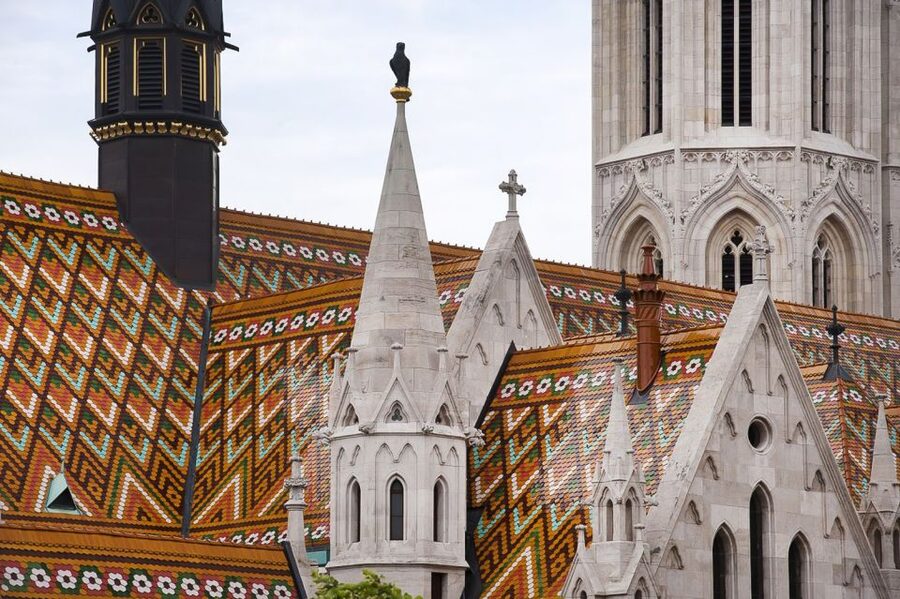
The tour covers the conquest of Hungary, the development of the kingdom, the country’s difficult political periods, and the most recent democratic changes. That is a lot to fit into one outing.
The advantage is that you leave with a usable outline of Hungarian history instead of isolated facts about buildings. That can make the rest of your visit more rewarding, especially if you plan to explore Budapest museums, monuments, or neighborhoods on your own.
The limit is depth. A three-hour walk cannot treat every century, ruler, conflict, and architectural change with equal attention. If you enjoy detailed history, the private option may be worth considering because it should give you a better chance to ask questions and shape the conversation around your interests.
The tour is also a good first-day activity. You get the basic geography of the capital, the main historic districts, and a guide’s explanation of how the city reached its current form. Later, you can return to the places that deserve more time.
Italian guides and the group experience
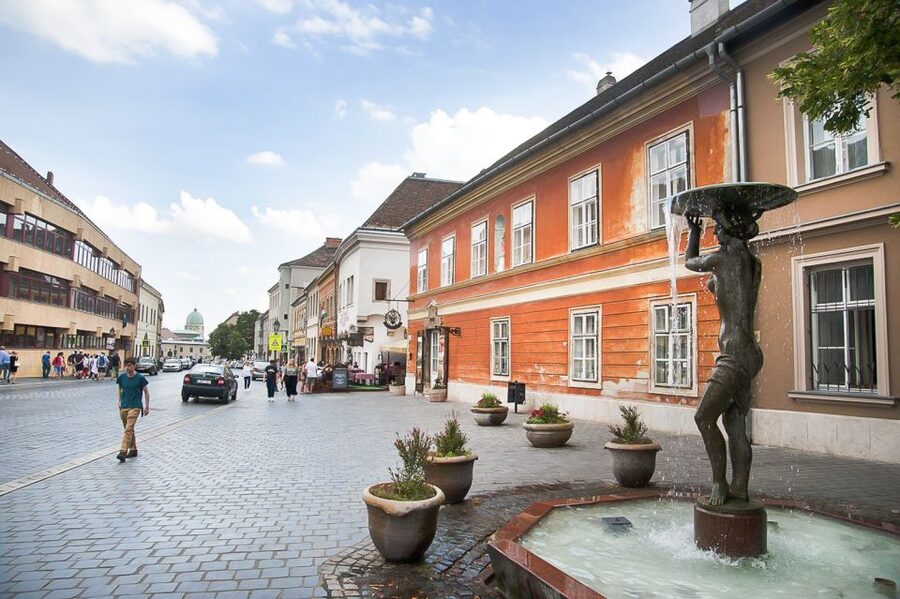
Language is the clearest reason to choose this tour over a standard Budapest walk. The guide speaks Italian throughout, which lets you ask questions and follow historical explanations without constantly translating in your head.
The recent guide feedback gives particular weight to patience, preparation, kindness, and detailed explanations. One guide was described as feeling almost like a friend during the walk, while another was praised for making the key attractions easy to understand in excellent Italian.
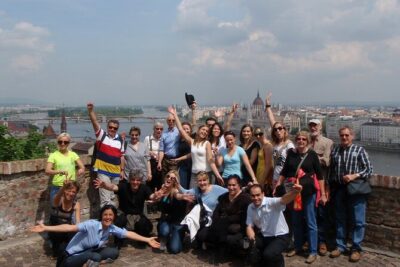
The tour is available as a private or small-group experience. That choice matters. A small group may provide a good balance between cost and personal attention, while a private tour is better if you want to pause often, ask many questions, or move at a pace suited to your group.
The published price is $41 per person, but the final value depends on the group format and what you want from the day. For a short stay, it is a practical way to see both sides of Budapest with a guide. If you already know the city well, or prefer long unstructured walks, you may get more from exploring independently.
Comfort, clothing, and practical limits
Wear comfortable shoes. You will walk for three hours, and the Buda Castle area is not the place for thin soles or formal footwear chosen for appearance rather than comfort.
The stated dress rules prohibit shorts and sleeveless shirts. Follow those rules from the start, especially because the route includes religious and historic sites. You do not want clothing to become a problem at the meeting point.
The tour is described as suitable for all ages and types of visitors, but detailed accessibility information is not provided. If you have mobility needs, contact the provider before booking and ask about the walking surface, slopes, transport changes, and exact route.
The meeting point is easy to identify: California Coffee Company, next to St. Stephen’s Basilica. Arrive with the meeting point details ready on your phone, and allow enough time to locate the guide before the scheduled start.
Free cancellation is available up to 24 hours before the tour for a full refund. You can also reserve now and pay later, which is useful if your Budapest plans are still shifting.
Who will get the most from this Budapest walk?
I would recommend this tour most strongly to you if Italian is your preferred language and you have only a short time in the capital. It covers the two main historic halves of Budapest without requiring you to plan the route or decode the city’s history alone.
It also suits first-time visitors who want a strong overview before exploring independently. Families and mixed-age groups may appreciate the three-hour length, since it gives you a substantial introduction without committing to a full-day excursion.
The private option makes particular sense for couples, families, or groups with specific interests. If you want more detailed explanations of Matthias Church, the castle district, or Hungary’s political history, private guiding gives you a better chance to shape the experience.
I would hesitate if your main goal is extended time inside museums or churches. The tour is built around walking, views, historic buildings, and explanation. It is not an admission-heavy sightseeing package, and the transport tickets are not included.
Should you book this Italian Budapest tour?
Book it if you want an efficient, history-focused introduction to Budapest in Italian. The route combines St. Stephen’s Basilica, the Royal Palace, the President’s Palace, the Castle Quarter, Matthias Church, and Fishermen’s Bastion, while also giving you the basic story of Hungary from its conquest to modern democracy.
The strongest reasons to choose it are the Italian-language guidance, the chance to cover Pest and Buda in one outing, and the warm, detailed style associated with guides such as Katalin, Caterina, and Elisabetta. Just remember that three hours moves quickly, public transport costs extra, and the tour offers an overview rather than long visits inside every landmark.
FAQ
How long is the Budapest walking tour?
The tour lasts three hours.
What language is the tour conducted in?
The tour is conducted in Italian with a live Italian-speaking guide.
Where does the tour meet?
The meeting point is next to St. Stephen’s Basilica, in front of California Coffee Company.
Which Budapest sights are included?
The route includes St. Stephen’s Basilica, the Royal Palace, the President’s Palace, the Castle Quarter, Matthias Church, and Fishermen’s Bastion.
Is public transport included in the price?
No. You need four public transport tickets per person, costing 1,400 HUF.
How much does the tour cost?
The listed price is $41 per person.
Can I book a private tour?
Yes. Private and small-group options are available.
What should I wear and bring?
Bring comfortable shoes. Shorts and sleeveless shirts are not allowed.
New walking tours around Budapest
- Jewish Quarter of Budapest Walking Tour★ 4.7 · 369 reviews
- Budapest: Castle District Walking Tour★ 4.8 · 223 reviews
- Budapest: Walking Tour to the Shoes Memorial and Parliament★ 4.7 · 151 reviews
- Budapest: Walking Tour and Photoshoot with Digital Photos★ 4.7 · 82 reviews
- Budapest: Buda Castle District Walking Tour with a Historian★ 4.9 · 867 reviews
- Budapest: Jewish History Guided Walking Tour with Historian★ 4.8 · 205 reviews
- Budapest: Hungarian Cooking Class and Market Walk★ 5.0 · 91 reviews
- Budapest: Inner City Walking Tour in German★ 5.0 · 76 reviews
Budapest Walking Tours, side by side.
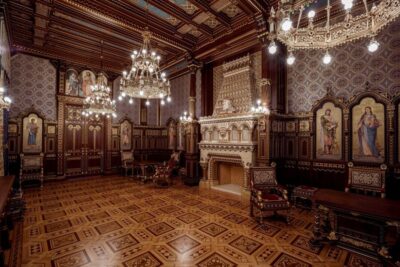
Budapest: Buda Castle Walk with Saint Stephen’s Hall
Read our review →
Big Bus Budapest Hop-On Hop-Off Bus and Walking Tour
Read our review →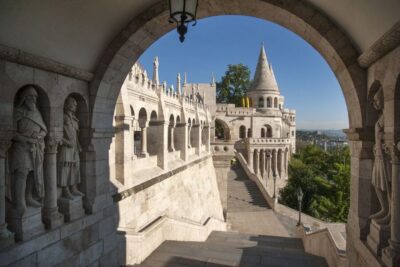
3-Hour Orientation Walking Tour of Buda and Pest
Read our review →
Budapest: 3-Hour Grand City Tour and Castle Walk
Read our review →

Budapest Food Walking Tour: Eat, Sip & Explore Like a Local
Read our review →Lists this walk sits on