
Review · BUDAPEST
Budapest Historical Sightseeing – Free Walking Tour
Budapest’s past is not gentle, and this walk does not smooth away the hard parts. In about 2.5 hours, you move from the National Museum and the old Jewish Quarter to Communist memorials, Parliament, and the Shoes on the Danube Bank. The route gives you a fast, useful reading of Pest, with history tied to the streets beneath your feet.
I like the route’s range: grand buildings, political symbols, Jewish history, local customs, and views across the Danube all fit into one morning or afternoon. I also like the minimal price, which makes this a smart first-day choice if you want orientation without committing to an expensive private tour.
The main catch is simple: you walk about three miles, often on cobblestones, and the group can reach 50 people. The experience depends heavily on your guide and on hearing that guide clearly, so arrive ready to stay close, listen, and tip at the end.
Key points to know before you go
- The route covers Pest, not Buda: You see Fisherman’s Bastion and the Castle District from across the river, but you do not tour the Buda side.
- The walk ends near the Chain Bridge: From there, you can reach central Budapest or return toward Kálvin tér on foot.
- The history is both proud and painful: Expect Hungary’s 1948 uprising, Jewish Quarter history, wartime persecution, Communist rule, and modern politics.
- The price is only part of the cost: You pay about $3.63, but tips are an important part of the guide’s income.
- The pace is steady: Comfortable shoes, water, sunscreen, and weather protection matter more than fancy equipment.
- Guide style can vary: Peter, Victoria, Elizabeth, George, and Sabi are among the guides named in feedback, with Victoria receiving especially warm praise for her humor and historical storytelling.
Starting at Kálvin tér and the National Museum
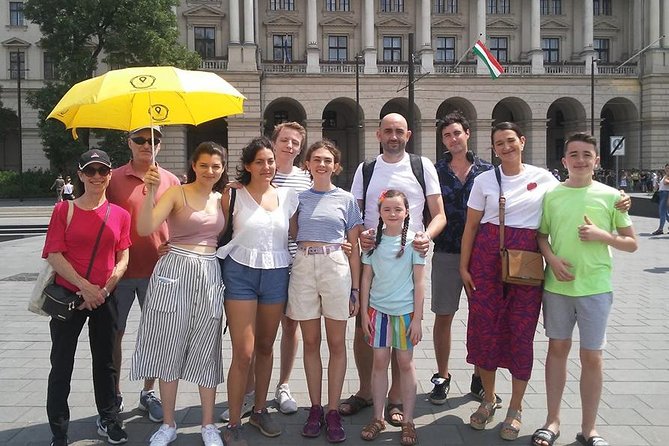
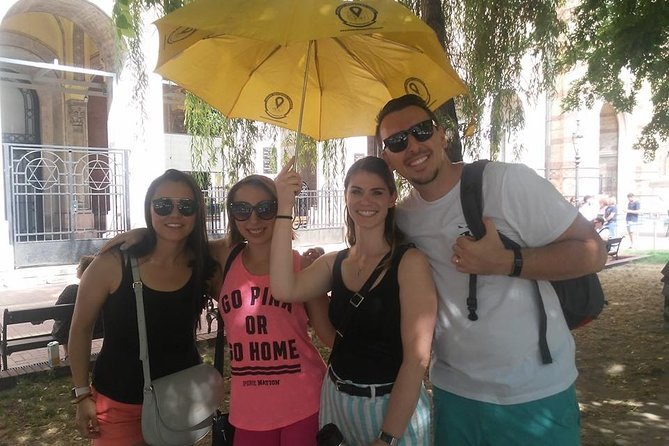
Meet at the OTP Bank near Kálvin tér 12 to 13. Look for the guide in yellow. Kálvin tér is a practical meeting place, with seating and some shelter if the weather turns unpleasant. It is also close to public transportation, so you can reach the start without a long trek through the city.
The first substantial stop is the garden of the Hungarian National Museum. Here, the guide introduces the turul, the mythical bird that appears in Hungarian tradition, and explains the museum’s founder and collections. The setting gives you an early lesson in how Hungary uses monuments and public buildings to tell its story.
You also hear about the 1848 uprising and the VIII District, once known for grand palaces and now better understood through its changing social life. This is a good opening because it links national events to an actual neighborhood rather than treating history as a list of dates.
The stop lasts about 10 minutes and does not include museum entry. That is worth noting. You see the museum from outside, but this walk is about orientation and explanation, not indoor collections.
More History Walking Tours in Budapest:
- BloodThirsty Hungary: Walking tour & Dark Historical Stories
★ 4.9 · 633 reviews - Budapest: Jewish History Guided Walking Tour with Historian
★ 4.8 · 205 reviews - History and Hauntings of Salem Guided Walking Tour
★ 5.0 · 14,564 reviews
Unger’s House and the changing face of Budapest
From Kálvin tér, the route moves toward Unger’s House, an unusual courtyard building associated with architect Miklós Ybl. Its design mixes Byzantine, Gothic, Moorish, Renaissance, and Romantic touches. The result is less polished than the grand avenues, but it shows how varied Budapest architecture can be.
The stop takes only about five minutes. That is enough to look, listen, and understand the building’s importance, but not enough for a slow architectural study. If you enjoy façades, rooflines, and odd details, keep your eyes open between official stops. The route works best when you treat the streets themselves as part of the lesson.
Elizabeth Square, Astoria, and city life after dark
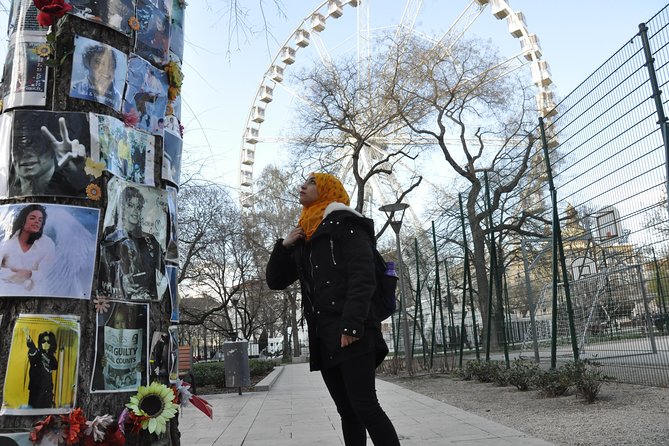
Elizabeth Square brings the tour into a more modern part of central Budapest. The Budapest Eye occupies the area, and the guide explains the square’s past while pointing out nearby nightlife and bars. This is one of the moments when the tour moves beyond kings, wars, and memorials to show how Budapest functions now.
The route then passes the Danubius Hotel Astoria, a grand French Empire-style building. The guide covers its cosmopolitan past and its links with international stars and film productions, including the Josephine Baker Story directed by Brian Gibson.
Neither stop is long. Elizabeth Square gets about five minutes, while Astoria is a quick pass-by. Do not expect time to enter the hotel or ride the Ferris wheel. Instead, you get useful context and a better sense of the city’s central districts.
The Jewish Quarter: memory, loss, and reinvention

The walk continues through the Jewish Quarter, one of the most important sections of the route. The district was once home to a strong Jewish community, became a ghetto during the Second World War, and later changed again as artists, students, independent shops, designers, and bars moved in.
This part requires attention. The streets can be lively, but the history underneath them is painful. A good guide helps you hold both realities at once: this is a district with active nightlife and creative energy, yet it also carries the memory of forced confinement and murder.
The tour does not promise entry to a synagogue or museum. You learn from the streets and from the guide’s explanation. That makes this section valuable as an introduction, but anyone wanting a detailed study of Jewish Budapest should plan a separate visit to a dedicated museum or memorial site.
More City Highlights Walking Tours in Budapest:
- Budapest City Landmarks Walking Tour in 2 Hours
★ 5.0 · 2,048 reviews - Ho Chi Minh City Street Food Tour & Sightseeing By Motorbike
★ 5.0 · 9,413 reviews - Historic Charleston Guided Sightseeing Walking Tour
★ 5.0 · 6,216 reviews - Dublin Highlights and Hidden Gems Guided Walking Tour
★ 5.0 · 6,020 reviews
St. Stephen’s Basilica and the story of Hungary’s first king
At St. Stephen’s Basilica, the guide stops outside the impressive church and explains its name. Stephen was Hungary’s first king, and his place in the country’s story is central to understanding Hungarian identity.
You do not receive admission to the basilica as part of the tour. The exterior stop lasts about 10 minutes, giving you time to take in the scale and hear the historical background. If you want to see the interior or climb the dome, you will need to return on your own.
This is a useful point in the route for practical questions. Guides such as Victoria have been praised for offering advice on food, transport, customs, and places to visit later. Doing this walk early in your stay means you can use those suggestions for the rest of your time in Budapest.
Liberty Square and Hungary’s Communist past

Szabadság tér, or Liberty Square, is one of the strongest stops for understanding modern Hungary. The guide discusses the Communist memorial and the political meaning of the square. You also get a broader explanation of Hungary’s difficult relationship with foreign control and its long struggle for self-government.
The stop lasts about 15 minutes, making it one of the longer pauses. That matters because the subject needs room. Hungary’s past includes occupation, political pressure, dictatorship, and national resistance. The tone may feel direct or serious, and the humor can be dry. If you prefer history presented gently, this section may feel blunt. If you want an honest account of the country’s painful chapters, it is one of the walk’s strongest moments.
Stock Exchange Palace and the Reagan statues
The Stock Exchange Palace follows, with a short explanation of the large historic building and its private ownership. This is mainly an architectural and civic stop, so do not expect a long interior visit. Admission is not included.
Nearby, the Ronald Reagan statue provides a lighter political moment. The guide explains why Reagan appears to walk away from Parliament and why George H. W. Bush is positioned nearby. These statues give the tour a way to discuss the end of Communism through public art and symbolism rather than only through dates and speeches.
The stops are brief, but they break up the heavier material. They also show how Budapest uses monuments to make political memory visible in ordinary public spaces.
Parliament Square and the Danube view
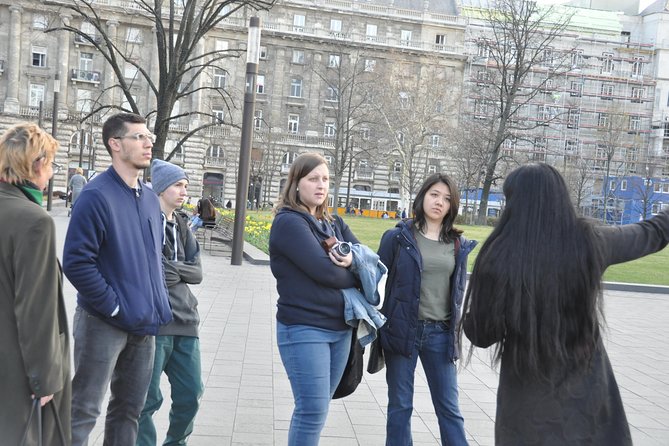
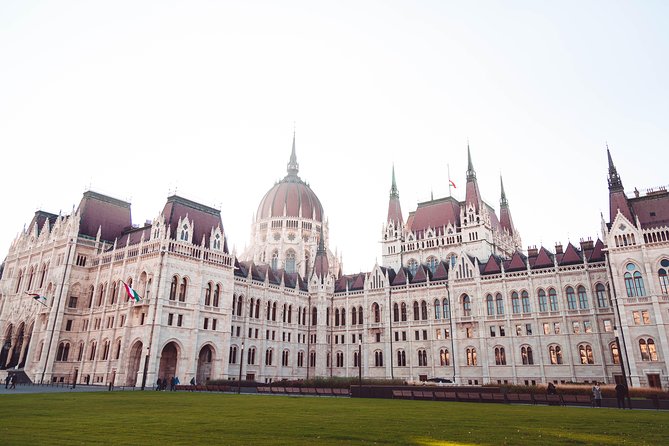
The Hungarian Parliament Building is the route’s major visual prize. From the outside, you see the electric Neo-Gothic design and the building’s position beside the Danube. The guide also points out other important buildings around the square, including the former Ministry of Justice and the agricultural museum.
This is an exterior visit only. Parliament admission is not included, and the tour does not take you inside. That is not a serious flaw for a first look, since the building is best appreciated from the riverfront and square. Still, if the interior is a priority, book a separate visit and check its entry rules.
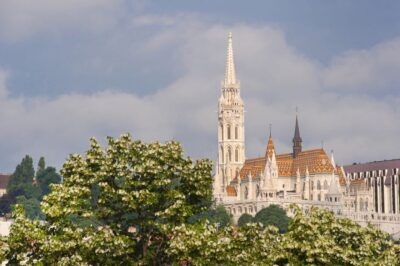
The guide also points across the river toward Buda. You can see Fisherman’s Bastion, Matthias Church with its colorful tiled roof, and the former royal palace. Gellért Hill and Margaret Island appear in the wider view. The tour does not cross over to explore them, but the distant orientation helps you plan your next outing.
Fisherman’s Bastion from Pest and the Chain Bridge
The Pest-side view toward Fisherman’s Bastion is brief, about five minutes, but useful. You learn where the Castle District sits and how its landmarks relate to the Danube. It is a preview rather than a substitute for visiting Buda.
The walk then reaches Széchenyi Chain Bridge, one of Budapest’s defining crossings. The guide explains its history and reconstruction. This is also where the tour ends, at Id. Antall József rkp. 1.
Ending at the bridge works well. You can continue toward the city center, cross toward Buda, or walk back in the direction of the starting point. The end point is more useful than finishing in a quiet residential street because you are already close to major sights and transport links.
Shoes on the Danube Bank: the quietest stop
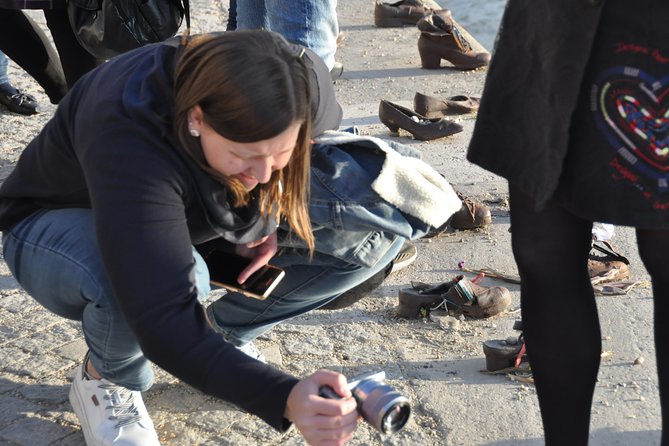
The final listed stop is the Shoes on the Danube Bank memorial. Sixty pairs of iron shoes represent Jewish people who were ordered to remove their shoes before being shot along the river during the Holocaust.
It is a simple memorial, and the simplicity is its force. The guide explains what happened and gives you a moment to look across the water. This is not a place for a rushed group photo or loud conversation. Stay attentive and give the stop the respect it needs.
The memorial may be listed at the end of the route, but the actual finish is at the Chain Bridge area. Confirm the precise order with your guide on the day, since the walking sequence can vary.
Price, group size, and guide quality
At about $3.63 per person, this is not a conventional fully priced guided tour. The small booking charge helps arrange the experience, while tips provide the guide’s main income. Budget the tour accordingly. If the guide gives you a useful introduction to Budapest, a fair tip is part of the arrangement, not an optional afterthought.
The maximum group size is 50. Some groups are smaller, and one account describes a group of about 25, but you should prepare for a crowd. A large group can make it harder to hear near traffic, busy squares, or the river. Stay near the guide and speak up immediately if you cannot hear.
The named guides have different styles. Peter is described as clear and strong on historical explanation. Victoria is repeatedly praised for humor, local advice, passion, and the ability to keep a long walk moving. Elizabeth is noted for giving first-time visitors useful context, while Sabi helped explain transport and passes. George is described as friendly and well informed, though a large group made hearing difficult on one occasion.
That mix tells you something important: the content is strong, but the personality and delivery may vary. One sharply negative account describes a rushed, harsh presentation, while the wider pattern is highly positive. The tour has a 4.9 rating from 1,303 reviews, with 97 percent recommending it, but those numbers do not guarantee that every guide or group will suit every person.
Walking conditions and what to bring
Plan on roughly three miles of walking over about 2.5 hours. Budapest’s cobblestones make comfortable shoes essential. The route includes outdoor stops, so the weather matters more than it would on a museum tour.
Bring:
- Water
- Sunscreen in warm weather
- An umbrella during rainy periods
- A warm jacket in cold weather
- Cash for a tip and public toilets
There is a short five-minute break for drinks and toilets, but no coffee, tea, food, or drink is provided. Public toilets can cost between 100 and 500 Hungarian forints. The guide cannot carry luggage or equipment, so arrive with only what you can comfortably manage.
The tour is aimed mainly at adults and children over 12, though younger children are welcome. Most people who can walk the distance can take part. Service animals are allowed, but ordinary dogs are not. There is no hearing induction loop.
Should you book the Budapest Historical Sightseeing Free Walking Tour?
Book it if you want a low-cost first look at Pest, especially early in your visit. The route covers far more than a parade of famous façades: you get Communist-era context, Jewish Quarter history, national symbols, modern public art, Parliament, the Danube, and practical advice for exploring on your own.
Skip it if you want museum entry, a small private group, a slow architectural study, or a tour focused equally on Buda and Pest. You should also choose another format if three miles of outdoor walking sounds tiring or if you need guaranteed quiet conditions for hearing the guide.
For most first-time visitors who can manage the distance, the value is excellent. Arrive at Kálvin tér early, find the yellow-shirted guide, stay close, and bring water. Start with this walk, then return later to the buildings and neighborhoods that catch your interest.
FAQ
Where does the tour start?
The meeting point is OTP Bank at Budapest, Kálvin tér 12 to 13, 1085 Hungary. The guides wear yellow.
Where does the tour end?
The tour ends at Id. Antall József rkp. 1, near the Chain Bridge. From there, you can walk back toward the meeting point or continue into central Budapest.
How long is the walking tour?
The tour lasts approximately 2 hours and 30 minutes. You should be prepared to walk about three miles.
Is the tour offered in English?
Yes. The tour is offered in English and includes an in-person guide.
Does the price include tips?
No. Tips are not included, and they are an important part of the guide’s income. The listed price is about $3.63 per person.
Are food and drinks included?
No. Food, coffee, and tea are not provided. There is a short break when you can buy your own drink and use a toilet.
Does the tour enter Parliament or the museums?
No. The route visits the exteriors of Parliament, the National Museum, St. Stephen’s Basilica, and other buildings. Admission fees are not included.
Can children and dogs join the tour?
Children are welcome, with the experience best suited to adults and children over 12. Dogs are not permitted, but guide dogs are allowed when the owner carries the official papers.
More Free Walking Tours in Budapest
- Paris City Center Free Walking Tour (Tip-Based)
★ 5.0 · 1,340 reviews - Discover Helsinki – Tip-based Tour by RED UMBRELLA – 2026
★ 5.0 · 368 reviews - Downtown Asheville Tip-Based Sightseeing Walking Tour
★ 5.0 · 360 reviews - Free walking tour of Brasov in English
★ 4.9 · 302 reviews
New walking tours around Budapest
- Jewish Quarter of Budapest Walking Tour★ 4.7 · 369 reviews
- Budapest 3-Hour Walking Tour in Italian★ 4.6 · 217 reviews
- Budapest: Castle District Walking Tour★ 4.8 · 223 reviews
- Budapest: Walking Tour to the Shoes Memorial and Parliament★ 4.7 · 151 reviews
- Budapest: Walking Tour and Photoshoot with Digital Photos★ 4.7 · 82 reviews
- Budapest: Buda Castle District Walking Tour with a Historian★ 4.9 · 867 reviews
- Budapest: Jewish History Guided Walking Tour with Historian★ 4.8 · 205 reviews
- Budapest: Hungarian Cooking Class and Market Walk★ 5.0 · 91 reviews
Budapest Walking Tours, side by side.
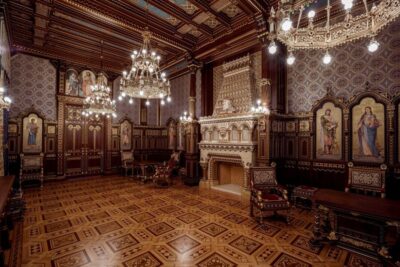
Budapest: Buda Castle Walk with Saint Stephen’s Hall
Read our review →
Big Bus Budapest Hop-On Hop-Off Bus and Walking Tour
Read our review →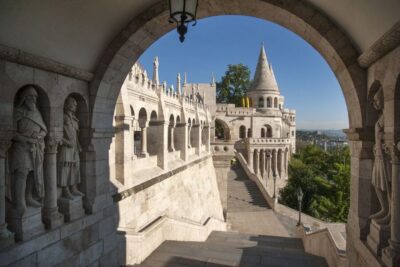
3-Hour Orientation Walking Tour of Buda and Pest
Read our review →
Budapest: 3-Hour Grand City Tour and Castle Walk
Read our review →
Budapest Food Walking Tour: Eat, Sip & Explore Like a Local
Read our review →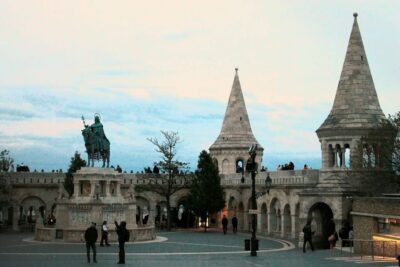
BloodThirsty Hungary: Walking tour & Dark Historical Stories
Read our review →Lists this walk sits on