
Review · BUDAPEST
Budapest: Castle District Walking Tour
Buda Castle Hill is more than a grand palace and a fine view. It is a compact record of 800 years of war, occupation, royal power, and ordinary life, with medieval remains, Ottoman traces, baroque homes, WWII ruins, and government buildings sharing the same hill. This two-hour walk gives you a useful map of it all without making you stop at every plaque.
I like the clear route and the local stories, especially the Medieval Jewish Prayer House, the Castle Hill caves, and the connection between Fisherman’s Bastion and Walt Disney. I also like the guides’ practical approach. Rita, Gary, Dora, Andras, Boulash, and others are praised for humor, patience, and useful advice about what to see next. The main drawback is physical: the route includes a 10-minute uphill walk and plenty of stairs, so it is not a good fit for wheelchair users, strollers, or anyone who struggles with steep paths.
Key points at a glance
- Start at Batthyány tér: Meet by the metro exit, about 15 meters from St. Anna Church, where the guide holds a royal blue flag.
- See the district’s major sights: The route includes the Royal Palace, Matthias Church, Fisherman’s Bastion, Maria Magdalena Church Tower, terraces, and historic streets.
- Go beyond the postcard view: Expect stories about Jewish life, Ottoman rule, WWII destruction, royal government, public art, and the underground cave system.
- Plan for hills and stairs: You need moderate fitness and comfortable shoes. The route is not suitable for wheelchair users or strollers.
- A very low upfront price: The listed cost is $2.27 per person, but the guide works mainly for tips, with €10 per person given as a common amount.
- Best for first-time visitors: The tour gives you a strong orientation, though you may want extra time afterward to enter attractions at your own pace.
Why Buda Castle Hill deserves a walking tour

Budapest is split by the Danube, but Buda Castle Hill feels like a separate town above the river. The hill is easy to underestimate on a map. The main sights sit close together, yet the area has layers that are hard to spot if you simply walk from palace to church to lookout.
A guide helps connect those layers. You learn why the district mattered for defense, how different communities lived here, and how repeated wars changed the buildings. The tour also points out details you could easily miss, such as urban mini monuments, unusual public statues, and the different meanings of crosses with one, two, or three horizontal bars.
I would use this walk early in a Budapest visit. It gives you the basic shape of the Castle District, then leaves you better prepared to return to the palace, church, or lookout that interests you most.
More Castle and Palace Walking Tours around Budapest:
- Budapest: Buda Castle Walk with Saint Stephen’s Hall
★ 4.5 · 3,012 reviews - Budapest: Buda Castle District Walking Tour
★ 4.6 · 2,108 reviews - Budapest: 3-Hour Grand City Tour and Castle Walk
★ 4.3 · 1,437 reviews
Starting at Batthyány tér and climbing into Buda
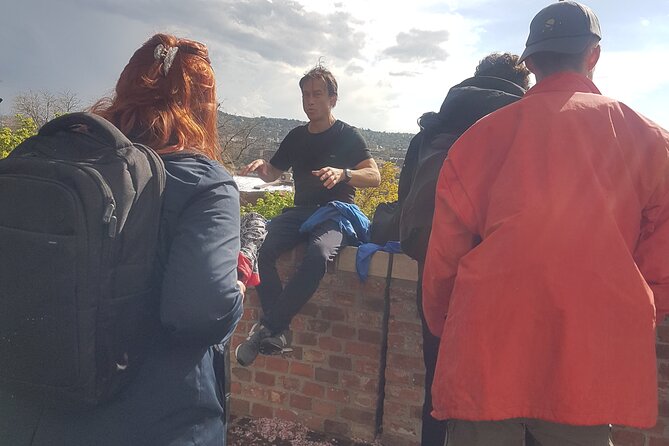
The meeting point is convenient. You meet at the Batthyány tér metro exit, about 15 meters from St. Anna Church. Look for a guide holding a blue flag. The square also has public toilets and a food market, useful if you need water or a quick snack before the climb.
The first uphill section takes about 10 minutes. It is not described as a mountain hike, but it is enough to matter, particularly in hot weather or if you are carrying a child. One guide, Andras, reportedly allowed regular pauses so the group could catch up before continuing with the explanation. That is the right pace for this kind of walk.
Wear shoes with a firm grip. Castle Hill includes steps, slopes, and uneven walking surfaces. The tour is capped at 30 people, which keeps it from becoming a huge procession, though the group may still feel substantial at busy times.
Groups of eight or more cannot book this activity, even if they try to reserve separately. That rule helps keep the walk aimed at small independent parties rather than private large-group outings.
The Royal Palace and the story of repeated destruction
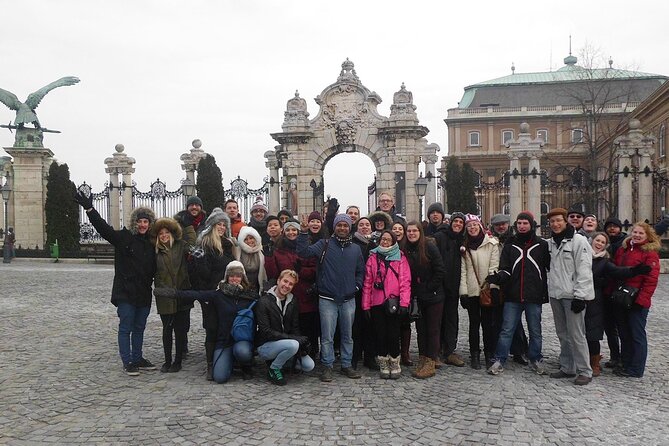
The Royal Palace is the hill’s biggest presence. It was once home to Hungarian kings, but the building you see today reflects repeated rebuilding after war damage. The guide explains the palace as part of the district’s long political story, not simply as a grand façade for photographs.
That context matters. Buda Castle Hill has been fought over and occupied many times, and the palace changed with each period. You hear about the Hungarian royal court, later conflicts, and the modern role of the district. The walk also points out where the president and prime ministers’ offices are located, showing that this is still a working center of national power.
The tour does not appear to include a dedicated interior visit to the palace. Think of this stop as an outdoor introduction, with time afterward if you want to explore inside on your own.
Look for the Hungarian mythical bird during this part of the route. It is a small but memorable way to connect national symbols with the buildings around you. The guide may also explain the meaning behind the district’s statues and decorations, turning what could be a quick photo stop into a short lesson in Hungarian identity.
Matthias Church and the churches of the hill
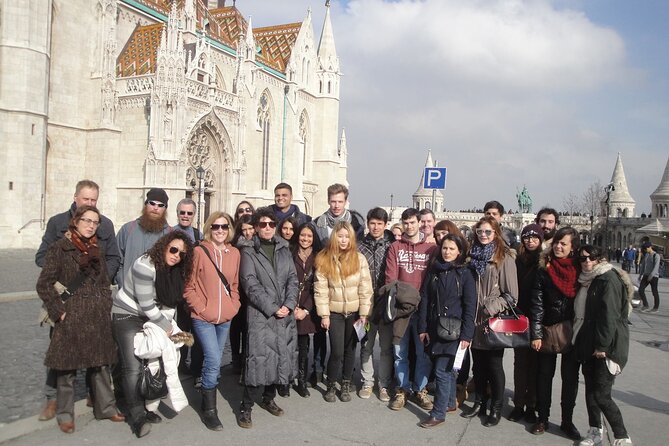
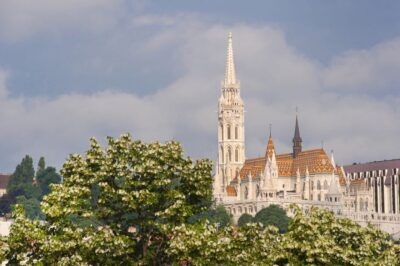
Matthias Church is one of the district’s main landmarks. Its patterned roof and ornate exterior make it an obvious stop, but the guide adds historical context that helps you understand why it matters.
The church belongs to the changing story of Buda itself. The Castle District has been shaped by Hungarian, German, Jewish, and Ottoman communities, and religious buildings reveal some of those changes. The walk also includes the Maria Magdalena Church Tower and other important structures, so you get a wider look at the hill’s religious past rather than seeing only its best-known church.
Again, this is primarily a walking tour, not an admission package. If you want to spend time inside Matthias Church or climb a tower, ask your guide when to return and how much time to allow. The final practical question period is a good moment to sort out those plans.
More walking tours around Budapest:
- Big Bus Budapest Hop-On Hop-Off Bus and Walking Tour
★ 3.5 · 2,206 reviews - Budapest City Landmarks Walking Tour in 2 Hours
★ 5.0 · 2,048 reviews - 3-Hour Orientation Walking Tour of Buda and Pest
★ 4.8 · 1,834 reviews - Budapest Historical Sightseeing – Free Walking Tour
★ 5.0 · 1,302 reviews
Fisherman’s Bastion and the river panorama
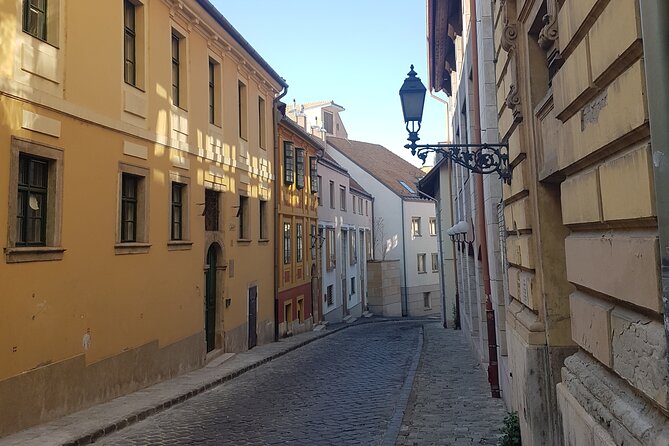
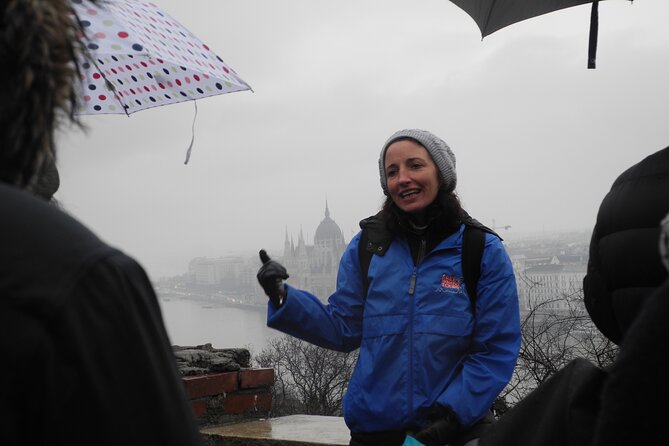
Fisherman’s Bastion supplies the tour’s most obvious photo setting. From its terraces, you look across the Danube toward Pest, with the river and city spread below. The views are especially useful early in your visit because they help you understand Budapest’s layout.
The guide adds more than directions to the best viewpoint. You learn about the Bastion’s design, its place in Castle Hill’s public image, and its curious link with Walt Disney. That detail may sound light beside stories of war and occupation, but it gives the stop a welcome change of pace.
You also learn how to enjoy a free view from Castle Hill. That is a practical benefit. Some lookout areas may involve fees or busy access points, while the hill has public viewpoints that cost nothing. Your guide can point out where to go after the tour if you want another look without paying for an additional terrace.
One limitation is time. Two hours is enough for an overview and photos, but you should not expect a long, quiet pause at every terrace. One person specifically wanted more free time at the top of the castle. If photography is your main goal, plan to stay in the district after the walk ends.
Jewish, German, Hungarian, and Ottoman traces
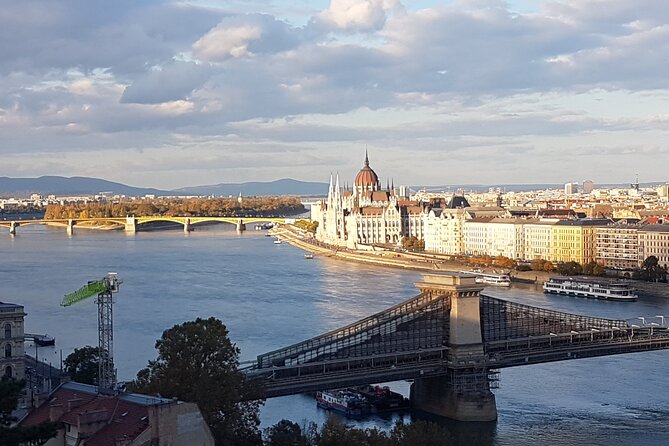
The most worthwhile part of the walk may be the human story beneath the famous buildings. The guide discusses how German, Jewish, and Hungarian residents lived in the district, then points out places connected to those communities.
The Medieval Jewish Prayer House is a particularly important stop. It sits near attractive baroque residential buildings, and the contrast helps show how the district changed over time. You are not just looking at a preserved royal quarter. You are seeing a place where families lived, worked, worshipped, and adapted to new rulers.
The route also reaches the pilgrimage site connected with Gül Baba, the Ottoman Turkish monk and soldier. This adds another perspective to the history of Buda. Ottoman rule is not treated as a distant footnote. It becomes part of the physical story of the hill, its people, and its religious life.
The guide may also identify where wealthy Hungarians live today. That detail brings the walk into the present and helps you notice that the Castle District is not only a museum zone.
WWII damage and the underground Castle Hill
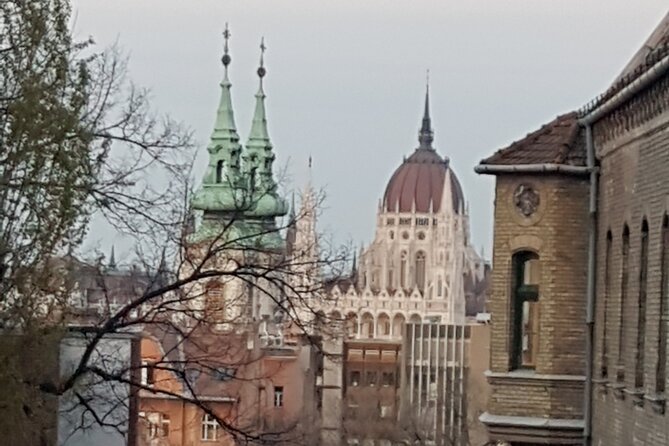
The Castle District suffered major destruction during World War II. The tour explains where the Nazi stronghold was and how the fighting affected the buildings around the hill. Those stories help explain why some streets look carefully restored while other buildings carry a different sense of age.
The underground side of the district adds another layer. Castle Hill contains caves and labyrinths that served defensive purposes over the centuries. The walk introduces you to this underground world, though the supplied details do not indicate that you enter a full cave attraction. Treat it as an outdoor explanation of what lies beneath your feet, not as a separate cave tour.
This is one reason a guide adds real value. A map can show you the palace and church. It cannot easily tell you that the hill’s defenses, homes, storage spaces, and underground passages formed part of the area’s survival system.
Small statues, huszars, and details you might miss
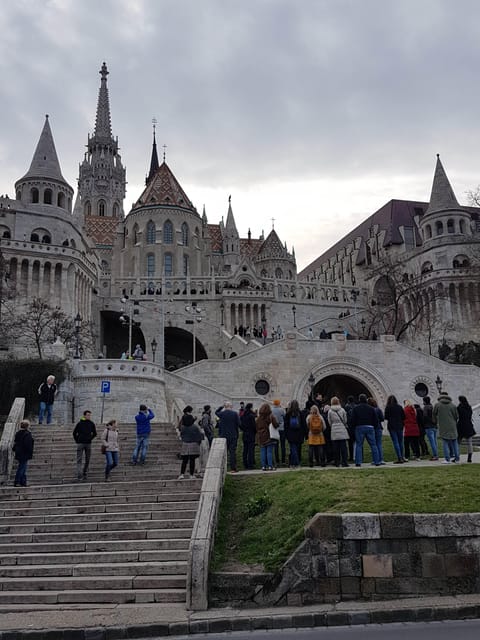
The walk includes public art and small monuments scattered around the district. Some are described as the funniest statues in Budapest, which gives the route a lighter tone after the heavier war and occupation stories.
You also hear about the huszars, the light cavalry fighters associated with Hungarian history and a reputation for womanizing. That kind of anecdote helps keep the tour from turning into a list of dates and rulers. Several guides, including Dora, Boulash, Rita, and Odea, are described as using humor and questions to keep the group engaged.
The questions can be playful but useful. You may be asked to identify major landmarks or think through how Hungarian life changed over the centuries. Odea also teaches basic Hungarian words, while other guides offer restaurant and sightseeing suggestions for the rest of your stay.
The quality of the experience depends partly on the guide you receive. The guide roster changes, but the strongest feedback consistently highlights clear explanations, good humor, patience on the hills, and practical local advice. Gary is noted for detailed explanations and strong recommendations. Judith is described as personable and funny. Rita is praised for patient pacing and restaurant suggestions. These are useful signs of the style to expect, though no particular guide can be guaranteed.
What the $2.27 price really means
At $2.27 per person, the upfront cost is unusually low for a two-hour guided walk. The price is mainly a booking, administration, and marketing fee paid through GetYourGuide. You are expected to tip the guide afterward, and €10 per person is given as a common amount, with the final sum left to you.
That changes the value calculation. If you want a genuinely low-cost introduction and are comfortable budgeting for a tip, this is a strong deal. If you prefer one fixed all-in price with no social pressure around tipping, the arrangement may feel less straightforward.
I would judge the value by the amount of time saved. In two hours, you get the main Castle District sights, an explanation of its political and religious history, a river panorama, practical recommendations, and a route through details you might otherwise miss. The walk will not replace a full museum visit, but it can prevent you from spending your first afternoon wandering without a plan.
You can reserve now and pay later, and cancellation is allowed up to 24 hours before the start for a full refund. Check the available starting times when booking, since the exact schedule is not fixed in the supplied information.
Who should book this Castle District walk
This tour suits you if you are visiting Budapest for the first time, want a clear introduction to Buda, and enjoy history explained in plain language. It is also useful if you like asking questions. The walk ends at the original meeting point with time for practical advice and remaining questions.
It works well for independent sightseers who want orientation rather than a rigid full-day program. Afterward, you can choose to return to Matthias Church, spend more time at the palace, take photographs at Fisherman’s Bastion, or explore the surrounding streets.
You should think twice if you dislike hills, stairs, or a group pace. The route is not suitable for wheelchair users, and one account makes clear that strollers can be difficult because of the stairs. A moderate fitness level is required, and the activity is not suitable for people over 95 according to the stated restrictions.
The tour is designed for international visitors and may not suit Hungarian residents. The guiding language is English.
My verdict on the two-hour route
I would book this walk if I wanted to understand Buda Castle Hill before exploring it on my own. The strongest feature is not simply seeing the big sights. It is learning how the palace, church, Jewish prayer house, Ottoman pilgrimage site, WWII damage, public art, and underground defenses belong to one place.
The tradeoff is the uphill walking and limited time at each stop. Bring water, wear comfortable shoes, and treat the tour as an introduction rather than a complete visit to every attraction. If you do that, the low booking price, engaging guide style, river views, and useful local advice make this a sensible first step into Budapest’s Buda side.
FAQ
Where does the Castle District walking tour start?
It starts at the Batthyány tér metro exit, about 15 meters from St. Anna Church. Look for the guide holding a royal blue flag.
How long does the tour last?
The walking tour lasts two hours. Starting times vary, so check availability when you book.
What language is the tour in?
The live tour guide speaks English.
Does the tour include Buda Castle, Matthias Church, and Fisherman’s Bastion?
The route includes the Royal Palace, Matthias Church, Fisherman’s Bastion, Maria Magdalena Church Tower, and other important buildings in the Castle District. The supplied information does not state that entrance tickets to interiors are included.
Is the tour difficult to walk?
You need moderate physical fitness and must be able to complete a 10-minute uphill walk. The route also includes stairs, so it is not suitable for wheelchair users and may be difficult with strollers.
What does the price include, and should I tip?
The listed $2.27 fee is a booking, administration, and marketing fee paid through GetYourGuide. The guide works for tips, and €10 per person is given as a common amount, though you decide what to pay.
New walking tours around Budapest
- Jewish Quarter of Budapest Walking Tour★ 4.7 · 369 reviews
- Budapest 3-Hour Walking Tour in Italian★ 4.6 · 217 reviews
- Budapest: Walking Tour to the Shoes Memorial and Parliament★ 4.7 · 151 reviews
- Budapest: Walking Tour and Photoshoot with Digital Photos★ 4.7 · 82 reviews
- Budapest: Buda Castle District Walking Tour with a Historian★ 4.9 · 867 reviews
- Budapest: Jewish History Guided Walking Tour with Historian★ 4.8 · 205 reviews
- Budapest: Hungarian Cooking Class and Market Walk★ 5.0 · 91 reviews
- Budapest: Inner City Walking Tour in German★ 5.0 · 76 reviews
Budapest Walking Tours, side by side.
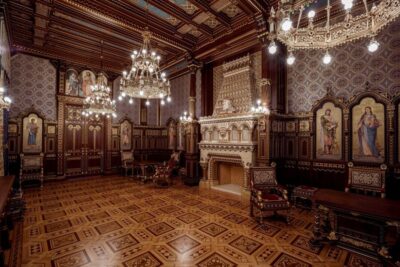
Budapest: Buda Castle Walk with Saint Stephen’s Hall
Read our review →
Big Bus Budapest Hop-On Hop-Off Bus and Walking Tour
Read our review →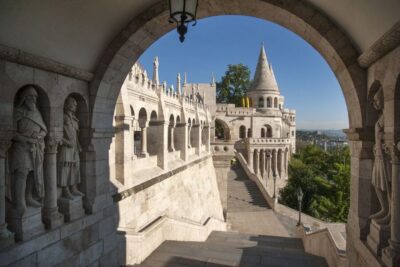
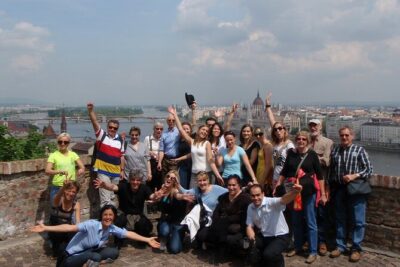
3-Hour Orientation Walking Tour of Buda and Pest
Read our review →
Budapest: 3-Hour Grand City Tour and Castle Walk
Read our review →

Budapest Food Walking Tour: Eat, Sip & Explore Like a Local
Read our review →Lists this walk sits on