
Review · DUBLIN
Dublin: Highlights and Hidden Corners Walking Tour
Dublin’s best stories often sit between the famous sights. This 2.5-hour walk links Dublin Castle, Christ Church Cathedral, Temple Bar, the General Post Office, and Trinity College, then pauses for oddities such as a former cinema, a Lisbon tram used as a café, and a church that is no longer a church. It gives you the city’s main outline without treating Dublin like a checklist.
I like the small groups of up to 16 and the easy pace built around conversation. Guides including Joe Brennan, John O’Flynn, Jacob, Katie, and Dave have earned praise for humor, clear storytelling, and useful advice for the rest of a Dublin stay. The main caution is that it covers a lot of ground, and one person found the pace a little quick, so wear comfortable shoes and speak up if you need a slower walk.
Key points at a glance
- A two-sided Dublin route: Start in the old south-side quarter, cross the Liffey, and finish near Trinity College and O’Connell Street landmarks.
- Stories behind the stones: Learn how the 1916 Rising affected the General Post Office and the surrounding city.
- Small groups by design: Numbers are limited to 16, with extra guides added when needed.
- Odd details reward attention: Look for the old cinema, former Lisbon tram café, unusual post-box, wobbly bridge, and cheeky composer sculpture.
- External visits only: The tour introduces the buildings from outside, leaving you free to choose which interiors deserve your time later.
- Good first-day value: At $31 per person, it combines orientation, local context, and practical suggestions in one walk.
Why this route works as a first look at Dublin
The tour begins at the Tree of Gold statue, known in Irish as Crann an Óir, on Dame Street at the corner of Fownes Street Upper. That is a useful starting point because Dame Street sits between several of Dublin’s key areas. From here, you can reach the old Viking and medieval quarter, Temple Bar, the Liffey, and the main north-south streets on foot.
I like the route’s shape. It does not stay in one polished district, and it does not treat the River Liffey as a dividing line you only cross for a photo. You see how the city changes from the castle quarter to Temple Bar, then across to the north side and O’Connell Street.
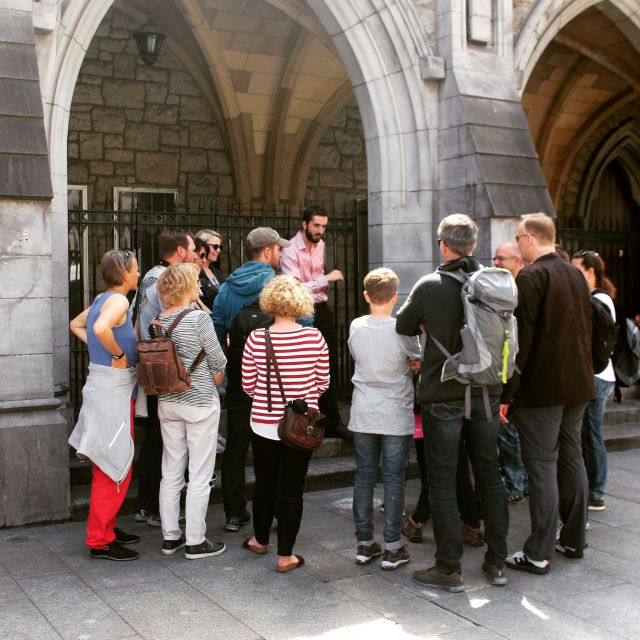
The English-speaking guide keeps the walk moving with history, architecture, and human stories. That mix matters. Dates and building names can blur together, but a story about a café in a former tram or a post-box marking Ireland’s shift to independence is easier to remember.
The group limit also helps. Sixteen people is large enough to keep the tour lively but small enough for questions. The company says additional guides are provided when required, which helps preserve that smaller feel during busy periods.
More City Highlights Walking Tours in Dublin:
- Dublin Highlights and Hidden Gems Guided Walking Tour
★ 5.0 · 6,020 reviews - Dublin: Highlights and Hidden Gems Walking Tour
★ 4.9 · 2,140 reviews - Dublin Highlights: 2.45-Hour Walking Tour in Italian
★ 4.7 · 460 reviews
City Hall, Dublin Castle, and the medieval quarter
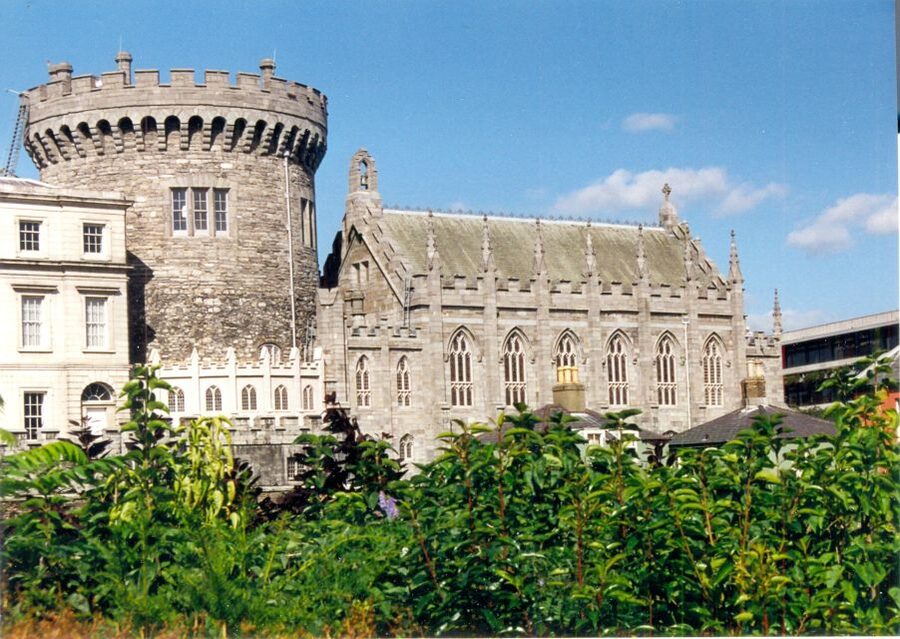
From Dame Street, the walk heads toward City Hall and the grounds and gardens of Dublin Castle. These are some of the clearest places to get a sense of Dublin’s political past, and the guide provides the setting before the route moves on.
The castle grounds are especially useful for orientation. You are seeing the area from outside rather than joining a full interior tour, so the guide’s explanation does much of the work. If the castle interests you, this first look helps you decide if you want to return for a separate visit.
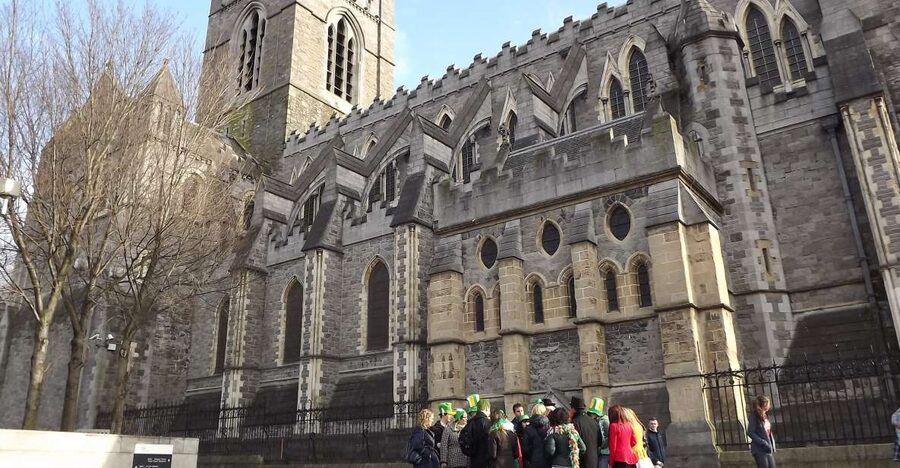
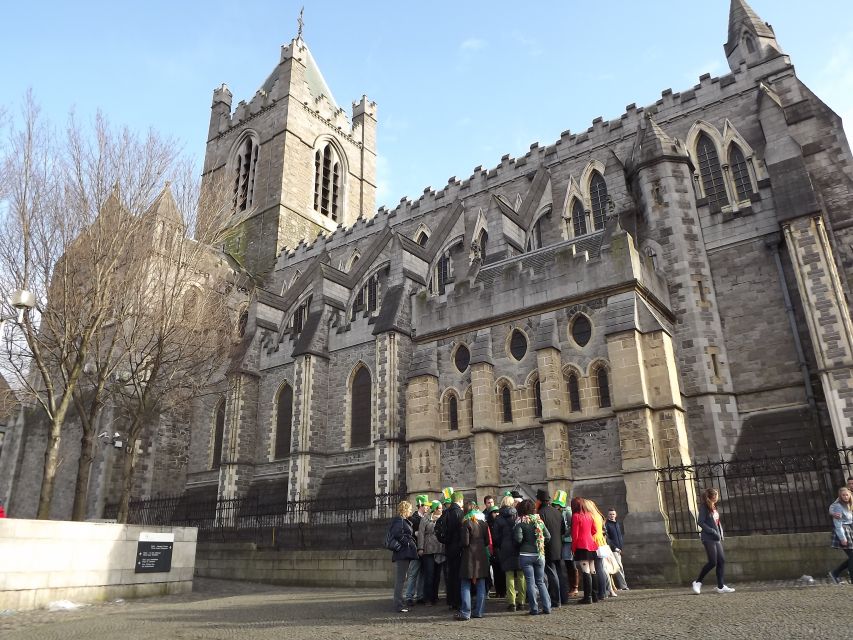
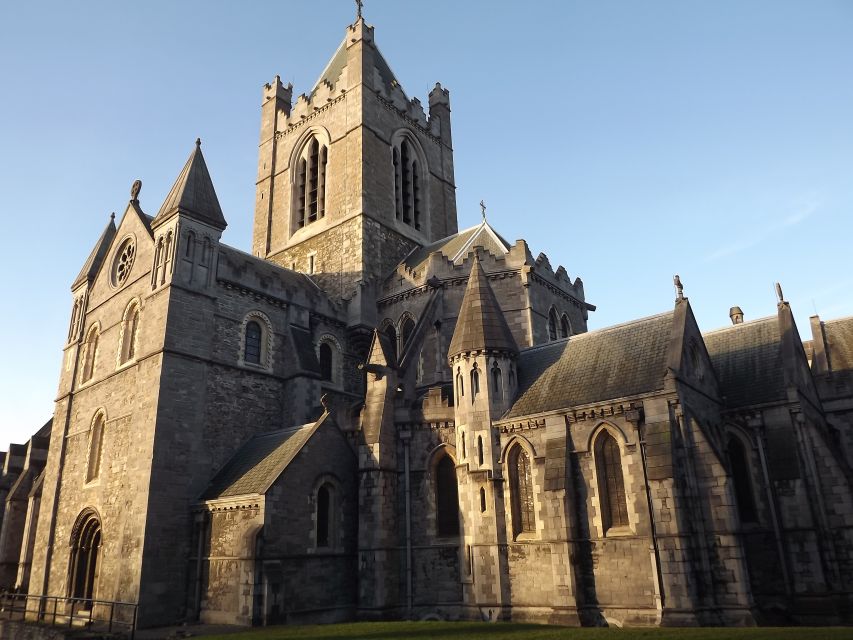
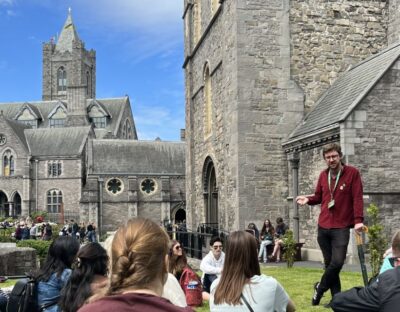
Christ Church Cathedral comes next, along with nearby Fishamble Street and Smock Alley. This is where the route’s older layers become easier to picture. The emphasis is not simply on grand architecture. The guide connects buildings and streets with the people and events that shaped them.
You should know that all visits on this walking tour are external. That keeps the schedule moving and makes the $31 price easier to understand, but it also means the tour is not a substitute for entry to Dublin Castle or Christ Church Cathedral. You can plan those interiors later if you want more time inside.
Temple Bar beyond the pub signs
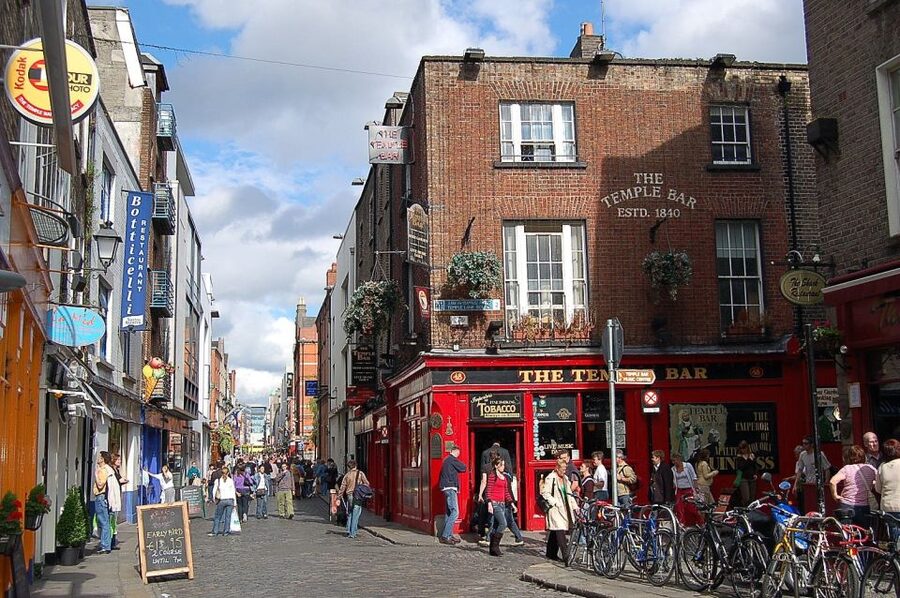
The route then turns toward Meeting House Square and Temple Bar. This is one of Dublin’s best-known areas, but it can be easy to reduce it to pubs and crowds. The walk gives you more context by pointing out the district’s streets, buildings, and less obvious details.
Fishamble Street and Smock Alley help broaden the picture. Instead of simply passing through Temple Bar, you get a sense of how the area fits into the older city. The guide’s job here is valuable because the most interesting details are not always marked with a large sign.
This part can feel busy, especially when the district is full. A small group and a live guide make it easier to stay together, but you should not expect a quiet stroll through empty lanes. The reward is a better understanding of one of Dublin’s most visited quarters, rather than another quick pass through its most photographed spots.
Crossing the Millennium Bridge and the River Liffey
The walk continues across the Millennium Bridge and along the River Liffey. This is a short physical crossing, but it changes the feel of the tour. You move from the south-side historic quarter to Dublin’s north side, where O’Connell Street becomes the main spine.
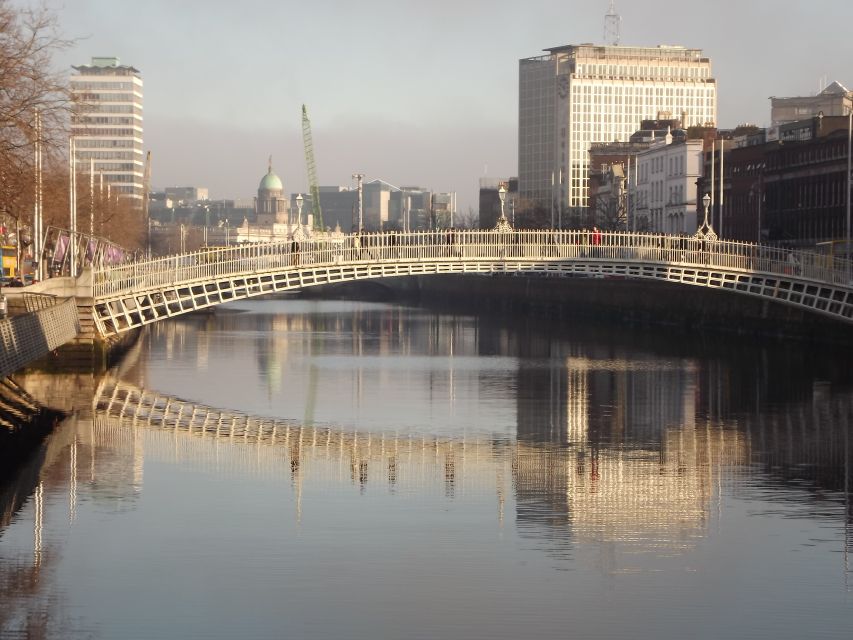
The bridge also offers a useful view of the river and the relationship between the two sides of central Dublin. One of the tour’s lighter moments involves a bridge with an unusual bounce, a detail that gives the walk some personality without taking it far off course.
The Italian Quarter and St Mary’s Church follow. St Mary’s is no longer used as a church and now serves as a famous café and bar. That is exactly the kind of stop that makes this tour different from a standard monument walk. You get a quick explanation of how a familiar building found a new use, then keep moving.
The route also points out a former Lisbon tram now serving as a café. It is an amusing reminder that Dublin’s character is not limited to grand Georgian buildings and political landmarks.
More walking tours around Dublin:
- 1916 Rebellion Walking Tour
★ 5.0 · 1,605 reviews - 2-Hour Historical Walking Tour from Dublin
★ 5.0 · 875 reviews - Historical 2-Hour Guided Walking Tour of Dublin
★ 4.7 · 865 reviews - Dublin: Mythology, Folklore and Legends Walking Tour
★ 4.9 · 703 reviews
O’Connell Street and the story of 1916
Henry and Moore Streets lead toward O’Connell Street, one of the city’s major historic avenues. Here the guide brings the walk into Ireland’s modern political story, especially at the General Post Office.
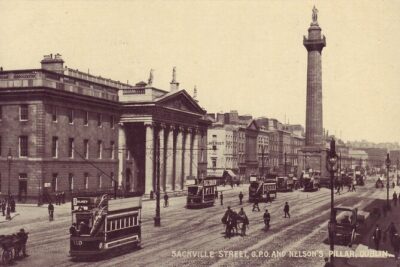
The GPO was the headquarters of the rebels during the 1916 Rising. The fighting caused major damage to the building and to much of the surrounding street. Seeing the GPO in person gives that event a physical setting, rather than leaving it as a date in a history book.
The O’Connell Monument adds another layer to the street’s story. The guide also points out a post-box that reflects Ireland’s transition to independence. Small details like this work well because they show how political change appeared in ordinary city objects, not only in speeches and monuments.
This section may be the most useful for anyone who wants a quick introduction to Dublin’s political past. The guide keeps it accessible and ties the larger events to the street in front of you. If you already know Irish history well, you may want more depth than a walking introduction can provide. For a first visit, the balance is sensible.
The former Parliament House and Trinity College
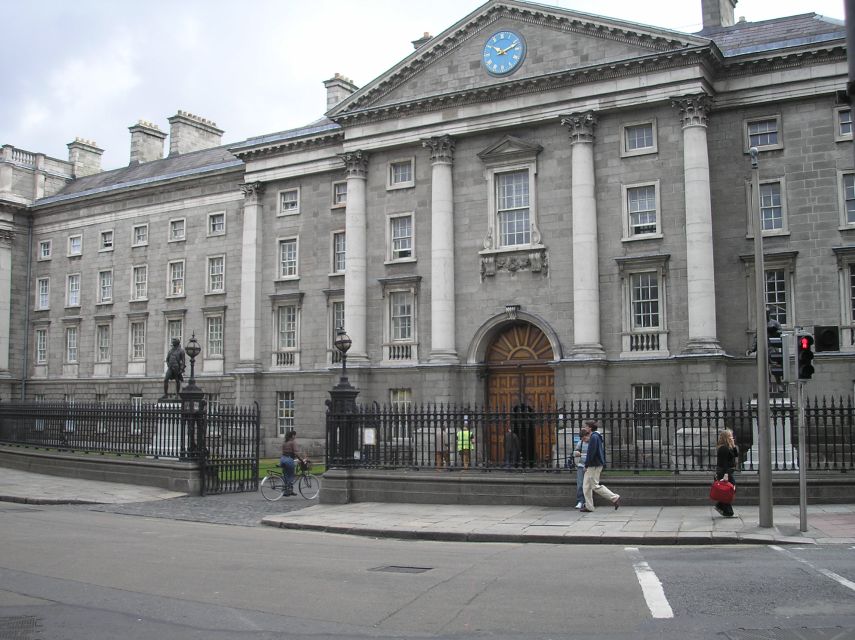
The route returns toward the south side and finishes around the former 18th-century Houses of Parliament, now the Bank of Ireland, before ending outside Trinity College. This gives you a final look at Dublin’s political and academic landmarks in one compact stretch.
Trinity College is best known for the Book of Kells. You do not enter as part of this tour, but the guide leaves you at a useful point for deciding if you want to visit afterward. Because the college is a major Dublin attraction, a short explanation of its place in the city helps you judge how to use your remaining time.
The walk also includes a humorous representation of a da Vinci painting and a starkly comic, naked depiction of a famous 18th-century composer. These surprises keep the closing section from becoming a dry march between formal buildings.
There is one practical point to clarify before booking. The route description says the walk finishes outside Trinity College, while the meeting information says the activity ends back at the meeting point. Confirm the exact end location for your chosen departure, especially if you are arranging another booking immediately afterward.
The guides make the difference
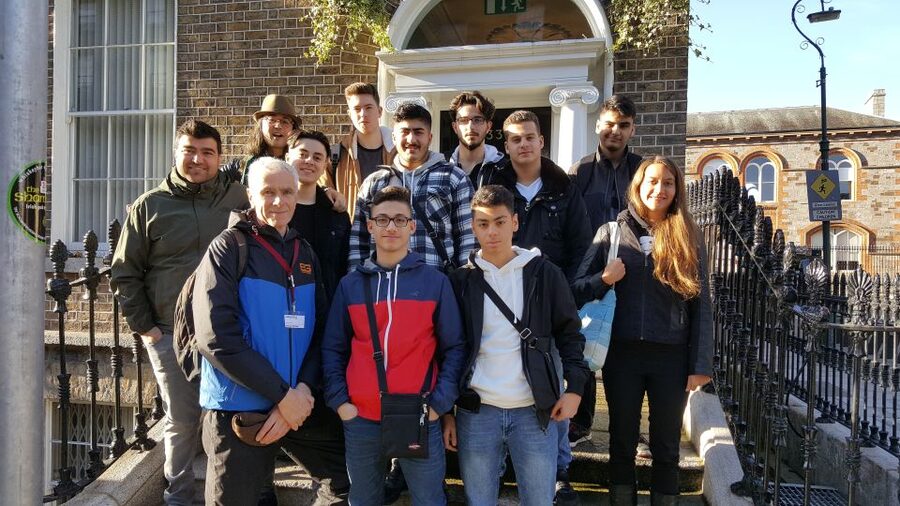
The strongest part of this experience is the guide’s delivery. Joe Brennan is praised for a well-judged walking pace and clear presentation. John O’Flynn brings architectural and political context with a welcoming manner. Jacob is noted for patience with questions and for helping with directions after the tour.
Katie is described as both informative and funny, with recommendations useful for the rest of a Dublin visit. Dave is also singled out for making sure the group learned something while enjoying the walk. These details point to a consistent strength: the guide is not just reciting facts but shaping the experience around the people in the group.
That said, guide-led walks naturally vary in tone. You may get a more history-focused presentation or a lighter one, depending on who leads your departure. The supplied information names several guides, so the company clearly uses a team rather than promising one fixed individual.
If you have a question, ask it. The guides are described as open to inquiries, and the group size should make it possible to do so without stopping the entire tour for long. If the pace feels quick, say so early rather than waiting until the end.
Is $31 a good value?
At $31 per person, the tour is fairly priced for a 2.5-hour introduction to central Dublin. You are paying for a trained English-speaking guide, a carefully connected route, and local details that can be hard to notice alone.
The value is strongest if this is your first Dublin visit. In one outing, you cover the castle quarter, Temple Bar, the Liffey, O’Connell Street, the GPO, the former Parliament House, and Trinity College. You also receive ideas for places to revisit after the walk.
The price does not include entry to the buildings, and gratuity is not included. That is not a serious drawback if you view the experience as an orientation walk rather than a collection of admissions. You can spend extra only at the sites that interest you most.
The reserve-now-and-pay-later option also gives you some flexibility, and free cancellation is available up to 24 hours before the tour for a full refund. Check the available departure time when booking, since the start schedule can vary.
Who should book this walking tour?
I would choose this tour for a first or second day in Dublin. It gives you a city framework quickly, and the guides can help you decide how to spend the rest of your stay.
It suits you if you enjoy:
- History explained through streets and ordinary objects
- A mix of major sights and less obvious city details
- Small groups rather than large coach tours
- A 2.5-hour walk with no scheduled interior admissions
- Friendly storytelling with room for questions
It may be less suitable if you want long visits inside Dublin Castle, Christ Church Cathedral, or Trinity College. It is also not ideal if you dislike walking between districts or prefer a slow, stop-heavy pace. One comment specifically called for a slower walk, so comfortable footwear and realistic expectations matter.
The tour is listed as wheelchair accessible, but the route crosses several central streets and includes a substantial amount of walking. If you use a wheelchair, confirm the current route and any access details before departure.
Should you book it?
Book this tour if you want Dublin explained as a connected city rather than a list of isolated sights. The combination of the 1916 story at the GPO, the medieval quarter, Temple Bar, the Liffey crossing, and odd local details gives you a useful first map of central Dublin.
Skip it only if you already know the city well or want extended indoor visits. At $31, it offers particularly good value for a first-day orientation, and the small group, capable guides, and mix of serious history with playful discoveries make it more memorable than a basic landmark checklist.
FAQ
How long is the Dublin Highlights and Hidden Corners Walking Tour?
The tour lasts 2.5 hours. Check availability for the departure times offered on your chosen date.
How much does the tour cost?
The price is $31 per person.
Where does the tour start?
It starts at the Tree of Gold statue, Crann an Óir, in Central Plaza on Dame Street, Dublin 2, at the corner of Dame Street and Fownes Street Upper.
Where does the tour finish?
The route description says it finishes outside Trinity College. The meeting information also says the activity ends back at the meeting point, so confirm the exact finish point when booking.
Is the tour conducted in English?
Yes. The live tour guide speaks English, and English is the listed tour language.
How large is the group?
The maximum group size is 16 people. Additional guides are provided when required.
Are Dublin Castle, Christ Church Cathedral, and Trinity College visited inside?
No. All visits during the walking tour are external. You have opportunities to visit sites separately after the tour.
Is the tour wheelchair accessible?
Yes, the activity is listed as wheelchair accessible.
Can I cancel the booking?
Yes. You can cancel up to 24 hours in advance for a full refund. The reserve-now-and-pay-later option allows you to book without paying immediately.
New walking tours around Dublin
- Dublin: Traditional Pubs Walking Tour with Local Guide★ 4.9 · 112 reviews
- Dublin: Traditional Pub Walking Tour★ 4.6 · 295 reviews
- Dublin: Macabre History Walking Tour★ 4.9 · 95 reviews
- Dublin: Mythology, Folklore and Legends Walking Tour★ 4.9 · 703 reviews
- Dublin: Irish Music Walking Tour with Live Performance★ 4.8 · 137 reviews
- Dublin: Delicious Walking Food Tour★ 4.9 · 137 reviews
- Dublin Highlights: 2.45-Hour Walking Tour in Italian★ 4.7 · 460 reviews
- Dublin: Sightseeing Walking Tour in German★ 4.7 · 231 reviews
Dublin Walking Tours, side by side.
Dublin Highlights and Hidden Gems Guided Walking Tour
Read our review →
Dublin Historical Centre Food Tour with 8 Food Tastings & Drinks
Read our review →
Dublin: Mythology, Folklore and Legends Walking Tour
Read our review →
Dublin Highlights: 2.45-Hour Walking Tour in Italian
Read our review →

Lists this walk sits on