
Review · SPLIT
Split: History and Heritage Walking Tour
Split’s old center is not a museum behind a ticket gate. It is a living city built inside and around a 1,700-year-old Roman palace. This walking tour shows you how imperial stone, medieval homes, Gothic palaces, shops, cafés, and daily life all share the same compact space.
I like the strong storytelling, especially the tale of how Diocletian rose from obscurity to become Rome’s most powerful man. I also like the local touch from guides such as Antonella, Antonela, and Nikolas, who connect Roman rule with Croat and Venetian chapters. The main drawback is group size: some departures have approached 30 people, which can mean waiting in crowded lanes.
Key Points to Know Before You Book
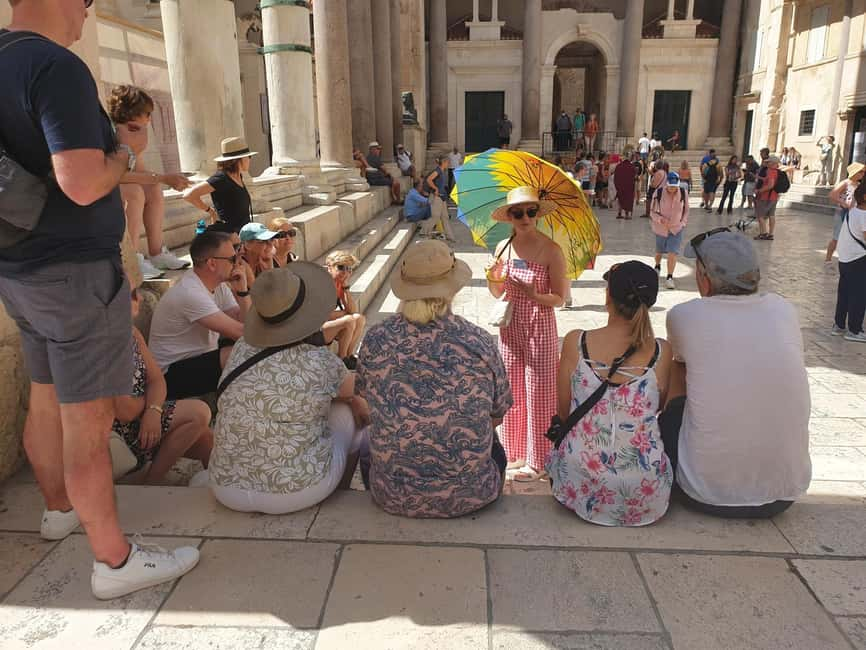
- Diocletian’s Palace is still part of Split: You walk through public streets, courtyards, and squares rather than a silent archaeological site.
- The best feature is the storytelling: Guides explain the Roman, medieval, Venetian, and modern layers in plain language.
- Antonella and Antonela receive especially warm praise: Their energy, clear explanations, and ability to keep attention suit both history fans and casual visitors.
- The $18 price covers a small-group walking tour and guide: Admission tickets, food, drinks, and transport are not included.
- The tour runs in every kind of weather: Bring comfortable shoes, a hat, and rain protection if the forecast looks uncertain.
- Look for yellow: Meet beneath the old Roman arch on Peristil Square, beside the Tourist Information Office, where the guide uses a yellow shirt or umbrella.
Why Split’s Palace Makes Such a Good Walking Tour
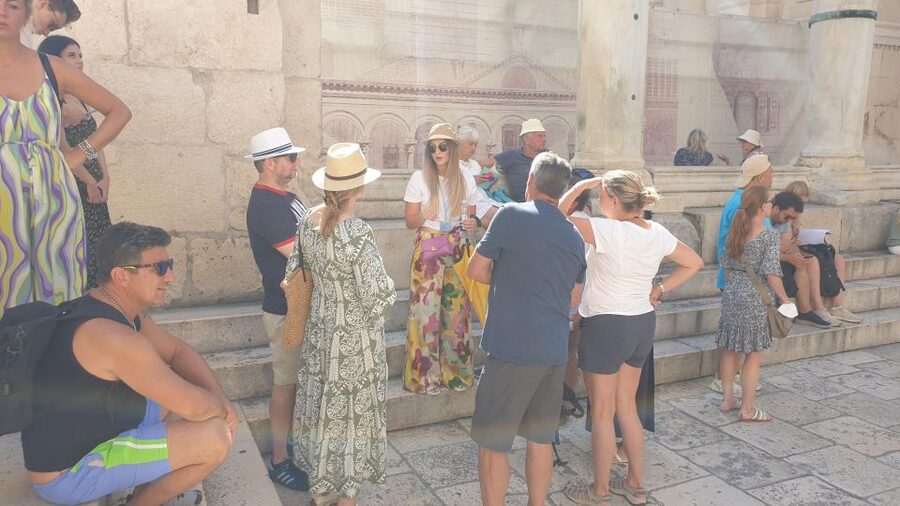
Diocletian’s Palace is the reason a guided walk works so well here. You do not simply arrive at one grand building, admire it, and leave. The old palace forms the core of present-day Split, so the remains appear in fragments as you move through ordinary city life.
A Roman wall may frame a shop entrance. A medieval building may rise directly from ancient foundations. A narrow lane can lead from a palace courtyard to a Gothic façade, then out toward a modern café. Without context, these pieces can blur together. With a guide, the city becomes a layered story.
The tour focuses on the historical core, where you see important sections of the palace and the old town without paying an admission fee for a separate attraction. That makes it useful early in your stay, when you want to understand the layout before exploring on your own.
I especially like the way the setting keeps the past connected to the present. You are not being shown a reconstructed Roman world. You are seeing what remains, what has been changed, and how Split continues to use the same central spaces after seventeen centuries.
More History Walking Tours in Croatia
- Dubrovnik Old Town History Walking Tour
★ 5.0 · 1,684 reviews - Dubrovnik: Ancient City Walls & Wars Walking Tour
★ 5.0 · 1,270 reviews - Zagreb: City & History Walking Tour & WW2 Tunnels
★ 4.9 · 1,202 reviews
Peristil Square Is the Right Place to Begin
The meeting point is Peristil Square, beneath the old Roman arch at the north side of the square and next to the Tourist Information Office. Look for a yellow T-shirt or yellow umbrella.
This is a practical meeting point because Peristil is one of the clearest places to begin understanding the palace. It gives the guide a strong visual setting for explaining Diocletian’s project and the central role of the imperial complex.
Arrive with enough time to find the arch and identify the yellow marker. The old center has narrow passages and plenty of movement, so spotting a guide in a bright shirt or under a yellow umbrella is easier than relying on a small sign.
The tour returns to this same meeting point. That helps you plan the rest of your day. You can continue walking through the old center, return to a place you noticed on the tour, or use the square as a fixed point while you explore.
Diocletian’s Rise Gives the Tour Its Main Story
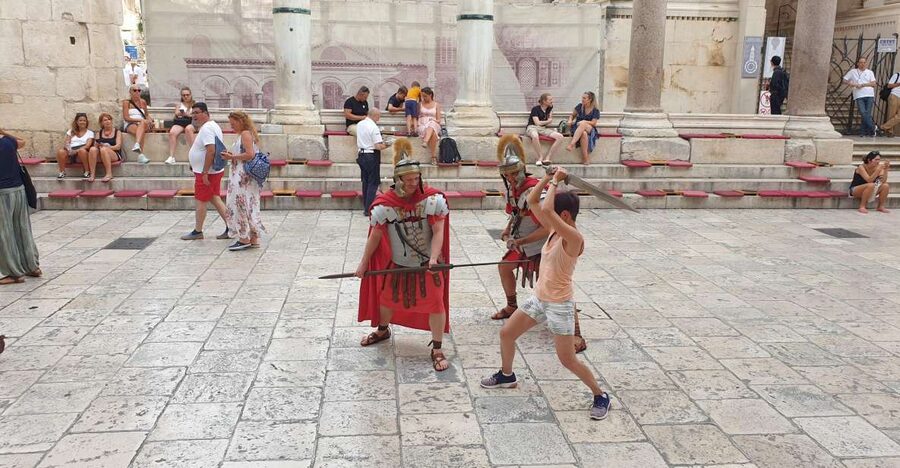
One of the most appealing parts of this experience is the story behind the palace’s owner. The guide explains how Diocletian went from a relatively unknown soldier to the most powerful man in the Roman world.
That personal rise gives the ruins a human focus. Instead of hearing only dates and building terms, you begin to see the palace as a statement of power. Diocletian did not build a modest retirement home. He created a large imperial residence and fortified complex that reflected his position, wealth, and authority.
The tour also explains what the palace was like in Roman times and what remains today. That distinction matters. Ancient sites can look complete from one angle and heavily altered from another. A good guide helps you separate original Roman fabric from later medieval and modern changes.
Antonella and Antonela are particularly well suited to this kind of explanation. Their style, as reflected in the feedback, is energetic and clear rather than dry. They make complex material easier to follow, which helps if you are traveling with someone who does not usually choose historical tours.
Romanesque Churches and Medieval Fortifications

The palace is only one part of the story. The walk also includes Romanesque churches, medieval fortifications, and buildings shaped by later centuries.
These stops show how Split changed after Roman rule. The city did not discard the palace and begin again elsewhere. Later residents adapted the old structure, added new buildings, and made the complex their own.
The medieval fortifications are useful for understanding defense and urban growth. They help you picture Split as a lived-in city rather than a Roman relic. The Romanesque churches add another layer, with religious buildings occupying a city that began as an imperial project.
The guide’s job here is to connect the architectural details. You may see a church, a wall, or a palace façade and appreciate it on its own. The stronger experience comes from understanding how each belongs to a different period of Split’s development.
This is also where the walking format pays off. You can see changes in stonework and building style at close range. The guide can point out details that are easy to miss while wandering, a benefit several people specifically valued.
Same streets, a different story:
- Dubrovnik: Old Town Walking Tour
★ 4.8 · 5,174 reviews - Dubrovnik: The Original Game of Thrones Tour & Lokrum Option
★ 4.8 · 5,064 reviews - Split: Old Town and Diocletian Palace Walking Tour
★ 4.9 · 4,727 reviews - Dubrovnik Discovery Old Town Walking Tour
★ 5.0 · 4,458 reviews
Gothic Palaces and the Venetian Chapter
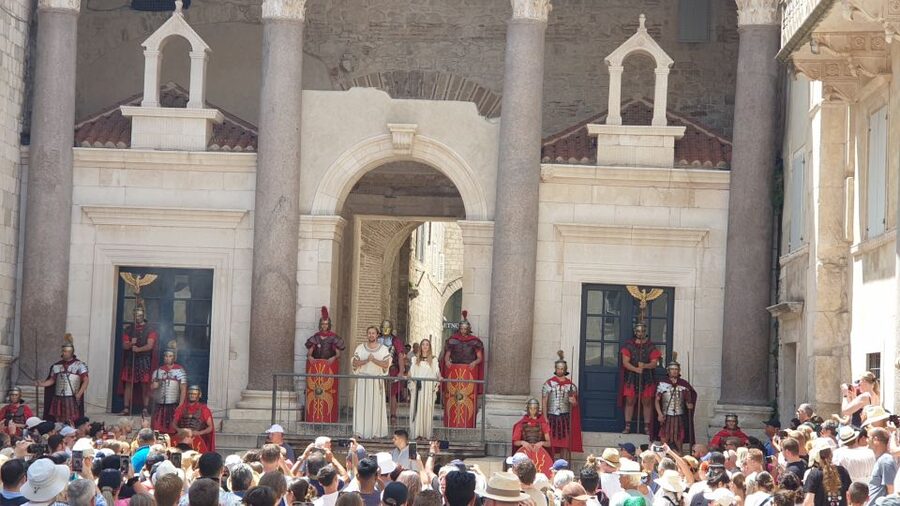
Gothic palaces add another change in tone and design. The tour places these buildings alongside Roman remains, making the old town feel like a conversation between eras.
The Venetian influence is another important part of the story. The guide explains how Venetian rule affected architecture and city life, alongside the arrival of Croats and the later development of Split. This broader view keeps the tour from becoming a narrow account of one emperor.
I like that the experience reaches beyond the Roman period. Many short city walks stop once they have explained the ancient ruins. Here, you get a clearer sense of how the city continued to change through medieval and Venetian times and into the present.
That wider timeline also makes the streets easier to read after the tour. You can look at one building and ask which period shaped it, or notice how several periods occupy the same small block. Split rewards that kind of close attention.
Storytelling That Works for History Fans and Everyone Else
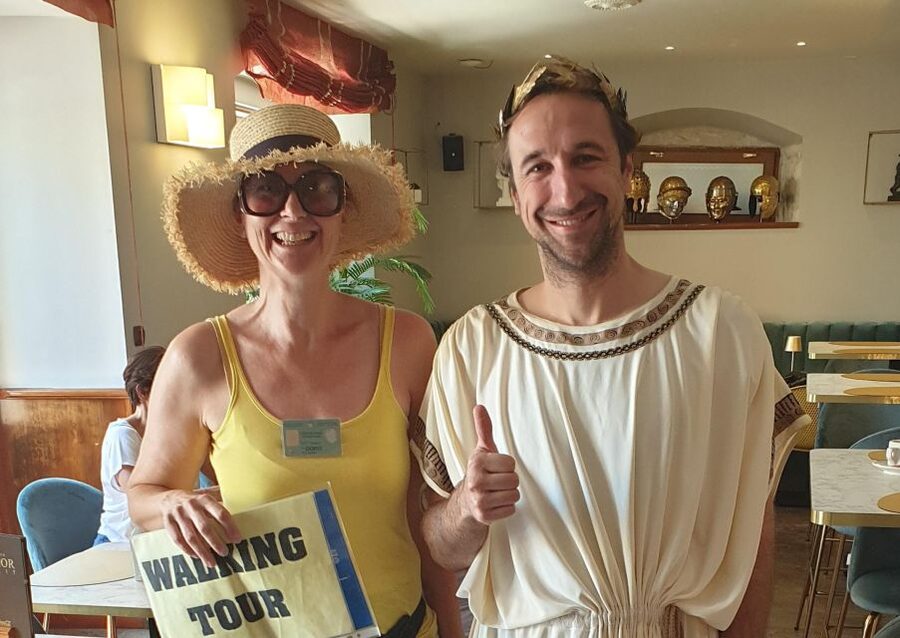
The strongest praise is directed at the guides’ delivery. Antonella is repeatedly described as lively, clear, enthusiastic, and easy to follow. Antonela receives similar praise for explaining complicated material in simple language and keeping the group engaged.
Nikolas is also noted for explaining the city’s influences and showing less obvious corners that are easy to miss while wandering alone. Doris is remembered for helping with an umbrella during rain, a small detail that says something useful about the practical attitude you may encounter on a weather-prone day.
The guides do not appear to rely only on a list of dates. Their approach includes stories, facts, local connections, and personal links to Split. Traditional singing happened along one walk, adding an unscripted cultural moment, though you should treat that as a possible bonus rather than a promised part of every departure.
The tone seems to suit mixed groups. History fans get Roman politics, architecture, and the changing rule of Croats and Venetians. Less committed history listeners get memorable stories and a guide who knows how to keep the pace moving.
A guide can also answer questions as you go. That matters in a city where a single stone or doorway may raise a question about religion, defense, trade, or daily life. The tour is not just a speech delivered at one square.
A Note About Group Size and Pace
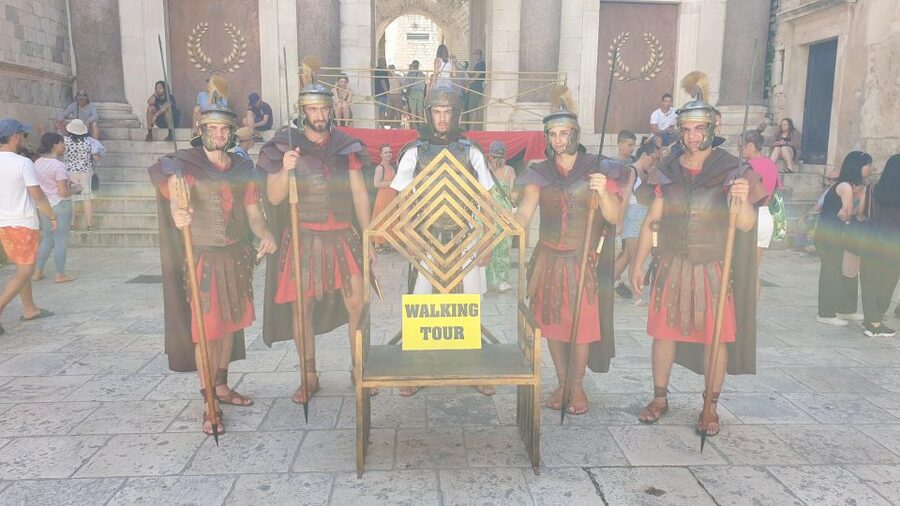
The advertised format is a small-group walking tour, but one departure reached almost 30 people. The guide even acknowledged the size. That is the main practical weakness to consider before booking.
A large group can lose time in crowded streets. The guide may need to stop and wait for people to catch up, and you may stand farther away than ideal during an explanation. Narrow lanes and busy public spaces make this more noticeable than it would be in an open park.
On the other hand, the tour is still priced at $18 per person, so it offers good value even if the group is larger than expected. You are paying for a local guide who organizes the story and leads you through the historic core, not for private attention.
Stay close to the guide, listen for the next meeting point, and avoid drifting behind to take too many photographs during transitions. If you need a quieter, more personal experience, ask about group size before committing. If your priority is a well-priced introduction to Split, the occasional wait may be a fair trade.
What the $18 Price Really Covers
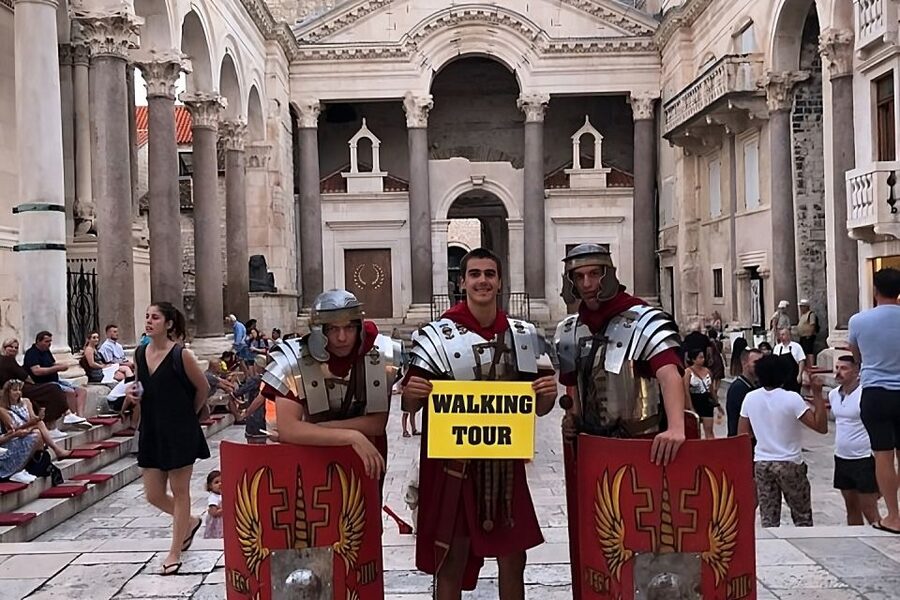
At $18, this is an inexpensive way to get a structured introduction to the city. The fee includes the walking tour and guide, but not hotel pickup, drop-off, food, drinks, or admission tickets.
The fact that the walk uses public areas keeps the cost down. You are not paying for entry to a separate palace exhibit or a private archaeological collection. The value comes from interpretation: someone explains what you are looking at and places it in a wider story.
That is particularly useful if you have only a short visit. One person with 48 hours in Split described the tour as a strong way to learn quickly and enjoy the city at the same time. I would agree with the general strategy: take the walk early, then return to the places that caught your attention.
You can also reserve now and pay later, which gives you some flexibility. Cancellation is allowed up to 24 hours in advance for a full refund. Those terms are useful if your plans depend on ferry connections, weather, or a changing cruise schedule.
Weather, Shoes, and Physical Comfort
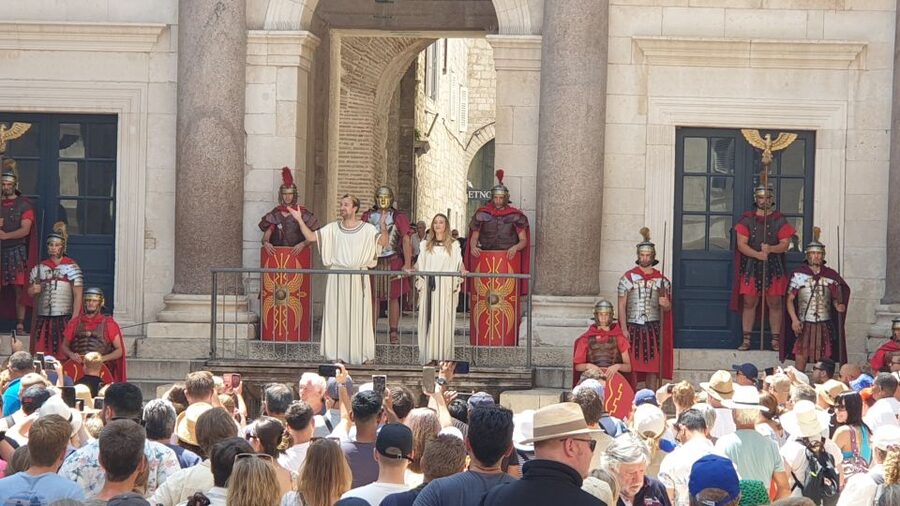
The tour runs in rain or sunshine. Split’s old center has hard surfaces, uneven sections, and plenty of standing, so comfortable shoes matter more than stylish footwear.
Bring a hat for sunny weather. If rain is possible, take a compact umbrella or waterproof layer. One guide provided an umbrella during a wet walk, but you should not depend on that being available for everyone.
The experience is listed as suitable for all ages, but it is not suitable for people with high blood pressure or people with hearing impairments. The walking and listening format may also be tiring if you have difficulty standing for extended periods, so consider your own needs before reserving.
Costumes are not allowed. That rule is straightforward, but it is worth noting if you are visiting Split during a themed event or planning a historical dress-up activity elsewhere in town.
Game of Thrones as a Useful Bonus
Fans of Game of Thrones receive extra information about filming locations. This is a bonus, not the main purpose of the walk.
That balance is sensible. Split is more than a television backdrop, and the Roman and medieval material deserves most of the attention. Still, filming references can help connect the old streets to something familiar, especially if your group includes people with different interests.
You should book this tour for Split’s history first and treat the television locations as an added reason to pay attention. The main route covers public parts of the historic center, so it gives you a sense of the real city behind the screen.
Which Visitors Will Get the Most From It
I would choose this tour if you are visiting Split for the first time, have only a day or two, or want a clear framework before exploring alone. It is also a good match for couples or families with mixed interest in history because the storytelling aims to stay entertaining.
It suits people who want Roman architecture but also care about medieval and Venetian influences. The tour does not treat the palace as an isolated monument. It explains how the old city grew around it and how modern Split still uses the same central area.
It may be less suitable if you strongly prefer a private guide, need a very quiet pace, or want extensive access to paid interiors. Admission tickets are not included, and the walk focuses on the public historic core.
Language choice is another advantage. Tours are available in English, Russian, German, and French. Check the selected departure carefully so you join the language you want.
Should You Book the Split History and Heritage Walk?
Book it if you want a lively introduction to Split for $18, especially at the start of your stay. The palace, churches, fortifications, Gothic buildings, and city stories are easier to understand with a guide, and Antonella, Antonela, Nikolas, and other local guides have shown a strong ability to make the past clear and entertaining.
Go in knowing that the group may be larger than the small-group label suggests. Wear good shoes, arrive at Peristil Square early, stay near the yellow marker, and plan for changing weather.
For a first look at Split’s Roman, medieval, Venetian, and modern layers, this is a sensible buy. If you want a private, deeply specialized architectural tour, look for a smaller format instead.
FAQ
How much does the Split History and Heritage Walking Tour cost?
The tour costs $18 per person. The price includes the small-group walking tour and guide, but not admission tickets, food, drinks, or hotel transportation.
Where does the tour start?
It starts on Peristil Square beneath the old Roman arch at the north side of the square, next to the Tourist Information Office. Look for a yellow T-shirt or yellow umbrella.
Where does the tour end?
The walk ends back at the meeting point on Peristil Square.
Which languages are available?
The tour is available in English, Russian, German, and French.
Does the tour run in bad weather?
Yes. The tour operates in rain and sunshine. Bring comfortable shoes, a hat, and suitable rain protection.
Can I cancel for a full refund?
Yes. You can cancel up to 24 hours in advance for a full refund.
New walking tours around Croatia
- Zadar: Food Tasting & Old Town Walking Tour★ 5.0 · 94 reviews
- Livade: Guided Truffle Hunting Walking Tour★ 4.6 · 82 reviews
- From Split: Krka Waterfalls Cruise & Trogir Walking Tour★ 4.7 · 681 reviews
- Dubrovnik: Old Town Walking Tour★ 4.9 · 792 reviews
- Dubrovnik: Walls and Wars Walking Tour★ 4.8 · 501 reviews
- Dubrovnik: Cable Car, Walking Tour and City Walls Combo★ 4.6 · 322 reviews
- Dubrovnik: Panoramic Ride and Old Town Guided Walking Tour★ 4.7 · 261 reviews
- Dubrovnik: Game of Thrones And Iron Throne Walking Tour★ 4.8 · 505 reviews
Split Walking Tours, side by side.

Split: Old Town and Diocletian Palace Walking Tour
Read our review →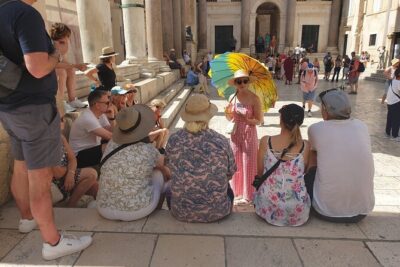
Walking Tour of Split and Diocletian’s Palace
Read our review →
Krka Waterfalls tour with Trogir Walking tour and Krka panoramic boat cruise
Read our review →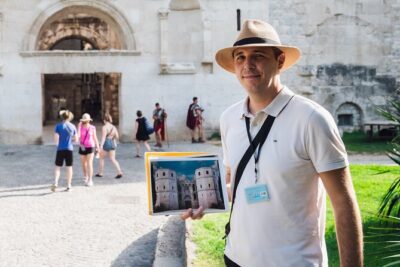
Walking Tour of Split with a ‘Magister’ of History
Read our review →
From Split: Krka Waterfalls Cruise & Trogir Walking Tour
Read our review →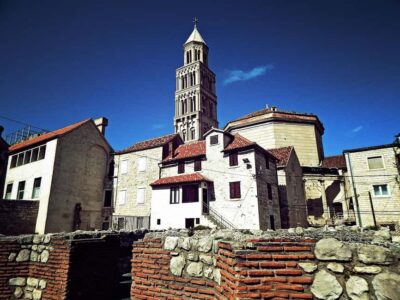
Diocletian’s Palace and Old Town SMALL GROUP Walking Tour
Read our review →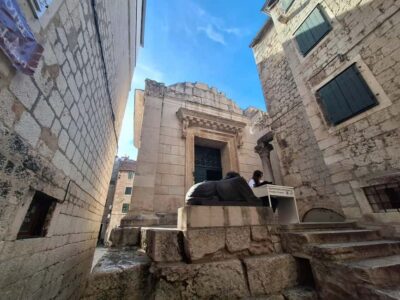
Split: City Walking Tour w/ Game of Thrones Locations
Read our review →