
Review · KYOTO
Kyoto: Gion Magical Night Walking Tour with Geisha Trivia
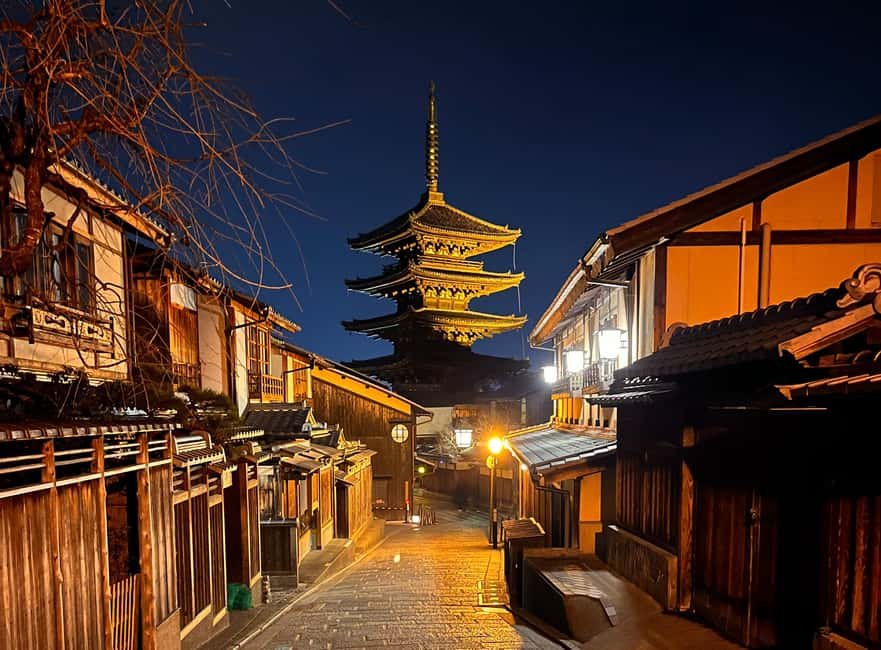
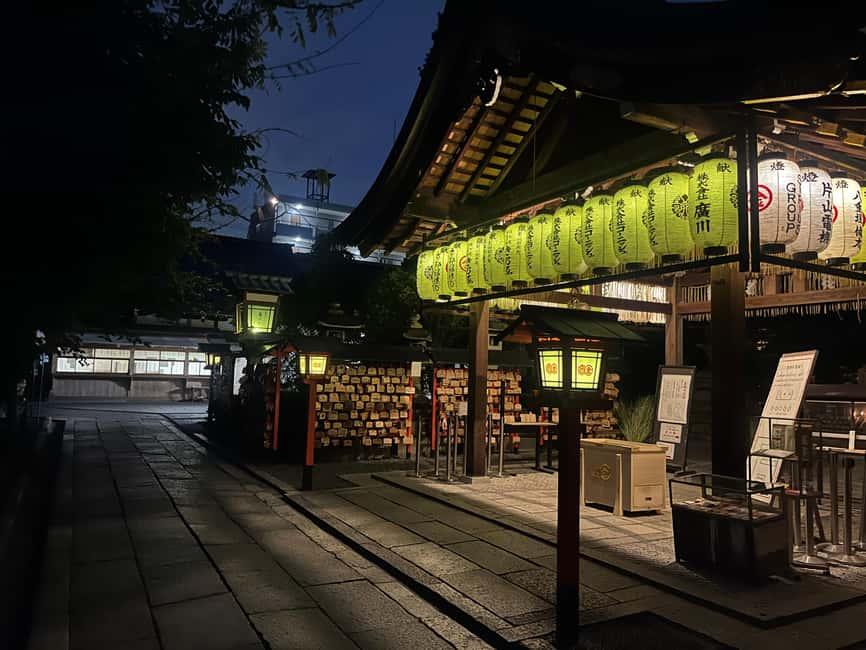
Gion changes character after sunset. Lanterns glow, temple roofs catch the light, and the narrow streets feel far calmer than they do in daylight. This 100-minute walk begins at Minamiza Theatre and combines Hanamikoji, geisha traditions, shrines, a lit Buddhist pagoda, and quieter lanes.
I like the small groups of up to 10 and the chance to ask plenty of questions. I also like the way guides such as Hina, Shino, Masami, Sho, and Kevin add practical details, from shrine customs to nearby restaurants. The main drawback is the route’s stairs, which make it unsuitable for wheelchairs, strollers, and people with limited mobility.
I love this tour most as an early Kyoto activity, before you have learned the layout of Gion on your own. It gives you useful cultural context, not just pretty streets. Just remember that a Geiko or Maiko sighting is luck, not the purpose of the tour, and that the start time means departure from the meeting point.
Key points to know before booking
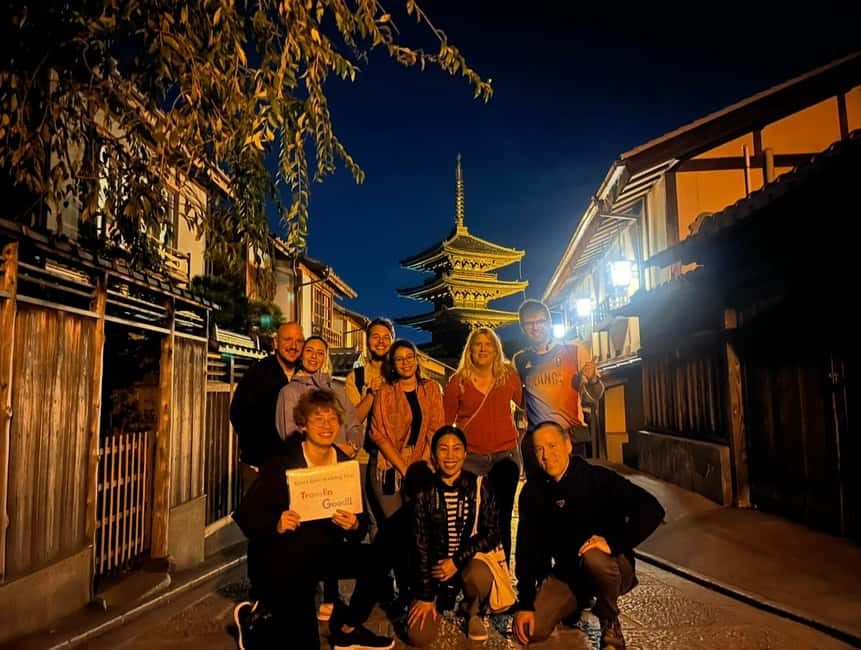
- Start at Minamiza Theatre: Meet in front of the theater, on the front side, with the TravelinGood sign.
- See Gion at its quietest: Evening lighting and fewer people give Hanamikoji and the surrounding lanes a different mood.
- Learn the difference between Maiko and Geiko: Guides explain clothing, traditions, work, and the rules of the district.
- Go beyond the geisha quarter: The route includes a matchmaking shrine, an illuminated Buddhist pagoda, quieter paths, and a shrine more than 1,000 years old.
- Expect a personal pace: Groups are limited to 10, and the walk is described as manageable even for older walkers, though stairs are part of the route.
- Pay $24 for focused local guidance: The price includes an English-speaking guide and photography service, with free cancellation up to 24 hours before departure.
Why Gion is better after dark
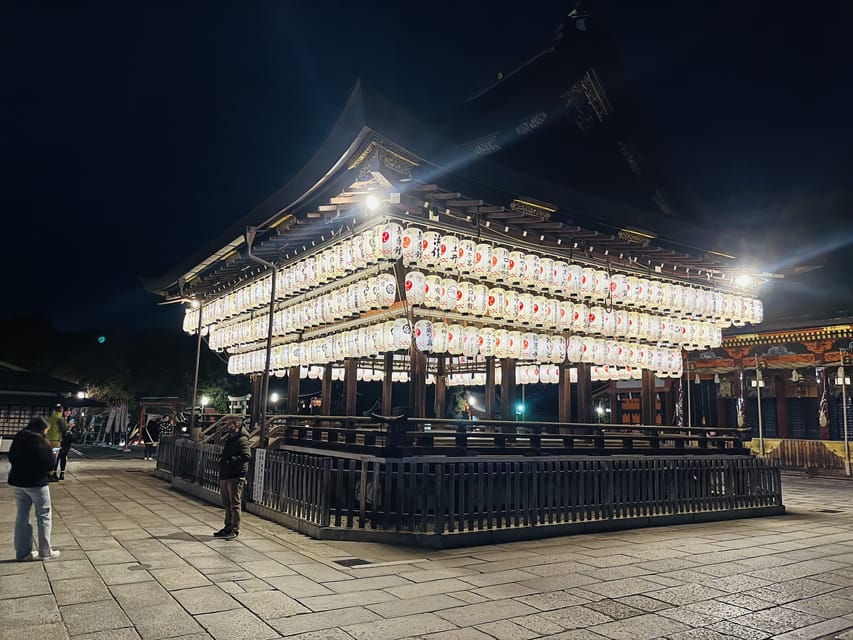
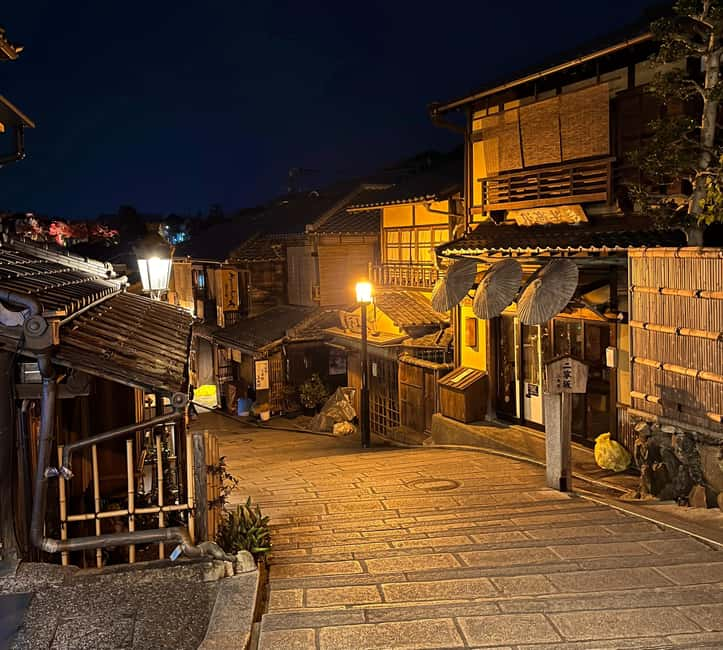
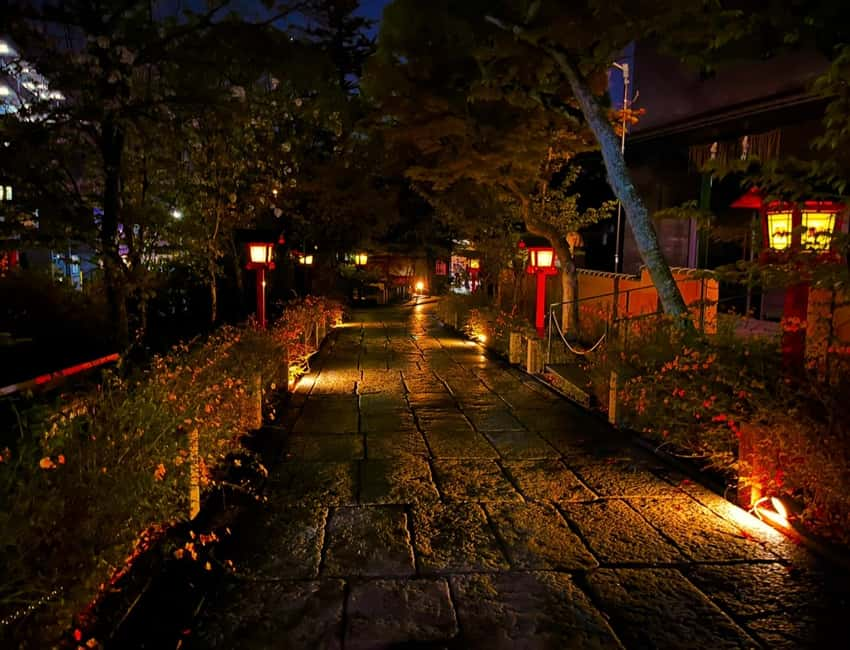
Gion is attractive by day, but night gives it a more focused mood. The wooden facades, paper lanterns, stone paths, and temple buildings look different once the street lighting becomes part of the scene. You are not simply walking through an old district. You are seeing how its traditional design works after ordinary sightseeing hours.
The tour begins near the Minamiza Theatre, one of Gion’s clearest landmarks. That makes the meeting point fairly easy to identify, but you still need to arrive at least five minutes early. The listed time is when the group leaves, not when people begin gathering. A late arrival can mean missing the walk, so allow extra time if you are coming by bus or taxi.
I would book this near the start of a Kyoto stay. You will gain a useful sense of direction, learn which parts of Gion are cultural sites rather than photo backdrops, and pick up ideas for food and daytime sightseeing. Guides including Shino and Hina have also shared restaurant suggestions and tips for other Kyoto sights, which can make the tour useful beyond its 100 minutes.
The evening departure is the standard appeal, but there is also a limited February option beginning at 3pm. That earlier departure suits you if you have dinner plans, evening theater, or simply prefer to walk in daylight. It will not offer the full night atmosphere, though the later parts of the route may still have attractive lighting.
More Night Walking Tours in Japan
- Night Walk in Gion: Kyoto’s Geisha District
★ 4.5 · 2,003 reviews - Kyoto Gion Night Walk & Geisha District Guided Tour
★ 5.0 · 786 reviews - Kyoto: Gion Sunset Walking Tour with Local Guide
★ 4.7 · 351 reviews
Hanamikoji and the rules of geisha culture
The first major part of the route leads toward Hanamikoji, the best-known traditional street in Gion. Its appeal is not only the architecture. This is where your guide explains the world of Maiko and Geiko, including the differences between them and the customs that shape their public appearances.
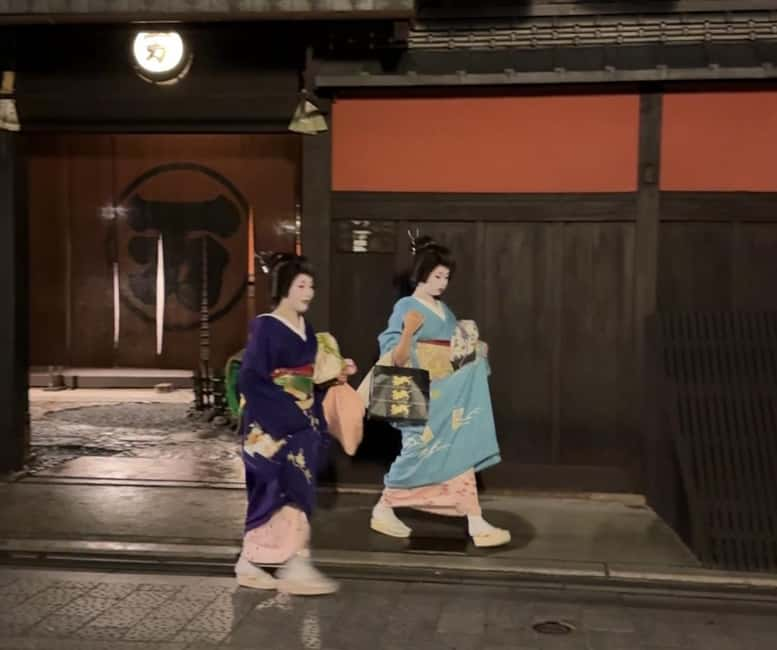
The spelling can vary depending on the source, but Kyoto commonly uses Geiko for what many visitors call geisha, and Maiko for a Geiko in training. The distinction is more than a vocabulary lesson. Clothing, hairstyle, makeup, and stage of training all help explain what you are seeing. Guides such as Sho have used photos and videos to make those differences easier to understand.
This part of the tour is also where respectful behavior matters most. A Geiko or Maiko may pass through the area on business, but the walk is not a meeting opportunity. The tour specifically does not promise contact with performers. You might see one entering or leaving a taxi, as some groups have, but you should treat that as an unexpected sighting rather than a scheduled feature.
That limitation is a strength. It keeps the focus on learning how the district works instead of turning local people into a photo stop. Your guide can explain the lanterns, private clubs, and traditions without encouraging you to block doorways or chase someone down the street.
At $24, this cultural explanation is a large part of the value. If you already know a great deal about Maiko and Geiko, some material may feel familiar. If this is your first visit to Kyoto, the context will help you read the streets with more understanding.
Shrines, prayer customs, and Kyoto stories

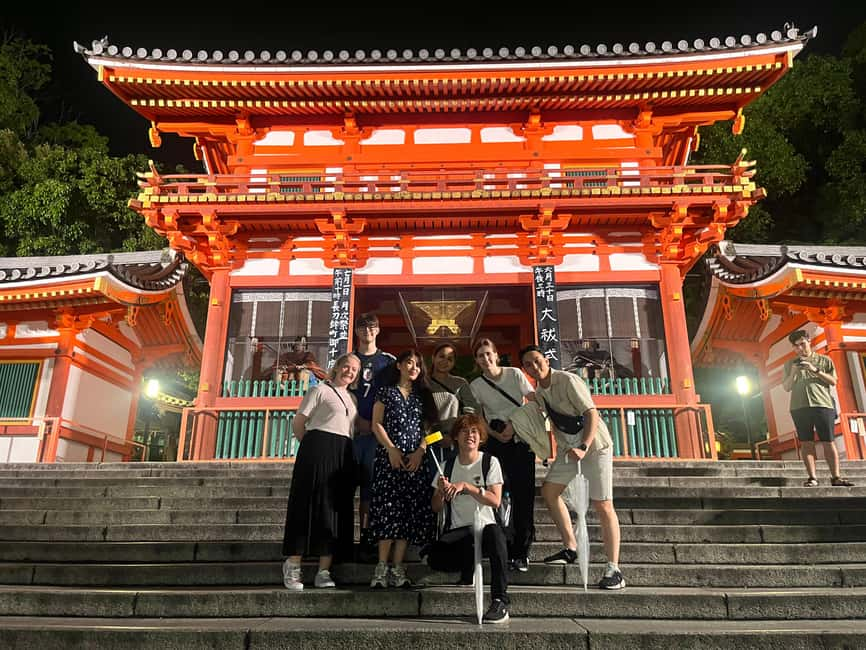
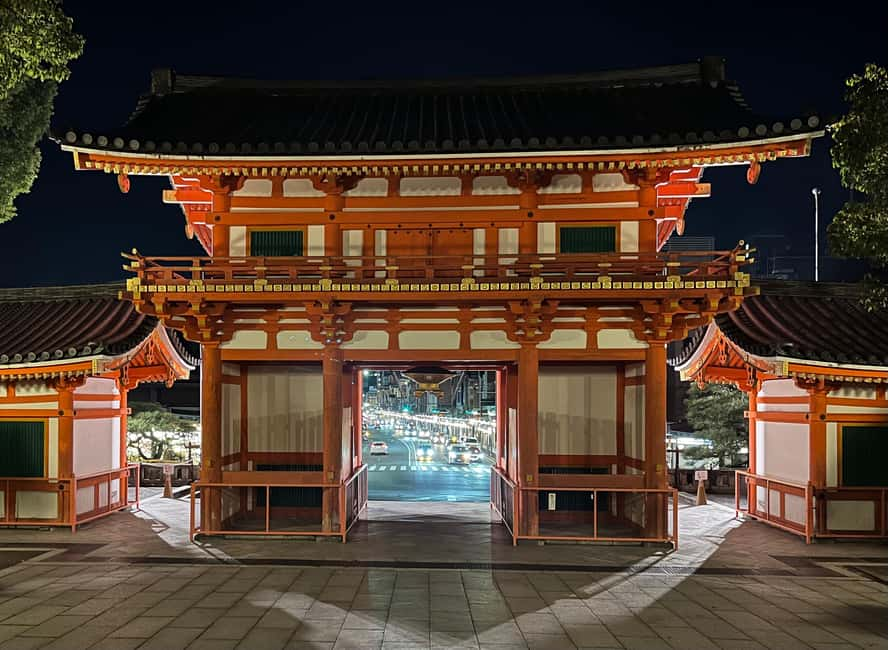
The walk does not remain inside the geisha quarter. You also visit a shrine associated with matchmaking, where the guide explains some of the spiritual ideas connected with the site. Later, the route reaches a shrine more than 1,000 years old.
The shrine stops add welcome variety. Gion can otherwise become a sequence of wooden buildings and narrow lanes, especially if you are not sure what you are looking at. Here, you learn how Shinto spaces differ from Buddhist temples and how to approach a shrine respectfully.
Shino has been particularly good at making the ritual clear, guiding the group through the steps and encouraging people to take part. That kind of instruction is useful because Japanese religious customs can seem simple from a distance but have their own order and meaning. You do not need prior experience to follow along.
The guides also bring in local legends and stories tied to the shrines. Hina, Yuri, and Masami have been praised for answering questions patiently and explaining small details rather than rushing from one photo stop to the next. That matters in a group walk. A guide who pauses for questions can turn an ordinary courtyard into a place you remember.
The route includes stairs, so do not treat this as a fully level stroll. One participant found the walking easy even at an older age, but the official restrictions are clear: the activity is not suitable for wheelchair users, people with limited mobility, or those using baby carriages. Babies under one year and people with a cold are also listed as unsuitable.
The illuminated Buddhist pagoda and quieter lanes
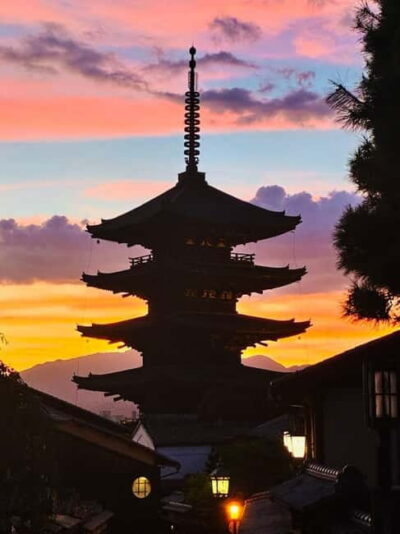
One of the visual highlights is a Buddhist pagoda outside the main geisha district. It is illuminated at night, giving the structure a stronger presence than it might have in daylight. The pagoda is often described as the evening’s visual high point, and I can understand why. It breaks up the close street views with a more open, vertical sight.
The exact route can vary with local conditions, but the walk also uses side paths and less obvious corners of Gion. This is where a guide earns the fee. You could walk through the district alone, but you might pass the same places without knowing their purpose or missing a quiet turn entirely.
Nighttime also helps with crowd levels. The busiest lanes can be packed during the day, while evening walks often feel more relaxed. Do not expect every street to be empty, especially near famous sights, but the overall pace is calmer than a daytime sightseeing circuit.
The atmosphere is part of the attraction, yet it comes with practical tradeoffs. Low light can make uneven paving and steps harder to see. Wear comfortable shoes with a firm sole, stay close to the group, and keep your phone ready for directions rather than relying only on a map.
Photography service is included. That is useful if you want a few pictures of your group or of the route without handing your phone to a stranger. Still, the strongest memories here are likely to come from the lighting, stories, and quiet pauses rather than from trying to photograph every facade.
More Night Walking Tours in Kyoto:
- Kyoto Fushimi-Inari Night Walking Tour
★ 4.8 · 171 reviews - Private Street Food Evening Walking Tour in Ho Chi Minh City
★ 5.0 · 3,175 reviews - Granada: Albaicín and Sacromonte Guided Sunset Walking Tour
★ 4.9 · 2,962 reviews - Bremen: Walking Tour in German with Night Guard
★ 4.7 · 2,922 reviews
What the guides add to the walk
The guide can shape this experience more than any individual stop. The strongest guide reports point to clear English, friendly conversation, and an ability to adjust to different ages and questions.
Shino has led groups through the shrine ritual, explained Gion’s history, and offered restaurant ideas. Hina has been praised for combining clear information with a warm manner. Masami has taken time to answer detailed questions about Maiko and Geiko, while Sho has added photos, videos, and practical explanations.
Other named guides include Pam, Kevin, Yuri, Wasabi, Sora, Ricky, Liki, Hinari, and Karen. Wasabi’s Kyoto background was useful when explaining local traditions, while Kevin’s clear English helped make stories easy to follow. Yuri has been especially effective at keeping the group comfortable while explaining the rules and customs of the district.
You should not book based on one particular guide being guaranteed. The guide assigned to your departure can vary. What you can count on is an English-speaking live guide and a small group designed to allow questions.
The mix of formal explanation and casual conversation is another plus. One walk may cover geisha traditions, Shinto and Buddhism, and local legends, then finish with a restaurant suggestion. That range makes the tour feel like an introduction to Kyoto rather than a single-topic lecture.
Group size, pace, and who will enjoy it
A cap of 10 people is important here. Gion’s lanes are narrow, and a large group would make it harder to hear, keep together, or stop without getting in the way. A small party also lets you ask about details that interest you, whether that means hairstyles, shrine customs, or the meaning of a lantern.
The pace is generally gentle. The walk lasts 100 minutes, and the route is not described as strenuous. Still, you should be ready for stairs and uneven sections. This is a walking tour, not a vehicle-based overview.
Families can make good use of it. Two children aged 9 and 11 enjoyed the mix of stories, shrines, and illuminated streets, while children under 6 do not need a ticket. Younger children may find the cultural explanations long, especially if they are tired in the evening, so consider the earlier February departure when available.
It also suits older adults who can manage stairs. One participant specifically found that there was not too much walking, but the accessibility restriction remains important. If steps are a problem, choose a different way to see Gion.
Solo visitors and couples will appreciate the easy social setting of a small group. You are not left to decode the district alone, but you also avoid the impersonal feel of a very large sightseeing party.
Is $24 good value for 100 minutes?
The price is reasonable if you want interpretation rather than a simple walk. At $24, you are paying for a live English guide, a carefully planned route, photography service, and the chance to ask questions in a small group. You also receive cultural context that is difficult to gather from street signs alone.
The value is strongest for a first visit. You will see several types of places in one outing: Hanamikoji, shrines, a pagoda, side paths, and traditional streets. You also save time by having the route connected for you.
The value is lower if you have already spent several days studying Gion, know the difference between Maiko and Geiko, and have visited the main shrines independently. One person found the tour excellent for first-time visitors but less useful when the basic information was already familiar.
Free cancellation up to 24 hours before the start and the reserve-now, pay-later option reduce the risk of booking. Your ticket is valid only for the date and time selected, so do not assume you can join another departure. That rule protects the small group size, but it means you need to be precise when planning.
Meeting point and simple preparation
Meet in front of Minamiza Theatre, on the front side of the building. Look for the guide holding a TravelinGood sign. Arrive at least five minutes before the stated start time, since the group leaves then.
Allow extra time for road traffic if you come by taxi or bus. Kyoto buses can move slowly, and arriving at the theater at the exact departure time is risky.
Wear shoes suitable for stairs and stone or paved lanes. In winter, bring a warm layer. One guide even provided a hand warmer to a participant, but you should not rely on that. The tour operates outdoors, so dress for the evening temperature.
Keep expectations realistic. You may see a Geiko or Maiko, but nobody can promise it. The reliable features are the walk through Gion, the cultural explanations, the shrine stops, the pagoda, and the night lighting.
Should you book the Gion night walk?
Book it if you want a compact introduction to Gion with real cultural explanation and a calm evening mood. It is especially useful during your first few days in Kyoto, for families with older children, and for anyone who prefers a small group over a large sightseeing crowd.
Skip it if stairs are difficult or if you want a guaranteed Geiko encounter. You may also find it too basic if you have already explored Gion thoroughly and studied its traditions.
For most visitors, the combination of a 10-person maximum, strong English guidance, illuminated temples and shrines, and a $24 price makes this a sensible Kyoto outing. Go for the streets and the stories. Treat a Geiko sighting as a lucky extra.
FAQ
Where does the Gion Magical Night Walking Tour begin?
The tour begins in front of Minamiza Theatre, on the front side of the building. Look for a guide holding a TravelinGood sign.
How early should I arrive?
Arrive at least five minutes before the stated start time. The listed time is when the group leaves the meeting point, not simply the time to begin gathering.
How long does the tour last?
The walking tour lasts 100 minutes.
What language is the tour conducted in?
The tour has a live English-speaking guide.
How many people are in the group?
The group is limited to 10 participants.
Can I expect to meet a Geiko or Maiko?
The tour is not intended for meeting Geiko or Maiko. You might see one in Gion, but sightings are not guaranteed.
Is the tour accessible for wheelchairs or strollers?
No. Due to stairs along the route, it is not suitable for wheelchair users, baby carriages, or people with limited mobility.
New walking tours around Kyoto
- Kyoto: Private Walking Tour with a Local★ 4.6 · 118 reviews
- Kyoto: Private 2.5 Hour Historical Walking Tour★ 4.9 · 121 reviews
- Kyoto: Imperial Palace & Nijo Castle Guided Walking Tour★ 4.7 · 453 reviews
- Kyoto: Izakaya Bars Guided Walking Tour★ 4.9 · 815 reviews
- Kyoto: Gion Sunset Walking Tour with Local Guide★ 4.7 · 351 reviews
- Kyoto: Gion Walking Tour★ 5.0 · 195 reviews
- Kyoto: Geisha Dinner & Gion Cultural Walk★ 5.0 · 73 reviews
- Kyoto: Gion Hidden Gems & Geisha Culture Tour★ 4.9 · 126 reviews
Kyoto Walking Tours, side by side.
Kyoto Geisha Walking Tour: Gion District & Hidden Gems
Read our review →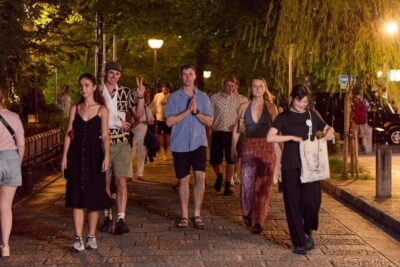
Kyoto: Gion Geisha District Walking Tour – Stories of Geisha
Read our review →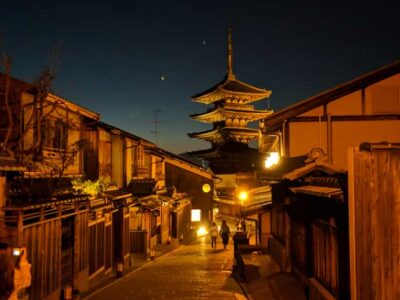
Best of Kyoto: Gion, Geisha, Pagodas & Cobblestones
Read our review →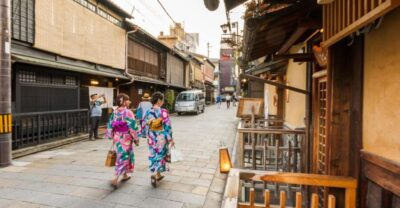

Nishiki Market Brunch Walking Tour (7 Tastings + Brunch)
Read our review →
Kyoto Gion: 2-Hour Geisha Culture & History Walking Tour
Read our review →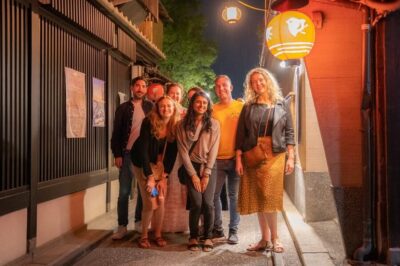
Kyoto Gion Cultural Walk & Geisha Show with Dining Options
Read our review →Lists this walk sits on