
Review · KYOTO
Kyoto: Gion Walking Tour
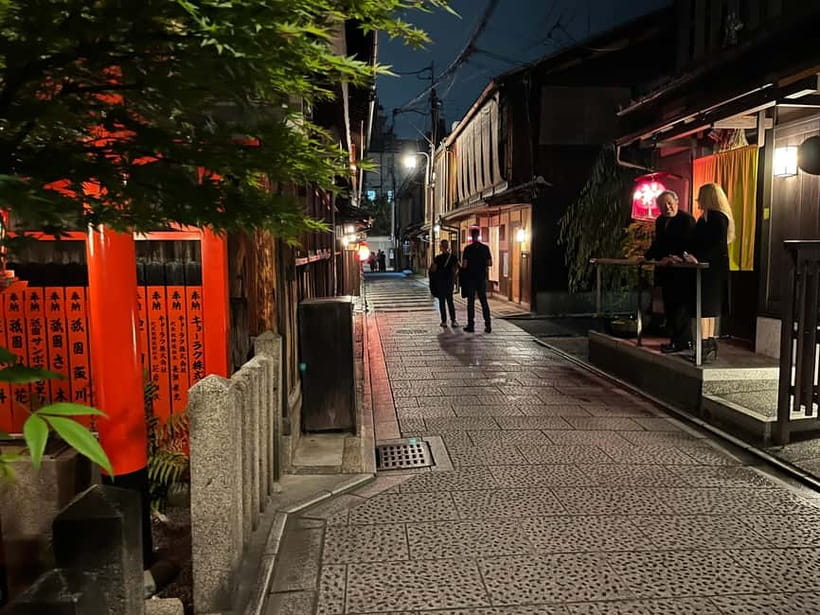
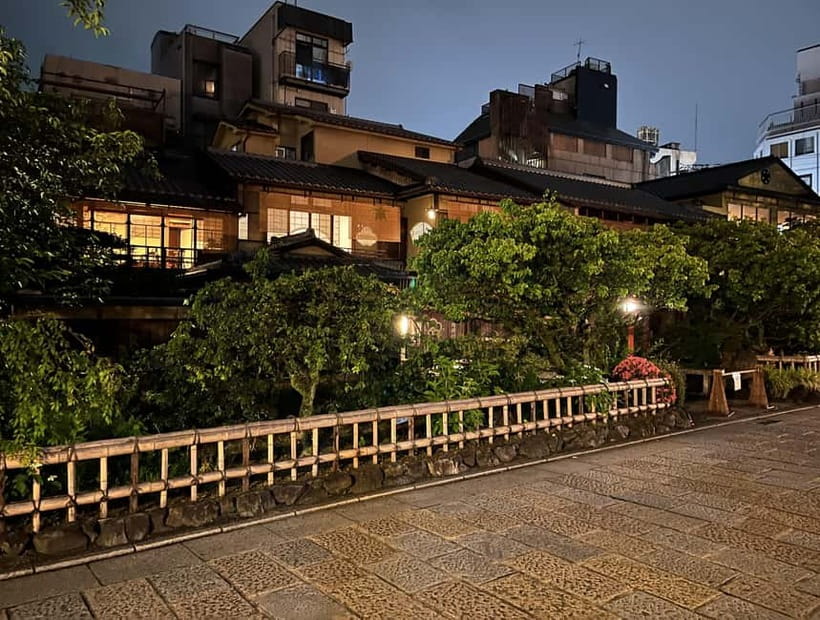
Gion is not just a place to chase a glimpse of a Geiko or Maiko. This two-hour walk connects Pontocho, Gion-Kobu, and Gion-Higashi, showing how Kyoto’s traditional entertainment districts fit into the city’s wider story. You’ll see wooden Machiya houses, old bridges, shrines, statues, and streets that are easy to pass without understanding.
I like the small maximum of six people, which makes it easy to hear the guide and ask questions. I also like the flexible, conversational style. Guides such as Jose and Saskia explain Japan through local history, personal experience, photographs, maps, and the everyday details you might otherwise miss.
The main consideration is that this is a walking tour, not a guaranteed Geisha sighting. The route covers about 3.3 kilometers, Hanamikoji-dori is not included, and the tour provides no water or other amenities, so wear comfortable shoes and arrive prepared for the weather.
Key points at a glance
- Three hanamachi in two hours: Walk through Pontocho, Gion-Kobu, and Gion-Higashi.
- Small groups of six: You can hear clearly and shape the discussion around your own questions.
- More than Geisha culture: Learn about Kyoto’s urban history, shrines, festivals, architecture, and daily life.
- Guides who make the past practical: Jose and Saskia use stories, photos, maps, and personal experience in Japan.
- A 3.3-kilometer route: The pace is manageable, but you will be on your feet for the full experience.
- No guaranteed Maiko or Geiko sighting: The tour explains their work and traditions without treating the districts like a photo safari.
Why this Gion walk is more than a Geisha hunt
Many first-time visitors arrive in Gion looking for traditional houses and a passing Maiko. That can be a pleasant moment, but it tells you little by itself. This tour gives you the background needed to understand why the streets look the way they do and how the entertainment districts developed.
The route visits three of Kyoto’s five hanamachi, the traditional districts associated with Geiko and Maiko culture. You’ll hear about the work, routines, customs, and training connected with these communities, while also learning about Kyoto’s broader past.
That wider focus is the tour’s strongest feature. You are not simply shown a pretty alley and told to take a picture. Guides point out small architectural details, explain how streets and neighborhoods changed, and connect old customs with modern Japanese life.
The format also suits curious people. You can ask about a shrine, a doorway, Japanese manners, local food, city life, or something you noticed earlier in your trip. Jose is praised for adapting the walk to individual interests, while Saskia brings a personal perspective as a Dutch speaker living in Japan. The experience can feel more like a conversation with an informed local contact than a fixed speech delivered to a crowd.
More walking tours around Kyoto:
- Kyoto Geisha Walking Tour: Gion District & Hidden Gems
★ 4.7 · 3,273 reviews - Kyoto: Gion Magical Night Walking Tour with Geisha Trivia
★ 4.9 · 2,393 reviews - Kyoto: Gion Geisha District Walking Tour – Stories of Geisha
★ 4.7 · 2,187 reviews
Meeting outside the Disney Store in Kyoto
The meeting point is in front of the Disney Store at Kyoto Shijo-Kawaramachi. Kyoto has only one Disney Store, and the guide sits outside holding an iPad showing the Get Your Guide image and the tour title.
This is a useful meeting point in a busy central area, but do not simply wait inside the store. Look for the seated guide outside. The tour may be offered in English, Dutch, French, or Spanish, so check the language when you book.
Starting times vary. The advertised morning options include 9:45 and 12:30, with availability depending on the date. The morning and midday tours can include a free visit to the Gion Gallery if you want to extend your time, so ask the guide about that option when you meet.
The price is $35 per person. For a two-hour walk with a maximum of six participants, I consider that a fair price, especially if you use the guide’s local knowledge to plan the rest of your Kyoto stay. It is less attractive if you want only photographs or expect admission tickets, food, transport, or refreshments, since none of those are included.
Pontocho Alley and the Kamo River
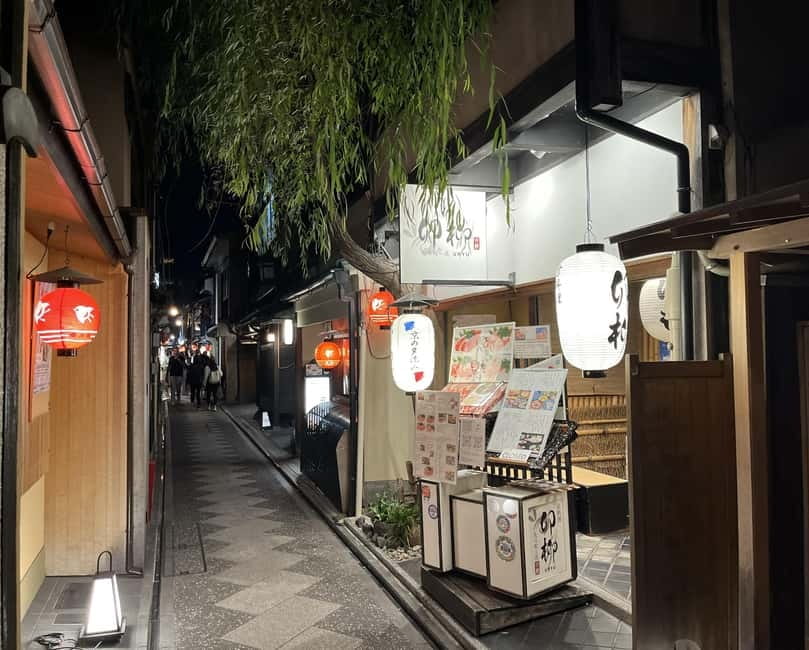
The walk begins around Pontocho Alley and Pontocho Kaburenjo. Pontocho is one of Kyoto’s best-known traditional entertainment areas, and the narrow route gives you an early look at the wooden facades and discreet entrances that define these districts.
The guide also takes you toward the Kamo River, including the Yagi-san and Kita-san statues, and Sanjo Ohashi bridge. These stops help move the tour beyond a single lane of attractive buildings. The river and bridge provide a wider view of how central Kyoto functions, while the statues add a small detail that would be easy to miss alone.
This opening section is especially useful if you have just arrived in Kyoto. Instead of treating the old districts as isolated picture spots, the guide explains their connection to the city around them. You begin to see Pontocho as part of an urban network, not just a place for evening restaurants.
The pace includes frequent stops. That means you are not walking continuously for two hours, but the route does require steady movement between locations. Several people have praised the sensible pace, although you should still bring supportive shoes.
From Yamato Dori into Gion-Kobu
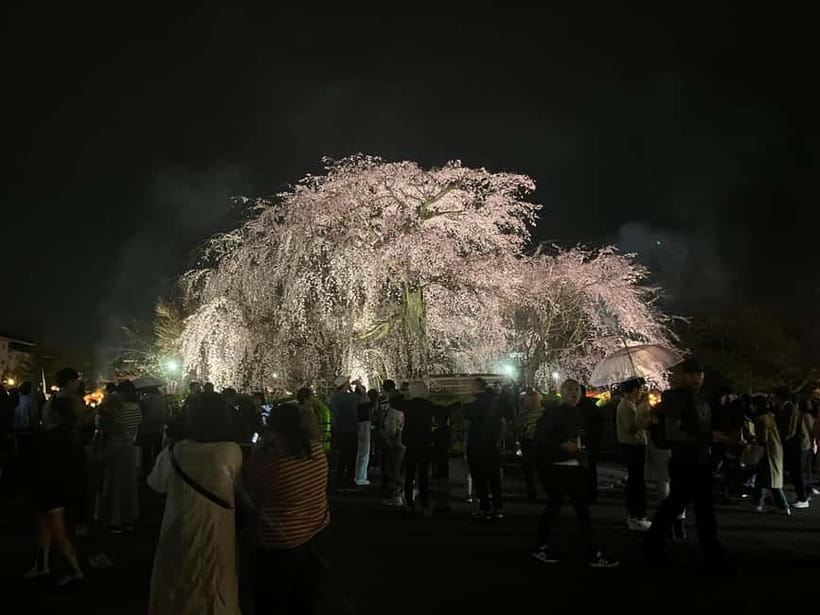
From Sanjo Ohashi, the route continues along Yamato Dori toward Gion-Kobu. This is where the tour begins to feel less like a general city walk and more like a close look at Kyoto’s traditional districts.
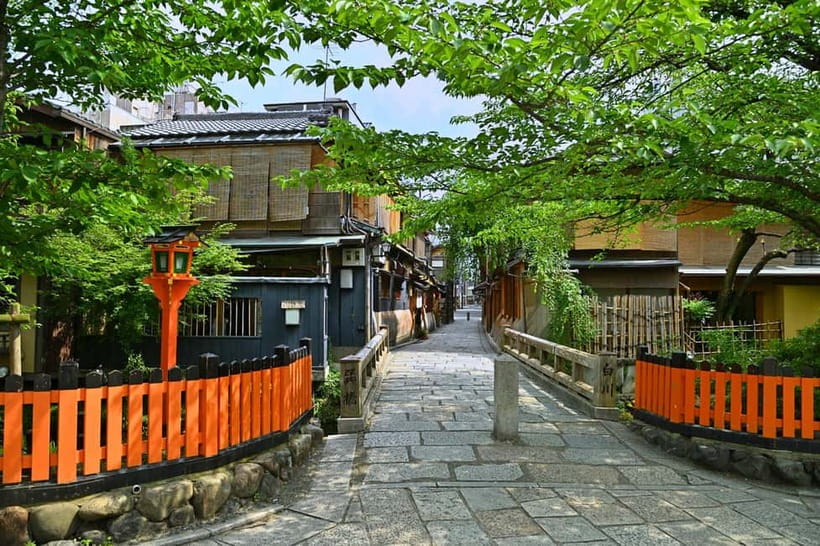
Gion-Kobu includes Gion-Shinbashi Dori and Gion Shirakawa, an area known for preserved streets, wooden Machiya houses, and the waterway running through the neighborhood. The guide explains what you are seeing rather than leaving you to guess which buildings are historic, which details are decorative, and which features relate to the area’s traditional businesses.
You’ll learn about the hanamachi system and the distinction between Maiko and Geiko. The tour also covers the routines, practices, and working life connected with these roles. That context matters because popular English-language ideas about Geisha culture can be vague or misleading. A good guide can replace the stereotypes with a clearer picture of training, performance, work, and community.
Expect plenty of pauses for short explanations. Guides have used an iPad to show older photographs, maps, and images of how Kyoto changed over time. This is helpful when the modern street in front of you looks too ordinary to reveal its earlier importance.
Same streets, a different story:
- Best of Kyoto: Gion, Geisha, Pagodas & Cobblestones
★ 4.9 · 2,058 reviews - Night Walk in Gion: Kyoto’s Geisha District
★ 4.5 · 2,003 reviews - Kyoto Gion Geisha District Walking Tour – The Stories of Geisha
★ 5.0 · 1,441 reviews - Nishiki Market Brunch Walking Tour (7 Tastings + Brunch)
★ 5.0 · 1,355 reviews
Tatsumi Jinja and Tatsumi Bridge
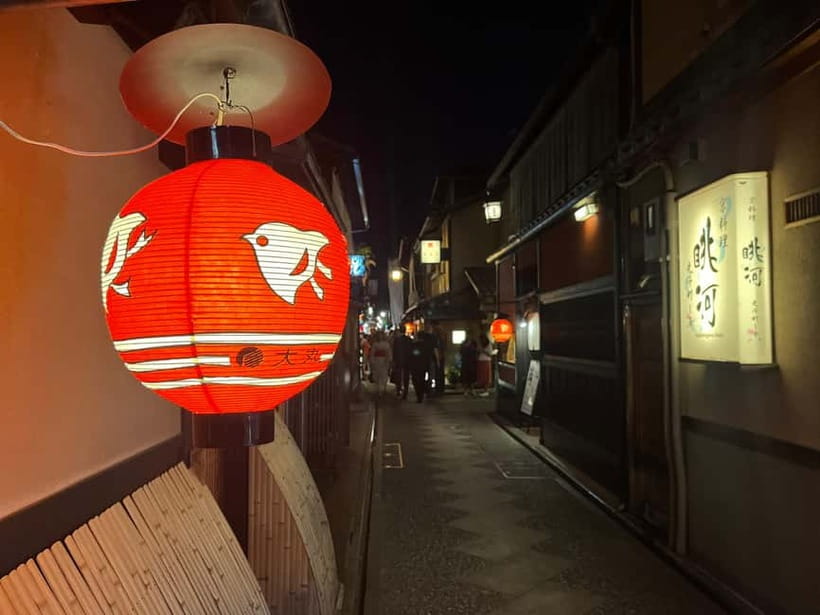
Tatsumi Jinja and Tatsumi Bridge are smaller stops, but they help give the walk its rhythm. Instead of focusing only on the most famous street, the route includes places where the atmosphere and local detail matter.
A small shrine can be easy to overlook when you are concentrating on shops and traditional houses. Your guide explains why the site matters and how it fits into the neighborhood. Tatsumi Bridge provides another compact viewpoint over the historic streets and waterways.
This part of the walk rewards questions. Ask about the shrine, the buildings, the symbols you see, or how people use these spaces today. The group size is important here. With six people or fewer, the guide can stop without creating a long queue of listeners, and you can ask something specific without shouting across a large group.
Gion-Higashi and the area around Yasaka Shrine
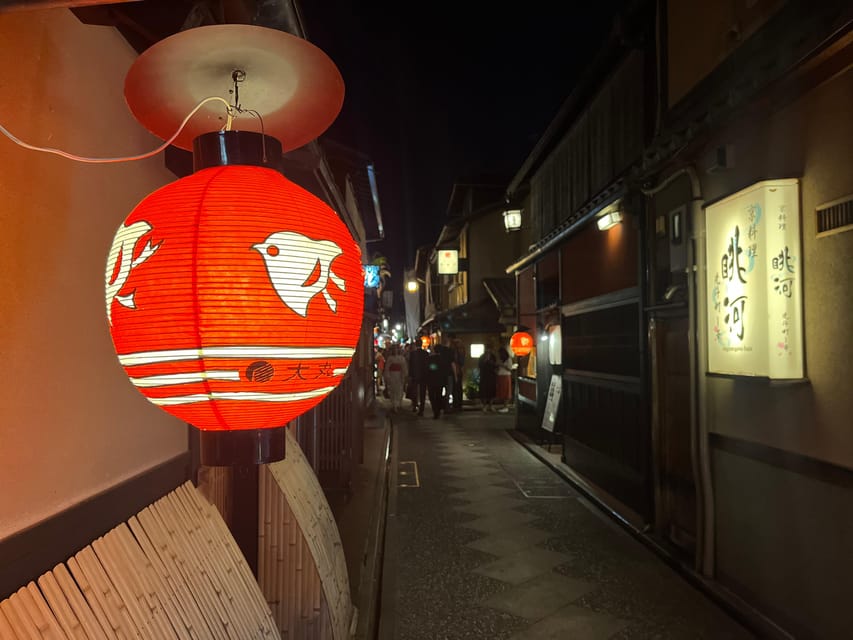
The route then reaches Gion-Higashi, the third hanamachi on the walk. Seeing Gion-Higashi after Pontocho and Gion-Kobu gives you a useful comparison between the districts. The guide can explain how the hanamachi differ while also showing the shared traditions that link them.
The final major stop is Yasaka Jinja, formerly called Gion Shrine. The district’s name comes from this shrine, whose connection to the area reaches back more than 1,100 years. If time allows, you’ll hear about the Gion Festival, one of Japan’s three most important festivals and an event with origins tied to this part of Kyoto.
Yasaka Shrine also adds a religious and civic layer to the tour. Gion is often presented as an entertainment district, but the shrine shows that the area has long been connected with worship, seasonal events, community life, and public tradition.
Some tours reach the shrine during the evening, when its lanterns and gates can create a different mood. The specific timing depends on the selected departure, so do not book solely for a night visit unless the available schedule confirms it.
What you will not see on this route
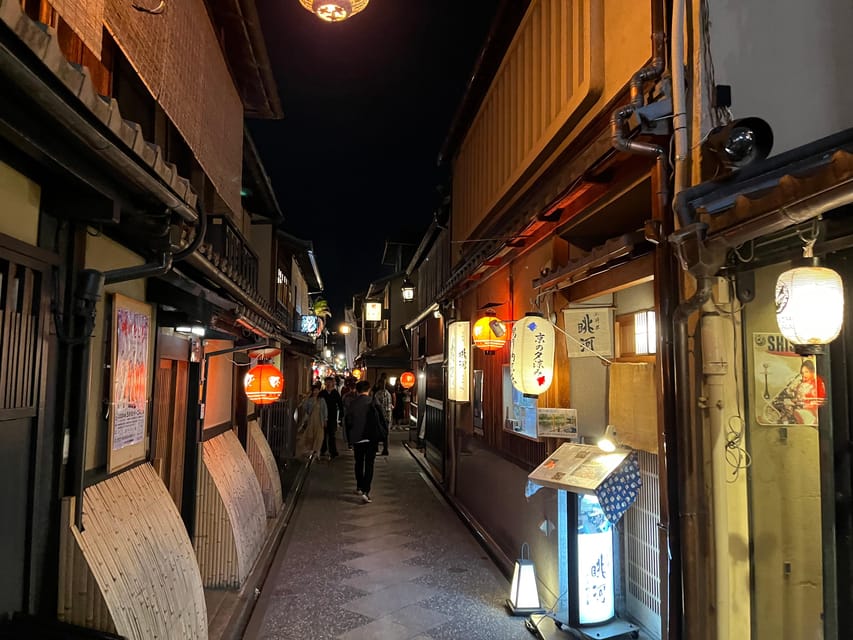
A key detail is that Hanamikoji-dori is not included. That famous street is often the first place people associate with Gion, so check the route before booking if it is your main target.
The omission is not necessarily a weakness. It allows the guide to spend time in Pontocho, Gion-Kobu, Gion-Higashi, and smaller streets that may receive less attention. Still, if you want Hanamikoji-dori specifically, you’ll need to visit it separately.
A Maiko or Geiko sighting cannot be guaranteed. That is worth treating as a positive ethical and practical point. The tour teaches you about the people and traditions of the hanamachi rather than promising a staged encounter.
If you do see a Maiko or Geiko, follow the guide’s instructions and observe respectfully. Do not block narrow streets, touch clothing, or treat someone heading to work as a public attraction. The best reason to book this walk is the explanation, not the possibility of a photograph.
How the guides shape the experience
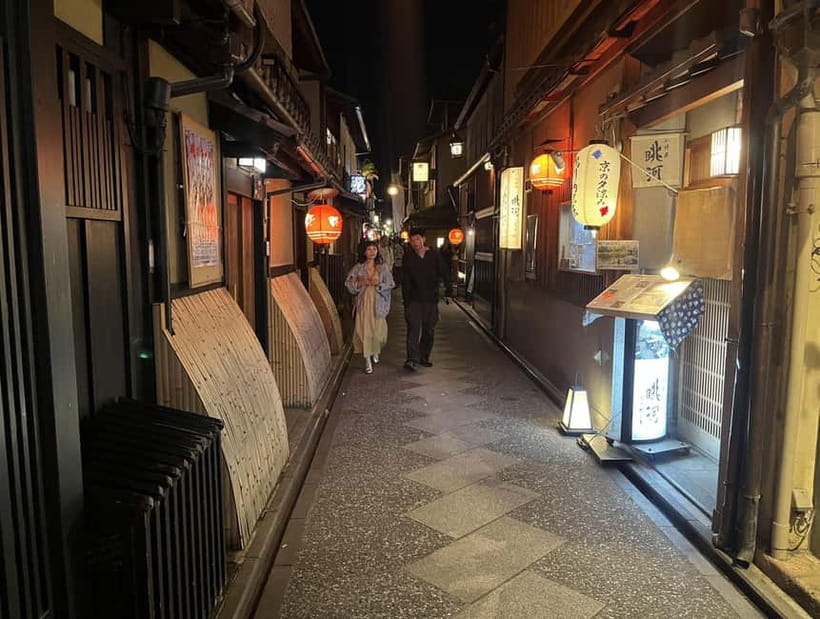
Guide quality matters more than the route on a walking tour, and this experience depends heavily on the person leading your group. Jose is repeatedly praised for his energy, humor, preparation, and ability to connect Kyoto’s past with present-day life. Saskia is noted for her enthusiasm, clear explanations, and Dutch-language guiding.
The strongest pattern is the way guides adapt to questions. You are encouraged to bring up anything you notice, from a roof detail to Japanese family life. Several tour experiences have included restaurant recommendations after the walk, though recommendations are not a formal inclusion and can vary by guide.
The guides are not necessarily Japanese natives. That may matter to you, but it can also be useful. Some have lived in Japan for years and can explain the country to an international audience in clear English, French, Spanish, or Dutch. Their outside perspective may make certain customs easier to discuss, while their long-term experience gives the conversation local depth.
The small group helps this approach work. A family, couple, or group of friends may receive a more personal walk if the tour is not full. If six people book together, the experience can feel close to private, but it is still a small-group tour rather than a guaranteed private booking.
Timing, weather, and what to bring
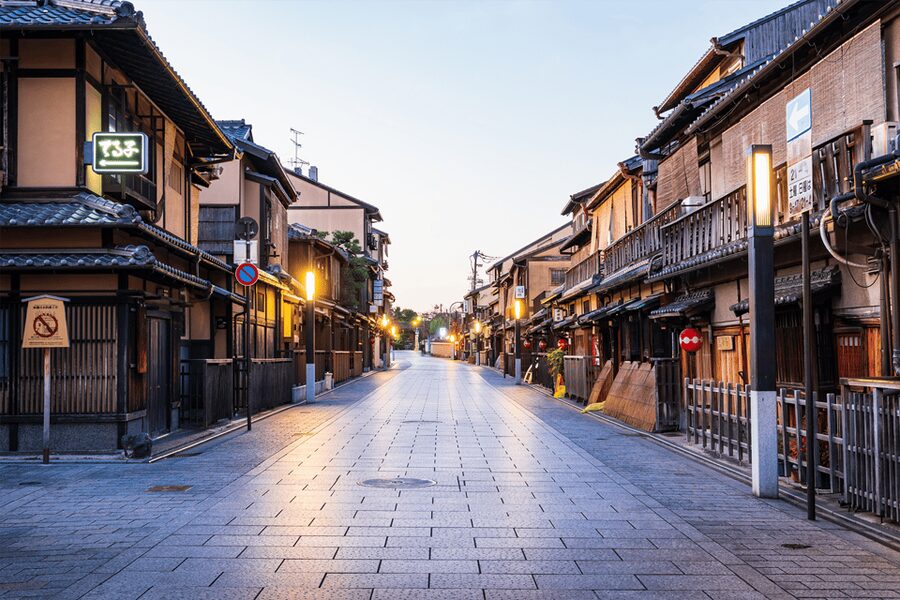
The walk lasts two hours and covers about 3.3 kilometers, or roughly two miles. That is not a strenuous hike, but you should expect to stand and walk for the full tour.
Bring water because no refreshments are supplied. Comfortable shoes are essential, especially on older streets and during periods when you stop frequently. A sun hat and sunscreen help in warm weather, while an umbrella is sensible during Kyoto’s wet days.
During cherry blossom season, roughly late March through early April, the route may change to include better blossom views around Gion. That can be a welcome seasonal adjustment, but it also means the exact path is not fixed in every detail.
The free cancellation policy allows you to cancel up to 24 hours in advance for a full refund. You can also reserve and pay later, which is useful when your Kyoto plans depend on weather or a changing rail itinerary.
Who should book this Kyoto walk?
I would choose this tour early in a Kyoto visit, especially if you want a framework for understanding Gion before exploring it alone. The route gives you enough context to return later and notice more.
It suits:
- First-time visitors who want history and culture without a full-day commitment
- Families who prefer frequent stops and room for questions
- Couples and small groups who want a personal conversation
- People interested in Maiko and Geiko culture beyond photographs
- Dutch, French, Spanish, or English speakers seeking a guided walk in their language
- Visitors who enjoy architecture, shrines, festivals, and everyday Japanese life
It may not suit you if you want a long free period for photography, a food tour, formal shrine instruction, or a guaranteed Geisha sighting. It is also not the right pick if Hanamikoji-dori is the one place you most want to see.
Should you book the Gion Walking Tour?
At $35, this is a sensible buy for a compact introduction to Kyoto’s historic center. The strongest value comes from the small group, the broad route, and the chance to ask questions rather than simply follow a flag through crowded streets.
Book it if you want to understand what you are looking at in Gion, Pontocho, and the two traditional districts. Go in with comfortable shoes, an open question list, and realistic expectations about Maiko sightings and the route.
Skip it if you want only the most famous photo locations. For everyone else, especially first-time Kyoto visitors, this two-hour walk can give the old streets far more meaning.
FAQ
How long is the Gion Walking Tour?
The tour lasts two hours.
How far does the tour cover?
The route covers about 3.3 kilometers, or approximately two miles.
Which areas does the tour visit?
The route includes Pontocho, Gion-Kobu, and Gion-Higashi. It also includes places such as Pontocho Alley, Pontocho Kaburenjo, the Kamo River, Sanjo Ohashi, Gion Shirakawa, Tatsumi Jinja, Tatsumi Bridge, and Yasaka Jinja.
Is Hanamikoji-dori included?
No. Hanamikoji-dori is not part of the stated itinerary.
Can I definitely see a Maiko or Geiko?
No. A Maiko or Geiko sighting is not guaranteed.
What languages are available?
The tour is available in English, Dutch, French, and Spanish.
How many people can join the tour?
The small group is limited to six participants.
What should I bring?
Bring comfortable shoes, a sun hat, an umbrella, sunscreen, and water. No amenities are provided.
Where is the meeting point?
Meet the guide outside the Disney Store at Kyoto Shijo-Kawaramachi. The guide will be seated outside with an iPad showing the Get Your Guide image and the tour title.
New walking tours around Kyoto
- Kyoto: Private Walking Tour with a Local★ 4.6 · 118 reviews
- Kyoto: Private 2.5 Hour Historical Walking Tour★ 4.9 · 121 reviews
- Kyoto: Imperial Palace & Nijo Castle Guided Walking Tour★ 4.7 · 453 reviews
- Kyoto: Izakaya Bars Guided Walking Tour★ 4.9 · 815 reviews
- Kyoto: Gion Sunset Walking Tour with Local Guide★ 4.7 · 351 reviews
- Kyoto: Geisha Dinner & Gion Cultural Walk★ 5.0 · 73 reviews
- Kyoto: Gion Hidden Gems & Geisha Culture Tour★ 4.9 · 126 reviews
- Kyoto Gion Cultural Walk & Geisha Show with Dining Options★ 5.0 · 518 reviews
Kyoto Walking Tours, side by side.
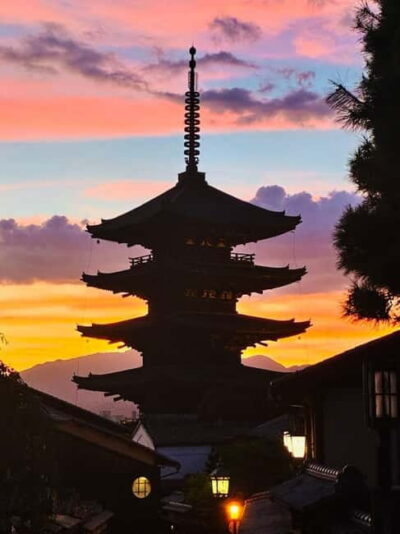
Kyoto Geisha Walking Tour: Gion District & Hidden Gems
Read our review →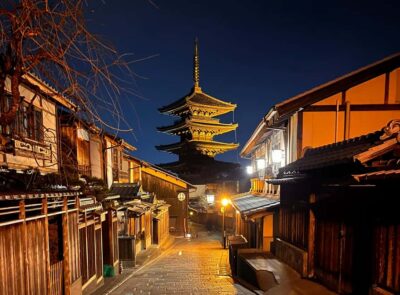
Kyoto: Gion Magical Night Walking Tour with Geisha Trivia
Read our review →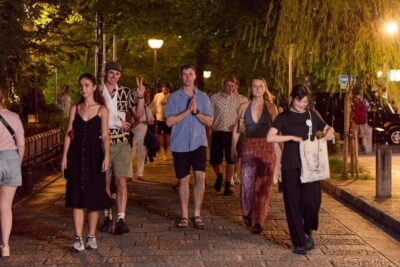
Kyoto: Gion Geisha District Walking Tour – Stories of Geisha
Read our review →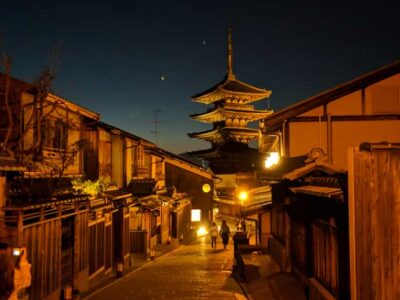
Best of Kyoto: Gion, Geisha, Pagodas & Cobblestones
Read our review →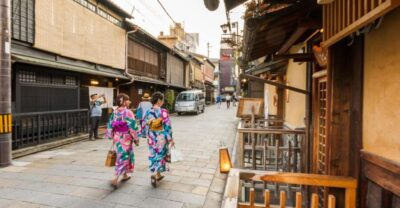
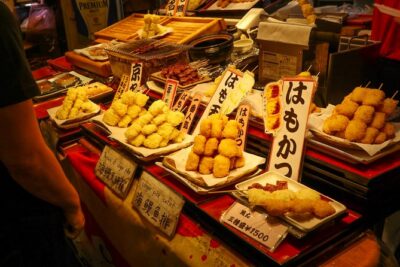
Nishiki Market Brunch Walking Tour (7 Tastings + Brunch)
Read our review →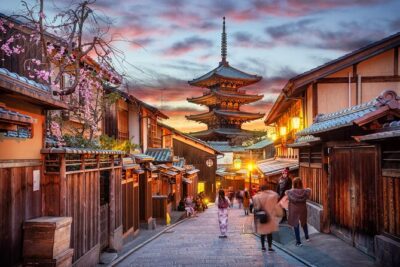
Kyoto Gion: 2-Hour Geisha Culture & History Walking Tour
Read our review →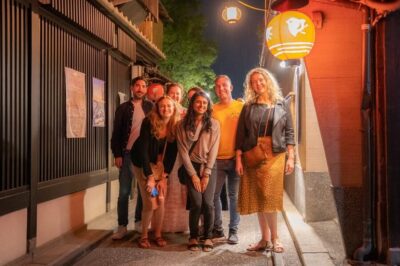
Lists this walk sits on