
Review · KYOTO
Kyoto: Imperial Palace & Nijo Castle Guided Walking Tour
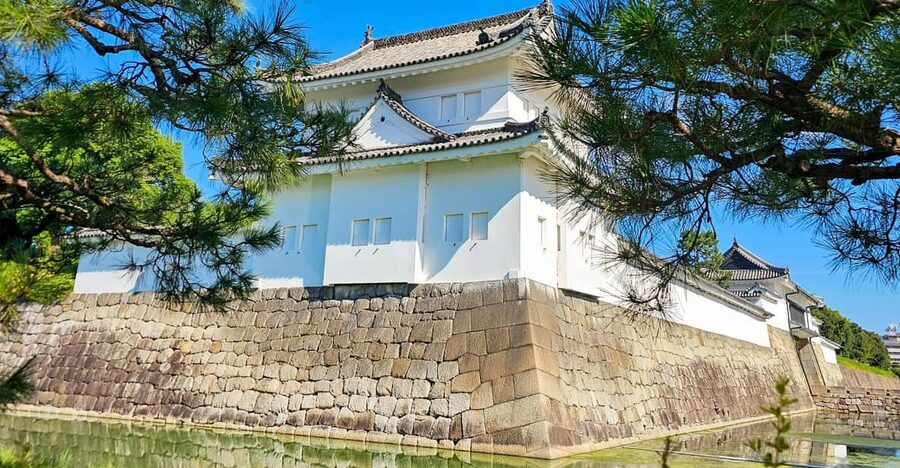
Kyoto’s old power struggle becomes much easier to understand when you see these two places together. Nijo Castle represents the shogun, while the Kyoto Imperial Palace represents the emperor, and the tour connects the two with a guide who can explain the difference without turning the walk into a history lecture.
I like the small group limit of nine, since it makes questions and conversation practical. I also like the one-way route, which starts at Nijojo-mae Station and ends near Imadegawa Station instead of sending you back to where you began. The main consideration is that the Imperial Palace is chiefly an outdoor visit, while Nijo Castle offers the more rewarding interior experience.
Key points to know
- Two major sites in three hours: You get a focused introduction to Nijo Castle and the Imperial Palace without giving up a full day.
- A useful emperor and shogun comparison: Seeing both sites together gives the tour a clear historical thread.
- Ninomaru Palace is included: The entrance covers Nijo Castle, the Ninomaru-goten Palace, and its Painting Gallery.
- Small groups capped at nine: Guides can answer questions and keep the walking pace manageable.
- Several guide languages: Tours are offered in English, French, and Spanish.
- The Imperial Palace is mostly an exterior visit: Dress modestly and expect gardens, grounds, and architecture rather than a full palace interior tour.
Why these two sites belong on the same morning
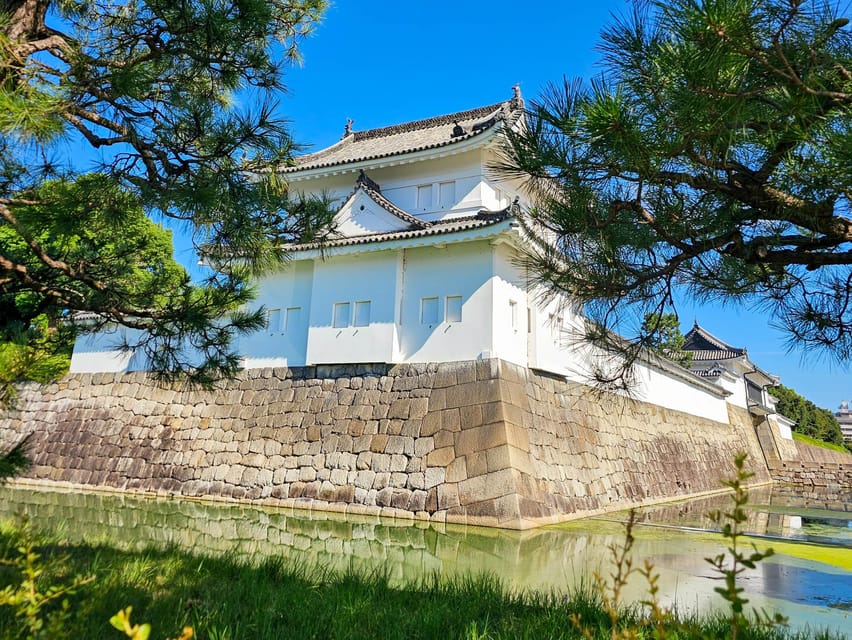
Kyoto served as Japan’s imperial capital for more than a thousand years. That long role left the city with two very different symbols of authority: the emperor’s palace and the shogun’s castle.
Nijo Castle was linked to the Tokugawa shoguns, the military rulers who held power during the Edo period. Kyoto Imperial Palace was the home of Japan’s imperial family before the capital moved to Tokyo. Seeing both in one outing gives you a useful framework for understanding Japanese politics, ceremony, architecture, and social order.
I find that context more valuable than simply ticking off two famous buildings. On your own, you may admire a gate, garden, or painted screen without knowing what it meant. A good guide helps connect those details to the people who used the spaces and the power they represented.
The tour lasts three hours, with about an hour at each main site and time spent moving between them. The pace is purposeful rather than leisurely, but the timing is enough to see the principal areas without giving up an entire day in Kyoto.
More Castle and Palace Walking Tours around Kyoto:
- Edinburgh Castle: Guided Walking Tour with Entry Ticket
★ 4.7 · 11,699 reviews - Venice: Doge’s Palace and St Mark’s Basilica Walking Tour
★ 4.4 · 6,291 reviews - Prague: 3-Hour Walking Tour of Old Town & Prague Castle
★ 4.7 · 5,696 reviews
Beginning at Nijojo-mae Station
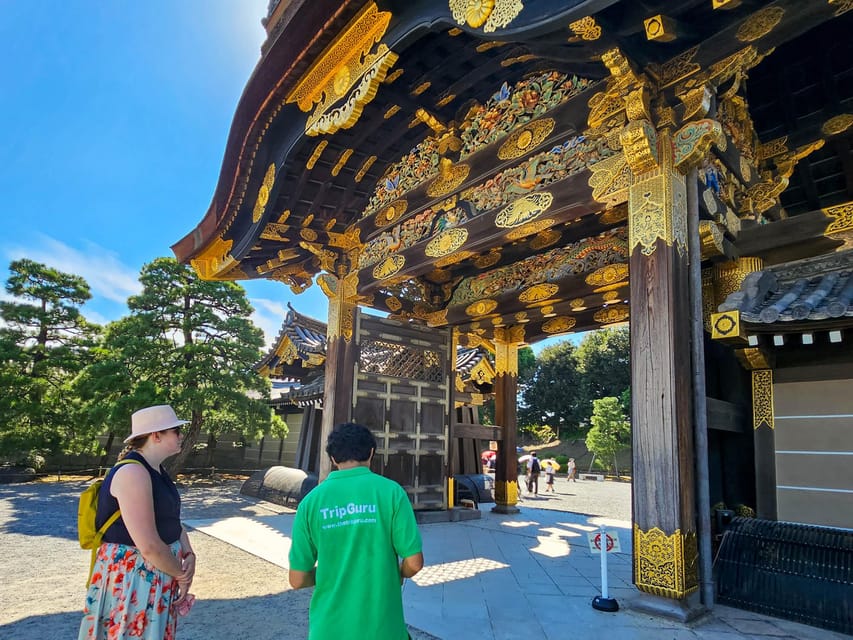
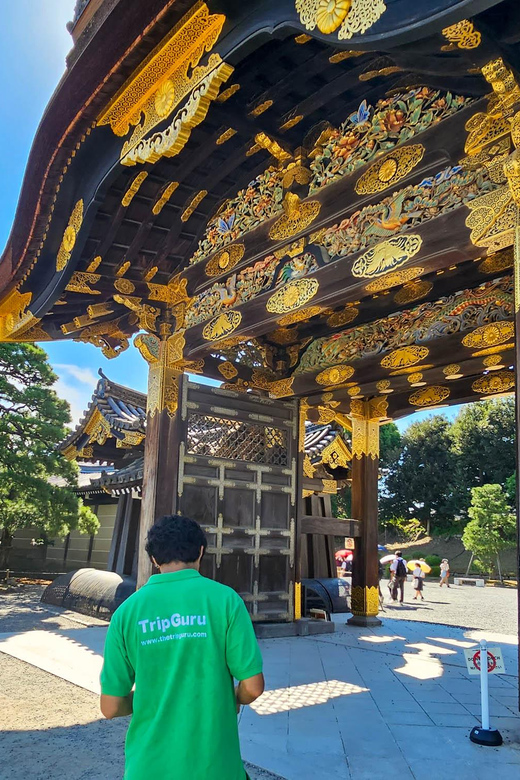
The meeting point is outside Exit 1 of Nijojo-mae Station. Your guide wears a TripGuru shirt or holds a TripGuru sign, so the meeting is designed to be straightforward. Arrive at least 10 minutes early. The guide waits no more than 10 minutes after the stated start time, and morning traffic can be slower than a navigation app suggests.
This is a good starting point because Nijo Castle is the first major stop. You can settle into the tour with the castle’s gates, grounds, and architecture before moving on to the Imperial Palace.
The group may include up to nine people, though some departures can be much smaller. A small group matters here. The guide can point out details, pause for questions, and keep everyone together through the castle grounds. Several guides, including Jasmine, Raphael, Vincent, Taku, and Cecilia, have been praised for clear English, patience, and an easy way of handling questions.
The tour is offered in English, French, and Spanish. Check the selected departure carefully, since the language is central to how much you will gain from the historical explanations.
Nijo Castle and the Ninomaru Palace
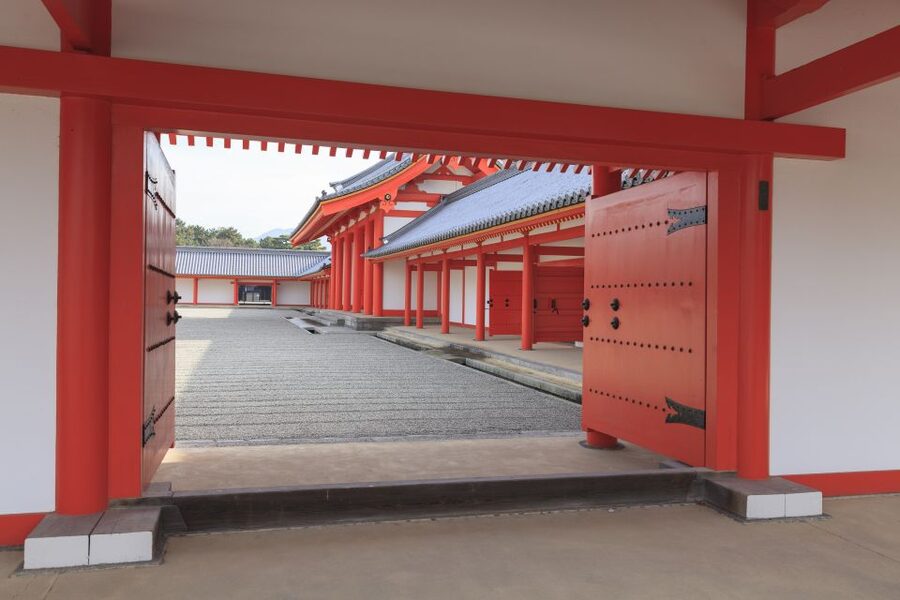
Nijo Castle is the stronger of the two stops for many people because you can enter the Ninomaru-goten Palace. The included admission covers the castle, the Ninomaru Palace, and the Painting Gallery.
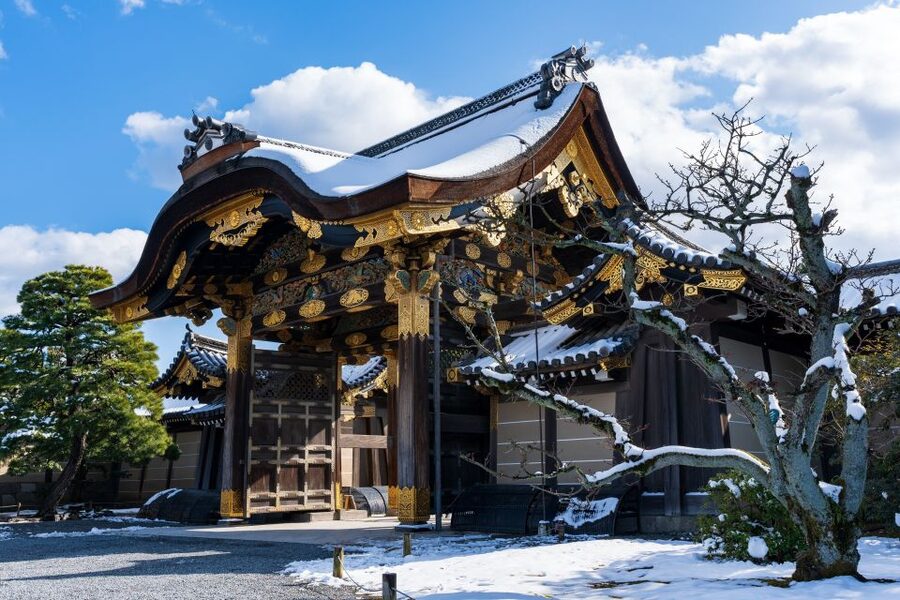
Inside, the architecture and painted interiors give you a direct sense of how the shogun’s residence worked. This is not just a fortified site. It was also a place for ceremony, political theater, and carefully managed access. The contrast between military power and refined design is part of what makes Nijo Castle so memorable.
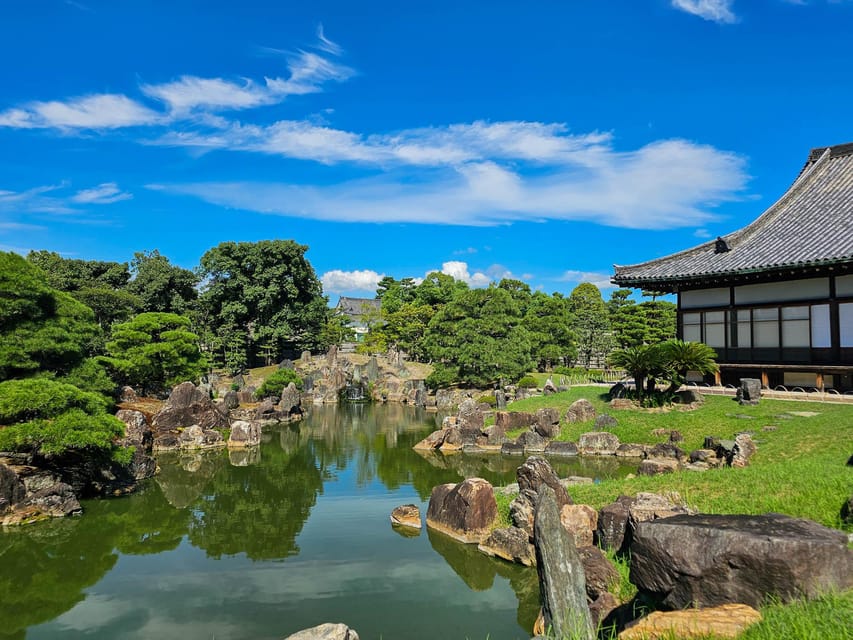
The gardens add another layer. Rather than rushing straight through the buildings, your guide can help you notice how the grounds frame the structures and how movement through the complex was controlled. The castle’s design rewards a slower eye, and a guide can keep you from missing small details while still maintaining the schedule.
The Ninomaru Palace is also the place where the tour’s historical comparison becomes concrete. You are not only hearing about the shogun. You are standing in a residence associated with that ruling system, then later comparing it with the imperial setting.
Expect to spend about an hour here. That is enough for an informed first visit, but not enough for every corner of the entire castle grounds. If you want a slow photographic walk or extended garden time, you may prefer a longer independent visit.
One practical point: the tour specifically covers the Ninomaru-goten Palace and Garden. It does not promise a complete tour of every castle area. That clear limit is useful when planning the rest of your day.
Moving toward the Kyoto Imperial Palace
The route continues on foot toward Kyoto Imperial Palace. This transfer is part of the walking experience, so comfortable shoes are important. Bring water, especially from late spring through summer. One June visitor found the heat intense and advised carrying water and a hat, sensible advice for a tour that spends time outdoors.
The walk also gives the tour a natural change of mood. Nijo Castle feels tied to the shogun’s military government and formal political control. The Imperial Palace has a different tone, centered on the emperor, court life, ceremony, and long continuity.
The tour does not include hotel pickup or drop-off, and meals and drinks are not included. Plan your transportation to Nijojo-mae Station before the start time, and remember that the tour finishes at Imadegawa Station. That one-way arrangement is convenient if you plan to continue sightseeing in northern or central Kyoto, but it may require another train, subway ride, or taxi to reach your next stop.
More walks with a guide around Kyoto:
- Kyoto: Izakaya Bars Guided Walking Tour
★ 4.9 · 815 reviews - Kyoto Gion Night Walk & Geisha District Guided Tour
★ 5.0 · 786 reviews - Kyoto: Gion Sunset Walking Tour with Local Guide
★ 4.7 · 351 reviews - Magical London: Harry Potter Guided Walking Tour
★ 4.7 · 22,044 reviews
Kyoto Imperial Palace and its open grounds
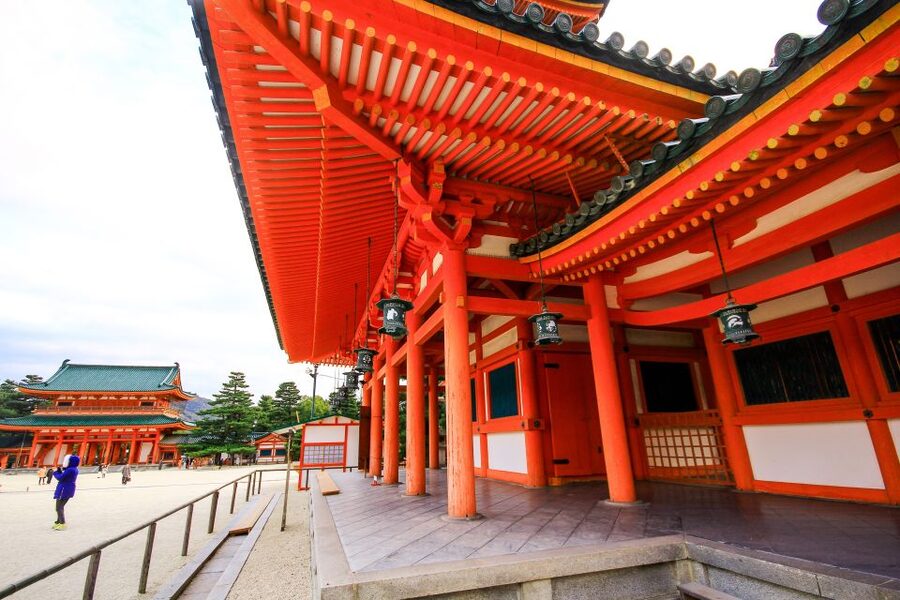
At the Imperial Palace, your guide introduces the former residence of Japan’s imperial family and explains the site’s place in Kyoto’s story. You can expect impressive buildings, gardens, open grounds, and architectural details rather than a full indoor palace visit.
This distinction matters. Some people arrive expecting to walk through a series of royal rooms. The experience is more about the grounds, exterior views, scale, and historical setting. One participant felt Nijo Castle offered more to see, while the palace added less than other Kyoto sights. That is a fair point to consider if your main interest is lavish interiors.
I still see value in including the palace because it completes the historical comparison. Without it, Nijo Castle can feel like an isolated monument. Together, the two places show the difference between the military government and the imperial court.
The open setting also changes the physical demands of the tour. You will walk across grounds and spend time outside, so sun protection and sensible clothing help. The requested dress is modest and respectful, with shorts or tank tops discouraged. This is especially important at a former imperial residence, where the setting calls for a more formal approach.
The palace portion lasts about an hour. That is enough time for the main explanations and a look at the key buildings and gardens. It is not designed as an exhaustive palace study.
The guides make the difference
The most consistently praised part of this experience is the quality of the guides. That matters because neither site explains itself fully through visual beauty alone.
Raphael Matsui has been praised for answering questions about Japanese history and culture, while Jasmine has been noted for clear explanations, humor, and close attention to the group. Vincent is known for managing time well and moving between historical facts and modern cultural references. Taku has been described as patient, considerate, and especially well informed about both sites.
Other named guides include Cecilia, Alex, Kosuke, Naoki, Gus, Kenta, Yuko, Katsuhiko, Miyake, and Jasmine Lau. The exact guide depends on your departure, but the pattern is clear: the experience is built around interpretation, not simply escorting you from one entrance to another.
A guide can also adjust the emphasis. You might ask about architectural symbols, Japanese religion, daily life, court ceremony, or the difference between the emperor’s role and the shogun’s power. The strongest outings appear to be the ones where the group asks questions rather than treating the guide as a moving audio recording.
Some departures may feel nearly private when only a few people book. That is a pleasant bonus, but it is not something to assume. The official group limit is nine.
Is $49 a fair price?
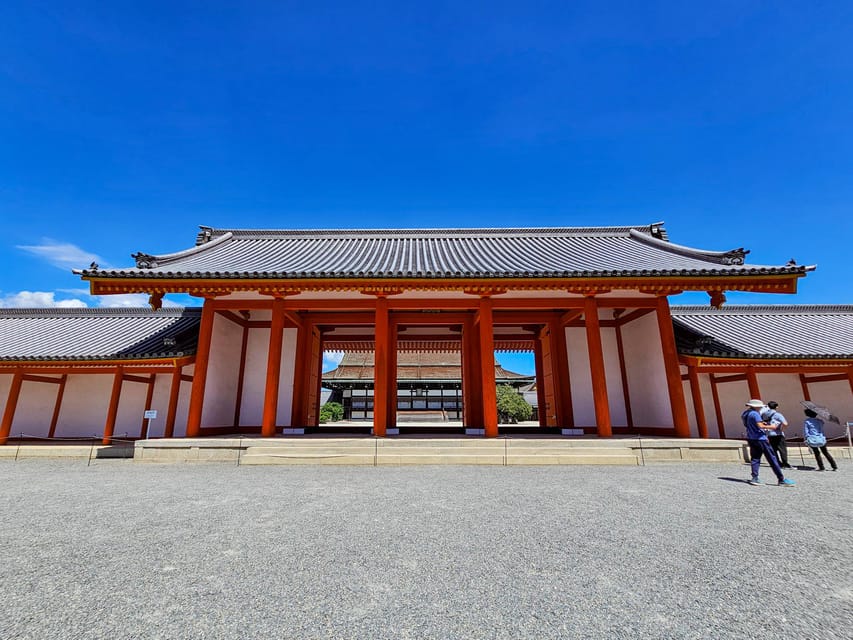
At $49 per person, this tour is reasonably priced if you value explanation and efficient planning. The fee includes an English, French, or Spanish-speaking guide, the walking tour, and Nijo Castle admission, including the Ninomaru-goten Palace and Painting Gallery.
You are paying for more than entry tickets. You are also paying for the connection between two sites, the historical framing, and the convenience of seeing them in one organized route. If you are short on time or unsure how to interpret Japanese architecture, that can be a good use of your sightseeing budget.
The value is weaker if you prefer to move at your own pace, spend a long time photographing gardens, or read every sign independently. The tour gives you roughly one hour at each site, so it favors structure over lingering.
The reservation terms also suit uncertain schedules. You can reserve and pay later, and cancellation is free up to 24 hours before the tour for a full refund. Last-minute reservations are welcomed, subject to availability. Multiple start times make it easier to fit the outing around temples, meals, or a morning arrival.
Who will enjoy this walking tour most?
I would recommend it most to first-time Kyoto visitors who want a clear introduction to the city’s political and imperial past. It also works well for couples, solo visitors, and families with older children who can manage several hours of walking.
History fans will appreciate the direct emperor and shogun comparison. The tour also suits anyone who wants to ask questions about Japanese culture rather than simply take photographs.
It is less suitable for people with mobility impairments, heart problems, respiratory issues, or pregnancy, according to the activity restrictions. The route involves walking between sites and spending time outdoors. You should also reconsider it if you dislike fixed pacing or if a palace interior is your main reason for booking.
Wear comfortable shoes, bring a camera, carry cash for personal needs, and pack water in warm weather. Modest clothing is the safer choice for the Imperial Palace grounds.
How to fit it into your Kyoto day
The tour begins at Nijojo-mae Station and ends at Imadegawa Station, so plan the rest of your day around that northbound movement. Starting with Nijo Castle means you will not need to cross Kyoto to return to the first site after the palace visit.
The three-hour length leaves room for another activity, but do not schedule something immediately afterward if you dislike rushing. Meeting early, finding the station exit, walking through both sites, and reaching the finish point all require attention to the clock.
You may also want food before or after the tour, since meals and drinks are not included. The flexible start times are useful, but the 10-minute waiting limit means flexibility should apply to your booking choice, not your arrival time.
Should you book it?
Book this tour if you want historical context, efficient sightseeing, and a small group. Nijo Castle provides the more substantial interior visit, while the Imperial Palace gives you the other half of the emperor and shogun story.
Skip it if you want a slow, independent exploration or expect to enter the main palace rooms at the Imperial Palace. For most first-time visitors with only half a day to spare, the $49 cost is fair, especially when a strong guide such as Jasmine, Raphael, Vincent, or Taku turns two major sites into one understandable story.
FAQ
How long does the Kyoto Imperial Palace and Nijo Castle tour last?
The tour lasts three hours. The planned visit includes about one hour at Nijo Castle and one hour at Kyoto Imperial Palace, along with walking time between the sites.
Where does the tour begin?
The meeting point is outside Exit 1 of Nijojo-mae Station, near Nijo Castle. Your guide will wear a TripGuru shirt or hold a TripGuru sign.
Where does the tour finish?
The tour finishes at Imadegawa Station.
Is admission to Nijo Castle included?
Yes. The price includes Nijo Castle admission, including the Ninomaru-goten Palace and Painting Gallery.
Can I enter the Kyoto Imperial Palace buildings?
The tour includes the Imperial Palace grounds, architecture, and gardens. It does not describe a full indoor palace visit.
What languages are available?
Live tours are available in English, French, and Spanish.
How large is the group?
The group is limited to nine participants. Some departures may be smaller, depending on bookings.
What should I wear and bring?
Wear comfortable shoes and dress modestly for the palace grounds. Bring a camera and cash, and carry water and a hat in hot weather.
New walking tours around Kyoto
- Kyoto: Private Walking Tour with a Local★ 4.6 · 118 reviews
- Kyoto: Private 2.5 Hour Historical Walking Tour★ 4.9 · 121 reviews
- Kyoto: Izakaya Bars Guided Walking Tour★ 4.9 · 815 reviews
- Kyoto: Gion Sunset Walking Tour with Local Guide★ 4.7 · 351 reviews
- Kyoto: Gion Walking Tour★ 5.0 · 195 reviews
- Kyoto: Geisha Dinner & Gion Cultural Walk★ 5.0 · 73 reviews
- Kyoto: Gion Hidden Gems & Geisha Culture Tour★ 4.9 · 126 reviews
- Kyoto Gion Cultural Walk & Geisha Show with Dining Options★ 5.0 · 518 reviews
Kyoto Walking Tours, side by side.
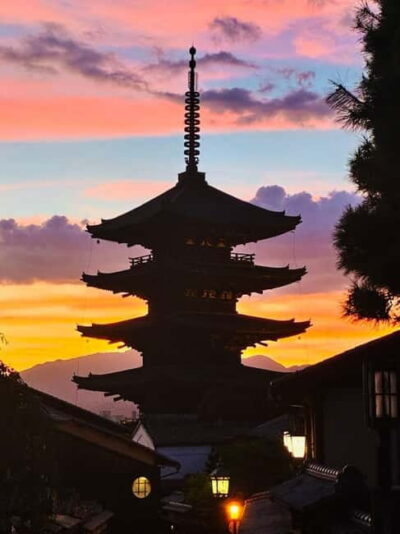
Kyoto Geisha Walking Tour: Gion District & Hidden Gems
Read our review →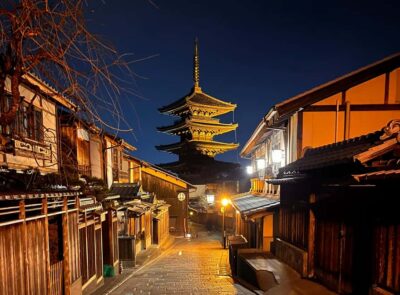
Kyoto: Gion Magical Night Walking Tour with Geisha Trivia
Read our review →
Kyoto: Gion Geisha District Walking Tour – Stories of Geisha
Read our review →
Best of Kyoto: Gion, Geisha, Pagodas & Cobblestones
Read our review →

Nishiki Market Brunch Walking Tour (7 Tastings + Brunch)
Read our review →
Kyoto Gion: 2-Hour Geisha Culture & History Walking Tour
Read our review →
Lists this walk sits on