Review · MEXICO CITY
Walking Tour of the Historic Center of Mexico City
Mexico City’s historic center makes its story visible at every turn: Aztec ruins sit beside Spanish colonial churches, grand government buildings, and early 20th-century murals. This tour gives you that pre-Hispanic-to-modern sweep on foot, beginning at the Zócalo and ending near Bellas Artes and the House of Tiles.
I like the small group limit of 10, which makes it easier to hear your guide and ask questions. I also like the mix of famous sights and less obvious stops, especially the Diego Rivera murals inside the Ministry of Education and the small archaeological window beneath a city street.
The main drawback is simple: this is a real three-hour walk, often over cobblestones, with limited places to sit. Mexico City’s altitude, heat, crowds, and busy crossings can make the pace tiring, and one slow group may mean not every listed stop receives equal time.
Key points to know before you book
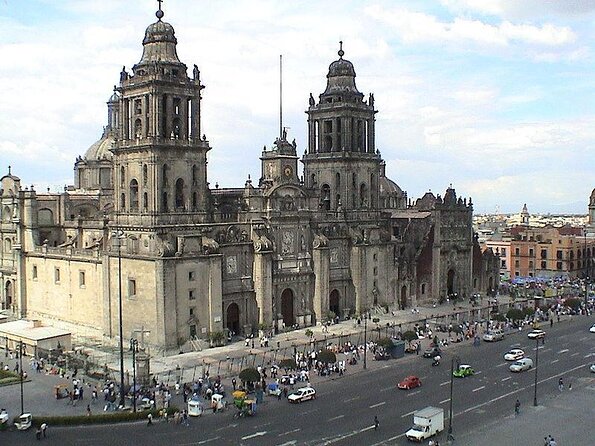
- A strong first look at Centro Histórico: You move from the Zócalo and cathedral to Aztec remains, colonial plazas, revolutionary-era art, and modern city life.
- Small groups help: The maximum is 10 people, and guides such as Fernanda, Alexia, Luis, Nat, and Benjamin are praised for clear English, humor, and thoughtful answers.
- The Diego Rivera murals are a highlight: About 25 minutes are set aside for the Ministry of Education, home to a large group of Rivera’s murals.
- Expect a brisk urban walk: The route lasts about three hours and includes cobblestones, crowded streets, sun, and few sitting breaks.
- The tour ends in a useful location: You finish beside the Palace of Fine Arts and the House of Tiles, well placed for further exploring.
- The fee buys structure and guiding: Transportation, tips, and purchases are extra, but the tour brings together sights that would take more planning to connect on your own.
Why this is a smart introduction to Mexico City
Mexico City can feel enormous on your first day. The historic center gives you a manageable starting point, but it is still dense, noisy, and packed with layers of history. A good walking tour helps you understand how those layers fit together instead of presenting one grand building after another.
This route frames the city as a meeting point between Mexica culture, Spanish rule, the viceroyalty, independence, revolution, and present-day Mexico. Guides also touch on indigenous languages, food, music, politics, the Day of the Dead, trade, and daily life. That broader approach matters because the center is not an open-air museum. It is a working part of the capital.
The tour is offered in English and runs for about three hours. A 4.8 rating from 870 reviews, with 95 percent of customers recommending it, points to a consistently well-received experience. The repeated praise focuses on clear explanations, lively storytelling, a friendly manner, and guides who adjust to the needs of the group.
More History Walking Tours in Mexico
- Historic Downtown Walking Tour
★ 5.0 · 1,289 reviews - Mexico City: Historic Downtown Walking Tour
★ 4.8 · 1,039 reviews - Historical and Cultural Walking Tour of San Miguel de Allende
★ 5.0 · 641 reviews
The Zócalo puts Mexico City’s scale on display
The meeting point is Plaza de la Constitución, usually called the Zócalo. This huge square is the right place to begin because it gathers political, religious, commercial, and architectural power in one view.
Your guide points out the National Palace, the Supreme Court of Justice, and the shops associated with Mexico’s silver trade. The opening stop is planned for about 15 minutes, so you should expect an orientation rather than a long visit inside any building.
The Zócalo can be crowded, and groups may need to stay close to their guide. Look for the green shirts and umbrellas used to identify the tour guides. They are useful markers in a busy square, especially during a daytime visit.
The cathedral and the Aztec city beneath it
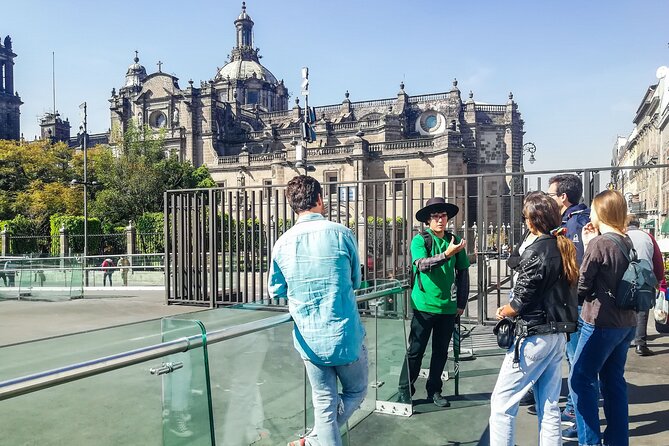
The Metropolitan Cathedral is covered from the outside for about 10 minutes. Your guide explains its construction, origins, and mixture of Baroque and Neoclassical design. This short stop gives you the basic framework for understanding why the cathedral looks like a building shaped by many periods rather than one clean architectural style.
Admission is not included, and the itinerary does not promise an interior visit. If you want to see the inside, you will need to arrange that separately, either during free time or on another visit.
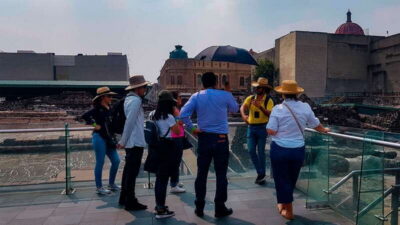
Nearby, the route turns toward the remains of Templo Mayor. The tour views the archaeological site from outside and explains its importance to the Mexica, including its connection with the gods of rain and the sun and the way the ancient ceremonial center was laid out.
This is one of the most useful historical contrasts on the walk. You are not simply looking at ruins. You are seeing how the Spanish colonial city was built over the Mexica capital, with the older city still appearing through excavations and exposed foundations.
Diego Rivera’s murals inside the Ministry of Education
The Museo Vivo del Muralismo, located inside the Ministry of Education, is one of the route’s strongest stops. About 25 minutes are reserved for the interior, where you see a major portion of the murals Diego Rivera painted during his career.
The murals cover festivals, traditions, work, social conflict, trade, and politics in early 20th-century Mexico. This gives you a visual route into the country’s public history. Instead of hearing only about political change, you see how artists presented workers, customs, and social struggle to a broad audience.
This stop can be especially valuable if you have limited time in Mexico City. The tour brings you to important public art without requiring a separate museum plan. One guide, Fernanda, was also praised for being flexible about allowing extra minutes in the education building courtyard when the group wanted to look longer.
The time is still limited. You will not study every mural in detail, and visitors who want a full art history treatment should return on their own. Think of this as a well-chosen introduction that shows you why Rivera matters.
More Old Town Walking Tours in the world:
- Underground Vaults Walking Tour in Edinburgh Old Town
★ 4.5 · 8,506 reviews - Prague: 3-Hour Walking Tour of Old Town & Prague Castle
★ 4.7 · 5,696 reviews - Dubrovnik: Old Town Walking Tour
★ 4.8 · 5,174 reviews - Split: Old Town and Diocletian Palace Walking Tour
★ 4.9 · 4,727 reviews
Santo Domingo and the trade routes of New Spain
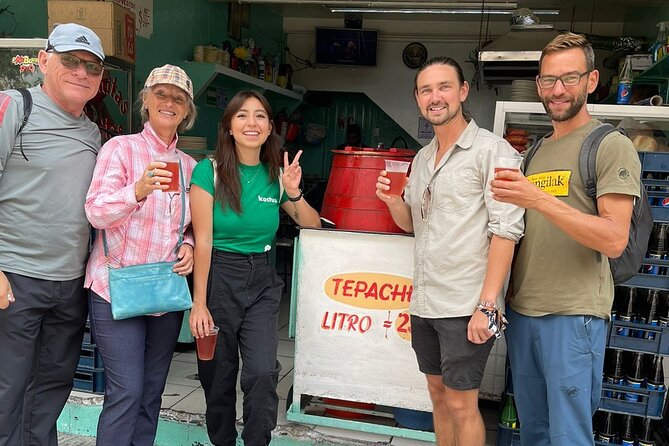
Plaza de Santo Domingo shifts the story toward the colonial period. The guide discusses the viceroyalty of New Spain, the trade in spices and goods with Asia, the Holy Inquisition, and French attempts to conquer Mexico.
The square works well as a teaching stop because it connects local architecture with events far beyond Mexico City. The city was not isolated. Goods, people, religion, power, and ideas moved through it.
The scheduled visit lasts about 15 minutes and is outdoors. You will want to pay attention to the guide rather than expect a formal monument visit. This is one of the stops where the quality of the storytelling makes a real difference, and the strongest guides on this tour are praised for making complex subjects easy to follow.
Plaza Tolsá gives your feet a short break
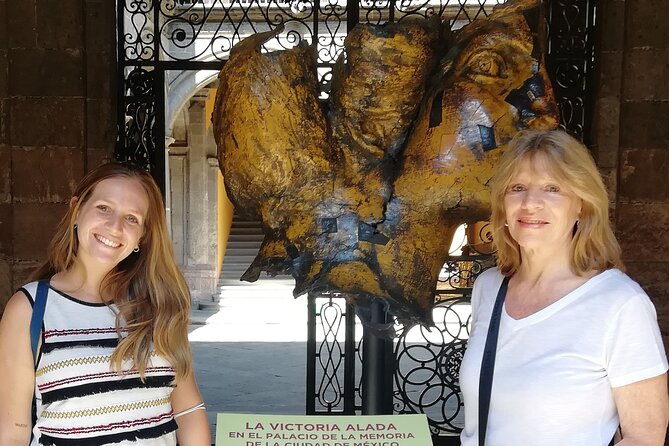
Plaza Tolsá is the planned rest point. You stop in the shade for about 20 minutes while the guide discusses subjects such as indigenous languages, Day of the Dead traditions, music, politics, and Mexican food.
That pause is practical as well as informative. The walk includes uneven pavement and cobblestones, so a shaded break helps. Still, do not interpret the stop as a long rest period. You remain on a three-hour urban route with more walking ahead.
The plaza also brings several important sights into one frame. You see the equestrian statue of Charles IV, often called El Caballito, or the Little Horse, along with the exterior of the National Museum of Art and the Mining Palace. The guide uses these buildings to explain more about Mexico’s architectural and political past.
A small archaeological window reveals a buried city
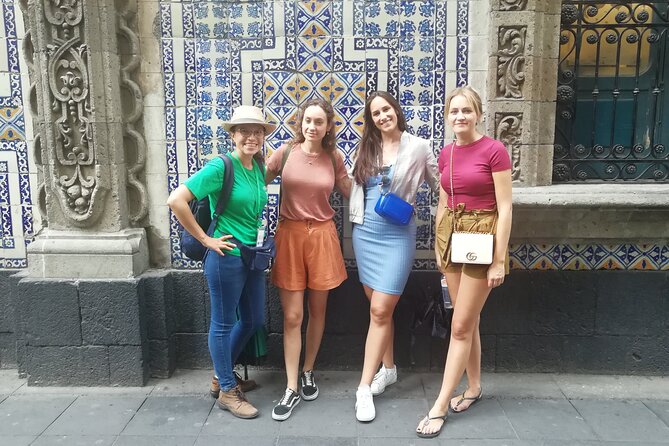
The Ventana Arqueológica is a brief five-minute stop, but it offers a memorable idea: Mexico City’s past can appear beneath an ordinary street.
The guide explains how the archaeological remains were found and discusses the hidden layers beneath buildings in the center. The stop is included, and its short length fits the walking tour well. You do not need a large museum visit to understand the basic point. The city you see today was built over earlier cities, and traces of those older structures remain close to the surface.
Because this stop is brief, stay close and listen carefully. It is easy to miss a small archaeological feature when the surrounding streets are busy.
Bellas Artes, Palacio Postal, and the House of Tiles
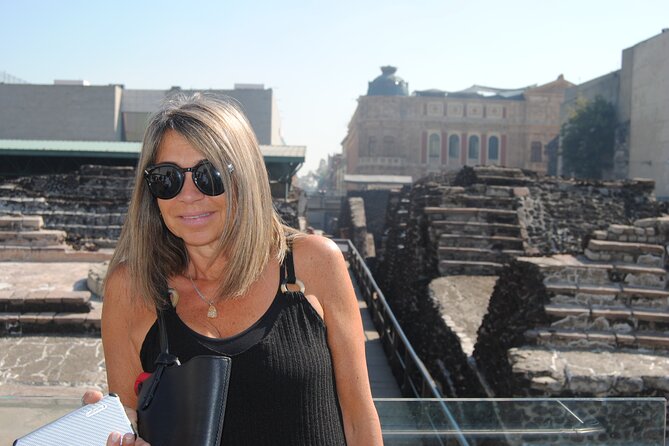
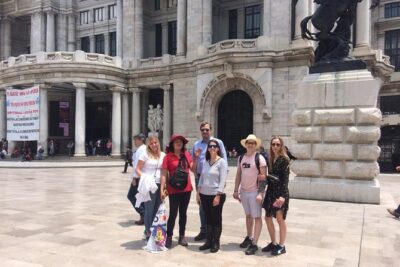
The route then reaches the Palace of Fine Arts, one of Mexico City’s essential landmarks. The tour allows about 15 minutes to discuss the exterior and interior as works of art, although the itinerary does not include an interior admission ticket.
You should treat this as a visual introduction rather than a full museum visit. The building is worth returning to if you want more time with its art and architecture. The tour gives you the context and the location, then keeps moving.
Next comes Palacio Postal, a still-operating palace with an ornate appearance and a story tied to economic and political power. The stop lasts about 10 minutes. Admission is not included, so expect an exterior-focused explanation unless you make your own arrangements.
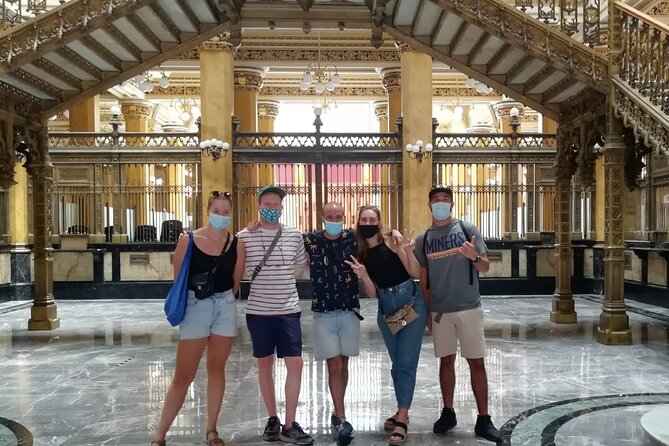
The final major sight is the House of Tiles, visited for about 15 minutes. Its tiled facade has become one of the city’s best-known images, and it makes a fitting end to a route built around architecture. The tour finishes at Edificio Guardiola, near the Palace of Fine Arts and the House of Tiles, so you can continue taking photographs, find a meal, or return to any building that caught your attention.
What the guides do best
The strongest part of this experience is the guiding. Names appearing in the feedback include Fernanda, Alexia, Luis, Nat, Benjamin, Sara, Gabby, Thomas, Eduardo, Oscar, and Sarah. Different guides will have different personalities, but the consistent strengths are clear English, warmth, humor, and a willingness to answer questions.
Fernanda is praised for combining modern humor with a real affection for Mexico City. Alexia is noted for adding thoughtful commentary about both the past and the present. Luis is especially valued for local recommendations and for leading at a comfortable pace. Nat is praised for answering questions and caring for a small group. Benjamin brings energy and humor to the historic-center route.
You should feel free to ask questions. The tour is not designed as a lecture with no interruptions. It works best when you use the guide’s local perspective to connect the buildings with your own interests.
Pace, comfort, and the practical side of the walk
You need comfortable shoes. The route includes cobblestones, busy streets, sun, and stretches without a place to sit. One group did not reach every planned stop because some participants had difficulty walking, so the tour is better for people who can manage a steady urban walk.
Mexico City’s elevation can also affect how tiring the route feels, especially if you have just arrived. Bring water, wear sun protection, and keep your attention on street crossings. Guides have been praised for finding shade, helping with crossings, and allowing bathroom breaks when needed, but the basic physical demands remain.
Transportation to the meeting point is not included. The tour is near public transportation, and you should plan your arrival at Plaza de la Constitución rather than assume a pickup from your lodging.
Tips are not included either. Food, sweets, and other purchases are also your responsibility. The tour provider uses a free-walking-tour style, so the value depends on how much you want a scheduled route, an English-speaking guide, and a small group instead of planning each sight yourself.
No price is provided in the tour details, so I cannot judge the exact cost. Use this simple test: if the fee is modest, the route offers good value because it links nine major sights and adds context you might miss alone. If the fee is high, remember that several stops are exterior explanations and that cathedral and Palacio Postal admission are not included.
Free cancellation is available up to 24 hours before the start time for a full refund. Cancellations or changes inside that window are not refundable, and poor weather or a failure to meet the minimum group size may lead to a new date or full refund.
Who should book this Mexico City walk?
I would choose this tour for a first visit, especially if you want a clear introduction before returning to the places that interest you most. It suits solo visitors, couples, friends, and mixed-age groups who can walk for three hours.
It is also a good match for English-speaking visitors who want more than a list of dates and building names. The route covers art, architecture, politics, food, language, religion, colonial trade, and contemporary life.
You may prefer to skip it if you want extended time inside museums, a slow photography walk, or a route built around accessibility and frequent seating. The itinerary is ambitious, and the group’s pace can change if someone has difficulty walking.
FAQ
How long is the walking tour?
The tour lasts approximately three hours.
Where does the tour begin?
It begins at Plaza de la Constitución, also known as the Zócalo, in Centro Histórico.
Where does the tour end?
It ends at Edificio Guardiola, beside the Palace of Fine Arts and near the House of Tiles.
Is the tour offered in English?
Yes. The walking tour is offered in English.
What is included in the experience?
The three-hour guided walking tour of Mexico City’s historic center is included. The Ministry of Education mural visit and the archaeological window are listed with included admission.
What is not included?
Transportation to the meeting point, tips, food, sweets, and some admission fees are not included. The cathedral and Palacio Postal stops list admission as not included.
Should you book it?
Book this tour if you want to get your bearings fast and understand how Mexica, colonial, revolutionary, and modern Mexico connect. The small group size, strong English-language guiding, Diego Rivera murals, and practical shade breaks make it a useful first-day choice.
Skip it only if three hours on uneven streets sounds too demanding or if you want to spend long periods inside each museum and monument. For most first-time visitors who can walk comfortably, this is a well-planned introduction to the historic center, with enough substance to make your later exploring more rewarding.
More History Walking Tours in the world
- History and Hauntings of Salem Guided Walking Tour
★ 5.0 · 14,564 reviews - Lisbon: History, Stories and Lifestyle Walking Tour
★ 4.8 · 10,902 reviews - Boston: Freedom Trail History Small Group Walking Tour
★ 5.0 · 6,450 reviews - Historic Charleston Guided Sightseeing Walking Tour
★ 5.0 · 6,216 reviews
New walking tours around the world
- Niagara Falls, Canada: White Water Walk Entry Ticket★ 4.5 · 147 reviews
- NYC: Walking Tour with Local Guide and 30+ Top NYC Sights★ 4.5 · 248 reviews
- Zadar: Food Tasting & Old Town Walking Tour★ 5.0 · 94 reviews
- Niagara Falls: Walking Tour, Journey Behind Falls, & Cruise★ 4.8 · 773 reviews
- New York City: Gangsters and Ghosts 2-Hour Walking Tour★ 4.7 · 615 reviews
- NYC: History of Slavery & Underground Railroad Walking Tour★ 4.7 · 87 reviews
- New York City’s Hell’s Kitchen: Walking Food Tour★ 4.8 · 200 reviews
- New York City: Central Park Walking Tour★ 4.7 · 82 reviews
Mexico City Walking Tours, side by side.

Frida Kahlo VIP [Museum Tickets Included] Walk, Markets & Churros
Read our review →
Mexico City: Guided walking tour through the most historic parts of the city.
Read our review →