
Review · BUDAPEST
Budapest: Jewish History Guided Walking Tour with Historian
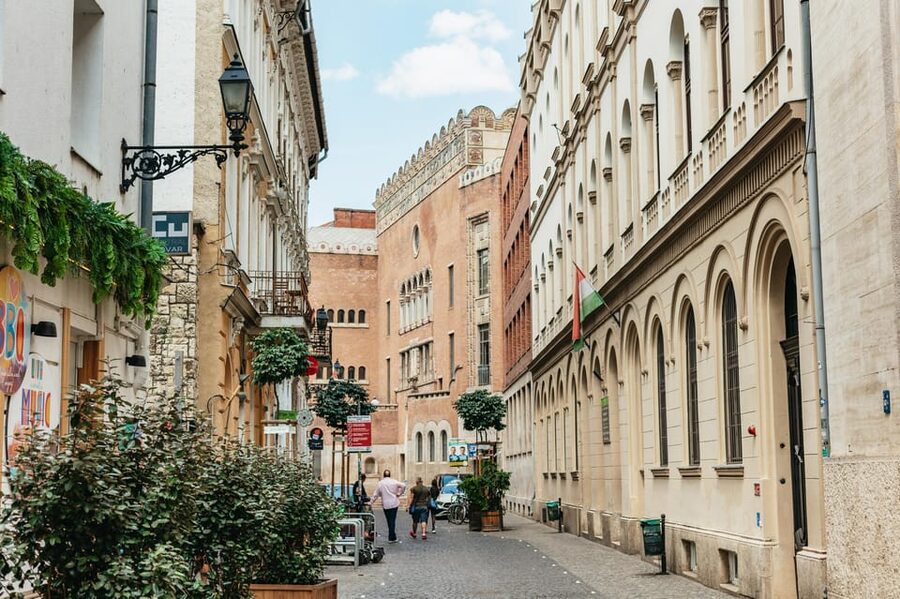
Budapest’s Jewish Quarter is more than a pretty collection of synagogues and ruin pubs. It is a place where centuries of Jewish life, forced displacement, wartime courage, and present-day community all meet on the same few streets. This tour gives you that larger picture while walking through the 7th district with an English-speaking historian.
I like two things in particular: the small groups of up to 10, which make it easier to hear and ask questions, and the frank treatment of Hungary’s past. Guides such as Gabor, Noemi, András, Barbara, and Maggie have been praised for making difficult history clear without smoothing away the uncomfortable parts. The coffee and flódni cake also provide a welcome pause.
The main limitation is simple: you do not enter the three synagogues as part of the tour. If you want to see the interiors, you will need to arrange separate admission. The walk also starts in all weather, so sensible shoes and a weatherproof layer matter.
Key points at a glance
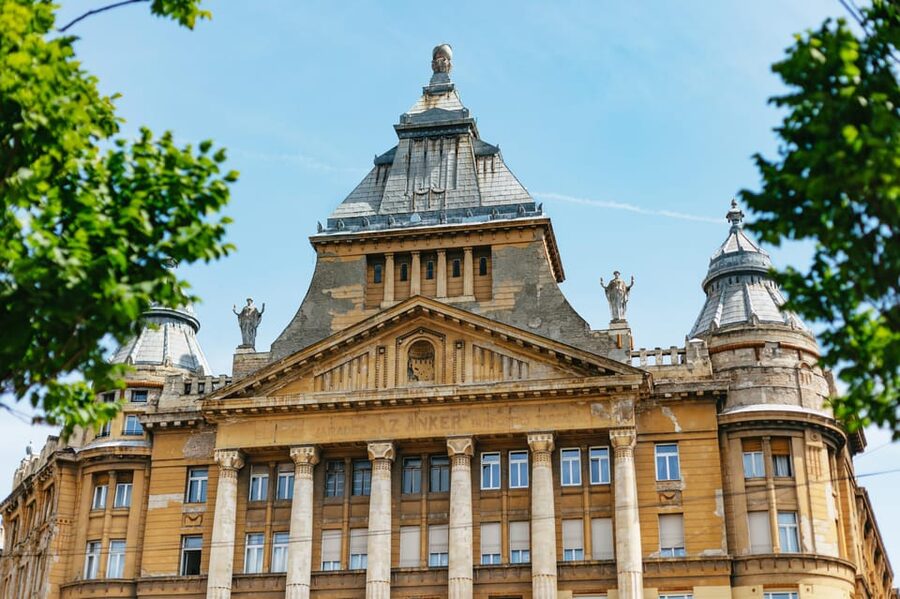
- Three important synagogues from the outside: See the Dohány Street, Rumbach Street, and Kazinczy Street buildings while learning how their different traditions shaped the district.
- A serious look at World War II: Visit memorials linked to Raoul Wallenberg and Carl Lutz, who helped save Jewish lives in Budapest.
- A small, question-friendly group: The 10-person limit keeps the guide close and makes discussion easier.
- A taste of local Jewish Budapest: Finish with coffee or a soft drink and flódni, a traditional layered Jewish cake.
- More than wartime history: The route covers earlier Jewish life, the former ghetto, today’s community, kosher businesses, street art, Gozsdu Passage, and ruin pubs.
- A central meeting point: Begin outside the Kempinski Hotel Corvinus, facing the Ferris wheel on Erzsébet Square, near Deák Ferenc tér.
Starting at Erzsébet Square
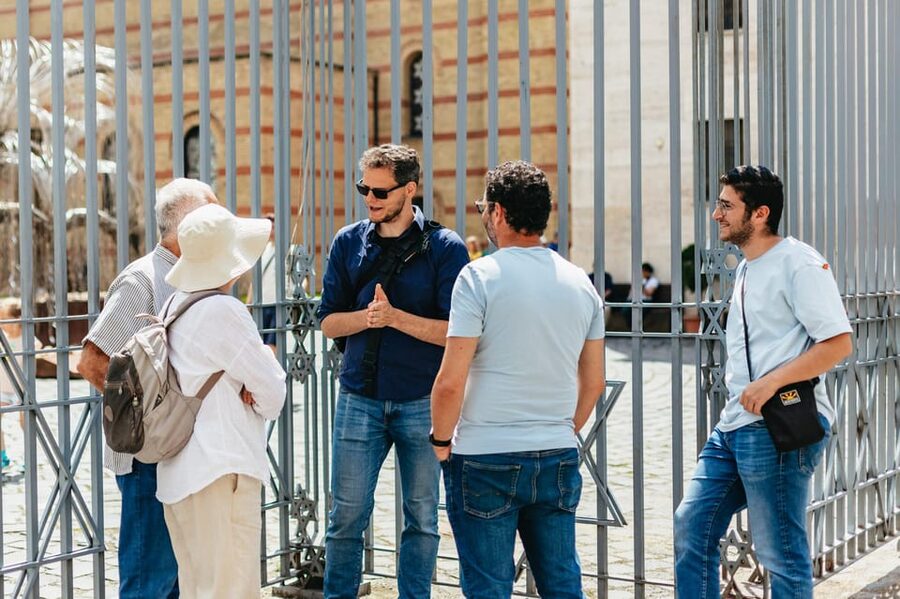
The tour begins in front of the Kempinski Hotel Corvinus Budapest, facing the Ferris wheel on Erzsébet Square. This is a practical meeting point in central Pest, and you can reach it by the M1, M2, or M3 subway lines, as well as several buses and trams. Get off at Deák Ferenc tér and allow a few minutes to find the hotel frontage.
This central location also makes the tour easy to fit into a first day in Budapest. You are not beginning in a remote corner of the district. After the walk, you can continue toward the Jewish Quarter, Gozsdu Passage, or nearby cafés and bars.
The guide speaks English, and the group is capped at 10 people. That size matters on a city walk. You are less likely to lose the thread of a story at a busy corner, and you have a real chance to ask about Hungarian history, Jewish customs, or places you pass along the way.
The pace is described as a walking tour over about two and a half hours. You should expect a fair amount of time on your feet. One person specifically noted that the walk was good exercise on a hot day, which is a useful reminder to bring water and dress for the forecast.
More Jewish Heritage Walking Tours around Budapest:
- Jewish Quarter of Budapest Walking Tour
★ 4.7 · 369 reviews - Amsterdam Anne Frank: Small-Group Walking Tour & Local Guide
★ 4.8 · 12,789 reviews - Anne Frank’s Story – Guided Walking Tour through Amsterdam
★ 5.0 · 11,619 reviews
Jewish life before the ghetto
The strongest part of the experience is its broad time frame. The Jewish Quarter is not introduced only as a World War II memorial zone. Your guide first sets out how Jewish life developed in Budapest over more than 200 years, including restrictions, migration, changing political conditions, and pressure placed on Jewish people to convert.
That background helps explain why the district contains different synagogue traditions and architectural styles. You are not simply looking at old buildings. You are learning how religious practice, legal status, community identity, and the growth of Budapest affected one another.
Several guides have used maps or visual material to place Hungary in the wider story of Central Europe. This is especially useful if you know little about Hungarian history. The country’s borders, political changes, and relationship with neighboring areas can be hard to follow from a quick visit, so this early explanation gives the rest of the walk a clearer frame.
I would pay attention to the guide’s local examples here. The best moments are not just dates and names, but explanations of how ordinary people lived, worshipped, worked, and moved through the city. Guides have also been praised for answering questions about both the historical period and present-day Budapest, so bring the questions that interest you.
Three synagogues, three traditions
The route takes you past the exterior of Budapest’s three main synagogues:
- The Dohány Street Synagogue
- The Rumbach Street Synagogue
- The Kazinczy Street Orthodox Synagogue
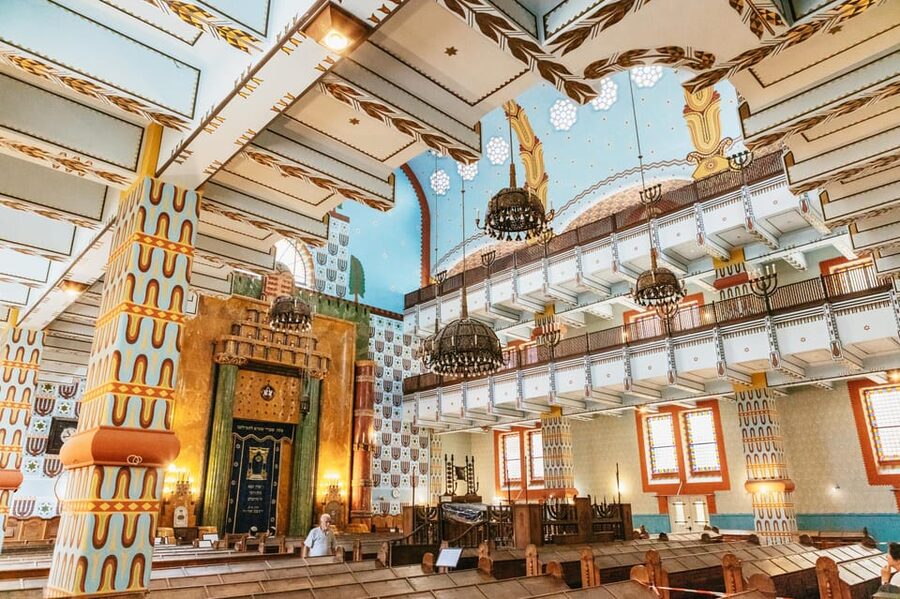
The Dohány Street Synagogue is the visual centerpiece. It is one of the largest synagogues in Europe and a major landmark in the district. From the outside, its size and ornate design give you a sense of the importance of Budapest’s Jewish community when the building was created. The tour does not include interior admission, so treat this stop as an architectural and historical introduction, not a full synagogue visit.
The Rumbach Street Synagogue was built in 1872 by Viennese architect Otto Wagner. Its exterior gives the guide a chance to explain the Neolog tradition and the way Budapest’s Jewish community developed along different religious lines. The building is also a useful reminder that the quarter is not architecturally uniform.
The Kazinczy Street Orthodox Synagogue adds another part of the picture. Seeing the three buildings together helps you understand that the Jewish community was never a single, simple group. Different religious practices and institutions existed side by side.
You may see older tour descriptions or personal accounts that refer to entering a synagogue. For this experience, plan on viewing all three from outside. If interior architecture is a priority, check separate opening times and admission options before booking this walk.
Through the former ghetto
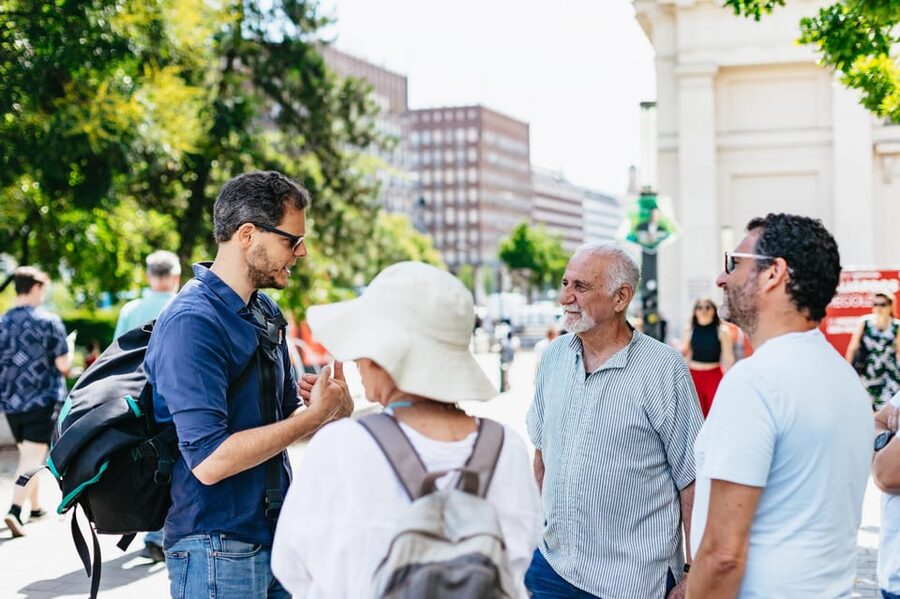
The walk continues along streets associated with the former ghetto. Today, the area includes synagogues, kosher restaurants, kosher shops, bars, cafés, and colorful walls. That modern mix can make the past easy to miss, which is exactly why a guide adds value here.
Your guide points out remnants connected with the ghetto and explains how the area was used during the final months of World War II. The ghetto existed for less than two months, but the events connected with it were devastating. A short walk through ordinary streets becomes much more meaningful when you understand what happened in those same spaces.
The tone is serious, and that is appropriate. Several guides have been praised for explaining Hungary’s role without glossing over the treatment of Jewish people. This is not a tour that turns wartime suffering into a quick backdrop for photographs. At the same time, the discussion includes courage, survival, and the continuing life of the community.
The district can be busy, especially around popular nightlife areas. That creates a contrast between the present-day street scene and the stories you are hearing. You will need to stay close to the guide and watch the pavement, traffic, and other pedestrians while listening.
More History Walking Tours in Budapest:
- Budapest Historical Sightseeing – Free Walking Tour
★ 5.0 · 1,302 reviews - BloodThirsty Hungary: Walking tour & Dark Historical Stories
★ 4.9 · 633 reviews - History and Hauntings of Salem Guided Walking Tour
★ 5.0 · 14,564 reviews - Lisbon: History, Stories and Lifestyle Walking Tour
★ 4.8 · 10,902 reviews
Raoul Wallenberg, Carl Lutz, and acts of courage
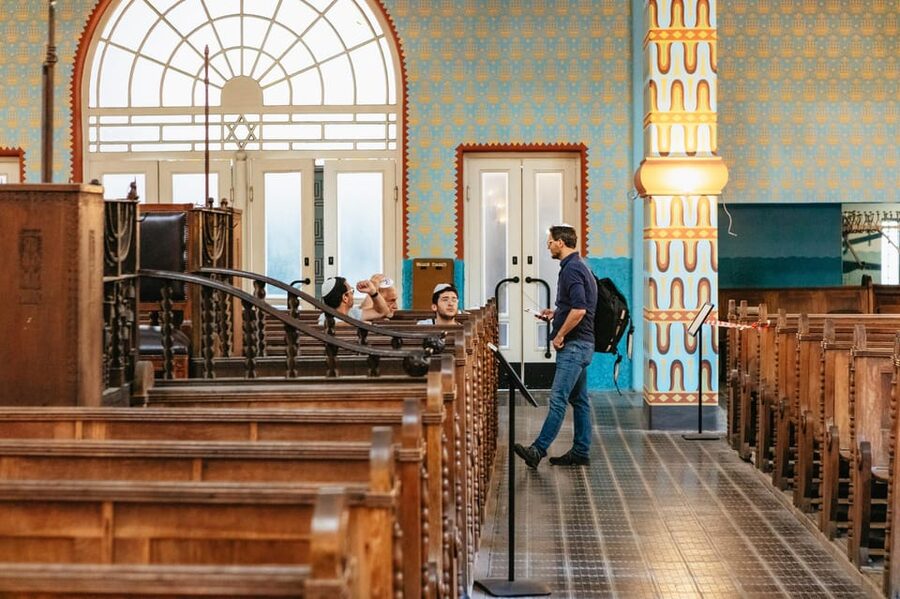
The tour includes memorials connected with Raoul Wallenberg and Carl Lutz. Both men helped save Jewish lives in Budapest during the winter of 1944 and 1945, when the situation was at its most dangerous.
Their stories give the walk a human scale. Instead of hearing only about governments, laws, and military events, you learn about individuals who used official positions, documents, buildings, and personal courage to protect people. Both are recognized as Righteous Among the Nations, a title given to non-Jews who helped save Jewish lives during the Holocaust.
These stops are likely to be among the most affecting parts of the afternoon. They also show why a historian guide is useful. A memorial on its own can be easy to pass without understanding its setting. The guide connects the monument to the people, decisions, and risks behind it.
Expect the guide to give you time to look and ask questions. The group format helps here. With 10 people or fewer, the conversation can remain focused rather than becoming a one-way lecture.
Gozsdu Passage and the modern Jewish Quarter
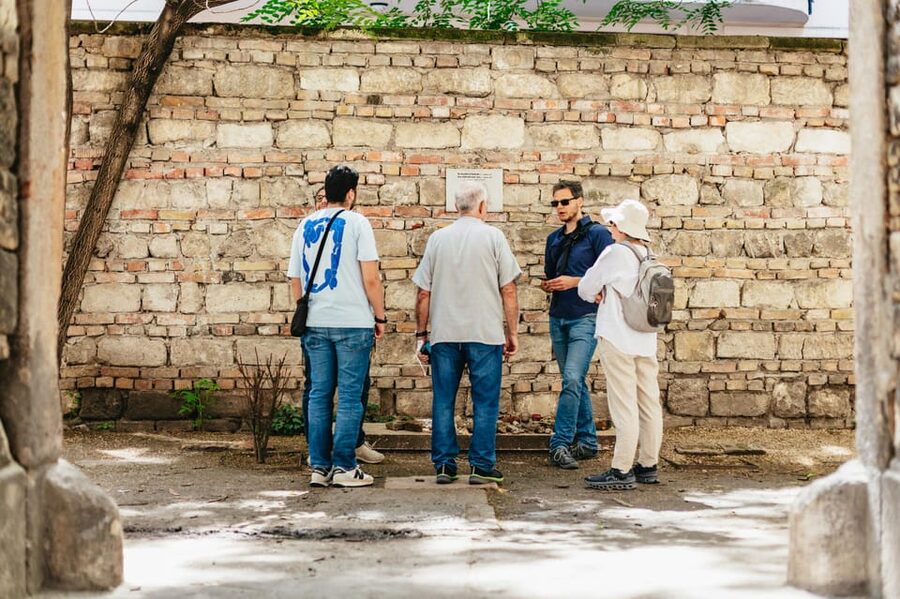
Gozsdu Passage brings you into the present-day character of the district. The passage is lively and commercial, and it sits near many of the bars and nightlife spots that have made this part of Budapest popular.
The guide uses this area to explain what has changed and what remains. You hear about ruin pubs, local nightlife, street art, and the less obvious details of Erzsébetváros, also known as Elizabeth Town. This gives you practical orientation for later exploring on your own.
I like this part because it prevents the tour from treating the Jewish Quarter as a museum frozen in 1944. The neighborhood has a current Jewish community, active cultural life, restaurants, shops, and residents whose lives are not defined only by wartime history.
Still, the modern atmosphere can feel jarring after the memorials. You may pass loud bars or colorful street art within minutes of hearing about the ghetto. That contrast is not a flaw in the tour. It is part of the district’s reality, but you should be prepared for a walk that moves between painful history and casual city life.
Coffee, flódni, and a useful pause
The final portion includes about 15 minutes at a local café for coffee or a soft drink and flódni. Flódni is a traditional Jewish Hungarian cake, generally associated with layers of pastry and fillings such as poppy seed, walnut, apple, and plum.
This is more than a token snack. After two hours of walking and listening, a seated pause gives you a chance to digest the material and ask follow-up questions. Food also offers a small connection to living culture. You are not only studying a community’s past, you are sampling something tied to Jewish Budapest.
The included refreshment adds value to the $63 price, though the main reason to book is the guide and the focused route. If you are comparing this with a general city walk, the cost makes more sense when you want historical context rather than a quick list of landmarks.
The stop is short, so do not expect a full meal. If you need more food, plan to eat before or after the tour. The Jewish Quarter has many restaurants, but this experience does not include a larger tasting program.
How the guides shape the experience
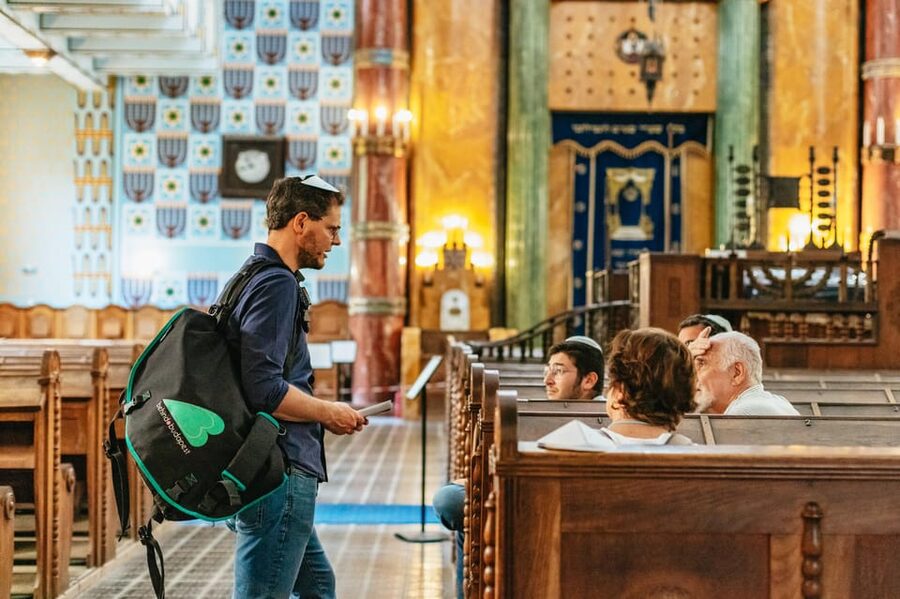
The guide is the key variable in any history walk. The people leading this experience have included Barbara, Andrea, András, Gabor, Noemi, Judit, Zsolt, Maggie, Daniel, Gabriel, and others. Their styles will differ, but the strongest pattern is clear: guides explain Hungarian history alongside Jewish history rather than treating the two as separate subjects.
Gabor has been praised for combining humor with clear explanations and for handling questions well. Noemi has been described as warm, passionate, and attentive to individual needs. András has been noted for a strong overview of both Hungary and the Jewish Quarter. Daniel has been praised for telling stories in an engaging way, while Barbara has added family connections to the history.
Those details matter because this is a talk-heavy walk. You are not simply following a route and taking photographs. A guide who can explain political change, religious differences, wartime events, and current life in plain language makes the same streets far more useful.
A small group also allows the guide to adjust the pace. One person noted that the walk moved at a comfortable speed, and another appreciated having time for questions. If you want a fully private tour with your own schedule, this is not that. But the 10-person limit offers a good middle ground between a private guide and a large city group.
Price, timing, and who should book
At $63 per person, this is a fair price if you want a focused history tour led by a specialist guide. It includes the walking tour, the historian guide, and coffee or a soft drink with flódni. It does not include entry to any synagogue, so budget separately if you want to visit interiors.
The total duration is about 2.5 hours, with roughly 2 hours and 15 minutes of sightseeing and a 15-minute café stop. That is enough time for a meaningful introduction, but not enough to cover every detail of Budapest’s Jewish history. One person wished for a longer tour, and I understand why. The subject is large, and the route sometimes has to move on just as a discussion gets interesting.
You should book this if you enjoy history, want context before visiting the synagogues, or prefer a small group where you can ask questions. It is also a good choice if you are new to Budapest and want to connect the Jewish Quarter with the city’s wider political and cultural story.
You might skip it if your priority is synagogue interiors, a food-focused experience, or a short sightseeing loop with little discussion. You should also reconsider if a two-and-a-half-hour walk in uncertain weather sounds tiring. The tour runs in all weather, so wear comfortable shoes and bring suitable clothing.
Free cancellation is available up to 24 hours before the start, and you can reserve now and pay later. Those terms help if your Budapest plans are still shifting.
Should you book this Budapest Jewish Quarter walk?
I would choose this tour for its honesty, small groups, and strong historical frame. The walk covers much more than the famous Dohány Street façade. You see the three major synagogue exteriors, visit memorials to people who saved lives, pass through the former ghetto, and learn how the district functions today.
Book it before a separate synagogue visit if you want the buildings to make sense when you see them inside. Just remember that admission is not included, and the tour itself stays outdoors apart from the café stop. For a thoughtful introduction to Jewish Budapest, $63 buys a useful, human-scale look at one of the city’s most important neighborhoods.
FAQ
How long does the tour last?
The experience lasts about 2.5 hours. The sightseeing portion is listed as approximately 2 hours and 15 minutes, followed by a 15-minute coffee and dessert stop.
Where does the tour begin?
Meet the guide in front of the Kempinski Hotel Corvinus Budapest, facing the Ferris wheel on Erzsébet Square.
How can I reach the meeting point?
You can use the M1, M2, or M3 subway lines, along with several buses and trams. Get off at Deák Ferenc tér.
Are the three synagogues visited inside?
No. The Dohány Street, Rumbach Street, and Kazinczy Street synagogues are viewed from the outside only. Entry is not included.
Is food included?
Yes. The tour includes coffee or a soft drink and a local Jewish cake called flódni at a café.
What language is the tour offered in?
The live guide conducts the tour in English.
What happens if the weather is bad?
The tour starts in all weather conditions, so dress accordingly and wear comfortable walking shoes.
New walking tours around Budapest
- Jewish Quarter of Budapest Walking Tour★ 4.7 · 369 reviews
- Budapest 3-Hour Walking Tour in Italian★ 4.6 · 217 reviews
- Budapest: Castle District Walking Tour★ 4.8 · 223 reviews
- Budapest: Walking Tour to the Shoes Memorial and Parliament★ 4.7 · 151 reviews
- Budapest: Walking Tour and Photoshoot with Digital Photos★ 4.7 · 82 reviews
- Budapest: Buda Castle District Walking Tour with a Historian★ 4.9 · 867 reviews
- Budapest: Hungarian Cooking Class and Market Walk★ 5.0 · 91 reviews
- Budapest: Inner City Walking Tour in German★ 5.0 · 76 reviews
Budapest Walking Tours, side by side.
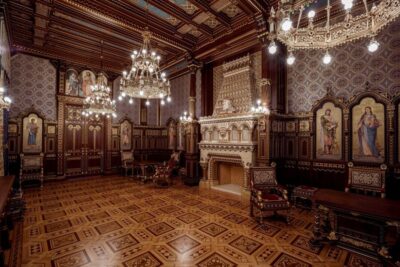
Budapest: Buda Castle Walk with Saint Stephen’s Hall
Read our review →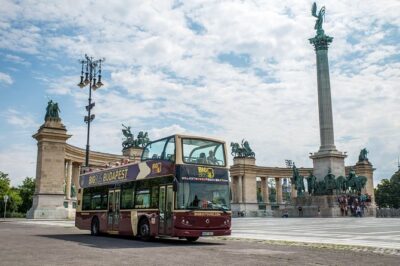
Big Bus Budapest Hop-On Hop-Off Bus and Walking Tour
Read our review →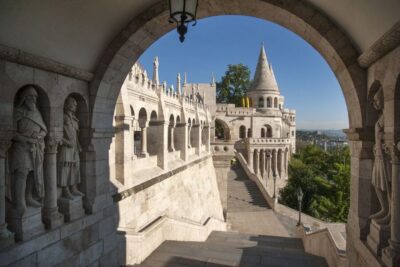
3-Hour Orientation Walking Tour of Buda and Pest
Read our review →
Budapest: 3-Hour Grand City Tour and Castle Walk
Read our review →

Budapest Food Walking Tour: Eat, Sip & Explore Like a Local
Read our review →Lists this walk sits on