Review · ROME
Rome Food Tour in the Historic Centre with 8+ Food Tastings
Rome makes a strong first impression through food, and this tour gets straight to the good stuff. You begin at Piazza Navona, then walk through the old Jewish Ghetto and central Rome while eating pizza, supplì, pasta, cannoli, gelato, and other Roman staples.
I like the generous range of food and the way the guide links each dish to Roman life. I also like the small group limit of 12, which makes it easier to ask questions. The main drawback is simple: three hours of walking and eating can feel like a lot, especially on a hot day or if you arrive after breakfast.
Key points
- Eight or more tastings: Expect two kinds of homemade pizza, supplì, cold cuts, cheeses, two Roman pastas, cannoli, gelato, and a secret dish.
- Piazza Navona to Largo di Torre Argentina: The route connects major sights with food stops, rather than treating lunch and sightseeing as separate activities.
- A maximum of 12 people: The group size suits anyone who wants conversation and personal attention without paying for a private tour.
- Strong guide-led storytelling: Massimiliano, Rocio, Luda, Federico, Eduardo, Manuel, Robbie, and others have been praised for mixing food knowledge, Roman history, humor, and practical advice.
- A very filling experience: Arrive hungry. Several tastings are full portions or substantial samples, not just tiny bites.
- Easy central meeting point: The tour starts beside Sant’Agnese in Agone at Piazza Navona and ends at Largo di Torre Argentina.
Why This Rome Food Tour Works So Well
The best food tours do more than take you from one restaurant to another. They teach you how a city eats. This one uses central Rome as its classroom, with food stops woven between fountains, churches, palaces, ancient ruins, and old neighborhoods.
You get a useful introduction to Roman cooking in a short window. The menu moves from street food to pasta, then through cured meats, cheese, dessert, and gelato. That variety matters because Roman cuisine is not one single style. It includes quick fried snacks, bakery food, simple pasta, market ingredients, and sweets shaped by centuries of local tradition.
The experience lasts about three hours. That is long enough to feel substantial, but short enough to fit around a morning at the Pantheon, an afternoon at the Colosseum, or an evening reservation. Since the route stays in central Rome, you also spend your sightseeing time efficiently.
The price is $118.51 per person. That is not cheap for lunch, but it can be fair value if you want a guided meal, several tastings, neighborhood context, and help choosing food for the rest of your stay. You would spend less by ordering one meal on your own, but you would not get eight or more tastings, a guide, or the same range of stops.
More Food Walking Tours in Italy
- Rome: Guided Food Walking Tour with Wine in Trastevere
★ 4.9 · 3,105 reviews - Rome: Trastevere & Campo de Fiori Street Food Walking Tour
★ 4.9 · 2,768 reviews - Rome: Trastevere Street Food Walking Tour with Local Expert
★ 4.8 · 1,784 reviews
Starting at Piazza Navona
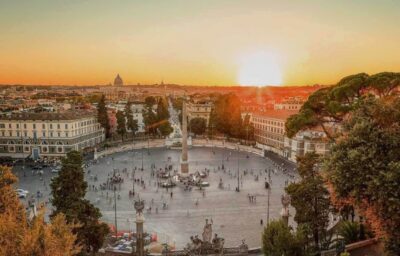
The meeting point is Sant’Agnese in Agone, at Piazza Navona. This is a practical place to begin because the square is easy to recognize and already gives you a lesson in Rome’s habit of building new life over old foundations.
Piazza Navona follows the shape of an ancient stadium. Today, it is framed by baroque buildings, fountains, cafés, and street activity. The famous Fountain of the Four Rivers, with its obelisk and dove, is one of the route’s visual anchors. Your guide uses the square to connect Roman architecture with the food culture around it.
Do not treat the first 20 minutes as wasted time before the eating starts. This opening helps you get oriented. You can look at the fountains, learn how the square developed, and understand why this part of Rome remains such a natural meeting place.
The area offers espresso, gelato, pizza bianca, and supplì, but the exact tasting order can change. Food businesses may have availability issues, and weather or other local conditions can alter the route. The important point is to expect the general menu rather than a fixed restaurant-by-restaurant schedule.
Pizza, Supplì, and the Roman Way to Start Eating
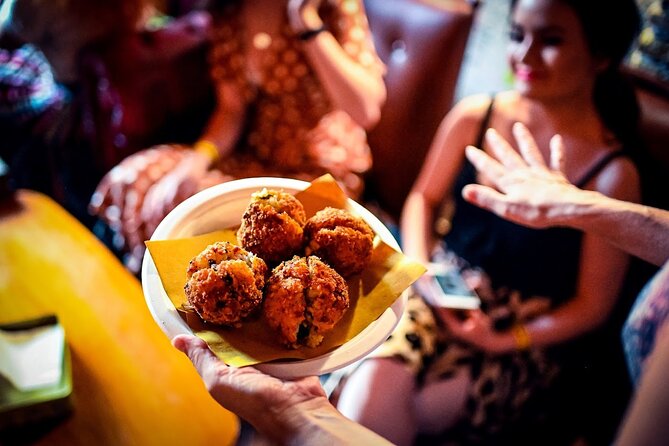
The first food usually sets the tone, and this tour begins with familiar Roman comfort food. You receive two different types of homemade pizza, along with supplì, the fried rice croquette filled with cheese.
Pizza in Rome takes several forms, and sampling two versions lets you compare texture and style instead of assuming all Italian pizza is the same. The tour does not present pizza as a tourist symbol only. It places it within everyday Roman eating, where bakery counters and casual food shops are part of the daily rhythm.
Supplì is especially useful for first-time visitors. It is portable, filling, and distinctly Roman in spirit. The crisp outside and soft rice center make it a good example of how simple ingredients become a satisfying snack.
This section also shows why you should not eat a large breakfast before meeting the group. You have many stops ahead, and even the early samples add up quickly.
A Walk Through the Jewish Ghetto
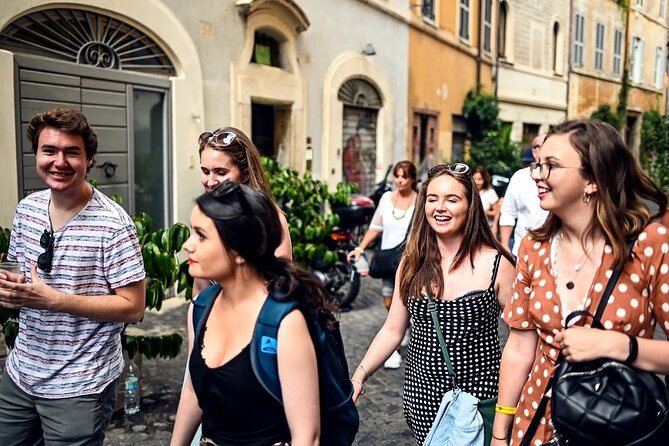
The route continues toward the ancient Jewish Ghetto in the Rione Sant’Angelo. This is one of the most meaningful parts of the tour because the neighborhood adds social and religious context to the food.
The ghetto was established in 1555. Its past is difficult, and the area carries a strong sense of place that cannot be reduced to restaurants and pretty streets. A good guide explains how the neighborhood developed while also showing how food traditions are tied to community and memory.
You should expect the walking here to be part of the main experience, not a brief transfer between tastings. The streets are central and accessible by public transport nearby, but Rome’s historic center can still mean uneven pavement, crowds, and frequent stops. Wear comfortable shoes and leave room in your schedule.
Food in this area gives the tour a change of tone. You are not just eating Roman pasta in a modern dining room. You are walking through a district with its own identity, then tasting food in a setting that makes the meal easier to remember.
More History Walking Tours in Italy
- Venice: City Center Historical Guided Walking Tour
★ 4.2 · 1,873 reviews - Palermo: Street Food and History Walking Tour
★ 4.9 · 1,486 reviews - Verona: History and Hidden Gems Guided Walking Tour
★ 5.0 · 1,379 reviews - Genoa: 2-Hour Guided Walking Tour of the Historical Center
★ 4.2 · 605 reviews
The Palace, the Fountain, and Ancient Roman Layers
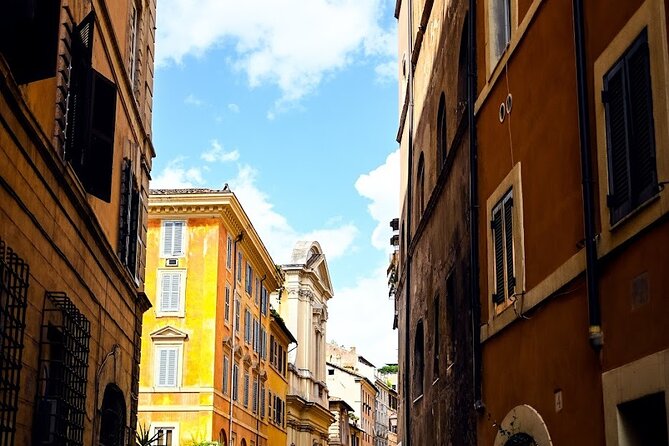
The route includes a major High Renaissance palace that now serves as the French Embassy in Italy. It also returns to the grand visual language of Rome through the Fountain of the Four Rivers.
These stops may not be separate food tastings, but they give the guide useful material. The point is not to provide a full architectural tour. Instead, you get short explanations while moving through the center, with food acting as the thread that keeps the walk lively.
The tour also passes remains of an ancient walkway built in the second century B.C. to connect two Roman temples. This is typical central Rome: a modern street may conceal or run beside a fragment from a much older city.
I like this balance. You get enough history to understand the setting, but the tour does not turn into a lecture. Guides such as Massimiliano, Manuel, Rocio, Luda, and Federico have been praised for explaining the background in a clear, entertaining way. The quality will depend on who leads your departure, but the format gives a strong guide plenty to work with.
Campo de’ Fiori and the Changing Food Scene
Campo de’ Fiori is a rectangular square south of Piazza Navona. Its name means field of flowers, a reminder that Rome’s public spaces often preserve traces of their earlier uses.
This stop broadens the food picture. You may see how a central Roman square functions as a place for food, social life, and sightseeing at once. The experience is not limited to formal restaurants. Street food, market-style products, bakery items, and casual bites all have a place in the city’s eating culture.
The exact stop can vary based on availability, weather, and other conditions. That flexibility is useful because a food tour needs working shops and fresh food, but it means you should not book expecting a rigid sequence. Think of the advertised menu as the promise, and the route as the method.
Cold Cuts, Cheese, and Two Roman Pastas
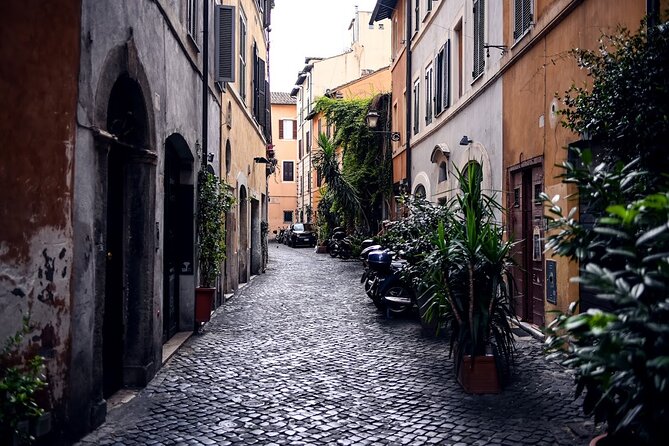
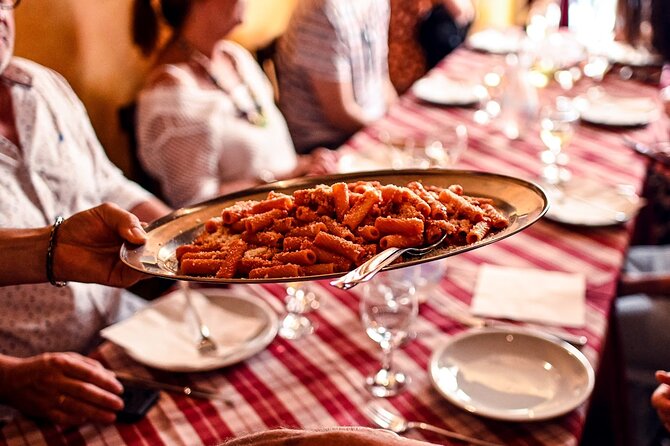
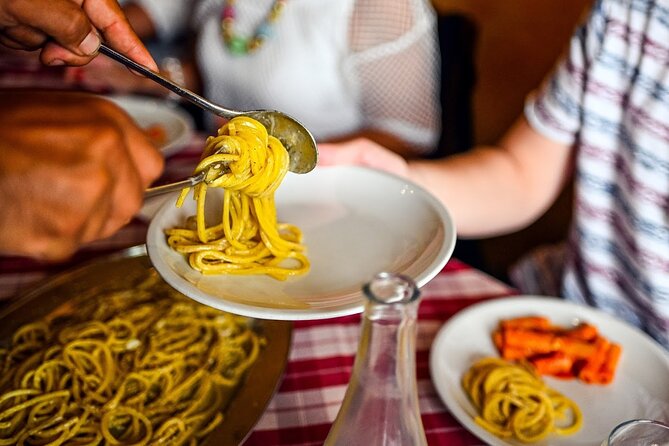
The middle of the tour shifts from snacks to more substantial food. You taste Italian cold cuts and cheeses, followed by two Roman pastas.
This is where the tour becomes a real meal. The pasta tastings help you compare different Roman preparations, while the cold cuts and cheese provide a look at the ingredients that often appear on a Roman table before the main course.
The order and serving locations can change, but the structure is smart. You begin with hand-held foods, move through savory specialties, then finish with sweets. It is a progression that feels more like lunch than a string of unrelated samples.
Portions appear generous. Multiple descriptions of the experience emphasize leaving full, and one guide even adjusted drinks for a nine-year-old while adults had coffee and wine. That is useful to know if you are bringing children. The tour is not only for food-focused adults, though children who dislike walking or trying unfamiliar dishes may tire before the final stop.
Vegetarians have also been accommodated, including a separate vegetarian pasta and alternatives at other stops. Still, the formal information does not promise every dietary requirement, so you should confirm needs before booking rather than relying on a last-minute adjustment.
Largo di Torre Argentina and the Final Treats

The route ends at Largo di Torre Argentina, a square with four Roman Republican temples and the remains of Pompey’s Theatre. This is a fitting final setting because the ruins remind you how much of Rome’s past remains visible in the middle of ordinary city life.
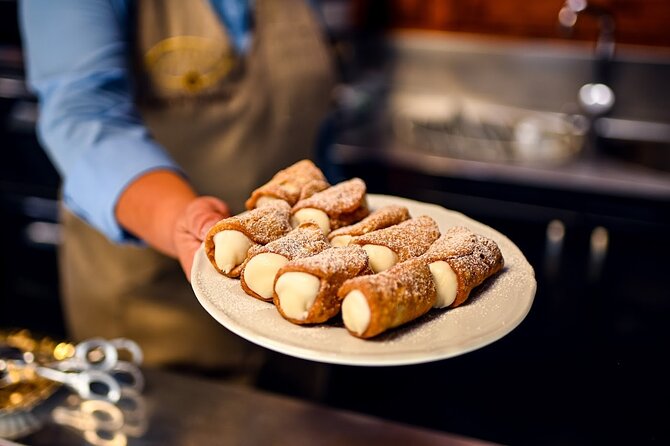
By this point, you will have eaten cannoli and artisanal gelato, along with the tour’s secret dish. The gelato is an especially good finish because it is lighter and colder than another savory plate. A number of guides have also included espresso or wine along the way, but drinks are not listed as a guaranteed part of the included menu, so you should not count on them as part of the formal value.
Cannoli can be a surprise for people who think they do not like it. The quality of the filling and shell makes a big difference, and this stop gives you a chance to try it in a guided setting rather than dismissing it from a poor version elsewhere.
The final secret dish adds a little fun, but it also means the full menu cannot be known in advance. If you have allergies or strong dislikes, ask about this before the tour begins.
What the Guides Add
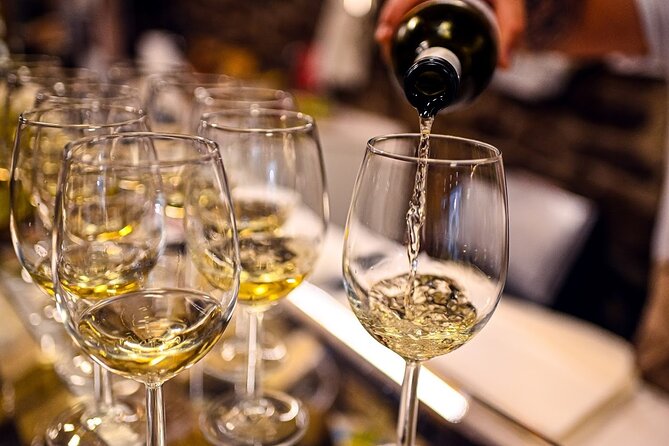
The guide may be the biggest factor in how much you enjoy this experience. The regular praise has centered on guides who are friendly, funny, energetic, and able to explain both the food and the city.
Massimiliano has led several especially well-regarded departures. He has been described as clear in English, attentive in the heat, good with children, and strong at connecting each dish with Roman history. Rocio has also been praised for humor and small historical details, while Luda, Federico, Eduardo, Robbie, Manuel, and other guides have received similar approval for warmth and local insight.
Names and assignments can change, so you cannot select a particular guide based on the information provided. What you can expect is a guide-led format rather than a self-guided tasting route.
That matters because the best information is often small and practical: what a dish is called, how it developed, what ingredients matter, and which kinds of places may be worth returning to during your stay. Guides have also offered tips for dining later in the trip, which can make the tour more useful than one afternoon of eating.
Group Size, Pace, and Comfort
The maximum group size is 12. That is small enough for a personal feel, but not necessarily private. In one unusual departure, only two people booked and the company still ran the tour, creating a private experience. You should not expect that every time, but it shows that a small booking may still operate.
The walking is manageable for most people, yet it is not nothing. You move through several central neighborhoods, stop to eat, and stand or walk between locations. A family with children as young as four and six managed the route, and a pregnant participant found the walking acceptable, but comfort depends on weather, energy, and personal needs.
Hot weather deserves attention. One departure took place above 90 degrees Fahrenheit, and the guide made the experience work, but Rome’s stone streets can feel tiring when you are full. Carry water, wear sensible shoes, and avoid arriving already exhausted from a morning of sightseeing.
The tour is offered in English. Confirmation is sent within 48 hours, subject to availability. It is near public transportation, starts and ends in central Rome, and does not include hotel pickup or drop-off.
Who Should Book It
You should consider this tour if you want a first taste of Roman food without spending several days researching bakeries, pasta shops, gelaterias, and neighborhood restaurants.
It works particularly well early in a Rome visit. You can use the guide’s advice for later meals, learn which dishes you want to order again, and get oriented in the central neighborhoods.
Families can make it work, especially if children enjoy sampling and stories. Couples and solo visitors will also find the small group useful, since food naturally makes conversation easier. The tour suits people who want history but do not want a full three-hour lecture.
It is less suitable if you prefer a slow sit-down meal, dislike walking, have strict dietary restrictions that have not been confirmed, or want complete control over every dish. The menu includes meat, cheese, pasta, sweets, and a secret item, so flexibility helps.
Should You Book the Rome Food Tour?
I would book this if you arrive hungry and want a practical introduction to Roman food tied to the city’s streets and landmarks. The combination of two pizzas, supplì, cold cuts, cheeses, two pastas, cannoli, gelato, and a secret dish makes the $118.51 price easier to justify for visitors who value variety and guidance.
The strongest reason to go is not one particular tasting. It is the way the meal, the Jewish Ghetto, Piazza Navona, Campo de’ Fiori, and Largo di Torre Argentina fit together. You finish with a better sense of what Rome eats and where that food belongs.
Book at least a day ahead if possible, since the experience is often reserved well in advance. You can cancel for a full refund up to 24 hours before the start time. Leave the morning or afternoon open, skip the heavy meal beforehand, and prepare for a filling walk through the historic center.
FAQ
How long does the Rome food tour last?
The tour lasts approximately three hours.
Where does the tour begin?
It begins at Sant’Agnese in Agone, Piazza Navona 14, in Rome.
Where does the tour end?
The tour ends at Largo di Torre Argentina in central Rome.
What food is included?
The included tastings are two types of homemade pizza, supplì, Italian cold cuts and cheeses, two Roman pastas, cannoli, artisanal gelato, and a secret dish.
How many people can join the tour?
The group has a maximum of 12 travelers.
Can I cancel for a full refund?
Yes. You must cancel at least 24 hours before the experience start time for a full refund. Changes or cancellations made less than 24 hours in advance are not accepted for a refund.
More Old Town Walking Tours in Rome
- Underground Vaults Walking Tour in Edinburgh Old Town
★ 4.5 · 8,506 reviews - Prague: 3-Hour Walking Tour of Old Town & Prague Castle
★ 4.7 · 5,696 reviews - Dubrovnik: Old Town Walking Tour
★ 4.8 · 5,174 reviews - Split: Old Town and Diocletian Palace Walking Tour
★ 4.9 · 4,727 reviews
More Food Walking Tours in Rome
- Reykjavik Food Walk – Local Foodie Adventure in Iceland
★ 5.0 · 18,952 reviews - Ho Chi Minh City Street Food Tour & Sightseeing By Motorbike
★ 5.0 · 9,413 reviews - Little Havana Food and Walking Tour in Miami
★ 5.0 · 8,882 reviews - New Orleans Food Walking Tour of the French Quarter with Small-Group Option
★ 5.0 · 6,118 reviews
New walking tours around Rome
- Rome: Fountains and Squares Small-Group Walking Tour★ 4.7 · 335 reviews
- Highlights of Jewish Ghetto And Trastevere Walking Tour★ 4.8 · 233 reviews
- Ghosts, Legends & Mysteries of Rome Tip-Based Walking Tour★ 4.7 · 284 reviews
- Dark Heart of Rome – Facts, Legend & Mystery Walking Tour★ 4.5 · 329 reviews
- Alternative Walking Tour of Rome’s City Center & Hidden Gems★ 4.8 · 244 reviews
- Rome: Small-Group Guided Day or Night Walking Tour★ 4.8 · 1,009 reviews
- Rome by Night Walking Tour – Legends & Criminal Stories★ 4.5 · 1,003 reviews
- Rome: Small-Group City Highlights Moonlight Walking Tour★ 4.9 · 949 reviews
Rome Walking Tours, side by side.
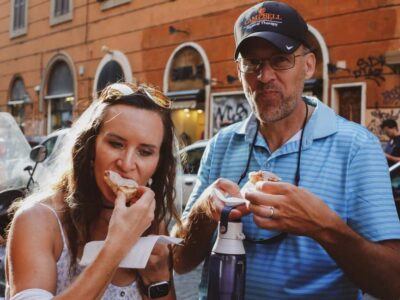
Rome: Guided Food Walking Tour with Wine in Trastevere
Read our review →
Rome: Trastevere & Campo de Fiori Street Food Walking Tour
Read our review →
Rome: Paranormal Night Walking Tour & Secret Backstreets
Read our review →
Rome: Colosseum Arena, Roman Forum & Palatine Hill Tour
Read our review →
Rome: Trastevere Street Food Walking Tour with Local Expert
Read our review →
Rome: Small-Group Guided Day or Night Walking Tour
Read our review →
Rome by Night Walking Tour – Legends & Criminal Stories
Read our review →