
Review · SPLIT
Walking Tour of Split and Diocletian’s Palace
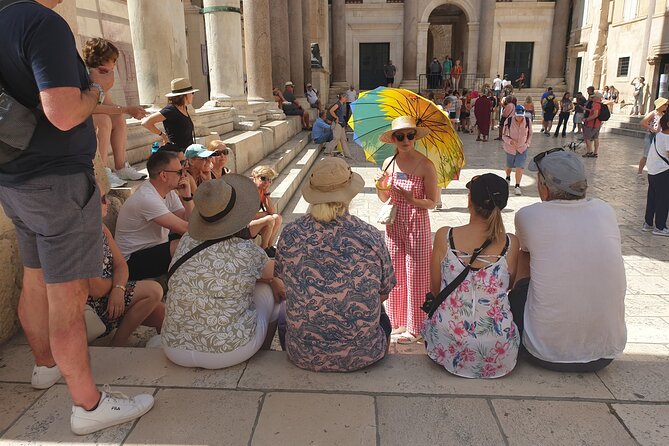
Diocletian’s Palace is not a single building you enter and leave. It is the old heart of Split, with homes, shops, cafés, streets, churches, and Roman remains woven into one living city quarter. This walking tour gives you a useful first look at that unusual mix, starting in the Peristyle and moving through the palace toward the waterfront.
I like the route for two reasons: it connects Roman sites with everyday Split, and it gives you a guide to explain details you could easily miss alone. I also like the compact length, which works well for a cruise stop or your first morning in town. Guides such as Antonella, Anton, Mario, and Marino have been especially praised for clear storytelling, humor, and enthusiasm.
The main concern is sound. The palace can be crowded with several groups in the same small spaces, and some guides speak too softly for people at the back. Headsets are not provided, so stay close to the guide and arrive ready to listen carefully.
Key points to know before you book
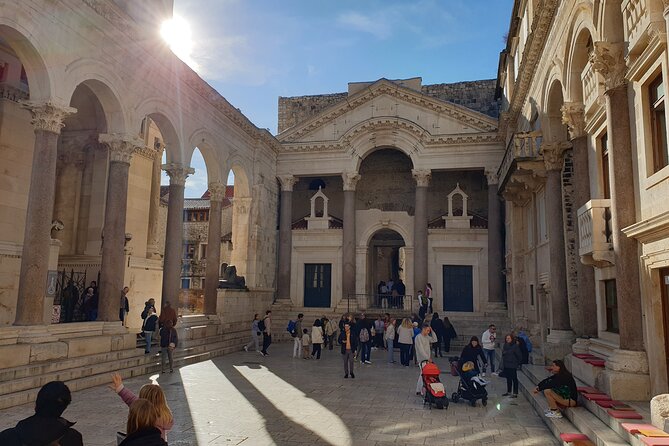
- The Peristyle is your starting point: This grand central square helps you understand how Diocletian’s Palace is laid out.
- The route mixes Roman, medieval, Venetian, and modern Split: You will see the palace substructures, Golden Gate, Riva Harbor, Fruit’s Square, and the old synagogue area.
- The tour lasts about 90 minutes: It is long enough for an overview but not a full archaeological visit.
- Paid palace areas are not included: The substructures museum section is not part of the walk, and admission tickets are not supplied.
- Group size can reach 20 people: A smaller group may feel personal, but a crowded departure can make hearing difficult.
- Wear practical shoes: Expect uneven surfaces, high steps, and some up and down walking.
Why Diocletian’s Palace makes such a good walking tour
The palace is the kind of place that rewards a guide. Its Roman walls were built for Emperor Diocletian, yet the area no longer feels like a preserved monument set apart from city life. People live and work inside it. The old structure forms the framework for modern Split.
That can be confusing at first. A narrow lane may follow a Roman passage. A medieval house may lean against an ancient wall. A square can contain columns from one era and buildings from another. Without context, you may notice attractive stonework but miss how the whole center fits together.
This tour gives you that framework in a short span. The guide points out how the main parts of the palace connect and explains how the site changed over time. That is the real value here. You are not just collecting seven photo stops. You are learning how to read Split.
The experience is offered in English and costs $48.37 per person. That is a fair price if you want a guided introduction and plan to explore more on your own afterward. It is less compelling if you expect extensive interior access, museum visits, or a private tour. No admission tickets are included, so budget separately for paid areas you choose to visit after the walk.
More Castle and Palace Walking Tours around Croatia:
- Split: Old Town and Diocletian Palace Walking Tour
★ 4.9 · 4,727 reviews - Diocletian’s Palace and Old Town SMALL GROUP Walking Tour
★ 5.0 · 502 reviews - SPLIT-PRIVATE Walking Tour of Diocletian’s Palace & Old Town
★ 5.0 · 467 reviews
Starting in the Peristyle, Split’s Roman stage
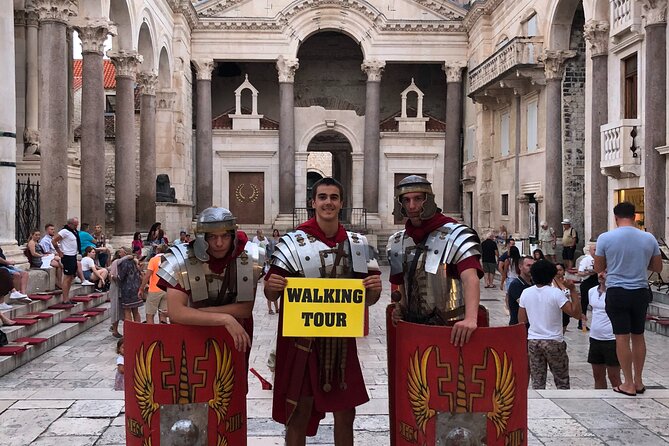
The meeting point is on Peristil ulica, at the Peristyle itself. This is a practical starting place because the square is the central gathering point of the palace, with routes leading toward many of the major sights.
Allow extra time to find the exact meeting spot. The old center has lanes and open spaces that can feel confusing, especially if you are arriving from the waterfront. Your confirmation arrives when you book, but the meeting point still deserves a careful look before the tour begins.
The Peristyle is scheduled for about 15 minutes. Here, the guide explains the layout of the palace and its role in Diocletian’s complex. The square gives you a strong visual introduction: stone, columns, and ancient walls are not displayed behind barriers. They are part of the city around you.
This is also where the group dynamic matters most. If the square is crowded, position yourself near the guide before the explanation begins. The tour can include up to 20 people, and several groups may gather in the same area.
The Vestibule and the sound of Dalmatian song
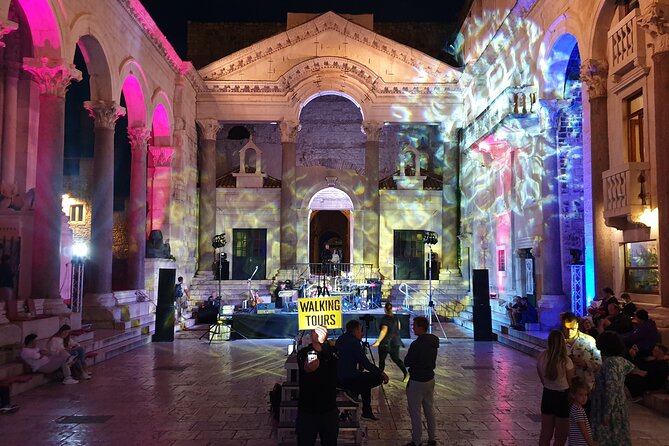
The next stop is the Vestibule, the former entrance space connected with the emperor’s apartments. The visit is brief, about five minutes, but it adds a different mood to the tour.
The rounded space has strong acoustics, and you may hear traditional Dalmatian singing there. That possibility is not the central purpose of the tour, but it can make the stop memorable. It also shows how the old palace continues to function as a real place rather than a silent archaeological shell.
Your guide uses the Vestibule to explain its original role and later history. Because the space is enclosed, sound can carry in unusual ways. Stay close and avoid standing behind other people if you want to catch every word.
The palace substructures and what they reveal
The substructures receive about 10 minutes. This is one of the most useful stops because the lower level helps explain how the palace was built.
The layout below mirrors parts of the imperial rooms above. That makes the substructures more than a dark passageway. They show the construction logic of the palace and how these spaces were used over different periods.
There is an important limit: this walking tour does not visit the museum portion of the substructures, and admission is not included. You can visit that area after the tour if you want a closer look. The guide’s explanation gives you a reason to return, but do not assume the ticketed museum is part of your $48.37 booking.
This distinction matters when comparing tours. The experience is best understood as an orientation walk, not a full palace admission package. If the substructures are a priority, leave time and money for a separate visit.
More walking tours around Croatia:
- Dubrovnik: Old Town Walking Tour
★ 4.8 · 5,174 reviews - Dubrovnik Discovery Old Town Walking Tour
★ 5.0 · 4,458 reviews - Dubrovnik: Game of Thrones Walking Tour
★ 5.0 · 1,732 reviews - Dubrovnik Old Town History Walking Tour
★ 5.0 · 1,684 reviews
The Golden Gate and Gregory of Nin
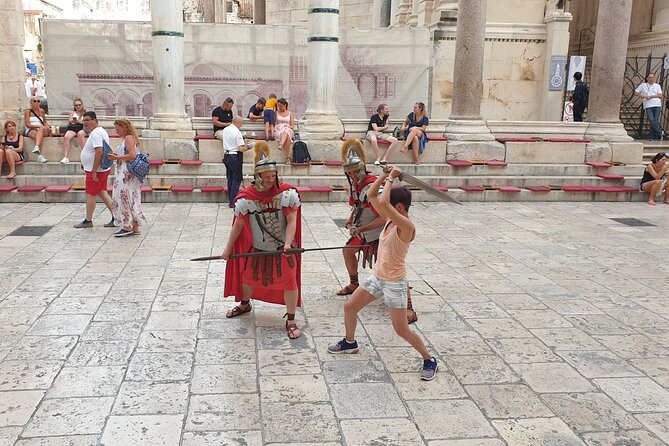
The Golden Gate is the palace’s main entrance and receives about 10 minutes. It is a natural place to discuss the relationship between the palace and the later city that grew around it.
You will also see the statue of Gregory of Nin. The guide explains his importance to Croatian history and language, giving this stop a national and cultural angle beyond Roman architecture.
This is the sort of detail that makes a guided walk worthwhile. You can photograph a gate or statue on your own, but you may not know why it matters. A good guide turns a quick stop into a useful piece of the story.
The Golden Gate is also a practical orientation point. After the tour, you can use the palace entrances and surrounding lanes with more confidence. I would mark this area on your phone or take note of the route, since it helps connect the interior of the old center with the streets outside.
Riva Harbor and Split’s waterfront rhythm

The walk then heads to Riva Harbor, where you spend about 15 minutes. The waterfront promenade gives you a welcome change of scale after the tight lanes and enclosed palace spaces.
A bronze model of Diocletian’s Palace helps you see the full plan. This is especially useful after walking through only selected parts of the complex. The model gives you a bird’s-eye view and helps connect the Peristyle, gates, substructures, and waterfront.
The guide also explains the story of Split’s Riva promenade. This is one of the tour’s better transitions because it links the ancient palace with the public life of the modern city.
If you are visiting Split for only one day, pay attention here. The Riva is easy to find later, and it is a useful place to return for a pause between sightseeing stops. The tour ends back at the original meeting point, so this waterfront stop is part of the route rather than the final drop-off.
Fruit’s Square and the Venetian chapter
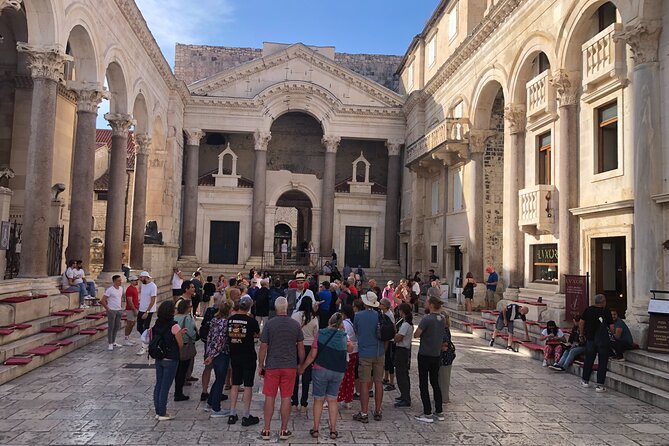
Fruit’s Square, officially Trg Brace Radic, receives around 10 minutes. The stop adds a Venetian layer to the story of Split.
The guide points out a 15th-century Venetian citadel and explains the importance of Marko Marulić, often called the father of Croatian literature. This is a welcome expansion beyond the emperor and his palace. Split’s story did not stop in Roman times, and the square helps show how later powers and local culture shaped the city.
The square also gives you a chance to notice how compact the historic center is. Major remains, public spaces, and later buildings are close together. The tour’s route is not a long march across town. It is a connected walk through a small area with many historical layers.
If literature and local culture interest you, this stop may be more rewarding than you expect. If your main aim is Roman architecture, it still helps round out the picture and prevents the tour from becoming a single-period history lesson.
The old synagogue and Split’s Jewish history
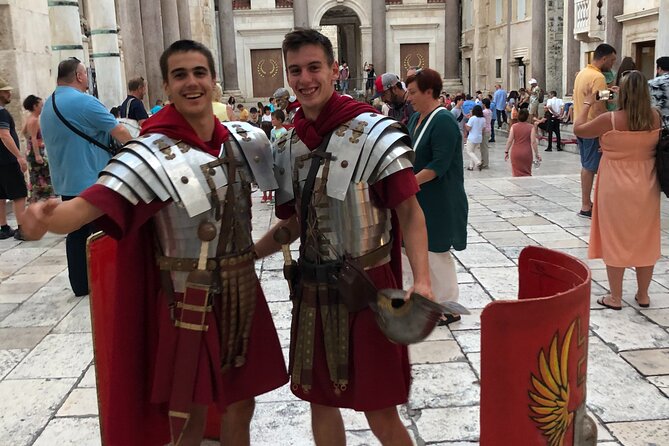
The final listed stop is the Split Synagogue, a 16th-century building. The tour passes by and explains the history of the Jewish community in the city.
This is a short stop, about 10 minutes, and it is another reminder that the old center contains more than imperial remains and Venetian walls. Split’s past includes different communities, faiths, and periods of change.
Admission is not included here either. The supplied details describe passing by the synagogue, so you should not expect an interior visit as part of the standard walk. If entering the site is important to you, ask the guide about the available arrangements during the tour rather than assuming access.
Guide quality can shape the whole experience
The guide is the biggest variable. The strongest accounts describe guides who combine facts with stories and humor. Antonella is noted for clear English, organization, and a lively sense of humor. Anton and Anthony are praised for enthusiasm and for making the palace easy to follow. Mario is described as willing to answer questions beyond the planned route, while Marino brings a teacher’s passion for Split.
That kind of guide can turn a basic route into a strong introduction. A storyteller helps you remember why a place matters, not just which century it belongs to. Several guides on this experience also have teaching backgrounds, which can be a real advantage when the subject becomes complicated.
There is a less comfortable side. One guide was described as difficult to hear and unfocused, with too much discussion unrelated to the palace. Another group found the English hard to follow because the guide spoke softly. These problems are not minor in a walking tour built around spoken explanation.
You can improve your odds by staying close to the guide, especially in the Peristyle and substructures. If the group spreads out, move forward rather than hoping the sound will carry. At the meeting point, identify the guide early and ask where the group should stand.
Group size, timing, and physical demands
The maximum group size is 20. That is not a private experience, but it is still more manageable than a large city tour. In practice, the tour can feel smaller or larger depending on how many other groups are in the palace at the same time.
Several departures are available, which helps fit the walk around a cruise arrival, lunch, or a separate palace visit. The scheduled duration is about 90 minutes. One departure was reported to finish in less time, so do not plan another activity with no gap at all.
The route includes uneven ground and high steps. It is not recommended for people who have trouble with high steps, and most participants should be comfortable walking through old stone streets. Service animals are allowed, and the meeting area is near public transportation.
Wear shoes with a firm sole. The advice is simple, but it matters more here than on a smooth modern sidewalk tour. Bring water in warm weather, and keep your phone or camera easy to reach because the route offers many quick photo opportunities.
Who will get the most from this tour
I would choose this tour early in a Split visit. The guide’s map of the palace helps you plan the rest of your time, including a return to the paid substructures or a second look at the squares and gates.
It suits first-time visitors, cruise passengers, couples, families, and anyone who wants history explained without spending half a day in a museum. The 90-minute length is also useful if your schedule is tight.
It is less suitable if you want a private guide, a quiet archaeological visit, or included admission to every important interior. It may also frustrate you if you need a very slow pace or have trouble hearing in a group.
The tour’s 99 percent recommendation rate and 4.9 rating from 2,588 ratings point to a strong overall experience, but the lower ratings reveal the practical risks: missed bookings, a delayed start, a changed time, poor sound, or a guide who does not stay focused. Confirm the time before setting out, especially if you are traveling into Split from elsewhere.
Cancellation and booking details worth knowing
You receive confirmation at booking. Free cancellation is available up to 24 hours before the start time for a full refund. Changes or cancellations made within 24 hours are not accepted and are not refunded.
The operator may cancel if the minimum number of participants is not reached. In that case, you are offered another date or experience, or a full refund.
The tour begins and ends at Peristil ulica, 21000 Split. Since the start point can be difficult to find, arrive early rather than cutting it close.
Should you book the Split Palace walk?
Book it if you want a clear first look at Diocletian’s Palace, a quick introduction to Split, and a guide who can connect Roman remains with later Croatian, Venetian, religious, and waterfront history. At $48.37, the price makes sense when you value explanation and orientation more than included admissions.
Skip it if your main goal is an in-depth visit to the palace substructures, a private experience, or guaranteed quiet listening. In that case, you may prefer to explore the paid areas separately and use this tour only if you want a guide-led overview.
My practical choice would be to book an early time, arrive well before the meeting point, stay near the guide, and keep the rest of the day open for the substructures museum and independent wandering. With the right guide, this walk gives you the structure you need to enjoy Split on your own.
FAQ
How long does the Walking Tour of Split and Diocletian’s Palace last?
The tour lasts approximately 1 hour and 30 minutes. One reported departure ended sooner, so leave a little space before your next planned activity.
What language is the tour offered in?
The tour is offered in English.
Where does the tour start and finish?
It starts at Peristil ulica, 21000 Split, Croatia, near the Peristyle. The activity ends back at the meeting point.
Are admission tickets included?
No. Admission tickets are not included. The museum portion of the palace substructures is not visited during the tour, but you can visit it afterward.
How many people can join the tour?
The maximum group size is 20 participants.
Is the tour suitable for people with mobility difficulties?
The tour is not recommended for people who have trouble with high steps. The route includes uneven surfaces and steps in the historic center.
What is the cancellation policy?
You can cancel up to 24 hours before the start time for a full refund. Cancellations or changes made less than 24 hours before the start time are not accepted and are not refunded.
New walking tours around Croatia
- Zadar: Food Tasting & Old Town Walking Tour★ 5.0 · 94 reviews
- Livade: Guided Truffle Hunting Walking Tour★ 4.6 · 82 reviews
- From Split: Krka Waterfalls Cruise & Trogir Walking Tour★ 4.7 · 681 reviews
- Split: History and Heritage Walking Tour★ 4.9 · 650 reviews
- Dubrovnik: Old Town Walking Tour★ 4.9 · 792 reviews
- Dubrovnik: Walls and Wars Walking Tour★ 4.8 · 501 reviews
- Dubrovnik: Cable Car, Walking Tour and City Walls Combo★ 4.6 · 322 reviews
- Dubrovnik: Panoramic Ride and Old Town Guided Walking Tour★ 4.7 · 261 reviews
Split Walking Tours, side by side.
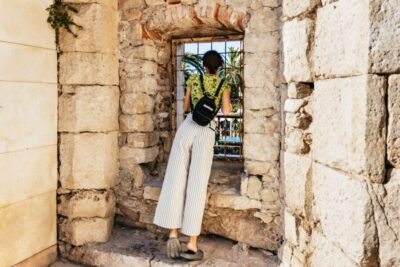
Split: Old Town and Diocletian Palace Walking Tour
Read our review →
Krka Waterfalls tour with Trogir Walking tour and Krka panoramic boat cruise
Read our review →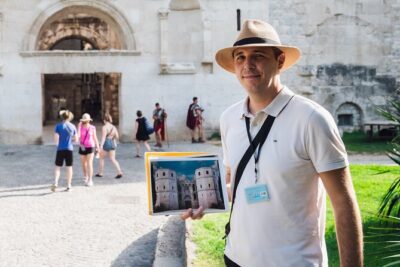
Walking Tour of Split with a ‘Magister’ of History
Read our review →
From Split: Krka Waterfalls Cruise & Trogir Walking Tour
Read our review →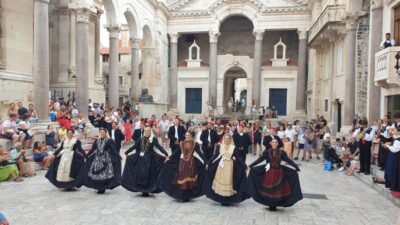
Diocletian’s Palace and Old Town SMALL GROUP Walking Tour
Read our review →
Split: City Walking Tour w/ Game of Thrones Locations
Read our review →
Discover The Old Town Split 1.5h walking Small group tour
Read our review →Lists this walk sits on