Review · DRESDEN
Dresden: Private Guided Walking Tour
Dresden’s old town packs a remarkable amount into a compact walk: grand Baroque buildings, royal courtyards, wartime destruction, East German life, and the peaceful revolution of 1989. I like the way this private tour connects architecture with real political history, rather than treating the city as a row of pretty façades. I also like the two-hour length and the chance to ask your own questions, with guides such as Frau Schulz and Idiko praised for humor and an easy rapport with mixed-age groups.
The main consideration is the group limit of 25. That is still private, but it is not an intimate walk for a large family or full school group. You also need to choose English or German, since no other language is offered.
Key points to know
- A compact route through Dresden’s historic core: Begin at Neumarkt and finish near Frauenkirche, with the city’s major sights along the way.
- Baroque architecture takes center stage: See the Zwinger, Semperoper, Dresden Castle, Taschenbergpalais, and other grand buildings.
- History reaches beyond royal splendor: The guide covers the Middle Ages, Renaissance, Baroque Dresden, World War II’s aftermath, East Germany, and 1989.
- Private means your group sets the tone: Ask questions, request restaurant or event suggestions, and let the guide adjust the conversation.
- English and German only: Confirm your preferred language when booking.
- Two hours is efficient but focused: You get a strong introduction, not a full museum visit or an exhaustive tour of every interior.
Why this two-hour Dresden walk works so well
Dresden can be confusing at first. The most famous sights sit close together, yet each belongs to a different chapter of the city’s story. A royal palace, an opera house, a rebuilt church, and a ceremonial courtyard may all appear within a few minutes of one another.
That makes a guided walk useful. You are not simply checking off Frauenkirche, Semperoper, and the Zwinger. You are hearing how Dresden grew over more than 1,000 years, how its rulers shaped the city, how war changed it, and how life behind the former East German border affected ordinary people.
I particularly like the balance between large events and small anecdotes. The guide is expected to bring in both the dark years of the Middle Ages and the vigor of the Renaissance, then move forward to the peaceful revolution of 1989. That range gives the old town more meaning than a purely architectural tour.
The private format also changes the feel of the outing. You can ask why a building looks the way it does, pause over a detail, or request suggestions for restaurants and events. If your group includes children, older relatives, or people with different interests, the guide can adjust the pace and explanation more easily than on a fixed public walk.
More Private Walking Tours in Germany
- Berlin Private Complete History All Day Walking Tour
★ 5.0 · 474 reviews - Munich Private Tour with a Local – Highlights & Hidden Gems
★ 5.0 · 469 reviews - Private Walking Tour Berlin Third Reich Hitler and World War II
★ 5.0 · 360 reviews
Starting at Neumarkt beside Frauenkirche
The meeting point is the Dresden Information office at Neumarkt 2, inside the QF Passage on the basement floor. This is a practical starting place because Neumarkt puts you right in the historic center, with Frauenkirche rising nearby.
Neumarkt is also a useful place to begin understanding Dresden’s complicated past. The square feels historic, but much of what you see today reflects rebuilding and restoration after the city’s wartime destruction. Your guide can help separate original fabric, reconstructed buildings, and later changes.
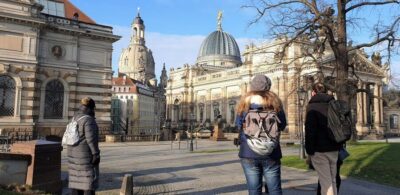
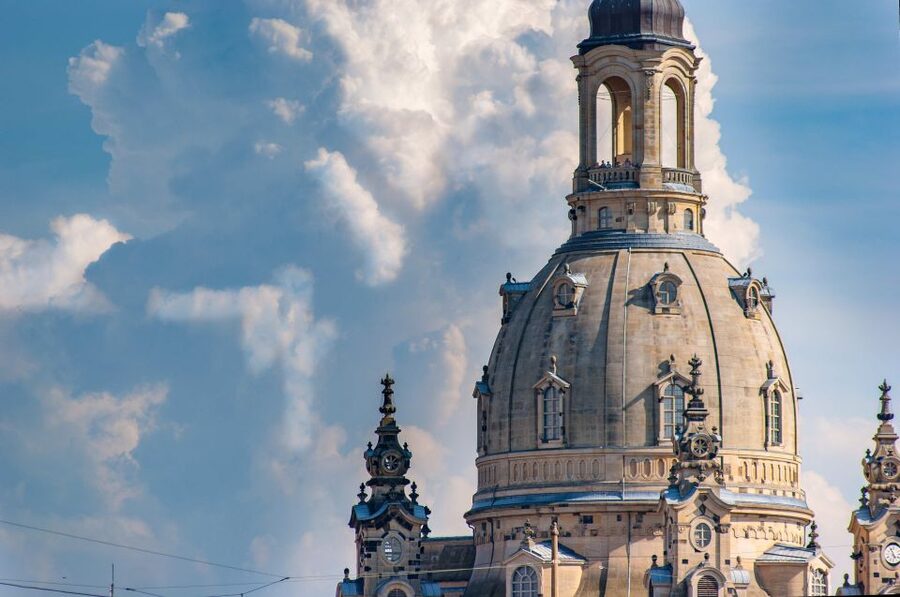
Frauenkirche is the natural visual anchor. Its large stone dome gives the square a sense of scale, while the surrounding buildings frame it as the heart of the old town. The tour does not promise a full interior visit, so think of this as an exterior-focused introduction unless your guide tells you otherwise.
The meeting point is easy to locate once you are at Neumarkt, but remember the specific instruction: the Dresden Information office is in the basement level of the QF Passage. Arriving a few minutes early is sensible, especially if you are meeting a private guide in a busy central square.
Frauenkirche and the story of a rebuilt city
Frauenkirche gives the tour one of its clearest history lessons. Its Baroque form represents Dresden at the height of its royal and artistic ambition, but its modern story reflects destruction, division, and reconstruction.
This is where a good guide can make the difference. Instead of treating the church as a postcard subject, you can learn how Dresden’s old center was affected by the war and how the city’s landmarks came to be restored. The church also provides a useful way to discuss the contrast between the grandeur of the Baroque period and the much harder decades that followed.
I would pay close attention here if you want more than dates. The tour is designed to explain how Dresden’s past felt to people living through different periods, including the separation between East and West Germany. That human angle gives the buildings a proper setting.
Because the walk is only two hours, you should not expect a long church visit or a detailed art-history lecture on every feature. The strength is the overview and the connections between sites.
Dresden Castle and the royal center
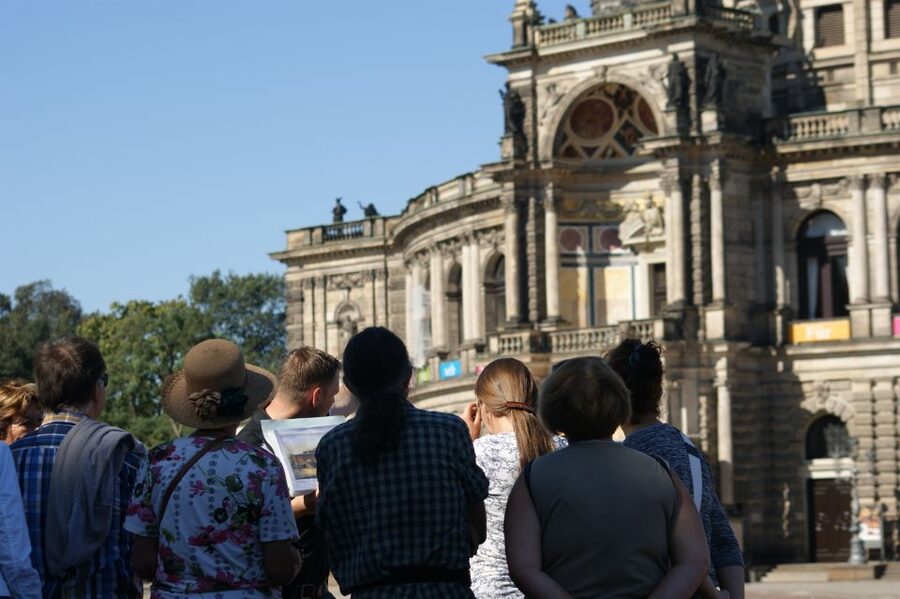
From the area around Neumarkt, the route moves toward Dresden Castle. This is one of the key stops for understanding the city as a seat of power.
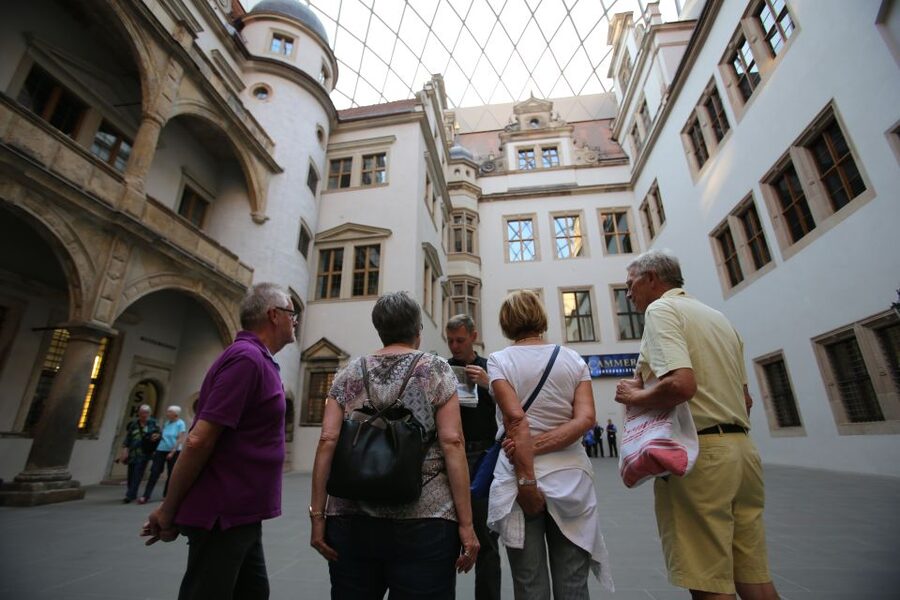
The castle helps explain why Dresden’s Baroque center is so grand. Royal residences were not only homes. They were places where authority was displayed through architecture, ceremonies, art, and access. Your guide can connect the castle to the nearby ceremonial spaces and explain how the different buildings worked together.
This part of the walk is especially useful if you are seeing Dresden for the first time. Rather than wandering among separate monuments, you begin to see the old town as a planned royal quarter. The buildings are close enough together that the relationship between them becomes clear on foot.
The castle itself contains major collections and museums, but this experience is a walking tour, not an extended museum visit. If you want to explore the interiors, plan separate time before or after the walk. The guide’s job here is to give you the context that helps those later visits make sense.
Same streets, a different story:
- Discover Berlin Half-Day Walking Tour
★ 5.0 · 9,624 reviews - Berlin City walk Government District and Places of Democracy
★ 4.7 · 8,467 reviews - Berlin: Third Reich & Cold War Guided Walking Tour
★ 4.9 · 8,378 reviews - Munich: Third Reich & WWII Walking Tour
★ 4.6 · 6,181 reviews
Semperoper and the city’s Baroque drama
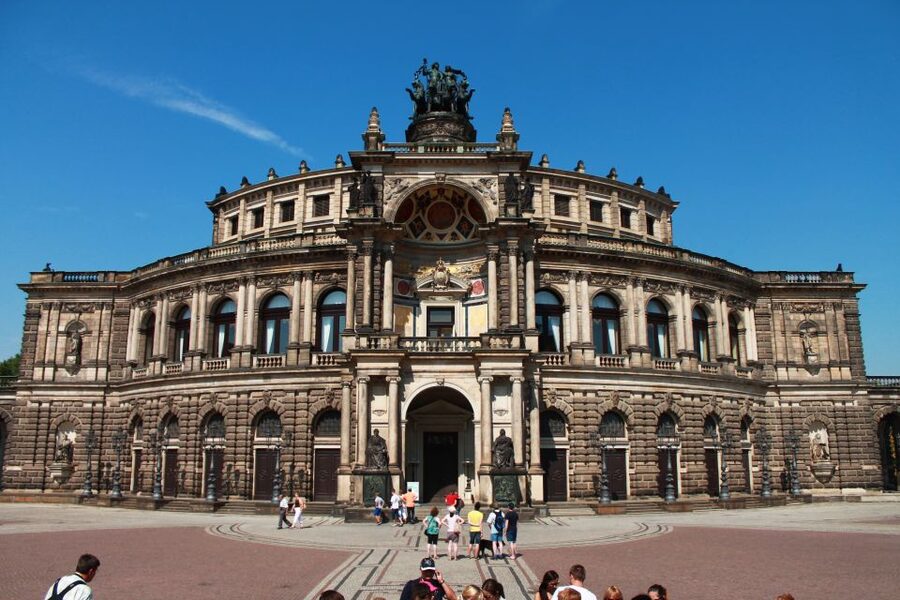
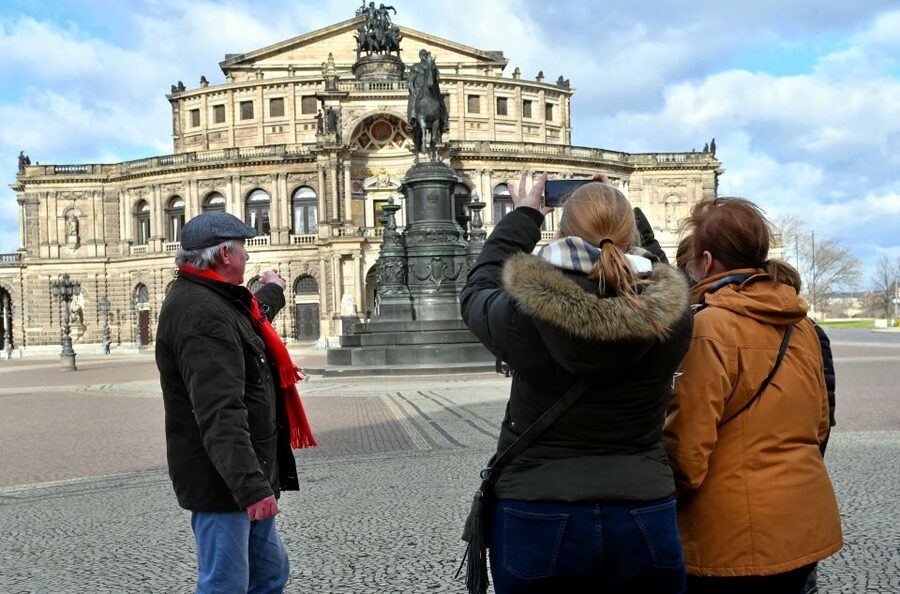
Semperoper brings a different kind of grandeur to the route. The opera house is one of Dresden’s most famous buildings, and its ornate design fits the city’s taste for spectacle.
Your guide can explain the building as part of Dresden’s wider cultural life, not just as an attractive façade. Opera, court ceremony, music, and architecture all fed the city’s image as a major center of the arts. Even if you do not attend a performance, seeing the opera house in its setting adds another layer to the old town.
The building is also a good reminder that Dresden’s story is not only about churches and palaces. The city’s identity includes performance, design, and public culture. I like having this stop in a walking route because it breaks up the purely royal focus and shows how the center served both rulers and audiences.
The tour does not include an opera performance or promise entry inside. You are paying for the guided walk and interpretation, so check the schedule separately if you want to return for a show.
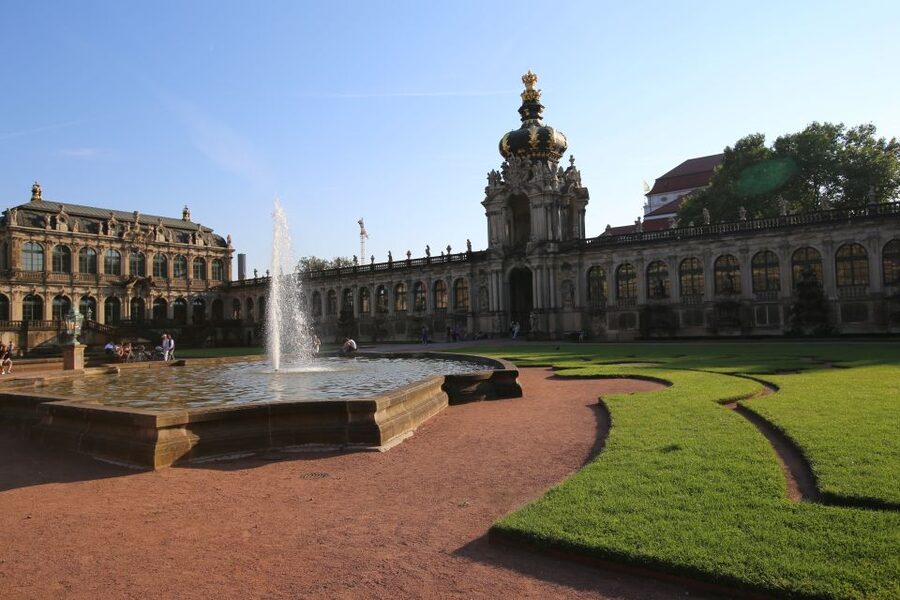
The Zwinger: Baroque Dresden at full volume
The Zwinger is likely to be the visual high point of the walk. Its courtyards, pavilions, sculpture, and formal design show Baroque Dresden at its most theatrical.
This is the place where the phrase Baroque splendor earns its keep. The architecture was made to impress, and it does so through symmetry, ornament, and a strong sense of ceremony. A guide can point out how the spaces were designed to shape movement and display power.
I find the Zwinger more rewarding when someone explains its purpose rather than leaving you to photograph it and move on. The building is not just a decorative enclosure. It reflects the ambitions of the court and the way rulers used public architecture to project wealth and control.
Give yourself time to look up. The details are easy to miss when you are focused on finding the next stop. Still, the two-hour schedule means this will be a guided overview rather than a slow architectural study. If the Zwinger captures your interest, return later for a longer look and any museums you want to visit.
Procession of Princes and Stallhof
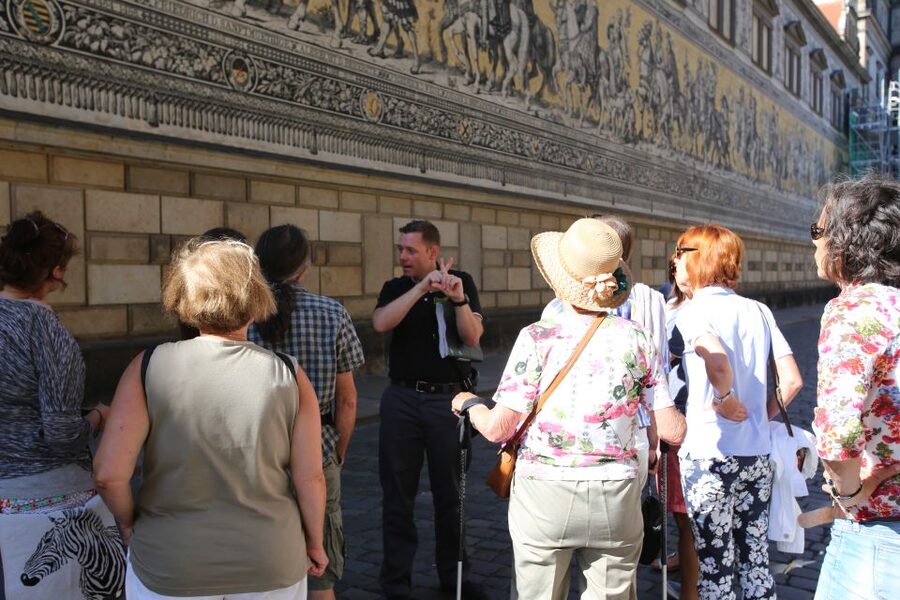
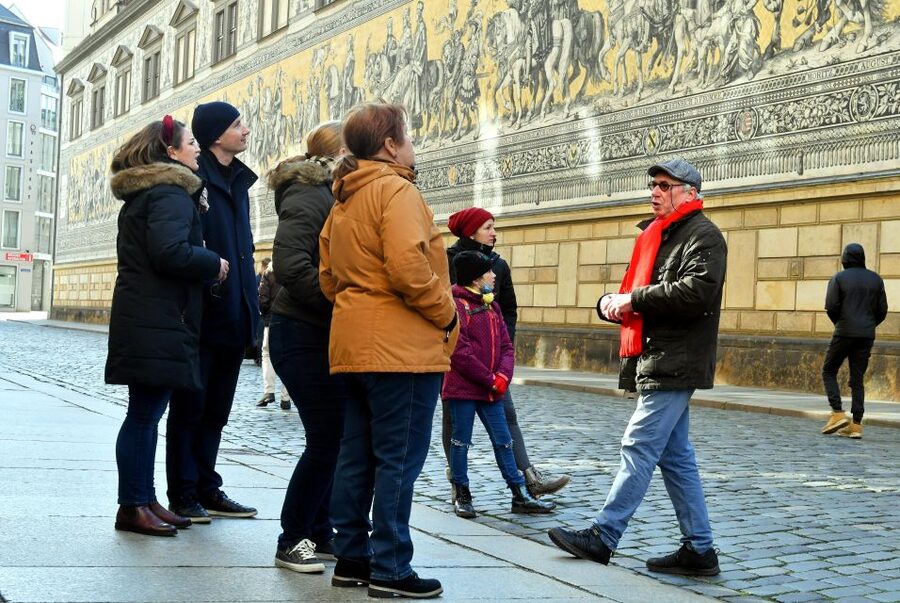
The Procession of Princes is one of Dresden’s most memorable outdoor artworks. It stretches along a wall near the royal complex, showing a long sequence of rulers on horseback.
The mural offers a useful visual summary of Saxony’s ruling history. It can be hard to take in without guidance, so this is a strong place to ask questions about the figures, the order, and the message behind the artwork. The guide’s stories and small details should help turn a long wall into something readable.
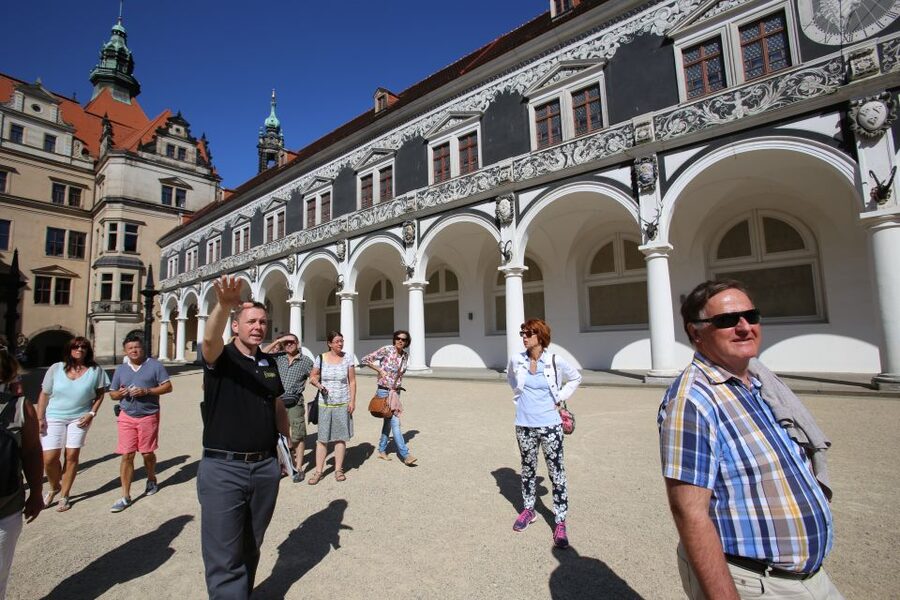
Nearby, Stallhof adds another view of court life. This historic courtyard was used for tournaments and ceremonies, giving you a sense of how public events were staged for the royal household and its audience.
These stops are valuable because they show history outside the grandest interiors. You are walking through spaces where ceremony once took place, with the buildings and artwork still forming a connected route. The guide may also point out less obvious corners, which is one reason the private format can be worthwhile.
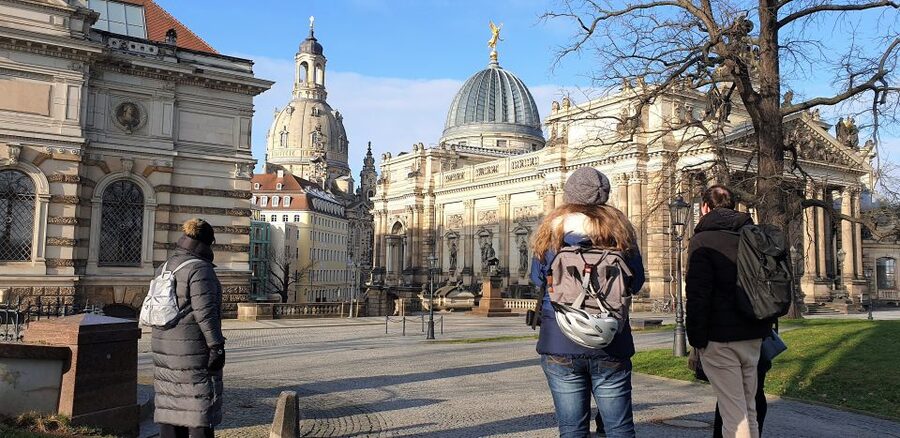
Dresden Cathedral and Brühl’s Terrace
The route continues to Dresden Cathedral and Brühl’s Terrace. The cathedral adds an important religious building to a walk that has so far emphasized royal and civic architecture.
Its presence helps show how closely religion, monarchy, and public life were tied together in historic Dresden. You can compare its form and setting with Frauenkirche, then ask the guide about the city’s religious and political changes.
Brühl’s Terrace offers a shift in mood. Known as the Balcony of Europe, it gives the walk a more open setting along the Elbe. The tour information does not promise a long stop for views, but the terrace provides a welcome change from enclosed squares and narrow streets.
I like this part of the route because it lets the city breathe. After several dense architectural stops, you get a chance to take in Dresden from a broader position. Keep your expectations practical, though. This is still a walking tour with a fixed two-hour duration, not a dedicated riverfront sightseeing outing.
Taschenbergpalais and Augustus Bridge
Taschenbergpalais carries the tour back toward the courtly center. Its name and location connect it with Dresden’s royal quarter and the network of grand buildings around the castle.
Your guide can help you see how these sites relate to one another, rather than treating each palace as a separate attraction. The value here is the sequence: castle, ceremonial spaces, palace buildings, and public routes all fit into one story about Dresden’s rulers and urban design.
The walk then reaches Augustus Bridge, one of the city’s key crossings over the Elbe. A bridge may sound less dramatic than a palace, but it helps explain Dresden’s position and growth. It links the old town with the wider city and gives you another perspective on how the historic center sits within its surroundings.
The route concludes near Frauenkirche, bringing you back to the area where it began. That is convenient if you want to continue sightseeing, stop for a meal, or return to a museum without arranging transport.
History from the Middle Ages to 1989
The tour’s broad time span is one of its biggest strengths. You are not getting only a Baroque walking tour, even though the architecture provides the main visual theme.
The guide covers the Middle Ages, Renaissance, and Baroque periods before moving into the modern era. That matters because Dresden’s beauty can otherwise make its recent past easy to overlook. The city’s story includes war, reconstruction, life in former East Germany, and the peaceful revolution of 1989.
For many people, the 1989 section will be the most distinctive part. You can hear what daily life and political division meant for people in East and West Germany, rather than treating reunification as a single date in a textbook. The tour promises both major events and personal anecdotes, so the subject should feel connected to places around you.
I would book this walk if you want historical context but do not want a formal lecture. It is also a good first activity in Dresden because it gives you a framework for later visits to churches, palaces, museums, and memorial sites.
Group size, guide style, and value
The price is $212 per private group of up to 25 people. The value depends heavily on how many people are sharing the cost. For a couple, it is a premium choice compared with a public group walk. For a family, reunion, school group, or larger party, the per-person cost can become quite reasonable.
The private setup gives you more control than a standard group tour. You can ask for clarification, request practical suggestions, and focus on the periods that interest you most. The included tips cover restaurants and events, which is helpful at the end of a first day in town.
The strongest feedback points to the guides’ warmth, humor, and ability to handle different ages. Frau Schulz was praised for keeping both younger and older people interested, while Idiko was singled out for an especially strong performance. Those names suggest the provider has experienced guides, though you should not assume you will receive a particular person unless that is confirmed when you book.
There is one serious practical warning. A booking reported that no guide appeared and that a refund had not yet arrived. That is not enough to judge the normal operation of the tour, especially beside several very positive accounts, but it is a reason to save your confirmation details and check the meeting arrangements carefully.
The tour has free cancellation up to 24 hours before the start, and you can reserve now and pay later. It is wheelchair accessible, offered in English or German, and the maximum group size is 25. These details make it easier to fit into a flexible itinerary, but they do not turn the walk into a fully customized route with another language or a different meeting point. Requests for those changes must be made in advance.
Who should book this Dresden tour?
I would choose this experience for a first visit, especially if you want the city’s major sights explained in a short block of time. It suits families and mixed-age groups because the guide can adjust the tone and answer questions without forcing everyone into a fixed public format.
It also works well for history-minded visitors who want the story to continue beyond royal architecture. The treatment of East and West Germany and the events of 1989 gives the walk more range than a simple Baroque sightseeing circuit.
You may want something else if you prefer long museum visits, quiet photography, or a very small group of only a few people. A group of 25 is private in booking terms but can still feel large on a busy street. And if you need a language other than English or German, this tour will not meet that need.
Book it if you want a clear introduction to Dresden, lively local explanation, and a route that covers the old town’s main sights without taking half a day. Skip it if you already know the center well or want detailed access to interiors. For most first-time visitors, the combination of Frauenkirche, Zwinger, Semperoper, castle buildings, royal courtyards, and modern history makes the two hours well spent.
FAQ
How long is the Dresden private walking tour?
The tour lasts two hours. It covers the main historic center on foot and finishes near Frauenkirche.
Where does the tour meet?
Meet your guide at Dresden Information, Neumarkt 2, 01067 Dresden, in the QF Passage on the basement floor.
Which languages are available?
The tour is offered in English or German. Requests for another language must be sent in advance, but the available tour languages are English and German.
What sights are included on the route?
The route begins at Neumarkt and includes Frauenkirche, Semperoper, the Baroque Zwinger, Dresden Castle, Brühl’s Terrace, the Procession of Princes, Stallhof, Dresden Cathedral, Taschenbergpalais, and Augustus Bridge.
How many people can join the private group?
The maximum group size is 25 people.
Is the walking tour wheelchair accessible?
Yes. The activity is listed as wheelchair accessible.
New walking tours around Germany
- Mystical Hamburg – Walking Tour in German★ 4.6 · 168 reviews
- Munich: Raven Black Witches and Executioners Walking Tour★ 4.7 · 294 reviews
- Munich : Private Walking Tour with A Guide (Private tour)★ 4.5 · 85 reviews
- Munich: Guided Food Walking Tour with Beer Tasting★ 4.7 · 183 reviews
- Munich Old Town – Guided Walking Tour in English★ 4.7 · 153 reviews
- Munich: Old Town Guided Walking Tour★ 4.6 · 479 reviews
- Munich: Old Town Walking Tour★ 4.7 · 589 reviews
- Munich: Birthplace of the Third Reich Guided Walking Tour★ 4.6 · 771 reviews
Dresden Walking Tours, side by side.

Dresden: City & Semperoper Guided Walking Tour
Read our review →
Dresden: Complete Walking Tour with Frauenkirche Visit
Read our review →
Dresden: Walking Tour with a Night Watchman including a Meal
Read our review →
Dresden: Guided Walking Tour and Chocolate Museum Ticket
Read our review →

Dresden: Neustadt District Street Art Guided Walking Tour
Read our review →