Review · GERMANY
Trier: Guided City Walk with Wine Tasting
Trier’s Roman past and Moselle wine culture come together neatly on this two-hour walk. You move from the Porta Nigra to the Forum Baths, tasting a different local wine at selected stops and hearing why each drink connects to a building, square, or chapter in the city’s past. Guide Simon, who grew up in Trier, is especially good at joining the dots between place and glass.
I like the clever wine-and-history pairings, which give the tasting a purpose beyond simply sampling drinks. I also like the easy, step-free route, with time to see major Roman and Christian landmarks without signing up for a long day on foot. The main consideration is that this is a walking tasting, not a winery visit, so you will not tour vineyards or cellars.
Key points to know
- Five wines in warmer months: Taste regional wines with breadsticks and water while walking through central Trier.
- Winter brings mulled wine: From mid-November through January, four local mulled wines may replace the regular tasting when at least six people book.
- Simon adds local character: He grew up in Trier and connects Roman, Christian, medieval, wartime, and modern stories to the route.
- A strong first look at Trier: The walk covers the Porta Nigra, main market, cathedral, churches, palace, baths, and more.
- The route is barrier-free: No steps are required, and the walk is suitable for wheelchair users.
- The $43 price includes a useful extra: You receive a voucher for one glass of wine with a main course at Weinwirtschaft Friedrich-Wilhelm.
Why this Trier walk works so well
Trier can feel like several cities layered in one compact center. Roman gates and baths sit near grand churches, a medieval market square, and the Electoral Palace. If you simply stroll from sight to sight, you will see the stonework but miss much of the story.
This tour gives that story a clear shape. You begin at the Porta Nigra and finish near the Forum Baths, moving through the central sights in a sensible direction. The wine stops break up the walking and give you a taste of the Moselle region without sending you out of town.
I especially like the way the drinks are tied to the places around you. The point is not just to taste Riesling or another regional wine. You hear about the local wine trade and the connection between Trier and the surrounding Moselle growing area as the city unfolds around you.
The guide makes a large difference here. Simon is the name most often associated with the experience, and his background gives the tour a personal tone. He grew up in Trier, answers questions readily, and brings both local history and wine knowledge to the walk. His humor also helps keep a long sequence of dates and rulers from feeling like a classroom lecture.
More Food Walking Tours in Germany
- Berlin Center Food Tour with 8+ Authentic Local Tastings
★ 5.0 · 1,227 reviews - Cologne: Südstadt Guided Foodie Walking Tour
★ 4.6 · 624 reviews - Dresden: Taste of Dresden Food Walk
★ 4.6 · 397 reviews
Starting beside the Porta Nigra
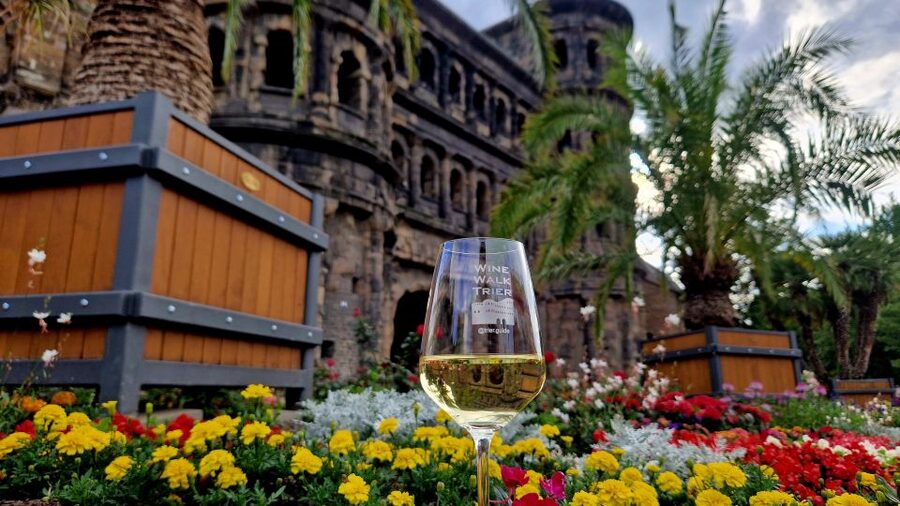
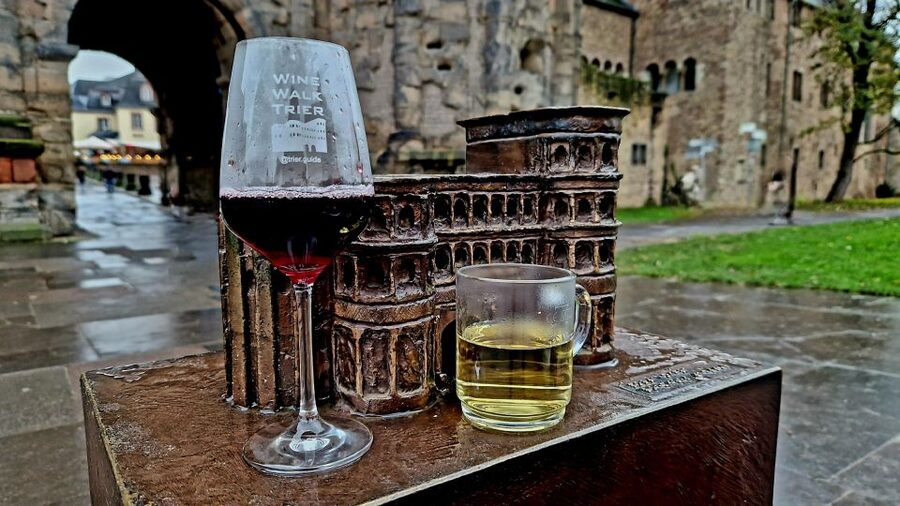
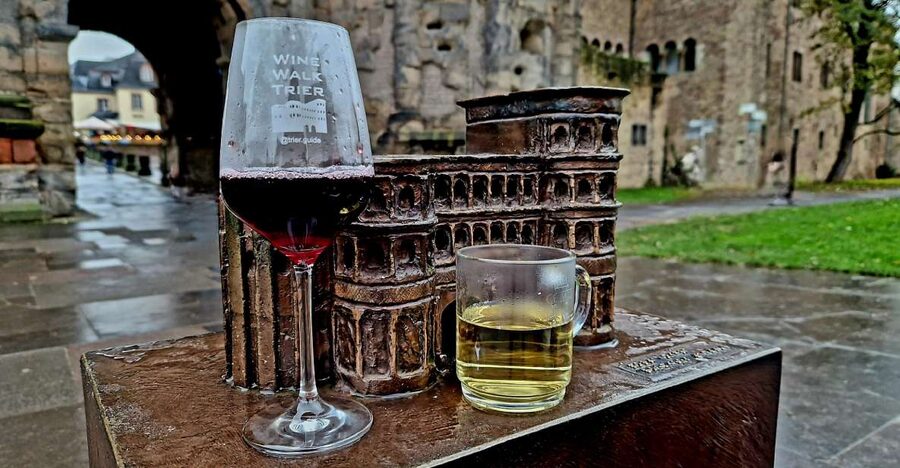
Meet on the left side of the Tourist Information office, in front of the city model and near the flags. The tour is operated independently, so do not assume the staff inside the tourist office are running it. Look for your guide at the stated meeting point.
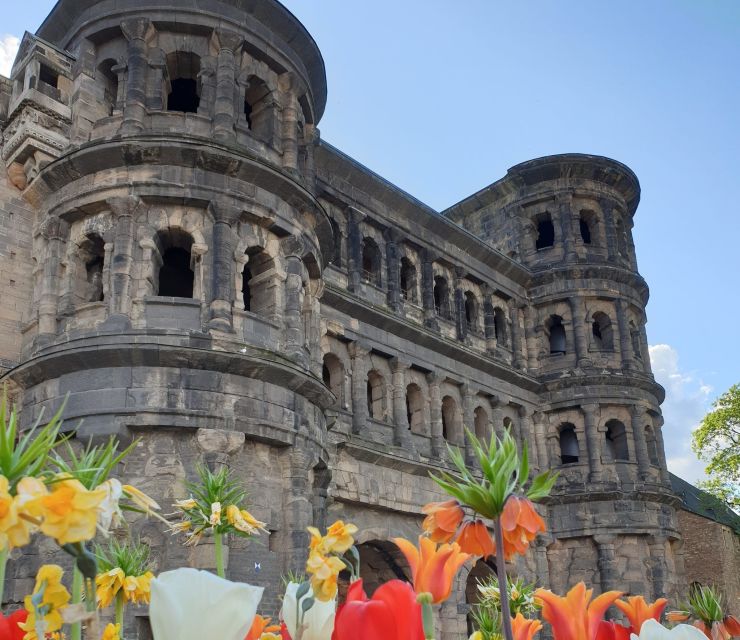
The Porta Nigra is an ideal beginning. This dark Roman gate once formed part of Trier’s fortifications and remains one of the city’s clearest signs of its ancient past. You get a photo stop and an introduction to the Roman foundations of the city before heading into the streets.
This is also a practical place to begin if you are arriving by train or spending only one day in Trier. The meeting point is close to the station, making the tour easy to fit into a day trip from Luxembourg or another nearby base.
A useful tip: arrive early. One participant arrived about three minutes late and was still welcomed warmly, but rushing to the starting point is an unnecessary way to begin a walking tasting. You will enjoy the first explanation more if you have time to find the city model and settle in.
The market cross and Trier’s public heart
From the Porta Nigra, the route continues toward the Market Cross on the main market. This square is one of the city center’s key public spaces, and it offers a change of mood from the heavy Roman gate.
Here, the guide can place Trier’s old civic life in context. The market is not simply a pretty square for photographs. It helps show how the city functioned as a place of trade, authority, religion, and daily business over the centuries.
A wine tasting at or near this part of the route makes sense. The market was a place where goods moved, and wine has long been part of the economic life of the Moselle region. The drink becomes a small prompt for a bigger story about local production and the city’s role as a regional center.
The pace is active but not athletic. You walk between several sights, stop for explanations, and take photographs. Still, this is not a sit-down tasting where you can linger over every glass. If you are serious about wine, treat the samples as an introduction to local styles rather than a formal tasting class.
Trier Cathedral and Liebfrauenkirche
The Cathedral of Trier and the Liebfrauenkirche bring the city’s Christian past into the route. They also show why Trier feels different from a standard Roman ruins destination. Ancient stone is only part of the story here.
The cathedral is a major visual stop, while the neighboring Liebfrauenkirche has its own architectural character. The tour gives you a chance to understand these buildings within the wider development of the city rather than seeing them as isolated photo backgrounds.
The wine stop at Liebfrauenkirche adds one of the more unusual links in the walk. The guide explains the relationship between the drink and the site, so the tasting stays connected to the route. You should have time for photos and, depending on the flow of the group, a closer look at the surroundings.
The supplied route describes brief sightseeing stops, not extended interior visits. If you want to study the cathedral or church in detail, plan to return after the tour. That is one of the strengths of the experience: it gives you a map of what deserves more of your time later.
More Wine and Tapas Walking Tours around Germany:
- Barcelona Tapas and Wine Experience Small-Group Walking Tour
★ 5.0 · 5,804 reviews - Authentic Parisian Gourmet Food Tour with 10 Local Dishes & Wines
★ 5.0 · 4,754 reviews - Barcelona: Tapas Walking Tour with Food, Wine, and History
★ 4.8 · 4,261 reviews - Lisbon: Food and Wine Small Group Walking Tour
★ 4.9 · 4,082 reviews
The Aula Palatina and Electoral Palace
The Aula Palatina, also called the Basilica of Constantine, is one of Trier’s most striking Roman buildings. Its scale helps you picture the city as a major imperial center rather than a quiet provincial town.
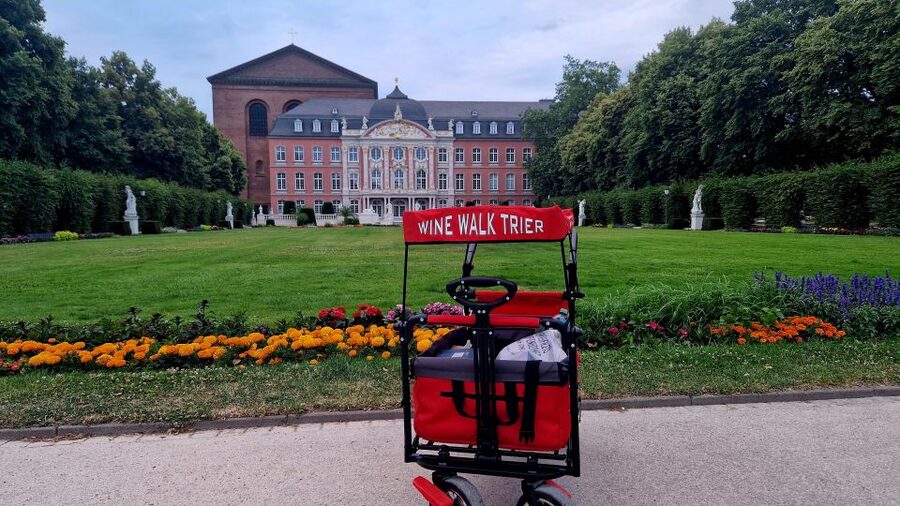
Next comes the Electoral Palace, whose ornate appearance contrasts sharply with the plain, massive Roman basilica. The two buildings together make a fine history lesson in stone. You can see how Trier’s role and architecture changed as political and religious power shifted over the centuries.
A wine tasting at the Electoral Palace is another example of the tour’s basic idea. The glass is not random refreshment. It gives the guide a way to talk about the region, the city, and the places that shaped local life.
This part of the walk is particularly useful if you have limited time in Trier. You get several major sights in one compact route, with enough explanation to help you decide where to return. I would not treat the tour as a substitute for entering every monument, but it is an efficient orientation.
Kaiserthermen and the Roman bath complex
The Kaiserthermen, or Imperial Baths, bring the Roman chapter back into focus. Even from the outside, the remains show the size and ambition of ancient Trier.
The tour then continues toward the Forum Baths, where the walk ends. The Forum Baths are also Roman bath ruins, but they offer a different final perspective on the city’s ancient infrastructure. Ending here gives the route a satisfying arc, from the Roman fortifications at the Porta Nigra to the public bathing complex near Viehmarkt Square.
A final wine tasting takes place at the Forum Baths. That closing glass gives you a moment to look back over the route while hearing more about the local wine region. It is a pleasant end point, though remember that the tour finishes outside the baths. If you want an extended visit, you can arrange that separately.
What you actually drink along the way
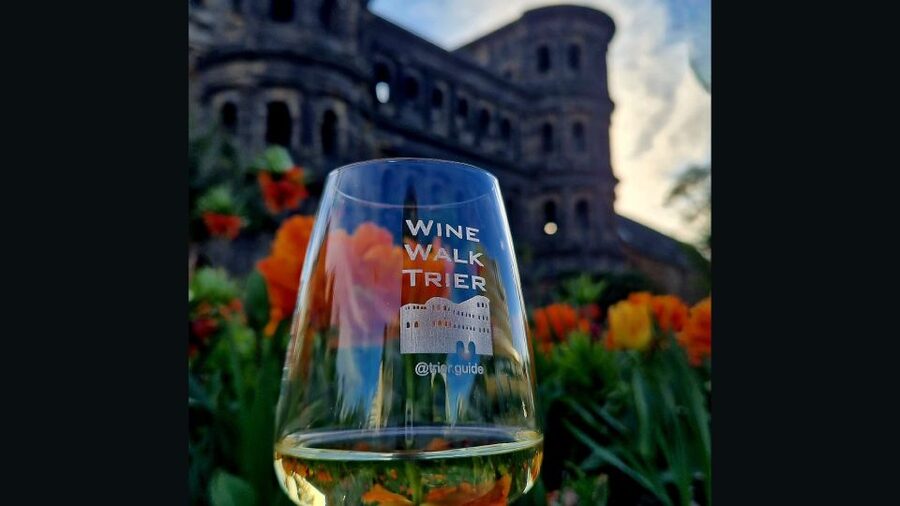
In the warmer months, the standard tasting includes five different regional wines. The selection is linked to buildings or places in Trier, and the guide explains the connection between each wine and the local area.
The focus is strongly regional, especially on Moselle wine culture. Several participants specifically praised the Rieslings and the careful choices at each stop. You should expect an approachable introduction rather than technical instruction on soil, vintages, or winemaking methods.
Water and breadsticks are included. That matters more than it may sound. Five tastings over two hours can feel more comfortable with something to eat and drink between samples, particularly on a warm day.
In winter, from the middle of November through the end of January, the experience may feature four different mulled wines from local wineries instead. This format applies when at least six people register. If fewer than six people join, the experience may use five different wines as in summer.
The winter version sounds particularly suited to Trier’s Christmas market season, though you should understand the exact tasting can depend on group size. If mulled wine is your main reason for booking, check the seasonal arrangement before paying.
Nonalcoholic grape juices are also available, but you need to arrange that by email. This makes the tour more flexible for people who do not drink alcohol, though the option should not be left until the meeting point.
The guide’s role and the group atmosphere
The strongest part of this experience is the guide’s ability to keep history connected to the street in front of you. Simon is repeatedly described as warm, funny, patient, and well informed about both Trier and wine. He also offers practical answers rather than sticking rigidly to a script.
That matters in a city with this much material. Trier’s story stretches from Roman rule through the rise of Christianity, the Middle Ages, the world wars, and modern life. A guide who can move between those periods without losing the group gives the walk its value.
The group atmosphere can add to the enjoyment. Wine encourages conversation, and the tasting format tends to make the experience social. On the other hand, a lively group or busy street can make it harder to hear. One participant specifically noted that street noise occasionally required extra concentration.
If clear audio is important to you, stay close to the guide and ask people not to spread out. There is no indication that audio devices are provided, so position matters.
Is $43 good value?
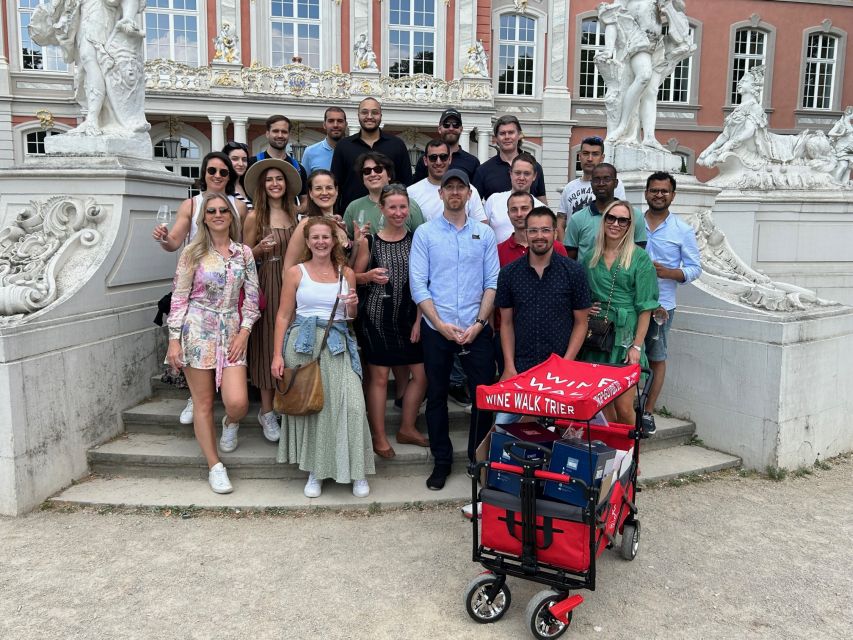
At $43 per person, the tour is fairly priced if you want both a city introduction and several local tastings. You are paying for two hours of guiding, five wines in the regular season or four winter mulled wines under the stated condition, water, breadsticks, and a route that covers many of Trier’s main sights.
The included voucher improves the value. You receive a voucher for one glass of wine with a main course at Weinwirtschaft Friedrich-Wilhelm, next to the Basilica. It gives you a reason to continue the local wine theme after the walk, though the main course itself is not included.
The value is weaker if your priority is a full winery visit. You will not be transported through the Moselle countryside, meet a winemaker, or taste in a vineyard setting. This is a city walk with portable tastings and historical links.
There are also small extra costs to note. A tasting glass can be purchased for 6 euros after the tour, and a wine glass holder costs 3 euros. You do not need to buy either item, but the glass holder may be useful if you want to keep your hands free while walking.
Practical details that affect the experience
The walk lasts two hours and is offered in English and German. It takes place rain or shine, so bring suitable clothing and footwear. The route does not require steps and is completely barrier-free, which is a real advantage for anyone who needs a level route.
Hotel pickup and drop-off are not included. You meet in central Trier and finish at the Forum Baths, so plan your onward route from there rather than expecting to return to your hotel or the starting point.
Free cancellation is available up to 24 hours before the activity for a full refund. You can also reserve and pay later, which is useful if you are building a flexible Germany itinerary.
The tour suits adults and older children who enjoy history, local drinks, and a moderate amount of walking. It is less suitable if you want a quiet, formal wine seminar or a slow visit inside each monument. It also deserves a little caution for anyone sensitive to alcohol: five samples in two hours is still a meaningful amount, even with water and breadsticks.
Who should book this Trier wine walk?
I would choose this tour if I had one day in Trier and wanted a strong first look at the city. The route covers the major Roman and religious sights, while the wine stops give the walk a clear local identity.
It is also a good fit if you are staying in the Moselle area but do not have time for a countryside winery outing. You get a taste of regional wine culture without giving up the city’s monuments.
I would especially consider it for visitors who enjoy stories, questions, and a guide with personal ties to the city. Simon’s mix of local memory, historical detail, humor, and wine knowledge appears to be central to the experience.
I would skip it if you dislike drinking while walking, need long interior visits, or want a specialist tasting with detailed notes on each vintage. For everyone else, the $43 fee buys a useful introduction to Trier, plus enough wine to make the history easier to remember.
FAQ
How long does the Trier wine walk last?
The tour lasts two hours.
Where does the tour begin?
Meet on the left side of the Tourist Information office, in front of the city model near the flags. The meeting point is close to the Porta Nigra.
Where does the tour finish?
The walk ends outside the Forum Baths at Viehmarkt Square.
How many wines are included?
The warmer-season format includes five regional wines. From mid-November through the end of January, the tour may include four local mulled wines when at least six people register.
Are nonalcoholic drinks available?
Yes. Four different grape juices can be arranged, but you need to book this option by email.
Is the route suitable for wheelchair users?
Yes. The route is described as completely barrier-free and does not require climbing steps.
What languages are offered?
The live guide is available in English and German.
What is included besides the wine?
The price includes the walking tour, guide, regional wines or seasonal mulled wines, water, breadsticks, and a voucher for one glass of wine with a main course at Weinwirtschaft Friedrich-Wilhelm near the Basilica.
Should you book the Trier Guided City Walk with Wine Tasting?
Book it if you want Trier’s Roman ruins, churches, palace, and baths explained in one manageable walk, with local wine giving the route a relaxed social touch. The strongest reason to go is the link between each tasting and the city around you, along with Simon’s personal feel for Trier.
Skip it only if you want a dedicated vineyard tour or extended monument visits. For a first afternoon in Germany’s oldest city, this is a practical and enjoyable way to get your bearings, taste the Moselle region, and leave with a clear list of places worth seeing next.
New walking tours around Germany
- Mystical Hamburg – Walking Tour in German★ 4.6 · 168 reviews
- Munich : Private Walking Tour with A Guide (Private tour)★ 4.5 · 85 reviews
- Munich: Raven Black Witches and Executioners Walking Tour★ 4.7 · 294 reviews
- Munich: Guided Food Walking Tour with Beer Tasting★ 4.7 · 183 reviews
- Munich Old Town – Guided Walking Tour in English★ 4.7 · 153 reviews
- Munich: Old Town Guided Walking Tour★ 4.6 · 479 reviews
- Munich: Old Town Walking Tour★ 4.7 · 589 reviews
- Munich: Birthplace of the Third Reich Guided Walking Tour★ 4.6 · 771 reviews
Germany Walking Tours, side by side.
Berlin City walk Government District and Places of Democracy
Read our review →
Berlin: Third Reich & Cold War Guided Walking Tour
Read our review →
Berlin’s Best: 2 Hour Walking Tour Third Reich and the Cold War
Read our review →